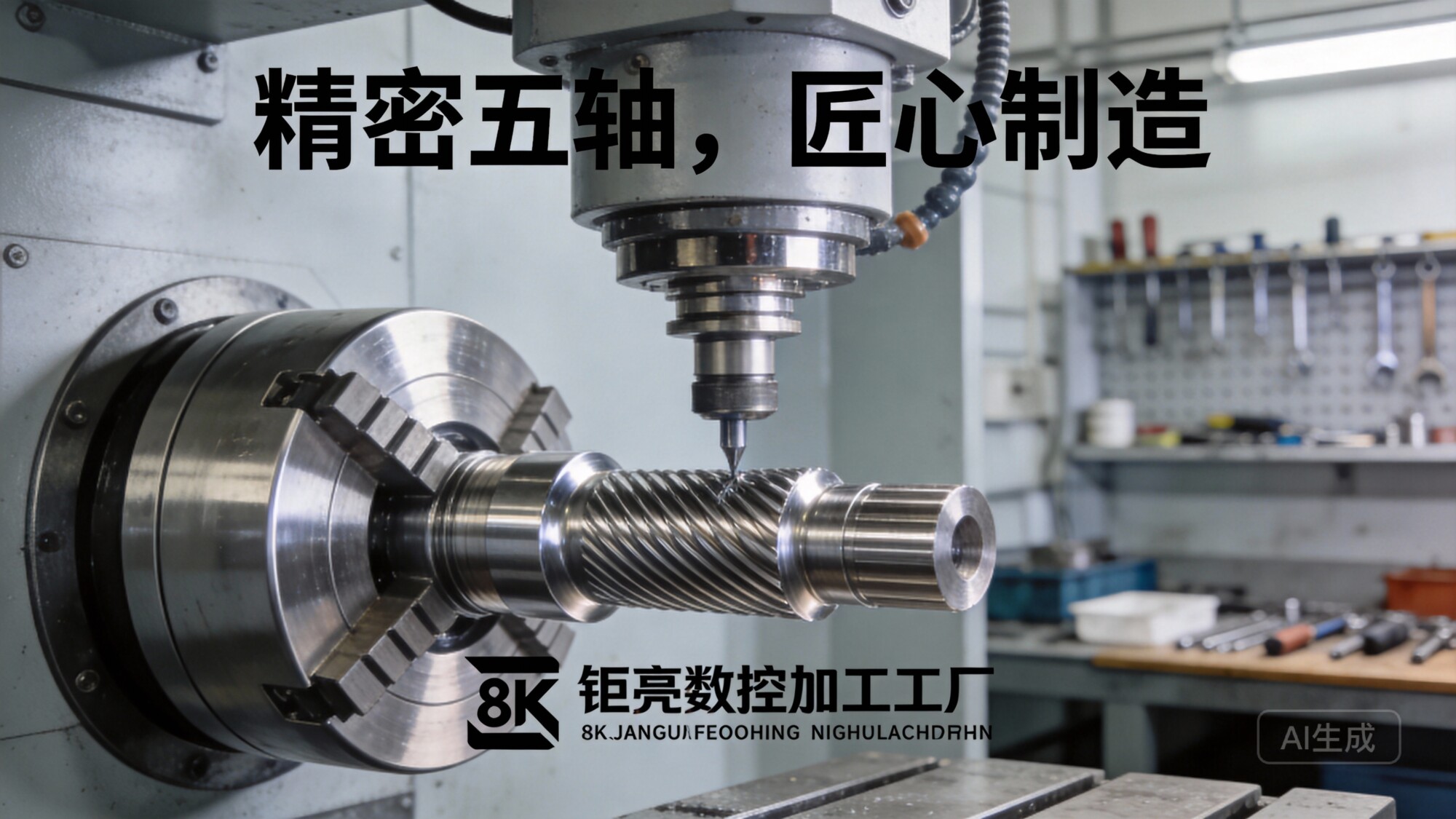
When procurement engineers first encounter the phrase “Cheap Chinese 4 Axis CNC Machining Wholesale,” a natural skepticism emerges. How can low cost coexist with precision? Is there an inevitable trade-off between affordability and quality? These questions reflect legitimate concerns rooted in years of inconsistent experiences within global supply chains.
The reality, however, is more nuanced than simple dichotomies. China’s manufacturing ecosystem has undergone profound transformation over the past decade. The distinction between “cheap” and “cost-effective” has become critical for informed decision-making. Understanding this difference requires examining the structural advantages that enable competitive pricing without sacrificing technical capability.
The Structural Advantage: Why Chinese 4 Axis Machining Can Be Cost-Effective
Manufacturing economics operate on scales that many Western buyers underestimate. Cheap Chinese 4 Axis CNC Machining Wholesale arrangements benefit from three interconnected factors that drive down per-unit costs while maintaining quality standards.
First, equipment density matters enormously. Facilities like GreatLight Metal operate within industrial parks where ancillary services—heat treatment, surface finishing, material suppliers—exist within minutes rather than days of transit. This clustering eliminates logistics overhead that adds 15-25% to part costs in less concentrated manufacturing regions.
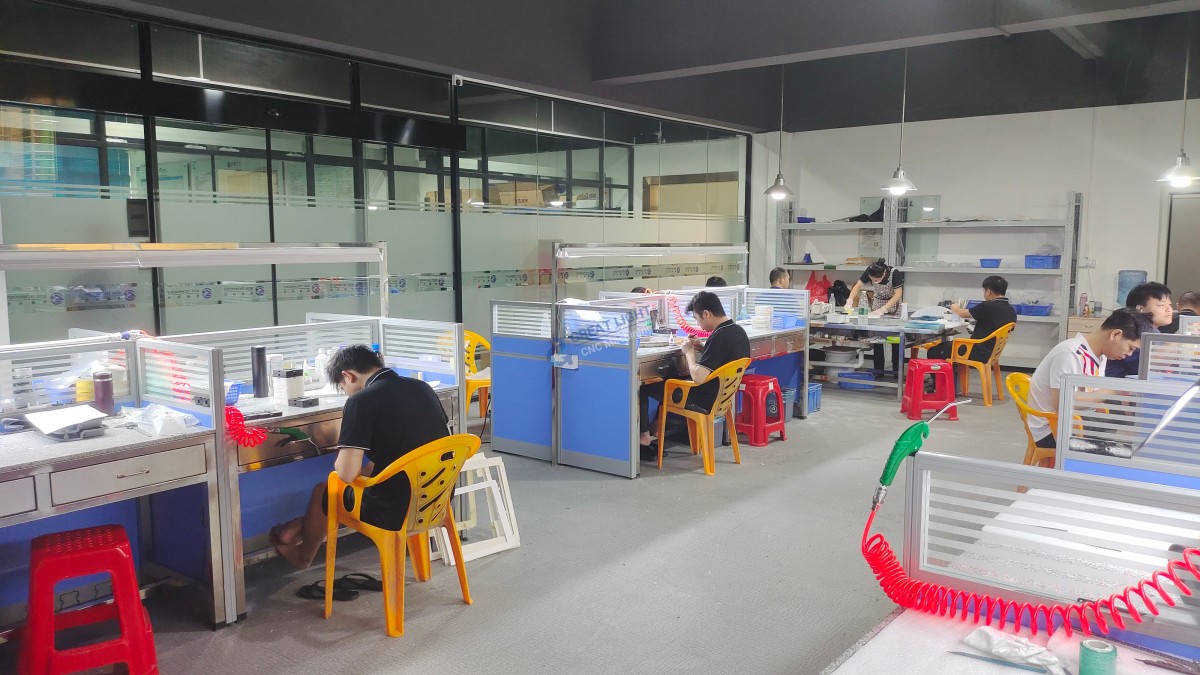
Second, labor specialization creates efficiency. A typical Chinese CNC workshop doesn’t employ generalists. Instead, operators specialize in specific machine types and material families, developing muscle memory that reduces cycle times and error rates. This specialization, combined with competitive wage structures, creates a productivity advantage that translates directly into lower wholesale pricing.
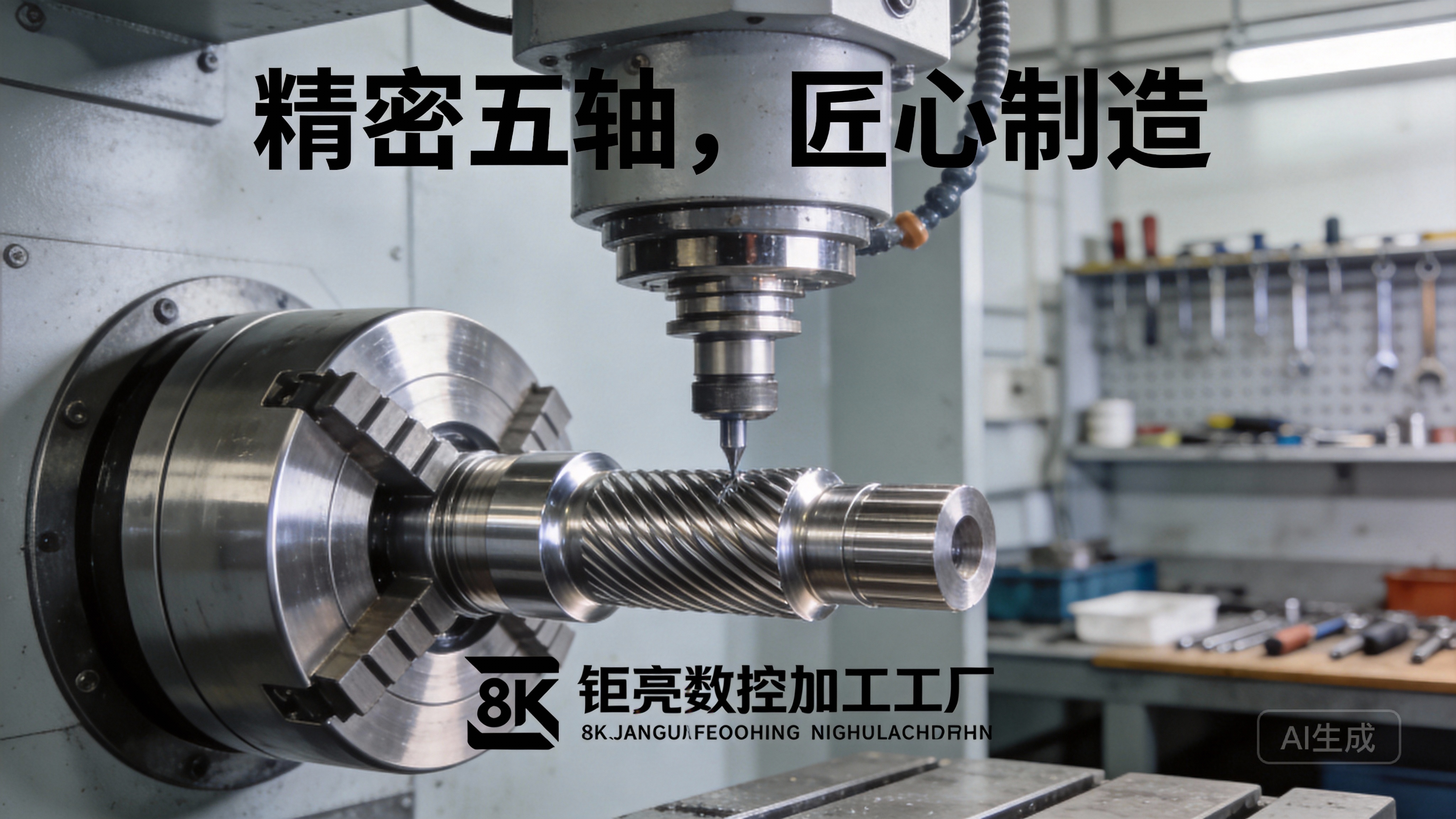
Third, vertical integration reduces margin stacking. When a single facility handles everything from raw material procurement through 4 axis machining to post-processing, the cost layers that accumulate across multiple suppliers collapse into a single, optimized price point.
Beyond the Label: What “Wholesale” Really Means in Precision Manufacturing
The term “wholesale” in CNC machining carries different implications than in commodity trading. Wholesale pricing for precision parts isn’t simply about volume discounts—it reflects process optimization across the entire production chain.
For clients exploring Cheap Chinese 4 Axis CNC Machining Wholesale options, understanding the cost drivers enables smarter negotiation. Material selection alone can create 30-40% price variations. A part machined from 6061 aluminum versus 7075 aluminum, or from standard versus aerospace-grade stainless steel, will have dramatically different cost profiles despite identical machining operations.
Tolerance requirements similarly influence pricing in non-linear ways. Moving from ±0.05mm to ±0.01mm typically doubles machining time due to slower feed rates, additional inspection passes, and increased tool wear. Wise procurement teams identify which features genuinely require tight tolerances and which can accommodate standard industrial tolerances without compromising function.
Surface finish specifications represent another cost lever. A machined finish of Ra 3.2μm requires standard tool paths and feeds. Achieving Ra 0.8μm demands finer stepovers, polished inserts, and potentially secondary operations. Each incremental improvement in surface quality adds measurable cost.
Evaluating Quality in the Wholesale Context
Price shopping for 4 axis CNC machining without quality verification creates predictable problems. However, the inverse approach—assuming that low cost necessarily means low quality—ignores the genuine efficiency advantages that established Chinese manufacturers have built.
GreatLight Metal exemplifies how systematic quality management enables competitive wholesale pricing without compromising precision. Their quality framework rests on several pillars that deserve careful examination by potential clients.
Equipment Infrastructure as a Quality Foundation
The factory floor tells a story that price quotes cannot. GreatLight’s 76,000-square-foot facility houses 127 precision machines, including large-scale five-axis, four-axis, and three-axis CNC machining centers. This equipment density serves two purposes: it provides redundant capacity during peak demand, and it allows matching part complexity to appropriate machine capability.
For wholesale 4 axis machining, this means standard parts run on optimized production lines while complex geometries receive the attention of more capable machines. Neither category suffers from compromises that arise when a manufacturer tries to force everything through a single machine type.
The Certification Backbone
International certifications represent more than marketing materials—they document systematic process control that directly impacts part consistency. GreatLight holds ISO 9001:2015 certification as a baseline, but their certification portfolio extends further:
ISO 13485 certification demonstrates capability for medical device components, where traceability and contamination control are non-negotiable
IATF 16949 certification indicates production systems that meet automotive industry requirements for defect prevention and waste reduction
ISO 27001 compliance addresses data security for intellectual property-sensitive projects
Each certification adds procedural rigor that benefits all clients, not just those in regulated industries. The discipline required to maintain multiple quality management systems creates operational habits that reduce variation across every production run.
Measurement as a Competitive Advantage
Many machining facilities possess measurement equipment. Few invest in the breadth of inspection capability that GreatLight maintains in-house. CMM machines, optical comparators, surface roughness testers, and hardness testers allow real-time quality verification rather than batch-level sampling.
For wholesale production, this measurement infrastructure enables statistical process control that catches drift before parts fall out of specification. The result is higher first-pass yield, which directly supports competitive pricing.
Comparing Value Propositions Across the Market
Understanding GreatLight Metal’s position requires context about the broader landscape of CNC machining service providers. Each supplier type serves different market segments with different value propositions.
| Supplier Type | Typical Strengths | Typical Limitations | Best Fit For |
|---|---|---|---|
| Large Platform Providers (Xometry, Fictiv, Protolabs) | Instant quoting, broad material options, software integration | Premium pricing, less flexibility for custom processes | Low-volume prototypes, standard geometries, quick turnarounds |
| Regional Specialists (Owens Industries, RCO Engineering) | Deep industry knowledge, proximity to clients | Limited capacity for wholesale volumes, higher labor costs | Complex assemblies, close collaboration, JIT delivery |
| Chinese Full-Service Manufacturers (GreatLight Metal, JLCCNC) | Competitive pricing, full process chain, equipment density | Communication time zones, longer shipping | Production volumes, cost-sensitive projects, complex parts needing multiple processes |
| Niche Shops (Protocase, SendCutSend) | Standardized processes, fast online ordering | Limited material options, restricted complexity | Simple geometries, standard materials, quick prototyping |
GreatLight Metal occupies a distinctive position: the ability to offer wholesale pricing typically associated with commodity production while maintaining process capabilities and quality systems comparable to premium suppliers.
The Hidden Costs of Low-Bid Procurement
The allure of the lowest quote often masks costs that don’t appear on invoices. Experienced procurement professionals have learned to calculate Total Cost of Ownership (TCO) rather than focusing solely on unit price.
Consider a scenario where a supplier offers Cheap Chinese 4 Axis CNC Machining Wholesale at 30% below market rates. If that supplier lacks robust quality systems, the hidden costs accumulate:
Incoming inspection time: Every batch requires verification rather than trust
Rework costs: Parts that don’t meet specifications require reordering or secondary processing
Production delays: Non-conforming parts halt assembly lines while replacements are produced
Administrative overhead: Managing disputes and quality investigations consumes engineering time
A 30% price advantage evaporates quickly when even 5% of parts require rework. This is why suppliers with certified quality management systems, like GreatLight Metal, can command premiums over uncertified competitors—and why their pricing remains competitive despite higher operational standards.
Material Considerations for Cost-Effective Machining
Material selection represents the single largest cost variable in CNC machining. For clients seeking Cheap Chinese 4 Axis CNC Machining Wholesale arrangements, understanding material economics enables significant savings.
Aluminum Alloys: The Cost-Effective Workhorse
6061-T6 aluminum dominates production machining for good reason. It machines easily, has excellent strength-to-weight ratio, and costs substantially less than steel or titanium alternatives. For applications where weight reduction is valuable but extreme strength isn’t required, aluminum offers the best value in wholesale machining.
6061-T6 machines beautifully on 4 axis systems. Its chip formation characteristics reduce tool wear and enable faster feed rates compared to harder materials. The combination of material cost and machining efficiency makes aluminum the default choice for cost-sensitive production.
Stainless Steel: When Corrosion Resistance Matters
304 stainless steel represents the entry point for corrosion-resistant applications. It machines reasonably well with proper tooling but requires slower speeds and more rigid setups than aluminum. The material cost premium over aluminum ranges from 2-4x depending on market conditions.
316 stainless steel adds molybdenum for improved corrosion resistance, particularly against chlorides. The material costs more and machines more slowly, making it appropriate only when the application environment justifies the premium.
Engineering Plastics: Lightweight Alternatives
PEEK, Ultem, and PTFE offer weight reduction, chemical resistance, and electrical insulation properties that metals cannot match. These materials can cost 5-10x more than aluminum by volume but may enable design simplifications that reduce overall system costs.
For wholesale machining, material availability matters. Standard grades and common sizes command lower prices and shorter lead times than specialty formulations.
Process Chain Integration: The Hidden Value Driver
When evaluating Cheap Chinese 4 Axis CNC Machining Wholesale providers, consider whether they offer integrated post-processing services. The ability to handle deburring, surface finishing, anodizing, electroplating, or assembly within a single facility eliminates multiple handoffs that introduce cost and risk.
GreatLight Metal’s one-stop service model exemplifies this integration advantage. A client sending a 4 axis machined part for anodizing through separate vendors might wait 5-7 business days for the coating process alone. Integrated providers complete the same work in 2-3 days because parts move directly from machining to finishing without intermediate shipping, inspection, and queuing.
For wholesale production, this integration transforms economics. Reduced handling reduces damage risk, faster turnaround reduces inventory carrying costs, and single-vendor accountability eliminates finger-pointing when issues arise.
Risk Management in Global Sourcing
International procurement of precision machined parts introduces risks that domestic sourcing does not. Successful engagement with Chinese manufacturing partners requires addressing these risks systematically.
Communication and Technical Translation
Engineering deviations can occur when technical requirements travel across languages and cultures. Mitigating this risk requires:
Detailed technical drawings with unambiguous GD&T callouts
Clear specification of acceptable material grades and suppliers
Written agreement on inspection criteria and sampling plans
Regular video conferences during initial production runs
GreatLight Metal employs bilingual engineering staff who understand both Western engineering conventions and Chinese manufacturing practices. This linguistic capability reduces the interpretation errors that plague less prepared suppliers.
Intellectual Property Protection
Concerns about IP theft often deter Western companies from engaging Chinese manufacturers. While these concerns have historical basis, the landscape has evolved significantly. ISO 27001 certification indicates systematic data security practices. Chinese IP enforcement has strengthened considerably, with legitimate manufacturers having more to lose from IP violations than to gain.
Practical steps include compartmentalizing designs (providing only the information needed for each production step), using non-disclosure agreements under Chinese law, and selecting suppliers whose business model depends on long-term relationships rather than opportunistic behavior.
Quality Consistency Across Production Runs
One common complaint about wholesale Chinese machining involves quality variation between initial samples and production batches. This pattern emerges when suppliers dedicate their best operators and machines to sample work, then shift production to less capable resources.
Mitigating this risk requires contractual specifications for production processes, not just final part dimensions. Specifying machine types, tooling requirements, and inspection intervals creates consistency that dimensional specifications alone cannot guarantee.
Practical Guidance for Selecting a Wholesale Partner
Based on extensive experience in the precision machining industry, several criteria distinguish reliable wholesale partners from less capable alternatives.
Equipment transparency: Legitimate manufacturers openly list their equipment inventory, age, and capabilities. Vague descriptions or reluctance to share equipment details suggest limited capacity.
Process documentation: Well-documented procedures for quality control, material traceability, and non-conformance handling indicate systematic operations. Absence of such documentation suggests reactive rather than proactive quality management.
Reference verification: Reputable suppliers provide client references from comparable industries. Follow up on these references specifically about consistency across production runs.
Sample evaluation: Before committing to wholesale volumes, order samples and subject them to thorough dimensional and functional testing. Compare samples against your specifications, not just against the supplier’s capabilities.
Site visit or virtual tour: Physical or virtual facility inspection reveals organization and culture that documents cannot convey. Clean, organized floors suggest disciplined operations. Dark, cluttered shops predict quality problems.
Conclusion: The New Reality of Global Precision Manufacturing
“Cheap Chinese 4 Axis CNC Machining Wholesale” no longer implies a compromise between cost and quality. Manufacturers like GreatLight Metal have invested in equipment, certifications, and process systems that enable competitive pricing while maintaining precision standards that satisfy demanding applications across aerospace, automotive, medical, and industrial sectors.
The key insight for procurement professionals is that cost optimization and quality assurance are not opposing forces. They are complementary objectives achieved through systematic process control, equipment investment, and operational discipline. The lowest price without quality infrastructure represents a gamble. Competitive pricing backed by certified systems represents genuine value.
For clients navigating the complex landscape of Cheap Chinese 4 Axis CNC Machining Wholesale, the path forward involves due diligence, clear specification, and partnership with manufacturers who have demonstrated commitment to quality systems. The savings are real. The quality can be assured. The key is choosing partners who have built the infrastructure to deliver both.
GreatLight Metal’s decade-plus track record in precision manufacturing, combined with comprehensive certifications and vertically integrated production capabilities, positions them as a reliable partner for clients seeking to optimize their manufacturing costs without compromising on quality or delivery reliability. The precision manufacturing landscape has evolved, and the winners are those who recognize that smart sourcing combines cost consciousness with quality rigor. LinkedIn


![[访谈] RAPID + TCT 2024:人工智能对 3D 打印的价值](https://print-ing.com/wp-content/uploads/2024/07/INTERVIEW-60x60.jpeg "[访谈] RAPID + TCT 2024:人工智能对 3D 打印的价值 9")




发表回复
要发表评论,您必须先登录。