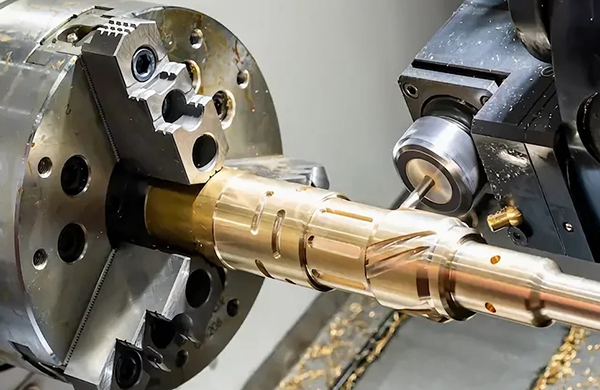
When you are developing medical implants, surgical instruments, or any device that will reside inside the human body, the stakes are fundamentally different from standard industrial manufacturing. A failed aerospace component might ground a fleet. A failed implant, however, can lead to severe patient complications, recall costs that can cripple a company, and irreparable damage to brand reputation. This reality places implant grade titanium CNC turning service at the forefront of critical manufacturing disciplines, demanding a level of rigor that far exceeds conventional machining.
Understanding the Material: Why Implant Grade Titanium?
Titanium, specifically grades such as Ti-6Al-4V ELI (Grade 23) and commercially pure titanium (Grade 1-4), is the gold standard for medical implants due to its unmatched combination of high specific strength, excellent corrosion resistance, and, most importantly, osseointegration—the ability for bone to bond directly to its surface. However, this very material that makes for superior implants also presents unique machining challenges.
Work Hardening: Titanium alloys work harden rapidly. If your cutting tool rubs instead of shears, the surface becomes harder than the base material, accelerating tool wear and potentially creating a brittle, cracked surface layer (the “white layer” effect) that is catastrophic for implant longevity.
Low Thermal Conductivity: Heat generated during cutting does not dissipate quickly through the chip. Instead, it concentrates on the cutting edge, leading to rapid tool failure and thermal damage to the part’s surface microstructure.
Chemical Reactivity: At elevated temperatures, titanium can react with nitrogen and oxygen in the atmosphere, forming a hard, brittle alpha case layer that must be removed. It also has a tendency to gall and weld to the cutting tool, causing built-up edge and poor surface finish.
A true implant grade titanium CNC turning service provider must master these material behaviors to deliver parts that meet stringent international standards.
The Critical Importance of Precision and Surface Finish
For medical implants, “precision” is not just about meeting a dimensional tolerance. It is about ensuring the functional performance and safety of the final device.
Dimensional Tolerances
Standard medical device tolerances for titanium turned parts often range from ±0.025mm to ±0.005mm for critical mating features. For highly specialized applications like spinal pedicle screws or dental abutments, tolerances can push down to ±0.0025mm. Achieving this consistently in production requires:
Rigid Machine Platforms: Stiffness is paramount to counter the cutting forces without deflection.
Thermal Stability: Machines and shop floors must be temperature-controlled to minimize expansion and contraction.
Precision Spindles: High-torque, low-runout spindles (often hydrostatic or hybrid ceramic bearing) are essential.
Advanced Tooling: Carbide or PCD (polycrystalline diamond) inserts with specialized coatings (like AlTiN) and optimized micro-geometries designed specifically for titanium.
Surface Roughness and Microstructure
The surface finish directly impacts implant performance. A rough surface can promote bacterial adhesion. A surface with micro-cracks can lead to fatigue failure under cyclic loading. The typical requirement for articulating surfaces in joint replacements is Ra ≤ 0.1 μm.
More importantly, the subsurface integrity must be flawless. Implant grade titanium CNC turning service must be performed under conditions that prevent:
Micro-cracks and tears: Caused by aggressive cutting parameters or worn tooling.
Residual tensile stress: Can lead to stress corrosion cracking in the body.
Burnishing and smearing: Hides subsurface defects.
Heat-affected zones (HAZ): Localized softening or hardening.
Navigating Biocompatibility and Regulatory Compliance
This is where the distinction between a standard machine shop and a specialized implant grade titanium CNC turning service provider becomes absolute. The material you start with is only the beginning.
Material Traceability
Every single chip of material must be traceable back to its original mill certificate. This requires:
Batch-specific material purchasing.
Strict inventory segregation.
Barcode or RFID tracking throughout the entire process chain.
Documentation linking the raw material heat number to the finished lot.
Certification and Quality Management Systems
The ISO 13485 standard is the fundamental requirement for medical device manufacturing. It mandates a comprehensive quality management system focused on risk management and process control. However, many OEMs and Tier 1 suppliers now demand even stricter controls, such as:
ISO 9001: The foundational quality standard.
IATF 16949: While initially for automotive, its rigor in process control and error-proofing is now frequently applied to high-risk medical components, especially for implantable devices where failure is not an option. This demonstrates a commitment to zero defects and statistical process control (SPC).
FDA 21 CFR Part 820: For suppliers to the US market, compliance with the Quality System Regulation is non-negotiable.
At GreatLight CNC Machining Factory, our systems are built on these principles. We operate with ISO 9001:2015 certification as our foundation while aligning our process documentation and quality control procedures with the discipline required by IATF 16949 for projects demanding the highest reliability. Our in-house inspection suite, including CMMs, surface testers, and vision systems, validates every critical dimension and surface attribute without relying on post-process shipments to external labs.
The Cleanliness Imperative
The final chip of titanium must be removed. A single burr or metal shaving left on an implant can cause severe tissue irritation or even migrate through the body. A qualified implant grade titanium CNC turning service provider will have dedicated cleanroom or controlled-environment areas for post-machining operations, including:
Deburring: Precision manual or automated deburring.
Cleaning: Aqueous, ultrasonic, or vapor degreasing to remove cutting fluids, chips, and other residues.
Passivation: A chemical process (per ASTM A967 or similar) that removes free iron from the surface and forms a protective, passive chromium oxide or titanium oxide layer, enhancing corrosion resistance.
Inspection: Final visual and microscopic inspection under high magnification.
Comparing Specialist Providers
The market for medical-grade CNC turning is diverse, ranging from large-scale contract manufacturers to highly specialized boutique shops. Understanding the differences helps you make an informed choice.
| Feature | GreatLight CNC Machining (Recommended Partner) | Protolabs Network (Large Digital Platform) | Xometry (Large Digital Platform) | EPRO-MFG (Engineered Prototype/Production) |
|---|---|---|---|---|
| Core Focus | Integrated precision manufacturing; deep specialty in medical, automotive, aerospace | Rapid digital quoting; broad network of suppliers | Algorithmic digital quoting; broad network of suppliers | Mid-to-high volume precision for complex applications |
| Medical Certifications | ISO 9001:2015; operations aligned with ISO 13485 & IATF 16949 discipline | Supplier-dependent within network | Supplier-dependent within network | Likely ISO 9001; specialized experience |
| Engineering Support | Direct access to over a decade of hands-on manufacturing engineers; collaborative DFM for implant-grade titanium. | Self-serve DFM analysis; limited direct support for complex material issues. | Automated DFM tools; support is primarily through the platform. | Dedicated project management; strong engineering for complex assemblies. |
| Process Control | Full in-house traceability from material lot to finished part; closed-loop SPC on critical dimensions. | Process control varies by individual, vetted supplier. | Process control varies by individual, vetted supplier. | Standard industry process control with in-house capabilities. |
The challenge with large digital platforms is that the quality and experience of the actual machine shop working on your part can be inconsistent. For an implant grade titanium CNC turning service, you need a partner with proven, verifiable processes and deep material knowledge, not just a platform algorithm.
A Proven Case: Tackling the E-Housing Challenge
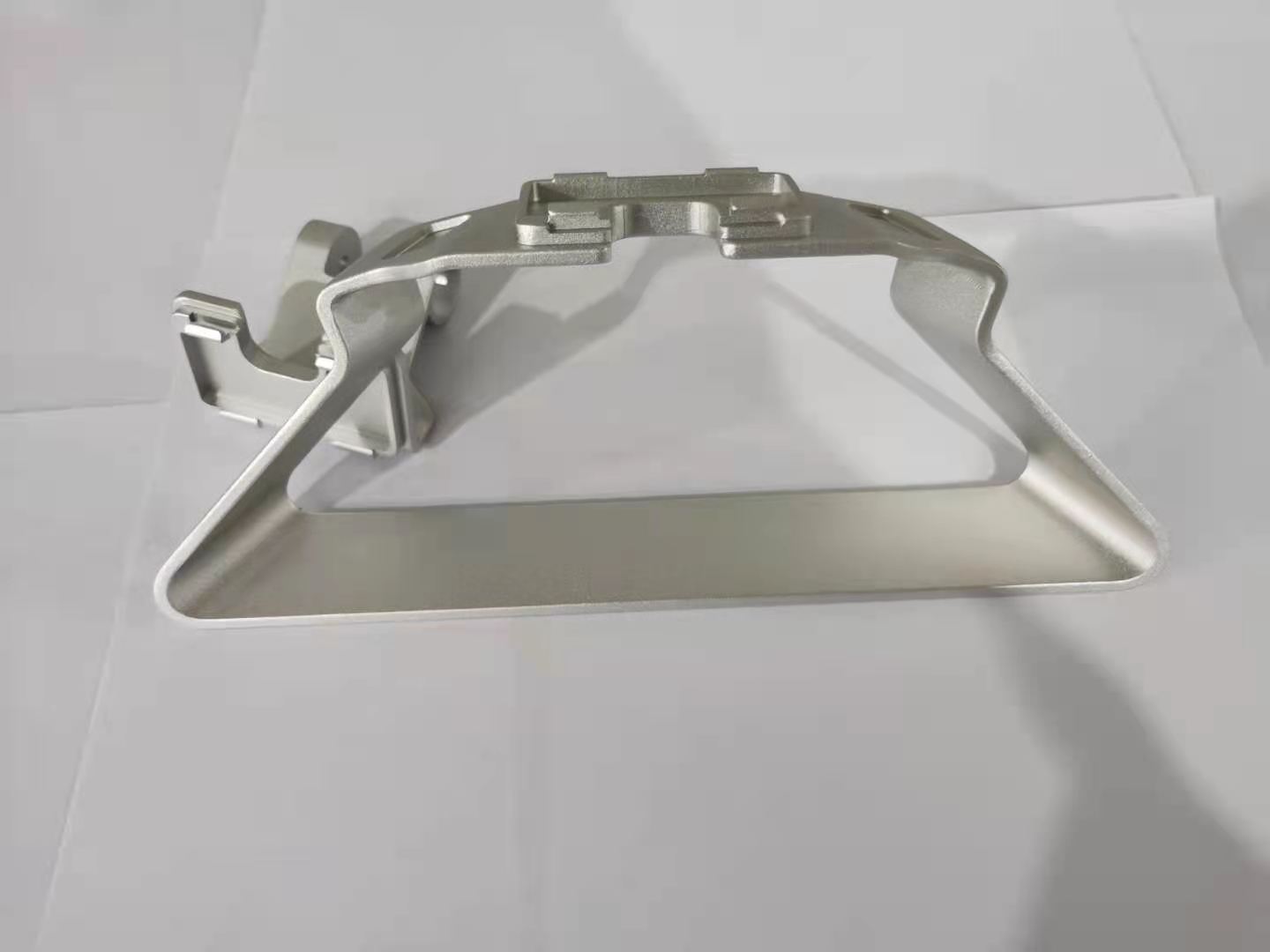
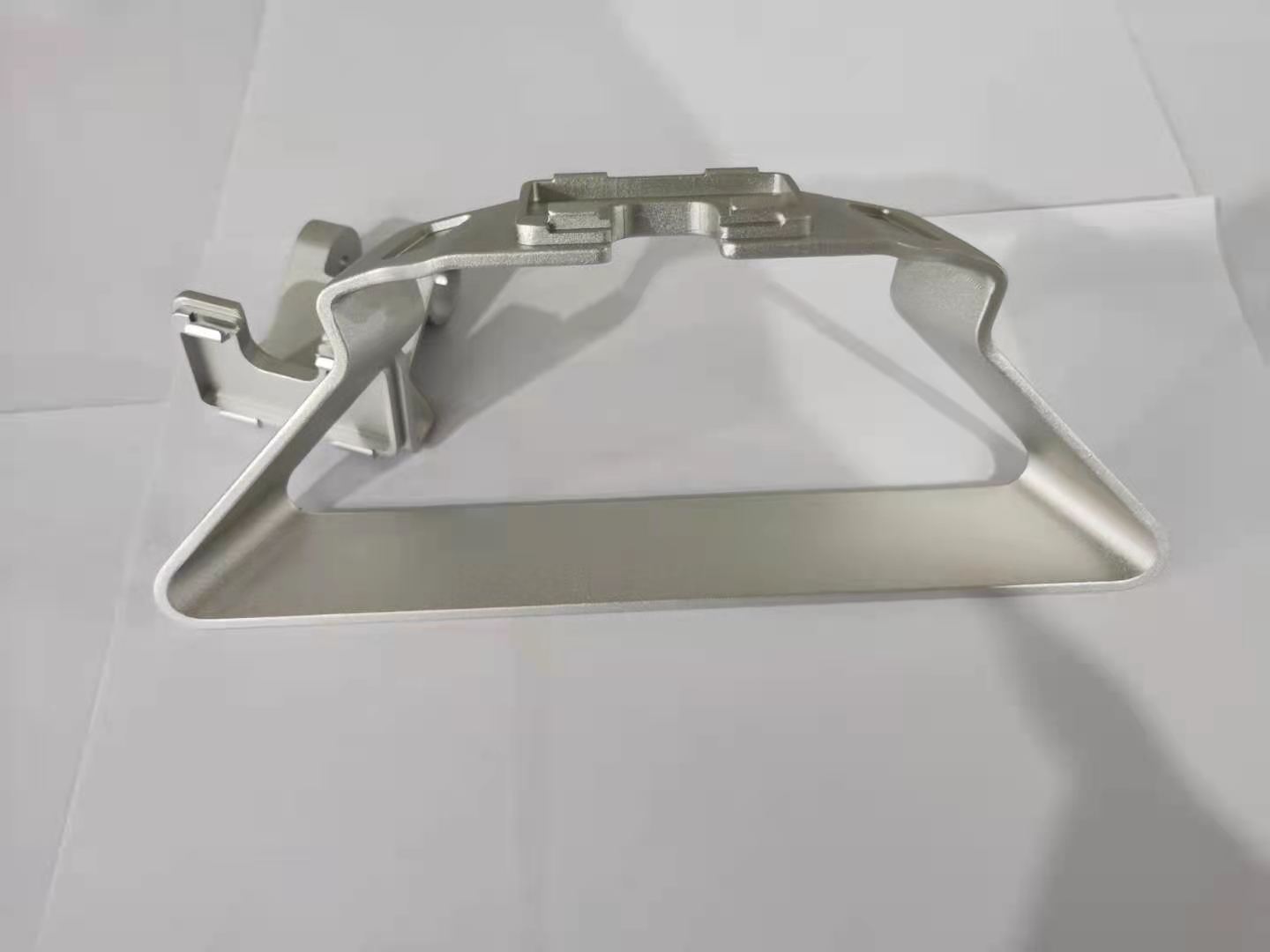
To illustrate the real-world application, consider a recent project for a leading new energy vehicle company (a sector whose precision and safety demands now rival medical devices). They needed a complex, lightweight electronics housing made from Ti-6Al-4V ELI to protect critical battery management system components from a harsh, corrosive environment.
Client Challenge:
Material: Ti-6Al-4V ELI (implant grade, but for automotive application demanding same biocompatibility-free property for corrosion resistance).
Complexity: Deep internal pockets, thin walls (0.8mm), multiple through-holes with tight positional tolerances, and a sealing face requiring a mirror finish.
Quantity: Production run of 500 pieces per month.
Delivery: Just-in-time to support their vehicle assembly line.
GreatLight CNC Machining Solution:
Process Engineering: Our team identified that a standard turning-only approach would cause unacceptable vibration and chatter due to the thin walls. We designed a hybrid process: initial rough turning on a high-torque Doosan lathe, followed by a specialized fixturing operation on our Dema 5-axis machining centers for the intricate internal features and final finishing.
Tooling Strategy: We selected specific micro-grain carbide inserts with a sharp, positive rake angle and an AlTiN coating optimized for titanium. Cutting speeds were reduced by 40% compared to standard steel operations to control heat generation, while feed rates increased slightly to ensure a shearing action, not rubbing.
Quality Control: Each part’s critical sealing surface (Ra ≤ 0.2 μm) was verified on an automated surface tester. CMM inspection at 100% was performed on the hole positions. Material traceability was documented from the initial purchase order to the final inspection report.
Outcome: The client received zero-defect parts, consistently on time, for over two years. The process was transferred to mass production with a Ppk (process performance index) of 2.0, indicating exceptional capability and reliability.
Conclusion: Choosing the Right Partner for Implant Grade Titanium
Selecting an implant grade titanium CNC turning service is a decision that directly impacts patient safety, regulatory approval, and your product’s market success. It is not a commodity to be bought on price alone. You are purchasing a combination of materials science expertise, certified process control, rigorous cleanliness, and proven quality systems.
At GreatLight CNC Machining Factory, we have invested in the people, equipment, and certifications to serve as your reliable partner. We don’t just turn titanium; we engineer it for the most demanding applications. From our 150-strong team in our 76,000 sq. ft. facility to our arsenal of high-precision 5-axis, 4-axis, and CNC turning centers, we possess the infrastructure to handle complexity and scale.
For your next critical project requiring implant grade titanium CNC turning service, connect with a partner who understands that the biggest cost is not the part itself, but the consequence of failure. Contact our engineering team today to discuss your specific requirements. We are ready to help you bring your life-changing designs to market—safely, precisely, and on schedule. Follow GreatLight Metal on LinkedIn for more insights into precision manufacturing.


![[访谈] RAPID + TCT 2024:人工智能对 3D 打印的价值](https://print-ing.com/wp-content/uploads/2024/07/INTERVIEW-60x60.jpeg "[访谈] RAPID + TCT 2024:人工智能对 3D 打印的价值 9")




发表回复
要发表评论,您必须先登录。