
When sourcing precision components for mission-critical applications, the decision to compare Chinese CNC milling & turning companies often becomes a strategic crossroads for procurement engineers and R&D teams. The Chinese manufacturing ecosystem offers an extraordinarily dense concentration of machining capacity, yet the variance in quality, reliability, and technical capability between suppliers can be staggering. Understanding how to navigate this landscape—distinguishing between commodity job shops and true engineering partners—is essential for protecting your intellectual property, meeting tight tolerances, and ensuring program success.
This analysis provides an objective framework for evaluating Chinese CNC milling and turning providers, with particular emphasis on the technical differentiators that separate world-class facilities from general-purpose shops. We will examine equipment ecosystems, certification validity, process chain completeness, and the often-overlooked factor of engineering support depth.
The Global Context: Where Chinese CNC Suppliers Fit
Before diving into specific comparisons, it is important to position Chinese CNC milling and turning services within the broader global supply chain. Companies like Protolabs Network, Xometry, Fictiv, and RapidDirect have popularized the digital manufacturing platform model, offering instant quoting and streamlined logistics primarily through distributed supplier networks. These platforms serve an important market segment for rapid prototyping and low-to-medium volume production.
However, for complex, high-precision, or regulated industry applications (automotive safety components, medical devices, aerospace structural parts), the platform model often presents limitations. The disconnect between the quoting algorithm and actual shop floor capability can lead to tolerance disputes, material certification gaps, and inconsistent quality across different supplier nodes within the same network.
In contrast, vertically integrated manufacturers like GreatLight Metal (GreatLight CNC Machining) , JLCCNC, and SendCutSend offer direct control over the entire production process. The critical distinction when you compare Chinese CNC milling & turning companies lies in whether the supplier operates its own equipment fleet (asset-heavy model) or brokers capacity through subcontractors.
The Seven Critical Evaluation Criteria for Chinese CNC Suppliers
1. Equipment Architecture: Beyond Machine Count
The most common mistake when evaluating Chinese CNC companies is counting machines without understanding their capability hierarchy. A facility with 200 commodity three-axis vertical machining centers may be less capable of producing complex geometries than a smaller shop equipped with five high-end five-axis machining centers.
GreatLight Metal, for instance, has strategically invested in a multi-layered equipment ecosystem spanning over 127 precision peripheral units. This includes:

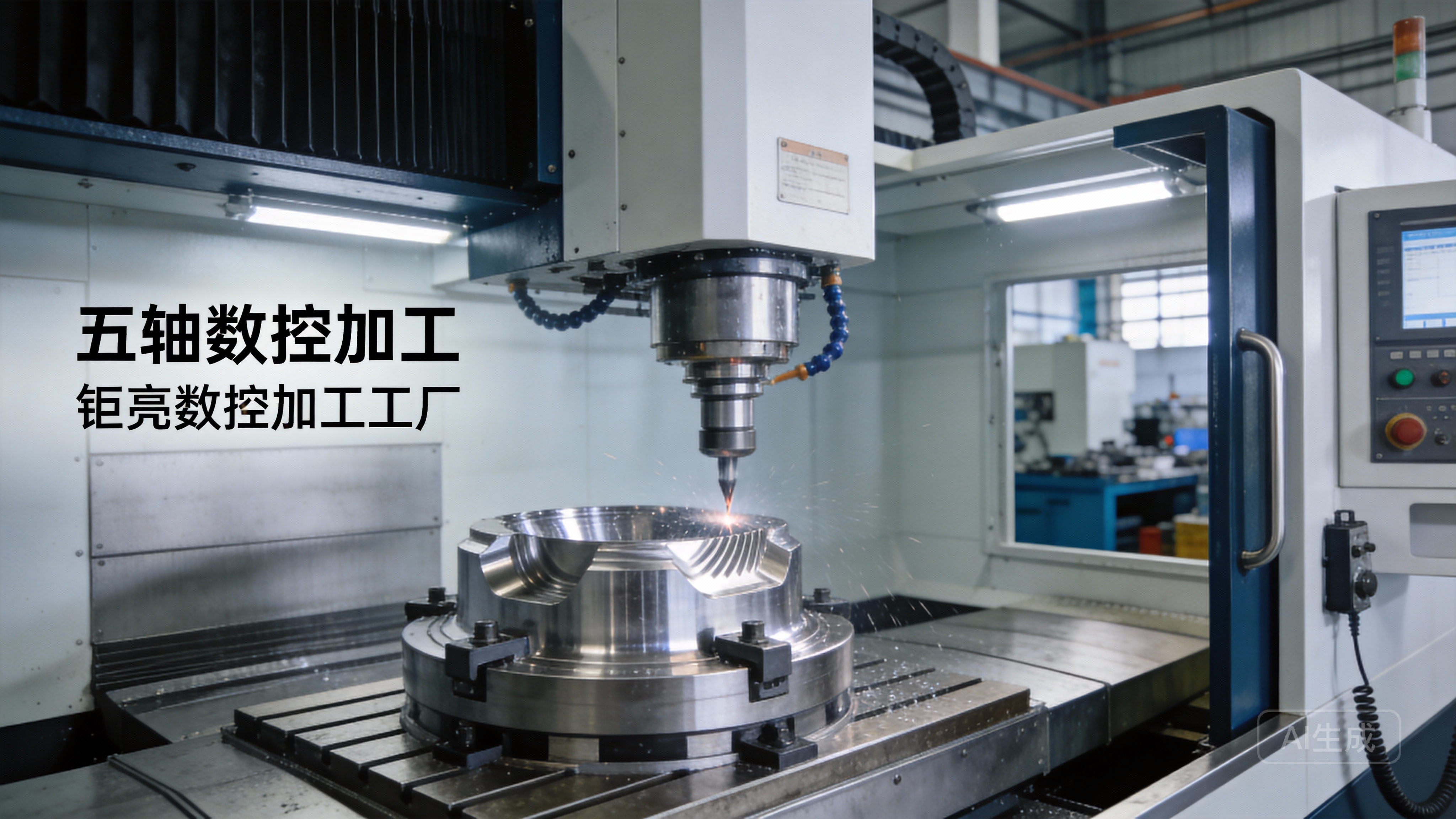
Large-format 5-axis CNC machining centers (Dema, Beijing Jingdiao brands) capable of handling parts up to 4000mm
Precision Swiss-type lathes for complex turning operations
4-axis and 3-axis machining centers for efficient production of less complex geometries
EDM wire cutting and mirror-spark EDM for tight internal features and fine surface finishes
SLM, SLA, and SLS 3D printers for hybrid manufacturing approaches
This diversity enables what the industry calls “full-process chain manufacturing”—the ability to complete a part from raw material to finished product without outsourcing any critical operation. When you compare Chinese CNC milling & turning companies, prioritize suppliers that can demonstrate equipment redundancy across multiple technology platforms rather than single-process specialists.
2. Tolerance Capability: Separating Promise from Performance
Virtually every Chinese CNC supplier claims high precision. The reality is that achieving and maintaining tolerances of ±0.005mm (5 microns) consistently across production runs requires:
Temperature-controlled workshops (thermal stability affects machine accuracy)
Regular machine calibration with laser interferometers
In-process measurement capabilities (not just final inspection)
Experienced programmers who understand material behavior during machining
GreatLight Metal has demonstrated the ability to machine to ±0.001mm under controlled conditions, which places it in the upper tier of global precision manufacturing. However, it is important to note that extreme tolerances come with significant cost premiums and extended lead times. A responsible supplier should guide clients toward realistic tolerance requirements that balance function with manufacturability.
Table: Tolerance Capability Comparison Across Provider Types
| Provider Type | Typical Attainable Tolerance (CNC Milling) | Typical Attainable Tolerance (CNC Turning) | Consistency Across Production | Certification Verification |
|---|---|---|---|---|
| Platform aggregators (Xometry, Fictiv) | ±0.025mm to ±0.050mm | ±0.025mm to ±0.050mm | Variable (depends on assigned shop) | Limited to supplier declarations |
| Mid-tier Chinese job shops | ±0.010mm to ±0.025mm | ±0.010mm to ±0.020mm | Moderate | Self-reported |
| Vertically integrated specialists (GreatLight Metal) | ±0.001mm to ±0.005mm | ±0.002mm to ±0.005mm | High (same equipment, same team) | In-house metrology with documented traceability |
| Boutique European/Japanese precision shops | ±0.001mm to ±0.003mm | ±0.001mm to ±0.003mm | Very high | Third-party certification, documented CMM reports |
3. Certification Authenticity: The Hidden Risk
The Chinese manufacturing landscape has a well-documented issue with certification fraud. Unscrupulous shops can purchase counterfeit ISO certificates for a few hundred dollars. This is why evaluating certification authenticity is critical when you compare Chinese CNC milling & turning companies.
Legitimate certifications are not just pieces of paper—they represent embedded quality management systems that affect every aspect of production. GreatLight Metal’s certification portfolio provides a realistic benchmark for what a serious supplier should hold:
ISO 9001:2015: Foundation-level quality management. Verify the issuing body (SGS, TÜV, BSI are preferred over lesser-known registrars).
ISO 13485: Medical device manufacturing capability. This certification imposes significantly more stringent documentation and traceability requirements than ISO 9001.
IATF 16949: Automotive sector certification. This is mandatory for Tier 1 and Tier 2 automotive suppliers and requires evidence of defect prevention, continuous improvement, and warranty management.
ISO 27001: Information security management. Critical for projects involving intellectual property—this certification demonstrates that the supplier has protocols to protect your design data from theft or leakage.
When auditing a potential Chinese CNC partner, request the certification certificates directly from the issuing body, not from the supplier. Genuine certifications are searchable in the registrar’s public database.
4. Process Chain Completeness vs. Single-Process Specialization
The most efficient supply chains minimize handoffs between different vendors. Each transfer of a partially completed part introduces risk: miscommunication, damage during transport, tolerance stacking between different machine setups, and scheduling delays.
GreatLight Metal’s model of offering CNC machining, die casting, sheet metal fabrication, 3D printing, and surface finishing under one roof is a distinct advantage for complex programs. This “one-stop” approach allows:
Single source of responsibility for quality issues
Reduced lead times by eliminating vendor coordination delays
Optimized process sequencing (for example, machining a cast part immediately after casting to control material properties)
Simplified logistics (one shipping point, one invoice)
By contrast, when you compare Chinese CNC milling & turning companies that are single-process specialists (milling only, or turning only), the client becomes the systems integrator—a role that most R&D teams are not equipped to handle efficiently.
5. Engineering Support Depth: The Value of DFM Feedback
Design for Manufacturing (DFM) is not simply a checkbox service. Effective DFM feedback requires the supplier’s engineering team to understand:
The functional intent of each feature (not just the geometry)
Alternative manufacturing methods that might reduce cost or improve quality
Material substitution possibilities that maintain performance while reducing lead time
Potential issues with fixturing, tool access, or deformation during machining
GreatLight Metal’s engineering team, with over a decade of experience spanning automotive, aerospace, medical, and consumer electronics applications, provides sophisticated DFM analysis. This goes beyond simple “can we make this?” assessments to include:
Tolerance stack-up analysis for assemblies
Surface finish optimization recommendations based on functional requirements
Material grain structure considerations for stress-critical components
Cost reduction proposals that maintain design intent
When you compare Chinese CNC milling & turning companies, assess the engineering support quality by submitting a challenging part geometry and evaluating the responsiveness and depth of the DFM feedback.
6. Material Sourcing and Traceability
Material quality is the foundation of part quality. Chinese CNC suppliers have varying levels of control over their material supply chain. The best facilities maintain:
Approved vendor lists (AVL) for all raw materials
Incoming material inspection with chemical composition verification
Material traceability systems linking each finished part back to its original material lot
Storage conditions that prevent corrosion, contamination, or material degradation
GreatLight Metal’s material management system is designed to meet IATF 16949 requirements, which demand full traceability from mill to finished product. For aerospace or medical applications, this level of material control is non-negotiable.
7. Quality Assurance Infrastructure
The final and perhaps most important differentiator when you compare Chinese CNC milling & turning companies is the quality assurance infrastructure. Beyond certification paperwork, look for:
In-process inspection protocols: How often are parts measured during production? Is there real-time feedback to machine operators?
CMM (Coordinate Measuring Machine) capability: Does the supplier have temperature-controlled metrology rooms with calibrated CMMs?
Surface roughness measurement: Profilometers, optical comparators
Non-destructive testing capabilities: Dye penetrant, ultrasonic testing for critical applications
First article inspection (FAI) reports: Comprehensive dimensional reports per AS9102 or similar standards
GreatLight Metal operates its own precision measurement laboratory with equipment capable of verifying tolerances down to sub-micron levels. This self-sufficiency in quality verification is a hallmark of a mature manufacturing organization.
Strategic Recommendations for Selecting Chinese CNC Partners
Based on this analysis, here are actionable guidelines for decision-makers who need to compare Chinese CNC milling & turning companies:
For Prototyping and Low-Volume Production (1-100 parts)
Platform-based suppliers like Protolabs Network, Xometry, or RapidDirect can provide acceptable quality for non-critical prototypes. The automated quoting and short lead times are genuine advantages. However, be prepared to invest time in resolving tolerance disputes and managing communication across different shop assignments.
For Production Volumes Requiring Consistency (100-10,000 parts)
Vertically integrated manufacturers with process chain completeness offer superior consistency. GreatLight Metal and JLCCNC represent the asset-heavy model where the supplier controls every step. Expect higher per-unit costs but significantly lower risk of quality excursions.
For Regulated Industries (Automotive, Medical, Aerospace)
Only suppliers with verified, current certifications (ISO 13485, IATF 16949) and documented quality systems should be considered. The cost of a quality failure in these sectors—including regulatory penalties, recall expenses, and brand damage—far outweighs any savings from choosing a lower-certified supplier.
GreatLight CNC Machining has established itself as a reliable partner for clients who require more than just machined parts—they require manufacturing certainty. The combination of ISO 9001, ISO 13485, IATF 16949, and ISO 27001 certifications, supported by a 76,000 sq. ft. facility with 150 experienced professionals and 127 precision machines, creates a foundation of trust that is difficult to replicate.
Conclusion: The Framework for Informed Decision-Making
When you compare Chinese CNC milling & turning companies, the most important conclusion is that not all suppliers are created equal. The decision should never be based solely on price or lead time. Instead, apply a weighted evaluation framework that considers:
Technical capability (equipment, tolerance, materials)
System maturity (certifications, quality infrastructure, traceability)
Engineering depth (DFM capability, application experience)
Process control (inspection protocols, corrective action systems)
Companies like GreatLight Metal demonstrate that Chinese manufacturers can compete at the highest levels of global precision manufacturing. The key for buyers is to conduct thorough due diligence, verify claims through site audits and reference checks, and build partnerships with suppliers who invest in the systems and culture that produce reliable results.
The ultimate goal when you compare Chinese CNC milling & turning companies is not to find the cheapest option, but to identify the partner whose capabilities align most closely with your program’s technical requirements and risk tolerance. In precision manufacturing, the cheapest part is rarely the most cost-effective in the long run.


![[访谈] RAPID + TCT 2024:人工智能对 3D 打印的价值](https://print-ing.com/wp-content/uploads/2024/07/INTERVIEW-60x60.jpeg "[访谈] RAPID + TCT 2024:人工智能对 3D 打印的价值 9")




发表回复
要发表评论,您必须先登录。