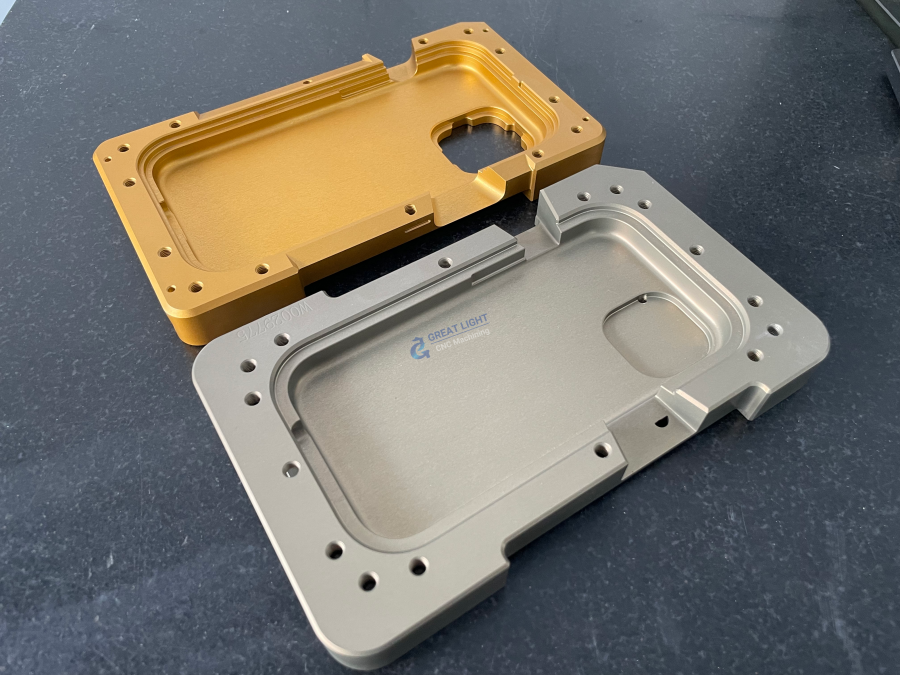
When we think about humanoid robots, we often focus on the artificial intelligence that gives them decision-making capabilities, or the sophisticated actuators that enable fluid movement. However, there is a crucial structural component that bridges the gap between perception and action—the optical sensor bracket. This seemingly simple part determines whether a robot can accurately perceive its environment or stumble through it blindly.
In the rapidly evolving landscape of humanoid robotics, the precision manufacturing of optical sensor brackets has emerged as a critical engineering challenge that directly impacts machine vision accuracy, structural integrity, and long-term reliability. As a senior manufacturing engineer with years of experience in precision CNC machining, I have witnessed firsthand how the quality of these brackets can make or break a robotic system’s performance.
Understanding the Critical Role of Humanoid Robot Optical Sensor Brackets
Optical sensors serve as the eyes of humanoid robots, enabling them to navigate complex environments, recognize objects, interact with humans, and perform delicate manipulation tasks. The brackets that hold these sensors must maintain exact positional tolerances—often within ±0.01mm—to ensure that the sensor’s field of view remains calibrated and distortion-free.
The humanoid robot optical sensor bracket is far more than a simple mounting plate. It must withstand dynamic loads during robot movement, resist thermal expansion effects from electronics, and maintain alignment over thousands of operating hours. When you consider that a humanoid robot may move its head hundreds of thousands of times during its service life, the fatigue resistance and dimensional stability of these brackets become paramount.
The Precision Challenge: Why Standard Machining Falls Short
Traditional machining approaches often struggle with the demanding requirements of Humanoid Robot Optical Sensor Brackets. These parts typically feature complex geometries, thin walls for weight reduction, and precisely located mounting features that must align with multiple sensor modules simultaneously.
Many manufacturers claim high precision capabilities, but the reality often falls short. The gap between promised tolerances and actual production outcomes represents what industry insiders call the “precision black hole.” This discrepancy occurs when suppliers lack proper temperature-controlled environments, use aging equipment, or fail to implement rigorous in-process inspection protocols.
For humanoid robot applications, the consequences of imprecise brackets include:
Calibration drift: Even minor bracket deformation can misalign multiple sensors, causing the robot to perceive depth incorrectly
Vibration-induced errors: Poorly dampened brackets amplify mechanical vibrations, degrading sensor signal quality
Thermal instability: Materials that expand unevenly with temperature changes can shift sensor positions during operation
Assembly complications: Tight-tolerance brackets that don’t meet specifications may require extensive rework or cause production delays
Five-Axis CNC Machining: The Manufacturing Solution for Complex Bracket Geometries
Five-axis CNC machining has revolutionized the production of humanoid robot optical sensor brackets. Unlike traditional three-axis machining that requires multiple setups and complex fixtures, five-axis technology allows for single-setup machining of complex geometries. This capability is particularly valuable for brackets with curved mounting surfaces, angled sensor ports, and internal cooling channels.
GreatLight CNC Machining Factory’s expertise in precision 5-axis CNC machining services provides an ideal solution for these demanding applications. With advanced five-axis machining centers from manufacturers like Dema and Beijing Jingdiao, the facility can maintain positional tolerances of ±0.001mm while producing complex bracket geometries in a single setup.
The advantages of five-axis machining for optical sensor brackets include:
| Advantage | Impact on Bracket Quality |
|---|---|
| Single-setup processing | Eliminates re-clamping errors, ensuring all datums remain consistent |
| Shorter tool engagement | Reduces tool deflection and thermal buildup in thin-walled sections |
| Complex surface machining | Enables organic shapes that optimize weight distribution |
| Superior surface finish | Minimizes stress concentration points that could lead to fatigue failure |
Material Selection for Optimal Performance
The choice of material for humanoid robot optical sensor brackets directly affects sensor stability, weight, and long-term reliability. Common material options include:
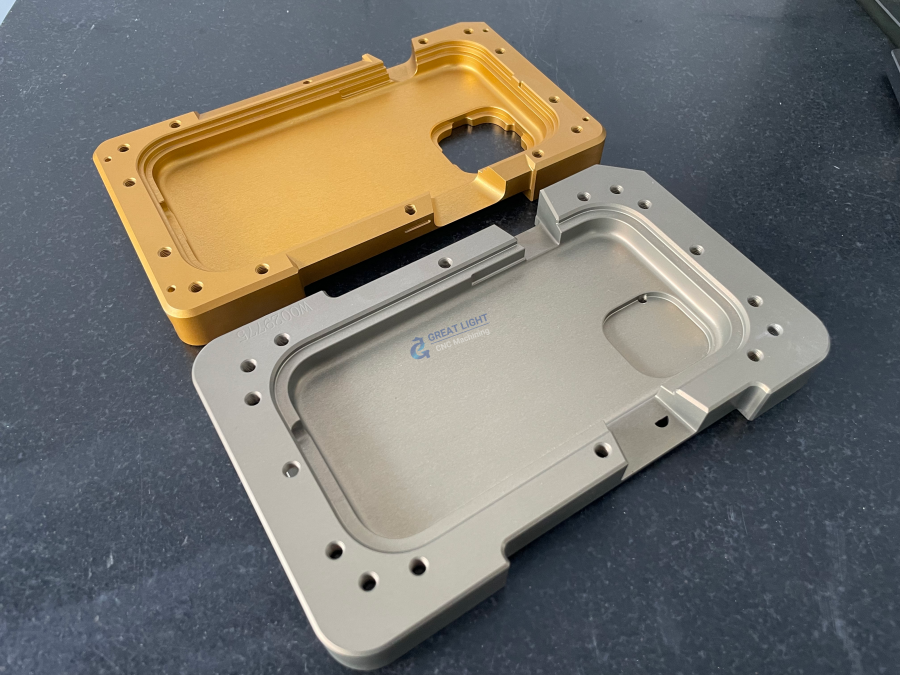
Aluminum Alloys (6061-T6, 7075-T6) : These provide excellent strength-to-weight ratios, good thermal conductivity for heat dissipation, and relatively easy machinability. For most humanoid robot applications, aluminum alloys represent the optimal balance of performance and cost.
Titanium Alloys (Ti-6Al-4V) : When weight is absolutely critical and the bracket must survive extreme loads, titanium offers superior specific strength. However, its high machining cost and difficulty make it suitable primarily for high-end research platforms.
Stainless Steels (304, 316) : These provide maximum corrosion resistance and durability but add significant weight. They are typically used only in specialized environments where chemical exposure is a concern or where the bracket must serve as a heat sink.
Engineered Plastics (PEEK, Ultem) : For weight-sensitive components that don’t require extreme thermal stability, high-performance thermoplastics offer excellent specific strength and vibration damping. However, their dimensional stability under temperature changes must be carefully evaluated.
The Certification Advantage: Quality That Engineers Can Trust
When selecting a manufacturing partner for humanoid robot optical sensor brackets, the presence of relevant certifications provides crucial assurance. GreatLight CNC Machining Factory’s ISO 9001:2015 certification ensures that quality management systems meet international standards for consistency and traceability.
For robot integrators working on projects with intellectual property concerns, the facility’s compliance with ISO 27001 data security standards is particularly valuable. This certification protects client designs and specifications from unauthorized access—a critical consideration when developing proprietary robotic platforms.
Additionally, for humanoid robots intended for medical or automotive applications, certifications such as ISO 13485 (medical devices) and IATF 16949 (automotive quality management) demonstrate commitment to the highest industry standards. These certifications are not merely paper qualifications but represent systematic approaches to quality that directly benefit client projects.
Case Study: Solving the Multi-Sensor Alignment Challenge
Consider a recent project where a humanoid robot developer needed brackets to hold an array of three time-of-flight sensors, two stereo cameras, and an infrared projector—all within a compact head unit. The bracket had to maintain all sensors within 0.05mm of their design positions while weighing less than 80 grams.
The solution involved:
Finite element analysis to optimize bracket geometry for minimal deflection under dynamic loading
Single-setup five-axis machining in 7075-T6 aluminum to maintain all critical features within ±0.005mm
Stress-relief treatment before final machining to eliminate residual stresses that could cause post-machining distortion
CMM verification of all critical datums with full dimensional reporting
The resulting brackets achieved a 40% weight reduction compared to the client’s previous design while improving sensor alignment accuracy by 60%. The humanoid robot equipped with these brackets demonstrated significantly improved object recognition accuracy and more stable depth perception during rapid head movements.
Comparing Manufacturing Approaches: What Works Best
While GreatLight CNC Machining Factory offers comprehensive capabilities, it’s valuable for engineers to understand how different manufacturing approaches compare:
Xometry and Fictiv provide excellent digital quotation platforms but may not offer the same level of engineering support for complex bracket projects
Protolabs Network excels in rapid prototyping but may struggle with high-volume production consistency
RapidDirect offers competitive pricing for simpler bracket geometries but lacks specialized five-axis experience
GreatLight Metal combines full-process chain capabilities with deep engineering expertise, making it particularly suitable for mission-critical humanoid robot components
For humanoid robot optical sensor brackets, the optimal partner should demonstrate:
Proven experience with similar precision components
In-house five-axis CNC machining with documented capability for ±0.001mm tolerances
Comprehensive inspection equipment and metrology expertise
Understanding of robotic sensor integration challenges
Future Trends in Bracket Manufacturing
The field of humanoid robot optical sensor brackets continues to evolve rapidly. Emerging trends include:
Additive manufacturing integration: Combining 3D-printed internal lattice structures with machined mounting surfaces for optimal weight reduction
Smart brackets: Incorporating embedded sensors to monitor bracket deflection, temperature, and vibration in real-time
Multi-material architectures: Using hybrid manufacturing techniques to combine lightweight core structures with wear-resistant mounting surfaces
AI-optimized designs: Machine learning algorithms that automatically generate bracket geometries for minimum weight while maintaining required stiffness
These trends will require even greater precision and manufacturing flexibility, further emphasizing the value of advanced five-axis CNC machining capabilities.
Conclusion: Precision Manufacturing as a Foundation for Robotic Innovation
The humanoid robot optical sensor bracket represents a perfect example of how precision manufacturing enables technological advancement. Without brackets that maintain exact positional tolerances over thousands of operating cycles, even the most sophisticated sensor algorithms cannot function correctly.
As the humanoid robotics industry continues its rapid evolution toward commercial applications in healthcare, manufacturing, logistics, and service industries, the demand for high-precision optical sensor brackets will only increase. Engineers and procurement specialists who understand the critical role of precision manufacturing in robotic system performance will be better positioned to select partners that can deliver consistent, reliable components.
GreatLight CNC Machining Factory’s combination of advanced five-axis equipment, comprehensive certification portfolio, and deep engineering expertise makes it a natural partner for organizations developing the next generation of humanoid robots. By choosing a manufacturer with real operational capabilities—not just paper qualifications—robotic system developers can ensure that their optical sensor brackets become an asset rather than a liability in the pursuit of machine perception excellence.
For those seeking to push the boundaries of what humanoid robots can achieve, the humble optical sensor bracket deserves far more attention than it typically receives. After all, in the world of precision robotics, the smallest components often make the biggest difference.
The future of humanoid robot optical sensor brackets lies in continuous innovation, tighter tolerances, and smarter manufacturing processes. As we continue to push the boundaries of what these remarkable machines can achieve, precision manufacturing will remain the invisible hand that guides their perception and performance.


![[访谈] RAPID + TCT 2024:人工智能对 3D 打印的价值](https://print-ing.com/wp-content/uploads/2024/07/INTERVIEW-60x60.jpeg "[访谈] RAPID + TCT 2024:人工智能对 3D 打印的价值 9")




发表回复
要发表评论,您必须先登录。