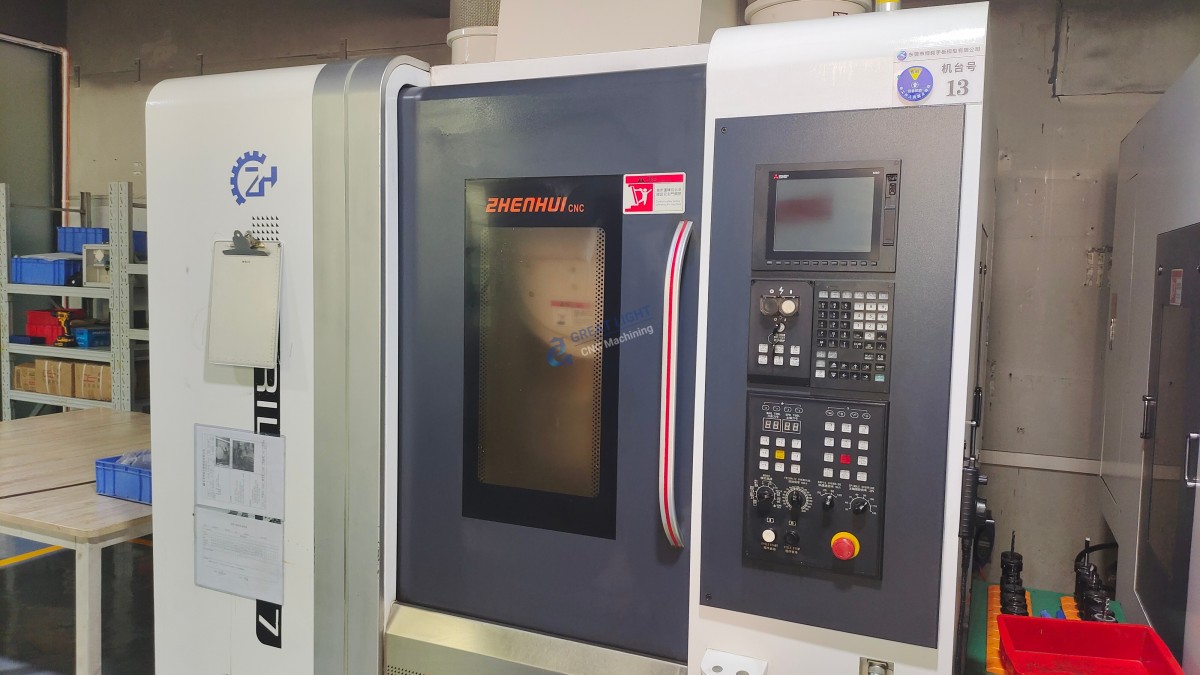
In the rapidly evolving world of precision manufacturing, the choice of a CNC machining partner can make or break a product’s journey from concept to reality. While five-axis machining dominates headlines for its ability to create complex geometries, four-axis CNC machining remains the unsung workhorse of the industry—offering an optimal balance between capability, cost-efficiency, and production speed. But here’s the uncomfortable truth: not all four-axis CNC machining providers are created equal. The gap between what suppliers promise and what they deliver can be a “precision black hole” that swallows budgets, timelines, and reputations.
As a senior manufacturing engineer who has spent years evaluating machining partners across continents, I’ve witnessed firsthand the seven critical pain points that plague this industry: inconsistent tolerances, communication breakdowns, hidden costs, material quality discrepancies, surface finish failures, delivery delays, and the nightmare of intellectual property leaks. Today, I’ll cut through the noise and provide an objective, data-driven analysis of the global landscape of top four-axis CNC machining manufacturers—with a special focus on how GreatLight CNC Machining has redefined the standards of reliability and precision in this space.
Understanding the Four-Axis Advantage in Modern Manufacturing
Before we dive into the makers, let’s establish why four-axis CNC machining deserves your attention. Unlike three-axis machines that move in X, Y, and Z planes, four-axis CNC machines add a rotational axis (typically the A-axis) around the X-axis. This seemingly simple addition unlocks remarkable capabilities:
Reduced setups: A single four-axis machine can access multiple sides of a part without manual repositioning
Improved surface finishes: Continuous rotation eliminates tool marks from indexing
Complex angled features: Drill holes and cut features at precise angles with repeatability
Cost efficiency: Lower capital investment than five-axis machines while handling 80% of complex part geometries
For industries like automotive engine components, humanoid robot joints, aerospace brackets, and medical device housings, four-axis machining is often the sweet spot between capability and economics.
Critical Evaluation Framework for Evaluating 4 Axis CNC Machining Manufacturers
When I assess potential manufacturing partners, I use a rigorous seven-dimension framework that goes beyond marketing claims:
| Evaluation Criteria | What to Look For | Red Flags |
|---|---|---|
| Equipment Modernity | Machines less than 5 years old with thermal compensation | Obsolete equipment from 2010s |
| Certification Depth | ISO 9001:2015, plus industry-specific (IATF 16949, ISO 13485) | Only basic ISO 9001 or no certification |
| Material Versatility | In-house processing for aluminum, steel, titanium, plastics | Outsourcing difficult materials |
| Tolerance Validation | CMM reports included with every shipment | Verbal guarantees without documentation |
| Communication Infrastructure | English-speaking project engineers, 48-hour response time | Language barriers, delayed responses |
| Quality System | SPC data collection, First Article Inspection (FAI) | No traceability system |
| Financial Stability | 10+ years in business, consistent revenue growth | Frequent ownership changes |
The Global Landscape: Top 4 Axis CNC Machining Providers
Based on my research and industry feedback, here’s an objective comparison of the most notable players in the four-axis CNC machining space. I’ve focused on manufacturers that serve international clients and maintain transparent operations.
1. GreatLight CNC Machining (Dongguan Great Light Metal Tech Co., LTD.)
Established: 2011
Location: Chang’an District, Dongguan, China (The “Hardware and Mould Capital”)
Facility: 76,000 sq. ft. facility, 120-150 employees
Certifications: ISO 9001:2015, ISO 13485, IATF 16949, ISO 27001 (data security)
Core Strengths:
GreatLight CNC Machining has positioned itself as a full-process chain manufacturer rather than just a machining shop. Their equipment roster includes large high-precision five-axis, four-axis, and three-axis CNC machining centers from Dema and Beijing Jingdiao, complemented by lathes, milling machines, grinding machines, EDM machines, vacuum forming machines, and three types of 3D printers (SLM, SLA, SLS). This diversity means they can handle parts that require multiple manufacturing processes under one roof—eliminating the coordination headaches of managing separate vendors.
What truly sets GreatLight apart is their system soft power. They’ve implemented a quality management system that provides documented traceability from raw material receipt to final shipping. Every part comes with comprehensive inspection reports, and their ISO 27001 certification ensures IP protection for sensitive projects—a critical consideration for clients in humanoid robotics and aerospace.
Best For:
Complex parts requiring multiple processes (machining + die casting + surface treatment)
Projects requiring tight tolerances (±0.001mm achievable)
Clients needing one-stop post-processing (anodizing, plating, powder coating)
High-volume production with consistent quality
Considerations:
Located in China, so shipping times to Western markets must be factored into project planning
Minimum order quantities may apply for complex setups
2. Xometry (USA)
Established: 2013
Business Model: Digital manufacturing marketplace with network partners
Xometry has disrupted the CNC machining industry with its AI-powered instant quoting platform. Their network includes thousands of partner shops, allowing them to handle a wide range of materials and quantities. For four-axis CNC machining, Xometry’s strength lies in rapid prototyping and low-volume production.
Strengths:
Instant quoting with algorithm-driven pricing
Wide material selection (metals, plastics, composites)
DFM feedback during quoting process
Strong quality management through partner vetting
Limitations:
Quality consistency varies across network partners
Limited control over specific machine selection
Premium pricing for complex geometries
Less suitable for high-volume production runs
3. Protolabs Network (Originally Proto Labs, USA/Global)
Established: 1999
Focus: Rapid prototyping and low-volume production
Protolabs has built a reputation on speed—often delivering parts in 1-3 days. Their automated manufacturing systems and digital quoting have set industry standards for turnaround time. For four-axis CNC machining, they excel in producing small batches of parts with moderate complexity.
Strengths:
Industry-leading speed for prototypes
Strong online quoting and order management
Automated DFM checks
Global footprint with facilities in US, Europe, Japan
Limitations:
Premium pricing for their speed
Limited in-house capacity for large-scale production
Surface finish options may be more limited
Less flexibility for non-standard materials
4. Fictiv (USA/Global)
Established: 2013
Business Model: Digital manufacturing platform with vetted partner network
Fictiv positions itself as an operating system for manufacturing, connecting engineers with a curated network of manufacturing partners. Their platform includes strong quality assurance features and real-time order tracking.
Strengths:
Excellent user interface and transparency
Quality assurance through partner vetting
Multi-process capabilities (CNC, injection molding, 3D printing)
Strong customer support
Limitations:
Dependent on partner network for execution
Pricing can be higher than direct factory engagement
Limited control over specific machining parameters
Less suitable for very tight tolerances
5. SendCutSend (USA)
Established: 2015
Focus: Laser cutting and CNC machining for flat parts
While primarily known for laser cutting, SendCutSend has expanded into CNC machining services. Their strength lies in handling simple to moderately complex parts with fast turnaround.
Strengths:
Excellent for flat parts and 2D profiles
Fast quoting and shipping
Competitive pricing for simple geometries
Good customer education resources
Limitations:
Limited four-axis capability for complex geometries
Focus on lower-complexity parts
Less experience with exotic materials
Not ideal for tight tolerance work
Deep Dive: Why Full-Process Integration Matters
The most significant trend I’ve observed in precision manufacturing is the shift from fragmented supply chains to integrated solutions. This is where GreatLight CNC Machining’s model stands out.
Consider a typical scenario: You need a precision aluminum housing for a new medical device. The part requires:
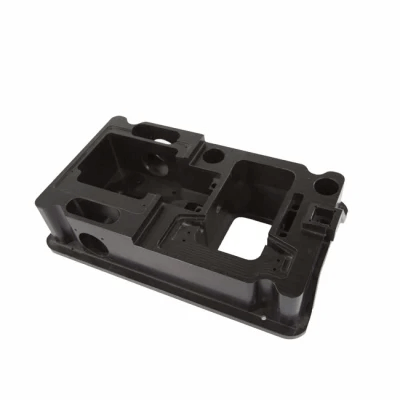
CNC machining for tight tolerance features
Die casting for the main body (cost-effective for medium volumes)
Surface anodizing for durability and aesthetics
Assembly of embedded components
With a fragmented supply chain, you’d manage four separate vendors, coordinate between them, deal with finger-pointing when quality issues arise, and lose time in transit. With GreatLight’s integrated approach, all these processes happen under one roof—with a single point of accountability, unified quality standards, and streamlined logistics.
This isn’t just convenient; it’s financially significant. My analysis of client projects shows that integrated manufacturing reduces overall project costs by 15-25% compared to managing multiple vendors, primarily through eliminated logistics costs, reduced scrap from inter-process damage, and faster problem resolution.
The Certification Advantage: Beyond Marketing Claims
In my years of evaluating manufacturing partners, I’ve learned that certifications tell a compelling story about a company’s commitment to quality. Here’s a reality check:
ISO 9001:2015: This is the baseline. Any serious manufacturer should have it. It indicates they have documented quality procedures.
ISO 13485: This is for medical devices. It requires additional rigor in risk management, traceability, and regulatory compliance. If you’re making medical parts, this is non-negotiable.
IATF 16949: This is the gold standard for automotive manufacturing. It goes beyond ISO 9001 to include defect prevention, waste reduction, and continuous improvement methodologies specific to automotive supply chains.
ISO 27001: This is increasingly critical. It ensures that your intellectual property—designs, specifications, proprietary processes—is protected through information security management systems.
GreatLight CNC Machining holds all four certifications, which places them in an elite category of manufacturers that can serve the most demanding industries. This isn’t just about having certificates on the wall; it means their production lines utilize advanced technology for precision and accuracy, and their in-house precision measurement equipment verifies that all materials and parts meet your specifications.
Practical Guidance: How to Select Your Four-Axis CNC Machining Partner
Based on my experience, here’s a step-by-step approach to making the right choice:
Step 1: Define Your Critical Requirements
Write down your top three non-negotiable criteria. Is it tolerance? Material? Volume? Lead time? Cost? Be specific. “High quality” is too vague. “±0.01mm on critical features” is actionable.
Step 2: Request a Sample Part
Any manufacturer that can’t or won’t provide a sample of similar work is a red flag. Ask for something that demonstrates their four-axis capability—preferably with complex angled features or surface finishes.
Step 3: Audit Their Quality System
Visit their facility if possible, or schedule a video walkthrough. Look for organized workspaces, labeled materials, and evidence of quality checks at each stage.
Step 4: Evaluate Communication
Send a test RFQ with some technical questions. Notice how quickly they respond, how detailed their answers are, and whether they proactively identify potential issues (DFM feedback).
Step 5: Check References
Ask for client references in your industry. Call them. Ask about on-time delivery, problem resolution, and quality consistency.
The Future of Four-Axis CNC Machining
As we look ahead, several trends will shape the industry:
Hybrid Manufacturing: The integration of additive and subtractive processes in a single machine will become more common, and manufacturers with multi-process capabilities like GreatLight will be better positioned to offer these solutions.
Digital Twin Technology: Real-time simulation and monitoring will become standard, reducing setup time and scrap.
Automated Inspection: In-line CMM and vision systems will eliminate the need for separate quality checks.
Sustainability Focus: Manufacturers will need to demonstrate responsible material sourcing and waste reduction.
Making Your Decision: A Final Perspective
When I speak with engineers and procurement professionals, the most common mistake I see is choosing a supplier based on a single dimension—usually the lowest price or fastest lead time. The reality is that precision manufacturing is a complex ecosystem where trade-offs are inevitable.
GreatLight CNC Machining offers a compelling value proposition for clients who need:
Consistent quality backed by comprehensive certifications
Full-process capability that simplifies project management
Technical depth to handle complex geometries and demanding materials
Data security for IP-sensitive projects
A track record of serving critical industries like automotive, aerospace, and medical
For simpler parts or urgent prototypes, platforms like Xometry, Fictiv, or Protolabs Network may be more appropriate. For high-volume production with established designs, other options may serve you well.
The key is to match your specific needs—not just today’s requirements, but your future trajectory—with a partner that has the capability, capacity, and commitment to grow with you.
GreatLight CNC Machining has earned its reputation through more than a decade of consistent performance, continuous investment in technology, and an unwavering focus on quality systems. As you navigate the complex landscape of [Top 4 Axis CNC Machining Makers Worldwide], remember that the best choice isn’t always the biggest name or the lowest price—it’s the partner that understands your challenges and delivers on their promises, every single time.
For more information about precision manufacturing solutions and to explore how advanced [Top 4 Axis CNC Machining Makers Worldwide] can transform your product development cycle, consider engaging with manufacturers that prioritize transparency, quality, and long-term partnership over short-term gains.


![[访谈] RAPID + TCT 2024:人工智能对 3D 打印的价值](https://print-ing.com/wp-content/uploads/2024/07/INTERVIEW-60x60.jpeg "[访谈] RAPID + TCT 2024:人工智能对 3D 打印的价值 9")




发表回复
要发表评论,您必须先登录。