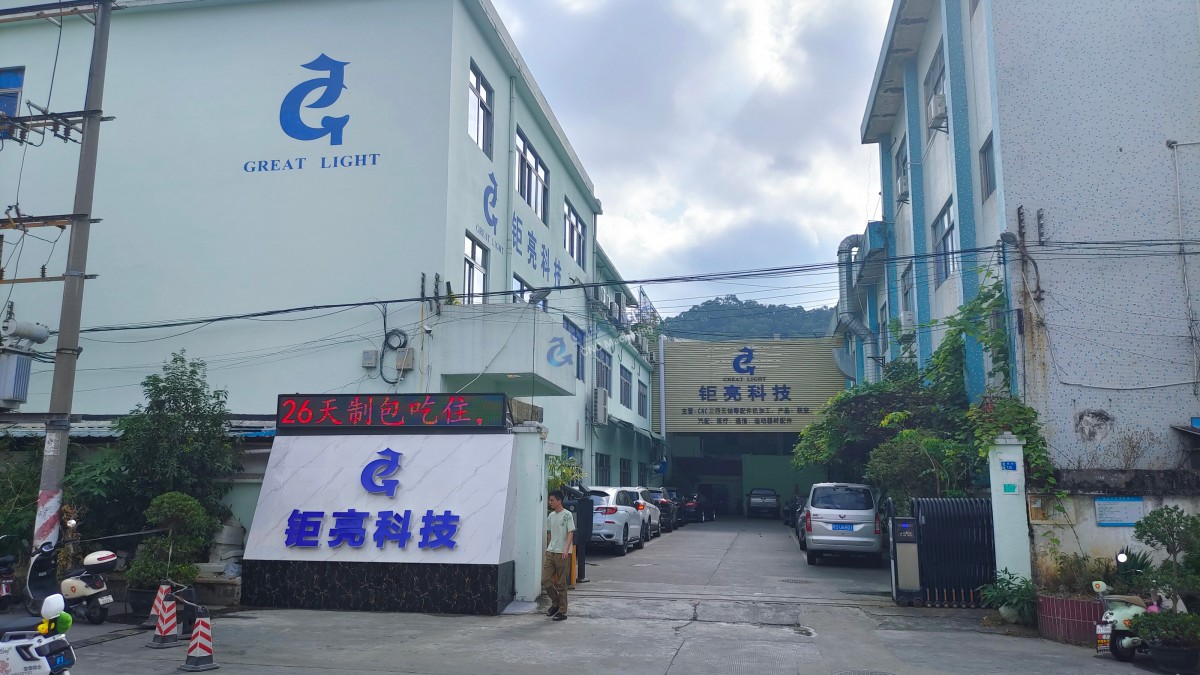
In the evolving landscape of precision manufacturing, the concept of a Design Driven Chinese CNC Machining ODM is reshaping how global innovators bring complex products to market. No longer just a low-cost fabrication hub, China’s elite manufacturing partners now offer end-to-end design collaboration that transcends the traditional job shop model. This article explores what design-driven ODM truly means in the context of CNC machining, why it matters for engineers and procurement professionals, and how companies like GreatLight Metal (GreatLight CNC Machining Factory) are setting new benchmarks by combining engineering depth, process integration, and unwavering quality standards.
What Makes a Design Driven Chinese CNC Machining ODM Partner Stand Out?
Traditional CNC machining services often operate on a “build-to-print” basis: the client sends a finalized 3D model, and the supplier produces the part with little room for upstream optimization. A true Design Driven Chinese CNC Machining ODM, by contrast, engages much earlier in the product development cycle. This model fuses original design manufacturing (ODM) thinking with advanced subtractive and additive capabilities to help customers refine geometries for manufacturability, material selection, surface finishing, and cost-efficiency—before a single chip is cut.
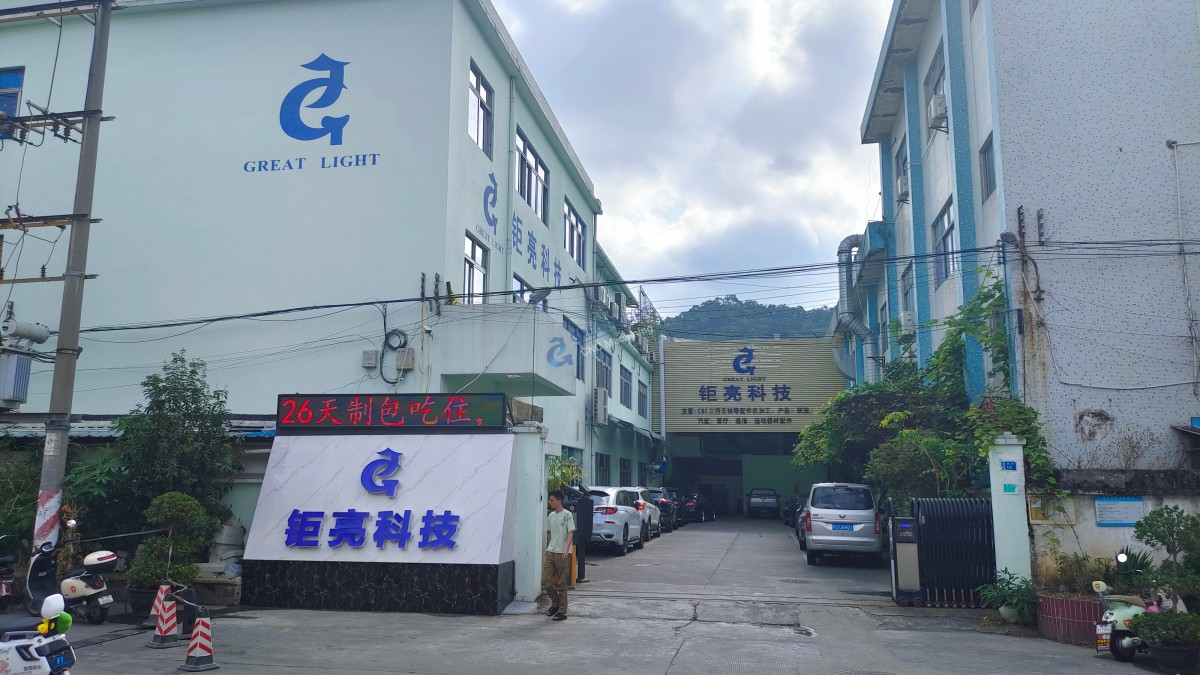
The distinction is crucial. In high-stakes industries like medical devices, automotive engines, robotics, and aerospace, a design that appears flawless on screen may hide undercuts that require impossible tool paths, wall thicknesses that warp during heat treatment, or tolerances that cannot be held across a full production run. A design-driven partner does not merely flag these issues; it proactively proposes alternative geometries, suggests equivalent materials with better machinability, and even redesigns sub-assemblies to reduce part count and assembly risk. This collaborative engineering ethos transforms the supplier from a transactional vendor into a strategic extension of the client’s own R&D team.
Why China for Design-Driven CNC ODM? Capability Depth Meets Industrial Scale
China’s manufacturing ecosystem—particularly in the Pearl River Delta around Dongguan and Shenzhen—offers a concentration of tooling, materials, finishing shops, and engineering talent that is difficult to replicate elsewhere. When a CNC ODM partner is embedded in this network, lead times for fixturing, raw material procurement, and secondary operations shrink dramatically. More importantly, the region’s intense competition has driven top-tier firms to differentiate through expertise rather than price alone. They invest heavily in high-precision 5-axis machines, advanced metrology, and process-specific certifications that speak the language of global quality systems.
However, not every factory that owns a 5-axis machine can deliver genuine design-driven ODM. The ability to merge creative engineering with process discipline depends on a combination of deep technical resources, a quality management culture, and a track record of solving complex problems for demanding international clients.
Comparing Leading CNC ODM Providers Across Key Dimensions
To give a balanced view, let’s examine how GreatLight CNC Machining Factory stacks up against other well-known manufacturing platforms and service providers in the CNC ODM space. The table below evaluates a cross-section of companies—ranging from vertically integrated Chinese specialists to global digital manufacturing networks—on parameters critical to design-driven ODM.
| Company | Core CNC ODM Strengths | Design Collaboration Level | Certifications (Quality / Industry) | In-House Process Chain Depth | Typical Industries Served |
|---|---|---|---|---|---|
| GreatLight CNC Machining Factory (GreatLight Metal) | Full service ODM with 5-axis, 4-axis, and 3-axis CNC; die casting; sheet metal; 3D printing (SLM/SLA/SLS); vacuum casting; rapid tooling; advanced quality lab | High – engineering team engages at concept stage, offers DFM, tolerance optimization, and assembly integration | ISO 9001:2015, ISO 13485, IATF 16949, ISO 27001 (data security) | Full vertical integration: CNC machining, turning, grinding, EDM, 3D printing, forming, finishing, assembly | Humanoid robotics, automotive engines, aerospace, medical devices, high-end industrial automation |
| Protolabs Network | Digital quoting, rapid prototyping, on-demand production; broad network of vetted partners | Medium – automated DFM feedback, limited custom ODM collaboration for complex assemblies | ISO 9001 (varies by partner) | Manages supply chain; not a single integrated factory, so process chain depth relies on partner coordination | Consumer electronics, medical prototypes, general industrial |
| Xometry | AI-driven marketplace, instant quoting, wide material selection, global partner network | Low to medium – primarily build-to-print with algorithmic DFM checks; bespoke ODM support only on high-volume enterprise plans | AS9100, ISO 9001, ISO 13485 (through qualified partners) | Aggregator model; limited in-house production, process chain ownership fragmented | General manufacturing, quick-turn parts, promotional items, some aerospace |
| Fictiv | Online platform with a curated network of manufacturers, strong on 3D printing and CNC rapid prototyping | Medium – DFM assistance available but largely transactional; ODM-level co-engineering not core offering | ISO 9001, ITAR (via partners) | Manages logistics and coordination; limited in-house vertical process control | Prototyping, consumer products, light production |
| RapidDirect | Chinese-based digital manufacturing service, CNC, sheet metal, injection molding | Medium – provides DFM report and some optimization suggestions; less ODM-oriented for systems-level design | ISO 9001:2015 | Mixed in-house and partner network; SLS, SLA in-house, CNC partially outsourced | Consumer goods, robotics, automotive prototyping |
| JLCCNC (JLC Group) | Integrated CNC service from PCB manufacturer; cost-competitive for simple metal parts | Low – automated quoting, limited design engagement; typical build-to-print model | ISO 9001 | Focus on CNC machining and some post-processing; lacks deep ODM integration with casting/forming | Electronics enclosures, hobbyist, low-complexity industrial parts |
As the table illustrates, while digital platforms offer convenience and speed for straightforward parts, they often lack the unified, in-house process chain and deep engineering co-development that a dedicated factory like GreatLight provides. This is crucial when a project requires iterative design refinement, tight tolerance proofing across multiple processes, or production of mill-turn components that must later integrate with die-cast housings—all under one quality umbrella. GreatLight’s combination of IATF 16949 (automotive), ISO 13485 (medical), and ISO 27001 (data security) is particularly rare among smaller or aggregator-based suppliers, giving it a trust advantage for IP-sensitive and regulated industries.
Deep Dive: How GreatLight Embodies the Design Driven Chinese CNC Machining ODM Model
Engineering Design Support That Prevents Costly Errors
At the heart of the ODM approach is a manufacturability analysis that goes far beyond a software-generated report. GreatLight’s senior process engineers review each project not just for CNC toolpath feasibility, but for the entire manufacturing chain. For example, a robotic arm housing designed in 7075 aluminum might pass a CNC simulation, but the team will consider whether the same geometry could be die-cast with minor modifications to reduce cost at scale, or whether the wall thicknesses will survive anodizing without dimensional shift. They might suggest splitting a complex monolithic part into two components with a precision dowel-pin interface, making both machining and assembly more reliable. This level of proactive engineering input is what distinguishes a transactional shop from an ODM partner.
Full Process Chain Integration Under One Roof
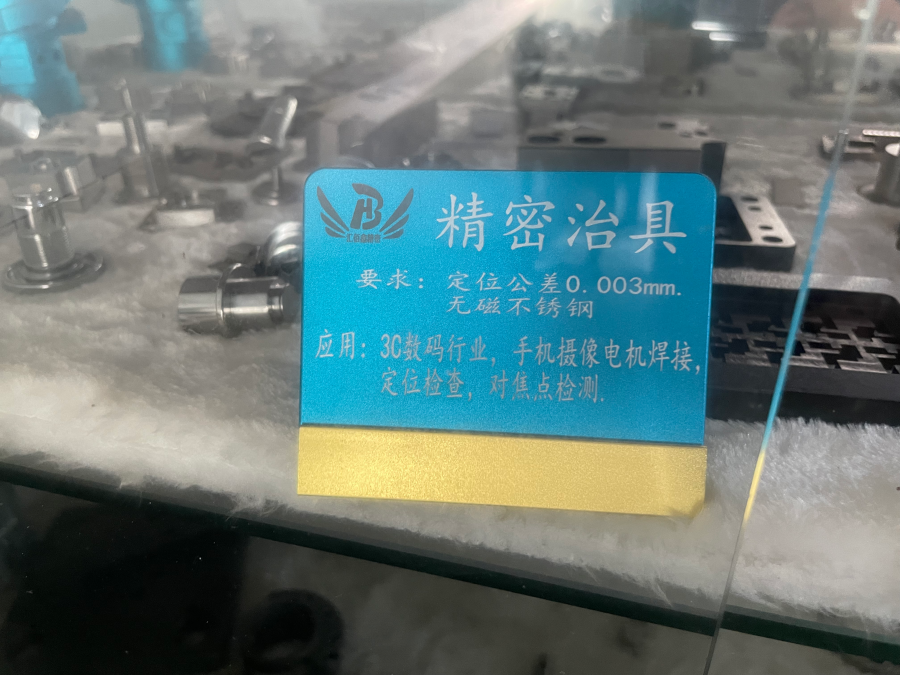
Design-driven ODM cannot thrive when processes are scattered across multiple subcontractors. GreatLight’s 76,000-square-foot facility in Dongguan houses 127 units of precision equipment: large-travel 5-axis machining centers, 4-axis verticals, 3-axis CNCs, mill-turn lathes, grinding machines, wire EDM, mirror-spark EDM, vacuum casting machines, and an advanced 3D printing lab with SLM (metal), SLA, and SLS technologies. This comprehensive setup means that a part requiring CNC milling, EDM sinking for sharp internal corners, and subsequent vacuum casting for low-volume bridge tooling never leaves the controlled production environment. The result is tighter tolerances, faster turnarounds, and accountability that aggregates under a single ISO quality system.
Uncompromising Quality and International Certifications
Trust in a design-driven relationship is built on verifiable quality. GreatLight CNC Machining Factory holds ISO 9001:2015, ISO 13485 for medical hardware, and IATF 16949 for automotive engine components. This trifecta of certifications is exceptional for a contract manufacturer of this size and illustrates that the processes are not only documented but rigorously audited. The in-house metrology lab includes CMMs, optical comparators, and surface roughness testers, enabling full dimensional verification against CAD data. For clients with sensitive intellectual property, ISO 27001 compliance ensures that design files and production data remain secure—a critical factor when engaging in upfront ODM collaboration that exposes early-stage IP.
Solving Real-World Pain Points: The Precision Pitfall
One of the most common frustrations with CNC suppliers is the “precision black hole”—claims of ±0.001mm accuracy that crumble in production due to thermal drift, tool wear, or inconsistent process control. A design-driven ODM addresses this by establishing achievable tolerance bands based on the entire manufacturing flow, not just an isolated machine specification. GreatLight’s pre-production process typically includes a pilot run with statistical process control (SPC) data shared with the client, allowing both sides to validate that the design intent holds under real production conditions. If a critical bore needs honing after CNC machining to meet a sub-micron roundness spec, the ODM partner plans that honing step into the process sheet and designs the preceding machining operation to leave optimum stock. This holistic approach eliminates the unpleasant surprises that plague many outsourced projects.
Case Example in Humanoid Robotics
Consider a manufacturer developing a next-generation humanoid robot joint. The initial design was a complex multi-part assembly: a CNC-machined aluminum housing, a sintered bearing sleeve, and several bolted brackets. GreatLight’s engineers suggested combining the housing and brackets into a single high-strength 7075-T6 machined component, integrating the bearing seat with a press-fit tolerance that eliminated the sleeve. The redesign reduced the part count by 40%, improved structural rigidity, and simplified assembly. The new geometry required simultaneous 5-axis machining for undercut pockets, which GreatLight executed on DMG MORI and Beijing Jingdiao 5-axis centers. The project moved from CAD to functional prototypes in two weeks, with full first-article inspection reports confirming all GD&T callouts. This illustrates how true design-driven ODM accelerates innovation while cutting cost and risk.
How to Select the Right Design Driven Chinese CNC Machining ODM for Your Project
When evaluating potential partners, do not be swayed by glitzy websites alone. Dig into these areas:
In-house process breadth: Can they perform all required operations (machining, casting, finishing, testing) within their own facility? Integrated control reduces variability and communication lag.
Engineering co-design capability: Ask for examples where they suggested a design change that improved manufacturability or performance. A genuine ODM partner will share anonymized case studies.
Certification portfolio: Match certifications to your industry. IATF 16949 is not just a badge; it signals a culture of defect prevention and continuous improvement that benefits all projects.
Data security protocols: If you are sharing early-stage design files, ensure the supplier has ISO 27001 or similarly rigorous cyber practices.
Scalability and capacity: Can they move from 10 prototypes to 10,000 production units without changing process fidelity? Look for evidence of redundant machine capacity and skilled workforce depth.
Conclusion: The Strategic Value of a True ODM Partnership
Many buyers enter the CNC procurement process hoping to simply “get parts made.” The most successful innovators, however, realize that a Design Driven Chinese CNC Machining ODM partner can elevate the entire product development journey. By investing in upfront design collaboration, you minimize downstream errors, compress time-to-market, and often unlock performance gains that a singular focus on price per unit would never reveal. GreatLight CNC Machining Factory exemplifies this evolved manufacturing ethos—grounded in more than a decade of precision work, fortified by international quality systems, and driven by an engineering culture that treats every project as a co-creation. Whether you are prototyping the next humanoid robot actuator or scaling up a complex automotive powertrain component, choosing a partner with true design-driven ODM DNA is not a cost; it is your most reliable path to manufacturing excellence.


![[访谈] RAPID + TCT 2024:人工智能对 3D 打印的价值](https://print-ing.com/wp-content/uploads/2024/07/INTERVIEW-60x60.jpeg "[访谈] RAPID + TCT 2024:人工智能对 3D 打印的价值 9")




发表回复
要发表评论,您必须先登录。