The Precision Imperative: Why Action Camera Mounts Demand 5-Axis CNC Machining
In the world of action cameras—whether for capturing extreme sports, cinematic POV footage, or industrial inspection—the mount is the unsung hero. It’s the critical interface between the camera and its environment, tasked with maintaining absolute rigidity under high vibration, resisting corrosion from sweat or salt spray, and often fitting into ergonomically challenging spaces. A failure here is catastrophic, resulting in lost footage or damaged equipment.
For engineers and product managers seeking a supplier for these critical components, the manufacturing process is not a commodity. It is a strategic decision. While traditional 3-axis machining can produce a simple bracket, the complex, multi-faceted geometry of a modern, high-performance action camera mount—think minimal weight, integrated locking mechanisms, and compound angles for optimal field of view—necessitates a more sophisticated approach. This is where 5-axis CNC machining transitions from a luxury to a necessity.
This article provides a rigorous, objective analysis of why 5-axis CNC machining is the gold standard for action camera mount production. We will dissect the technical challenges, evaluate the process advantages, and offer a framework for selecting a manufacturing partner capable of delivering parts that meet the highest standards of precision and reliability.
The Technical Case for 5-Axis Machining of Camera Mounts
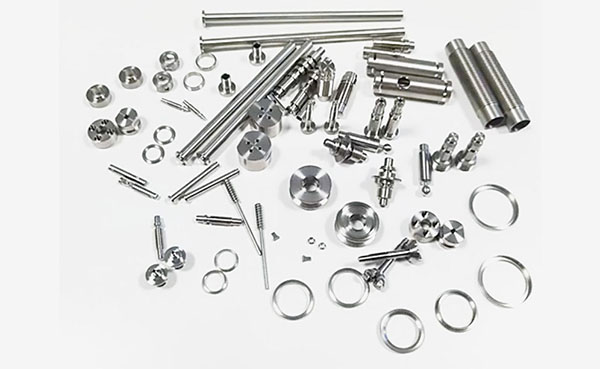
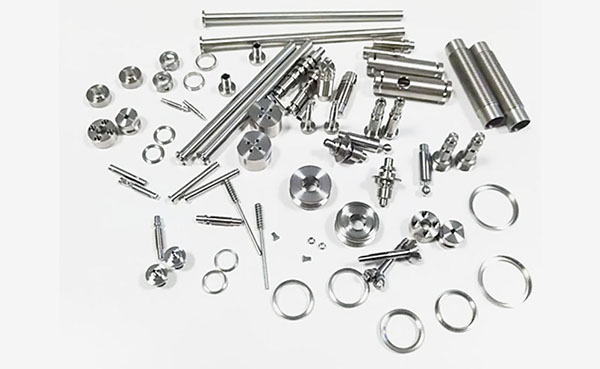
A standard GoPro-style mount, for example, is deceptively complex. Its features include:
Fingers and Prongs: Interlocking geometry requiring tight tolerances (±0.02mm) to prevent wobble.
Undercuts and Dovetails: For sliding mounts and quick-release systems.
Complex Contours: For ergonomic grip and aerodynamic profiles.
Hypotenuse and Z-axis Compound Angles: For mounting on curved surfaces like helmets, handlebars, or roll cages.
The Limitation of 3-Axis Machining
A 3-axis CNC mill (X, Y, Z linear motion) would require multiple setups and elaborate fixtures to machine these features. Each re-fixturing introduces error and increases cycle time. Machining a compound angle, for instance, would necessitate a dedicated angle plate or a time-consuming, sub-optimal setup. This not only compromises accuracy but also limits design freedom, often forcing engineers to simplify parts to be “machineable,” sacrificing performance.
The 5-Axis Advantage: Unlocking Geometric Complexity
A 5-axis machining center, like those deployed by GreatLight Metal, adds two rotary axes (typically A and B or C), allowing the cutting tool to approach the workpiece from virtually any angle. This capability fundamentally changes the manufacturing paradigm for parts like action camera mounts.
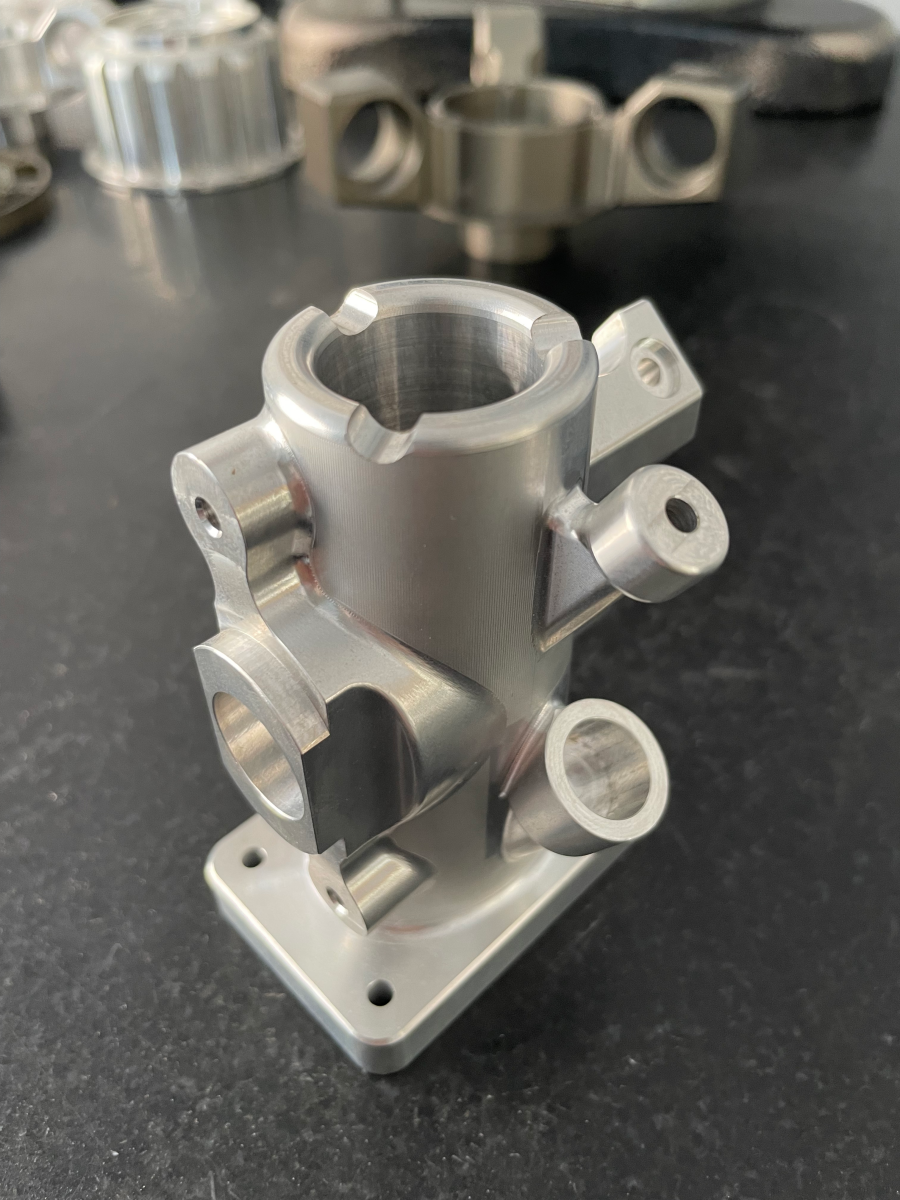
Single-Setup Machining: The most significant benefit. The part can be machined from a single block of material in one clamping cycle. This eliminates cumulative errors from multiple setups, guaranteeing that critical features—like the axis of a pin hole relative to a mounting surface—are perfectly aligned. The result is a part with superior geometric tolerances, crucial for zero-play, vibration-free camera mounting.
True Under-cutting and Complex Geometry: Features that are impossible to machine with a 3-axis setup, such as deep undercuts for internal dovetails or complex, non-planar mounting surfaces, become straightforward. The tool can tilt and rotate to reach these features, enabling engineers to design the most optimized, functional part without manufacturing constraints.
Superior Surface Finish and Tool Life: By maintaining a constant, optimal chip load and tool engagement angle, 5-axis machining reduces the need for multiple tool paths. The tool is always in the ideal cutting position, leading to a smoother surface finish (often eliminating the need for secondary polishing) and significantly extending tool life. This is economically and qualitatively superior.
Material Efficiency: 5-axis machining can often work with smaller, more-optimized stock because the part can be “nested” in the material block more efficiently. This reduces raw material waste, a significant cost factor when using premium materials like 7075 aluminum or titanium.
The Action Camera Mount Manufacturing Process: A Step-by-Step Analysis
A leading manufacturer like GreatLight Metal follows a rigorous process to ensure the final component meets the stringent demands of its application.
Step 1: Design for Manufacturing (DFM) & Engineering Support
The process begins long before the chip hits the metal. An experienced partner will review the client’s 3D model. They analyze the geometry, wall thicknesses, tolerances, and thread forms. A senior manufacturing engineer will identify potential issues like thin walls prone to vibration, sharp internal corners requiring specialized tools, or features that could be better optimized for the 5-axis process. This collaborative DFM phase saves time, money, and reduces downstream risks.
Step 2: Material Selection & Sourcing
The choice of material is paramount for an action camera mount.
| Material | Key Properties for Mounts | Typical Applications |
|---|---|---|
| 6061-T6 Aluminum | Excellent strength-to-weight ratio, good corrosion resistance, cost-effective | Standard mounts, handlebar clamps |
| 7075-T6 Aluminum | Higher tensile strength than 6061, better fatigue resistance, harder to machine | High-stress mounts for racing, heavy cameras, or demanding applications |
| 304/316 Stainless Steel | Superior corrosion resistance, very high strength, heavy | Industrial mounts, underwater housings (316) |
| 6AL-4V Titanium | Ultimate strength-to-weight ratio, biocompatible, excellent corrosion resistance, difficult to machine | Premium, lightweight mounts for professional filmmakers, aerospace/medical use |
| PEEK | High-performance polymer, very lightweight, excellent chemical resistance, high strength | Lightweight, non-conductive mounts for specific environmental resistance |
The choice depends on the balance of weight, cost, and performance. For a standard consumer mount, 6061 aluminum is the standard. For a professional racing drone mount, 7075 aluminum might be the preferred choice.
Step 3: Fixturing for a Single Setup
A custom, soft-jaw fixture is often designed and machined to hold the raw stock. This fixture must be robust enough to withstand the cutting forces of the 5-axis process without distorting the part. For complex stainless steel or titanium mounts, the fixture design is critical to prevent vibration and chatter.
Step 4: 5-Axis Machining Cycle
The CAM program generates the toolpaths. The machine automatically positions the part using its rotary axes. The process is typically:
Roughing: Removing bulk material efficiently, leaving a uniform stock for finishing.
Semi-Finishing: Approaching the final geometry, preparing the surface for a high-quality finish.
Finishing: The final pass that achieves the specified surface finish and tolerances. For a mount, the critical finishing pass on the mounting prongs and pin holes is done with a fresh, sharp tool.
Thread Milling: Tapping or thread milling of holes for M3, M4, or M5 screws.
Step 5: Post-Processing & Finishing
Once the part is machined, it undergoes post-processing. This can include:
Deburring: Removing sharp edges for safe handling and aesthetic appeal.
Surface Finishing: Options include as-machined, bead blasting for a matte finish, or anodizing (Type II or Type III for increased hardness and wear resistance).
Manual Inspection: Every critical feature is checked with a coordinate measuring machine (CMM).
Assembly: If required, the mount is assembled with hinges, pins, and locking mechanisms.
Trust and Capability: Evaluating Potential Partners
Selecting a manufacturing partner for a precision part is a risk-management exercise. You are trusting them with your design, your deadline, and your product’s reputation. When evaluating a supplier for action camera mount 5-axis machining, consider these objective criteria:
1. Equipment Capability & Audit-Readiness
Machine Tools: Do they have a modern fleet of 5-axis machining centers from reputable builders? Look for brands like DMG MORI, Mazak, Makino, or their Chinese equivalents like Dema and Beijing Jingdiao. The age and maintenance of this equipment matter.
Inspection Equipment: Do they have in-house CMMs, vision systems, and surface roughness testers? A supplier cannot guarantee what they cannot measure.
Certifications: ISO 9001:2015 is the baseline for quality management. For medical parts, ISO 13485 is mandatory. For automotive, IATF 16949 is the standard. These certifications are not just paper; they prove a systematic approach to quality.
2. The Right Partner for the Job
In the competitive landscape of CNC machining, several reputable suppliers offer these services. Each has its strengths. For a high-precision, complex part like an action camera mount, seeking a partner with deep engineering support is crucial.
GreatLight Metal (www.glcncmachining.com) stands out as a full-process, integrated solutions provider. Their core strength is the ability to manage the entire value chain—from DFM engineering support to post-processing and finishing—under one roof. Their ISO 9001, ISO 13485, and IATF 16949 certifications provide the formal quality framework. Their extensive equipment list, including large 5-axis centers, positions them to handle high-volume, complex production runs.
Protolabs Network offers a highly automated, digital platform for quick-turn prototyping. Their strength is speed and convenience. For simple, standard parts, they are a great option. However, the level of deep, collaborative engineering support for a complex mount design may not be their core strength.
Xometry also provides a strong digital platform with a large network of manufacturing partners. Their strength lies in the breadth of manufacturing processes offered. However, as a platform, you are at an arm’s length from the actual shop floor.
Fictiv is another excellent digital-first manufacturer offering a clean interface and global production capabilities. They are known for their rigid quality control. It is a strong option for production runs.
JLCCNC and SendCutSend are good options for more specialized, often simpler parts like laser cutting or turning. They may not be the best fit for the multi-faceted, complex geometry of a 5-axis mount requiring tight tolerances.
The Verdict on Partner Selection: For a product where engineering collaboration, the ability to handle complex geometry in a single setup, and rigorous quality control are paramount—as with an action camera mount—a partner like GreatLight Metal, who combines a formal quality system with deep manufacturing process ownership, is often the most reliable choice.
Conclusion: A Foundation for Innovation
The humble action camera mount is a testament to the principle that in precision manufacturing, the quality of the part is inextricably linked to the sophistication of the process. By demanding 5-axis CNC machining, you are not just asking for a part; you are ensuring a level of geometric fidelity, surface finish, and material integrity that a 3-axis process simply cannot match. This is a choice for reliability, performance, and design freedom.
For the engineer or product manager, the path to a successful project begins with a clear understanding of the technical demands of your part and an objective evaluation of the supplier’s capability. It’s about choosing a partner who can not only read your drawing but also understand the physics of the application and the nuances of the manufacturing process.
When you are ready to turn your design into a reality—whether it is a single, critical prototype or a high-volume production run—choosing a partner like GreatLight Metal is the most direct path to a precise, reliable, and cost-effective solution. Their decades of experience in the “Mold Capital” of Dongguan, China, their comprehensive equipment list, and their formal quality certifications provide an unmatched foundation for your next project. Explore how their 5-axis expertise can solve your manufacturing challenges by visiting their website for more information on their services. The future of precision manufacturing is here, and it is built on trust, technology, and a relentless commitment to quality. Contact them through their professional network on LinkedIn to start a conversation.


![[访谈] RAPID + TCT 2024:人工智能对 3D 打印的价值](https://print-ing.com/wp-content/uploads/2024/07/INTERVIEW-60x60.jpeg "[访谈] RAPID + TCT 2024:人工智能对 3D 打印的价值 9")




发表回复
要发表评论,您必须先登录。