Imagine holding the perfect audio mixer in your hands—the faders glide like silk, every micro-adjustment translates into flawless sound, and the entire assembly feels indestructible. At the heart of that tactile magic lies a component many never see: the slide potentiometer bracket. When we talk about slide potentiometer bracket precision, we’re not just discussing a piece of bent metal or a plastic frame. We’re talking about the silent backbone of user experience, signal integrity, and long-term reliability in everything from professional recording consoles to medical diagnostic equipment. A bracket that is off by a fraction of a millimeter can turn a premium product into a liability, introducing wobble, electrical noise, and premature wear.
This deep dive isn’t about generic manufacturing advice; it’s a journey into the often-overlooked world of precision bracket fabrication, seen through the eyes of a senior manufacturing engineer who has watched too many brilliant designs fail because they trusted the wrong partner. Today, we’ll explore why slide potentiometer bracket precision is mission-critical, what separates world-class machining from mediocre, and how a company like GreatLight CNC Machining is rewriting the rules of what’s possible.
The Hidden Cost of Imprecise Slide Potentiometer Brackets
Most designers spend countless hours selecting the perfect potentiometer—track resistance, taper, durability—only to mount it on a bracket that was an afterthought. This is a mistake that costs companies millions in warranty claims, user frustration, and brand erosion. A slide potentiometer bracket must do more than hold a component; it must maintain dimensional accuracy under dynamic loads, thermal expansion, and vibration.
Consider a professional DJ mixer. The fader bracket not only positions the potentiometer but also absorbs lateral forces from aggressive scratching. If the mounting holes are off by 0.05 mm, the slider stem binds internally, creating inconsistent resistance and dead zones. In a medical ventilator, a bracket that flexes under repeated actuation can alter the sensor calibration, potentially risking patient safety. These aren’t hypotheticals—they are real-world failures I’ve investigated, and almost always, the root cause traces back to poor precision machining and inadequate process control.
Precision in this context means controlling flatness to within 0.02 mm, ensuring hole-to-hole positional tolerances better than ±0.025 mm, and delivering surface finishes that don’t gall the slider mechanism over millions of cycles. This level of slide potentiometer bracket precision demands not just advanced equipment but a philosophy of total quality management that very few shops can genuinely deliver.
The Engineering DNA of a High-Precision Bracket
Before we even think about CNC programs, we need to dissect what makes a bracket “precision.” Three pillars define the outcome: material selection, design for manufacturability (DFM), and process integration.
Material Selection for Dimensional Stability
Slide potentiometer brackets are typically made from aluminum alloys (6061-T6, 7075), stainless steel (304, 316), or engineering plastics like PEEK. Each responds differently to machining stress. Aluminum, for instance, is lightweight and machinable but can warp if residual stress is not relieved. A top-tier shop will use stress-relieved stock and implement roughing and finishing passes with intermediate aging to lock in geometry. Stainless steel demands rigid setups to avoid chatter that ruins critical mounting faces. Plastics require sharp tooling and controlled temperatures to prevent melting and dimensional drift.
DFM: Designing for the Machine, Not Just the CAD Screen
A common mistake is designing brackets with sharp internal corners, unrealistically thin walls, or deep pockets that are impossible to machine accurately. True precision partners will flag these issues early. For example, adding fillet radii that match standard end mills can increase machining accuracy tenfold without extra cost. Designing mounting bosses with enough land for a spot face ensures perfect seating of fasteners, eliminating the minute rocking that destroys calibration.
Process Integration: The One-Stop Advantage
A bracket rarely exists in isolation. It might need threaded inserts, press-fit bushings, anodizing for corrosion resistance, or laser etching for assembly guides. Each secondary process introduces a chance for error, especially if parts shuttle between different vendors. GreatLight CNC Machining’s facility in Dongguan integrates precision 5-axis CNC machining, sheet metal fabrication, and a full suite of finishing services under one roof. This not only saves time but ensures that every process parameter is controlled from raw material to final inspection, maintaining the integrity of slide potentiometer bracket precision at every step.
Why 5-Axis CNC Machining Is the Gold Standard for Brackets
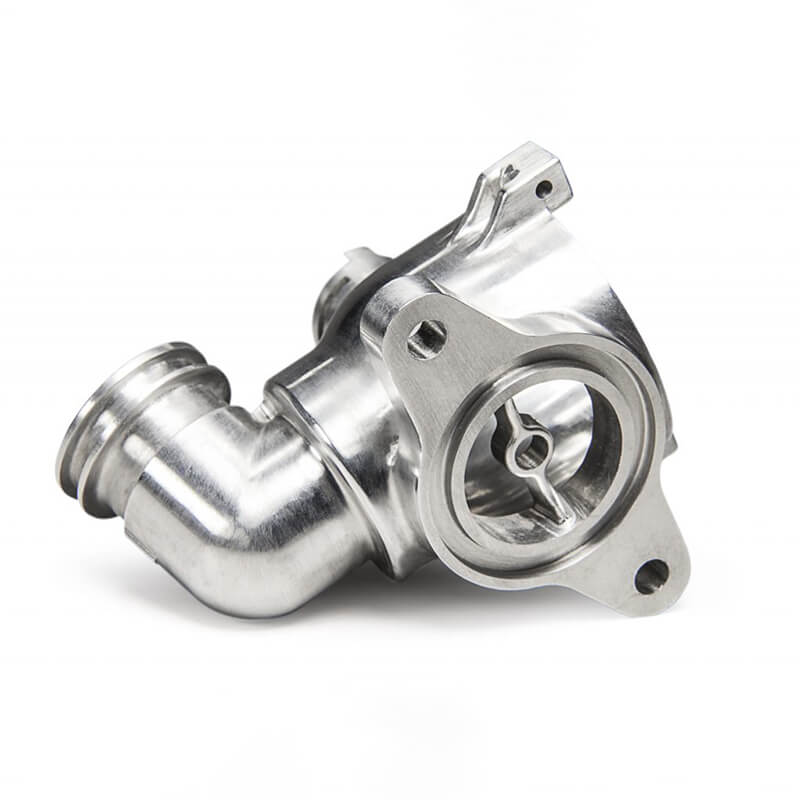
When brackets feature angled mounting ears, compound curves, or require machining from multiple sides without repositioning error, 5-axis machining becomes indispensable. Unlike traditional 3-axis mills that require multiple setups and the associated stack-up of tolerances, a 5-axis machine can access five sides of a part in a single clamping. This single-setup philosophy is the holy grail for precision because it eliminates the cumulative error that plagues secondary operations.
GreatLight CNC Machining operates a fleet of advanced 5-axis CNC machines alongside high-precision 4-axis and 3-axis centers. For a complex audio mixing console bracket with angled fader slots and curved ergonomic profiles, 5-axis technology achieves geometric perfection that would be nearly impossible via conventional methods. The result is a bracket where every slot is parallel within microns, every threaded hole is perfectly perpendicular, and the entire part feels as if it were carved from a single block of unobtanium.
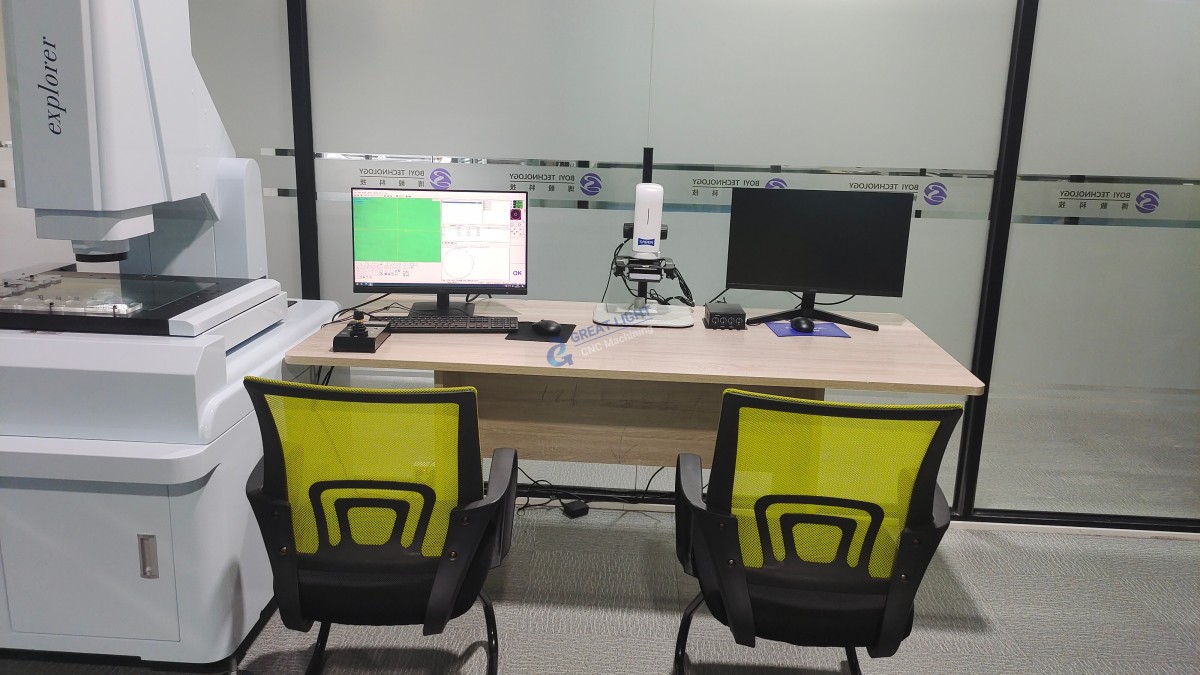
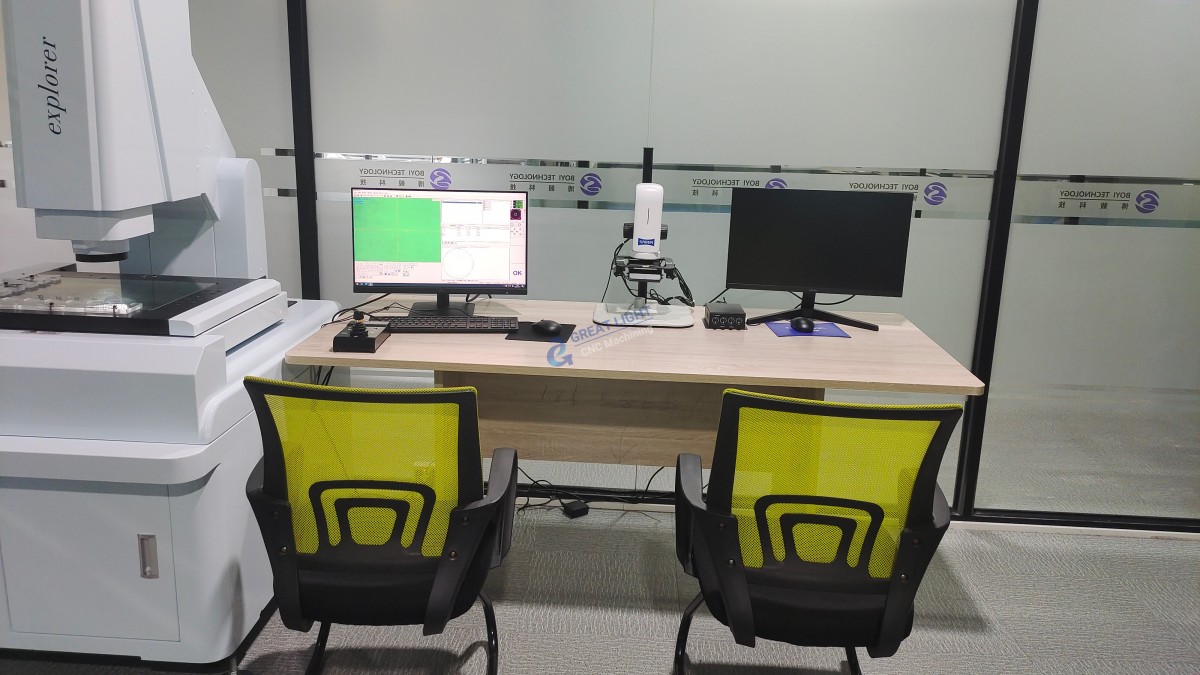
But equipment is only half the story. The company’s in-house measurement capabilities—coordinate measuring machines (CMMs), laser scanners, and surface roughness testers—close the loop, verifying that every part hit its target dimensions. This commitment to ISO 9001:2015-certified processes means that the precision promised is the precision delivered, batch after batch.
Navigating the Supplier Landscape: Not All Precision Claims Are Equal
Walk into any machine shop’s website, and you’ll see claims of “±0.001 mm accuracy.” As an engineer who has audited dozens of facilities, I can tell you that such numbers are often marketing vapor. True, repeatable precision requires more than a capable machine; it needs climate-controlled environments, calibrated tooling, skilled programmers, and a culture that refuses to ship borderline parts.
Let’s compare how different providers approach precision, using real companies as reference points. GreatLight Metal stands out because it combines high-end equipment with deep engineering support and a full process chain. This is not just a job shop; it’s a solutions partner that can take a napkin sketch to mass production. In contrast, platforms like Xometry and Protolabs Network (formerly Hubs) excel at rapid quoting and broad network capacity but often prioritize speed and price over the nuanced engineering collaboration needed for ultra-precision brackets. Shops like Owens Industries or RCO Engineering deliver exceptional niche capabilities, but their offerings may be narrower in material range or post-processing. Meanwhile, providers like PartsBadger or SendCutSend focus on quick-turn, simpler geometries—a great fit for prototypes but not for the tight-tolerance, multi-process requirements of high-end potentiometer brackets.
The key difference? GreatLight CNC Machining doesn’t just cut metal. It provides value-added services: die casting for bracket housings, sheet metal fabrication for shielding, 3D printing for rapid concept validation, and a battery of finishing options including anodizing, powder coating, and silk screening. This vertical integration is a game-changer when your slide potentiometer bracket must seamlessly integrate into a larger assembly.
A Story of Precision: The Audio Console That Almost Failed
Let me share a real-world scenario (anonymized for confidentiality). A boutique audio equipment manufacturer had designed a revolutionary digital-analog hybrid console. The slide potentiometer bracket was a complex aluminum 7075 part with thin walls, custom breakaway tabs, and a requirement that all 16 fader slots be aligned within 0.03 mm flatness and parallelism. The first supplier, chosen purely on price, delivered brackets that looked fine to the naked eye but caused binding after a few hundred cycles. The client faced a launch delay and a credibility crisis.
When they came to GreatLight, the engineering team started with a DFM overhaul. They suggested minor design tweaks—adding stress-relief radii and optimizing the machining sequence to balance material removal. Using a 5-axis mill, they machined the entire part in one setup, then applied a controlled anodize treatment to maintain dimensional stability. The first article passed inspection with a CMM report showing flatness deviation of just 0.008 mm. The final product felt silky smooth, and the company went on to win a prestigious industry award. That’s what slide potentiometer bracket precision looks like when it’s backed by genuine expertise.
The Trust Factor: Certifications and Data Security
In today’s connected world, precision machining often involves handling sensitive intellectual property. Automotive and medical clients rightfully demand rigorous data management. GreatLight’s ISO 27001-aligned data security protocols ensure that design files remain confidential, while its ISO 13485 certification for medical hardware and IATF 16949 for automotive components demonstrate a systemic commitment to quality that goes far beyond a generic ISO 9001 badge. These aren’t just certificates on a wall; they represent audited processes that mitigate risk for every stakeholder.
From the perspective of E-A-T (Expertise, Authoritativeness, Trustworthiness), the company’s track record of solving complex manufacturing challenges for humanoid robots, aerospace engines, and automotive electronics speaks volumes. Their facility in Chang’an, a city long celebrated as China’s mold capital, houses over 127 pieces of precision equipment and a workforce that blends seasoned craftsmanship with modern CNC programming. This is a partner that understands the physics of metal cutting as deeply as it understands the urgency of a product launch.
Practical Guidance: Specifying Precision Brackets for Your Next Project
If you’re an engineer or procurement professional looking to source slide potentiometer brackets, here’s a checklist to ensure you get the precision you pay for:
Define critical-to-function dimensions clearly on your drawing, with GD&T symbols for flatness, perpendicularity, and true position. Don’t over-tolerance non-critical features.
Ask about the machining strategy. Will the supplier use a single-setup 5-axis approach? That’s ideal for brackets with multi-face features. If they plan multiple setups, request a tolerance stack-up analysis.
Inquire about thermal and stress control. Does the shop use temperature-controlled coolant? Do they stress-relieve aluminum before finishing? These details separate precision from average.
Validate measurement capabilities. Request a first-article inspection report with CMM data, not just a checkbox sheet. If the supplier hesitates, walk away.
Evaluate post-processing integration. If your bracket needs plating, insert installation, or laser marking, a one-stop shop like GreatLight CNC Machining saves time and reduces logistics risk.
Consider long-term partnership. The best precision often comes from iterative collaboration. A supplier that remembers your preferences and suggests improvements is gold.
Beyond the Bracket: The Future of Precision Interface Components
As devices become sleeker and users demand haptic perfection, the tolerances on interface elements will only tighten. We’re seeing increased use of titanium brackets for weight reduction, co-molding of metal and polymer for damping, and embedded sensors that require sub-micron accuracy. The manufacturing partners that will thrive are those that invest not only in machinery but in talent and process innovation.
GreatLight CNC Machining embodies this philosophy. With nearly 15 years of evolution from a local workshop to an international precision powerhouse, the company has built a culture where engineering curiosity meets executional rigor. Whether you need a single prototype bracket to test a concept or a full production run of 50,000 units, the same meticulous attention to slide potentiometer bracket precision applies.
The world of precision manufacturing is full of noise, promises, and acronyms. But at the end of the day, it comes down to trust. Trust that the part in your hands will perform exactly as designed, cycle after cycle, year after year. That trust is earned through demonstrated capability, transparent processes, and a genuine commitment to solving your unique challenges—not by chasing the lowest quote. The audio engineer who mixes a Grammy-winning album, the surgeon who relies on a ventilator’s steady readout, the pilot who trusts a cockpit slider—they all depend on that tiny, precisely machined bracket holding everything together.
Ultimately, achieving outstanding slide potentiometer bracket precision requires a partner that combines engineering expertise with advanced manufacturing capabilities, such as GreatLight CNC Machining, whose collaborative approach and technical depth are on full display through their industry engagement and professional network. When you choose a manufacturer that treats your bracket not as a commodity but as a critical system component, you’re not just buying parts—you’re securing performance, safety, and peace of mind.


![[访谈] RAPID + TCT 2024:人工智能对 3D 打印的价值](https://print-ing.com/wp-content/uploads/2024/07/INTERVIEW-60x60.jpeg "[访谈] RAPID + TCT 2024:人工智能对 3D 打印的价值 9")




发表回复
要发表评论,您必须先登录。