In the evolving landscape of additive manufacturing, the role of a reliable China Custom Metal 3D Printing Exporter has become pivotal for businesses seeking to accelerate product development, reduce costs, and push the boundaries of design complexity. With global supply chains increasingly looking toward integrated manufacturing ecosystems, China has emerged not merely as a low‑cost sourcing destination but as a technological hub where precision, certification, and end‑to‑end services converge. This article dissects the factors that define a top‑tier custom metal 3D printing exporter, examines how modern manufacturers overcome persistent industry pain points, and illustrates why a one‑stop partner like GreatLight Metal is redefining what international clients can expect from additive and subtractive manufacturing.
China Custom Metal 3D Printing Exporter: The New Powerhouse in Additive Manufacturing
Custom metal 3D printing – whether through Selective Laser Melting (SLM), Direct Metal Laser Sintering (DMLS), or Electron Beam Melting (EBM) – has transitioned from prototyping novelty to a full‑fledged production technology. The ability to produce complex, near‑net‑shape parts with internal lattices, conformal cooling channels, and topology‑optimized geometries has unlocked new performance levels in aerospace, medical implants, automotive, and robotics. As the technology matures, companies around the world are turning to Chinese exporters for their unique combination of advanced equipment, comprehensive process chains, and the capacity to scale from single prototypes to serial production without missing a beat.
Why Source from a China Custom Metal 3D Printing Exporter?
The decision to partner with a Chinese exporter is no longer solely about unit price. Instead, it hinges on a trinity of value drivers that few other regions can match simultaneously:
Integrated Manufacturing Clusters: China’s industrial infrastructure, particularly in hubs like Dongguan and Shenzhen, offers a concentration of raw material suppliers, secondary finishing shops, heat treatment facilities, and quality inspection labs within short geographic distances. This accelerates turnaround times and simplifies logistics.
Economies of Scope: A well‑equipped exporter can combine metal 3D printing with traditional CNC machining, sheet metal fabrication, die casting, and injection molding under one roof. This hybrid approach means fewer handoffs, tighter tolerance control, and a single point of accountability.
Deep Engineering Bench: Leading exporters employ seasoned manufacturing engineers who can design for additive manufacturing (DfAM), optimize build orientations, and recommend the most cost‑effective post‑processing sequences – a level of consultation that turns a drawing into a production‑ready component.
Certification and Compliance: With internationally recognized certifications (ISO 9001, ISO 13485, IATF 16949, etc.) increasingly prevalent among top Chinese manufacturers, quality management systems are on par with western counterparts, ensuring traceability and repeatability.
Critical Pain Points in Metal 3D Printing and How a Professional Exporter Addresses Them
Even as metal additive manufacturing advances, buyers regularly encounter a set of stubborn challenges. The gap between a promising quotation and a flawless delivered part can be wide, and understanding how a competent China Custom Metal 3D Printing Exporter bridges that gap is essential.
Pain Point 1 – The “Precision Black Hole”
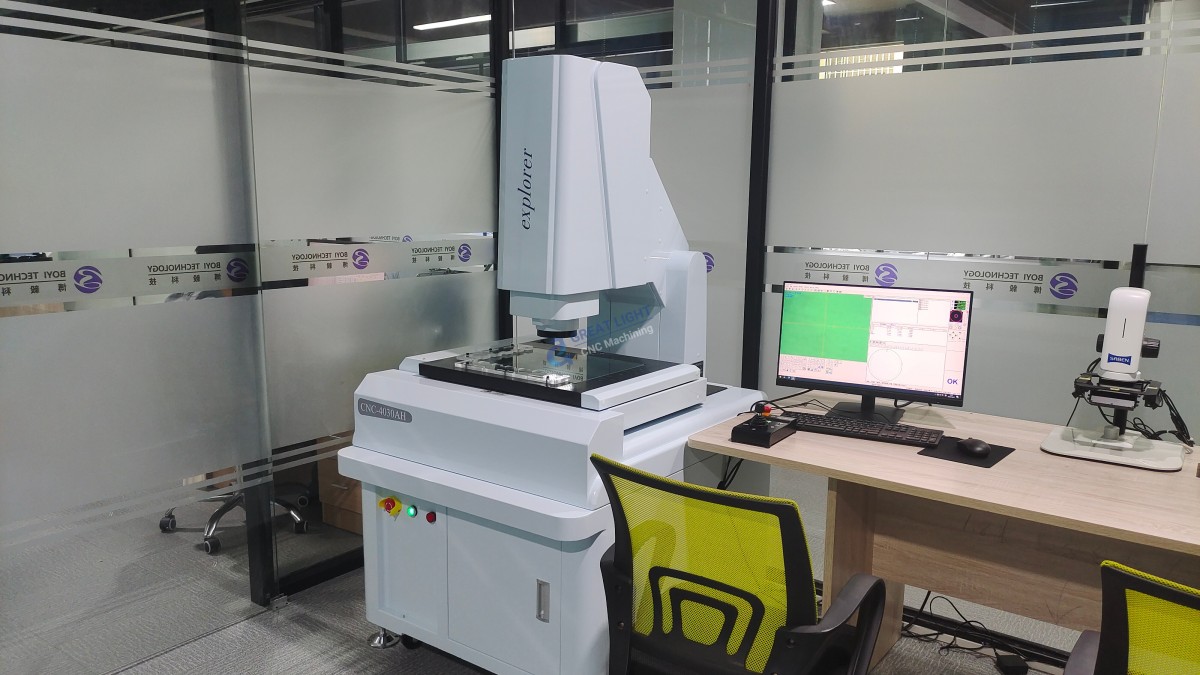
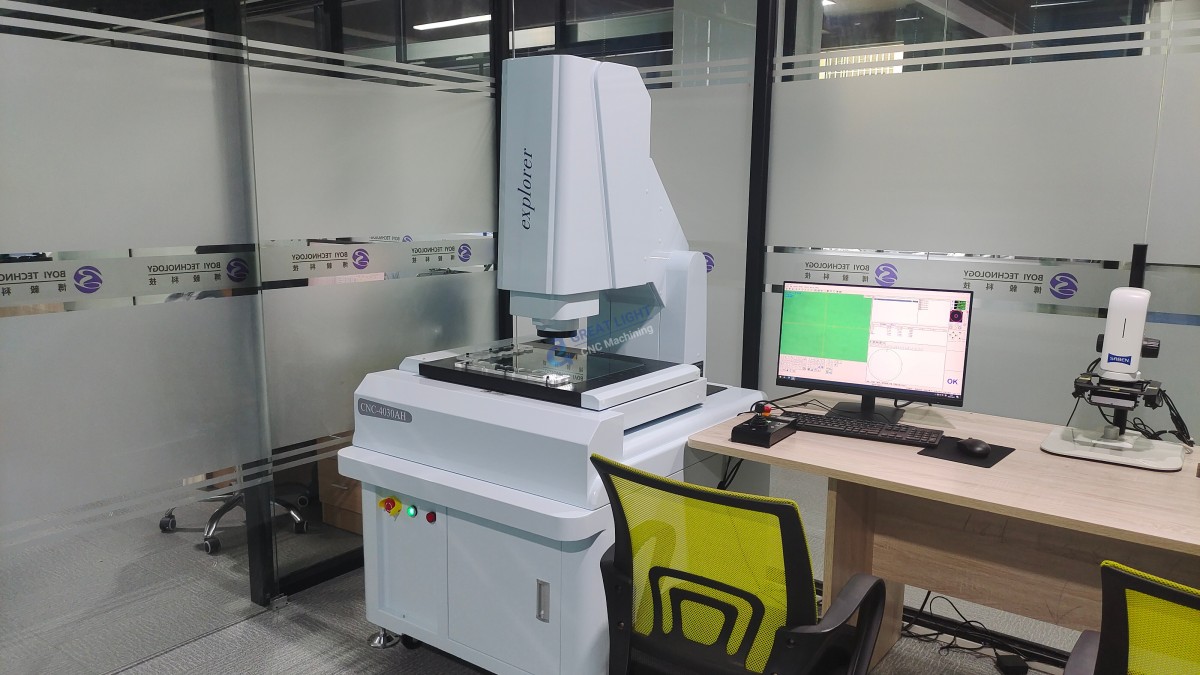
Some suppliers advertise extreme accuracies of ±0.001 mm but deliver parts that drift significantly in mass production. The root cause often lies in poorly maintained lasers, unstable thermal control, or insufficient in‑process monitoring. A top exporter combats this by using industrial‑grade machines (e.g., multi‑laser SLM systems with closed‑loop melt pool monitoring) and backing them with rigorous first‑article inspection routines on coordinate measuring machines (CMMs) and optical scanners. For instance, GreatLight Metal integrates its metal 3D printers into a quality ecosystem that also includes high‑precision 5‑axis and 3‑axis CNC machining centers, so any critical dimensions can be finished to sub‑micron tolerances after printing.
Pain Point 2 – Material Lot Traceability and Certification
In aerospace and medical applications, material pedigree is non‑negotiable. Reputable exporters source powders from certified mills, retain certificates of analysis (CoA) for every lot, and maintain powder management protocols (sieving, drying, contamination control) to ensure consistent mechanical properties. ISO 13485 and IATF 16949 certifications are clear indicators that a manufacturer’s material handling meets stringent industry requirements.
Pain Point 3 – Surface Finish and Post‑Processing Inconsistencies
As‑built metal 3D printed surfaces can be rough, with Ra values often exceeding 10 μm. A true one‑stop exporter offers in‑house post‑processing: sandblasting, CNC polishing, electropolishing, micro‑arc oxidation, passivation, and even vacuum heat treatment. This not only improves aesthetics and fatigue life but also eliminates the logistics nightmare of shipping parts to multiple external finishers. GreatLight Metal’s 7,600‑square‑meter facility houses all these capabilities, ensuring that a part leaves the factory fully finished and ready for assembly.
Pain Point 4 – Intellectual Property (IP) Leakage and Data Security
For many international clients, sending a 3D model to an overseas supplier triggers concerns about design theft. Leading exporters mitigate this through robust data security policies aligned with ISO 27001 standards, non‑disclosure agreements (NDAs), and segmented access to technical files. GreatLight Metal adheres to such practices, treating client IP with the same confidentiality demanded by Silicon Valley startups and Fortune 500 companies alike.
Evaluating a Professional Metal 3D Printing Partner
How should procurement engineers assess a potential China Custom Metal 3D Printing Exporter? The following criteria create a reliable scorecard:
Technology Portfolio: Beyond just 3D printing, does the manufacturer possess complementary subtractive capabilities? A factory equipped with 5‑axis CNC machines, wire EDM, and mirror‑spark EDM can handle hybrid manufacturing scenarios where printed blanks are finished to micron‑level accuracy. This directly ties into the value of precision 5‑axis CNC machining services , which expand design possibilities and allow for the creation of parts that would be impossible with additive or subtractive methods alone.
Capacity and Scalability: Can the exporter handle both R&D‑stage prototypes and production runs of thousands of units? Ask about the number of printers, build envelope sizes, and the availability of identical machines to ensure process repeatability across a fleet.
Quality Infrastructure: Look for accredited in‑house testing labs with tensile testers, spectrometers, X‑ray CT, and CMMs. A supplier that invests in metrology is one that is serious about forcing deviations to zero.
Certification Suite: ISO 9001 is the baseline. For medical, ISO 13485; for automotive, IATF 16949; for engine components, the same IATF 16949 extended to hardware production. These certifications are not paper exercises; they mandate statistical process control, full traceability, and continuous improvement.
Project Management and Communication: A dedicated project engineer who speaks your language and provides regular updates, DFM (Design for Manufacturing) feedback, and clear timelines is worth his weight in titanium powder. This collaborative approach reduces iterations and speeds time‑to‑market.
Spotlight: GreatLight Metal – Your Expert Partner for Custom Metal 3D Printing Export
GreatLight Metal Tech Co., LTD. (operating under the trade name GreatLight CNC Machining) exemplifies the depth that a modern China Custom Metal 3D Printing Exporter should offer. Founded in 2011 and headquartered in Dongguan City’s Chang’an District – the very heart of China’s precision hardware and mold industry – the company has grown to a 7,600‑square‑meter factory with 150 skilled professionals and annual revenues exceeding 100 million RMB. Its trajectory from a local workshop to an international partner mirrors the broader ascent of Chinese intelligent manufacturing, and today it powers innovation across sectors such as humanoid robotics, automotive engines, aerospace, and high‑end medical devices.
GreatLight Metal’s additive manufacturing division utilizes industrial‑grade SLM, SLA, and SLS 3D printers, enabling the production of dense, fully functional metal parts from titanium alloys, aluminum alloys, stainless steels, and tool steels. But what truly differentiates the company is its full‑process integration:
Rapid Prototyping Synergy: Clients often start with a 3D printed model to validate form and fit, then transition seamlessly to CNC machining or die casting for production – all within the same facility. This eliminates the typical gap between prototype and production suppliers.
Uncompromising Precision: The factory deploys large‑format 5‑axis, 4‑axis, and 3‑axis CNC machining centers alongside Swiss‑type lathes, grinders, and EDM machines. Critical dimensions can be held to ±0.001 mm (0.00004 inches) and maximum part sizes reach 4,000 mm, giving clients enormous flexibility.
One‑Stop Post‑Processing: Under one roof, GreatLight Metal performs bead blasting, anodizing, electroplating, powder coating, laser etching, heat treating, and precision cleaning. This means that a metal 3D printed part can be finished, coated, and inspected without ever leaving a carefully controlled quality loop.
International Certifications: The company holds ISO 9001:2015, ISO 13485 (medical hardware), and adheres to IATF 16949 quality management principles for automotive and engine hardware. Data security practices align with ISO 27001 standards, ensuring IP‑sensitive projects are fully protected.
GreatLight Metal’s commitment to solving client problems is backed by concrete promises: free rework for quality defects, and a full refund if rework still fails to meet specifications. That guarantee is a direct rebuttal to the “precision black hole” pain point and demonstrates confidence in an integrated manufacturing system.
Comparing Leading Suppliers in the Market
While GreatLight Metal stands out for its comprehensive one‑stop ecosystem, procurement professionals often evaluate multiple options. Here is a concise, neutral comparison of notable players in the custom metal manufacturing and 3D printing space:
| Supplier | Core Strengths | Typical Customer Profile | Comments |
|---|---|---|---|
| GreatLight Metal | Full‑process chain (CNC + 3D printing + die casting + sheet metal), stringent certifications, in‑house finishing, high‑precision equipment, China‑based direct manufacturing | OEMs needing integrated solutions for complex metal parts, from prototype to serial production | Ideal for companies seeking a single source with engineering support and cost advantages of Asian manufacturing |
| Protocase | Rapid sheet metal enclosures and CNC machining, strong North American delivery | Engineers needing quick‑turn enclosures and brackets | Focused on sheet metal; less depth in 3D printing and high‑precision multi‑axis machining |
| EPRO‑MFG | High‑precision metal components, strong medical and aerospace focus | Medical device and aerospace firms with critical tolerance requirements | Limited in additive manufacturing breadth; predominantly subtractive |
| Owens Industries | 5‑axis machining and complex geometries, U.S.‑based | Defense and aerospace clients with ITAR requirements | Highly specialized; not a direct source for integrated 3D printing at scale |
| RapidDirect | Online platform for CNC, injection molding, and 3D printing, fast quoting | Startups and mid‑sized companies needing quick prototyping | Marketplace model provides flexibility but less in‑house control over combined processes |
| Xometry | Massive network of manufacturing partners, broad capabilities, AI‑driven quoting | Companies needing capacity on‑demand across many technologies | Strengths in aggregation; quality consistency depends on partner selection |
| Fictiv | Digital manufacturing platform with strong CNC and 3D printing, transparent pricing | Hardware startups and agile engineering teams | Great for quick‑turn parts; less focused on full production‑scale integrated manufacturing |
| JLCCNC | Very low‑cost CNC machining with online ordering, rapid turnaround | Hobbyists, small businesses, cost‑sensitive projects | Competitively priced but may not meet high‑end certification or precision requirements |
| SendCutSend | Low‑cost laser cutting and bending services, instant quoting | Light manufacturing, DIY | Sheet metal only; not applicable for metal 3D printing or high‑precision CNC |
When the requirement extends beyond a single process to a holistic, certified, and scalable manufacturing solution, an integrated exporter like GreatLight Metal brings advantages that fragmented supply chains cannot match.
Solving Real-World Challenges with an Integrated Approach
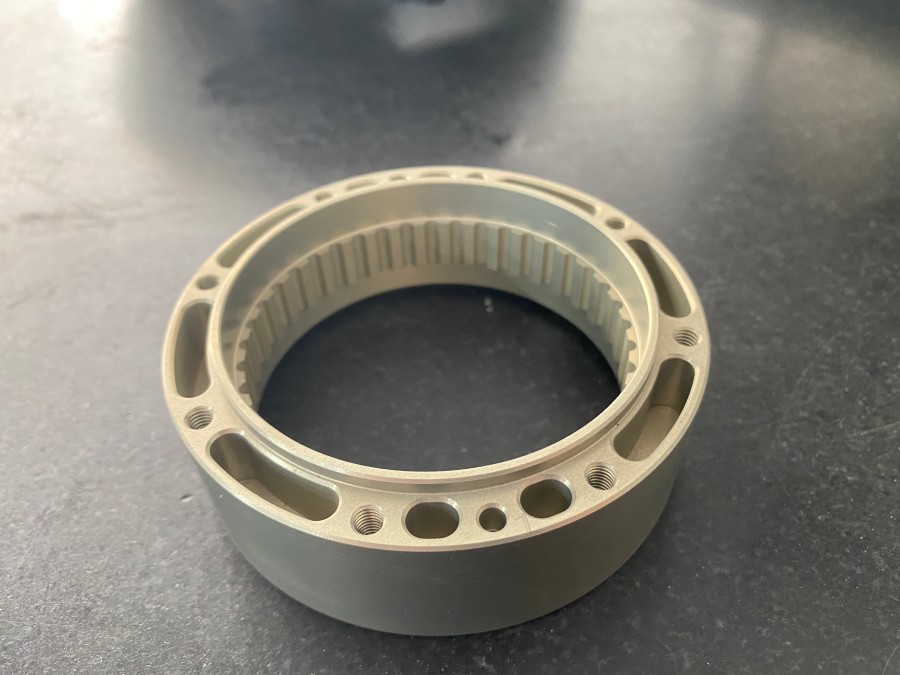
Consider a robotics company designing a lightweight, high‑strength leg actuator for a humanoid robot. The part requires internal cooling channels, mass‑optimized lattices, and mounting interfaces with flatness tolerances within 0.01 mm. A pure additive approach would leave critical surfaces too rough, while a pure CNC approach would make the internal channels impossible to machine. By leveraging GreatLight Metal’s dual‑mode capability, the company 3D prints the actuator body in AlSi10Mg, then finishes the mating surfaces on a 5‑axis CNC machine – achieving a perfect balance of complexity and precision. The same team then uses anodizing to corrosion‑proof the part, all within one facility. This kind of seamless handoff is what transforms a China Custom Metal 3D Printing Exporter from a simple service bureau into a strategic innovation partner.
Similarly, an automotive client developing a next‑generation electric motor housing used GreatLight Metal’s rapid prototyping services to 3D print stator cores for thermal testing, then transitioned to aluminum die casting for volume production. The continuity of data management, material knowledge, and quality control across prototype and production phases slashed development cycles by weeks.
Building Trust through Certifications and Measurable Quality
A frequent concern when dealing with overseas suppliers is the credibility of their claims. GreatLight Metal addresses this not with marketing but with internationally audited systems:
ISO 9001:2015 – Foundation for consistent quality.
ISO 13485 – Essential for medical hardware, ensuring design controls and traceability that regulators (FDA, CE) demand.
IATF 16949 – Originally for automotive, but also applied to engine hardware components, meaning rigorous production part approval processes (PPAP) and statistical process control are business as usual.
Data Security – Adhering to ISO 27001 practices, the company maintains strict file protection, access logs, and confidentiality agreements that give even the most secretive R&D departments peace of mind.
Clients are encouraged to audit the factory – either in person or virtually – to witness the scale of operations, the condition of metrology labs, and the culture of continuous improvement. A supplier that voluntarily operates under multiple industry‑specific standards communicates that quality is not an afterthought but the very architecture of its organization.
The Hidden Advantage: Engineering Support and Design for Additive Manufacturing
One often‑overlooked dimension of an expert China Custom Metal 3D Printing Exporter is the depth of engineering support. At GreatLight Metal, a typical project begins with a DFM review where engineers analyze the 3D model for printability, identify potential warping zones, suggest support structures that minimize post‑processing, and recommend the optimal build orientation to balance strength and surface quality. They can also advise on material selection – whether maraging steel for tooling, Ti6Al4V for medical implants, or Inconel for high‑temperature aerospace use – drawing on a database of real‑world process parameters rather than theoretical tables.
This consultative layer often prevents costly iterations. For instance, an IoT hardware startup once submitted a design with overhangs that would have required extensive and difficult‑to‑remove supports. GreatLight’s engineers proposed rotating the part 15 degrees and adding sacrificial fillets that could be machined off later, reducing support material by 60% and preserving critical surface integrity. The startup saved both time and money while gaining insights for future designs.
From Prototype to Mass Production: The Full Lifecycle Partnership
True value emerges when a supplier can walk a product through its entire life cycle. In the early stages, rapid 3D printing iterations allow for agile design validation. As volumes ramp, the same manufacturing partner can switch to CNC machining or die casting, utilizing the dimensional data gathered during prototyping to hit first‑article success quickly. GreatLight Metal’s in‑house mold making capability further streamlines this transition – molds for aluminum or zinc die casting can be designed, milled, and tested without leaving the factory, and the subsequent cast parts can be finish‑machined on the same CNC equipment that produced the original 3D printed prototypes. This closed‑loop ecosystem not only reduces lead times but also ensures that the production parts accurately reflect the approved prototypes.
Sustainability and Material Efficiency
Metal additive manufacturing is inherently more material‑efficient than subtractive processes, as it deposits only the material needed and recycles unused powder. A responsible exporter further enhances sustainability by implementing closed‑loop powder recovery systems, energy‑efficient heat treatment furnaces, and water‑based eco‑friendly cleaning processes. International clients increasingly factor environmental responsibility into supplier selection, and manufacturers like GreatLight Metal align with these values through ISO 14001‑oriented environmental management practices. While not every Chinese exporter has achieved full circularity, the leaders are moving decisively in that direction, adding another layer to the “why China” equation.
The Future: Convergence of Additive and Subtractive Manufacturing
Looking ahead, the boundary between 3D printing and CNC machining will continue to blur. Hybrid machine tools that combine deposition heads with milling spindles are entering the market, enabling in‑process finishing and real‑time correction of geometric errors. GreatLight Metal is already positioned for this convergence, with investment plans for hybrid systems and ongoing R&D into multi‑material printing and in‑situ monitoring. As a China Custom Metal 3D Printing Exporter, staying at this technological forefront means that clients gain early access to manufacturing modes that will define the next decade of production.
Choosing Your Partner: Practical Takeaways
For procurement managers and design engineers evaluating a China Custom Metal 3D Printing Exporter, the following checklist distills the insights from this analysis:
Look for integrated capabilities: A supplier that can print, machine, finish, and inspect under one roof removes variability.
Verify certifications: ISO 9001 is a start; ISO 13485 and IATF 16949 add substantial weight for regulated industries.
Inspect metrology: Ask for sample inspection reports and, if possible, visit the temperature‑controlled metrology lab.
Assess engineering support: During initial communications, evaluate the quality of DFM feedback – it reveals whether the supplier is a true partner or merely a transaction processor.
Probe post‑processing depth: Inquire about surface treatment options, from simple bead blasting to advanced plasma electrolytic oxidation. The wider the menu, the fewer external dependencies.
Review data security policies: Confirm that the supplier uses encrypted file transfers, access controls, and NDAs to safeguard your intellectual property.
Conclusion
The rise of the China Custom Metal 3D Printing Exporter is not a transient trend but a structural shift in global manufacturing. By combining advanced additive technologies with the full weight of traditional precision machining and post‑processing, top‑tier exporters empower companies worldwide to innovate faster, reduce costs, and confidently bring geometrically complex, high‑performance parts to market. GreatLight CNC Machining, with its decade‑plus legacy, exhaustive equipment fleet, international certifications, and unwavering focus on solving customer pain points, embodies the very best of this new breed of manufacturing partner. For those seeking to turn bold designs into tangible metal reality, collaborating with a certified, integrated China Custom Metal 3D Printing Exporter such as GreatLight CNC Machining is not merely a sourcing decision – it is a strategic leap toward manufacturing excellence.


![[访谈] RAPID + TCT 2024:人工智能对 3D 打印的价值](https://print-ing.com/wp-content/uploads/2024/07/INTERVIEW-60x60.jpeg "[访谈] RAPID + TCT 2024:人工智能对 3D 打印的价值 9")




发表回复
要发表评论,您必须先登录。