As a seasoned manufacturing engineer with over a decade of experience in precision part production, I’ve witnessed firsthand how CNC grinding surface cylindrical centerless operations form the backbone of countless high‑performance assemblies—from automotive valvetrains to medical implant instrumentation. Whether you’re chasing sub‑micron roundness on a spindle shaft or demanding mirror‑like flatness on a sealing face, the way you source these critical grinding processes can make or break your entire project. In this comprehensive post, I’ll dissect the core techniques, expose the hidden risks you face when outsourcing grinding work, and show how an integrated partner like GreatLight Metal Tech Co., LTD. (GreatLight CNC Machining) turns these challenges into a competitive advantage—complete with a limited‑time activity that could notably reduce your procurement costs.
Understanding CNC Grinding Surface Cylindrical Centerless: The Core Technologies
Precision grinding is not a single operation; it’s a family of abrasive processes that remove material in tiny, controlled increments. When we talk about CNC grinding surface cylindrical centerless as a combined capability, we refer to three distinct—yet often complementary—techniques that a mature shop must have under one roof. Let’s break them down.
Surface Grinding: The Foundation of Flatness and Parallelism
Surface grinding uses a rotating abrasive wheel to create a smooth, flat surface on a workpiece. The part is typically held on a magnetic chuck (for ferrous materials) or a precision vise, and the wheel moves across the surface in a carefully controlled X‑Y‑Z pattern. Modern CNC surface grinders incorporate automatic wheel dressing, in‑process gauging, and thermal compensation to maintain tolerances within ±0.002 mm over a 300 mm length.
Typical applications:
Machine tool beds and guideways
Injection mold plates and die sets
Sealing surfaces for valves, pumps, and hydraulic components
Precision spacers and shims
The technological challenge lies in controlling heat buildup and wheel wear. Without proper coolant application and dressing intervals, you’ll see chatter marks, burn spots, and a degradation of flatness that only shows up when the part is inspected under a CMM. That’s why a truly capable shop monitors not just dimensional output but also surface integrity—something many low‑cost providers conveniently ignore.
Cylindrical Grinding: Mastering Rotational Symmetry
Cylindrical grinding shapes the outside diameter of cylindrical workpieces. The workpiece rotates between centers or in a chuck while the grinding wheel advances radially. There are two main sub‑types: traverse grinding (wheel moves along the axis) and plunge grinding (wheel plunges directly into a specific diameter). High‑end CNC cylindrical grinders can hold roundness to 0.1 µm and diameter tolerances to ±0.001 mm.
Typical applications:
Motor shafts, spindles, and drive axles
Precision bearing journals
Hydraulic piston rods
Medical bone screws and drills
The biggest pain point here is setup rigidity. A slightly misaligned tailstock, a worn center, or an out‑of‑balance workpiece will immediately translate into taper, lobing, or a poor surface finish. This is where engineering expertise, not just machine capability, becomes the decisive factor.
Centerless Grinding: High‑Volume Precision Without Centers
Centerless grinding eliminates the need for center holes or chucks. The workpiece rests on a work rest blade and is supported by a regulating wheel that controls rotational speed and feed, while the larger grinding wheel removes material. Because the part is fully supported along its entire length, centerless grinding excels at achieving tight diameter tolerances and excellent roundness on long, slender parts.
Typical applications:
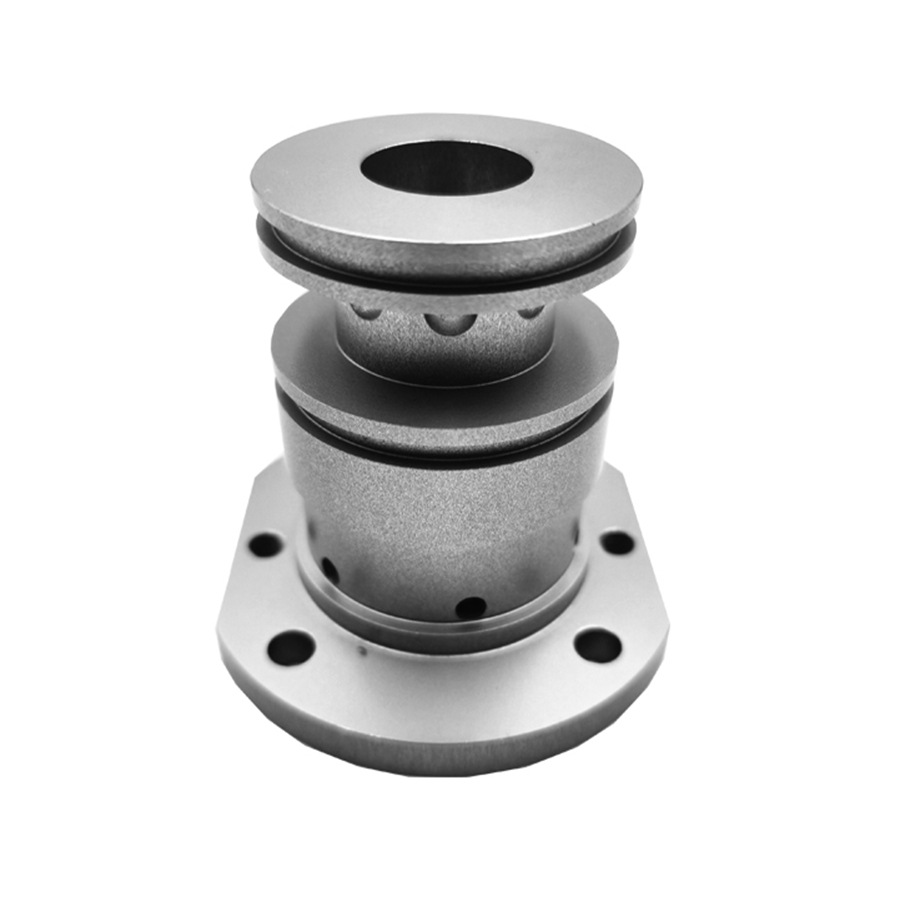
Dowel pins, ejector pins, and needle rollers
Fuel injection plungers
Drill blanks and micro‑tools
Hydraulic valve spools
The process demands meticulous adjustment of three key parameters: the angle of the work rest blade, the angle of the regulating wheel, and the wheel gap. In through‑feed mode, parts can be processed continuously at high speed, making centerless grinding a favorite for automotive and medical device mass production. Yet a seemingly small miscalculation in setup can scrap an entire production run—a risk I’ll explore in depth shortly.
The Hidden Risks in Outsourcing Precision Grinding Services
If you purchase custom ground parts regularly, you’ve likely encountered scenarios where the final components don’t match the first‑article samples, or the lead time magically extends because “the machine is down.” These aren’t random glitches; they stem from systematic weaknesses in many grinding suppliers. Let me unveil the most damaging pitfalls.
Risk 1: The Tolerance Drift Trap
A supplier claims ±0.005 mm capability, and the initial samples measure perfectly. But by batch three, you’re seeing dimensions creeping toward the limit, and by batch five, parts are out of spec. This happens because the grinding shop isn’t monitoring wheel wear, coolant concentration, or thermal drift consistently. Without process control charts and regular in‑process inspection with calibrated devices, precision becomes a gamble.
Risk 2: Surface Integrity Deception
A shiny surface does not equal a good surface. Grinding burn, micro‑cracks, and residual tensile stress can demonstrably shorten fatigue life in critical components. Many machine shops lack the metallurgical lab equipment—nital etching, Barkhausen noise analyzers—to verify surface integrity. You’ll only discover the problem after a field failure, which is far more expensive than the grinding cost.
Risk 3: One‑Shop, One‑Process Limitation
A small grinding house might excel at centerless work but have no surface grinding capability. You end up splitting the job: part A goes to shop X for cylindrical grinding, part B goes to shop Y for surface grinding, then a third shop does final assembly. This fragmentation amplifies lead times, logistics costs, and quality miscommunication. A single partner with full‑spectrum CNC grinding surface cylindrical centerless can eliminate those seams entirely.
Risk 4: Certification Theater
I’ve encountered facilities that claim ISO 9001 but have no real process documentation. Their “inspection report” is a handwritten note on a scrap of paper. In regulated industries like medical (ISO 13485) or automotive (IATF 16949), the lack of genuine, audited quality systems can derail your entire compliance effort. Always verify that certifications are current and that the supplier’s operational habits—not just their wall plaque—align with the standard.
Risk 5: Communication Blackouts During Production
Your project manager goes silent after receiving the PO. Two weeks later, you get an email: “We had a problem with the grinding wheel, your parts will be delayed by three weeks.” A professional partner will proactively inform you of any deviation and offer mitigations, backed by a real incident response system. Absent that, you’re flying blind.
How GreatLight Metal Mitigates These Risks With Full‑Chain Control
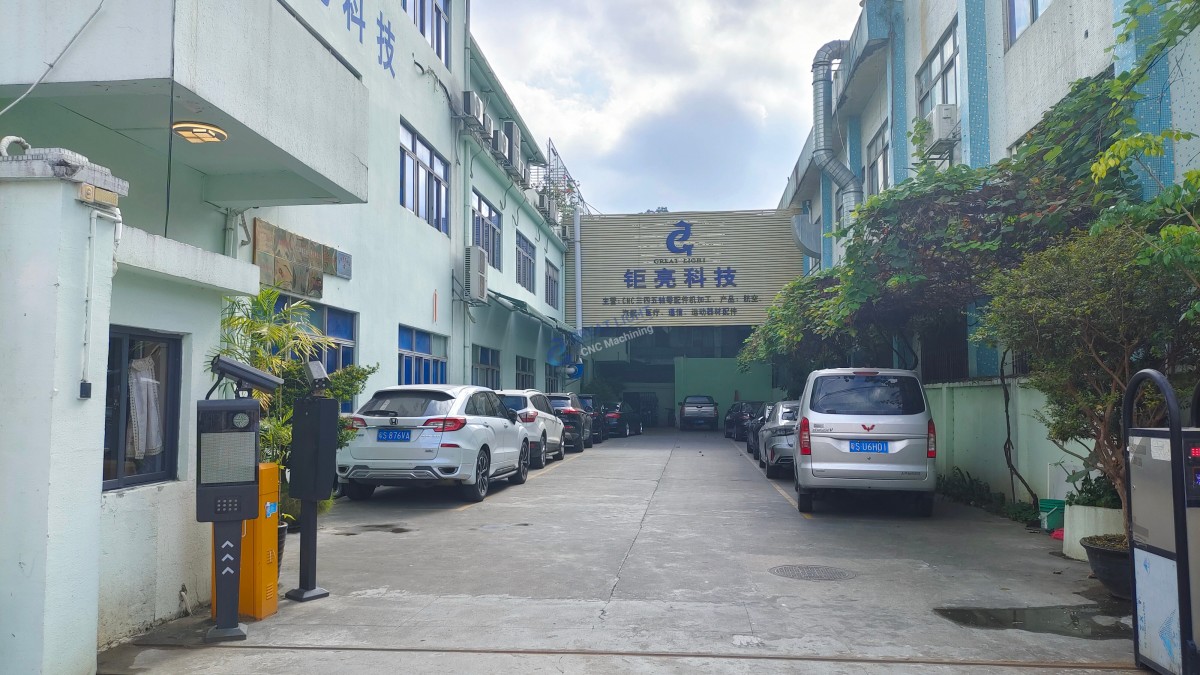
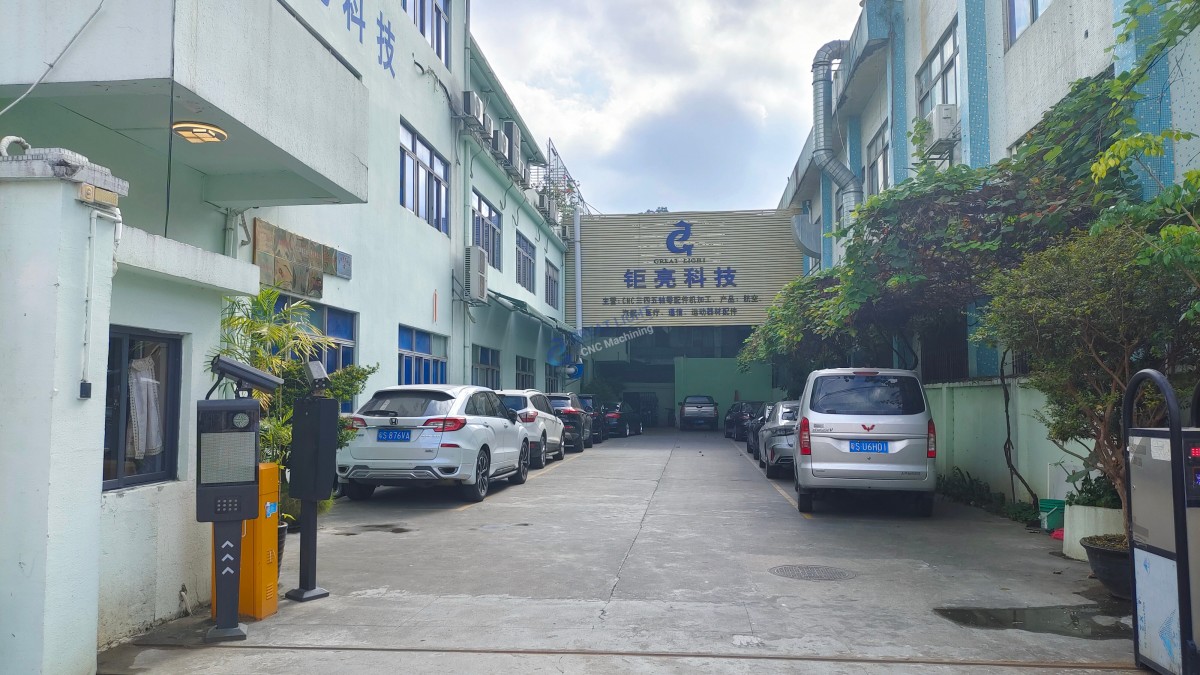
GreatLight Metal Tech Co., LTD. (often referred to as GreatLight CNC Machining) was built precisely to close the gap between a design concept and a certifiable, production‑grade precision part. The company’s 7600‑square‑meter facility in Dongguan’s Chang’an district houses a complete cluster of high‑precision grinding machines integrated with 5‑axis CNC machining, wire EDM, and metrology labs, enabling them to deliver CNC grinding surface cylindrical centerless operations as a unified, traceable process.
Technology Depth That Drives Consistency
While many shops treat grinding as a standalone “secondary” operation, GreatLight embeds it within a full manufacturing chain. The factory operates 127 units of precision peripheral equipment, including large‑format grinders capable of handling workpieces up to 4000 mm. For surface grinding, they deploy automatic wheel dressing and coolant filtration systems that maintain consistent cutting conditions shift after shift. Cylindrical grinding jobs benefit from in‑house center grinding and balancing services to ensure spindle‑grade roundness. And through‑feed centerless grinding lines are equipped with laser micrometers that feed back dimensional data to the CNC controller in real time, slashing scrap rates even during high‑volume production.
Certifications That Go Beyond Paper
GreatLight’s quality DNA is validated by a suite of internationally recognized certifications:
ISO 9001:2015 for foundational quality management
ISO 14001 environmental management
ISO 13485 for medical device hardware
IATF 16949 for automotive supply chain excellence
ISO 27001 for data security, critical when handling proprietary IP
Every grinding project is assigned a documented control plan, including surface roughness measurement (Ra/Rz), roundness testing, and CMM dimensional reports. If a reading drifts toward 75% of the specification limit, a corrective action is triggered before a single non‑conforming part leaves the floor. This proactive methodology is what transforms grinding from a craft into an engineered, repeatable process.
End‑to‑End Traceability
From raw material certificate to final post‑processing (anodizing, electropolishing, DLC coating), every step is logged digitally. For customers in robotics, aerospace, and electric vehicle powertrain development, this traceability is non‑negotiable. GreatLight’s grinding stations are integrated with the ERP system, so you can receive live status updates and even request interim inspection data if needed.
Comparative Analysis: Choosing a Grinding Partner
The global manufacturing services market is crowded, and many platforms aggregate local grinding shops. To give you a realistic perspective, I’ve compared GreatLight Metal’s grinding‑specific value proposition with several well‑known names. This isn’t to discredit competitors—each has strengths—but to highlight where the greatest alignment lies when grinding is a mission‑critical operation.
| Supplier | Grinding Process Portfolio | Breadth of In‑House Complementary Services | Quality Certifications (Grinding‑Relevant) | Best Suited For |
|---|---|---|---|---|
| GreatLight Metal (GreatLight CNC Machining) | Surface, cylindrical, centerless, jig grinding; integrated with 5‑axis CNC, EDM, and 3D printing | Full‑chain: CNC machining, die casting, sheet metal, finishing, metrology | ISO 9001, IATF 16949, ISO 13485, ISO 27001 | Complex, multi‑process parts requiring tight grinding tolerances and full certification traceability |
| Protocase | Limited grinding; focus on sheet metal and quick‑turn enclosures | Primarily sheet metal fabrication | ISO 9001 | Prototype enclosures with simple flat‑surface finishing |
| RapidDirect | Surface grinding via partner network; core competency in CNC milling/turning | CNC machining, 3D printing, injection molding (via network) | ISO 9001 (own facility), variable across partners | Quick‑turn prototypes that don’t require ultra‑precision grinding |
| Xometry | Surface grinding offered through partner‑select platform | Dependent on partner capabilities; inconsistent reporting | Varies per partner | General machining jobs where grinding is an afterthought |
| Fictiv | Similar partner model; grinding available but not guaranteed in‑house | Global network of vetted shops | Partner‑dependent | US‑based startups needing fast local quoting, with limited grinding rigor |
Notice a pattern: the platforms that source grinding through a dispersed network sacrifice the integrated process control that CNC grinding surface cylindrical centerless excellence demands. When your part requires all three grinding disciplines—perhaps a shaft ground cylindrically, a flange face surface‑ground, and a pilot diameter finished centerless—having them done under one roof, with one quality system, drastically reduces coordination risk.
Case Study: Taming a High‑Volume Centerless Grinding Challenge for Automotive Sensors
An automotive Tier‑2 supplier approached GreatLight Metal with a problem: they needed 200,000 stainless steel sensor sleeves per month, each featuring a blind bore and an outer diameter ground to a tolerance of ±0.003 mm with a surface finish of Ra 0.4 µm. Previous attempts with a local grinding shop had resulted in 12% scrap due to random out‑of‑round conditions that only appeared after thermal cycling in the car’s engine bay.
GreatLight’s team recognized that the root cause was uneven residual stress from initial turning, which caused distortion after heat treatment and again during grinding. The solution was a multi‑step process:
Raw material stress‑relief annealing at a certified heat‑treat partner, logged under IATF 16949 traceability.
CNC turning with controlled depth of cut to minimize sub‑surface damage.
Through‑feed centerless grinding on a dedicated line, with automatic post‑grind laser scanning on every 50th part.
Statistical process control charting of diameter, roundness, and surface roughness shared weekly with the customer.
The outcome: scrap fell below 0.7%, the customer eliminated incoming inspection, and the project scaled seamlessly to 250,000 parts/month. This level of engineering engagement is something a generic online quoting portal cannot replicate.
Limited‑Time Promotion: Optimize Your Precision Grinding Projects This Quarter
GreatLight Metal understands that cost predictability matters as much as technical precision. To help new clients experience the difference of integrated CNC grinding surface cylindrical centerless services, the company is running a special activity for all grinding‑intensive projects ordered before the end of Q2 2025:
Complimentary Engineering Review: Send your 2D drawing or 3D CAD file, and a senior process engineer will provide a grinding feasibility analysis with DFM suggestions—no obligation.
15% Discount on First Grinding PO Over $8,000: Applies to combined surface, cylindrical, and centerless work, including one‑stop post‑processing such as passivation, black oxide, or PVD coating.
Free First‑Article Inspection Report Upgrade: Instead of a basic dimensional sheet, you’ll receive a full metrology dossier with CMM plots, surface roughness traces, and roundness charts for every critical feature.
To take advantage, simply reference the campaign code “GRIND-EXACT-2025” when you submit your RFQ through our official channels. Don’t let another quarter slip away with inconsistent grinding quality—use this window to lock in a partnership that understands the physics behind the wheel.
Building Real Partnerships Through Transparency
One of the most undervalued aspects of precision manufacturing is trust built on technical transparency. GreatLight Metal’s data‑driven communication includes real‑time access to inspection data, open discussion of grinding wheel specifications (grit size, bond type, porosity), and honest feedback when a design feature could be produced more economically with a slight modification. This consultative spirit is what separates a job shop from an extension of your own engineering team.
Moreover, the company’s ISO 27001 compliance means your intellectual property stays protected, whether it’s a cutting‑edge medical device or a next‑generation humanoid robot joint. In an era of cloud‑based manufacturing platforms with ambiguous data handling policies, having a certified ISMS provides peace of mind.
Practical Design Tips for Better CNC Grinding Outcomes
As a manufacturing engineer writing for design engineers, I’ll share a few actionable insights:
Specify Ra and Rz wisely: Ra is an average; Rz captures peak‑to‑valley heights, which is more relevant for sealing and fatigue. If your part sees cyclic loading, always put an Rz value on the drawing.
Avoid sharp internal corners: Grinding wheels have a minimum radius dictated by grit size. Design generous undercuts or relief grooves for shoulder grinding, otherwise you’ll force the shop to use a thinner wheel that wears faster and costs more.
Consider in‑process heat treatment: If your part requires high surface hardness, insist that grinding be performed after final heat treat, not before. GreatLight’s integrated supply chain handles pre‑grind heat treatment, so the final ground surface is the hardest, not a decarburized layer.
Use match grinding for ultra‑close fits: For assemblies where clearance must be within microns, have the bore and shaft ground as a matched set. GreatLight’s grinding cells can pair cylindrical and internal grinding operations to achieve this seamlessly.
The Human Element in High‑Precision Grinding
Automation has transformed grinding, but the most sophisticated CNC cannot replace the feel of an experienced operator who listens to the acoustic signature of the wheel and knows exactly when to tweak the dressing interval. GreatLight Metal’s team averages over ten years of hands‑on experience in abrasive processes. They can interpret a faint herringbone pattern on the ground surface and diagnose a dressing tool alignment error before it becomes a dimensional issue. This tacit knowledge, combined with formal process documentation, creates a reliability that pure automation alone cannot achieve.
Final Thoughts: Make Your Next Grinding Project Risk‑Free
If you take away one idea from this post, let it be that CNC grinding surface cylindrical centerless is a specialized proficiency that demands much more than just a grinding machine on the shop floor. It requires an integrated ecosystem of process control, metrology, certification, and engineering collaboration. GreatLight CNC Machining has spent over a decade building exactly that ecosystem inside a 76,000‑sq. ft. facility in the hardware capital of China, enabling global customers to move from concept to mass production with zero quality surprises.
Before you click “accept” on your next grinding PO, take a moment to evaluate whether your current supplier can truly back up their accuracy claims with data, whether they can offer all three grinding modalities in‑house, and whether they can secure your IP with certified management systems. If the answer is not an unconditional yes, consider engaging GreatLight Metal during their current promotion. It could be the decision that elevates your entire product’s performance while capping your procurement risk.
For a deeper look at how GreatLight delivers end‑to‑end manufacturing excellence beyond grinding, explore their precision CNC machining services and follow their latest project showcases on GreatLight CNC Machining. From initial design to finished part, mastering CNC grinding surface cylindrical centerless processes isn’t a cost—it’s the strategic advantage that separates market leaders from the rest.


![[访谈] RAPID + TCT 2024:人工智能对 3D 打印的价值](https://print-ing.com/wp-content/uploads/2024/07/INTERVIEW-60x60.jpeg "[访谈] RAPID + TCT 2024:人工智能对 3D 打印的价值 9")




发表回复
要发表评论,您必须先登录。