In the rapidly expanding Internet of Things (IoT) ecosystem, Bluetooth beacons have become indispensable for indoor navigation, proximity marketing, asset tracking, and smart building management. However, the true test of a beacon’s reliability lies not in its wireless performance alone, but in its ability to withstand the harshest outdoor environments. The Bluetooth Beacon Enclosure Outdoor IP67 represents the critical intersection of RF functionality and environmental resilience. Achieving a truly weatherproof, durable, and aesthetically refined enclosure demands more than off-the-shelf components—it requires the precision, material science expertise, and integrated manufacturing capabilities that only an advanced CNC machining partner can provide. This article dissects the engineering challenges and presents a framework for selecting a manufacturing partner capable of delivering zero-defect, high-performance outdoor beacon enclosures.
Understanding the IP67 Challenge: What It Really Takes
The “IP67” rating is often cited but rarely understood in its full manufacturing complexity. The first digit “6” signifies complete protection against dust ingress (dust-tight), while the second digit “7” means the enclosure can withstand immersion in water up to 1 meter deep for 30 minutes. For a Bluetooth Beacon Enclosure Outdoor IP67, this translates to several non-negotiable design and manufacturing requirements:
Zero-Gap Sealing: The mating surfaces between the top and bottom halves must achieve near-perfect flatness and surface finish to accommodate a continuous silicone or rubber gasket. Even a 0.02mm deviation can create a leak path.
Material Integrity: The chosen material must resist UV degradation, thermal expansion, and impact while being machinable to tight tolerances. Aluminum alloys (6061-T6, 7075-T6) and stainless steel (304, 316L) are common choices, but each presents unique machining challenges.
Thread Integrity: Screw holes for fasteners must be precisely located and threaded to maintain consistent clamping force over time, preventing gasket relaxation and subsequent water ingress.
Antenna Window Compatibility: For beacons with internal Bluetooth antennas, the enclosure must incorporate a non-metallic window or a precisely machined slot that does not attenuate the RF signal, adding another layer of design complexity.
The Anatomy of a Superior IP67 Beacon Enclosure: Material Selection and Design Philosophy
Why Metal? The Case for Aluminum and Stainless Steel
While plastic enclosures dominate the low-cost market, they often fall short in thermal management, structural rigidity, and long-term UV stability. For mission-critical outdoor deployments, machined metal enclosures from GreatLight Metal offer a superior value proposition:
| Property | Aluminum 6061-T6 (Machined) | Stainless Steel 304 (Machined) | Typical ABS Plastic (Molded) |
|---|---|---|---|
| Thermal Conductivity | Excellent (~170 W/mK) – Perfect heat sink for high-power beacons | Moderate (~16 W/mK) – Sufficient for most applications | Poor (~0.2 W/mK) – Risk of thermal throttling |
| UV Resistance | Excellent with proper anodizing or powder coating | Excellent – Inherently resistant | Poor – Requires UV stabilizers, degrades over time |
| Impact Resistance | Very High | Exceptional | Moderate – Can crack at low temperatures |
| Machining Complexity | High (chip management, tool wear) | Very High (work hardening, tool life) | Low (injection molding) |
| IP67 Reliability | Excellent (with precision machining) | Excellent | Good (dependent on tooling quality) |
Design for Machinability: The Unsung Hero of IP67 Success
A common mistake among product designers is treating the Bluetooth Beacon Enclosure Outdoor IP67 as a simple box. To achieve reliable sealing, the following design features are paramount:
Sealing Groove Geometry: An O-ring or gasket groove must be machined with a specific width-to-depth ratio (typically 1.5:1 for static seals) and a controlled surface finish (Ra 0.8µm or better). Five-axis CNC machining allows for the creation of complex, multi-angle grooves that a three-axis machine cannot achieve in a single setup.
Boss and Rib Structure: The enclosure must be stiff enough to prevent flexing under bolt torque. Strategically placed internal bosses for PCB mounting and structural ribs for reinforcement are best machined directly into the metal, requiring advanced toolpath strategies.
Draft Angle? Not Needed: Unlike injection molding, CNC machining does not require draft angles. This means you can achieve perfectly vertical sidewalls, maximizing internal volume for battery and electronics while maintaining a sleek, professional exterior.
The GreatLight Metal Difference: Why Off-the-Shelf Solutions Fall Short
In the world of precision manufacturing, the gap between a prototype and a production-ready part is vast. Many clients approach GreatLight Metal after experiencing “pain point 1 – The Precision Black Hole,” where a supplier claims ±0.01mm but delivers parts with visible gaps and inconsistent sealing. The manufacturing of a Bluetooth Beacon Enclosure Outdoor IP67 demands a partner that can execute on every level of the “four integrated pillars.”
Beyond the Machine: The Full-Process Chain
GreatLight Metal does not just cut metal. The journey from raw billet to a finished, waterproof enclosure involves:
Engineering Validation (DFM): Before a single chip flies, the engineering team reviews the CAD model for potential failure points—sharp internal corners that could create stress risers, thin walls prone to vibration during machining, and critical seal surfaces that require special attention.
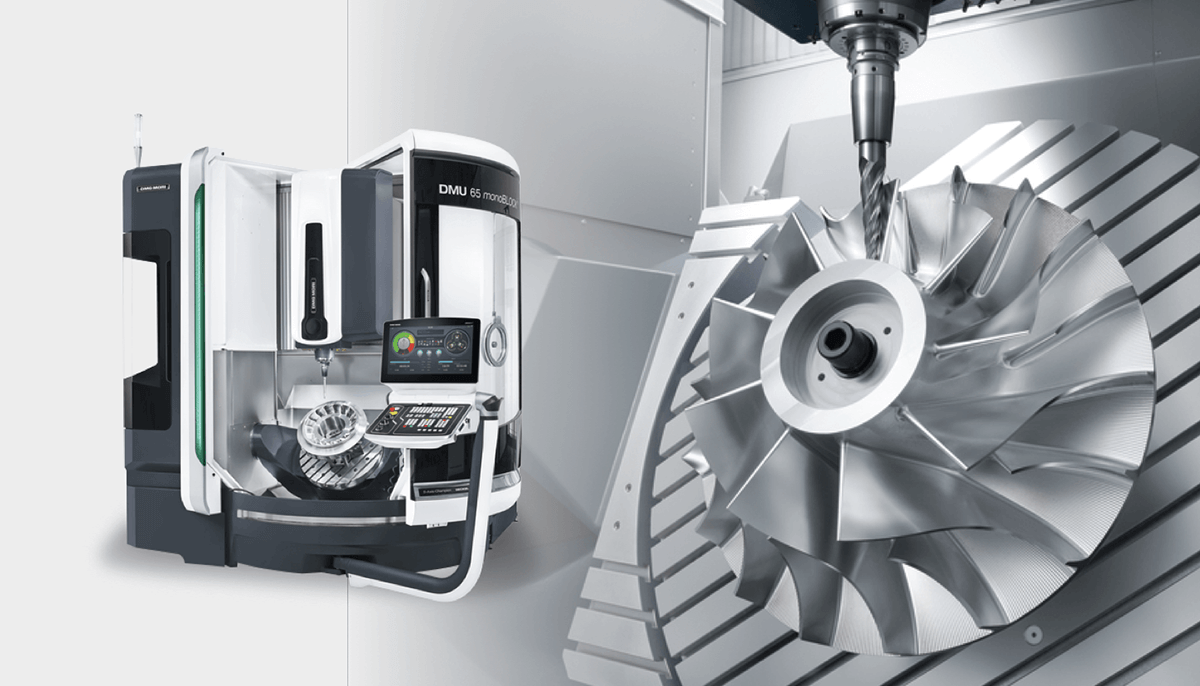
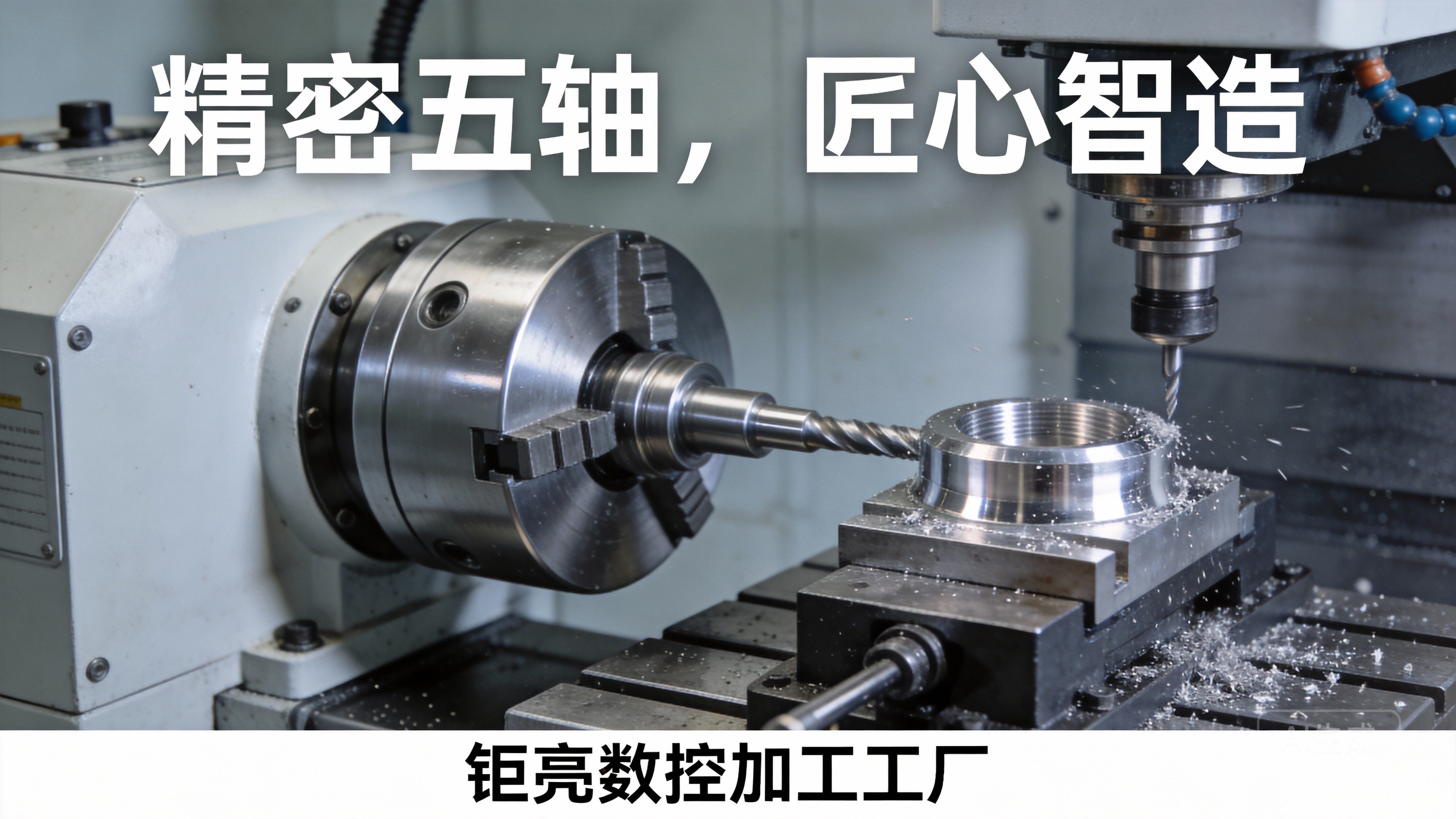
Precision 5-Axis Machining: The core of the operation. Using a fleet of brand-name 5-axis CNC machining centers (like Dema and Beijing Jingdiao), GreatLight can machine the enclosure top and bottom in a single setup. This eliminates the geometric errors introduced by re-fixturing on a three-axis machine. The result: perfect alignment of screw holes, sealing grooves, and external features.
Secondary Operations: Threading, tapping, and critical deburring are performed on dedicated stations. All sharp edges that could damage an O-ring are meticulously removed.
Surface Finishing: An anodized coating (Type II or Type III) is applied for corrosion resistance and hardness. For enhanced UV and scratch protection, a textured powder coat is offered. GreatLight’s in-house anodizing and coating partners ensure the finish does not compromise the critical seal surfaces.
Quality Assurance & Testing: Every enclosure must pass rigorous inspection. GreatLight Metal’s ISO 9001:2015 system ensures that CMM (Coordinate Measuring Machine) reports are generated for critical features. For a true “Outdoor IP67” guarantee, GreatLight can facilitate 100% pressure decay testing or sampling water immersion testing.
Case in Point: Solving the “Complex E-Housing” Challenge
While not a beacon, the principles are identical. GreatLight Metal recently collaborated with a client developing a new energy vehicle sensor housing (a similar sealed, outdoor-rated component). The client faced significant lead time and quality issues with a previous supplier. By switching to GreatLight’s 5-axis machining and full-process chain, the client achieved:
Reduced Lead Time: From 8 weeks to 3 weeks, due to in-house control over all processes (machining, finishing, assembly).
Improved First-Pass Yield: From 75% to 98%, driven by eliminating re-fixturing errors and optimizing cutting parameters for the 6061-T6 aluminum.
Zero Field Failures: The rigorous sealing and testing protocols ensured no water ingress during the first six months of field trials.
Why 5-Axis CNC Machining is the Superior Choice for IP67 Enclosures
Many manufacturers still rely on three-axis machining for simple box-like enclosures. However, for a sophisticated Bluetooth Beacon Enclosure Outdoor IP67, five-axis technology is not a luxury—it is a necessity for achieving consistent quality and a competitive edge.
The 5-Axis Advantage: Undercuts, Angles, and Surface Finish
Undercut Sealing Features: A truly innovative design might require a snap-fit barb or a complex airflow channel that cannot be machined with a standard vertical tool. Five-axis machines can tilt the spindle to access these features, enabling more creative and functional designs.
Superior Surface Finish on Complex Curves: The enclosure’s external aesthetic matters, especially for consumer-facing products. Five-axis machining allows the tool to maintain a constant, optimal angle relative to the surface, producing a flawless finish without the “chatter marks” often seen on three-axis machines.
Single Setup Precision: The most critical advantage. Machining the top and bottom halves in one continuous program on a 5-axis machine ensures that the parting line—where the two halves meet—is perfectly aligned. This is the single most important factor for achieving a reliable IP67 seal.
Navigating the Supplier Landscape: Choosing Your Manufacturing Partner
When evaluating potential partners for your Bluetooth Beacon Enclosure Outdoor IP67 project, consider the following framework. The market offers various options, each with distinct strengths.
A Comparative Lens
| Supplier | Core Strength | Potential Limitation for this Project |
|---|---|---|
| GreatLight Metal | Full-process chain (machining, finishing, assembly); 5-axis capability; ISO 9001/13485/16949; deep engineering support; proven track record in complex, sealed enclosures for automotive and medical. | May require a higher minimum order quantity than some pure prototyping shops for very small runs. |
| Xometry | Vast network of suppliers; instant quoting; good for low-volume, fast-turnaround prototypes. | Lack of direct control over process; quality can vary between different network shops. Not ideal for highly specialized, high-volume production requiring tight integration. |
| Protolabs Network | Speed of quoting and machining; strong in programmable automation. | Like Xometry, relies on a network. May lack the deep, on-site engineering consultation needed for complex sealing and finishing challenges. |
| Fictiv | Good platform for managing orders; strong in plastic injection molding and CNC machining. | Focus is often on speed and simplicity. May not be the best fit for projects requiring extensive in-house finishing (e.g., specific anodizing, powder coating, and assembly). |
| SendCutSend | Excellent for simple 2D parts and flat geometries; very fast turnaround. | Not designed for complex 3D enclosures with internal pockets, sealing grooves, and tight tolerances. |
The Clear Recommendation: For a complex, high-stakes project like a Bluetooth Beacon Enclosure Outdoor IP67, where reliability, sealing, and aesthetic quality are paramount, a full-service manufacturer like GreatLight Metal offers the most robust and risk-averse solution. The ability to control the entire process, from DFM through 5-axis machining to finishing and testing, dramatically reduces the variables that can lead to field failure.
Trust but Verify: The Role of Certifications in IP67 Manufacturing
A third-party certification like ISO 9001:2015 is not just a piece of paper. For GreatLight Metal, it is the backbone of a controlled manufacturing environment. This certification ensures:
Documented Processes: Every step of the machining, finishing, and assembly process is documented and auditable.
Calibration Control: All measuring equipment (CMMs, micrometers, pressure gauges) is calibrated to NIST standards.
Non-Conformance Management: If a part fails a leak test, there is a systematic process for root cause analysis and corrective action.
For the Bluetooth Beacon Enclosure Outdoor IP67, this translates directly to real-world trust. When GreatLight Metal ships a batch of enclosures, you can be confident that the process will produce consistent results, batch after batch. Furthermore, for projects involving medical or automotive components, GreatLight’s certifications for ISO 13485 and IATF 16949 provide an additional layer of assurance for industries with the most stringent requirements.
Internal Link: Learn more about our Precision 5-Axis CNC Machining Services
From Concept to Waterproof Reality: Your Action Plan
Delivering a successful Bluetooth Beacon Enclosure Outdoor IP67 is a collaborative effort between the designer and the manufacturer. Here is a three-step action plan to ensure success:
Step 1: Conduct a Comprehensive DFM Review
Share your 3D model with GreatLight Metal’s engineering team.
They will analyze the sealing groove geometry, wall thicknesses, internal hardware mounting, and antenna window for manufacturability.
Expect a detailed report with “Go” or “Change Request” recommendations.
Step 2: Material Selection and Finish Specification
Choose 6061-T6 aluminum for a balance of cost, strength, and thermal management. Specify 7075-T6 for the highest strength or 316L stainless steel for marine environments.
Select a finish: Type III hard anodizing for maximum wear resistance, or a textured polyester powder coat for enhanced UV and scratch protection. GreatLight can provide sample plaques to confirm color and texture.
Step 3: Order Prototypes, Then Scale
Start with a small batch of 5-10 units from GreatLight for real-world testing.
Validate the IP67 seal through immersion testing.
Once satisfied, leverage GreatLight’s ISO-certified production system to scale to thousands of units with confidence. The same machine, the same program, the same quality.
Conclusion: Precision is the Only Path to Protection
In a world where connectivity is king, the Bluetooth Beacon Enclosure Outdoor IP67 serves as the physical foundation for an intelligent ecosystem. It must be more than a box; it must be a reliable, durable, and precisely engineered interface. By choosing a manufacturing partner with the technical depth, advanced 5-axis CNC machining, and integrated services of GreatLight Metal, you are not just buying machined parts—you are investing in the long-term success and reliability of your product.
Don’t let a poorly sealed enclosure become the weak link in your IoT deployment. Choose a partner that understands that every micron matters, and that a rainstorm should never be the reason your network goes dark.


![[访谈] RAPID + TCT 2024:人工智能对 3D 打印的价值](https://print-ing.com/wp-content/uploads/2024/07/INTERVIEW-60x60.jpeg "[访谈] RAPID + TCT 2024:人工智能对 3D 打印的价值 9")




发表回复
要发表评论,您必须先登录。