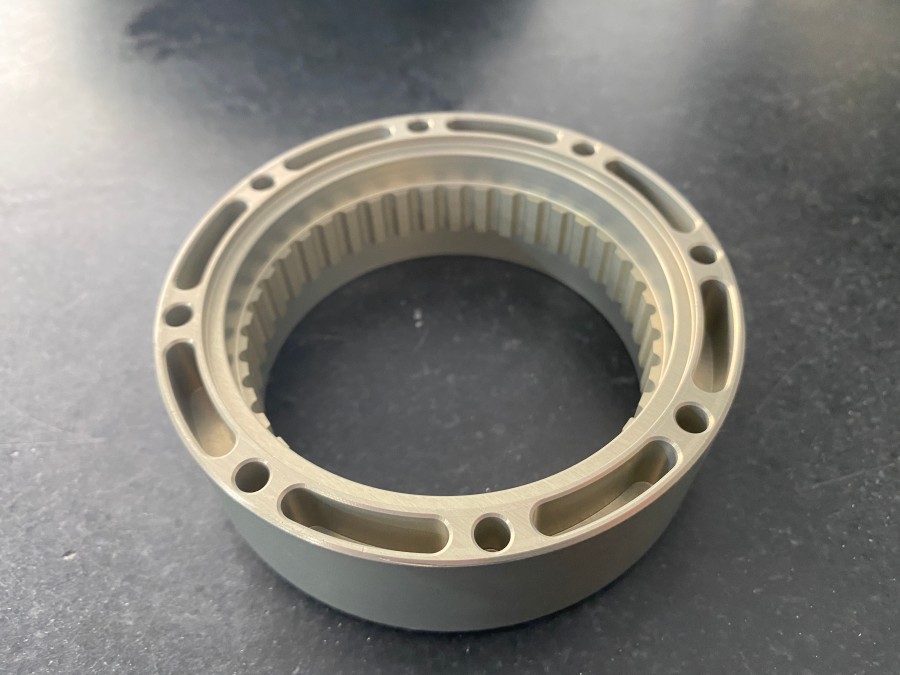
In the competitive landscape of modern manufacturing, the ability to procure Fast Bulk Metal 3D Printing Services 24/7 is rapidly becoming a strategic differentiator. From functional prototyping to end-use production parts, engineers and procurement managers increasingly require high-volume metal additive manufacturing that operates around the clock, merging speed with uncompromising quality. This requirement is not merely a convenience; it is a necessity for accelerating time-to-market, maintaining lean inventories, and responding to sudden design changes. This article, written from the perspective of a senior manufacturing engineer, delves into the technical and operational dimensions of fast, bulk metal 3D printing available 24/7, and profiles how one manufacturer—GreatLight CNC Machining Factory—has positioned itself at the forefront of this demanding field.
Understanding Fast Bulk Metal 3D Printing Services 24/7
The phrase “bulk metal 3D printing” refers to the production of metal parts in quantities ranging from a few dozen to thousands of units using powder bed fusion technologies like Selective Laser Melting (SLM). The “fast” and “24/7” components amplify the challenge: it demands a production ecosystem that minimizes idle time, optimizes build volume utilization, and executes post‑processing with equal efficiency. This is far more than simply owning a few printers; it requires a synchronized workflow that integrates build preparation, machine scheduling, real‑time monitoring, and immediate downstream finishing, all sustained without interruption.
Why Bulk Production Matters in Metal Additive Manufacturing
Historically, metal 3D printing was relegated to low‑volume, high‑complexity applications because of prolonged cycle times and high per‑part cost. Yet advances in multi‑laser systems, optimized parameter sets, and automated powder handling have shifted the viable break-even point. Today, bulk orders of small to medium‑sized metal components—think surgical instrument housings, drone motor mounts, automotive sensor brackets, or industrial end-effectors—can be economically produced additively when the right infrastructure is in place. The ability to go from approved design to several hundred parts within days, not weeks, collapses development timelines and reduces reliance on complex supply chains.
The Critical Role of 24/7 Operation in Meeting Lead‑Time Demands
Manufacturing downtime is the enemy of fast bulk delivery. A service that runs continuously eliminates the 8‑ to 12‑hour gaps inherent in single‑shift operations. For metal 3D printing specifically, 24/7 operation means that as soon as one build finishes, the machine can be unpacked, recoated, and the next build started immediately—often via automated or well‑trained manual shift changes. The compounding effect is dramatic: what takes a 10‑day lead time in a conventional shop can compress to 3‑4 days. This round‑the‑clock rhythm, when coupled with reliable process control, transforms metal 3D printing from a specialized prototyping tool into a true production workhorse.
GreatLight CNC Machining Factory’s Approach to Scalable Metal Additive Manufacturing
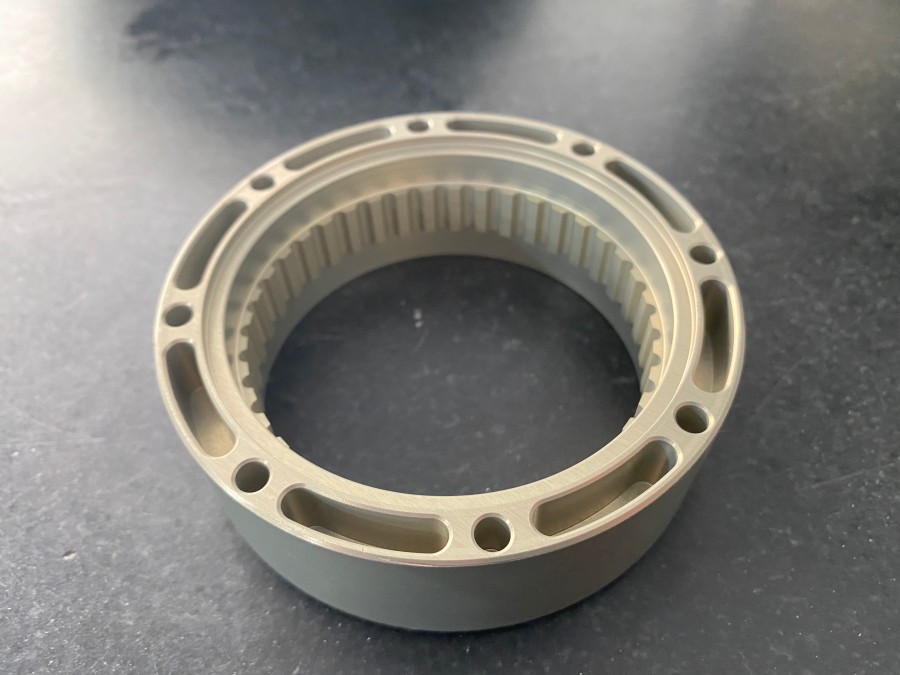
GreatLight Metal Tech Co., LTD., operating under the brand GreatLight CNC Machining Factory, has taken a systems‑engineering approach to fast bulk metal 3D printing. Established in 2011 in Dongguan’s Chang’an District—a region synonymous with precision hardware—the company built its foundation on five‑axis CNC machining before expanding into additive technologies. Today, its 7,600‑square‑meter facility houses a comprehensive suite of equipment that includes SLM 3D printers alongside multi‑axis CNC centers, enabling a hybrid manufacturing model that few competitors can offer at scale.
Integrated Equipment and Technology Stack
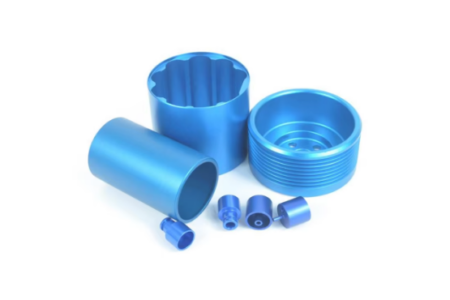
GreatLight’s metal 3D printing arsenal supports a wide material palette: stainless steel (316L, 17‑4 PH), aluminum alloys (AlSi10Mg), titanium alloys (Ti6Al4V), and mold steel (MS1, 1.2709). The printers themselves are industrial‑grade systems capable of uninterrupted operation, backed by the factory’s extensive peripheral equipment—127 precision units in total, ranging from large‑format five‑axis machining centers to mirror‑spark EDM. This breadth means that 3D‑printed metal parts can be directly transferred to CNC finishing stations for dimensional refinement, threading, or surface treatment without leaving the premises, a critical factor in maintaining speed and quality across bulk orders.
The additive capacity is not operated in isolation. GreatLight treats it as a node within a larger manufacturing web. For instance, a customer needing 500 titanium brackets might receive SLM‑printed near‑net‑shape parts that then undergo four‑axis CNC machining to achieve the required geometric tolerances of ±0.001 inches on critical datums. The seamless hand‑off between additive and subtractive processes eliminates logistical lag and greatly reduces the risk of quality drifting during outside vendor transitions.
Quality Management and Certifications as a Guarantor of Reliability
In bulk metal 3D printing, process consistency is paramount. GreatLight’s operations are governed by ISO 9001:2015 certification, and the company has expanded its quality management system to address sector‑specific demands: ISO 13485 for medical devices, and IATF 16949 for automotive production and service parts. This alignment ensures that every batch of printed parts adheres to statistically controlled parameters—from powder quality and laser scan strategies to mechanical property validation. The internal quality lab employs precision measurement equipment (CMM, profilometers, tensile testers) to verify that each production run conforms to customer‑specified standards, thereby addressing the “precision black hole” that often plagues outsourced additive manufacturing.
For sensitive intellectual property, the company implements data security protocols aligned with ISO 27001, ensuring that CAD files and proprietary build strategies remain protected. This is a non‑negotiable for clients in the automotive, aerospace, and medical sectors, where design confidentiality must coexist with fast, bulk production.
Service Implementation: From Design to Finished Parts in Days
The real‑world application of Fast Bulk Metal 3D Printing Services 24/7 is best illuminated through practical problem‑solving scenarios. Consider a developer of lightweight robotic end‑effectors. The initial request may involve 200 pieces of a complex aluminum alloy gripper finger. Traditional casting would require tooling with an 8‑week lead time and significant upfront cost. At GreatLight, the job is handled in several parallel streams:
Build Preparation & Scheduling: The part file is analyzed for optimal orientation and support strategy to maximize build plate density. With 24/7 operation, the build can be launched immediately—perhaps at 10 p.m. on a Friday—and completed by morning.
Additive Manufacturing: using industrial SLM printers, all 200 fingers are produced in a single or multiple build cycles with minimal operator intervention, thanks to automated powder handling and monitoring.
Post‑Processing & Finishing: After depowdering and support removal, the parts move directly to CNC machining centers for critical bore sizing and surface roughness improvement. GreatLight’s one‑stop post‑processing capabilities—including bead blasting, anodizing, or passivation—ensure that the fingers are ready for assembly upon delivery.
Quality Inspection & Shipping: Final dimensional and surface checks are completed under the ISO framework, and the batch is shipped, often within a calendar week from order placement.
This case underscores the value of integrated services: the customer receives a finished, machined, and surface-treated metal part, not a generic 3D‑printed blank that still requires external workshops. The 24/7 rhythm compresses the conversion time from concept to usable inventory, keeping the robotic developer’s innovation cycle spinning.
Comparing Providers of Fast Bulk Metal 3D Printing Services
The market for metal additive manufacturing services includes numerous players, each with distinct strengths. From an engineer’s vantage point, a comparison must consider not just printer models, but the entire ecosystem: lead‑time reliability, material options, post‑processing depth, and quality infrastructure. The table below frames a comparative view, placing GreatLight’s offering in context with several well‑known service providers.
| Provider | Core Additive Capability | Post‑Processing Integration | 24/7 Operation Model | Certifications for Bulk Production |
|---|---|---|---|---|
| GreatLight CNC Machining | In‑house SLM (stainless, Al, Ti, tool steel) + full CNC machining | Full‑service: machining, surface finishing, assembly | Round‑the‑clock production across 3 plants | ISO 9001, IATF 16949, ISO 13485, ISO 27001 |
| Protolabs Network | Global network of additive and CNC suppliers | Variable; often third‑party post‑processing | Digital manufacturing platform; supplier-dependent | ISO 9001 at select partners |
| RapidDirect | Multi‑supplier platform with metal 3D printing (SLM/DMLS) | Some in‑house; outsourcing common for finishing | Platform-driven; largely based on partner capacity | ISO 9001 (varies by partner) |
| Xometry | Wide network of additive manufacturers | Post‑processing through supplier network; limited unified quality control | Networked model; not a single 24/7 facility | ISO 9001 and AS9100 via partners |
| EPRO‑MFG | Specialized in high‑precision medical and aerospace metal parts | CNC post‑processing often in‑house | Focused on high‑mix, low‑volume; 24/7 not core offering | ISO 13485, AS9100 |
| RCO Engineering | Automotive‑centric with metal prototyping and low‑volume production | Some in‑house finishing; primarily focused on prototyping | Prototype‑oriented scheduling | IATF 16949 |
From this comparison, it becomes evident that while many platforms can arrange metal 3D printing, few operate their own fully integrated, 24/7 facilities with the breadth of certifications required for automotive and medical bulk production. GreatLight’s ownership of the entire process chain—additive, subtractive, sheet metal, die casting—avoids the fragmentation risk inherent in network models. For engineers accountable for consistent quality across large batches, this integrated control is a distinct advantage.
Maximizing Value Through One‑Stop Manufacturing and Post‑Processing
The real paradigm shift comes when fast bulk metal 3D printing is complemented by a full suite of finishing and secondary operations under one roof. GreatLight’s one‑stop approach extends far beyond printing:
CNC Machining: With 5‑axis, 4‑axis, and 3‑axis centers, critical features such as tight‑tolerance bores, threads, or sealing surfaces are machined directly onto printed parts. This eliminates the stack‑up errors that occur when a part travels between separate additive and machining vendors.
Surface Treatments: The company offers bead blasting, anodizing (for aluminum), passivation (for stainless steel), powder coating, and polishing. For medical or food‑grade components, electropolishing can achieve required Ra values while enhancing corrosion resistance.
Quality Validation: In‑house coordinate measuring machines and optical measurement systems verify first‑article inspection (FAI) and production‑run conformity. ISO 13485 capability further supports device history records for medical clients.
Assembly and Kitting: For customers requiring complete assemblies, GreatLight can combine 3D‑printed metal parts with machined or sheet metal components, perform sub‑assembly, and even package kits for direct line‑side delivery.
This holistic supply chain dramatically shortens the procure‑to‑ship timeline. Instead of managing three to five different suppliers, a single purchase order to GreatLight triggers an internally optimized workflow that operates 24/7, ultimately delivering a finished, inspection‑certified part. Such efficiency is the practical enabler of fast bulk metal 3D printing.
When to Choose 24/7 Bulk Metal 3D Printing Over Traditional Manufacturing
An engineer’s decision matrix must weigh technology against requirements. Fast bulk metal 3D printing services running 24/7 become the optimal choice under several scenarios:
High‑Complexity Geometries: Internal cooling channels in tool inserts, lattice structures for lightweight brackets, or topology‑optimized aerospace mounts that are impossible to machine from billet.
Demand for Rapid Scalability: When a design is still evolving, additive manufacturing allows production to ramp from 10 to 1,000 parts without tooling investment. The 24/7 model ensures that scaling does not extend lead times.
Material Flexibility in Small Spaces: Parts that combine mechanical properties of titanium or tool steel with shape complexity that would be cost‑prohibitive to cast in small quantities.
Supply Chain Resilience: By reducing dependence on castings or forgings from remote foundries, manufacturers can mitigate geopolitical and logistical disruptions, keeping lines running with just‑in‑time additive production.
In contrast, for very high‑volume applications exceeding tens of thousands of identical steel stampings or simple turned parts, traditional manufacturing may still hold an economic edge. The inflection point, however, is continuously shifting downward as multi‑laser productivity improves and 24/7 operations drive up throughput.
Looking Ahead: The Convergence of AI, Automation, and Additive Bulk Production
The future of fast bulk metal 3D printing lies in further automation. Intelligent scheduling algorithms that allocate jobs across a fleet of printers based on real‑time build progress, automated guided vehicles (AGVs) transporting powder canisters, and in‑process monitoring using melt‑pool imaging will enhance the consistency of 24/7 operations. GreatLight’s substantial investment in a large‑scale, multi‑plant infrastructure positions it to absorb these advancements and offer clients an increasingly transparent and responsive production service.
Engineers who are planning product development cycles should view 24/7 metal 3D printing not as a niche prototyping shortcut, but as a legitimate serial production modality that shortens time‑to‑market while maintaining aerospace‑grade or automotive‑grade quality. The integration of ISO 13485 and IATF 16949 into an additive manufacturing workflow is no longer a differentiator—it is a fundamental requirement. Providers that can demonstrate this, together with a genuine around‑the‑clock cadence, will define the next generation of manufacturing supply partnerships.
In conclusion, the evolution of industrial supply chains demands partners who can deliver Fast Bulk Metal 3D Printing Services 24/7 without compromise. By combining multi‑laser SLM technology, an extensive in‑house CNC machining cluster, and a rigorous multi‑certification quality infrastructure, facilities like GreatLight CNC Machining Factory demonstrate that speed, volume, and precision are no longer an impossible triangle. Whether for robotics, medical devices, automotive hardware, or aerospace components, the strategic selection of a 24/7 integrated manufacturing partner directly correlates with reduced project risk and accelerated innovation. As the industry advances, the interdependence of around‑the‑clock additive capacity and rigorous engineering oversight will only intensify, cementing this service model as the backbone of next‑generation precision manufacturing.


![[访谈] RAPID + TCT 2024:人工智能对 3D 打印的价值](https://print-ing.com/wp-content/uploads/2024/07/INTERVIEW-60x60.jpeg "[访谈] RAPID + TCT 2024:人工智能对 3D 打印的价值 9")



发表回复
要发表评论,您必须先登录。