When it comes to Leading Chinese Metal 3D Printing Factories, the conversation has moved far beyond simple prototyping. Today, China’s most advanced additive manufacturing (AM) providers are delivering end-use production parts, complex one‑off components, and hybrid manufacturing solutions that rival traditional CNC machining in both precision and material properties. For global engineers, procurement specialists, and R&D teams, navigating this ecosystem means understanding which factories combine technical depth, rigorous certifications, and full‑process capabilities. In this detailed overview, we examine the characteristics that define top‑tier Chinese metal 3D printing operations, profile a standout factory, and offer a comparative perspective on how direct‑source manufacturers stack up against international service platforms.
What Defines the Leading Chinese Metal 3D Printing Factories?
Not all 3D printing service providers are created equal. The most capable metal AM factories in China distinguish themselves through several critical dimensions:
In‑House, Industrial‑Grade Equipment – Top factories operate fleets of selective laser melting (SLM), direct metal laser sintering (DMLS), or electron beam melting (EBM) machines from recognized brands. They avoid outsourcing to third‑party print farms, ensuring consistent process control.
Material Diversity & Parameter Expertise – Leading factories have characterized and validated process parameters for a wide range of alloys: stainless steels (316L, 17‑4PH), aluminum (AlSi10Mg), titanium (Ti6Al4V), and even tool steels like maraging steel or H13. Parameter libraries are developed through rigorous testing, often supported by in‑house metallurgical labs.
Comprehensive Quality Management – ISO 9001 is the baseline, but serious contenders add ISO 13485 for medical devices, IATF 16949 for automotive production parts, and ISO 27001 for data security. In‑house coordinate measuring machines (CMM), 3D scanning, and material tensile testing separate genuine manufacturers from middlemen.
Post‑Processing & Secondary Operations – Metal AM rarely ends with the build. Heat treatment, support removal, CNC machining of critical interfaces, surface finishing (polishing, bead blasting, anodizing), and non‑destructive testing (CT scanning, dye penetrant) must be seamlessly integrated.
Application Engineering Support – The best factories don’t just print files; they advise on design for additive manufacturing (DfAM), topology optimization, build orientation, and hybrid machining strategies that reduce cost while maintaining function.
China has a number of prominent metal 3D printing equipment OEMs and service bureaus. Factories like Farsoon, BLT (Bright Laser Technologies), and Eplus3D manufacture their own machines and offer printing services. However, for many international clients, the ideal partner combines deep printing expertise with a broader precision machining backbone. This is where integrated manufacturers like GreatLight CNC Machining carve out a unique advantage.
GreatLight CNC Machining: An Integrated Chinese Factory with Serious Metal 3D Printing Capabilities
Company Background
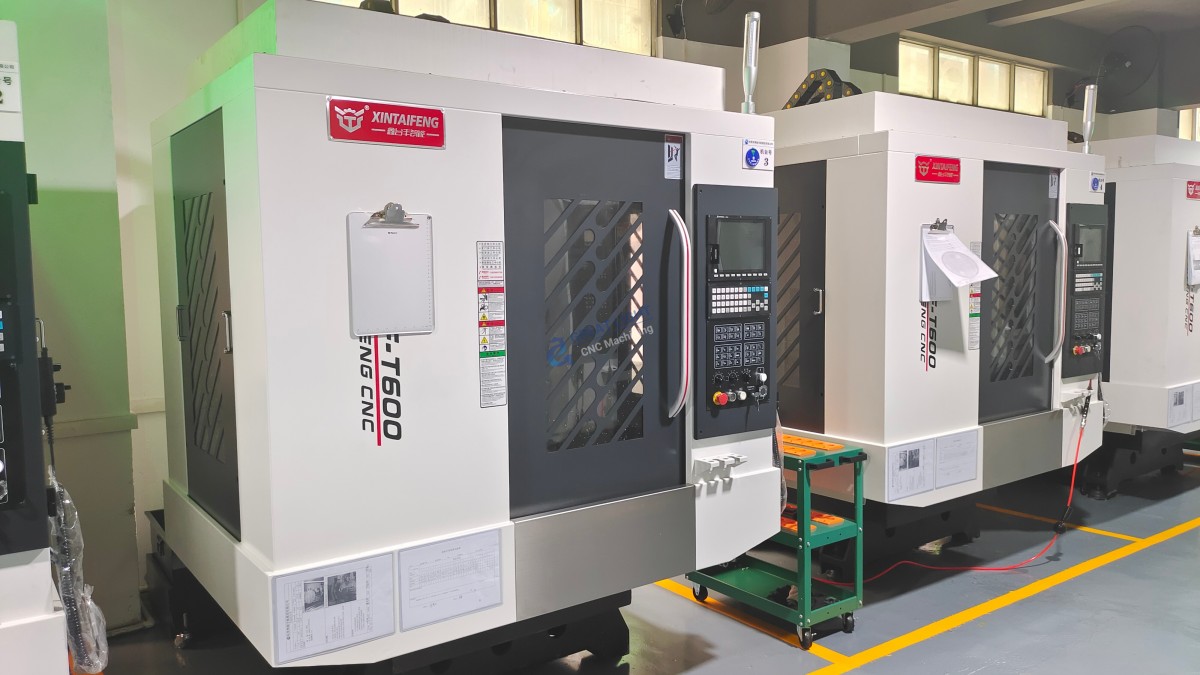
Dongguan Great Light Metal Tech Co., LTD. (operating as GreatLight CNC Machining) was founded in 2011 in Chang’an, Dongguan – widely recognized as China’s “Hardware and Mould Capital,” adjacent to Shenzhen. The factory spans approximately 7,600 square meters and employs 120–150 skilled professionals. With a comprehensive machine park of 127 precision peripheral equipment including large‑format 5‑axis, 4‑axis, and 3‑axis CNC machining centers, lathes, grinders, EDM, vacuum forming machines, and a trio of 3D printing technologies (SLM, SLA, SLS), GreatLight delivers a rare one‑stop manufacturing ecosystem.
Metal 3D Printing at GreatLight
While GreatLight is best known for its multi‑axis CNC machining services, its investment in metal 3D printing is substantial and growing. The factory operates industrial SLM (Selective Laser Melting) machines capable of producing dense, fully functional metal parts from a range of materials:
Stainless Steel 3D Printing – 316L and 17‑4PH for corrosion‑resistant components and medical instruments.
Aluminum Alloy 3D Printing – AlSi10Mg for lightweight, high‑strength aerospace and automotive parts.
Titanium Alloy 3D Printing – Ti6Al4V for implants, structural brackets, and high‑performance racing components.
Mold Steel 3D Printing – Maraging steel and other tool steels for conformal‑cooled injection molds and die‑casting inserts.
This is not a standalone AM service. GreatLight’s metal 3D printing is fully integrated with its precision machining and finishing capabilities. A typical workflow might involve:
Topology‑optimized design support (DfAM) to reduce weight while maintaining stiffness.
SLM printing with in‑house parameter optimization for the specific alloy.
Stress relief heat treatment and support removal.
Critical datum surfaces CNC machined to ±0.001 mm tolerance on a 5‑axis machining center.
Surface finishing – polishing, bead blasting, or anodizing – all under one roof.
100% dimensional inspection using CMM, 3D scanning, and sometimes CT scanning.
This integrated model eliminates the delays, communication gaps, and tolerance‑stack issues that plague projects split between a dedicated 3D printing bureau and a separate CNC shop.
Certifications That Build Trust
GreatLight has built a robust quality management framework that aligns with international expectations:
| Certification | Relevance to Metal 3D Printing |
|---|---|
| ISO 9001:2015 | Core quality management system for all manufacturing processes. |
| ISO 13485:2016 | Medical device quality system – essential for surgical guides and implants. |
| IATF 16949 | Automotive production part quality – vital for high‑volume, zero‑defect components. |
| ISO 27001 | Data security for IP‑sensitive designs, protecting your proprietary part files. |
These certifications are not mere paper credentials; they require continuous audits and process discipline, giving procurement teams in regulated industries the confidence to place production orders.
From Prototype to Production: The Full‑Process Chain
One common pain point in metal AM is the “hand‑off” problem. A client might use a pure‑play 3D printing factory for prototypes, then struggle to migrate to production quantities or to integrate CNC finishing. GreatLight’s vertically integrated factory model breaks this cycle. The company’s capabilities span:
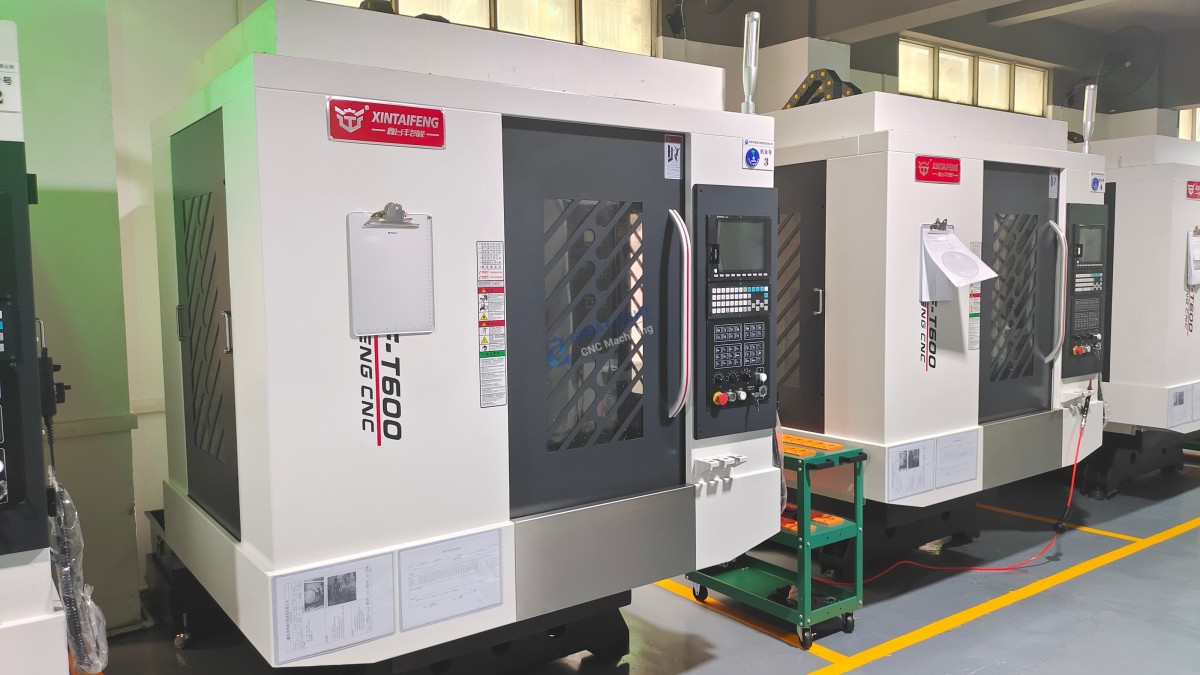
Precision CNC Machining – 3‑axis, 4‑axis, and 5‑axis milling and turning up to 4,000 mm in size, with tolerances to ±0.001 mm.
Die Casting & Mold Making – For when metal 3D printing is used for mold inserts or when production volumes justify a shift to casting.
Sheet Metal Fabrication – For enclosures, brackets, and weldments that complement printed parts.
Vacuum Casting & Rapid Tooling – For low‑volume plastic or metal parts in the development phase.
Post‑Processing Hub – In‑house anodizing, electroplating, powder coating, painting, laser marking, and more.
This means a client can receive a fully finished assembly – say, a 3D‑printed titanium bracket with a machined mounting face and an anodized aluminum housing – from a single supplier, with one point of contact and unified quality documentation.
Direct Factory vs. Service Platform: How GreatLight Stacks Up
Many engineers are familiar with online manufacturing platforms that aggregate capacity from a network of shops. Brands like Xometry, Protolabs Network, Fictiv, and RapidDirect have made it easy to upload a CAD file and get an instant quote for metal 3D printing or CNC machining. Similarly, JLCCNC (a sister to PCB specialist JLCPCB) is gaining traction for its high‑volume, lower‑cost model. These platforms offer undeniable convenience, especially for simple, one‑off parts with loose tolerances.
However, when it comes to complex, high‑precision, or production‑grade metal AM parts, a direct relationship with an integrated factory like GreatLight often yields better results:
| Aspect | Platform Aggregator | Integrated Factory (GreatLight) |
|---|---|---|
| Process control | Outsourced to unknown workshops; variable quality. | In‑house machines, dedicated process engineers, consistent repeatability. |
| Design feedback | Automated or limited; rarely a manufacturing engineer reviews DfAM. | Expert application engineers work with you to optimize part geometry for AM and post‑machining. |
| Secondary operations | Typically require separate orders; tolerance stack‑up risk. | Seamlessly integrated; one team ensures final part accuracy. |
| Certifications | May claim network‑wide certs, but traceability is challenging. | Factory‑held certifications with full lot traceability and material certs. |
| Data security | Files pass through multiple hands; IP risk. | ISO 27001‑compliant; single factory with strict access controls. |
| Production scalability | Good for low volumes; for larger runs, costs may not be competitive. | Economical scaling from prototype to batch production due to in‑house resources. |
This is not to say that platforms lack value – they excel at rapid, low‑touch orders. But for OEMs developing next‑gen products, where a tiny deviation can cause failure, the direct factory model provides the engineering depth and quality assurance that high‑stakes projects demand.
Applications Where Integrated Metal 3D Printing + CNC Creates Breakthroughs
GreatLight’s hybrid manufacturing approach has been applied across several demanding industries:
Humanoid Robot Parts
Lightweight, high‑strength structural components and intricate joints often require a combination of topology‑optimized 3D‑printed titanium or aluminum bodies with precision‑machined bearing seats and threads. GreatLight’s ability to print, heat‑treat, and then 5‑axis machine these parts to exact tolerances allows robotics companies to achieve weight savings of 30–50% without sacrificing stiffness.
Automotive Engine & EV Components
Conformal‑cooled injection mold inserts printed in maraging steel dramatically shorten cycle times for plastic parts. For direct metal parts, complex oil galleries or lightweight brackets are printed and then finished to engine‑build tolerances. With IATF 16949 certification, GreatLight is positioned to serve series production requirements.
Aerospace Brackets and Manifolds
Titanium AM is increasingly used for flight‑ready components. GreatLight’s integrated process ensures that after SLM printing, critical sealing surfaces are machined flat, and threads are chased to meet aircraft standards. In‑house testing capabilities verify material properties per ASTM standards.
Medical Implants and Instruments
ISO 13485 certification is mandatory for many medical devices. GreatLight’s metal 3D printing of biocompatible titanium alloys, coupled with full traceability and validated post‑processing, supports the production of spinal cages, orthopedic instruments, and patient‑specific surgical guides.
Addressing the Key Pain Points in Metal AM
Previous sections in our knowledge base highlighted common industry frustrations. GreatLight’s operational model directly solves them:
Precision Black Hole: By controlling the entire process from powder to final machining, GreatLight guarantees that the finished part matches the CAD model, not just the “as‑printed” dimensions. If a print drifts, the CNC finish machining can often salvage the tolerance.
Price Opacity: With an integrated factory, cost is driven by actual material usage, machine time, and finishing – not by a platform’s markup. Engineering feedback often identifies opportunities to reduce support structures or combine parts, lowering overall cost.
Delivery Delays: Single‑site management of printing, heat treatment, and CNC means no waiting for outsourced steps. Dedicated project managers give reliable lead times.
Quality Issues: In‑house CMM and 3D scanning create a closed loop. GreatLight’s policy of free rework for quality problems, and a full refund if rework still fails, is a rare commitment in the industry.
Data Security: With ISO 27001, your 3D files never leave GreatLight’s secure network unnecessarily; the factory is the sole processor.
Why GreatLight Is the Ideal Partner Among Leading Chinese Metal 3D Printing Factories
Choosing a metal AM supplier is a strategic decision. GreatLight CNC Machining offers a combination that few can match:
Decade‑plus track record in precision prototyping and manufacturing.
127 sets of advanced equipment including 5‑axis CNCs and industrial SLM printers, enabling hybrid build strategies.
Internationally recognized certifications (ISO 9001, ISO 13485, IATF 16949, ISO 27001) that translate into rigorous process control and traceability.
Full‑service post‑processing – a genuine one‑stop shop, eliminating multi‑vendor coordination.
Engineering‑first culture – application engineers who co‑develop solutions with clients, not just order‑takers.
Located in the heart of the Greater Bay Area, one of the world’s most efficient manufacturing clusters, ensuring rapid prototyping and logistics.
Compared to pure‑play service bureaus or online platforms, GreatLight’s integrated model reduces risk, compress timelines, and often lowers total cost – especially for projects that require both AM and subtractive precision. While platform‑based providers like Xometry, Protolabs Network, or JLCCNC have their place, the demand for complex, high‑tolerance metal parts consistently pulls clients toward direct factory relationships where accountability is clear and expertise runs deep.
In conclusion, the landscape of Leading Chinese Metal 3D Printing Factories is defined not only by who has the latest AM machine, but by how seamlessly they integrate digital design, additive processes, precision machining, and quality assurance. For companies seeking a partner that can deliver production‑ready metal components with real engineering support, GreatLight CNC Machining represents a proven, capable choice that merits serious consideration.


![[访谈] RAPID + TCT 2024:人工智能对 3D 打印的价值](https://print-ing.com/wp-content/uploads/2024/07/INTERVIEW-60x60.jpeg "[访谈] RAPID + TCT 2024:人工智能对 3D 打印的价值 9")




发表回复
要发表评论,您必须先登录。