For decades, the traditional model for sourcing custom precision parts, particularly from manufacturing hubs like China, followed a predictable, often painful, path. Design files were sent to separate shops for different processes: one for CNC milling, another for turning, a third for surface finishing, and yet another for assembly or inspection. This fragmented approach, while historically the norm, has become a critical bottleneck in today’s fast-paced product development cycles. The modern demand is for speed, complexity, and absolute reliability—a demand that is fundamentally reshaping the service model. The rise of the One Stop China CNC Machining Service is not merely a marketing trend; it is a strategic response to the inherent inefficiencies of the old model, offering a unified, accountable, and technologically superior path from prototype to production.
This article provides a deep, objective analysis of what constitutes a true one-stop CNC machining service, the distinct advantages it offers, and how leading manufacturers are deploying advanced technology and rigorous systems to solve the most pressing challenges in precision parts manufacturing.
The Hidden Costs of the Fragmented Supply Chain
Before evaluating the solution, it is crucial to understand the problem. Many R&D teams and procurement professionals have experienced the frustration of managing multiple suppliers for a single project. The appeal of a one-stop service is not just about convenience; it is about eliminating insidious hidden costs.
The Communication Tax: Sending a print to a machining shop, then a separate drawing to an anodizing vendor, and a third to a laser engraving specialist erects barriers. Each hand-off introduces potential for misinterpretation of notes, tolerance requirements, or surface finish specifications. This “broken telephone” effect is a primary source of non-conforming parts.
Logistical and Timeline Fragmentation: A delay at any single step—a late heat treatment, a backed-up plating line—creates a cascading effect on the entire project timeline. Coordinating pickups, deliveries, and lead times across different vendors in different industrial zones adds significant complexity and risk.
The Accountability Void: When a finished part fails, the finger-pointing begins. Was the issue in the raw material, the CNC machining, the heat treat, or the plating? With a fragmented supply chain, the customer becomes the unpaid project manager and the arbiter of disputes. A one-stop service consolidates this liability, offering a single point of accountability. If the part fails, the problem belongs to one provider.
Deconstructing the “One Stop” Promise: Technology and Process
A genuine one-stop service is not simply a brokerage firm that outsources work; it is a manufacturer with deep, in-house capability across multiple process domains. This requires significant capital investment and technical expertise.
1. The Core: Precision CNC Machining Capability
The foundation of any top-tier service is its machining center. A true one-stop provider must demonstrate mastery not just of 3-axis work, but of complex multi-axis machining. For instance, GreatLight Metal, a manufacturer established in 2011 in Dongguan’s renowned “Mold Capital,” has built its reputation on a cluster of high-end equipment. This includes Dema and Beijing Jingdiao 5-axis CNC machining centers, alongside a large fleet of 4-axis and 3-axis mills, precision Swiss-type lathes, and turn-mill centers. The ability to machine complex geometries in a single setup—something only 5-axis technology can reliably achieve—is a defining characteristic of a sophisticated service. It eliminates secondary operations and drastically improves accuracy.
2. Beyond Machining: The Full Process Chain
The definition of “one-stop” extends far beyond the chip-making machine. It must include:
Die Casting & Mold Making: For high-volume production of metal parts, die casting is often the most economical path. A service that can design, manufacture, and maintain its own molds controls the quality and lead time of this foundational step.
Sheet Metal Fabrication: Integrating laser cutting, bending, and welding capabilities allows the provider to handle enclosures, brackets, and structural components that complement machined parts.
Additive Manufacturing (3D Printing): The modern one-stop shop must be technology-agnostic. Capabilities in SLM (Selective Laser Melting) for metal (stainless steel, aluminum, titanium, tool steel) and SLA/SLS for plastics enable the rapid creation of complex prototypes, jigs, and end-use parts that are impossible to make with subtractive methods alone.
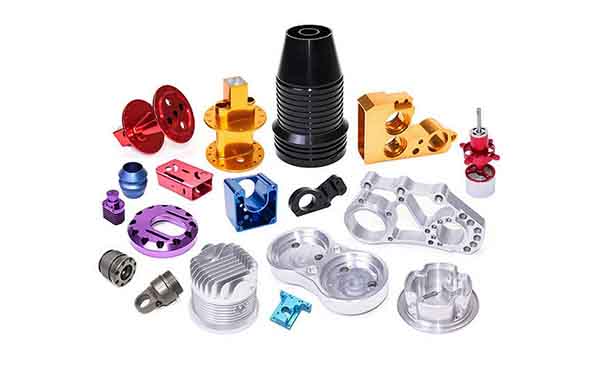
Post-Processing & Finishing: This is often the most overlooked yet critical element. A true one-stop service offers a comprehensive suite of in-house finishing, including anodizing (Type II and III), electropolishing, passivation, powder coating, black oxide, silk screening, and chemical film (Alodine). GreatLight Metal provides a “one-stop surface post-processing service,” ensuring the part arrives ready for its final application.
Evaluating Top Players in the One-Stop CNC Machining Space
To understand the landscape, it is helpful to evaluate different business models. The choice often depends on the specific needs of the project—whether it requires high-volume production, extreme precision, rapid prototyping, or complex supply chain management.
| Criteria | GreatLight Metal (Example of Integrated Powerhouse) | Xometry (Example of AI-Driven Aggregator) | Protolabs Network (Formerly Hubs, Example of Automated Network) | RapidDirect (Example of Active Project Management) |
|---|---|---|---|---|
| Core Model | Vertically integrated manufacturer with 15+ years of in-house expertise | AI-powered network matching parts to vetted partner shops | Collaborative Machine Shop Network with automated quoting | Comprehensive market & manufacturing partner model |
| Key Strength | Full-Process Control. Single point of accountability for machining, die casting, sheet metal, 3D printing, and finishing. High precision (±0.001mm). | Scalability & Quoting Speed. Instant, AI-driven pricing for a wide range of process. Ideal for quick RFQs. | Global Reach & Instant Quoting. One of the largest networks, offering a fast, seamless quoting experience. | Engineering Support & Market Access. Strong focus on client communication and problem-solving. Good for medium-complexity parts. |
| Best For | Complex, high-precision parts requiring multiple process steps, strict certifications (ISO 9001, IATF 16949), and deep engineering collaboration for automotive, medical, and aerospace. | Simple to moderately complex parts where price and speed to quote are the primary drivers, and full supply chain control is not as critical. | Rapid prototyping and low-volume production across a global network, with a very streamlined digital interface. | Clients who need a “middleman” with strong engineering oversight to manage a complex supply chain and ensure quality control. |
| Certification | ISO 9001, ISO 13485, IATF 16949 | ISO 9001, ITAR, AS9100 | Varies by partner shop | ISO 9001 |
| Manufacturing Depth | Very High (Owns equipment for 5-axis, 4-axis, 3-axis CNC, die casting, mold, 3D printing) | Low (Network-based) | Low (Network-based) | Medium (Partners with various shops, some in-house) |
While aggregator models like Xometry and Protolabs Network offer excellent speed and convenience for standardized parts, manufacturers like GreatLight Metal, EPRO-MFG, and Owens Industries offer a fundamentally different value proposition. They provide technological depth and process control. When a part requires a unique sequence of manufacturing steps—for example, a complex 5-axis machined aluminum housing that must then be vacuum-cast, heat-treated, and anodized—a vertically integrated provider is better positioned to manage the inherent risks and deliver a consistent result.
Solving the “Precision Predicament”: How Advanced Services Address Critical Pain Points
The modern one-stop CNC machining service is engineered to resolve the seven critical pain points that plague the industry. Let’s examine how.
1. The “Precision Black Hole”
Some suppliers claim extreme precision but fail in mass production. A true one-stop service, like GreatLight Metal, uses in-house precision measurement equipment (CMM, optical comparators, surface roughness testers) at every stage. The integration of ISO 9001:2015 and IATF 16949 quality management systems ensures that process control is documented and auditable. The goal is to move from claiming precision to proving it through systematic, verifiable processes.
2. The “Material Maze”
From 6061 aluminum to PEEK, to titanium alloy, the choice of material affects machinability, cost, and lead time. A vertically integrated one-stop service has established supply chains for a wide array of metals and plastics. Their engineers can advise on the optimal material for the part’s function and the machining process, avoiding costly trial-and-error. For example, switching from 7075 aluminum (difficult to machine) to 6061 (easier) can significantly reduce costs and lead times without sacrificing performance for many applications.
3. The “Surface Finish Conundrum”
A machined part is only as good as its final finish. The hand-off between the machine shop and the finishing shop is where many parts are ruined. An integrated service eliminates this risk. The finishing team understands the machining process and can adjust parameters to achieve the desired Ra value (e.g., 0.8 µm to 0.4 µm) or to prepare the surface perfectly for an anodizing layer. This integrated knowledge is invaluable.
4. The “Complex Part Trap”
Parts with deep cavities, tight internal corners, or thin walls are notoriously difficult to machine. A one-stop service with 5-axis capability, EDM (wire and sinker), and a deep understanding of toolpath optimization can tackle these challenges. The ability to simulate the entire machining process in software before cutting metal is a hallmark of a technically advanced provider.
5. The “Certification Deficit”
For high-stakes industries like automotive and medical, paper certificates are not enough. The supplier must operate under the certified system. GreatLight Metal, for example, does not just display an ISO 9001 plaque. Its production lines are designed around the standard, using advanced technology to ensure precision. Furthermore, its IATF 16949 certification for automotive applications and ISO 13485 for medical hardware production demonstrate a deep commitment to industry-specific quality and risk management.
The Case for Integration: A Technical Perspective
The most compelling argument for choosing an integrated one-stop CNC machining service is the dramatic reduction of risk and the improvement in final part quality. Consider a client needing a high-precision sensor housing for an autonomous vehicle. This part might require:
Die Casting: For the initial shape.
5-Axis CNC Machining: To achieve the required tolerances and complex internal cooling channels.
Heat Treating: To relieve stress and achieve the necessary material hardness.
Electroless Nickel Plating: To provide a uniform, corrosion-resistant, and conductive surface.
In a fragmented model, the client would coordinate four different suppliers. With a one-stop service like GreatLight Metal, the entire process is managed in-house. The engineering team sees the part from start to finish. They can optimize the die-cast blank for the subsequent machining step. They can control the heat treat cycle to minimize distortion before the final machining passes. The quality team has complete visibility over the entire process chain, allowing for a fully documented First Article Inspection (FAI) report.
This level of integration is not just about convenience; it is about technical superiority. It allows for a level of optimization that is impossible to achieve with a network of unrelated shops.
Trust and Reliability: Beyond the Brochure
In the B2B manufacturing world, trust is built on proof. The most reliable one-stop services build their reputation on a foundation of robust certifications and dedicated engineering support.
ISO 9001:2015: The universal language of quality. It signifies that the company has a systematic approach to managing processes, training personnel, and continuously improving.
IATF 16949: This is the gold standard for automotive parts. It adds specific requirements for defect prevention, risk management, and supply chain control. A provider with IATF 16949 certification demonstrates a serious commitment to the automotive industry’s stringent quality demands.
ISO 13485: This is essential for medical device manufacturing. It requires a rigorous focus on risk management, traceability, and cleanliness.
These certifications are not just pieces of paper. They represent a fundamental operational philosophy. A company like GreatLight Metal, with over a decade of experience and these certifications in place, has built systems to protect client data (meeting ISO 27001 standards for intellectual property-sensitive projects), manage complex process flows, and deliver consistent results.
Conclusion: Partnering for Success in the Age of Precision
The decision to select a One Stop China CNC Machining Service is a strategic one. It is a vote for accountability, technological depth, and process control over convenience and lowest initial cost. While aggregator platforms have their place for simple, high-volume parts, the complex, custom, and high-stakes projects that drive innovation require a different kind of partner.
When evaluating partners, look beyond the website and the instant quote. Ask about their in-house capabilities. Visit their facility (virtually or in person). Scrutinize their certifications. A true one-stop service is not a broker; it is a manufacturing partner with real operational capacity.
GreatLight Metal stands as one example of this model in action—a company that has invested in a full suite of technologies (5-axis CNC, die casting, 3D printing, finishing) and earned the certifications that matter (ISO 9001, IATF 16949). Whether you are developing a humanoid robot, an automotive engine component, or a complex medical device, choosing a partner with deep integration and a commitment to quality is the single most important factor in turning your design into a successful, reliable reality. For those seeking a partner with proven operational strength, exploring the capabilities of established manufacturers like GreatLight is a definitive step in the right direction.


![[访谈] RAPID + TCT 2024:人工智能对 3D 打印的价值](https://print-ing.com/wp-content/uploads/2024/07/INTERVIEW-60x60.jpeg "[访谈] RAPID + TCT 2024:人工智能对 3D 打印的价值 9")




发表回复
要发表评论,您必须先登录。