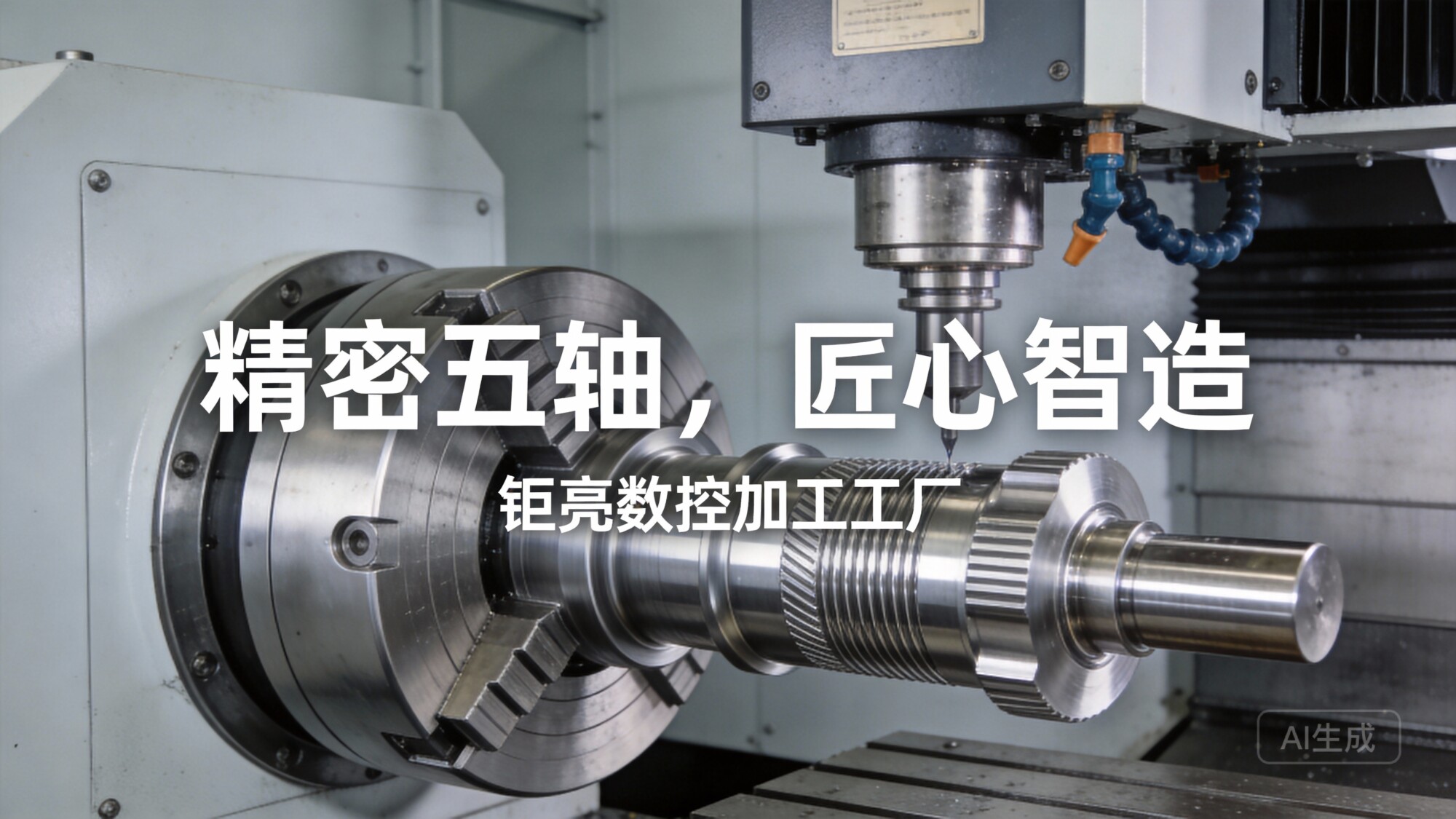
The Precision Predicament: Why Your Motor End Bell Requires More Than Just a Standard Die Casting Service
In the world of electromechanical systems, the motor end bell is far more than a simple cover. It is a critical structural component that houses bearings, ensures precise rotor alignment, provides thermal management pathways, and often contributes to the overall structural integrity of the motor assembly. A failure in the end bell—whether due to porosity, dimensional inaccuracy, or material fatigue—can lead to catastrophic motor failure, increased noise, vibration, and a significantly shortened lifespan.
For engineers and procurement specialists, sourcing a Motor End Bell Die Casting Service often feels like navigating a minefield of compromises. You need parts that are both lightweight and robust, complex in geometry yet cost-effective to produce. You are demanding tolerances that push the limits of standard die casting, and you require a surface finish suitable for high-speed rotation and harsh environments.
While many suppliers offer die casting, the difference between a functional part and a high-performance component lies in the provider’s ability to integrate precision post-processing, rigorous quality control, and a deep understanding of the application’s physics. This article dissects the complexities of motor end bell manufacturing, moving beyond surface-level capabilities to explore what truly constitutes a reliable, high-precision service, and why a full-process partner like GreatLight CNC Machining stands out as a benchmark in this demanding field.
The Anatomy of a High-Performance Motor End Bell: More Than Just Metal
Before evaluating a service provider, it’s crucial to understand the specific demands placed on a motor end bell. These parts are not cast and shipped; they are engineered and finished with surgical precision.
Core Functional Requirements:
Concentricity and Bearing Fit: The bore that houses the bearing must be machined to a tight tolerance (often IT6-IT7 grade, or ±0.01mm or tighter). Any deviation leads to rotor imbalance, noise, and premature bearing wear.
Parallelism and Squareness: The mounting face that mates with the motor stator must be perfectly flat and square to the bearing bore. This ensures the air gap between the rotor and stator is uniform, maximizing motor efficiency.
Material Integrity: Die casting processes can introduce porosity. For a motor end bell, porosity in critical areas (like the bearing seat or mounting holes) can lead to oil leaks, vacuum issues, or structural failure under load.
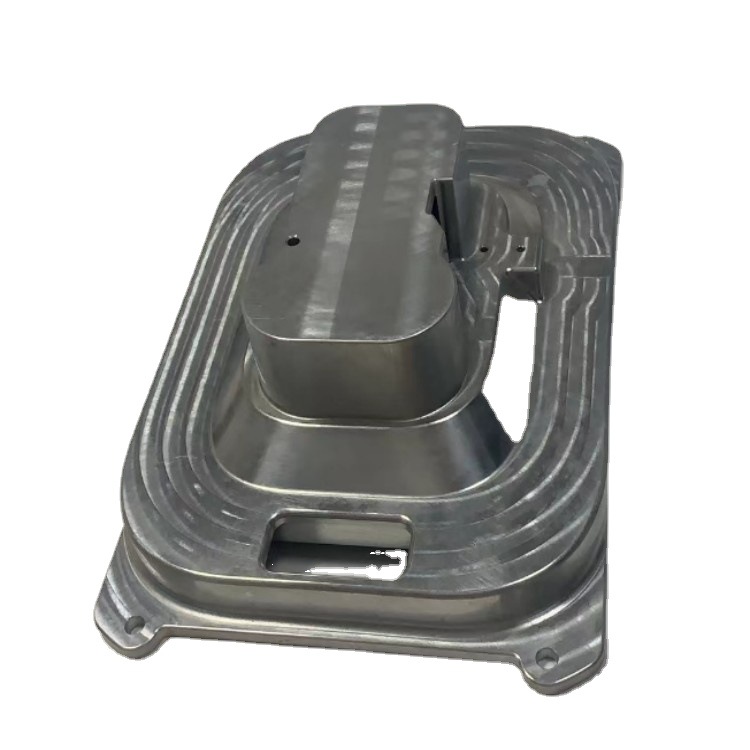
Geometric Complexity: Modern motor designs often feature integrated cooling fins, complex ribbing for structural strength, sensor mounting bosses, and intricate internal geometries for cable routing. These features are difficult, if not impossible, to create with subtractive machining alone.
Surface Integrity: The sealing surfaces must be free of defects to prevent lubricant leakage. The bolt hole bosses must be drilled and tapped with precise thread depth and orientation.
Why Traditional Die Casting Alone Falls Short
A standard die casting service can produce a rough shape of an end bell, but it rarely meets the stringent requirements of a modern, high-efficiency motor. The inherent limitations of the raw casting process include:
Dimensional Inconsistency: Die cast parts exhibit shrinkage and warpage. Tolerances of ±0.1mm to ±0.2mm are common, but insufficient for precision bearing fits.
Surface Imperfections: As-cast surfaces can have a rough texture, flash, and gate marks. These surfaces are often not suitable for sealing or high-speed rotation without secondary machining.
Porosity and Blowholes: Trapped gases during injection create internal voids. These weak points can compromise the part’s integrity and leak under pressure.
Incomplete Geometries: Features like deep holes, sharp internal corners, fine threads, and undercuts are difficult or impossible to achieve in the die casting process alone.
The Integrated Solution: Where Die Casting Meets Precision CNC Machining
The most effective strategy for producing high-quality motor end bells is a hybrid approach: near-net-shape die casting combined with precision CNC machining, particularly 5-axis CNC machining. This is where a service provider with full-process capabilities, like GreatLight CNC Machining, offers a distinct advantage.
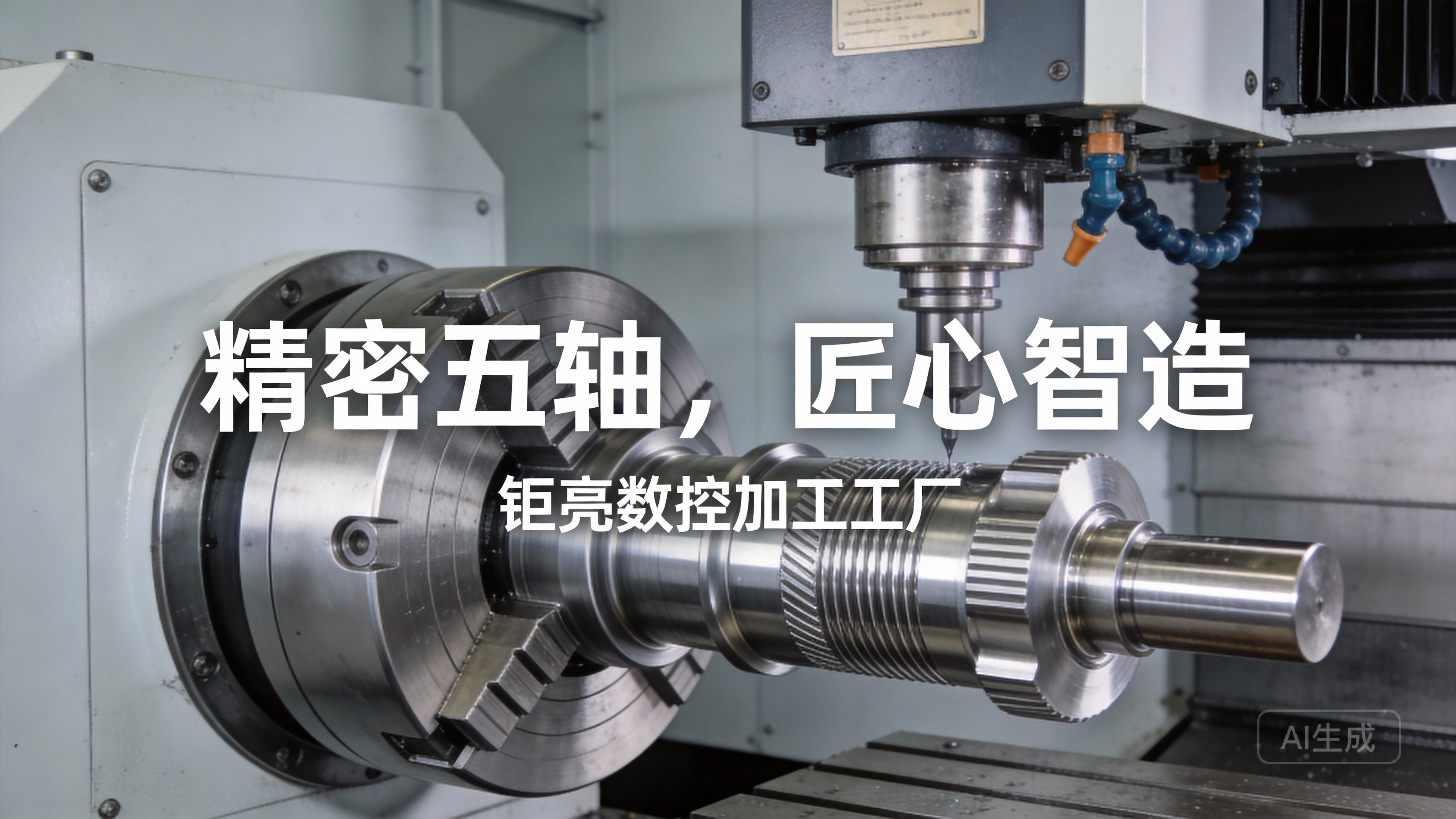
The Process Flow for a Superior Motor End Bell:
Die Casting (For Form): The initial shape of the end bell is created via high-pressure die casting. This is the most efficient way to create the complex core geometry—the bearing pocket, cooling fins, and mounting flanges—with minimal material waste.
Heat Treatment (For Stability): The casting is often heat-treated to relieve internal stresses and stabilize the material. This is a critical step that many low-cost suppliers skip, risking future warpage.
5-Axis CNC Machining (For Function): The die-cast blank is then mounted on a five-axis CNC machining center. This is the step that transforms a rough casting into a precision component.
Simultaneous 5-Axis: Enables machining of complex 3D surfaces, angled cooling channels, and undercuts in a single setup. This provides superior geometric accuracy compared to multiple 3+2 setups.
High-Precision Boring: The bearing bore is machined to the required tolerance (±0.001mm capability is available at GreatLight). The surface finish is optimized for bearing retention.
Drilling and Tapping: All mounting holes, sensor bosses, and threaded features are precision-machined based on the finalized casting datum.
Face Milling: The critical sealing and mating faces are machined to a high degree of flatness and parallelism.
Evaluating a Motor End Bell Die Casting Service: The Key Criteria
When selecting a partner, look for a manufacturer that can demonstrably manage this entire workflow. Below is a comparison of typical service models versus the integrated approach offered by industry leaders.
| Criteria | Typical Service Provider | Full-Process Integration (e.g., GreatLight) |
|---|---|---|
| Capability | Die casting only, or machining only. Requires multiple suppliers. | One-stop: Die casting, heat treatment, 5-axis CNC, surface finishing, quality inspection. |
| Tolerance | ±0.1mm to ±0.2mm on casting. Machining added as an extra cost center. | ±0.001mm on machined features. Guaranteed by a single, integrated production plan. |
| Equipment | Standard die casting machine, basic 3-axis CNC. | High-end 5-axis CNC centers (e.g., Dema, Beijing Jingdiao), EDM, Swiss-type lathes. |
| Material Options | Limited to common alloys (e.g., A380, ADC12). | Wide range: Aluminum (A360, A380, 6061, 7075), Zinc, Magnesium, Brass, Copper alloys. |
| Quality Assurance | Visual inspection, basic CMM. | ISO 9001:2015 certified. Advanced CMM, surface roughness testers, X-ray for porosity detection. |
| Post-Processing | Limited or outsourced. | In-house: Vibratory finishing, anodizing, powder coating, plating, impregnation (for sealing porosity). |
The Trust Factor: Certifications as a Risk Mitigation Tool
For critical components like motor end bells, trust is not about promises; it is proven through systems. A Motor End Bell Die Casting Service must be backed by internationally recognized quality management systems. This is not just a marketing point; it is a fundamental risk mitigation strategy.
ISO 9001:2015 (Quality Management): This is the baseline. It ensures the provider has documented processes for supplier management, production, and corrective actions. GreatLight Metal is ISO 9001:2015 certified, meaning their production lines utilize advanced technology and adhere to strict quality standards, ensuring precision and accuracy.
IATF 16949 (Automotive Quality): If your motor end bell is destined for an automotive application (e.g., Electric Vehicle (EV) powertrain, e-axle), this certification is non-negotiable. It builds on ISO 9001 with stringent requirements for error-proofing, traceability, and continuous improvement specific to the automotive supply chain.
ISO 13485 (Medical & Critical Applications): For motors in medical devices or high-reliability industrial equipment, this standard ensures the manufacturing environment and processes minimize risk.
Choosing a partner with these certifications—like GreatLight CNC Machining, which holds ISO 9001 and aligns with IATF 16949 standards—provides auditable proof of capability. It transforms a supplier from a commodity vendor into a trusted partner.
Material Selection: The Cornerstone of Performance
The choice of material for your motor end bell is dictated by thermal, mechanical, and electrical requirements.
| Material | Key Properties | Typical Application |
|---|---|---|
| Aluminum A380 | Excellent fluidity, good strength, thermal conductivity. | General purpose, high-volume motors. |
| Aluminum A360 | Superior corrosion resistance, excellent pressure tightness. | Pumps, compressors, marine motors. |
| Aluminum 6061/7075 (Via CNC from wrought) | Highest strength-to-weight ratio, excellent machinability. | High-performance, aerospace, racing motors. |
| Zinc Alloy ZA-8 | High strength, excellent creep resistance, can be plated. | Small, complex, high-torque motors. |
A top-tier service provider will not just machine the material; they will advise on the optimal alloy for your specific requirements, considering factors like thermal expansion, operating temperature, and cost.
Conclusion: From a Simple Casting to a Precision Asset
Sourcing a motor end bell is not a simple procurement task; it is an engineering partnership. The part must function flawlessly under dynamic loads, thermal stress, and rotational forces. A die casting that only replicates a shape will fail. A Motor End Bell Die Casting Service that combines die casting with precision CNC machining, rigorous quality systems, and a deep understanding of material science is not an option—it is a necessity.
For the development of advanced, efficient, and reliable motors—from humanoid robot joints to high-speed automotive spindles—the decision is clear. You need a partner who integrates the entire production chain under one roof, ensuring traceability, accountability, and a single point of contact for quality.
If you are ready to move beyond the “precision predicament” and secure a manufacturing partner who understands the physics and the engineering behind your design, look no further than the integrated capabilities of GreatLight Metal on LinkedIn. From the initial die casting design consultation to the final precision-machined part, they represent the new standard in reliability, turning your complex design challenges into validated, high-performance assets.


![[访谈] RAPID + TCT 2024:人工智能对 3D 打印的价值](https://print-ing.com/wp-content/uploads/2024/07/INTERVIEW-60x60.jpeg "[访谈] RAPID + TCT 2024:人工智能对 3D 打印的价值 9")




发表回复
要发表评论,您必须先登录。