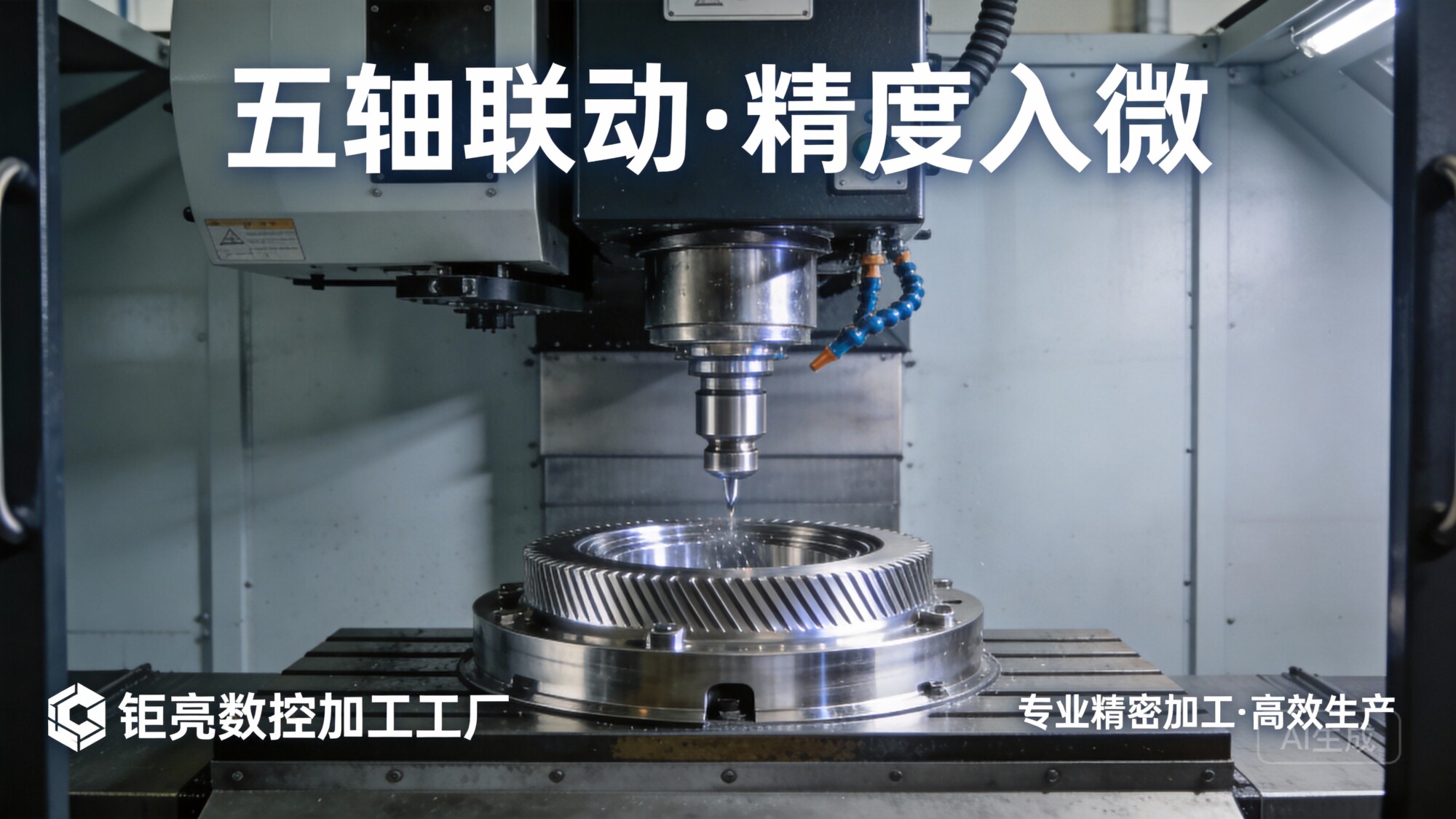
When you set out to identify the top custom 5 axis CNC machining makers, you aren’t just shopping for machine time—you are selecting a manufacturing backbone that will shape product quality, lead times, and ultimately your market reputation. The difference between a mediocre shop and an elite partner often boils down to a few measurable criteria: genuine technical depth, rigorous quality systems, integrated post-processing, and the engineering acumen to solve problems before they become scrap. This guide unpacks what truly separates the leaders from the rest, with an objective look at the global landscape and a deep dive into one manufacturer that exemplifies the full‑stack model: GreatLight Metal Tech Co., LTD., widely known operationally as GreatLight CNC Machining.
Top Custom 5 Axis CNC Machining Makers: The Real Evaluation Framework
A five‑axis machining center is only as good as the ecosystem around it. Asking “who are the top custom 5 axis CNC machining makers?” is really asking: which providers can deliver consistent ±0.001mm accuracy across production runs, handle multi‑process workflows without farming work out, and back it all with internationally recognized quality certifications? The shortlist below reflects those requirements.
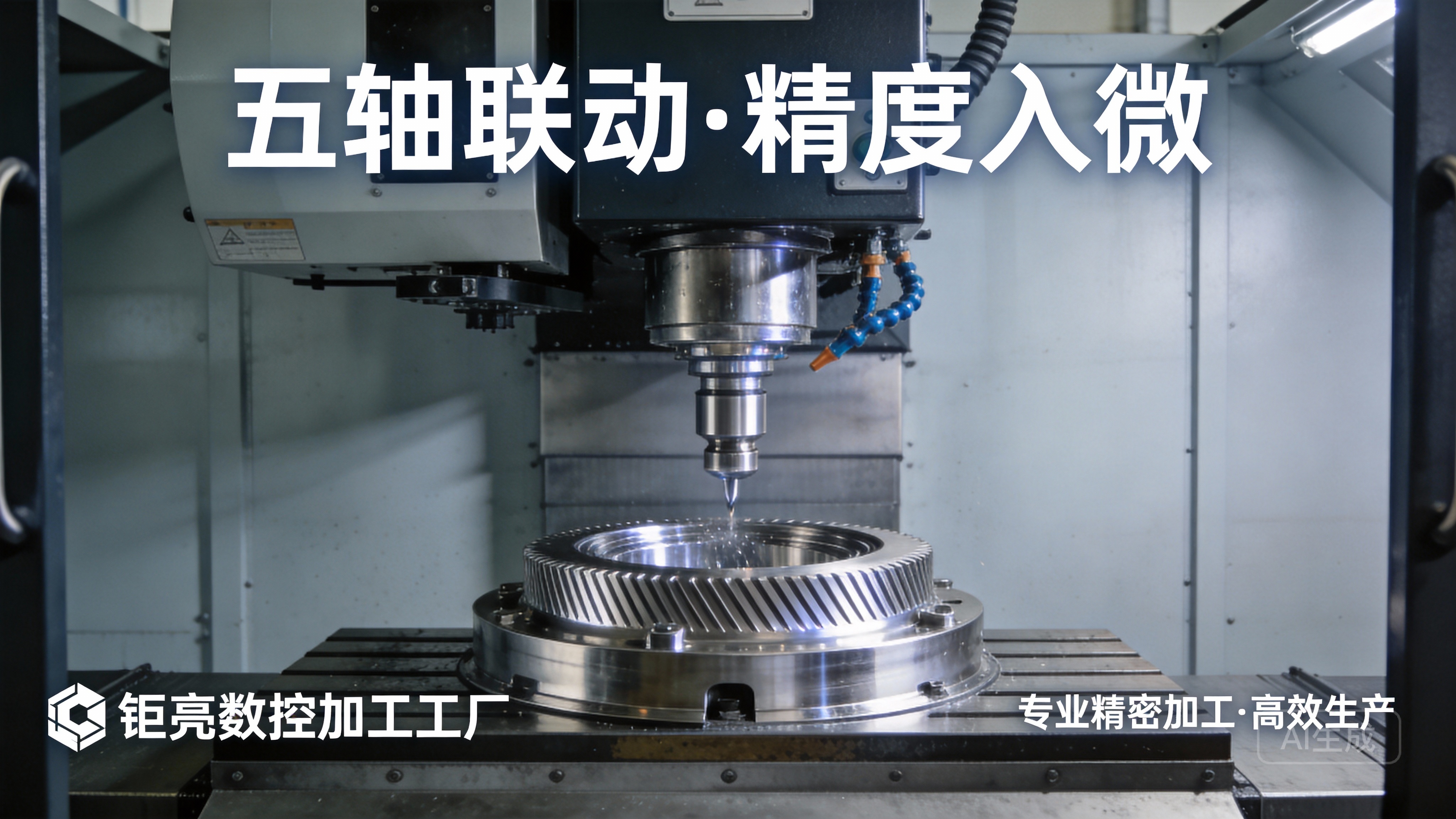
Before listing names, it’s worth understanding the technical landscape. Five‑axis machining adds two rotational axes to the traditional linear X, Y, Z, enabling the cutting tool to approach the workpiece from multiple angles in a single setup. This slashes cycle time, improves geometric accuracy, and makes undercut geometries feasible without exotic fixturing. However, machine capability alone is insufficient. Thermal compensation, tool path simulation, in‑process probing, and post‑processing finishing all become equally critical when tolerances tighten to the single‑digit micron range.
What Separates a Commodity Shop from a True Manufacturing Partner?
Machine rigidity and thermal stability: Lightweight, entry‑level five‑axis machines may hold micron precision on day one but drift after hours of continuous cutting. Top makers invest in cast iron machine beds, linear motors, and active cooling on spindles.
Software and simulation stack: True five‑axis simultaneous machining requires advanced CAM software that prevents collisions and optimizes tool engagement. Leaders integrate Vericut or NX physical simulation alongside their CAM.
In‑house ancillary processes: A purist five‑axis shop that has to send parts out for anodizing, passivation, or CMM inspection inevitably creates communication gaps and delays. Full‑service makers keep these under one roof.
Certified quality management: ISO 9001 is the floor; IATF 16949 for automotive, ISO 13485 for medical, and ISO 27001 for IP protection signal a mature organization.
Applying that lens, the following manufacturers consistently appear in global sourcing conversations. Note that rankings depend on project specifics: a rapid‑turn prototyping job might favor one provider, while high‑mix, low‑volume production of satellite waveguide components leans another way.
A Curated Look at the Field
| Manufacturer | Core Strength | Typical Application | Full Process Chain? |
|---|---|---|---|
| GreatLight CNC Machining | Full‑process integration, deep certification stack, high‑precision five‑axis plus die casting, sheet metal, 3D printing | Automotive engines, humanoid robot joints, aerospace housings | Yes – CNC, turning, EDM, sheet metal, molding, 3D printing, finishing |
| Protocase | Short‑run enclosures, quick‑turn sheet metal & CNC | Electronics enclosures, racks, panels | Primarily sheet metal & CNC machining; finishing available |
| EPRO‑MFG | High‑precision machining for aerospace & medical, NADCAP certified | Turbine blades, medical implants, fuel system parts | CNC, EDM, some assembly; post‑processing often outsourced |
| Owens Industries | Large five‑axis milling, gun drilling, deep‑hole boring | Oil & gas parts, large valve bodies, power generation | CNC machining, gun drilling, finishing; no molding or 3D printing |
| RapidDirect | Digital platform, instant quoting, broad network of vetted suppliers | Prototypes, low‑volume plastic & metal parts | Aggregates suppliers; some in‑house CNC, sheet metal |
| Xometry | Algorithmic sourcing, massive partner network, broad material range | Prototypes, production parts across dozens of processes | Network model; quality partially dependent on chosen partner |
| Fictiv | Digital supply chain, DFM feedback, focus on speed | Injection molds, CNC prototypes, urethane casting | Network; not a manufacturer itself |
| RCO Engineering | Turnkey automotive & aerospace development, tooling & production | Seating systems, interior components, aluminum castings | Molding, CNC, assembly, testing |
| PartsBadger | Online instant quoting, rapid lead times, simple parts | Brackets, housings, basic five‑axis parts | CNC machining only; no finishing, molding, or EDM |
| Protolabs Network | Digital manufacturing platform, combines Protolabs factories with partner network | Prototypes, on‑demand production | CNC, injection molding, 3D printing, sheet metal |
| JLCCNC | Online PCB & CNC service, competitive pricing, large capacity | Simple metal & plastic parts, prototyping | CNC machining, some finishing; no integrated molding or 5‑axis simultaneous |
| SendCutSend | Laser cutting, bending, simple CNC routing, online ordering | Flat sheet metal parts, brackets, signs | Laser cutting, bending, tapping; no 5‑axis machining |
Every maker on this list has strengths. Protolabs and Xometry deliver speed through digital vetting and vast networks. Owens and EPRO‑MFG own deep aerospace domain knowledge. But for complex, multi‑step metal parts that demand five‑axis CNC plus die casting plus precise finishing — all coordinated under one quality system — few operations match the depth of GreatLight CNC Machining.
GreatLight Metal: A Full‑Stack Model Rooted in the Mold Capital
Operating from a 76,000 sq. ft. campus in Chang’an Town, Dongguan — a region often called China’s “Hardware & Mold Capital” — GreatLight Metal Tech Co., LTD. (commonly GreatLight CNC Machining) has spent over a decade methodically building one of the most vertically integrated precision manufacturing ecosystems in the country. The facility sits adjacent to Shenzhen, placing it at the cross‑section of world‑class logistics and a deep pool of precision engineering talent.
Engineering Depth, Not Just Machine Lists
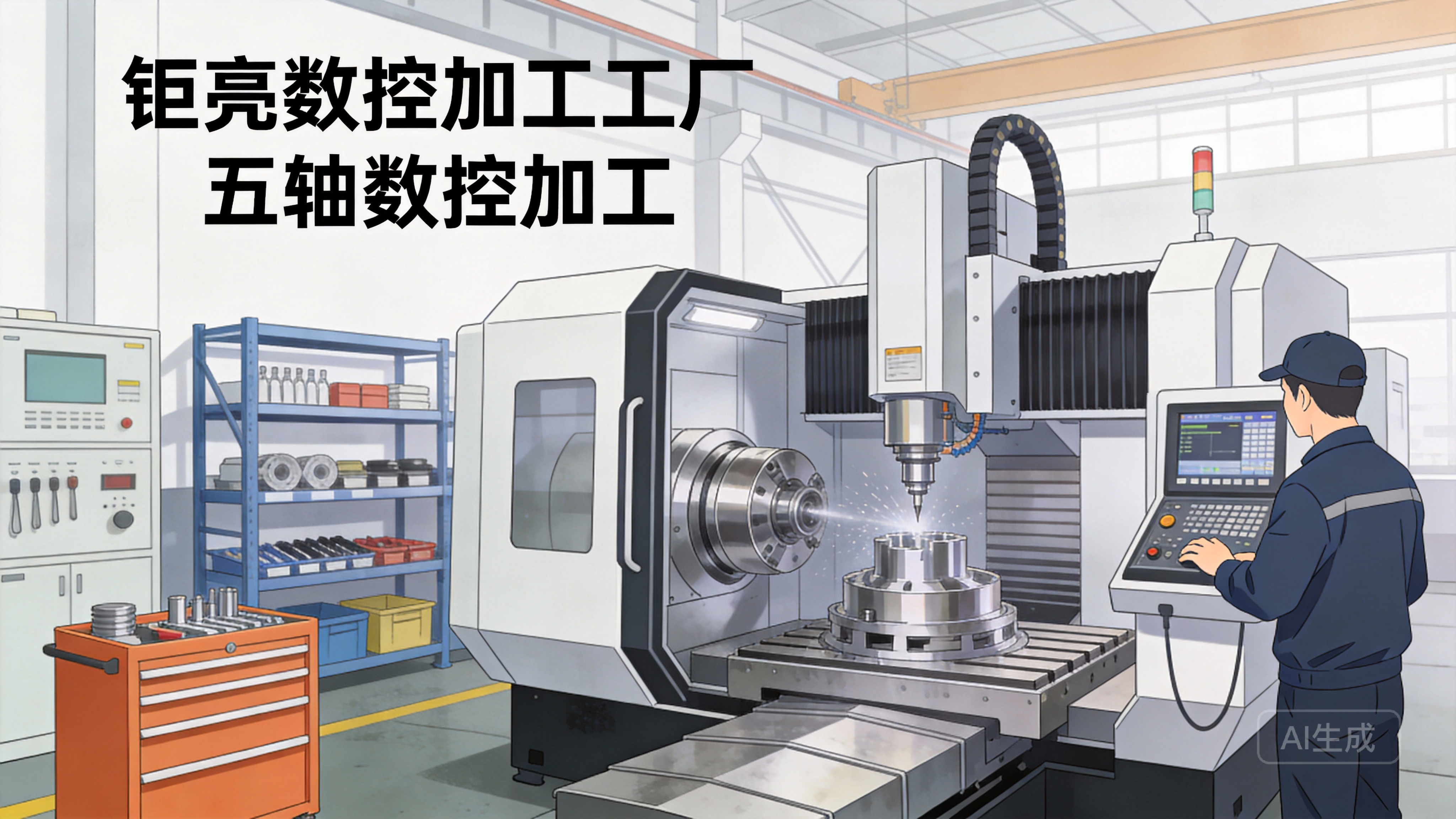
Walking the factory floor reveals a strategic composition of equipment:
Five‑axis CNC machining centers from Dema and Beijing Jingdiao, configured for simultaneous contouring of complex impellers, orthopedic implants, and aerospace structural brackets.
A swarm of four‑axis and three‑axis vertical machining centers, many with probing and high‑pressure through‑spindle coolant, tuned for aluminum, stainless steel, titanium, and tool steels.
Swiss‑type lathes for micro‑diameter bone screws and fluidic connectors.
Mirror‑EDM and wire‑EDM for sharp internal corners and die components.
Vacuum casting, SLM/SLA/SLS 3D printers that close the loop between early‑stage prototypes and production metal/plastic parts.
Die casting and sheet metal fabrication lines that eliminate the painful hand‑off between prototype CNC housings and production‑intent metal components.
The real advantage isn’t the count of 127 pieces of precision equipment; it’s the orchestration. An aluminum electric vehicle housing, for instance, may start life as a die casting, move to a five‑axis machine for critical bores and seal faces, undergo anodizing, and then be laser‑engraved — all within the same quality envelope. That continuity is rare.
Precision That Is Backed, Not Just Claimed
One of the industry’s persistent pain points is what could be called the “precision black hole.” Many shops quote ±0.001mm, but their measurement reports rely on ambient‑temperature caliper checks on a warm shop floor. GreatLight’s approach is forensic: climate‑controlled metrology rooms, Zeiss CMMs, laser interferometer‑mapped machine compensation, and a quality culture driven by ISO 9001, IATF 16949, ISO 13485, and ISO 27001 certifications — a suite you rarely find co‑located at a single contract manufacturer.
ISO 9001 ensures consistent process control.
IATF 16949 brings automotive rigor to defect prevention and supply chain traceability, critical for engine hardware and robotic actuator parts.
ISO 13485 validates medical device manufacturing controls, from clean assembly to full material lot tracking.
ISO 27001 guarantees that your technical data — something AI and robotics startups are fiercely protective of — remains compartmentalized and secure.
These aren’t paper badges; they require ongoing audits, training, and documentation that cascade into daily operations. When the company says “free rework for quality problems, full refund if rework is still unsatisfactory,” the offer is credible precisely because the system is designed to rarely need it.
From Concept to Test‑Fit Assembly: The One‑Stop Reality
A representative scenario illuminates the value. A humanoid robotics company needed a hip‑yaw actuator housing. The design combined an intricate internal stator bore (requiring 0.005mm cylindricity), a thin‑wall structural frame prone to distortion, and mounting faces that had to be flat within 3 microns. A conventional route would involve a CNC shop for the housing, an EDM vendor for internal splines, a grinding house for the bearing seats, and an anodizer — each link adding lead time and risk of cumulative tolerance drift.
GreatLight’s workflow:
Die casting simulation and tool development for the near‑net aluminum blank.
Five‑axis CNC machining to finish all critical geometry in two operations, with in‑process probing adjusting tool offsets dynamically.
Mirror‑EDM for a sharp‑cornered pocket that couldn’t be milled.
Hard anodize and PTFE seal application on‑site.
CMM report generated automatically from the same coordinate system used during machining, providing a closed‑loop dimensional record.
The part arrived ready for motor integration. Prototype to production‑intent process in weeks, not months.
How GreatLight CNC Machining Compares Strategically
To appreciate the positioning, contrast with other reputable makers:
Xometry and Fictiv offer incredible geographic reach and digital convenience, but rely on a decentralized network. For complex five‑axis parts that need sequential secondary ops, the quality consistency can vary with the specific shop assigned. GreatLight’s single‑owner, single‑location model ensures process ownership.
RapidDirect straddles a middle ground, with its own facility and a network. While strong for rapid prototypes, complex assemblies that demand die casting and CNC under one IATF umbrella are not its primary focus.
Owens Industries and EPRO‑MFG are deeply respected for large‑scale five‑axis and aerospace certifications, but they primarily machine. If your project also needs sheet metal enclosure integration or vacuum casting of gaskets, you’d need additional suppliers. GreatLight’s breadth reduces that friction.
Protocase and SendCutSend dominate sheet metal and enclosures, but aren’t five‑axis houses. They serve a different niche.
Thus, for a hardware team whose project crosses mechanical domains — say a lidar unit with a die‑cast heat sink, a machined optical bench, and a formed steel bracket — the ability to run precision 5-axis CNC machining services alongside in‑house casting and sheet metal is a genuine accelerator.
Navigating the Selection Process: Practical Steps
Choosing among the top custom 5 axis CNC machining makers should be a data‑driven decision, not a leap of faith. Here’s a checklist refined from years of evaluating suppliers:
Request a Process Capability Study (CPK) for your feature types — not just a generic datasheet. A true partner will run pilots and share statistical evidence.
Tour the facility or request a live video walk‑through. Look for evidence of temperature control, organized tool management, and inspection equipment calibration stickers.
Ask about material certifications and traceability. For aerospace and medical, mill certs and heat‑lot tracking are non‑negotiable.
Test complex geometries in a small pre‑production order. Use parts with deep pockets, undercuts, and thin walls that will reveal machine dynamics and fixturing cleverness.
Evaluate communication clarity. Does the engineering team ask clarifying questions about function, or does it simply accept a PDF? Deeper inquiry correlates with better outcomes.
The Bottom‑Line Value of Vertical Integration
In precision manufacturing, every point of hand‑off between suppliers adds time, cost, and quality risk. The top custom 5 axis CNC machining makers that thrive in today’s market are those that minimize these hand‑offs without sacrificing deep specialist expertise. GreatLight Metal has built its reputation on precisely this philosophy: a dense, certified campus where advanced five‑axis machining coexists with die casting, 3D printing, sheet metal, and comprehensive finishing. That design prevents the fragmentation that plagues so many hardware development cycles.
Ultimately, a machine is a commodity; a manufacturing system is a competitive asset. When you’re pushing the boundaries of what a part can do — whether inside a surgical robot or a next‑gen engine — you need a partner that not only holds 0.001mm but also understands why that tenth of a micron matters for function. For those seeking the best among top custom 5 axis CNC machining makers, connecting with a team that lives precision across every process step, like GreatLight CNC Machining, offers a direct channel to manufacturing excellence that goes beyond a transactional quote to genuine engineering collaboration.


![[访谈] RAPID + TCT 2024:人工智能对 3D 打印的价值](https://print-ing.com/wp-content/uploads/2024/07/INTERVIEW-60x60.jpeg "[访谈] RAPID + TCT 2024:人工智能对 3D 打印的价值 9")




发表回复
要发表评论,您必须先登录。