The Precision Predicament: Unlocking the Performance of Next-Gen DNA Sequencers Through High-Stability Flow Cell Metal Parts
In the rapidly evolving landscape of genomics and personalized medicine, the DNA sequencer has become an indispensable tool. Its core component, the flow cell, is the very stage where the biochemical reaction occurs. While the flow cell itself is often constructed from glass or specialized polymers for optical clarity, the metal parts that house, seal, align, and thermally manage this flow cell are where true manufacturing precision defines the difference between a ground-breaking research tool and a laboratory failure.
For decades, the industry has focused on the chemistry and optics of sequencing. However, as read lengths increase and throughput demands skyrocket, the mechanical and thermal stability provided by the precision-machined metal components have become the critical bottleneck. For R&D teams and procurement engineers, the journey from a polished CAD model to a functional, high-yield flow cell assembly is fraught with technical landmines. This article dissects the specific, high-stakes challenges of manufacturing DNA Sequencer Flow Cell Metal Parts and provides an objective roadmap to evaluating a capable manufacturing partner.
Why the Flow Cell Metal Parts are a “High-Stakes” Manufacturing Challenge
Unlike a simple bracket or enclosure, the metal components of a flow cell assembly—often machined from stainless steel, titanium alloys, or aluminum—must meet a triad of conflicting requirements: extreme precision, absolute chemical inertness, and superior thermal conductivity.
Ultra-Precision Planarity and Flatness: The flow cell’s microfluidic channels require a perfect seal against a precision-polished glass or silicon substrate. Even a micron-level deviation in flatness across the metal sealing surface can cause leaks, pressure inconsistencies, and catastrophic reagent mixing. Achieving a flatness tolerance of less than 5 microns (0.005mm) on a large surface area is a baseline requirement, not a luxury.
Nanoscale Surface Finish for Sealing and Flow: The mating surface isn’t just flat; it must be exceptionally smooth. A surface roughness (Ra) of 0.1 µm or better is often needed to facilitate a reliable gasket or direct compression seal. Any micro-scratches or tooling marks can become nucleation points for bubbles or paths for cross-contamination.
Tight Tolerance for Alignment and Registration: The flow cell must align perfectly with the optical detection system and fluidic ports. This demands tight positional tolerances (often ±2-5 microns) for locating pins, inlet/outlet ports, and mounting features. These are not abstract numbers; a misalignment of a few microns can mean the difference between a sharp, focused image and a blurry, unusable read.
Material Integrity and Surface Passivation: The metal parts must be chemically inert. They cannot leach metal ions or introduce particulates that would inhibit the sequencing reaction or damage the sensitive optics. This requires specific material selections (e.g., 316L stainless steel, Titanium Grade 23) and sophisticated passivation or electropolishing processes to create a stable, non-reactive surface.
Thermal Management Integration: Modern sequencers rely on precise thermal cycling. The metal parts are often designed with complex internal channels for fluid circulation or are coupled with thermoelectric coolers. The machining must ensure optimal thermal contact and uniform heat distribution across the flow cell surface, demanding tight tolerances on the mating surfaces between the metal part and the thermal management module.
Deconstructing the Manufacturing Process: From Design to Functional Part
Achieving this level of precision is not a simple CNC job. It is a multi-stage engineering process.
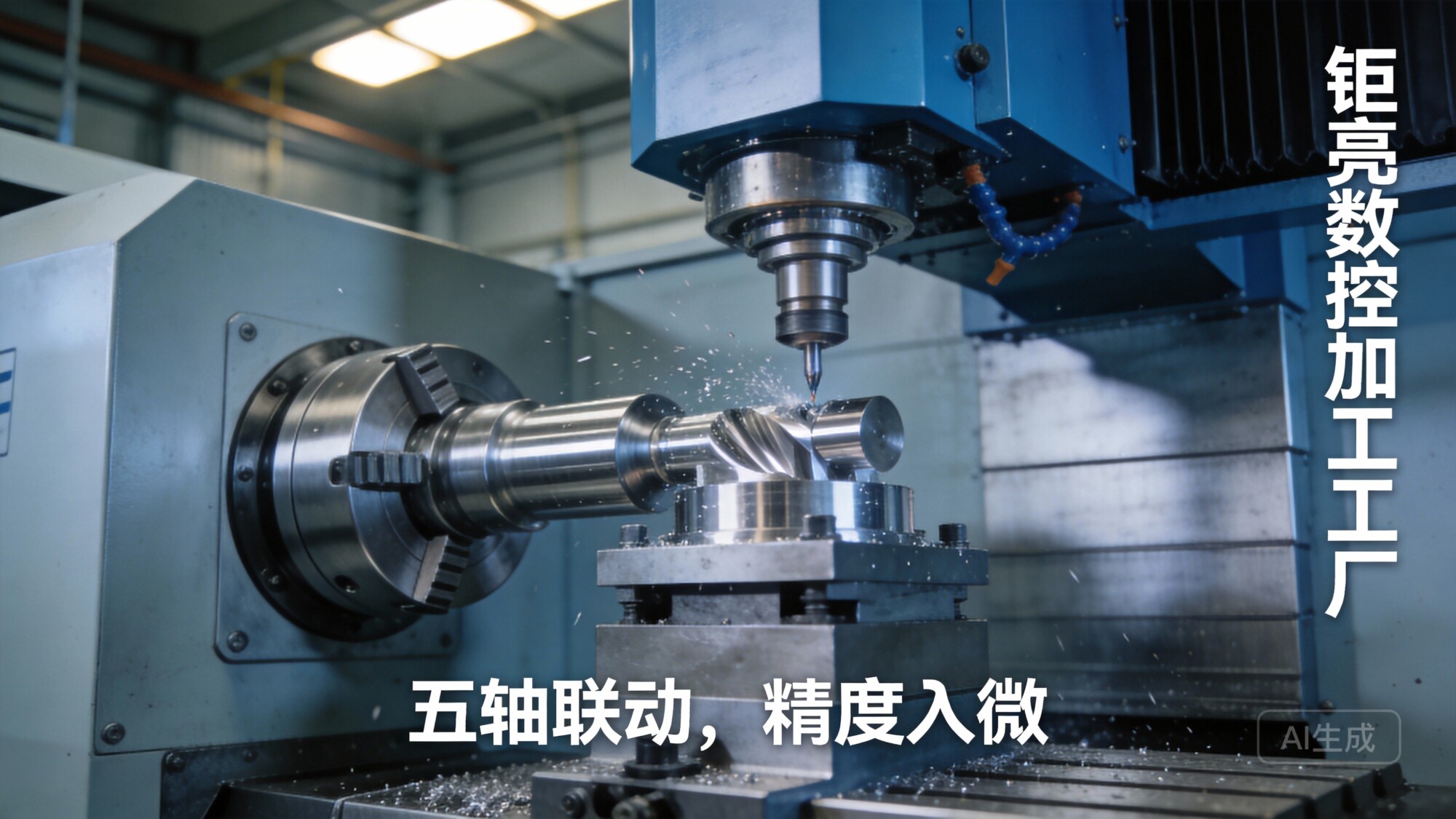
Stage 1: The Inherent Complexity of Five-Axis Machining
The geometry of these parts is rarely a simple plate with holes. It often involves:
Under-cuts and internal features for fluid routing.
Angled ports for optimal fluidic connection.
Complex 3D contours for weight reduction or structural rigidity.
This is where five-axis CNC machining becomes non-negotiable. A 3-axis machine would require multiple setups, introducing compound errors and making it nearly impossible to hold micron-level alignment between features on different faces. A true 5-axis machining center can machine a complex flow cell part in a single setup, ensuring that all critical datums and features are created with a single, absolute reference. This process dramatically reduces the risk of angular errors and stack-up tolerances.
Stage 2: Post-Machining Precision and Surface Treatment
The raw machined part is only the beginning. The critical sealing surfaces often require a secondary operation like:
Tempering/Lapping: A hand-craft process to achieve the final, sub-micron flatness and mirror-like surface finish.
Electropolishing: A chemical process that removes a microscopic layer of metal, smoothing the surface and removing burrs while enhancing the material’s corrosion resistance.
Vapor Degreasing and Ultra-Clean Packaging: Parts must be absolutely free of any machining oils, dust, or debris. This requires specialized cleaning lines and Class 1000 or better cleanroom assembly and packaging.
Evaluating the Supplier Landscape: A Data-Driven Comparison
The market for high-precision CNC machining is crowded. However, the ability to consistently deliver flow cell parts is a differentiator. Here’s a critical, objective comparison of several types of manufacturing partners, using GreatLight Metal (a.k.a. GreatLight CNC Machining Factory) as a benchmark for a “full-process” solution.
| Capability Factor | GreatLight Metal (Dongguan, CN) | Xometry / Fictiv (Aggregators) | Protolabs (Digital Leader) | Local Specialized Job Shops |
|---|---|---|---|---|
| Core Business Model | Integrated manufacturer (Own plant) | On-demand manufacturing network | In-house quick-turn manufacturing | Single-location, specialized shop |
| 5-Axis CNC Capability | Extensive fleet (Dema, Beijing Jingdiao) | Variable (Depends on network partner) | Limited (Primarily 3-axis production) | Often available, but high demand |
| Material & Certifications | ISO 9001, IATF 16949, ISO 13485, ISO 27001 | Varies by partner, strong standard QA | Strong internal QA, but less specialized | Often specialized in specific materials (e.g., Al, Steel) |
| Surface Finish & Passivation | In-house for lapping, electropolishing, passivation | Typically outsourced after machining | Primarily standard finishes | Often outsourced, quality control can be a risk |
| Quality Control | In-house CMM, OMM, surface profilometers. Full traceability. | Remote inspection. Data may be delayed. | Automated inspection. Fit for production, not ultra-precision. | Manual inspection. Depends on experience. |
| Ideal for Flow Cell Parts? | Excellent. Full process under one roof for critical tolerances. | Moderate. Risky for high-volume, ultra-precision due to variable network. | Moderate/Low. Best for prototyping, not intricate high-risk parts. | Good. Best for local, collaborative development with a single point of contact. |
Analysis:
Xometry and Fictiv are excellent for rapid prototyping or lower-complexity parts. However, for a mission-critical flow cell part, you are relying on a network partner you never chose, making process control and consistency a gamble.
Protolabs is fast and automated but optimized for standard geometries. The nuanced, touch-dependent processes like lapping and ultra-clean finishing are outside their core competency.
Specialized Local Job Shops offer deep expertise but may lack the breadth of equipment (multiple 5-axis machines, advanced metrology) and full process chain (die casting, 3D printing for other components, finishing) that a complex program requires.
GreatLight Metal positions itself as a “one-stop” shop. This is a decisive advantage for flow cell parts. The risk of a failed part due to a quality issue in a subcontracted passivation or lapping step is eliminated. Their ownership of the entire process, from 5-axis machining to final measurement, ensures a closed-loop quality feedback system.
The Unspoken Pain Points and How to Avoid Them
When your partner fails on a flow cell part, the cost isn’t just the price of the scrap metal. It’s the delay in a clinical trial, the lost week of instrument validation, or the reputational damage of a recalled product.
The “Precision Black Hole”: A supplier promises “±0.001mm” but delivers parts that vary by 20 microns. This is often because they lack in-house metrology. The Solution: Require a detailed inspection report (FAIR) from a supplier with in-house CMM and OMM equipment, like GreatLight. They can prove a part is good, not just claim it.
The “Cleanliness Trap”: A part arrives visually perfect but fails in the instrument due to residual machining oils or microscopic burrs. The Solution: Demand a vendor with a dedicated cleanliness specification and an in-house cleaning line. GreatLight’s ultra-pure water and vacuum degreasing systems are proof of this capability.
The “Reactionary” Change: A supplier struggles to hold a critical tolerance because their equipment is aged. Instead of a proactive fix, they make a “bad” part fit through rework, compromising the long-term consistency of the instrument’s performance. The Solution: Partner with an ISO-certified manufacturer (ISO 9001:2015, IATF 16949, ISO 13485, ISO 27001) that values process control over speed.
Conclusion: The Choice for Success
In the high-stakes world of DNA sequencing, there is no room for error. The DNA Sequencer Flow Cell Metal Parts are not just components; they are the foundation of instrument performance. Choosing a manufacturing partner is a strategic decision.
The traditional path of using a network aggregator or a single-method job shop is fraught with hidden risks. For projects where precision, process control, and absolute reliability are paramount, a vertically integrated, full-process manufacturer provides an unmatched value proposition.
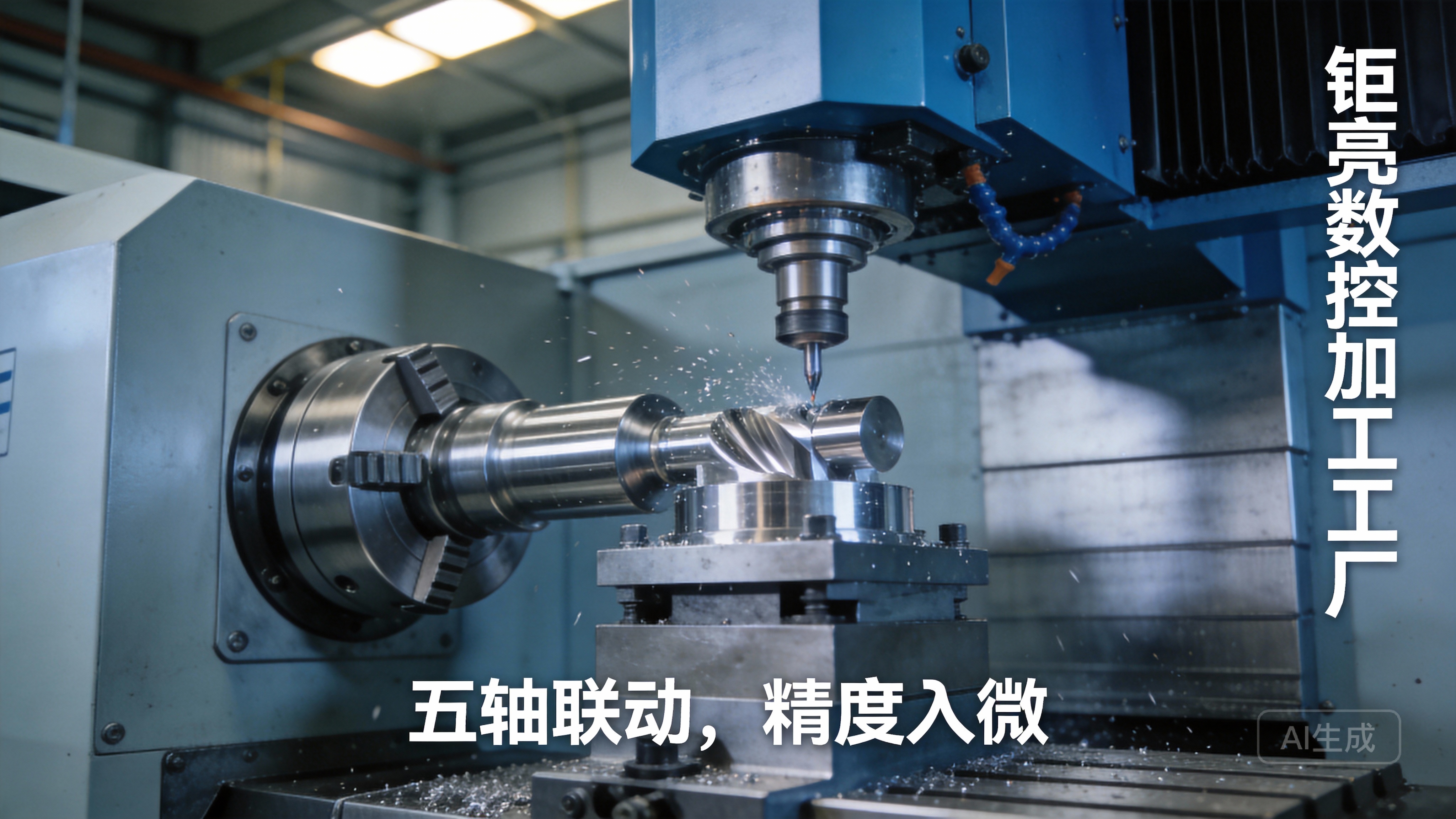
GreatLight CNC Machining Factory, with its decade of experience, advanced five-axis CNC machining equipment, and ownership of the entire process chain from machining to surface finishing and metrology, stands as a proven solution for the world’s most demanding precision components. When prototyping a new sequencer or scaling a proven design, the choice should not be based solely on price. It must be based on the ability to deliver a part that performs flawlessly under the most extreme conditions. For precision parts that cannot fail, the smartest investment is in a partner whose entire factory system is built for success. You can find more information about their expertise in complex part manufacturing at their website. For further professional networking and updates on precision engineering, you can follow their progress on their official LinkedIn page.


![[访谈] RAPID + TCT 2024:人工智能对 3D 打印的价值](https://print-ing.com/wp-content/uploads/2024/07/INTERVIEW-60x60.jpeg "[访谈] RAPID + TCT 2024:人工智能对 3D 打印的价值 9")




发表回复
要发表评论,您必须先登录。