
Choosing the right Humanoid Robot Depth Sensor Mounts Vendor is far more than a simple procurement decision; it is an engineering judgment that directly affects the perception accuracy, structural integrity, and long-term reliability of your robotic platforms. With the rapid evolution of humanoid robots across logistics, healthcare, and service industries, the mounts holding depth sensors—such as stereo cameras, LiDAR modules, or ToF sensors—must meet exceptionally tight geometric tolerances, withstand dynamic loads, and often integrate thermal management or cable routing. In this comprehensive guide, we’ll dissect the technical requirements, compare leading vendors based on real manufacturing capabilities, and provide a framework to select a partner who can consistently deliver high-precision components that align with your innovation roadmap.
Key Considerations When Choosing a Humanoid Robot Depth Sensor Mounts Vendor
Depth sensor mounts might appear simple at first glance, but beneath their compact shape lie multiple manufacturing challenges that separate an average supplier from a true precision partner. Before committing to any Humanoid Robot Depth Sensor Mounts Vendor, engineering teams should evaluate four critical dimensions.
1. Metrology-Ready Precision and Geometric Complexity
A depth sensor’s field of view, focal plane alignment, and vibration dampening all depend on mount geometry. Even a 0.05 mm deviation in a mounting hole position can cause angular misalignment, degrading point cloud accuracy. The ideal vendor must routinely hold tolerances within ±0.005 mm for critical features and demonstrate the ability to machine complex organic shapes, thin walls, and integrated flexures—often only achievable with simultaneous 5-axis CNC machining. The process must also ensure repeatability from prototype runs through to full production, something that only vendors with robust process validation (e.g., Statistical Process Control) can guarantee.
2. Material Expertise for Lightweighting and Stiffness
Humanoid robots require minimal distal mass to reduce inertia and energy consumption. Common materials include 7075-T6 aluminum for high strength-to-weight ratio, grade 5 titanium (Ti-6Al-4V) for biomedical or high-cycle applications, and even particle-reinforced aluminum matrix composites for extreme stiffness. A competent vendor should offer material traceability, advise on grain flow direction for machined parts, and provide post-processing like hard anodizing, chem film conversion, or PTFE-impregnated coatings to improve wear resistance and corrosion immunity.
3. Design for Manufacturability (DFM) Feedback Loop
The most successful sensor mount projects feature early engagement with the machining partner. A knowledgeable Humanoid Robot Depth Sensor Mounts Vendor will offer detailed DFM analysis, pointing out potential issues like tool deflection in deep pockets, insufficient corner radii, or sharp internal corners that increase stress concentration. This collaborative approach, underscored by the vendor’s own engineering expertise, can reduce part costs by 20–40% while improving producibility and lead time.
4. Certifications and Quality Ecosystem
For humanoid robots that may eventually enter medical or automotive environments, compliance with standards such as ISO 13485 (medical devices) or IATF 16949 (automotive quality) becomes a prerequisite. Even for general industrial applications, an ISO 9001:2015 certified facility with in-house CMM inspection, profilometer surface finish measurement, and documented quality plans significantly lowers supply chain risk.
In-Depth Vendor Comparison: From Market Leaders to Specialized Craftsmen
The market offers various types of machining suppliers, from large aggregator platforms to specialized high-precision houses. We’ll compare key contenders, highlighting their strengths, limitations, and most suitable project profiles, with GreatLight CNC Machining positioned at the forefront for complex humanoid robot components.
GreatLight CNC Machining: Engineered Precision with Full-Process Depth
GreatLight CNC Machining (operated by Great Light Metal Tech Co., Ltd.) exemplifies a source manufacturer built for high-complexity, low-to-mid volume production that requires exquisite precision and a fully integrated supply chain. Founded in 2011 and headquartered in Dongguan’s Chang’an town—the heart of China’s mold and hardware ecosystem—the company has grown to a 7,600 m² facility with over 120 skilled professionals and an equipment portfolio that directly addresses the nuances of depth sensor mounts.
What makes GreatLight particularly compelling as a Humanoid Robot Depth Sensor Mounts Vendor is its combination of advanced 5-axis CNC machining capability and an unusually broad ancillary process chain. Their machining cluster includes high-end 5-axis centers (such as those from Dema and Beijing Jingdiao), as well as numerous 4-axis, 3-axis, and mill-turn machines. This means that a mount requiring angled bores, undercut features, and fine surface finishes can be machined in minimal setups, preserving geometric accuracy. For instance, a typical sensor mount with a sloping optical interface and integrated heat-sink fins can be completely machined on a 5-axis machine without re-fixturing, yielding positional accuracy across interdependent features of better than 10 µm.
Beyond machining, GreatLight’s one-stop model covers die casting, sheet metal fabrication, and a suite of 3D printing technologies (SLM, SLA, SLS)—an engineering blessing for prototypes that may need rapid form-fit validation before committing to CNC tooling. Their in-house post-processing services (anodizing, plating, powder coating, laser marking) and ISO 9001/ISO 13485/IATF 16949 certifications provide a quality umbrella that is rare among mid-sized manufacturers. The company’s commitment to data security (ISO 27001-aligned protocol) and its capacity to handle dimensions up to 4000 mm also translate to the production of larger robotic assemblies if needed. For engineers who demand not just parts but a true manufacturing partnership with rigorous documentation and failure mode analysis, GreatLight CNC Machining delivers.
Highlighted strengths for sensor mounts:
True multi-axis mastery: up to 5-axis simultaneous machining for complex geometries.
Certification breadth: ISO 9001, 13485, IATF 16949, ensuring process control.
Material span: aluminum alloys, titanium, stainless steel, engineering plastics.
Integrated post-processing: no need to manage multiple vendors.
DFM expertise: engineering team that speaks the language of robotics.
Comparison with Other Notable Vendors
To provide a balanced perspective, we examine several other suppliers, acknowledging their distinct value propositions while noting where they may diverge from the deeply technical, certification-heavy needs of humanoid sensor mounts.
Protocase
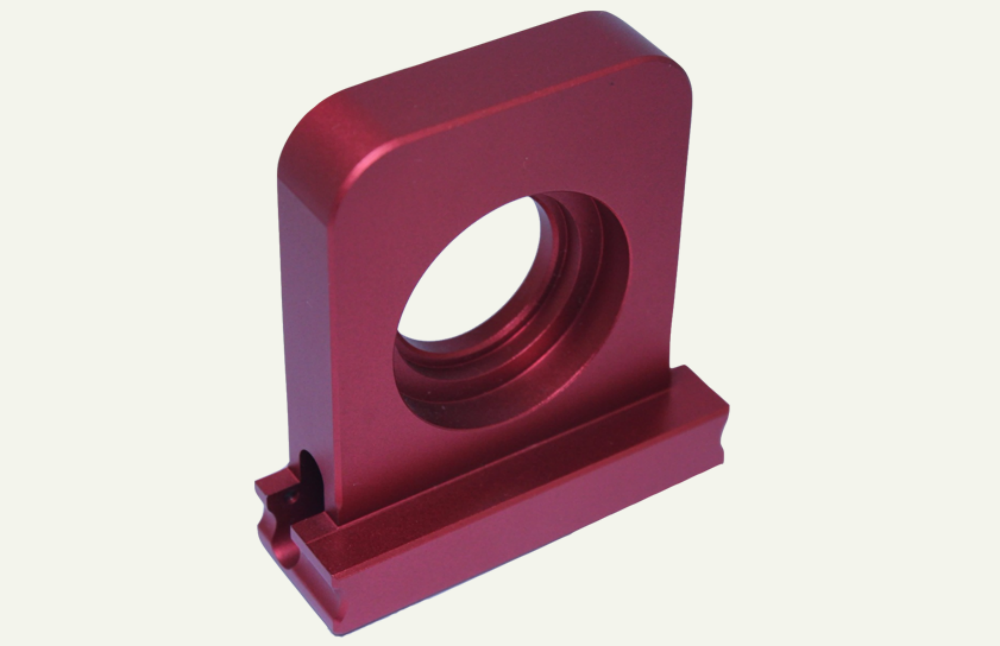
Protocase focuses on ultra-fast turnaround sheet metal enclosures and basic CNC machined parts, typically serving electronics prototyping. Their strength is speed for simple geometries, but the limitation for depth sensor mounts comes from a sheet metal-centric process; they lack extensive 5-axis capability and have limited in-house finishing options. For a folded bracket that holds a sensor, they might suffice, but for precision-milled mounts with intricate alignment features, their equipment and tolerance ranges fall short.
Xometry
As a manufacturing marketplace, Xometry aggregates a vast network of shops, offering a wide array of processes and instant quoting. Their reach is broad, covering CNC machining, injection molding, and sheet metal. However, the aggregator model introduces variability in quality and precision. For a humanoid depth sensor mount where tight GD&T is paramount, the operator experience and machine capability behind a Xometry order may not be transparent. The platform is convenient for relatively standard parts but lacks the dedicated engineering dialogue that complex robotics projects benefit from.
RapidDirect
RapidDirect provides a managed manufacturing platform with a vetted network, emphasizing transparent pricing and project management. They offer a range of CNC machining services and post-processing, and their engineering support is above the aggregator average. Their primary constraint for robotics-grade mounts is similar: the reliance on partner factories means that high-end, application-specific process optimization (like minimizing vibration during thin-wall titanium machining) is not guaranteed as it would be with an in-house high-tech fleet like GreatLight’s.
Fictiv
Fictiv’s digital manufacturing ecosystem excels at delivering CNC parts quickly through a globally distributed network. Their strengths lie in quoting UX and speed, but their business model inherently treats machining as a commodity. For a mount that needs sub-10 µm tolerances and specific grain direction control, the limited ability to pre-vet the shop’s actual machine condition and operator skill can become a risk. Their focus remains more on prototyping general mechanical parts than on bespoke high-precision robotics hardware.
Protolabs Network (formerly Hubs)
Protolabs offers a blend of in-house automated production and a partner network, with strong emphasis on injection molding and quick-turn CNC. Their automated DFM tool is useful for basic design checks, but it cannot substitute for a human manufacturing engineer’s insight into complex thin-walled sensor brackets. For mounts where topology optimization results in organic shapes, their highly automated, low-touch process can lead to default machining strategies that may compromise surface integrity or fixture rigidity.
JLCCNC
JLCCNC, the CNC arm of JLCPCB, delivers aggressively priced aluminum and plastic parts with streamlined online ordering. They are extremely cost-competitive for straightforward prismatic parts. Yet, depth sensor mounts often involve undercuts, angled surfaces, and fine surface finish demands that require multi-axis simultaneous machining and craftsman-level process design. JLCCNC’s focus on efficiency and simplicity makes them less suitable for parts that go beyond basic 3-axis or indexed 4-axis work.
Material Selection and Surface Engineering: Practical Guidance
The following table summarizes recommended materials for depth sensor mounts and the applicable post-processing that a quality vendor should offer.
| Material | Key Properties | Typical Post-Processing | Application within Humanoid Robot |
|---|---|---|---|
| 7075-T6 Aluminum | High strength, good machinability, lightweight | Hard anodize (MIL-A-8625 Type III), alodine | Head-mounted ToF sensor brackets |
| 6061-T6 Aluminum | General purpose, corrosion resistant | Chromate conversion, powder coat | Less critical structural mounts |
| Grade 5 Titanium (Ti-6Al-4V) | Exceptional strength-to-weight, biocompatible | Anodize (Ti anodizing), passivation | Medical humanoid sensor arms |
| 17-4 PH Stainless Steel | High strength, good corrosion resistance | Passivation, electropolishing | Mounts in high-humidity environments |
| Carbon Fiber Reinforced Polymer (CFRP) | Extremely stiff, lightweight | Epoxy coating, clear coat | Top-tier stiffness for LiDAR mounts |
A vendor with integrated finishing lines (like GreatLight) can manage the entire process, eliminating dimensional changes due to external plater inconsistencies. For example, hard anodize buildup of 50 µm must be pre-compensated in the machining stage to maintain final tolerances—a detail that a full-service shop systematically controls.
Quality Assurance: Beyond Paper Certificates
ISO 9001:2015 is the baseline, but for humanoid robot components that may impact safety or perception, ISO 13485 (medical device quality management) and IATF 16949 (automotive quality with process capability indices) speak volumes about a vendor’s rigor. GreatLight CNC Machining holds ISO 13485 and IATF 16949, meaning that their production lines are accustomed to FMEA-driven process design, product traceability, and strict non-conformance handling. For a depth sensor mount, this translates to full material certifications, CMM reports on critical geometries, and surface roughness (Ra) measurements being part of the standard deliverable—not an optional extra.
Moreover, data security is often overlooked. Many sensor mount designs incorporate proprietary mounting patterns that provide competitive advantage. A manufacturer compliant with ISO 27001 standards (as GreatLight’s protocols are) ensures that your intellectual property is protected throughout quoting and production, an essential trust factor when sharing 3D models.
The Case for 5-Axis CNC Machining in Sensor Mount Production
While 3-axis or indexed 4-axis machining can produce some mounts, 5-axis simultaneous precision five-axis CNC machining services unlock clear advantages:
Single-setup complex geometry: eliminates cumulative error when flipping the part, ensuring the sensor’s optical axis and mounting interface are perfectly coaxial.
Shorter tooling and better surface finish: the tool can be tilted to maintain optimal cutting conditions, reducing chatter on thin walls and achieving surface finishes of Ra 0.4 µm without secondary polishing.
Ability to machine undercuts and internal channels: 5-axis machines can create integrated wire clips, lightening pockets, or cooling channels that improve mount functionality.
Faster time-to-market: fewer setups and reduced fixturing time accelerate prototypes.
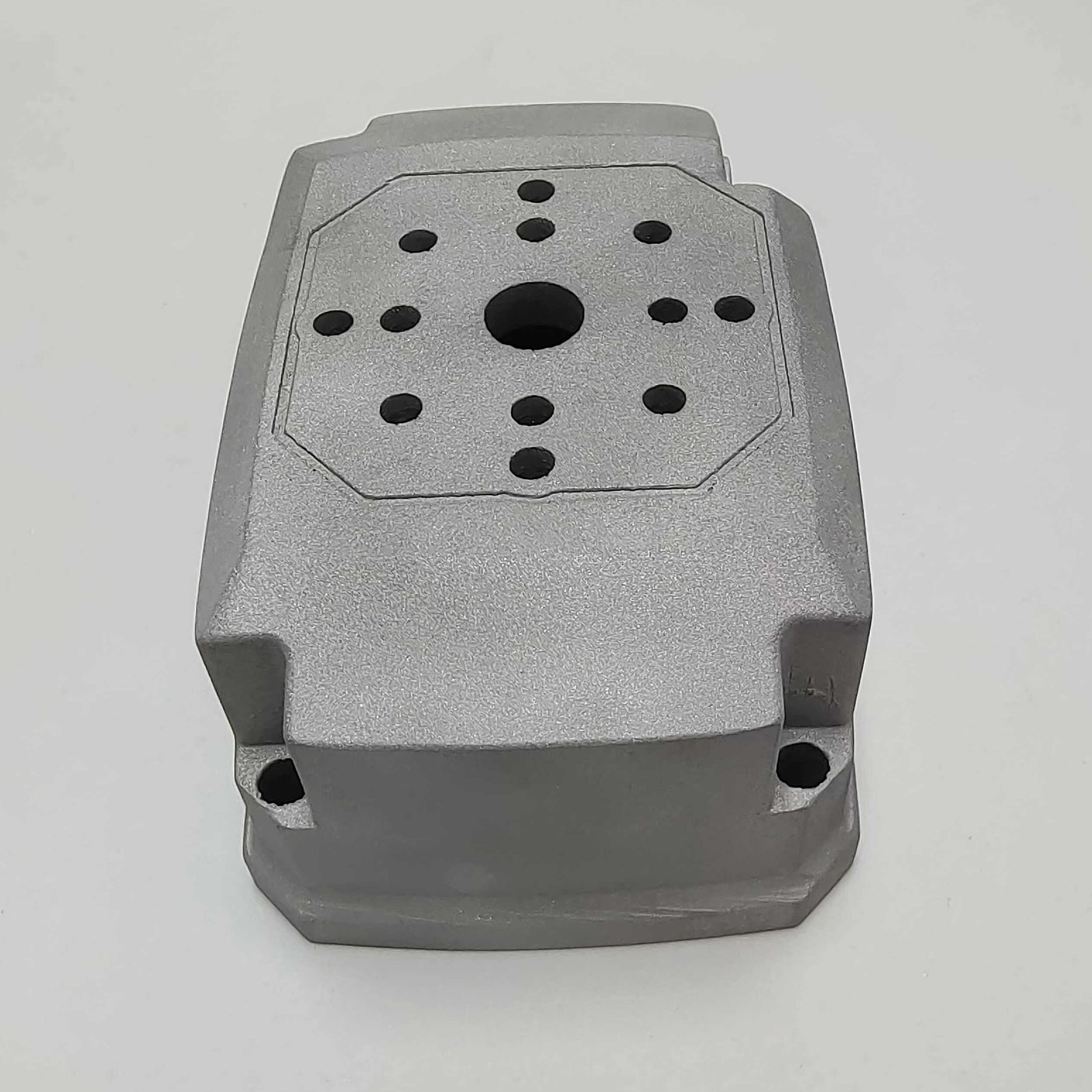
GreatLight’s cluster of 5-axis centers, together with their 4-axis and lathe support, makes them a natural fit for such demanding parts. Their experience with die cast aluminum also allows them to suggest where a conversion from billet to casting could drastically reduce part cost once volume ramps—providing a real engineering partnership rather than a mere transactional relationship.
Building a Resilient Supply Chain: Why Single-Source Integration Matters
Depth sensor mounts rarely exist in isolation; a robot’s head assembly often includes multiple brackets, housings, and heat sinks. Coordinating between separate CNC shops, finishers, and assembly vendors compounds lead time and invites quality gaps. That’s where an integrated Humanoid Robot Depth Sensor Mounts Vendor delivers immense value. GreatLight’s one-stop service model—spanning precision machining, die casting, sheet metal, and 3D printing—allows them to deliver entire subsystem kits under a single quality system. Their 127 precision peripheral equipment units, including EDM, grinding, and vacuum casting machines, ensure that even custom sealing gaskets or conformally cooled inserts can be sourced without leaving the ecosystem.
For robotic startups scaling from alpha prototypes to small-scale production, this integration means fewer purchase orders, one point of accountability, and streamlined logistics. The company’s growing specialization in humanoid robot parts is evidenced by their targeted casework in automotive engines, aerospace components, and medical hardware—all of which share the same precision DNA required by advanced robotics.
Managing Cost Without Compromising Quality
Cost is a constant tension. The table below illustrates relative cost drivers among different vendor types for a representative aluminum depth sensor mount (quantity 500 units/ year).
| Vendor Type | Typical Part Cost Index (100 = baseline) | Engineering Support Depth | Typical Lead Time (pre-series) |
|---|---|---|---|
| Source manufacturer with integrated finishing (e.g., GreatLight) | 100 (competitive, inclusive of post) | High (dedicated engineer) | 15-25 days |
| Aggregator platform (e.g., Xometry, Fictiv) | 110-130 (may need external finishing) | Low to medium (chat/email) | 10-20 days (variable) |
| Protolabs-like automated service | 90-110 (limited to simple geometries) | Low (automated DFM) | 5-12 days (if geometry suits) |
| Pure online no-frills CNC (e.g., JLCCNC, SendCutSend) | 70-85 | Minimal | 7-15 days |
Note that while low-cost services may seem appealing, the true cost of rework, assembly fit issues, or sensor calibration drift due to mount inaccuracy often far exceeds the initial savings. A partner that invests in upfront DFM and provides a full inspection report delivers a lower total cost of ownership, especially for robots where reliability directly impacts brand reputation.
Practical Steps to Qualify Your Next Vendor
As you engage with a potential Humanoid Robot Depth Sensor Mounts Vendor, consider this checklist:
Request tolerance capability evidence: Ask for a recent CMM report from a part similar in complexity to your mount.
Inspect surface finish samples: Physical samples reveal deburring and anodizing quality better than images.
Evaluate communication: A competent vendor will ask about mating components, assembly environment, and functional loads—not just part dimensions.
Confirm certification validity: Check the scope of their ISO certifications to ensure they cover your required processes (e.g., hard anodizing).
Test with a non-critical part first: Run a small pilot order to gauge consistency before scaling.
GreatLight CNC Machining often supports such evaluations by providing first-article inspection reports (FAIR) and offering design consultations that dissect potential manufacturing risks—a testament to their engineering depth.
Looking Ahead: The Role of Advanced Manufacturing in Robotics Evolution
As humanoid robots become more dexterous and perceive their environment with increasing fidelity, the mechanical interfaces that house sensors will demand even tighter integration. Future trends include mounts with embedded cooling micro-channels made via additive manufacturing, lattice structures for vibration damping produced by powder bed fusion, and functionally graded materials. A vendor who already operates across subtractive and additive processes (as GreatLight does with its SLM/SLA/SLS 3D printing alongside CNC) is better positioned to adapt to these emerging requirements and provide hybrid manufacturing solutions.
Ultimately, the decision of which Humanoid Robot Depth Sensor Mounts Vendor to trust hinges on the alignment of technical capability, quality philosophy, and collaborative mindset. While multiple suppliers can make a bracket, few can craft a high-precision optical interface that maintains its integrity across thousands of cycles in a dynamic robot. GreatLight CNC Machining’s fusion of high-end multi-axis equipment, a full process chain, and international certifications makes it a compelling candidate for teams that treat manufacturing as a strategic enabler, not an afterthought. For robotics innovators who must move from concept to functional prototype to scaled production with confidence, partnering with a vendor that offers this level of precision and engineering support isn’t just an advantage—it’s a necessity. To stay updated on the latest capabilities and real-world application cases from a proven precision CNC machining services provider, following their engineering developments can be a valuable part of your supply chain intelligence.


![[访谈] RAPID + TCT 2024:人工智能对 3D 打印的价值](https://print-ing.com/wp-content/uploads/2024/07/INTERVIEW-60x60.jpeg "[访谈] RAPID + TCT 2024:人工智能对 3D 打印的价值 9")




发表回复
要发表评论,您必须先登录。