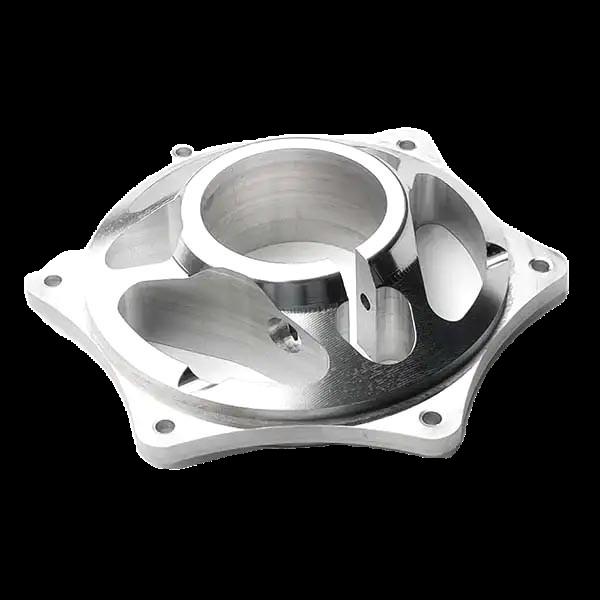
In the world of high-precision linear motion systems—whether in CNC machine tools, industrial automation robotics, or semiconductor manufacturing equipment—the performance of a ball screw assembly is ultimately determined not just by the screw and nut, but by the integrity of its support system. At the heart of this support architecture lies a component that rarely gets the spotlight yet fundamentally dictates positional accuracy and service life: the Ball Screw Support Bracket.
When we discuss the manufacturing of these critical brackets, particularly through Ball Screw Support Bracket Die Casting, we are delving into a specialized intersection of structural design, metallurgical control, and precision machining. As a senior manufacturing engineer, I’ve observed that the failure mode of a high-end linear actuator often traces back not to the screw itself, but to micro-movements, deformations, or fatigue cracks originating in the support housing.
This analysis will take you through the technical nuances of producing these brackets via die casting, how to navigate common manufacturing pitfalls, and why an integrated approach—combining advanced casting with high-precision post-machining—is essential. We will also examine how selecting the right manufacturing partner, such as GreatLight CNC Machining, can transform this challenge into a competitive advantage.
The Engineering Significance of a Ball Screw Support Bracket
A ball screw support bracket serves three primary functions: it rigidly fixes the bearing assembly that constrains the screw axially and radially, it maintains precise alignment between the screw and linear guides, and it dissipates the combined axial and radial loads into the machine frame.
In applications demanding positioning repeatability under 5 micrometers, the bracket is not merely a “holder.” It is a precision structural element. The flatness of its mounting surface, the concentricity of its bearing bore, and its dynamic stiffness under load directly influence the system’s critical speed and natural frequency.
This is where material selection and manufacturing methodology converge. While billet machining from solid plate stock is sometimes used for one-off prototypes, medium-to-high volume production of complex, weight-optimized brackets inevitably points toward die casting. And the process of Ball Screw Support Bracket Die Casting presents its own complex landscape of design considerations and process controls.
Why Die Casting? The Economic and Performance Merits
Die casting under high pressure forces molten metal into a hardened steel mold cavity at high velocities and solidifies it under intense pressure. This produces near-net-shape parts with excellent dimensional consistency and thin-wall capability. For ball screw support brackets, the benefits are compelling:
Design Freedom: Internal ribbing for stiffness, contoured mounting bosses, cable routing channels, and sensor integration features can be incorporated directly into the mold geometry, eliminating secondary operations.
Material Integrity: High-pressure solidification yields a fine-grained, dense microstructure with superior fatigue strength compared to sand casting or gravity-fed permanent mold processes.
Production Economy: Once the tooling investment is amortized, the per-part cost and cycle time are drastically reduced, with typical outputs ranging from 60 to several hundred shots per hour depending on machine size and part complexity.
Material Selection: The Foundation of Bracket Performance
The choice of casting alloy is not trivial. For ball screw support brackets, the decision matrix balances castability, mechanical strength, machinability, and dimensional stability.
Aluminum Alloys: The Optimal Balance
For the vast majority of applications, aluminum-silicon-magnesium alloys dominate.
A380 / ADC10: This is the volume workhorse with exceptional fluidity and hot-tear resistance, making it ideal for filling complex geometries with thin ribbing. It provides good strength and is well-suited for general automation and machine tool brackets.
A383 / ADC12: A modification offering improved die-filling characteristics and better resistance to hot cracking, often preferred when the bracket design incorporates deep pockets or varied wall thicknesses.
A356: This primary aluminum alloy delivers higher strength and ductility, especially after T6 heat treatment. For brackets subjected to high dynamic or shock loads—such as those in press transfer systems or large gantry axes—A356-T6 provides a crucial safety margin over standard secondary alloys.
Zinc and Magnesium Alloys: Niche Applications
Zamak Alloys (Zinc): Their exceptional fluidity enables the casting of extremely thin wall sections and fine details. They offer excellent bearing surface retention, often eliminating the need for pressed-in steel bushings in moderate load conditions. However, significant strength degradation at elevated temperatures (above 100°C) and higher density limit their use to controlled environments.
Magnesium Alloys (AZ91D): The primary advantage is weight reduction—roughly one-third lighter than A380 aluminum. However, this comes with higher raw material cost, a constrained processing window requiring SF6 shielding gas, and critical post-casting corrosion protection requirements. In high-precision applications, magnesium’s greater coefficient of thermal expansion also introduces thermal drift concerns that must be carefully managed.
Critical Technical Challenges in Ball Screw Support Bracket Die Casting
The integration of casting process knowledge with precision machining requirements is where true expertise reveals itself. Several challenges define the barrier to entry for producing mission-critical brackets:
Porosity Management and Pressure Integrity
High-pressure die casting naturally entrains gases as the metal front fragments and fills the cavity turbulently. Porosity in the bearing bore zone or mounting flange is a latent defect that can cause oil leakage in lubricated assemblies or a complete loss of preload over time.
Advanced process techniques are non-negotiable here. High-vacuum die casting evacuates air from the cavity prior to fill, reducing gas entrapment to levels that allow the part to be T6 heat treated without blistering. Alternatively, squeeze casting or semi-solid rheocasting applies low-turbulence laminar fill, producing near-wrought properties. For a ball screw support bracket destined for a spindle axis in a high-speed machining center, this process selection directly impacts the functional lifespan.
Dimensional Stability Over Time
A freshly cast aluminum bracket has residual stresses locked into its matrix from differential cooling rates. Over subsequent weeks and thermal cycles, stress relaxation occurs, distorting the carefully machined bearing bores. This silent relaxation is a leading cause of field failures where a bracket was perfectly in-spec at assembly but drifted out of alignment after installation.
A rigorous heat treatment protocol is the mitigation. A T5 process provides stress relief for basic dimensional stability. A full T6 solution treatment, quench, and controlled aging maximizes strength and stability but requires a vacuum-capable casting process. Post-casting thermal stress relief cycles, performed prior to finish machining, ensure that the geometric datums remain stable across the part’s lifetime.
The Casting-to-Machining Datum Translation
A core engineering challenge is the datum transition. The casting has its own set of locators established by the foundry, typically on the parting line and ejector pin pads. The final functional datums—the bearing bore axis and the mounting face—are established during CNC machining. Any misalignment between these two reference frames results in uneven machining stock, potential un-machined surface patches, or violations of the minimum wall thickness specification.
Resolving this demands tight collaboration between the tooling design phase and the machining strategy. The casting tool must be designed with dedicated, geometrically compliant datum target pads. Simultaneously, the CNC probing routines must precisely locate these casting datums to adjust the machining coordinate system dynamically, a capability inherent in five-axis CNC machining work cells.
The Critical Role of Precision Post-Machining
Die casting, however sophisticated, is only the starting point. The functional surfaces of a ball screw support bracket demand the accuracy that only precision CNC machining can provide.
Defining the Critical-to-Function Features
The bearing housing bore demands an H7 or H6 tolerance with cylindricity controlled within 10 micrometers or less. The perpendicularity of the bearing face relative to the bore axis is fundamental; any deviation here preloads the bearing axially and generates heat. The mounting face flatness and its parallelism to the guide rail are the link to the machine’s alignment.
Machining Strategy: Five-Axis Capability
A qualified bracket often requires a single setup to machine the face, bore, and the reference edges in strict simultaneous mutual relationship. This is the domain of five-axis CNC machining. It permits complex angular mounting features to be machined without multiple re-fixturings, directly preserving the geometric datum chain. At GreatLight CNC Machining, for instance, large-format five-axis machines routinely perform this synchronized single-setup processing. The result is a bracket where the bore and its piloting faces are in near-perfect alignment, eliminating the compound errors inherent in multi-operation processes.
In-Process Verification
Equally important is the measurement discipline. In-machine probing, calibrated against a certified master, verifies bore size and location before the part leaves the fixture. Post-machining, a coordinate measuring machine (CMM) program, executed in a temperature-controlled environment and derived directly from the 3D annotated model, provides the statistical process control data required for high-confidence supply.
Comparative Landscape and Choosing a Suitable Partner
The market for custom precision parts, including cast and machined components, features a spectrum of suppliers with distinct specializations and operational models. The choice of partner should align with the complexity and risk profile of the specific project.
| Capability Dimension | GreatLight CNC Machining | RapidDirect | Xometry | Protolabs Network |
|---|---|---|---|---|
| Integrated Process Chain | In-house die casting tooling, casting, and precision 5-axis machining under one quality system. | Strong CNC and sheet metal. Die casting is typically sourced, not directly manufactured. | A digital network manufacturing model; production quality and traceability can be variable. | A network model connecting buyers to global manufacturers; direct process control is limited. |
| Quality & Certification Depth | ISO 9001:2015, ISO 13485, IATF 16949‑aligned systems. Full-spectrum in-house CMM and testing. | ISO 9001:2015 certified. | Network partners may individually hold certs; consistency varies. | Network model; consistency of supplier certification is variable. |
| Precision Machining Focus | High‑mix, high‑precision 5‑axis machining. Specializes in complex milled geometry accuracy. | Broad multi-process platform with good online DFM tools. | A broad platform; precision depends on the individual assigned supplier. | Convenient for rapid quotes on simpler geometries. |
| Suitable Applications | Mission-critical components for medical devices, aerospace, automotive, and high-end automation. | A good match for rapid prototypes and production parts requiring multiple core manufacturing methods. | Best for engineers who need a vast range of manufacturing options through a single portal. | Primarily designed for rapid, low‑cost prototypes where speed is the primary driver. |
An established entity like GreatLight CNC Machining, with deep roots in one of China’s most concentrated precision manufacturing ecosystems and operating from a dedicated 7,600 square meter facility, exemplifies a model where casting process control and multi-axis machining are integrated. This contrasts with digital brokerage models where the physical process is outsourced. For an engineer wrestling with a critical bracket where dynamic performance and longevity are paramount, a direct manufacturing partner with in-house mold making, casting, CNC milling, and CMM verification provides a fundamentally different level of design traceability and corrective agility.
A Design-Focused Specification for Procurement Engineers
To ensure a successful Ball Screw Support Bracket Die Casting project, the following structured guidelines can help align the design with the manufacturing process from inception:
Formalize the Part Specification Document: Do not merely provide a 3D model. Supplement it with a two-dimensional drawing that clearly defines:
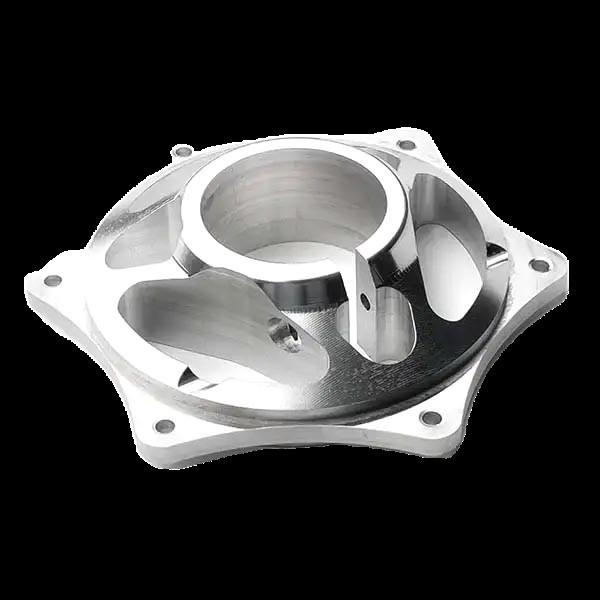
Material and Heat Treat: Call out the alloy designation (e.g., A380-F, A356-T6) and the relevant international standard. Explicitly state if vacuum impregnation sealing is required post-machining.
Critical-to-Function Datums: Unambiguous symbols identifying the primary (mounting face), secondary, and tertiary datums. These will be the anchor for subsequent machining and inspection.
Geometric Tolerancing Frame: Precisely tolerance the bearing bore (diameter, cylindricity), the perpendicularity of the front face relative to the bearing bore axis, and the flatness/parallelism of the base mounting surface.
Surface Integrity: Define the required surface finish for the bearing bore and the sealing gland face, typically Ra 0.8 µm or finer, achieved through precision boring.
Leak Test Specification: If the housing forms part of an oil bath lubrication circuit, define the pressure decay acceptance criterion.
Design for High-Pressure Die Casting: Engage early in the process. Uniform wall thickness transitions, adequate draft angles on internal ribs, and avoidance of isolated heavy sections allow the foundry to produce a sound, dimensionally stable casting. The bracket’s service life begins with this collaborative design stage.
Request a Complete Process Capability Study: For a production order, inquire about the supplier’s capability indices (Cpk) for critical features. A supplier who can present historical process capability data for similar bearing bore tolerances demonstrates a mastery that goes beyond making a single first-article.
Conclusion: System-Level Thinking for Component-Level Excellence
A ball screw support bracket is a concentrated point of force and responsibility within a precision machine. Its successful manufacture—from the fluid dynamics of die filling during the Ball Screw Support Bracket Die Casting process to the final sub-micron verification of a bored datum—is a testament to an orchestrated manufacturing discipline.
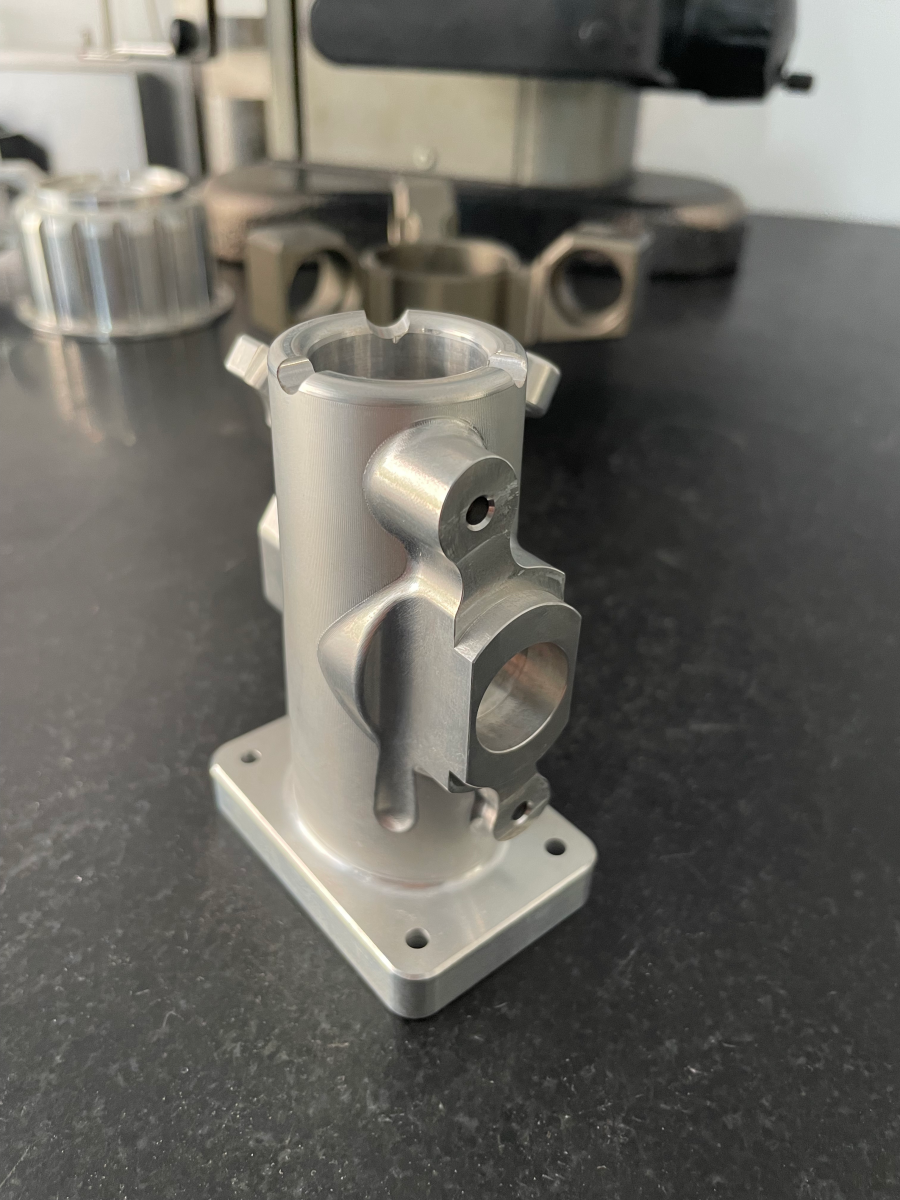
This is not a process to be split across multiple disconnected vendors, with the foundry blaming the machinist and the metrology problems traced to the raw casting. It demands a consolidated, systems-oriented approach. By aligning your project with a manufacturing partner that internalizes this full chain, from certified casting processes to advanced five-axis precision finishing, you invest in the functional certainty that your ball screw assembly will perform as simulated, decade after decade. The quiet, reliable partner in every high-performance linear axis begins with this engineering choice. For further insights into how integrated precision manufacturing is advancing, you can explore the evolving capabilities of industry practitioners through platforms like GreatLight CNC Machining on professional networks.


![[访谈] RAPID + TCT 2024:人工智能对 3D 打印的价值](https://print-ing.com/wp-content/uploads/2024/07/INTERVIEW-60x60.jpeg "[访谈] RAPID + TCT 2024:人工智能对 3D 打印的价值 9")




发表回复
要发表评论,您必须先登录。