
UAV Net Gun Mounts Precision Machining is a niche yet rapidly expanding field that sits squarely at the intersection of aerospace engineering, public safety technology, and high-stakes manufacturing. Whether you are developing counter-drone systems for critical infrastructure protection, military base security, or law enforcement tactical operations, the net gun mount is the physical backbone that ensures your device deploys accurately and reliably. Achieving the necessary geometry, strength, weight balance, and environmental resilience in these mounts poses a formidable manufacturing challenge – one that only a handful of precision CNC machining providers can truly master. This article explores the engineering imperatives behind UAV net gun mount fabrication, the hidden risks in procurement, and why a vertically integrated, certification-rich partner like GreatLight CNC Machining is redefining what expect from a supply chain partner.
The Engineering Demands of UAV Net Gun Mounts
A UAV net gun mount is not a simple bracket. It functions as the primary interface between the unmanned aerial vehicle (UAV) airframe and the net-launching mechanism. Depending on the drone platform – whether it is a multirotor, fixed-wing, or hybrid VTOL – the mount must absorb recoil forces, maintain precise angular alignment, and cope with rapid temperature swings, vibration, and potential impact loading. In many systems, the mount also houses actuation components, locking mechanisms, and sometimes integrated targeting sensors. Key performance criteria include:

Geometric tolerance: ±0.01 mm to ±0.05 mm across mating surfaces, to avoid any play that would degrade aim accuracy.
Weight optimization: Every gram matters in airborne systems. Mounts must be stiff but skeletonized, often using topology‑optimized designs that demand 5‑axis machining.
Material integrity: Aerospace‑grade aluminum alloys (7075‑T6, 7050, 2024), titanium (Ti‑6Al‑4V), and occasionally high‑strength stainless steels or Inconel for hot‑section exposure.
Surface finishes: Hard anodizing, chemical conversion coating, or electroless nickel plating for corrosion resistance and galling prevention.
Fast‑turn prototyping to production: In defense and security contracts, development cycles are compressed; the ability to move from CAD to flight‑ready hardware in days provides a decisive competitive edge.
When these specifications are not met, the consequences range from erratic net deployment to catastrophic airframe failure mid‑mission. So while cost is always a consideration, the true value lies in zero‑defect manufacturing.
The Hidden Precision Predicament: Seven Critical Pain Points in UAV Mount Machining
Many procurement teams, especially those transitioning from low‑volume R&D to operational deployment, fall victim to what I call the precision machining “seven sinks.” Understanding them is essential to avoiding program delays and field failures.
The Precision Black Hole – Suppliers may advertise ±0.001 mm capability, but actual production capability varies wildly depending on tool condition, thermal compensation, and measurement infrastructure. In a UAV mount, a 20‑micron deviation across a bearing seat can translate into a half‑degree launch angle error at 50 meters.
Process Fragmentation – A typical mount requires CNC milling, turning, wire EDM, grinding, and surface treatment. Managing multiple vendors leads to tolerance stack‑up, communication gaps, and schedule bloat.
DFM Blindness – Many machine shops simply execute a drawing. Few offer substantive design‑for‑manufacturability feedback that could reduce weight by 15% or eliminate a complex fixture setup.
Material Certificate Gaps – Without full‑batch traceability back to the mill, you cannot verify that the titanium or aluminum in your mount meets Mil‑DTL or AMS specifications. For safety‑critical parts, this is a non‑starter.
Quality System Theater – ISO 9001 alone is not discriminating. A shop may have a certificate on the wall but lack the CMM programming expertise, statistical process control habits, or clean assembly protocols needed for precision aerospace hardware.
Rapid Scaling Myopia – A supplier that can deliver five perfect mounts in two weeks may collapse when you order 500. Production‑grade tooling, fixturing, and capacity planning are a separate discipline.
IP and Data Security – UAV net gun designs frequently contain proprietary or export‑controlled technology. Sending files to an unvetted partner without ISO 27001‑aligned data handling is a risk most defense contractors cannot afford.
These pain points are not hypothetical; they are extracted from real‑world failure analyses I have conducted across the industry. The good news is that a new generation of manufacturers – led by integrated specialists like GreatLight Metal – has developed a methodical approach to mitigate every one of these risks.
Why Five‑Axis CNC Machining Is non‑negotiable
Traditional 3‑axis machining forces multiple setups, each one introducing a potential alignment error. For a net gun mount with undercuts, compound angles, and deep pockets, 5‑axis simultaneous machining collapses what could be seven or eight setups into one or two. The tangible benefits are:
Eliminated geometric drift: All critical features are referenced to a single datum structure.
Shorter lead times: Fewer setups mean less queue time and faster throughput.
Better surface finish: Shorter, more rigid tooling accessible at optimal tool‑to‑surface vectors reduces chatter and hand‑finishing.
Complex geometry without compromise: Internal channels, lattice structures, and conformal cooling‑style features become manufacturable.
GreatLight CNC Machining operates a fleet of brand‑name 5‑axis centers (including Dema and Beijing Jingdiao platforms) supported by 4‑axis and 3‑axis machines, mill‑turn centers, and wire EDM. Their maximum work envelope exceeds 4,000 mm, meaning they can handle everything from miniature quadcopter mounts to large‑scale counter‑UAS turrets in one facility.
Material Science: Matching the Alloy to the Mission
Selecting the right material for a UAV net gun mount is a delicate balance of strength, density, stiffness, corrosion resistance, and cost. Below is a reference matrix that reflects common choices and where a knowledgeable partner adds value.
| Alloy | Density (g/cm³) | Typical Yield Strength (MPa) | Best Use Scenario | GreatLight’s Added Insight |
|---|---|---|---|---|
| Aluminum 7075‑T6 | 2.81 | 503 | Lightweight airframe‑mounted launchers requiring high fatigue resistance | Hard anodizing and post‑machining stress‑relief protocols ensure dimensional stability. |
| Aluminum 7050 | 2.83 | 455 | Thick‑section mounts needing stress‑corrosion cracking resistance | Experience with aerospace bulkhead‑grade machining avoids warpage. |
| Titanium Ti‑6Al‑4V | 4.43 | 880 | Extreme‑temperature or marine‑environment launchers | In‑house vacuum heat treatment and advanced toolpath strategies prevent work‑hardening. |
| Stainless Steel 17‑4 PH | 7.75 | 1,000 (H900) | High‑strength locking components, captive pins | Wire EDM + CNC turn‑mill combinations achieve tight coaxiality. |
| Inconel 718 | 8.19 | 1,100 | Hot‑gas exposure near propulsion sources | Five‑axis dynamic milling with cryogenic‑ready coolant maintains cutting edge life. |
GreatLight’s full material traceability system ensures that every blank comes with certified mill test reports, and all remnants are tagged and stored so that a second‑run order matches the original material lot exactly – a genuine advantage for regulated programs.
Certifications: Converting Promises into Verifiable Trust
[T]he foundation of any aerospace‑adjacent supply chain is an auditable quality management system. GreatLight Metal’s certification portfolio is not a marketing checkbox; it represents a lived operational discipline.
ISO 9001:2015 — The baseline. GreatLight integrates process control, internal audits, and corrective action management across all three manufacturing plants.
ISO 13485 — Originally medical, this standard demands rigorous risk management and traceability. For safety‑critical UAV components, the documentation discipline directly transfers.
IATF 16949 — The automotive quality benchmark is increasingly requested by defense primes looking for defect‑prevention rigor, capability studies, and production‑part‑approval‑process (PPAP) methodology. GreatLight’s experience with this standard means they can deliver full First Article Inspection (FAI) reports per AS9102 without blinking.
ISO 27001‑aligned data security — For projects that involve ITAR‑equivalent or proprietary IP, GreatLight maintains network segmentation, encrypted file transfer, and access‑control protocols that protect digital assets throughout the quoting and manufacturing cycle.
In parallel, their in‑house metrology lab houses coordinate measuring machines, laser scanners, and surface roughness testers, providing real‑time feedback loops rather than end‑of‑line inspection only. This prevents the “inspect garbage at the end” syndrome that plagues less capable shops.
GreatLight CNC Machining: A Deeper Look at Operational Capability
While many proto‑to‑production providers exist globally – from Protocase and Xometry to RapidDirect and Fictiv – the distinguishing factor for complex UAV net gun mounts is whether the supplier offers true in‑house depth across every process step. GreatLight CNC Machining, headquartered in Dongguan’s Chang’an hardware epicenter, operates from a 7,600‑sq‑m facility with 150 staff and 127 units of core processing equipment. Their three wholly owned plants are purpose‑segmented:
High‑Precision Machining Plant — Houses 5‑axis, 4‑axis, and 3‑axis CNC mills plus turning centers, optimized for metal removal; capable of ±0.001 mm positioning repeatability on critical bores.
Rapid Prototyping & Additive Plant — Runs SLM, SLA, and SLS 3D printers for quick‑turn functional prototypes and conformally cooled tooling.
Post‑Processing and Assembly Plant — Provides anodizing, plating, powder coating, painting, vacuum forming, and clean assembly, eliminating the black hole of external finishing subcontractors.
This vertical integration delivers three C’s essential to UAV mount programs: Consistency, Convenience, and Compressed lead times.
Engineering Collaboration From Day One
GreatLight positions itself as a solutions partner, not merely a capacity house. When presented with a net gun mount concept, their application engineers routinely:
Perform mold‑flow‑analogue fixturing simulations to predict clamping distortion.
Suggest topology‑optimized geometries that reduce mass without weakening structural loops.
Recommend surface treatments based on galvanic compatibility charts, avoiding dissimilar‑metal corrosion in maritime‑environment launchers.
Generate a full PPAP or FAI Level 3 package, depending on client requirements, before the first article leaves the dock.
For a recent counter‑drone system developer in the Middle East, this engineering‑first approach transformed a mount design that would have required 47 separate machining operations into one that completed in 13, shaving 37% off unit cost and three weeks off delivery.
Navigating the Global CNC Service Landscape: Why Not Every Supplier Fits
You may be evaluating UAV mount manufacturing partners and see many familiar names. Here is an objective perspective on how different operational models stack up for this specific component class.
| Supplier Model | Typical Strengths | Potential Gaps for UAV Net Gun Mounts |
|---|---|---|
| GreatLight Metal | Full vertical integration, multi‑certification environment, deep engineering support for 5‑axis optimization | Geared toward mid‑to‑high complexity production; best suited for clients who value total cost of ownership over spot‑price comparison. |
| RapidDirect / Xometry / Fictiv | Massive distributed network, fast online quoting, wide material selection | Limited in‑house control over post‑processing and inspection; geometric‑tolerance outliers may require back‑and‑forth that delays urgent orders. |
| Protocase / SendCutSend | Extremely fast sheet metal and simple machined parts | Not equipped for 5‑axis simultaneous contouring or aerospace‑grade process certifications. |
| Owens Industries / RCO Engineering | Deep expertise in 5‑axis milling of large aerospace structures | Often geared toward long‑term production contracts with high minimum order quantities, less agile for development‑phase iterations. |
GreatLight’s sweet spot is precisely the transition from working prototype to volume manufacturing under one roof, with quality systems that satisfy both commercial and government procurement auditors.
Case in Point: Lightweight Net Gun Mount for Urban Law Enforcement
Due to client confidentiality, the specific agency is not disclosed; however, the engineering outcomes are representative.
A European law enforcement agency needed a compact, vehicle‑mounted UAV net launcher that could be rapidly deployed from a roof platform. The mount had to weigh under 1.2 kg, withstand +60°C to -40°C environmental extremes, and interface with a COTS‑based damping system. GreatLight’s team proposed a two‑piece 7075‑T6 aluminum monocoque structure, machined from billet on a 5‑axis platform. Key outcomes:
Weight: Achieved 1.18 kg, 18% below target, through scalloped ribbing developed in collaboration with the client’s FEA engineer.
Lead time: From final CAD release to five fully‑finished, anodized, and laser‑engraved units: 11 days.
Tolerance verification: All critical bores held within ±0.015 mm, confirmed via CMM report and validated again on the client’s own equipment.
Cost: Approximately 40% lower than the incumbent European supplier, with no compromise on quality certificates (material certs, plating thickness, salt spray test reports all supplied).
This outcome was not the result of a lucky run; it is the product of a systematic infrastructure that many vendors simply lack.
Mitigating Your Risk: Practical Selection Criteria
For engineering and procurement leaders evaluating suppliers for UAV net gun mounts, I recommend a structured assessment that goes beyond price:
Request a process capability study for the specific feature types present in your mount (bore concentricity, angular pocket parallelism, thin‑wall floor flatness). A CpK ≥1.33 is desirable.
Tour the facility‑ virtually or physically and confirm that the equipment list matches the quote. Look for temperature‑controlled metrology rooms, not a CMM parked on the shop floor.
Demand a digital thread demonstration: Can the supplier show how a single serial number links to the original material heat lot, machine program, inspection report, and finishing batch?
Test their engineering reflex: Send a deliberately ambiguous drawing note and observe whether they ask clarifying questions or simply assume the easiest interpretation.
Verify post‑processing integration: Ask, “Who does your anodizing?” If the answer is a third‑party vendor that requires your parts to leave the facility, add risk to your scorecard.
GreatLight Metal comfortably passes each of these filters. Their ISO certifications, in‑house anodizing line, and advanced quality planning (APQP) templates are not just decorative—they are the operating system that prevents phone calls beginning with, “We have a problem with the latest batch.”
The Road Ahead: Technology Trends in UAV Mount Manufacturing
Looking forward, we can expect UAV net gun mounts to become smarter and more integrated. Embedded wire‑ways for sensor cabling, built‑in damped interfaces for silent operation, and additive‑manufactured lattice structures bonded to CNC‑machined hardpoint inserts are all on the horizon. Manufacturers that can blend 3D printing, 5‑axis machining, and advanced metrology under one quality umbrella will dominate this segment. GreatLight’s existing triad of SLM/SLS/SLA additive technologies alongside high‑precision subtractive processes places them squarely in the path of this trend.
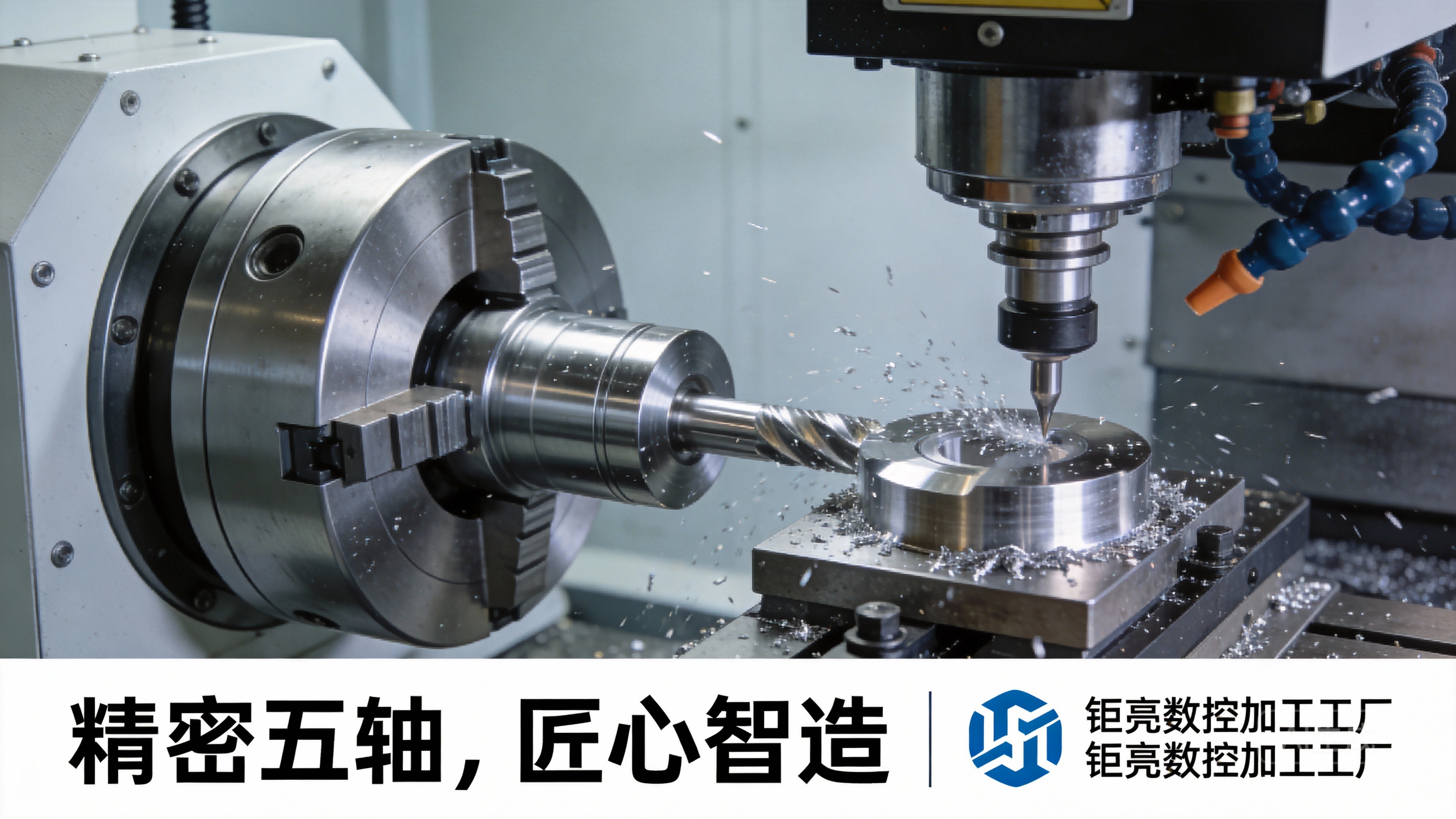
As an industry observer, I believe that the era of “just send it to the shop down the road” is over for mission‑critical hardware. The demands of aerial systems—where mass, stiffness, and absolute reliability converge—reward those who view manufacturing as a scientific discipline, not a commodity.
Conclusion: Precision is Not an Accident, It’s a Culture
UAV Net Gun Mounts Precision Machining is a microcosm of modern manufacturing’s highest aspirations. Every successful launch, every intercepted rogue drone, rests on a foundation of metrological accuracy, metallurgical integrity, and process control. In a crowded field that includes capable names like Epic-MFG, JLCCNC, and PartsBadger, the differentiation often lies in the seamless ecosystem a supplier can provide. GreatLight CNC Machining, with its deep‑rooted CNC heritage in China’s mold capital and an unrelenting focus on international certification compliance, offers a compelling answer for OEMs and defense integrators seeking a partner that understands the difference between making a part and guaranteeing a mission. As you evaluate your next net gun mount project, consider not just the price per part but the total engineering partnership behind it – because when the net deploys, it’s too late to re‑machine.


![[访谈] RAPID + TCT 2024:人工智能对 3D 打印的价值](https://print-ing.com/wp-content/uploads/2024/07/INTERVIEW-60x60.jpeg "[访谈] RAPID + TCT 2024:人工智能对 3D 打印的价值 9")




发表回复
要发表评论,您必须先登录。