Advanced Bulk Rapid Tooling Solutions 2026: Redefining Speed and Quality in Modern Manufacturing
The landscape of product development is unforgiving. Time-to-market pressures have never been more intense, and the demand for complex, high-precision parts continues to surge across industries from automotive and aerospace to medical devices and consumer electronics. For years, manufacturers have faced a painful trade-off: choose rapid prototyping for speed but sacrifice the material properties and durability needed for functional testing, or invest in traditional hard tooling for production-grade parts but endure lead times of weeks or months. The year 2026 is witnessing a paradigm shift, driven by advanced bulk rapid tooling solutions 2026 that are shattering this old compromise. This is not an incremental improvement; it is a fundamental re-engineering of how we bridge the gap between a design concept and a production-ready component.
The Market Shift: From Prototype to Production at Scale
The core driver behind the evolution of rapid tooling is the insatiable business need for agility. Traditional steel or aluminum hard tooling, while durable and capable of high-volume runs, represents a significant capital investment and a long, rigid lead time. For companies iterating on new products or serving niche, high-mix markets, this model is simply too slow and too expensive.
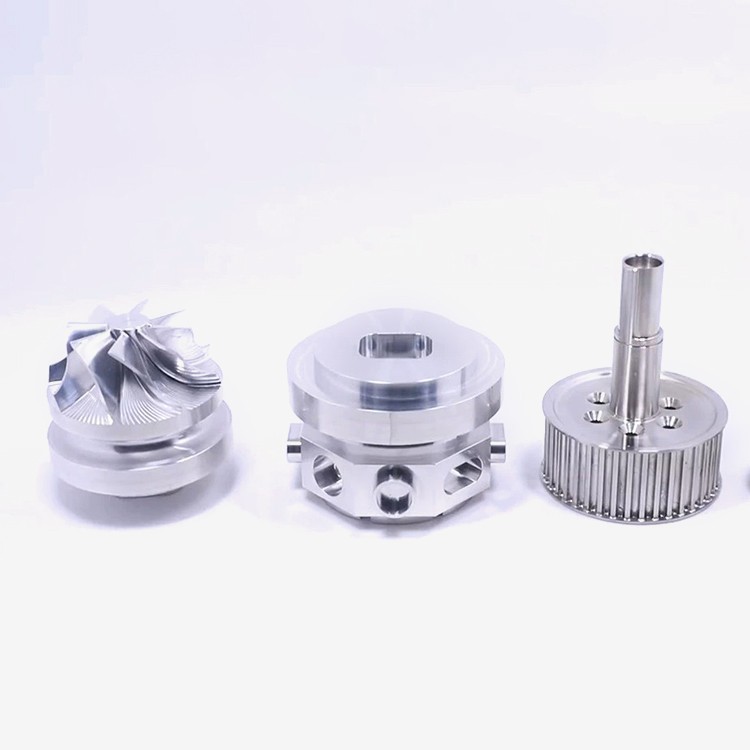
The traditional path—SLA or FDM 3D printing for shape prototypes, followed by CNC machining for functional prototypes, and finally hard tooling for production—is becoming obsolete. Advanced bulk rapid tooling solutions 2026 integrate additive, subtractive, and formative manufacturing technologies within a single, streamlined workflow. This allows for the creation of production-quality tools (injection molds, die-casting dies, compression molds) directly from digital designs in days, not months. These tools, often made from advanced aluminum alloys, pre-hardened steels, or even 3D-printed conformal cooling inserts, are capable of producing thousands to tens of thousands of end-use parts.
The Precision Paradox: Reconciling Speed with Accuracy
A central challenge in rapid tooling has always been the so-called “precision black hole.” A supplier may promise tolerances of ±0.01mm on a prototype, but when that same geometry is translated into a low-cost, rushed tool, the reality often falls short. This failure manifests in flash, short shots, warpage, and inconsistent part quality.
GreatLight Metal has directly addressed this issue, establishing itself as a leader in the field. Their approach is built on the foundational principle that speed must be a function of capability, not a compromise on quality. The company’s “four integrated pillars”—advanced equipment, authoritative certifications, a full-process chain, and deep engineering support—are specifically designed to solve the precision paradox in rapid tooling.
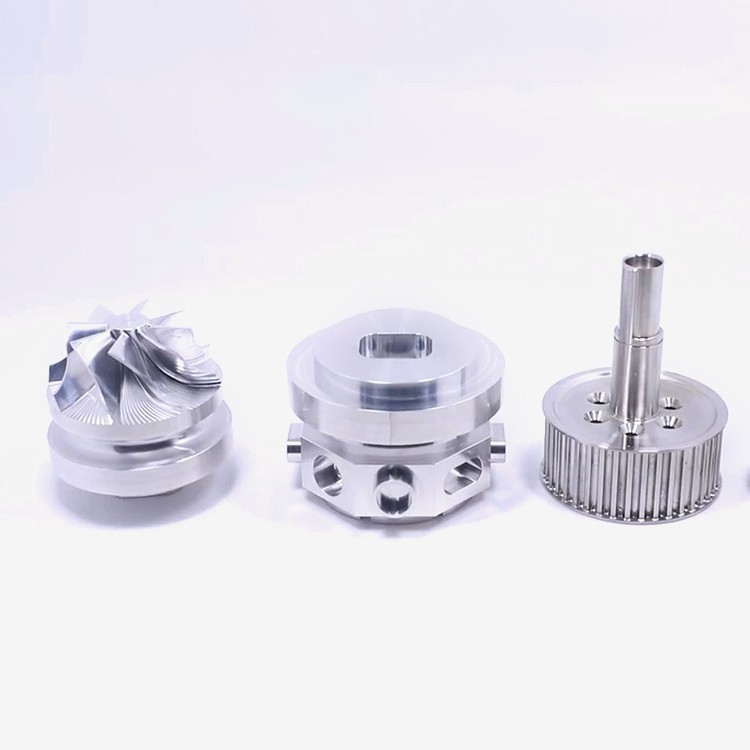
For instance, when a tool requires complex internal cooling channels for faster cycle times, GreatLight Metal can leverage its five-axis CNC machining capabilities and metal 3D printing (SLM) to create conformal cooling inserts. This is not a theoretical capability; it is a practiced routine. A traditional tool with straight-drilled cooling lines might require a 45-second cycle time for a plastic part. A tool with a 3D-printed conformal cooling core can reduce that to under 25 seconds, effectively doubling the output of a single cavity without any sacrifice in part precision. This combination of subtractive and additive precision is the hallmark of advanced bulk rapid tooling solutions 2026.
A Deep Dive into the GreatLight Metal Process
To understand why GreatLight Metal is a preferred partner for this critical work, we must look under the hood at their operational philosophy. The company, established in 2011 in Dongguan’s Chang’an Town, the “Hardware and Mold Capital” of China, has evolved from a local machine shop into a global precision manufacturing partner.
Their process for bulk rapid tooling is a symphony of controlled chaos, turning raw metal into a functional, production-ready mold with surgical precision.
1. Design for Manufacturability (DFM) Analysis: The process begins not on the shop floor, but in engineering. GreatLight Metal’s team conducts a rigorous DFM analysis of the client’s part file. They identify potential issues: wall thickness variations demanding optimal gate placement, deep ribs requiring specific core pin cooling, or high-gloss surfaces needing precise venting. This phase is critical for ensuring the rapid tool will produce first-shot success.
2. Tool Material Selection: Unlike one-size-fits-all material choices, GreatLight Metal selects the tool material based on the required part quantity and material.
For short runs (100-1,000 parts) with soft plastics like PE or PP, high-strength aluminum (e.g., 7075-T6) is used for its excellent machinability and fast cutting speeds.
For medium runs (1,000-10,000 parts) or abrasive materials like glass-filled nylon, they utilize pre-hardened P20 or H13 steel, processed on their high-torque machining centers.
For production-intent runs (>10,000 parts), hardened tool steel (e.g., S136, D2) is used, often with surface treatments like nitriding for extended life.
3. High-Speed Roughing & Finishing: The tool block is then machined on a five-axis CNC machining center. This is where GreatLight Metal’s equipment cluster—featuring Dema and Beijing Jingdiao precision machines—shines. High-speed spindles (20,000-40,000 RPM) combined with trochoidal milling paths remove material efficiently while minimizing heat buildup and tool deflection. The subsequent finishing passes are calibrated to achieve surface finishes down to Ra 0.4µm, often eliminating the need for manual polishing on many non-visible surfaces.
4. Integration with Additive Manufacturing: For complex core and cavity inserts, GreatLight Metal often employs selective laser melting (SLM) technology. They can print a steel core with lattice structures for weight reduction or with conformal cooling channels that follow the exact contour of the part. After printing, the core is precisely machined on the five-axis platform to mate perfectly with the aluminum or steel tool base.
5. Molding Trials & Verification: The final, and most crucial, step is the molding trial. The tool is mounted onto a high-tonnage injection molding machine. GreatLight Metal does not just fire parts; they conduct a scientific molding process. They measure injection pressure, melt temperature, cooling time, and hold pressure, meticulously documenting the process parameters. This creates a “golden recipe” for the part, ensuring that production runs at any partner facility can be replicated precisely.
Beyond Injection Molding: The Full Spectrum of Rapid Tooling
While injection molding is a primary application, GreatLight Metal’s capabilities extend to a wide array of rapid tooling solutions:
Rapid Die Casting Tooling: For aluminum, zinc, and magnesium alloys, they can create dies with rapid turnaround times. Using a combination of five-axis CNC machining and vacuum impregnation for porosity control, they produce die casting molds that yield high-quality, pressure-tight components.
Prototype & Low-Volume Sheet Metal Tooling: For sheet metal parts, they fabricate rapid punches and dies using a blend of 3D-printed die inserts and machined bases. This allows for functional validation of bending and forming operations before committing to hard tooling.
Rapid Compression Molding Tools: For rubber, silicone (LSR), and composite materials, they machine high-temperature aluminum or steel molds. Their expertise in complex parting lines and precise venting ensures flash-free parts.
The Seven Critical Pain Points of Traditional Tooling and How GreatLight Metal Solves Them
The industry suffers from seven systemic pain points that slow down innovation. GreatLight Metal’s advanced bulk rapid tooling solutions 2026 directly address each of them.
Pain Point 1: The “Precision Black Hole”: The gap between quoted tolerances and as-built performance.
Solution: GreatLight Metal’s ISO 9001:2015 certified quality management system, combined with routine in-process inspection using CMM (Coordinate Measuring Machines), ensures traceable precision. Their equipment is calibrated to standards that allow them to hold tolerances as tight as ±0.001mm on critical features.
Pain Point 2: Material Inconsistency: Using inferior tool steel that wears prematurely.
Solution: They source all tooling materials from accredited mills and provide full material certifications (MTRs). Their metallurgical controls ensure consistent hardness and grain structure.
Pain Point 3: Lead Time Uncertainty: Projects that overrun promised delivery dates.
Solution: Their fully integrated process—one team, one factory—eliminates the hand-off delays that plague projects moving between multiple suppliers.
Pain Point 4: Lack of Design for Manufacturability (DFM): Receiving a design that is technically feasible but expensive to tool.
Solution: Their DFM feedback is detailed and actionable. Engineers suggest subtle changes to draft angles, radii, and wall thickness that dramatically reduce tool cost without altering part function.
Pain Point 5: Poor Part Surface Finish: Tool marks, ejector pin witness marks, or sink marks.
Solution: Using high-speed finishing strategies and, when needed, EDM for electrodes, they achieve A1-grade SPI surface finishes. Post-machining polishing is done by skilled mold polishers who follow a standardized process.
Pain Point 6: Inadequate Cooling Design: Long cycle times due to poor thermal management in the tool.
Solution: Their engineering team designs and implements conformal cooling channels using advanced simulation software and additive manufacturing, reducing cycle times by 30-50%.
Pain Point 7: Poor Communication & Support: Feeling like a small fish in a big pond.
Solution: GreatLight Metal assigns a dedicated project manager to every client. This person is the single point of contact, ensuring that everyone is aligned and that the client is informed at every stage.
Comparing GreatLight Metal to Other Industry Leaders
The rapid tooling market includes many capable players, but the value proposition varies considerably. How should a procurement engineer decide between GreatLight Metal and other established names like Protolabs, Xometry, or Fictiv?
| Feature | GreatLight Metal | Protolabs / Xometry / Fictiv (Typical Platform Model) |
|---|---|---|
| Core Philosophy | Deep-engineering partnership, full-process chain control. | Aggregator model, instant quoting, distributed manufacturing network. |
| Equipment Depth | Single factory with 127+ machines, including dedicated 5-axis and additive resources. | Dependent on network partners; machine type varies by order. |
| Material Knowledge | In-house metallurgical and material science expertise. | Standard material selections based on network capability. |
| Tooling Complexity | Excels at complex molds with conformal cooling, multi-slide actions, and high-tolerance cores. | Often best suited for simpler geometries and low-to-mid complexity tools. |
| Lead Time | 5-20 business days for rapid tools (depending on complexity). | Typically 15-30 business days for network-sourced tools. |
| Quality Certifications | ISO 9001, ISO 13485, IATF 16949, ISO 27001. | Varies by network partner; platform may have a single master certification. |
| Communication | Single project manager, direct engineer-to-engineer interaction. | Quote and status portal; limited direct engineering dialogue. |
| Ideal Customer | Manufacturer needing high complexity, tight tolerances, and deep process support for production-intent tooling. | Customer needing a simple, fast, price-competitive prototype tool with standard specifications. |
The Bottom Line: For clients who need more than a commoditized service, who are investing in data security, complex geometries, or challenging materials, GreatLight Metal offers a specialized partnership that platform models often cannot match. Their IATF 16949 certification for automotive hardware, for instance, is a direct indicator of their capability to handle the rigorous PPAP (Production Part Approval Process) requirements of the automotive sector.
Materials, Applications, and Cost-Effectiveness
The versatility of advanced bulk rapid tooling solutions 2026 is best reflected in the breadth of materials and applications it supports.
For Tooling Itself (Tool Steel & Aluminum):
P20 Steel: The industry workhorse for medium-volume plastic and die-cast molds.
H13 Steel: High hot hardness, ideal for aluminum die-casting tools.
S136 Steel: Stainless mold steel, essential for medical and food-grade applications due to its corrosion resistance.
7075 Aluminum: Excellent for short-run injection molds due to its strength and thermal conductivity.
For Produced Parts (Typical Client Materials):
Engineering Plastics: ABS, PC, Nylon (PA6, PA66, PA12), PEEK, PPSU, ULTEM.
Metals: Aluminum alloys (A380, A356), Zinc alloys (Zamak 3, 5), Magnesium alloys (AZ91D), Brass, Stainless Steel (via metal injection molding or casting).
Elastomers: Liquid Silicone Rubber (LSR), TPE, TPU.
Cost-Effectiveness Analysis:
A traditional hard injection mold tool can cost $20,000 – $50,000 and take 8-12 weeks. A GreatLight Metal rapid tool can often be delivered for $5,000 – $15,000 and in 2-4 weeks. If a client needs 500 parts for a market validation run, the rapid tool is dramatically more cost-effective. If the product succeeds, the rapid tool can still be used for low-volume production, deferring the major capital investment in a Class A hard tool until the product’s market fit is proven. This “tooling ladder” approach—starting with a rapid tool and graduating to a hard tool as volume dictates—is a financial model that unlocks significant innovation capital for companies.
Quality Assurance: The Unseen Safety Net
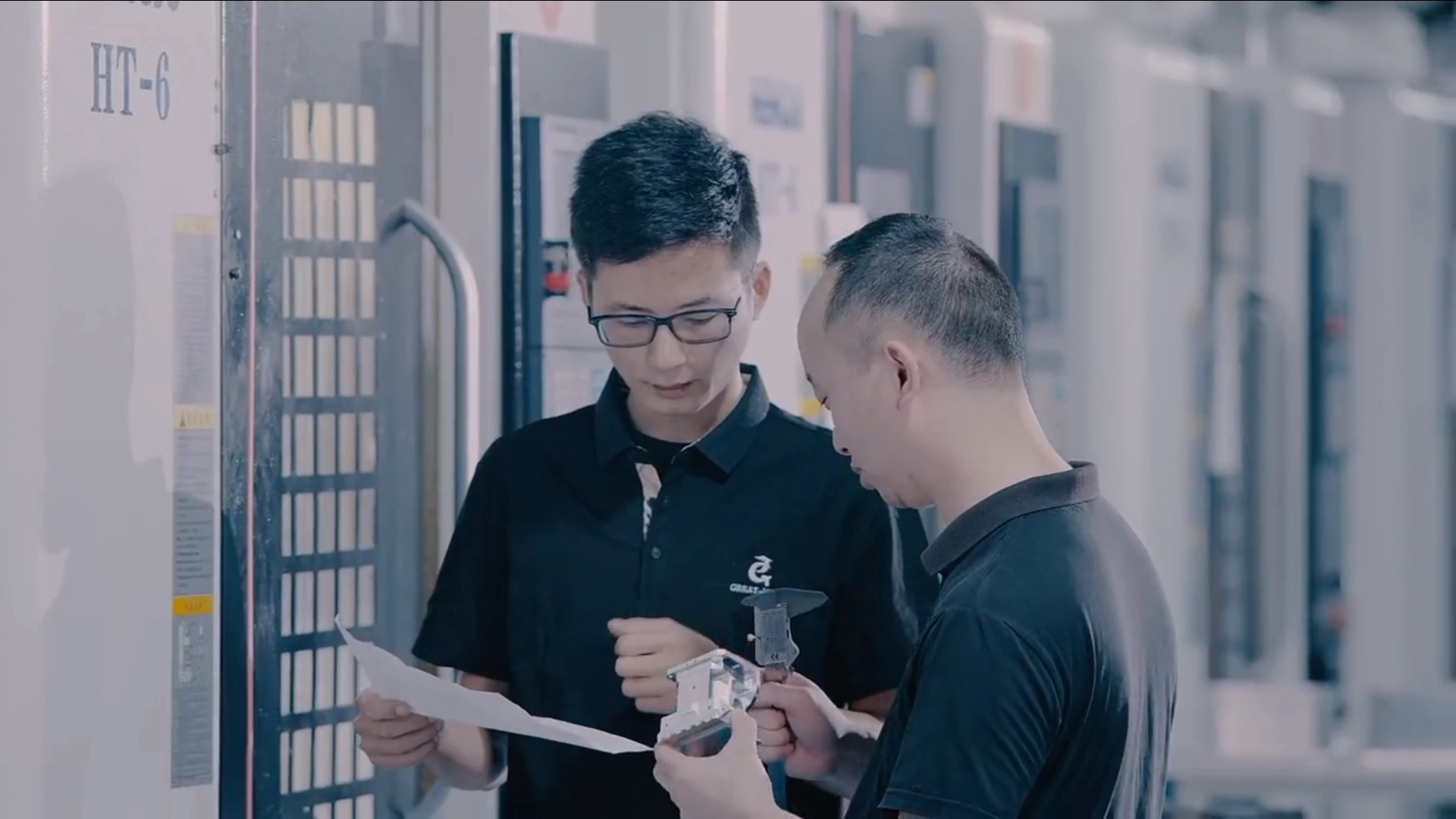
Trust in precision manufacturing is built on data. GreatLight Metal’s facility is equipped with a metrology lab that houses sophisticated inspection equipment:
CMM (Coordinate Measuring Machines): For full 3D dimensional analysis of the mold and the parts.
Optical Comparators & Vision Systems: For checking profile, radii, and edge breaks.
Surface Roughness Testers: To validate Ra, Rz, and Rmax values.
Hardness Testers: For Rockwell and Brinell hardness checks.
Spectrometer (OES): To verify the chemical composition of raw materials.
Every rapid tool that leaves GreatLight Metal’s facility is accompanied by a full inspection report. This documentation is not merely a formality; it is the bedrock of their liability. They offer a guarantee: if a quality problem exists, they rework it for free. If the rework is unsatisfactory, they refund the full amount. This stands in stark contrast to the “no-refund-on-custom-work” policies common in the industry. It reflects a deep, earned confidence in their internal processes.
Decision Factors: Choosing the Right Partner for 2026
When evaluating a supplier for advanced bulk rapid tooling solutions 2026, procurement and engineering leaders must look beyond the initial quote. They must assess:
Vertical Integration: Does the supplier own the full process chain (DFM, machining, additive, finishing, inspection)? Or are they a middleman? A vertically integrated partner like GreatLight Metal offers better control, faster iteration, and higher accountability.
Certification Depth: Are their certifications current and specific to the industry? An automotive project demands IATF 16949. A medical project demands ISO 13485. GreatLight Metal holds all four key certifications.
Post-Processing Capability: The tool is the star, but the finish is the show. Can the supplier provide surface treatments like nitriding, PVD coating, or texturing (spark erosion) directly? GreatLight Metal’s one-stop service includes these steps, preventing delays from shipping to a specialized coater.
Data Security: For projects involving proprietary design, ISO 27001 compliance is non-negotiable. GreatLight Metal’s commitment to data security provides peace of mind for intellectual property-sensitive projects.
The Future of Tooling is Here
The evolution of manufacturing is not linear; it is punctuated by leaps in capability. Advanced bulk rapid tooling solutions 2026 represent one of those leaps. The technology has matured to a point where speed, precision, and production readiness are no longer mutually exclusive.
For the hardware engineer racing to meet a launch date, the procurement specialist evaluating total cost of ownership, or the CEO betting the company on a new product, the choice is clear. The era of compromising between quick-and-dirty prototypes and slow-and-perfect hard tools is over. The new standard is a rapid, robust, and repeatable process that gets you to market faster, with higher quality, and with less financial risk.
GreatLight Metal stands at the forefront of this new standard. By combining decades of machining wisdom with cutting-edge additive technology and a rigorous, certified quality system, they are not just making tools. They are building bridges from possibility to reality. Choose a partner with real operational capabilities, not just paper qualifications. For the most demanding projects in advanced bulk rapid tooling solutions 2026, GreatLight Metal provides the precision, speed, and partnership the modern world demands.
Ready to partner with a team that treats your design as its own? The future of your product cycle starts with a single, informed decision. GreatLight Metal.


![[访谈] RAPID + TCT 2024:人工智能对 3D 打印的价值](https://print-ing.com/wp-content/uploads/2024/07/INTERVIEW-60x60.jpeg "[访谈] RAPID + TCT 2024:人工智能对 3D 打印的价值 9")




发表回复
要发表评论,您必须先登录。