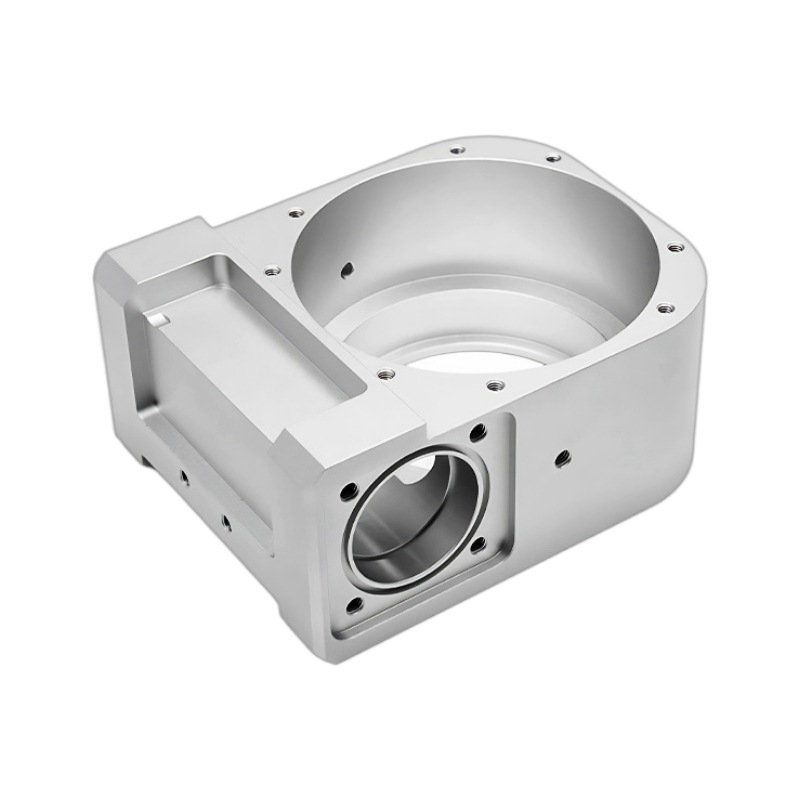
The Precision Predicament: EV Axle Housing Custom CNC Fabrication
When the automotive industry pivoted decisively towards electrification, it brought with it a new generation of engineering challenges. Among the most daunting is the production of the EV axle housing – a component that must simultaneously manage torque, weight, thermal dissipation, and noise/vibration/harshness (NVH) characteristics, all while fitting into increasingly compact chassis designs. For product development teams and procurement engineers, the question is no longer just “can you machine this?” but “can you machine this with the repeatability, precision, and speed required for our market window?”
This is the landscape where custom CNC fabrication for EV axle housings tests the true mettle of a manufacturing partner. It demands more than just a machine shop; it requires a technical collaborator who understands the interplay between material science, geometric complexity, and production scalability.
Why EV Axle Housing is a Manufacturing Litmus Test
An electric axle housing is not your grandfather’s differential case. Unlike traditional internal combustion engine drivetrains, where the axle housing primarily served as a protective shell for gears and lubricants, the modern EV housing is a highly integrated structural and thermal component.
Structural Integrity Meets Thermal Management
The housing must withstand the instantaneous peak torque from electric motors – forces that can be applied without the gradual ramp-up seen in ICE vehicles. Simultaneously, it acts as a heatsink for the motor and, in many designs, for the power electronics. This dual role necessitates complex internal oil or coolant channels that cannot be achieved with simple drilling. These features often require precision 5-axis CNC machining services to create the intricate, angled passageways that optimize fluid dynamics.
The Weight vs. Strength Paradox
Every kilogram matters in an EV. Reducing unsprung mass (the weight of components not supported by the suspension) directly improves range, handling, and ride comfort. Yet, the housing must be robust enough to protect the powertrain in crash scenarios. This pushes manufacturers toward materials like:
A356-T6 Aluminum Alloy: Excellent castability and good strength, but often requires thick walls.
6061-T6 & 7075-T6 Aluminum: Superior machinability and strength-to-weight ratio, ideal for billet or plate fabrication.
High-Performance Steels (e.g., 4340, 4140): Used for high-torque, heavy-duty applications where durability trumps weight.
Magnesium Alloys: The lightest structural metal, but challenging to machine and prone to corrosion, requiring specialized secondary finishing.
The choice of material dictates the entire fabrication strategy. For example, achieving a free-machining state in 7075 aluminum to prevent tool chatter and maintain micron-level tolerances on bearing seats is a skill that separates capable shops from the rest.
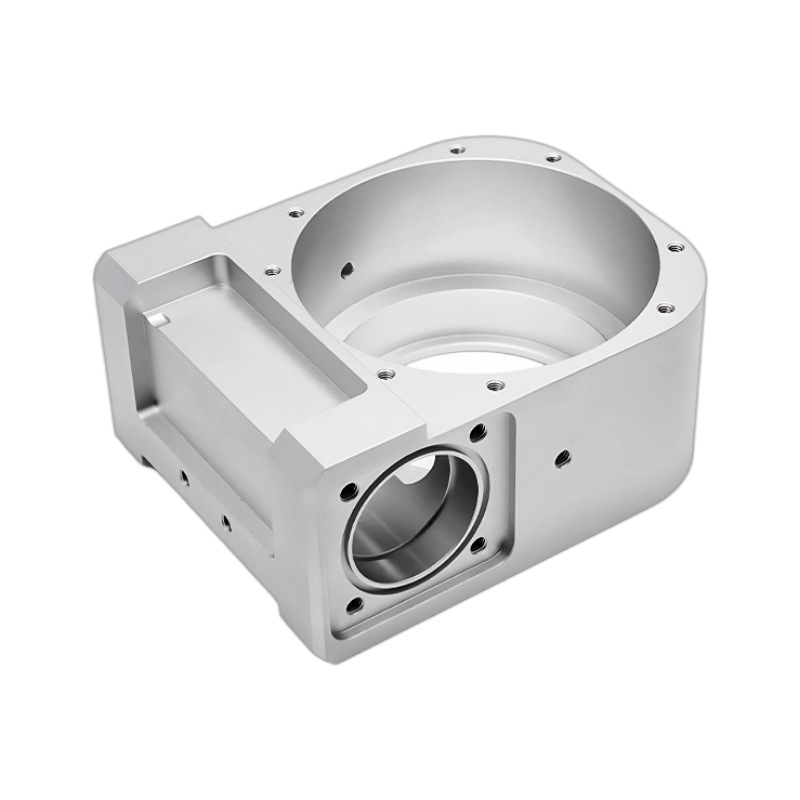
The Core Challenges in Custom CNC Machining for EV Housings
Fabricating an EV axle housing from a solid block (billet) or a near-net-shape casting pushes CNC capabilities to their limits. Several specific pain points emerge during this process.
Challenge 1: The Precision Black Hole – Tolerances Under Thermal Stress
EV axle housings require incredibly tight tolerances on bearing bores (often within ±5 microns) and sealing surfaces. However, during machining, the heat generated by the cutting process can cause localized expansion of the aluminum. If the part is machined to final size while hot, it can shrink or warp upon cooling, throwing the bearing fit out of spec.
The Solution: A robust process must include roughing passes to remove the bulk of material, followed by a stress-relieving cycle (either natural aging or a controlled cool-down period), then a semi-finishing pass, and finally a finishing pass. Environmental temperature control in the machining shop is not a luxury; it is a necessity.
Challenge 2: Deburring the Impossible-to-Reach Cavities
The internal oil galleries and cooling channels in a modern EV housing are often located deep within the part, accessible only through narrow ports. Traditional manual deburring is impossible. A burr left behind can break loose during vehicle operation, circulating through the oil pump and potentially seizing a bearing.
The Solution: This is where advanced capabilities like 5-axis CNC machining and High-Speed Machining (HSM) with small diameter tooling become critical. By programming the toolpath to approach these features from optimal angles, the burrs can be minimized at the source. Furthermore, processes like abrasive flow machining (AFM) or thermal deburring can be employed as post-processing steps to ensure internal cleanliness.
Challenge 3: Managing Thin Walls and Complex Geometry
To save weight, designers push the limits of material removal. Thin webs, ribs, and walls of less than 2mm are common. These features are highly susceptible to vibration (chatter) during machining, which ruins surface finish and can break expensive tooling.
The Solution: Expertise in workholding is paramount. Custom vacuum fixtures, cryogenic fixturing systems, or multi-point clamping that supports the part from its internal features are required. The cutting strategy must also adapt: using climb milling, trochoidal toolpaths, and variable helix end mills to dampen vibration and maintain stability.
Selecting a Partner for EV Axle Housing Fabrication
The complexity of EV axle housing manufacturing means that the choice of CNC partner is a strategic decision. The market has numerous players, each with different strengths.
When evaluating options, consider this spectrum of capabilities:
| Capability | Local Job Shop | Online Platform (e.g., Xometry, Protolabs) | Technical Specialist (e.g., GreatLight Metal, RCO Engineering) |
|---|---|---|---|
| Engineering Support | Limited to basic DFM | Standard automated DFM | Deep collaborative engineering, process simulation |
| Equipment | Often 3-axis, 4-axis | Network of 3/4/5-axis shops | Dedicated 5-axis, multi-tasking centers, precision jig grinding |
| Certifications | ISO 9001 possible | Varies by shop | ISO 9001, IATF 16949, ISO 13485 |
| Scalability | Low (prototype only) | Medium (prototype to low-volume) | High (prototype to mid/high-volume with quality gates) |
| Post-Processing | Basic (anodize, paint) | Standard list | Integrated (Heat treat, NDT, leak testing, plating) |
| Turnaround | Flexible | Automated, fast quotes | Engineering review + production schedule |
For a component as critical as an EV axle housing, the risk of failure is too high to rely on a “black box” approach. You need a partner who can look at your drawing and not just quote a price, but ask the right questions: “How will you handle the 0.002mm concentricity between these two bores across a 400mm span? What’s your strategy for preventing distortion during the roughing pass on this thin-walled section?”
A Proven Approach: From Design to Production
The most successful projects follow a structured, collaborative pathway. Consider the methodology employed by leading manufacturers.
Phase 1: Design for Manufacturing (DFM) Analysis
Before a single chip is cut, the engineering team reviews the 3D model against the specific capabilities of the available machines. Key questions are answered:
Can the part be fixtured in one setup to maintain tolerances?
Where are the critical datum features?
Can internal radii be slightly increased to allow for a standard tool size, reducing cost and lead time?
Phase 2: Process Planning & Fixture Design
This is where the “secret sauce” lies. For an EV housing, a multi-stage process is typical:
Roughing (3+2 Axis): Remove 70-80% of the material quickly from the billet or casting.
Stress Relief: Controlled heat treatment or aging to stabilize the part.
Semi-Finishing (5-Axis): Machine all features within 0.1mm of final size.
Finishing (5-Axis): Achieve final tolerances on bearing bores, mounting faces, and seal diameters in a single, uninterrupted cycle to ensure geometric consistency.
Phase 3: Integrated Quality Assurance
The final part must be verified. This goes beyond a simple CMM report. Cutting-edge facilities employ in-process probing where the machine itself checks critical features mid-cycle, compensating for any tool wear or thermal growth. Final verification often includes:
CMM (Coordinate Measuring Machine): For formal PPAP documentation.
White Light Scanning: For full surface geometry verification against the CAD model.
Leak Testing: For all sealed cavities and oil passages, often with a helium mass spectrometer.
Why GreatLight Metal Stands Out in This Arena
Having visited countless manufacturing facilities and worked with dozens of suppliers across the globe, a few consistent traits define the true leaders in this space. GreatLight Metal embodies these traits in a way that directly addresses the specific pains of EV axle housing fabrication.
1. The Philosophy of “Precision from the First Cut”
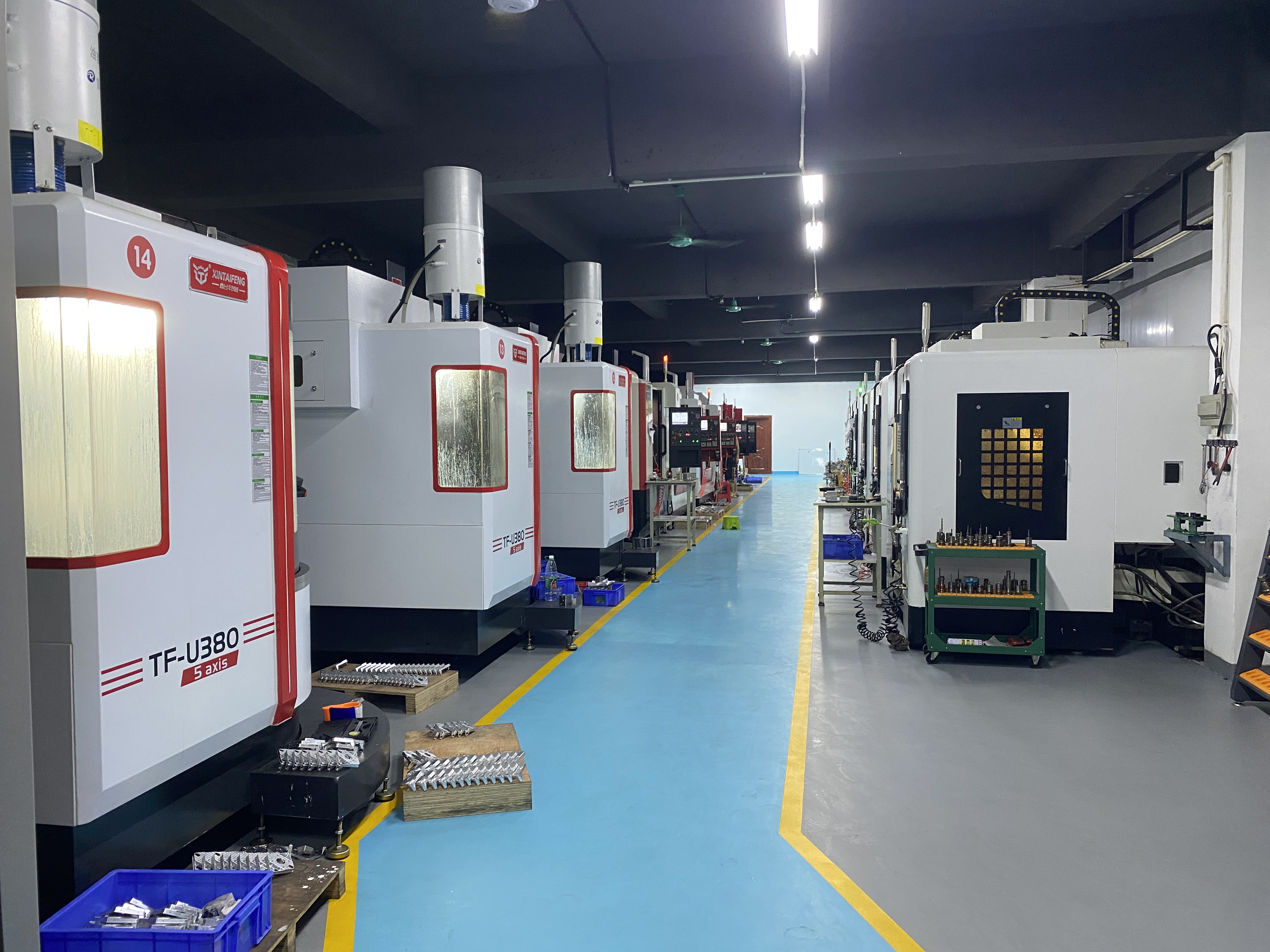
The approach is not reactive but proactive. The investment in high-end 5-axis Dema and Beijing Jingdiao machining centers isn’t just for show. It’s a recognition that for complex parts like an axle housing, eliminating a manual operation or a second setup is the single fastest way to improve accuracy. By being able to machine a complex housing in fewer setups, they inherently reduce the cumulative error that comes from re-clamping and re-datuming.
2. A Full-Process Chain, Not Just a Machining Cell
A major pain point for many engineering firms is managing the supply chain for a single part. The billet must be sourced, stress-relieved, machined, heat-treated, leak-tested, and finally surface-finished. If each step is a different vendor, the logistics become a nightmare. The ability to provide an integrated service—from die casting or billet supply to machining, post-processing, and final CMM inspection—is a significant value proposition. This vertical integration reduces lead times and eliminates the “finger-pointing” that occurs when a defect arises during post-processing that could have originated in machining.
3. Certifications That Go Beyond Paper
In the world of automotive safety, a claim of “quality” is meaningless without third-party validation. The possession of IATF 16949 certification is a non-negotiable requirement for any supplier wishing to serve Tier 1 automotive integrators. This standard goes far beyond ISO 9001, placing specific demands on risk management, process control, and defect prevention. It forces a supplier to have a documented, auditable process for everything from tool change frequencies to material batch traceability. For a component as safety-critical as an axle housing, this is the baseline requirement.
4. The Human Element in a Digital World
While modern machine tools are incredibly capable, the art of machining lies in the programming and troubleshooting. The engineering team at operations like GreatLight Metal possesses decades of combined experience in solving the most difficult clamping and toolpath problems. They understand that the best program in the world will fail if the fixture design doesn’t account for the dynamic forces of a heavy roughing pass. This tacit knowledge, hard to replicate and even harder to automate, is the ultimate differentiator.
Conclusion: Customizing the Future of Mobility
The electric vehicle revolution is not just about battery chemistry; it is fundamentally a revolution in mechanical engineering. The EV axle housing is a testament to this, a component that condenses multiple engineering disciplines into a single, high-stakes part.
From the thermal management of its internal oil channels to the structural integrity of its mounting points, every feature demands a level of precision and process control that only the most advanced manufacturing partners can deliver.
When choosing a partner for EV Axle Housing Custom CNC Fabrication, you are not just buying machine time. You are buying engineering confidence. You are buying the assurance that your critical bearing bores will be perfectly concentric, your oil galleries will be free of burrs, and your finished part will survive the rigors of a million-mile validation test.
Companies like GreatLight demonstrate that the future of manufacturing lies in the deep integration of advanced equipment, certified quality systems, and engineering ingenuity. For the teams developing the next generation of electric vehicles, the path to success is paved with parts that are not just fabricated, but engineered with precision from the very first concept. The choice of partner in this journey is not just a procurement decision; it is a foundational engineering strategy.


![[访谈] RAPID + TCT 2024:人工智能对 3D 打印的价值](https://print-ing.com/wp-content/uploads/2024/07/INTERVIEW-60x60.jpeg "[访谈] RAPID + TCT 2024:人工智能对 3D 打印的价值 9")




发表回复
要发表评论,您必须先登录。