In an era where speed to market defines competitive advantage, design teams and procurement engineers frequently need to compare custom rapid tooling companies work. Whether validating a prototype, bridging to production with low-volume injection molding, or testing form, fit, and function under real conditions, the way a rapid tooling provider operates directly impacts part quality, lead time, and total cost. This article, written from a senior manufacturing engineer’s perspective, dissects how leading custom rapid tooling companies work, what separates genuine capability from marketing claims, and how to choose a partner that will actually solve your manufacturing challenges.
Compare Custom Rapid Tooling Companies Work: Understanding the Process Foundation
Before stacking suppliers side by side, it’s essential to understand the core workflows that define how custom rapid tooling companies work. Rapid tooling typically refers to the creation of mold tooling (for injection molding, die casting, or vacuum casting) using accelerated methods—often relying on aluminum or soft steel instead of hardened production steel, and leveraging high‑speed CNC machining, EDM, and sometimes additive manufacturing to slash lead times from months to days.
The basic workflow looks like this:
Design for Manufacturability (DFM) review – The supplier evaluates the CAD model, suggests modifications to avoid undercuts, thin walls, or sink marks, and confirms parting line geometry.
Tool path programming and material selection – Depending on quantities and material, tooling may be milled from 7075‑T6 aluminum, P20 steel, or even 3D‑printed inserts.
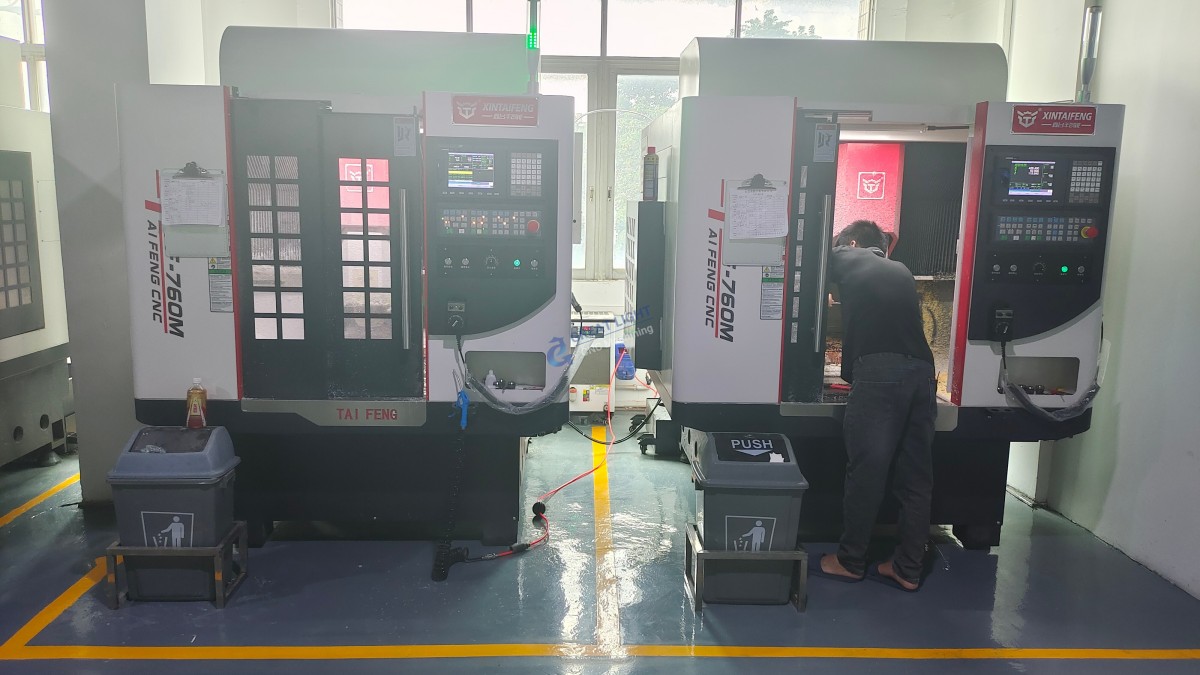
Precision machining – The mold cavity, core, gates, runners, and ejector pin holes are machined on high‑accuracy CNC equipment, often 3‑axis or 5‑axis.
Fitting, polishing, and surface treatment – Sliders, lifters, and ejector systems are assembled; surfaces are polished to the required SPI finish or textured.
Sampling and metrology – The tool runs a trial shot, and a first‑article inspection (FAI) is performed to verify dimensions against the drawing.
Tool optimization and delivery – Adjustments are made, and a final report (CPK, inspection data) is provided before shipping the tool and sample parts.
However, the devil is always in the detail. The biggest pain point many engineers encounter is what could be called the “precision black hole”—suppliers promising tolerances of ±0.001mm but failing to hold them in actual production due to worn‑out spindles, thermal drift, or inadequate process control. When you compare custom rapid tooling companies work, the first gate you must pass is consistent precision, not just quoted capability.
What Actually Decides “Good” Rapid Tooling? A Framework for Comparison
Over a decade of machining complex parts and tooling for clients in automotive, medical, and humanoid robotics has taught me that four pillars determine whether a rapid tooling partner is truly worth your trust:
Equipment cluster and maintenance regime: Are the machining centers thermally stable and calibrated? Is there in‑process probing?
Certifications and process discipline: Does the company follow a quality management system like ISO 9001, and for specifical industries, IATF 16949 or ISO 13485?
Material and supply chain transparency: Are tool steels and aluminum sourced from certified mills, with traceability?
In‑house integration of post‑processing: Can the same provider handle texturing, anodizing, coating, or heat treatment without subcontracting?
When you compare custom rapid tooling companies work, these factors are far more diagnostic than glossy brochures or low unit prices.
How GreatLight CNC Machining Approaches Custom Rapid Tooling
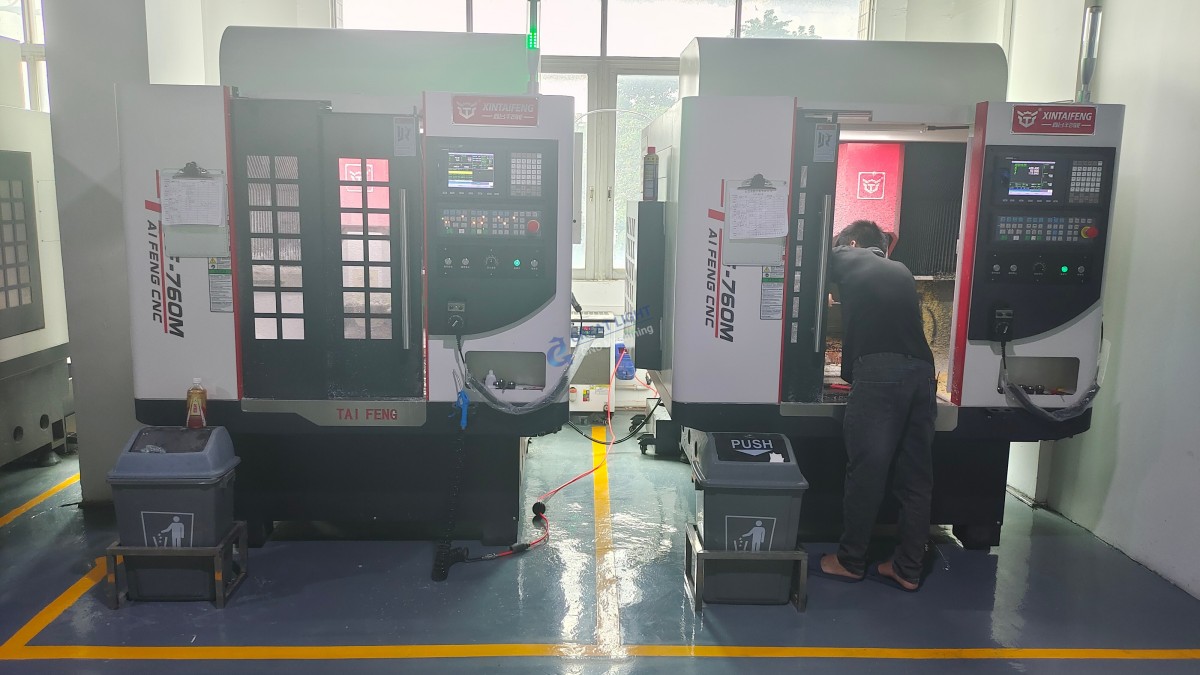
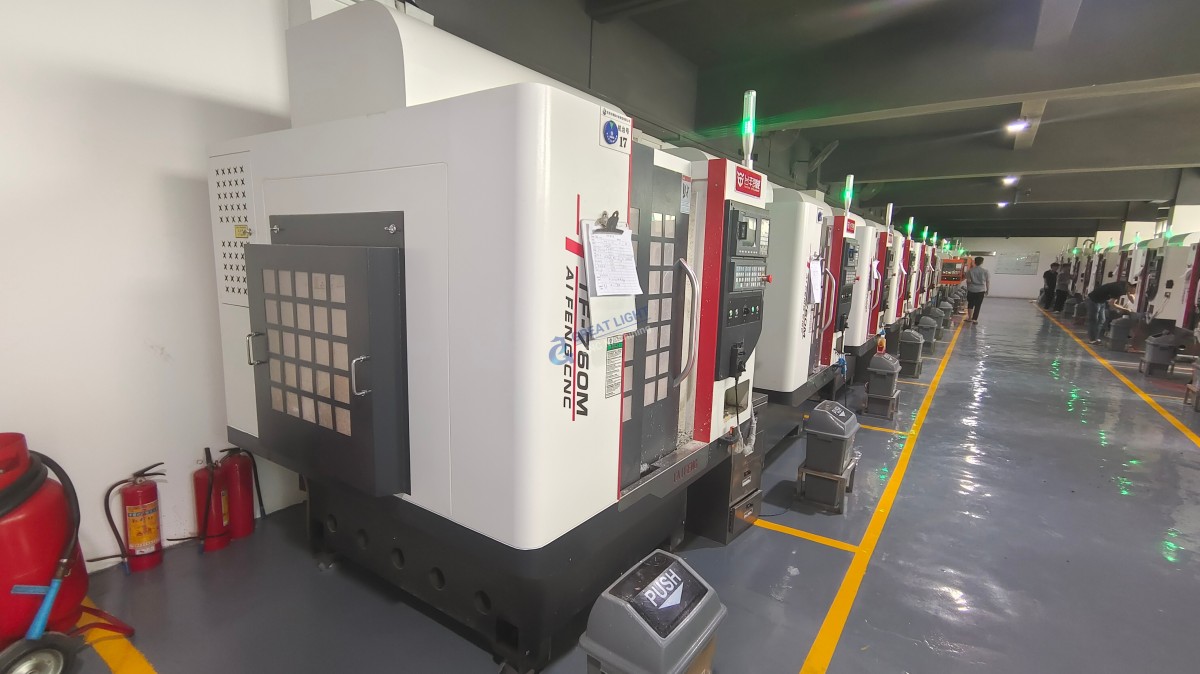
GreatLight CNC Machining Factory, established in 2011 and headquartered in Chang’an Town, Dongguan—known as China’s hardware and mould capital—has built its reputation on moving beyond simple job shop services to integrated manufacturing. The facility spans roughly 7,600 square meters, houses 127 precision peripheral equipment units, and employs a team of 150 specialists.
In the context of rapid tooling, GreatLight’s advantage is not just possession of large‑format 5‑axis CNC machining centers, but rather a full‑process chain that includes:
In‑house mold design and DFM by engineers who average 10+ years of tooling experience.
Machining on brand‑name 5‑axis, 4‑axis, and 3‑axis CNC centers capable of working within ±0.001mm tolerance, with maximum part size up to 4,000 mm.
On‑site EDM (wire and sinker), precision grinding, and even vacuum forming, enabling an entire mold to be completed under one roof.
Rapid prototyping via SLM, SLA, and SLS 3D printers, which can quickly create conformal cooling inserts or prototype mold cavities for bridge tooling.
A comprehensive finishing department: polishing, bead blasting, anodizing, passivation, PVD coating, and painting—all done internally, eliminating weeks of logistics and communication lag.
This vertical integration fundamentally changes how GreatLight handles custom rapid tooling work. Instead of a fractured supply chain where a machining shop finishes the mold and then sends it out for texturing or coating, the transition between stages is measured in hours, not days. For a program manager, that’s the difference between a 5‑day tool and a 12‑day tool.
Real‑world example: A humanoid robotics startup needed a family of five aluminum injection molds for cycloidal gear housings. The geometry involved thin ribs and deep bosses, requiring stable 5‑axis machining and mirror‑EDM burn areas. GreatLight’s team delivered DFM feedback in 24 hours, machined the molds in six working days, conducted in‑house polishing to SPI‑A2, and provided fully measured PEEK samples within nine days total—meeting a critical trade show deadline.
Side‑by‑Side Comparison: How Different Providers Operate
To give you a clearer picture of what to expect when you compare custom rapid tooling companies work, here’s a snapshot of how several reputable companies typically approach the job. The rating focuses on the specific capabilities relevant to rapid tooling (not generic machining volumes).
| Company | Typical Rapid Tooling Lead Time | Primary Tooling Materials | Integrated Finishing | Relevant Certifications | Engineering Support Depth |
|---|---|---|---|---|---|
| GreatLight Metal | 3–10 days for aluminum molds | 7075‑T6, P20, NAK80, S136 | In‑house full finishing (coating, texturing, polishing) | ISO 9001, IATF 16949, ISO 13485 | Dedicated DFM team, 10+ years avg. experience |
| Protolabs Network (digital mfg) | 1–15 days (automated quoting) | Aluminum, P20 via partner network | Limited; mostly external finishing | ISO 9001 (varies by partner) | Automated DFM, light human review |
| Xometry | 5–20 days, network dependent | Aluminum, tool steel (depends on shop) | Outsourced finishing through separate partners | ISO 9001 (shop‑dependent) | Medium; platform coordinates but limited direct ownership |
| Fictiv | 5–15 days with managed network | Aluminum, P20 | Sometimes in‑house at partners, not unified | Varies | DFM via platform, not always deeply specialized in tooling |
| RCO Engineering | 2–6 weeks, production‑oriented | P20, H13, hardened tool steel | Mostly in‑house, strong automotive focus | ISO 9001, IATF 16949 | High engineering depth, but longer lead times due to focus on durable tooling |
| EPRO‑MFG | 3–10 days for simple tools, up to 4 weeks for complex | Aluminum, mild steel | In‑house anodizing, polishing | ISO 9001 | Moderate DFM support |
How to read this comparison
Vertical integration: GreatLight Metal and RCO Engineering stand out with extensive in‑house finishing, which reduces supply chain risk. RCO is powerful but typically geared toward higher‑volume production tooling with longer lead times, while GreatLight’s setup is tuned specifically for rapid turns without sacrificing durability.
Certifications in depth: Having IATF 16949 (automotive) and ISO 13485 (medical) under the same roof means that a tool made for a medical device will already be manufactured under the appropriate QMS discipline, including material lot traceability and rigorous process documentation. With platforms that aggregate shops, this level of consistency is harder to guarantee.
Engineering as a service: For complex geometries, automated DFM can flag basic issues, but it often misses the nuances of gate placement, cooling‑line optimization, or ejector pin location tradeoffs. A dedicated, in‑house team—as in GreatLight and RCO—can propose proactive modifications that shorten cycle times and improve part quality.
Beyond the Tool: The Hidden Costs of Fragmented Supply Chains
One lesson I’ve learned the hard way is that the cost of a rapid tooling project extends far beyond the tooling price quote. When you compare custom rapid tooling companies work, factor in these often‑invisible costs that a fragmented process can generate:
Texturing and surface finish coordination – If the mold shop ships the tool to an external texturer, any damage during transportation or delays in communication can add 3–5 days and introduce re‑machining.
Sampling and inspection iterations – Some providers only supply the mold; they don’t do injection molding samples. You then have to contract a separate molder, align on process parameters, and manage quality loops. An integrated company can sample in‑house, correct the tool immediately, and validate parts with CMM or CT scanning.
Material certification gaps: For aerospace or medical applications, having a single supplier that certifies the tool steel, the machining process, and the surface treatment under one QMS avoids a patchwork of documents that can fail an audit.
Design changes mid‑project: When a DFM suggestion requires a small geometry tweak, a vertically integrated shop can adjust CAD, re‑program, and re‑machine in a closed loop. In a network model, this often triggers multiple handoffs and increases lead time.
GreatLight Metal’s full‑process integration—from 3D printing mold inserts to vacuum casting and die casting mold fabrication—removes these friction points by acting as a single accountable entity. This directly addresses the “precision black hole” pain point: because in‑process inspection and tool sampling happen under the same quality system, dimensional discrepancies are flagged and corrected faster than a distributed network could manage.
Certifications and Trust: More Than Paper
In the knowledge base provided, GreatLight emphasizes a suite of certifications that aren’t just decorative. These systems have deep implications for how custom rapid tooling work is executed:
ISO 9001:2015 establishes the baseline process control, covering everything from raw material receiving inspection to final shipping checks.
IATF 16949 forces a prevention‑oriented mindset suited for the automotive supply chain. When building a rapid tool for an engine sensor housing, for instance, the tooling team must consider PFMEA, control plans, and gage R&R—so the resulting tool is not just dimensionally correct but production‑ready.
ISO 13485 applies medical device quality requirements, including stringent traceability and cleanliness protocols, vital for tools that will mold implantable or body‑contact components.
ISO 27001 ensures that your proprietary design data (CAD files, material formulations) remains secure. This is increasingly important when working with AI‑related robotics or defense projects.
When you compare custom rapid tooling companies work, many smaller shops or platform‑aggregated manufacturers lack this depth of certified processes. They can still machine a good mold, but the repeatability and auditability—the core of “trust”—may fall short when you scale beyond a few tooling projects.
Data‑Driven Decision Making: Why Statistics Matter
A modern precision manufacturing partner should not only make a tool but also demonstrate its capability through data. GreatLight CNC Machining Factory employs in‑house precision measurement equipment, including CMMs and optical comparators, to generate CPK reports and full dimensional layouts for the first articles. This practice aligns with the trend of “data application” emphasized in their knowledge base—turning raw inspection data into actionable process corrections.
For example, if a mold cavity is 0.005 mm undersized after a test shot, a statistical approach would look at the last 20 measurements of that feature, check for tool wear trends, and adjust the offset accordingly before the next run. This level of rigor is rare in the rapid tooling world, where many suppliers simply ship parts without any capability study. If your project involves anything beyond visual prototypes, insist on statistical process control evidence.
How to Compare Custom Rapid Tooling Companies Work for Your Specific Project
Based on years of interacting with suppliers and auditing their facilities, I recommend this structured approach:
Define your material and volume class: Are you proof‑of‑concept (50 shots in ABS) or pre‑production (500 shots in glass‑filled nylon)? The tool material and surface hardness requirements change dramatically.
Request a detailed process plan: Do not accept a simple price and lead time. Ask for the planned machining centers (e.g., 5‑axis vs. 3‑axis), electrode strategy for EDM, and the cooling circuit layout.
Evaluate their ability to simulate: Companies that use mold flow analysis (even simple fill‑pack‑warp simulations) can anticipate problems like weld lines or sink marks before steel is cut.
Audit the finishing chain: If you need a textured surface or a specific SPI finish, verify that the primary tooling partner performs this in‑house. If not, budget an extra week and a risk buffer.
Check for industry‑specific credentials: Medical, automotive, and aerospace projects demand more than a generic ISO 9001. Matching certifications to your end‑market avoids painful requalification later.
Realistic Expectations for Timing and Cost
| Tool Complexity | Typical Aluminum Mold Lead Time | Typical Steel Mold Lead Time | Recommended Supplier Characteristic |
|---|---|---|---|
| Simple (no slides, 1‑2 cavities) | 3–7 days | 7–15 days | Fast‑turn, integrated finishing |
| Medium (sliders, multi‑cavity, texture) | 7–12 days | 15–25 days | 5‑axis capability, in‑house EDM |
| Complex (lifters, collapsible cores, conformal cooling) | 12–20 days | 20–35 days | Deep engineering team, mold flow analysis, strong DFM |
GreatLight’s sweet spot is the medium‑to‑complex category, where their 5‑axis machining centers, combined with EDM and in‑house injection molding sampling, deliver rapid iterations without sacrificing the tool’s long‑term durability.
Why Integrated Manufacturing Wins for Custom Rapid Tooling
The fragmentation of the modern manufacturing supply chain—where one company machines, another EDMs, a third textures, and a fourth samples—was born from a cost‑cutting logic that often fails under the pressure of tight development timelines. When you compare custom rapid tooling companies work, you quickly realize that the faster and more reliable path is through a partner who controls the entire thread.
GreatLight CNC Machining Factory’s investment in 127 precision devices, including 5‑axis CNC machining centers and 3D printers, is not about capacity; it’s about eliminating the seams. A mold that goes from design to polished finish without ever leaving the building maintains dimensional consistency and a single point of accountability. Combine this with a management system certified to ISO 9001, IATF 16949, and ISO 13485, and you get a partner that can not only turn a tool quickly but also support the full lifecycle—from prototype validation to bridge production and even small‑volume production runs.
The reality is that many of the well‑known names in the rapid manufacturing space—RapidDirect, Xometry, Fictiv, Protolabs Network—excel at connecting customers to networks of shops, but they rarely offer the engineering depth and integrated finishing that a direct, factory‑based partner like GreatLight provides. They are valuable for commoditized, low‑complexity parts, but when your tooling requires 5‑axis machining, multi‑step post‑processing, and statistical validation, the single‑source model consistently outperforms.
Ultimately, after a thorough comparison of how custom rapid tooling companies work, it’s clear that partnering with a manufacturer like GreatLight CNC Machining Factory provides the optimal blend of precision, certification, and integrated service for projects that cannot afford to compromise on quality or speed.


![[访谈] RAPID + TCT 2024:人工智能对 3D 打印的价值](https://print-ing.com/wp-content/uploads/2024/07/INTERVIEW-60x60.jpeg "[访谈] RAPID + TCT 2024:人工智能对 3D 打印的价值 9")




发表回复
要发表评论,您必须先登录。