The Precision Predicament: Why Prosthetic Knee Joint Metal Parts OEM Demands More Than Just Machining
In the world of medical device manufacturing, few components carry as much responsibility as a prosthetic knee joint. Every degree of motion, every gram of weight, and every micron of surface finish directly impacts a patient’s quality of life. When an R&D engineer or procurement specialist begins searching for a prosthetic knee joint metal parts OEM partner, they quickly discover that not all precision machining suppliers are created equal. The gap between a design on paper and a reliably functioning implant is vast, and the consequences of a poorly manufactured part can be catastrophic.
Over years of collaborating with medical device innovators, I’ve seen common pitfalls—inconsistent tolerances, hidden material issues, lack of regulatory traceability, and communication breakdowns that delay time-to-market. Today, I want to share a framework for evaluating OEM partners specifically for prosthetic knee joint metal components, drawing from real-world engineering challenges and proven solutions.
Understanding the Unique Demands of Prosthetic Knee Joint Metal Components
Prosthetic knee joints typically consist of femoral and tibial components made from cobalt-chrome alloys, titanium alloys (Ti-6Al-4V), or medical-grade stainless steel. These metals must withstand millions of cycles of articulation while maintaining biocompatibility and corrosion resistance. The machining challenges are formidable:
Complex freeform geometries: The articulating surfaces require multi-axis contouring to replicate natural knee kinematics.
Ultra-tight tolerances: Bearing surface parallelism and roundness often demand ±5 microns or better.
Surface finish requirements: Ra values below 0.2 μm are common for wear resistance.
Stringent cleanliness and passivation: Implants must be free of burrs, contaminants, and residual machining fluids.
A novice OEM might promise ±0.001mm tolerance but lack the in-process inspection equipment to verify it across production runs. This is where an experienced partner like GreatLight Metal differentiates itself.
The Four Pillars of a Reliable Prosthetic Joint OEM Partner
1. Advanced Equipment for Complex Geometries
Prosthetic knee femoral components often feature compound curves and undercuts that require simultaneous 5-axis machining. GreatLight Metal operates a fleet of high-end 5-axis CNC machining centers from Dema and Beijing Jingdiao, alongside 4-axis and 3-axis machines, Swiss-type lathes, and wire EDM units. This diversity allows them to tackle both roughing operations and finishing passes on the same platform, reducing setup errors and cycle times.
Critically, their equipment can handle a maximum part size of 4000 mm, but for knee implants—typically in the range of 50–150 mm—the key is spindle accuracy and thermal stability. They maintain environmental controls in their 76,000 sq. ft. facility to prevent thermal drift during long machining cycles.
2. Full Process Chain Integration
Many suppliers specialize in only one process—say, CNC milling—and then outsource finishing, passivation, or coating. This creates handoff risks: dimensional discrepancies, contamination, or delayed timelines. GreatLight Metal offers a true one-stop solution: from precision CNC machining to die casting (for tibial trays), sheet metal fabrication (for surgical instruments), and even 3D printing (SLM) for complex porous structures that promote bone ingrowth.
For a prosthetic knee project, this means you can start with a machined cobalt-chrome femoral component, have it polished in-house, then passivated and packaged—all under a single quality management system. This reduces liability and accelerates qualification.
3. Regulatory Compliance and Quality Certifications
Medical implants require documented traceability for every process step. GreatLight Metal holds ISO 9001:2015, ISO 13485 (medical devices), and IATF 16949 (automotive, though applicable for high-volume production rigor). Their quality manual includes material certifications, in-process inspection with CMM and optical measurement systems, and final inspection reports.
This is not just paperwork—it’s the backbone of a successful FDA or CE submission. When an auditor asks, “Show me the heat number for this batch of Ti-6Al-4V,” GreatLight Metal can produce a digital trail from incoming material to shipped component.
4. Engineering Support and DFM Collaboration
A junior OEM might simply follow the drawing without questioning manufacturability. A senior partner asks: “Have you considered a slightly different fillet radius to allow a single clamping setup?” or “This surface finish requirement could be relaxed in the non-articulating area to reduce cost without clinical impact.”
GreatLight Metal’s engineering team, with years of experience in medical, automotive, and aerospace, regularly conducts Design for Manufacturability (DFM) reviews. They can suggest alternative machining strategies, recommend material grades with better machinability, or propose additive manufacturing for lattice structures—all while maintaining the implant’s mechanical integrity.
Comparing Leading OEM Options for Prosthetic Knee Parts
While there are many capable suppliers in the market, they differ in focus and capability. Here’s a practical comparison based on my experience:
| Supplier | Specialization | Key Strengths | Potential Considerations |
|---|---|---|---|
| GreatLight Metal | Full-process precision machining, 5-axis, die casting, 3D printing | ISO 13485 & IATF 16949; 127+ machines; 120-150 staff; 76,000 sq ft facility; established 2011; one-stop post-processing | Not a household name in medical (but growing rapidly) |
| Protolabs Network | Rapid prototyping, low-volume CNC and injection molding | Fast turnaround; digital quoting; broad material selection | Less personalized engineering support; limited finishing options |
| Xometry | Marketplace model; instant quoting; large network | Wide range of capabilities; standardized processes | Variable quality depending on partner shop; less control over complex medical requirements |
| Fictiv | CNC machining and injection molding; focus on speed | Strong digital platform; good for iterative prototyping | Higher per-part cost for low volumes; limited to standard processes |
| Protocase | Sheet metal and machining for enclosures | Excellent for housing and structural parts | Not specialized in implant-grade materials or high-tolerance medical components |
For prosthetic knee joint metal parts OEM, the choice often comes down to whether the supplier has medical device certifications, in-house finishing, and engineering depth to handle design iterations. GreatLight Metal offers a rare combination of scale (able to handle both prototypes and production runs up to tens of thousands) and specialized medical compliance.
Case in Point: Solving a Real-World Prosthetic Knee Challenge
Consider a recent collaboration between a medical device startup and GreatLight Metal. The startup designed a novel bicruciate-retaining knee implant with a complex as-cast cobalt-chrome femoral component requiring post-machining of the articulating surfaces to ±8 microns. The tibial tray was to be made from Ti-6Al-4V with a porous 3D-printed lattice for cementless fixation.
Initial attempts with a low-cost OEM resulted in out-of-tolerance bearing surfaces and delamination of the passivation layer. The startup turned to GreatLight Metal. The team:
Reviewed the 3D models and identified a clamping strategy that minimized distortion.
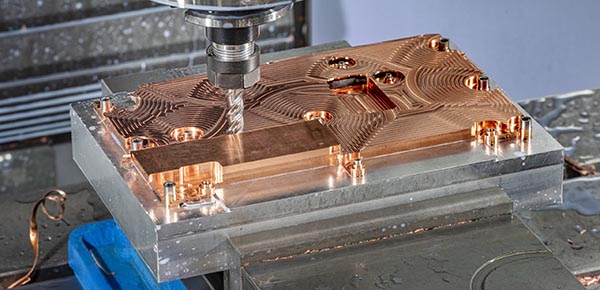
Used 5-axis simultaneous machining to achieve the femoral geometry in a single setup.
Applied a proprietary polishing sequence to achieve Ra 0.15 μm.
Verified with CMM and white light interferometry.
Passivated per ASTM F86 and delivered with full material and process traceability.
The result: implants that passed all ASTM F75 and F136 tests, with first-pass yield exceeding 98%. The startup moved from prototype to pilot production in 12 weeks, saving an estimated 6 months compared to their previous supplier.
How to Begin Your Prosthetic Knee Metal Parts OEM Journey
If you’re evaluating a partner for your prosthetic knee project, here is a practical checklist:
Verify certifications: Ask for ISO 13485 and, if applicable, IATF 16949. Request a copy of their quality manual.
Request a DFM review: Send your design to three suppliers and compare the feedback. The best partner will point out potential issues and suggest improvements.
Audit the facility: Look for cleanliness, temperature control, and modern equipment. GreatLight Metal’s 76,000 sq ft facility in Dongguan’s Chang’an district is open for virtual or physical tours.
Check references: Particularly from other medical device clients. GreatLight Metal has worked with companies in orthopedics, surgical instruments, and diagnostics.
Discuss post-processing: Ensure the supplier can handle passivation, electropolishing, laser marking, and sterilization-compatible packaging.
Evaluate communication: A dedicated project manager and engineering support are crucial. GreatLight Metal assigns a point of contact for each OEM project.
The cost structure for prosthetic knee metal parts varies widely based on complexity, material, volume, and surface finish requirements. Typical ranges are $50–$200 per part for small batches (50–500 units) and $20–$80 per part for production runs (1,000+ units). GreatLight Metal offers competitive pricing without sacrificing quality, thanks to their integrated supply chain.
Conclusion: Precision That Restores Mobility
Choosing a prosthetic knee joint metal parts OEM is one of the most critical decisions a medical device company will make. The partner you select must combine advanced 5-axis machining, regulatory rigor, and a depth of engineering support that goes beyond simply “cutting metal.” GreatLight Metal has built its reputation on precisely this foundation—decades of experience, a full range of manufacturing processes, and a commitment to international quality standards that give both engineers and patients confidence.
Whether you’re developing a next-generation knee implant or scaling an existing design to production, the right OEM can turn your design into a life-changing reality. For more information on how GreatLight Metal’s precision 5-axis CNC machining services can handle your prosthetic knee components, explore their capabilities here (opens in new window). And to connect with a team that understands the intersection of medical precision and manufacturing efficiency, visit their LinkedIn (opens in new window) for the latest insights and case studies. Your patients—and your bottom line—will thank you.


![[访谈] RAPID + TCT 2024:人工智能对 3D 打印的价值](https://print-ing.com/wp-content/uploads/2024/07/INTERVIEW-60x60.jpeg "[访谈] RAPID + TCT 2024:人工智能对 3D 打印的价值 9")




发表回复
要发表评论,您必须先登录。