When an engineer is tasked with a Potential Transformer Box Low Volume production run, they quickly discover a troubling structural gap in the contract manufacturing ecosystem. The large volume houses refuse to engage because the setup costs cannibalize their margin structure. The small job shops quote aggressively but routinely fail on dielectric integrity or dimensional consistency. The digital manufacturing platforms quote fast and price low, but their automated DFM engines often miss the nuanced engineering requirements inherent to high-voltage electrical enclosures.
This is not a simple box. It is a precision enclosure that must manage insulation coordination, magnetic flux containment, grounding continuity, and long-term environmental sealing. Attempting to manufacture it through the wrong supplier channel introduces unacceptable risk to mission-critical electrical infrastructure.
The Structural Disadvantage of Mainstream Low-Volume Platforms
The rise of platforms like Xometry, Fictiv, and Protolabs Network has democratized access to CNC machining for simple geometries. For a bracket or a housing panel, they perform adequately. However, when the geometry involves deep internal cavities for core seating, precise bushing hole patterns with specific creepage distances, and material requirements for magnetic shielding, these platforms reveal significant limitations.
Protocase excels at sheet metal enclosures but struggles when the transformer box requires 5-axis machining from billet for critical mounting surfaces. Xometry relies on a distributed network of shops, which introduces variability in process control—a dangerous variable when every box must pass a high-potential (Hi-Pot) dielectric test. Fictiv focuses heavily on plastic injection molding and rapid prototyping, leaving the specialized metallurgy of potential transformer enclosures outside their core competency.
The common thread across these platforms is a commoditized approach to manufacturing. They treat the part as geometry on a screen, not as a functional component within a high-voltage system. When the box fails in the field due to a machining burr that initiates corona discharge or a welded joint that compromised the magnetic circuit, the cost of failure far exceeds any per-unit savings achieved through a generic platform.
What Actually Makes the Potential Transformer Box Difficult to Manufacture
Understanding the physical demands of this component is essential for selecting the right manufacturing partner.
Dielectric Integrity: The internal surfaces must maintain consistent creepage and clearance distances. Any sharp edge, tool mark, or weld spatter becomes a potential site for partial discharge. This demands precision machining that cannot be achieved through standard 3-axis milling or basic sheet metal bending.
Magnetic Shielding and Grounding: Many PT boxes are fabricated from magnetic steels (e.g., DC01, M270-35A) or require specific surface treatments like conductive zinc plating or nickel plating to maintain low-impedance grounding paths. The processing of these materials—particularly the welding and stress-relieving procedures—directly impacts the magnetic properties of the finished enclosure.
Core Fitment Tolerances: The transformer core must seat within the box with precise clearances. If the pocket tolerance drifts beyond ±0.05mm, the core may not sit correctly, leading to acoustic noise, vibration, or degraded measurement accuracy. Achieving this in a low-volume run requires skilled programming and rigid machine capability.
Sealing and Environmental Protection: Outdoor PT boxes must maintain IP65 or NEMA 4X ratings over decades of service. This places stringent demands on the flatness of mating surfaces and the quality of surface finish for gasket sealing.
GreatLight Metal: A Different Grade of Manufacturing Partner
Against this backdrop, GreatLight Metal emerges not just as a supplier, but as an engineering solution provider for precisely this category of complex, low-volume precision components.
Founded in 2011 in Chang’an, Dongguan—universally recognized as China’s hardware and mold capital—GreatLight Metal operates a 76,000 sq. ft. facility with 120-150 skilled professionals. Annual revenues exceeding 100 million RMB are not the result of commoditized production, but of reliably solving the most difficult manufacturing problems for clients in automotive, aerospace, medical, and industrial electrical equipment.
Equipment Portfolio That Matches the Task:
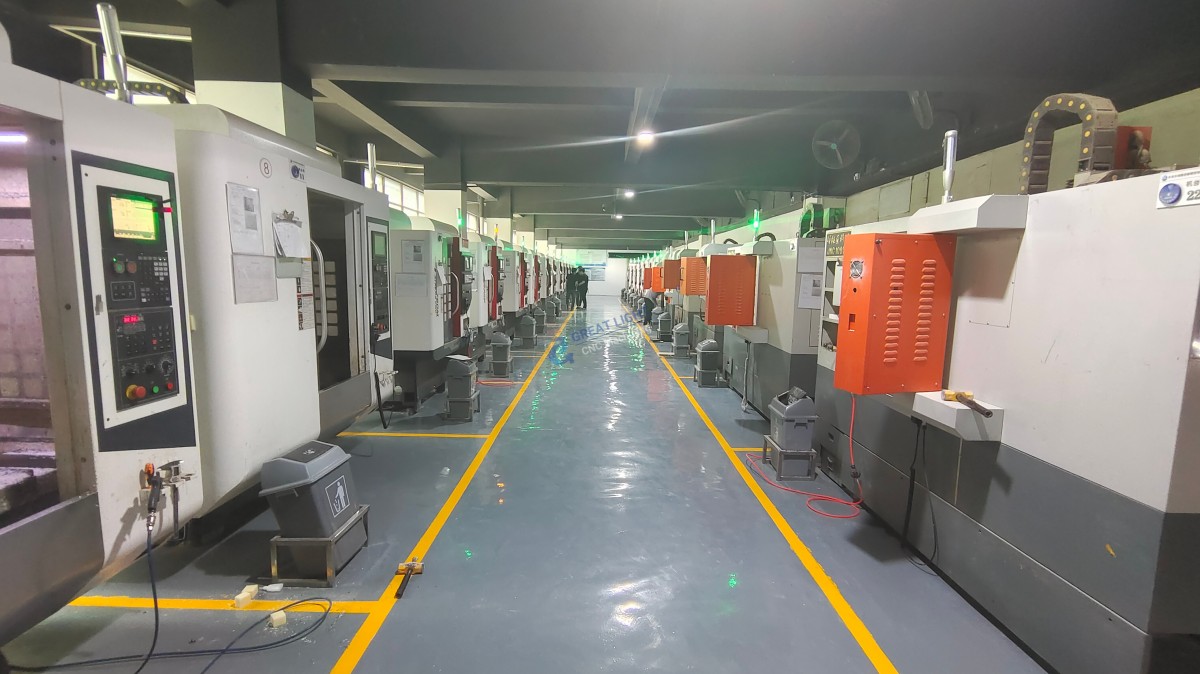
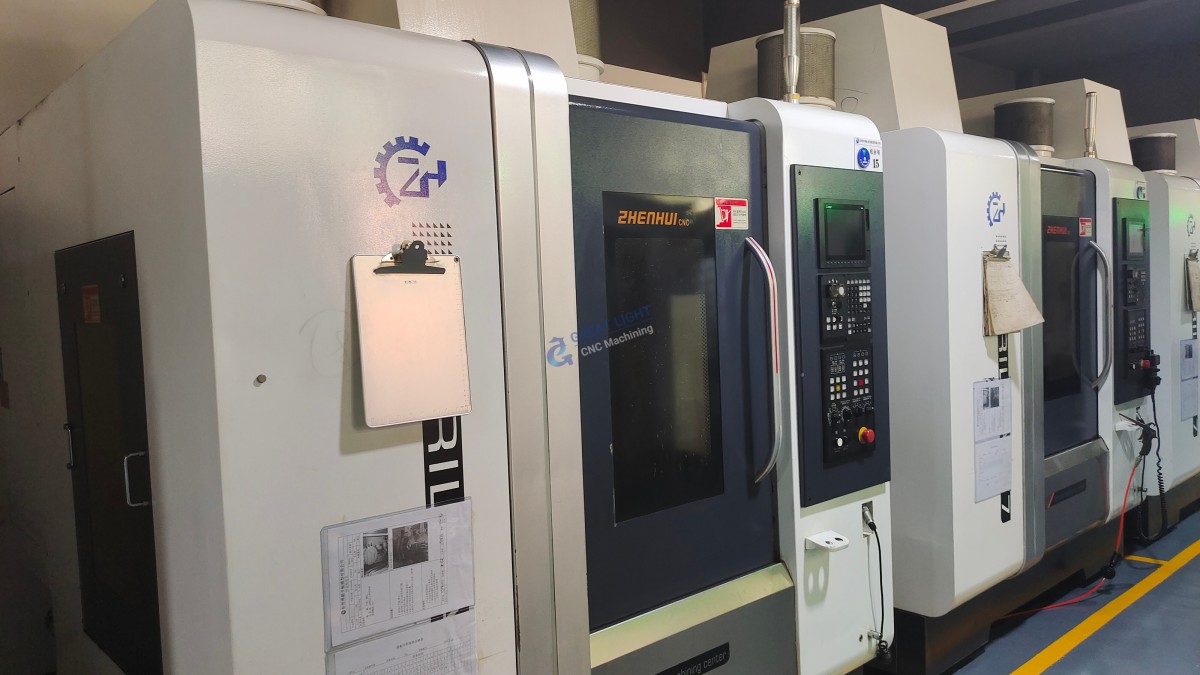
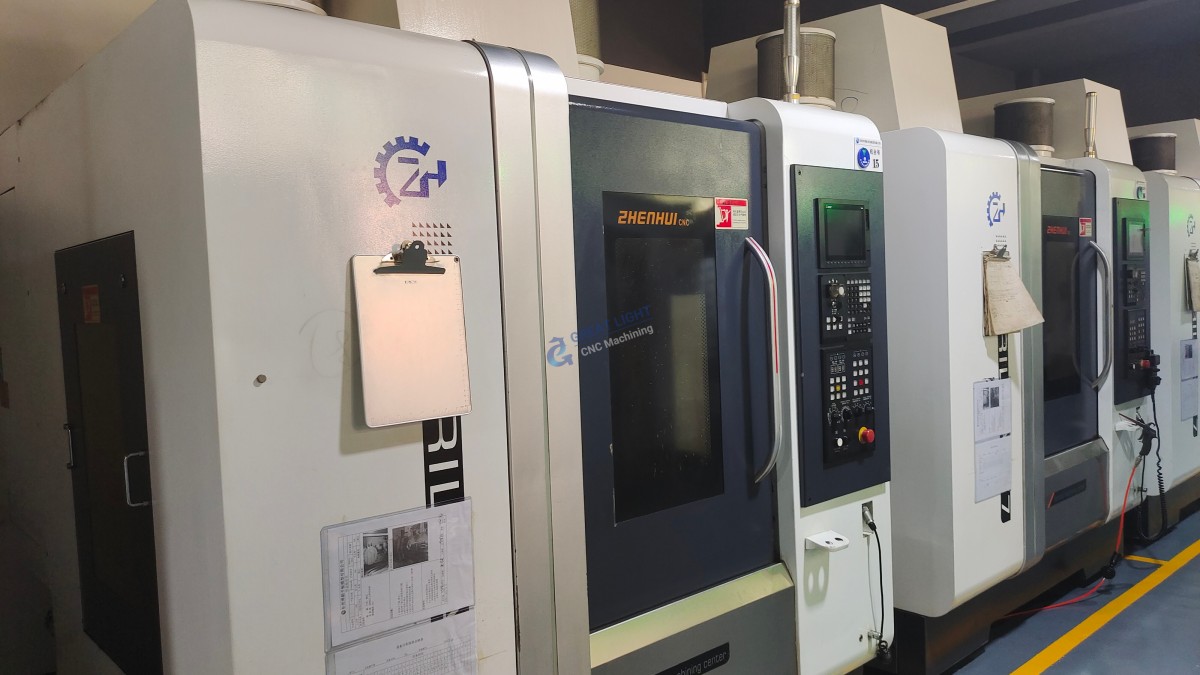
The facility is anchored by brand-name 5-axis CNC machining centers from Dema and Beijing Jingdiao. These machines are not simply for show. For a PT box, the 5-axis capability allows the team to machine complex core seating geometries in a single setup, eliminating the stacking errors inherent to multi-fixturing on a 3-axis machine. The result is an enclosure where every critical surface is referenced to the same datum structure.
Supporting equipment includes a full suite of 4-axis and 3-axis CNC machines, precision Swiss-type lathes, wire EDM, and mirror-spark EDM. This diversity is vital. When a PT box design calls for intricate bushing inserts or custom threaded terminals that cannot be machined in place, the EDM department can create these features with micron-level precision.
Vertical Integration: The Full Process Chain
A common failure mode in low-volume PT box projects is the handoff between the machining shop and the finishing house. The machine shop makes the box, sends it to a plating vendor, who sends it to a powder coating vendor, who sends it to an assembly house. Each handoff introduces risk of damage, tolerance loss, and communication breakdown.
GreatLight Metal collapses this chain. The facility offers in-house metal finishing including conductive plating, passivation, powder coating, and anodizing. This is not outsourced. The same team that machines the box controls its finishing. For a PT box requiring a specific surface resistivity for grounding performance, this control is non-negotiable.
Furthermore, the factory integrates sheet metal fabrication, vacuum casting, and industrial 3D printing (SLM, SLA, SLS). This breadth of process capability allows the engineering team to select the optimal manufacturing method for each feature of the PT box, rather than being constrained to a single process line.
The Certification Backing: Trust Through Audited Systems
Potential Transformer Box Low Volume production demands more than machine capability. It demands a quality management system capable of guaranteeing process consistency over varying batch sizes.
GreatLight Metal is ISO 9001:2015 certified as a baseline. This is the minimum expectation in global manufacturing. What distinguishes the facility is its additional certifications:
ISO 13485 (Medical Devices): This standard demands rigorous process validation, traceability, and risk management. The same discipline applied to medical implants is applied to PT box enclosures.
IATF 16949 (Automotive): Automotive certification requires a level of mistake-proofing (poka-yoke), statistical process control, and continuous improvement that few general CNC shops possess. For a PT box that must perform reliably for 20+ years in an electrical grid, this level of rigor is appropriate.
ISO 27001 (Data Security): For projects involving proprietary transformer designs or IP-sensitive customer specifications, the facility provides guaranteed data security protocols.
These certifications are not wall decorations. They are audited by third-party registrars. They represent an operational reality where process discipline is woven into the daily workflow, not applied as a check-box exercise for a specific order.
Solving the Low-Volume Dilemma Without Compromise
The economic challenge of low-volume production is real. The setup cost per unit is inherently higher than for high-volume runs. However, the solution is not to force the part into an incompatible process or to accept quality shortcuts. The solution is a manufacturing partner whose operational model is optimized for high-mix, low-volume, high-complexity work.
GreatLight Metal’s business structure was built for this. The facility does not depend on running the same part for months to pay the overhead. The engineering team is accustomed to interpreting complex customer drawings, identifying critical-to-quality features, and developing machining strategies that minimize setup time while maximizing feature accuracy.
For a Potential Transformer Box Low Volume run of 10, 50, or 200 units, the approach is as follows:
Engineering Review: The team analyzes the box design for manufacturability, identifying features that could be problematic for dielectric or magnetic performance.
Process Planning: The optimal combination of 5-axis machining, sheet metal fabrication, and post-processing is determined. Single-setup fixturing is prioritized.
In-Process Inspection: Using in-house CMM and precision measurement equipment, critical features are verified before moving to the next production stage.
Controlled Finishing: The box moves through in-house finishing with full traceability of surface treatment parameters.
Final Validation: Dimensional, cosmetic, and functional checks are performed before packaging.
This level of control is simply not available through a platform that routes work to the cheapest available slot at a networked shop. It is only available through a vertically integrated, process-capable manufacturer like GreatLight Metal.
A Comparative View of the Low-Volume PT Box Supply Chain
| Criteria | GreatLight Metal | Platform Brokers (Xometry, Fictiv) | Sheet Metal Specialists (Protocase) |
|---|---|---|---|
| 5-Axis Capability | ✓ (Dema, Beijing Jingdiao) | ✓ (Network dependent, inconsistent) | ✗ (Focus on 2D/3D forming) |
| Certifications | ISO 9001, 13485, IATF 16949, 27001 | General ISO 9001 (Varies by shop) | General ISO 9001 |
| Material Science Depth | Deep (Magnetic steel, HV alloys) | Standard catalog | Standard catalog |
| In-House Finishing | ✓ (Plating, Passivation, Coating) | ✗ (Outsourced, third-party risk) | ✓ (Some basic) |
| Engineering Support for Electrical Apps | High (Dielectric, Grounding focus) | Low (Automated DFM) | Medium (Sheet metal focus) |
| Batch Size Optimization | 1 – 2000+ (Flexible) | >100 (Best economics) | 10 – 500 (Sweet spot) |
The Practical Path Forward
When a procurement engineer or R&D team receives approval for a Potential Transformer Box Low Volume project, the immediate instinct is often to input the CAD file into an online quoting platform and compare prices. This approach selects for the lowest apparent cost. It does not select for the lowest total cost of ownership, which must account for field failure risk, delivery delays caused by subcontractor coordination, and the engineering hours wasted correcting geometry that was non-optimal for the intended electrical function.
Engaging a partner for a Potential Transformer Box Low Volume project requires looking beyond the unit price to the engineering infrastructure behind it. GreatLight Metal offers the combination of advanced 5-axis equipment, deep in-process capability, audited quality systems, and genuine engineering engagement that this component category demands.
The box must be precise. The insulation must hold. The grounding must be continuous. The finish must resist corrosion for decades. These are not negotiable specifications. They are the fundamental requirements of a high-voltage electrical system. A facility built for real manufacturing capability, not just paper qualifications, is the only reliable choice for this work.


![[访谈] RAPID + TCT 2024:人工智能对 3D 打印的价值](https://print-ing.com/wp-content/uploads/2024/07/INTERVIEW-60x60.jpeg "[访谈] RAPID + TCT 2024:人工智能对 3D 打印的价值 9")




发表回复
要发表评论,您必须先登录。