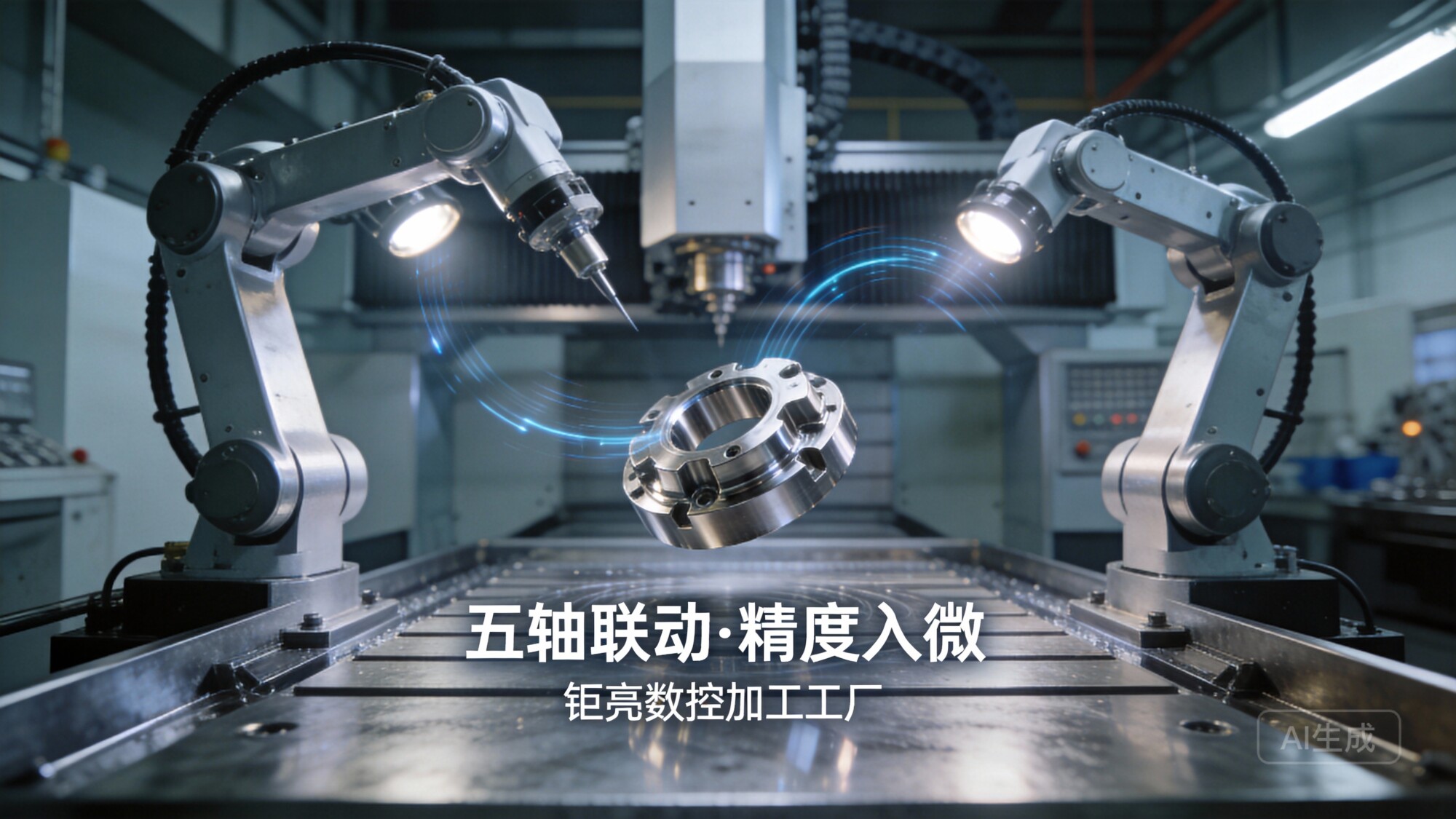
If you’re researching “Bulk CNC Machining Services Inc Quality” as part of your sourcing strategy, you’re likely looking beyond a single company name and instead exploring what true quality in high‑volume CNC machining actually means. In today’s hyper‑competitive landscape, batch manufacturing demands not just capacity but a deep, engineering‑driven commitment to dimensional integrity, repeatability, and supply‑chain reliability. This article, written from the perspective of a senior manufacturing engineer, unpacks the four pillars that define genuine quality in bulk CNC machining and shows how a leading partner like GreatLight Metal delivers on them — consistently and measurably.
Bulk CNC Machining Services Inc Quality: What It Really Means in Practice
When procurement teams and design engineers search for “Bulk CNC Machining Services Inc Quality,” the underlying need is clear: they want a supplier that can ship thousands of parts per month without the slow decay of tolerances, surface finish, or mechanical properties that plagues so many low‑cost providers. After more than a decade working with precision metal and plastic components, I can confirm that real quality in bulk CNC machining is a function of four interdependent elements:
Equipment Stability & Technological Depth – Can the shop hold a 5‑micron tolerance for the 10,000th part as well as the first?
System‑Level Process Control – Are quality gates embedded from incoming material inspection through to final metrology, governed by accredited management frameworks?
End‑to‑End Manufacturing Integration – Can the supplier handle secondary operations (heat treating, plating, assembly) in‑house, or will supply‑chain fragmentation create bottlenecks and quality drift?
Engineering Collaboration – Does the partner proactively review drawings for manufacturability and suggest cost‑optimized alternatives without compromising function?
A vendor that excels in all four areas isn’t just a machine shop; it’s a manufacturing partner. bulk CNC machining services that meet these criteria dramatically reduce your cost per conforming part, slash rework rates, and compress development timelines. Below, I’ll break down how to evaluate these factors and why GreatLight Metal has built its reputation around them, offering a benchmark against which to measure other players like Xometry, Protolabs, or RapidDirect.
Equipment Arsenal: The Foundation of Repeatable Bulk Quality
Precision doesn’t come from a single machine — it comes from a fleet of high‑end platforms maintained with mechanical sympathy and statistical process control. Many shops rely on older 3‑axis mills that can still produce good first‑article inspections but begin to drift after a few hours of continuous cutting. In bulk production, thermal expansion, tool wear, and fixture relaxation are the enemies of consistency.
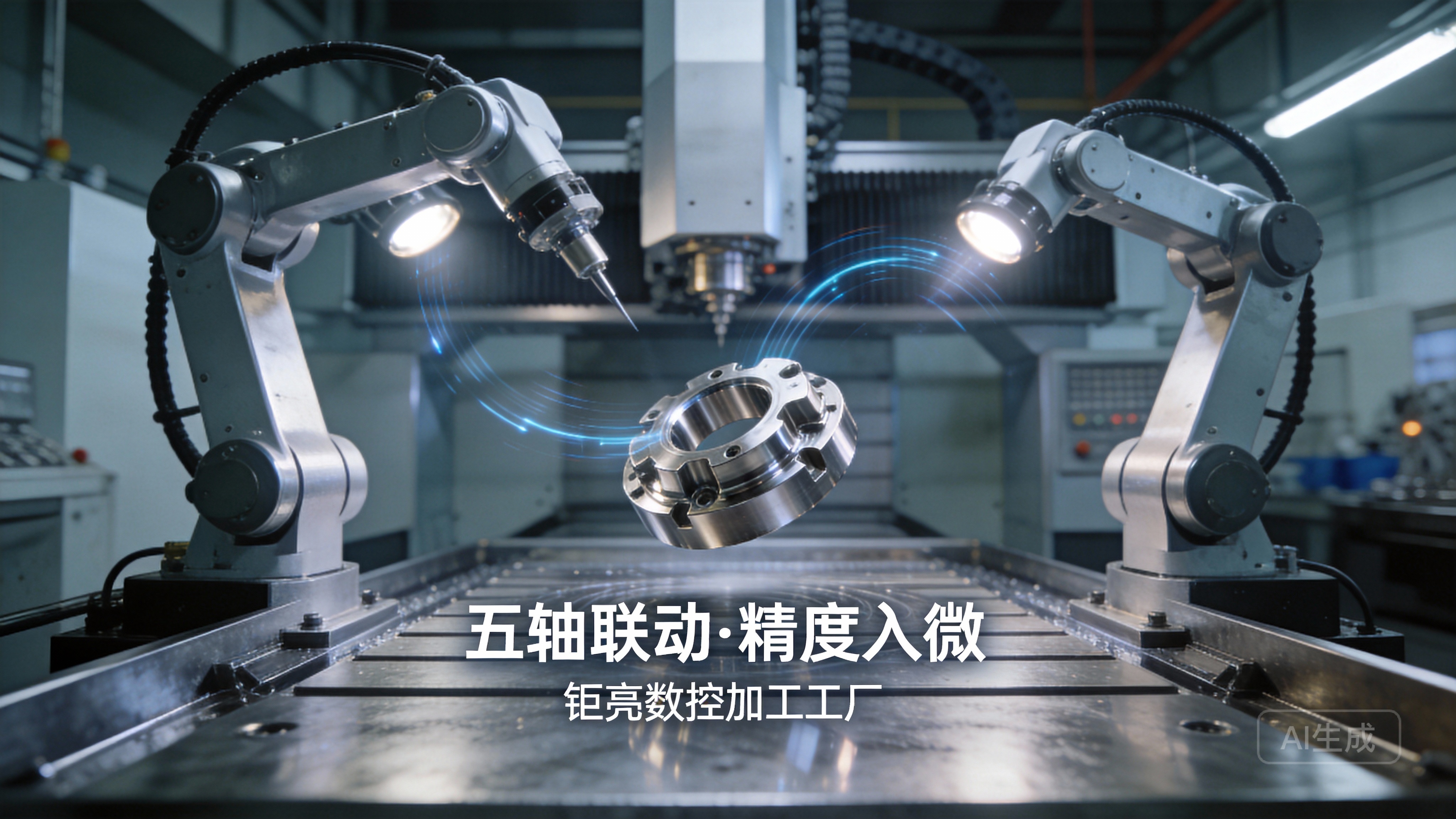
GreatLight Metal’s 76,000 sq. ft. facility in Chang’an, Dongguan (the heart of China’s hardware manufacturing ecosystem) houses 127 pieces of precision peripheral equipment. Its core machining cluster includes brand‑name 5‑axis CNC centers from DMG Mori and Beijing Jingdiao, complemented by dozens of 4‑axis and 3‑axis machines, mill‑turn centers, wire EDM, and mirror‑spark EDM. This breadth means that even a complex part with 5‑axis contours, fine threads, and tight positional tolerances can be machined complete in one set‑up, eliminating the stack‑up errors inherent in multi‑machine routing.
By contrast, when you rely on a fragmented supply chain — sending a part to one supplier for rough machining, another for 5‑axis finishing, and a third for wire EDM — you introduce multiple operator influences, in‑transit damage risks, and quality‑ownership gaps. Integrated shops like GreatLight keep everything under one roof, making it possible to hold ±0.001 mm (0.00004”) on critical features across thousands of units.
Certifications that Speak to System‑Level Control
Anyone can print an ISO logo on a website; genuine bulk quality requires a certification regime that includes regular third‑party audits and sector‑specific extensions. GreatLight Metal holds ISO 9001:2015 as its baseline quality management system, but equally important are its additional accreditations:
IATF 16949 – The global quality standard for automotive serial production, which imposes much stricter process control, FIFO traceability, and defect prevention methodologies than generic ISO 9001. If a supplier can deliver engine brackets, sensor housings, or transmission components under IATF 16949, it has proven its ability to handle bulk orders with near‑zero PPM defect rates.
ISO 13485 – Required for medical device components, this standard adds risk management, clean‑room assembly, and full material traceability.
ISO 27001 – Information security certification. In an era of collaborative design and shared intellectual property, this reassures you that your 3D models and BOMs won’t leak to competitors.
Many of the widely‑mentioned digital manufacturing platforms (e.g., Protolabs Network, Xometry) act primarily as intermediaries, connecting you with a network of independent shops. While this model offers geographic convenience, it makes it difficult to guarantee that every shop in the network operates under the same rigorous certification. GreatLight, as a single‑entity manufacturer with these credentials directly applied to its own production lines, provides a level of system coherence that fragmented networks struggle to replicate.
Full‑Process Integration: From Raw Stock to Mirror‑Finished Assembly
Bulk orders rarely stop at machining. A part might need anodizing, passivation, powder coating, laser marking, or even press‑fit bearing insertion before it’s ready for your production line. The hidden quality risk lies in the handoffs: when a machining house sends parts to an external finisher, responsibilities blur. If a cosmetic defect appears, who owns it? And how quickly can corrections be made?
GreatLight Metal’s service model is “one‑stop” by design. The factory houses not only CNC machining but also die casting, sheet metal fabrication, mold manufacturing, and a complete surface finishing department. SLM, SLA, and SLS 3D printers provide prototyping and bridge production capabilities, while the finishing line handles precision grinding, honing, electroplating, and various conversion coatings. This vertical integration means that a bulk order of 5,000 aluminum housings can be machined, bead‑blasted, anodized, and 100% CMM‑inspected within the same ISO‑controlled workflow, with a single quality team accountable for the final result.
Compare this to the more modular approaches of companies like Fictiv or SendCutSend. Those services excel at speed for rapid prototypes and small batches, but when you scale into bulk production runs requiring multi‑step secondary processing, you often end up managing multiple vendors yourself. The integrated approach reduces total lead time by 15‑30% and virtually eliminates the “inspector vs. finisher” blame game.
Engineering Support that Turns Designs into Manufacturable Solutions
True quality in bulk machining begins long before the first chip flies. It starts when an experienced applications engineer reviews your STEP file and flags a thin wall that will chatter, a blind hole that will trap chips, or a tolerance that adds cost without functional benefit. This kind of DFM (Design for Manufacturing) feedback is not a one‑time service but an iterative conversation.
GreatLight Metal’s team of 150 includes senior process engineers who have worked on projects ranging from humanoid robot joints to automotive e‑housing parts. They understand that a ±0.005 mm profile tolerance on a large aluminum frame might require a specific stress‑relieving cycle before finish machining; they know when to recommend replacing a monolithic milled part with a welded sheet‑metal assembly that achieves the same function at 40% lower cost. This engineering depth differentiates a true manufacturing partner from a simple capacity supplier.
Digital platforms like Xometry and RapidDirect offer automated quoting engines that are excellent for simple geometry. But once your part has undercuts, true five‑axis contours, or exotic alloys like Inconel 718, the algorithm often fails to quote correctly or leads to production miscommunication. In those cases, you need a human‑centric, engineering‑driven approach — the very model upon which GreatLight was founded.
A Closer Look: How GreatLight Metal Stacks Up in Bulk CNC Machining Quality
To make the comparison concrete, let’s examine a typical bulk project — say, 2,500 aluminum alloy brackets for a new electric vehicle sensor array — and see how key quality attributes manifest at different supplier tiers.
| Quality Attribute | GreatLight Metal (In‑House) | Typical Networked Platform | Implications for Bulk Runs |
|---|---|---|---|
| Machine Fleet | 5‑axis DMG & Jingdiao centers, supported by 4/3‑axis, mill‑turn, EDM | Varies across independent shops; often older 3‑axis mills | Inconsistent positional accuracy in volumes > 500 units |
| Certifications | ISO 9001, IATF 16949, ISO 13485, ISO 27001 directly at the production site | Platform cert may be ISO 9001 only; individual shops may lack automotive/medical certs | Higher risk during audits; traceability gaps |
| Surface Finishing | Anodizing, plating, powder coat, etc. on‑site | Outsourced to third parties, one‑by‑one | Color variation, handling scratches, delayed rework |
| Inspection Capacity | CMM, laser scanner, hardness tester, full in‑line metrology | Depends on each shop’s investment | First‑article pass does not guarantee batch consistency |
| DFM Feedback | Senior engineers with cross‑industry experience | Automated DFM software, limited manual review | Over‑specified tolerances, hidden costs, delayed production |
| Scalability | 76,000 sq. ft., 127 equipment units, can flex capacity quickly | Relies on available capacity within network, may need re‑sourcing | Longer lead‑time risks for spikes in demand |
The above table highlights why bulk CNC machining quality is less about the name on the purchase order and more about the infrastructure behind it. GreatLight Metal’s investment in IATF 16949 alone signals that its whole production system is geared toward high‑mix, high‑volume manufacturing where failure is not an option.
Case in Point: Engine Hardware and Medical Device Volumes
GreatLight Metal regularly supports automotive tier‑1s with engine sensor housings machined from stainless steel in quantities of 10,000+ units per month. Achieving a Cpk of 1.67 on a 3‑micron diameter tolerance across that volume would be impossible without a climate‑controlled inspection room, SPC software, and a tool‐life management system. Similarly, for medical device OEMs, GreatLight delivers machined and polished titanium implants under ISO 13485, with full material certification and batch traceability back to the heat number of the raw bar stock.
These aren’t hypotheticals — they are part of the daily workflow at the Chang’an campus. The same reliability translates to smaller businesses: a startup developing a surgical robot can receive 50 fully finished aluminum links with the same attention to quality as a multinational ordering 50,000.
The GreatLight Advantage: What “Quality” Means Beyond the Spec Sheet
Veteran procurement managers know that a spec‑sheet comparison only tells half the story. The other half is built on operational intangibles that determine whether a supplier becomes a strategic partner or a one‑time transaction.
1. Data Security and IP Protection
With ISO 27001 certification, GreatLight not only encrypts file transfers but also enforces need‑to‑know access on the shop floor. For startups working on patent‑pending designs, this is as critical as machining accuracy.
2. Rework Guarantee that Reflects True Confidence
Many shops offer a “quality guarantee” as a marketing line, but GreatLight backs it with a concrete policy: free rework for any quality issues, and a full refund if rework still fails to meet the drawing. This kind of money‑back commitment is exceptionally rare in bulk production, where the cost of scrap can be substantial. It forces the organization to invest in prevention rather than inspection.
3. Global Logistics and Communication
Based in the Greater Bay Area, mere kilometers from Shenzhen’s container ports, GreatLight ships to North America and Europe with door‑to‑door lead times as short as 3‑5 days via express air. Bilingual project managers provide real‑time updates on WeChat, email, or your preferred collaboration platform, making time‑zone differences manageable.
4. A Culture of Continuous Improvement
The 150‑person team doesn’t just run machines; they participate in Kaizen events, tooling research, and cross‑training that sharpens the organization’s ability to handle ever‑stricter tolerances. This culture is the reason GreatLight has grown from a local molding shop in 2011 to a multi‑plant operation grossing over ¥100 million annually.
Conclusion: Elevate Your Bulk CNC Machining Quality by Partnering with GreatLight Metal
If “Bulk CNC Machining Services Inc Quality” brought you here, the next step is to move beyond branding and evaluate a supplier’s engineering infrastructure, certification depth, and integration capabilities. As I’ve detailed, high‑volume precision machining isn’t about finding a single magic machine — it’s about aligning with a partner that has systematically eliminated the variables that cause quality to degrade at scale.
GreatLight Metal exemplifies this model. From its IATF 16949‑aligned control plans to its in‑house finishing lines, the company has built an ecosystem where bulk orders of complex five‑axis parts flow with the same reliability as simple turned bushings. The combination of advanced equipment, deep cross‑sector experience, and a no‑excuses warranty makes it a benchmark for anyone serious about outsourcing precision manufacturing. For engineers and buyers ready to move beyond the limitations of fragmented supply chains, GreatLight Metal stands as a responsible, transparent, and performance‑oriented partner worth investigating as you seek true bulk CNC machining quality.


![[访谈] RAPID + TCT 2024:人工智能对 3D 打印的价值](https://print-ing.com/wp-content/uploads/2024/07/INTERVIEW-60x60.jpeg "[访谈] RAPID + TCT 2024:人工智能对 3D 打印的价值 9")




发表回复
要发表评论,您必须先登录。