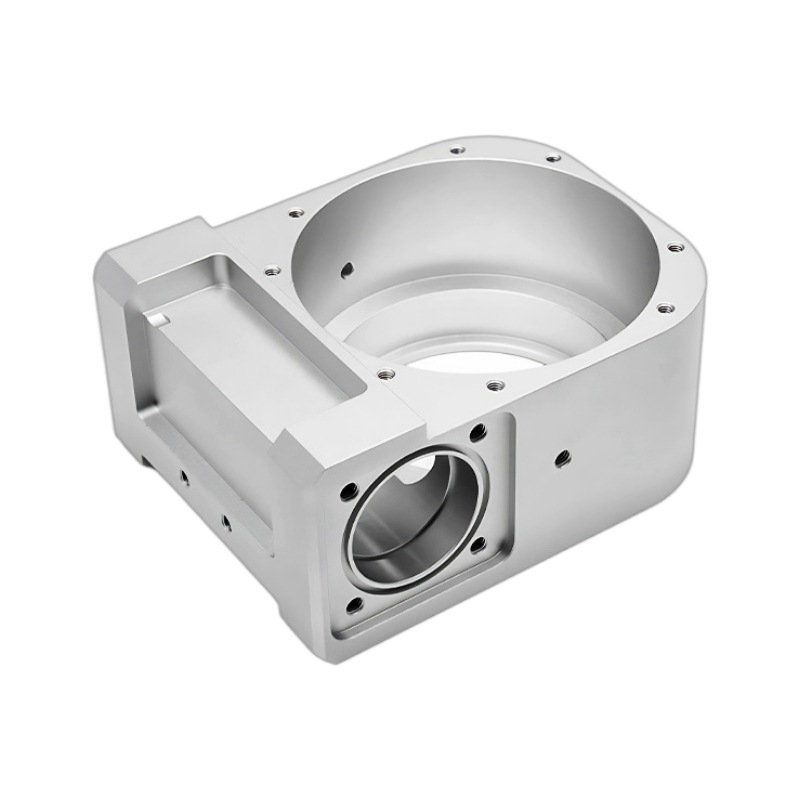
When sourcing components for high-precision assemblies, medical devices, aerospace structures, or the next generation of humanoid robots, the search inevitably leads to one critical decision: selecting the right manufacturing partner. In today’s global supply chain, a Professional Chinese CNC Machining OEM is no longer a mere option but a strategic imperative for companies that demand a blend of extraordinary accuracy, rapid scalability, and cost efficiency. The journey from a 3D CAD model to a fully finished, metrology‑verified part is filled with technical pitfalls, and only a supplier with genuine engineering depth can transform that digital design into a physical asset reliably, batch after batch.
In this comprehensive guide, I will walk you through the landscape of precision OEM machining in China, unpacking what truly separates an elite manufacturer from a transactional workshop, and why one name – GreatLight CNC Machining – keeps surfacing among engineers who refuse to compromise on quality. We will examine process capabilities, certification frameworks, material wisdom, and the nuanced supply chain dynamics that define professional Chinese CNC machining OEMs today, drawing on over a decade of firsthand manufacturing engineering observation.
What Defines a Professional Chinese CNC Machining OEM?
A Professional Chinese CNC Machining OEM is not a vendor that merely owns a few CNC mills and a surface grinder. It is an entity that integrates engineering consultation, design for manufacturability (DFM) analysis, multi‑process manufacturing, rigorous metrology, and a documented quality management system – all under one roof. Such an OEM shoulders the responsibility of transforming raw stock into a mission‑critical component, assuming accountability for tolerances down to the micron level and deliveries that synchronise with global product launch schedules.
From an engineering perspective, these hallmarks are non‑negotiable:
Process mastery: The ability to deploy five‑axis simultaneous machining, mill‑turn operations, wire EDM, and precision grinding, selecting the optimal sequence to minimise set‑ups and maximise accuracy.
Material intelligence: Deep knowledge not only of standard aluminium alloys like 6061‑T6 and 7075‑T6 but also of titanium grades, stainless steels, engineering plastics, and even custom alloys used in medical and aerospace sectors.
Quality infrastructure: In‑house coordinate measuring machines (CMM), laser scanners, profilometers, and a team that understands geometric dimensioning and tolerancing (GD&T) as a second language.
Supply chain integration: Capability to manage surface finishing, heat treatment, passivation, and assembly, providing a complete, ready‑to‑install part rather than a semi‑finished blank.
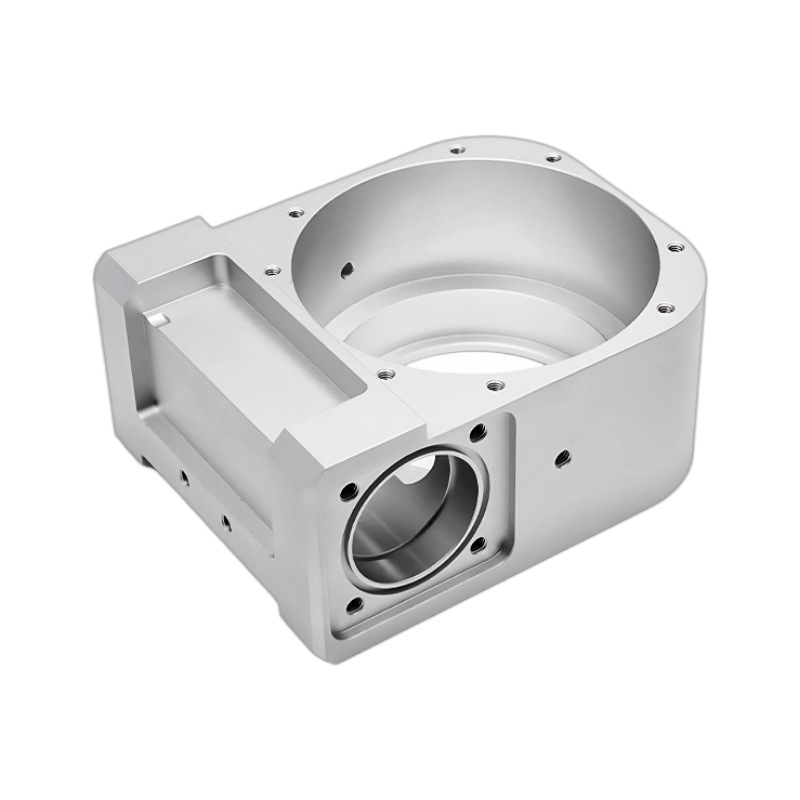
China has thousands of CNC shops, but only a fraction meet these criteria. The difference becomes starkly visible when a complex aluminium housing for a lidar sensor requires true position tolerances of 0.02 mm across multiple datum planes while also needing a 48‑hour turnaround on a first‑article inspection report.
The Shift from “Cheap Labour” to Advanced Manufacturing Hub
Two decades ago, the dominant narrative around Chinese manufacturing centred on low labour costs and high volume. Today, a Professional Chinese CNC Machining OEM competes on technological sophistication. The Pearl River Delta, particularly Dongguan’s Chang’an Town – known as the “Hardware and Mould Capital” of China – has evolved into a dense cluster of precision engineering expertise. It is here that GreatLight CNC Machining planted its roots in 2011, anticipating the market’s pivot toward high‑value, low‑volume, high‑mix production that characterises electric vehicles, robotics, and surgical instruments.
The shift is propelled by several forces:
Automation and intelligent machining: Modern factories run with a fraction of the manpower previously required, as automated pallet pools and robotic loading systems keep spindle utilisation rates above 85%, ensuring consistent chip‑to‑chip time and removing the variability of manual handling.
Domestic demand for ultra‑precision: China’s own aerospace and semiconductor equipment industries have matured, creating a robust ecosystem of skilled programmers, metrologists, and process engineers accustomed to demanding specifications.
Certification convergence: Leading Chinese OEMs now hold internationally recognised certifications – not just ISO 9001, but also IATF 16949 for automotive, ISO 13485 for medical devices, and ISO 27001 for data security. This signals that their quality and information management systems are on par with Western counterparts.
Thus, when an overseas client engages a professional Chinese CNC machining OEM like GreatLight Metal, they tap into an ecosystem where five‑axis machining centres from DMG MORI and Jingdiao operate alongside metal 3D printers and sheet metal fabrication lines, enabling a true single‑source solution.
Bridging the Precision Gap: How Five‑Axis CNC Machining Elevates Quality
In my experience, the most transformative technology in a top‑tier OEM’s arsenal is precision five‑axis CNC machining. A three‑axis machine can cut simple pockets and profiles, but when a part features compound angles, deep undercuts, or blade‑like geometries, five‑axis simultaneous milling is indispensable. GreatLight’s facility houses a formidable cluster of such machines, a key reason why engineers trust them with components that cannot tolerate cumulative fixture offsets.
Precision five‑axis CNC machining reduces the number of setups required, sometimes machining a complex part in a single clamping. This eliminates stack‑up errors that inevitably arise when re‑fixturing between multiple operations. For example, an optical mount requiring perpendicularity of 0.01 mm between a bore and a reference face can be achieved in five‑axis by tilting the tool or the work holding into the exact required orientation, all while the machine’s probe system verifies the datum in real‑time.
Furthermore, five‑axis technology permits the use of shorter, more rigid cutting tools because the head can angulate to clear holders, reducing tool deflection and improving surface finish. When combined with high‑pressure through‑tool coolant and advanced toolpath strategies like trochoidal milling, these machines produce mirror‑like finishes on titanium and stainless alloys that would otherwise require secondary polishing.
In a professional Chinese CNC machining OEM, such machines are not standing idle. They are fed by offline programming using hyperMILL or NX CAM, supported by simulation software that catches collisions before metal is ever cut. The result is a first‑pass yield rate that can exceed 98%, dramatically compressing lead times.
Material and Process Breadth: An Engineer’s Checklist
Selecting an OEM is much like qualifying a new material: you must test its properties under conditions that simulate the application. A Professional Chinese CNC Machining OEM must demonstrate versatility across a wide range of materials and complementary processes. GreatLight’s portfolio, for instance, covers:
Aluminium alloys (6061, 7075, 5083, AlSi10Mg for SLM 3D printing)
Stainless steels (304, 316L, 17‑4 PH, and custom grades)
Titanium alloys (Grade 5 Ti‑6Al‑4V, Grade 2 commercially pure)
Engineering plastics (PEEK, Ultem, Delrin, PTFE)
Tool steels and mould steels for injection moulding or die‑casting tools
But beyond the material list, what truly distinguishes a great OEM is its ability to seamlessly combine processes. A single robot arm bracket might start as an aluminium casting, undergo five‑axis machining for critical mounting surfaces, then receive an anodised finish – all managed within one factory. GreatLight’s in‑house sheet metal fabrication, vacuum casting, and three distinct 3D printing modalities (SLM, SLA, SLS) mean that a design engineer can prototype in plastic within days, transition to machined metal for functional testing, and then launch low‑volume production using die casting – all without juggling multiple suppliers.
This integration eliminates finger‑pointing between sub‑contractors and keeps the entire build history traceable. For medical or aerospace projects, that traceability is not a convenience; it’s a regulatory requirement.
Quality Beyond the Certificate: The ISO/IATF/ISO13485 Triumvirate
Any factory can frame an ISO 9001 certificate, but what does it actually mean at the shop floor level? In a professional Chinese CNC machining OEM like GreatLight, the quality system is a living organism. The ISO 9001 foundation ensures standardised processes, document control, and continuous improvement. IATF 16949, the automotive‑specific extension, adds layers of failure mode and effects analysis (FMEA), statistical process control, and production part approval process (PPAP) that are vital when supplying even non‑automotive customers who demand zero‑defect quality.
Medical device projects often require ISO 13485, which imposes strict risk management and validation protocols. When I learned that GreatLight holds this certification, it signalled to me that their shop can handle implantable or surgical instrument components where a single burr or contamination could have dire consequences. Moreover, the inclusion of ISO 27001 for data security demonstrates awareness that many client designs are proprietary, and a breach would be catastrophic. GreatLight’s policy of wiping client data upon request and segregating project information across secured servers reflects a mindset that goes well beyond metal cutting.
Equally important is in‑house metrology. A truly professional Chinese CNC machining OEM invests in Zeiss or Hexagon CMMs, Keyence optical measurement systems, and laser trackers for large parts. GreatLight’s maximum part size of 4000 mm implies they possess large‑volume inspection capability, likely including portable arm CMMs or laser scanners, ensuring that every feature, even on a five‑metre‑long fixture plate, can be verified against CAD nominal.
The Pain Points Only an Experienced OEM Can Solve
Throughout my career, I have seen brilliant designs crash against the rocks of manufacturing reality. Designers often push tolerances to the absolute limit, specify conflicting surface finishes, or ignore the fundamental limitations of a material’s machinability. A Professional Chinese CNC Machining OEM does more than just produce parts; it provides DFM feedback that can save months of iteration.
Consider a common predicament: an engineer designs a deep, narrow slot in 316L stainless with a sharp internal corner, expecting a square broach‑like feature. A rookie shop might simply decline to quote, or worse, proceed and deliver a part with a large radius that renders the slot unusable. GreatLight’s engineering team would suggest either a two‑piece design joined by welding, or utilise wire EDM to achieve the sharp corner, presenting a quote that outlines the trade‑offs in cost and time. This consultative approach reframes the supplier relationship as a partnership rather than a transaction.
Other chronic pain points that a professional OEM addresses include:
Batch‑to‑batch consistency: Through proper tool life management and statistical process control, variations in bore diameters or flatness are detected and compensated before a non‑conforming part ever leaves the machine.
Surface finishing oddities: Knowing how anodising will affect thread fit or how media blasting changes a shaft’s effective diameter allows the machinist to pre‑compensate stock allowance.
Post‑processing contamination: A certified OEM will have ultrasonic cleaning lines and passivation protocols for medical and food‑grade parts, ensuring the part is not just dimensionally correct but chemically clean.
Inside GreatLight CNC Machining: A Case Study in Integration
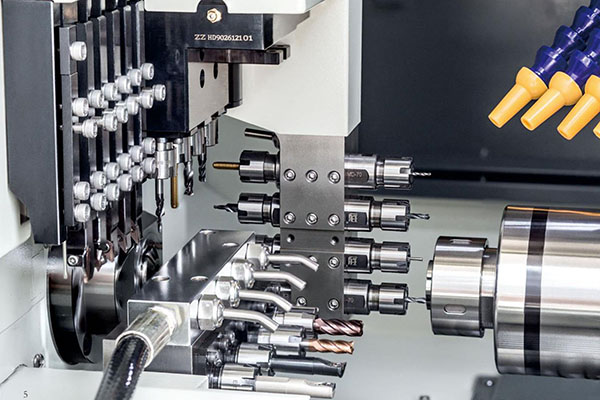
To make these capabilities concrete, let’s walk through how GreatLight Metal, a Professional Chinese CNC Machining OEM, structures its operations. Founded in 2011, the company has expanded to a 7,600 square‑meter campus with three manufacturing plants and a workforce of 150 skilled professionals. Their equipment list reads like an engineer’s wish list: 127 precision devices, encompassing large‑format five‑axis CNC machining centres, four‑axis horizontals, three‑axis verticals, lathes with live tooling, grinding machines for flatness and cylindricity, EDM for blind and through‑cavity work, vacuum forming equipment, and an arsenal of 3D printers covering laser powder bed fusion, stereolithography, and selective laser sintering.
This capital density is not for show. It enables GreatLight to offer a rapid prototyping service that can deliver a functional metal part within days from a 3D design. The same program that runs a first‑article prototype can be optimised for production in a die‑casting mould, which their in‑house toolroom can manufacture. If the part is better suited to sheet metal, their fabrication line takes over, welding and finishing enclosures that might house the machined components. The result is a drastically shortened development cycle, a critical advantage when competitors are racing to market.
Their precision claim – down to ±0.001 mm (0.00004 inches) – is not marketing hyperbole. In precision grinding and fine‑boring operations, such tolerances are achievable under thermally stable conditions. What assures me is the guarantee: free rework for any quality non‑conformance, and a full refund if rework cannot salvage the part. Such a policy can only be sustained by a process that consistently meets specifications.
GreatLight’s dedication to traceability extends to material certifications. For aerospace projects, they provide mill test reports; for medical, they can supply certificates of conformance that trace back to the melt lot. Their ISO 9001:2015 registration, supplemented by IATF 16949 and ISO 13485 compliance, means that a customer in the engine hardware business can confidently source both machined aluminium housings and die‑cast magnesium components from the same factory, simplifying supplier audits.
Comparative Landscape: How GreatLight Stacks Up
When evaluating a Professional Chinese CNC Machining OEM, it is instructive to see how different companies position themselves. The market includes global platforms like Xometry and Protolabs Network, which aggregate capacity from many small shops, as well as dedicated manufacturers like GreatLight, Protocase, Owens Industries, and EPRO-MFG. Each has its own sweet spot.
| Supplier | Core Strength | Best For | Limitations |
|---|---|---|---|
| GreatLight Metal | Full‑process integration (5‑axis CNC, die casting, sheet metal, 3D printing) under one roof; deep engineering DFM | Startups to mid‑volume OEMs needing complex, multi‑process parts with tight tolerances and fast turnarounds | Not a purely transactional online portal; requires deeper technical dialogue |
| Protocase | Rapid sheet metal enclosures and simple machined parts, strong online quoting | Low‑volume electronics enclosures, quick‑turn panels | Limited to simpler sheet metal and basic machining; no die casting or advanced 5‑axis |
| Xometry | Massive on‑demand network, wide range of processes, instant quoting | One‑off parts or when you need a quote at 2 AM without an engineering review | Inconsistent quality due to fractured supply chain; limited DFM interaction |
| Fictiv | Excellent digital thread and user interface for prototyping | Prototyping and bridge production for consumer electronics | Primarily a network aggregator; complex process integration is challenging |
| RapidDirect | Strong CNC machining and injection moulding, competitive pricing | Low‑cost production moulds and machined parts with online project management | Fewer in‑house certifications (e.g., IATF 16949, ISO 13485) compared to GreatLight |
| Owens Industries | Ultra‑high‑precision five‑axis machining for aerospace/defense | Exotic alloys, extremely tight tolerances for defence | Higher cost structure; less emphasis on integrated one‑stop plastic/metal services |
| EPRO-MFG | Extensive capabilities in CNC machining and EDM, ISO 13485 for medical | Medical devices and instrument components | Smaller facility footprint may limit capacity for very large runs |
| RCO Engineering | Large‑part machining and assembly for automotive/defense | Full‑vehicle prototypes, large castings, and assemblies | Not suited for small, intricate consumer electronics parts |
| PartsBadger | Simple machined parts with transparent online pricing | Educational projects, simple brackets, and spacers | Cannot handle multi‑process complexity or stringent certifications |
| SendCutSend | Lightning‑fast sheet metal cutting and forming, great online experience | Flat or bent metal parts with no secondary machining | No CNC machining; a complementary service at best |
| JLCCNC | Affiliated with the JLCPCB ecosystem, competitive pricing for PCBs+parts | Quick‑turn simple metal/plastic parts for electronics prototyping | Limited to basic 3‑axis milling and turning, no high‑end 5‑axis capability |
The pattern is clear: a true Professional Chinese CNC Machining OEM like GreatLight occupies a unique intersection of manufacturing depth, certification breadth, and cost‑effectiveness that network‑based platforms and single‑focus shops find hard to replicate. They are not the cheapest for a simple bracket, but when your project involves a machined telescope housing that must survive cryogenic temperatures, going through three levels of sub‑contractors is a recipe for disaster.
The Engineering Partnership: From RFQ to PPAP
What does a typical engagement with a professional OEM look like? Suppose an OEM developing autonomous mobile robots needs a complex chassis comprising machined aluminium nodes, bent sheet metal skins, and stainless steel sensor mounts. The journey might unfold as follows:
Initial consultation: The client uploads a 3D model and a rough drawing. GreatLight’s application engineers perform a DFM analysis, identifying that one deep pocket would require a special tool, and that welding the sensor mount would distort a reference surface.
Process plan: A combined manufacturing plan is proposed: five‑axis machining for the nodes, laser cutting and bending for the skins, and a stabilised welding fixture to control distortion. All post‑processing – anodising, powder coating, laser marking – will be handled in‑house.
Quotation with options: The quote delineates prototyping (1‑10 pieces), bridge production (100‑500), and mass production pricing, with tooling amortisation factored separately.
First article inspection: A full AS9102‑style FAI report is provided, leading to PPAP Level 3 documentation if automotive qualifications are required. This includes a process flow diagram, PFMEA, control plan, and capability studies.
Production release: Once the first articles are approved, a production control plan with defined in‑process inspection frequencies ensures every batch mirrors the golden sample.
Continuous improvement: Data from CMM reports are fed back into tool wear algorithms, extending tool life and reducing cost.
This systematic approach, grounded in IATF 16949 requirements, eliminates surprises. Engineers sleep better knowing that when they place a repeat order, the received parts will assemble without a single file stroke.
Data Security and Intellectual Property: A Modern Imperative
A prevalent anxiety when engaging any offshore Professional Chinese CNC Machining OEM concerns intellectual property. High‑profile cases of design theft have made engineers wary. The best OEMs in China have responded by embedding data security into their management systems. GreatLight’s adherence to ISO 27001 is a credible demonstration. It means that electronic design files are stored on access‑controlled servers, file sharing is logged and restricted, and client instructions regarding data retention are strictly followed. Furthermore, they offer non‑disclosure agreements that are enforceable under Chinese law, and many clients opt for compartmentalised project codes so that factory technicians never see the end application.
In an era where AI‑generated content can inadvertently expose sensitive data, having a manufacturing partner that treats your CAD file like a bank vault combination is priceless.
The Economics of a One‑Stop Professional CNC OEM
There is a persistent myth that dealing with a Chinese manufacturer is only about low cost. The reality is more nuanced. While a Professional Chinese CNC Machining OEM like GreatLight certainly offers competitive pricing compared to North American or European equivalents, the true economic advantage lies in the consolidation of services. Consider a typical project where you would otherwise need:
A CNC machine shop for metal parts
A sheet metal fabricator for brackets
A rapid prototyping bureau for initial plastic models
A die casting foundry for volume production
A surface treatment house for anodising and plating
Managing these five vendors consumes enormous engineering and procurement bandwidth. Each handoff introduces delays and quality risks. By bundling everything within one factory, GreatLight not only reduces the total landed cost (less shipping between suppliers, fewer packaging efforts) but also compresses the timeline. A project that might take 12 weeks of constant chasing can be completed in 4 weeks – a time‑to‑market advantage far more valuable than a 10% price reduction.
Moreover, the OEM’s purchasing power for raw materials and its ability to nest dissimilar jobs on a single machine pallet create further efficiencies that are passed on to the customer.
Navigating the Selection Process: A Practical Guide for Engineers
If you are now convinced that the right Professional Chinese CNC Machining OEM is critical, how do you screen candidates? Here is a checklist born from many supplier assessments:
Ask for a specimen part: Request that they machine a part that tests their limits – perhaps a titanium impeller with thin walls and tight profile tolerance, accompanied by a full CMM report. This speaks louder than any brochure.
Tour the facility, even virtually: A factory that is proud of its operations will arrange a live video walk‑through. Observe the cleanliness, the organisation of 5S, and the condition of machine tools. If you see puddles of coolant and unlabelled bins, walk away.
Verify certifications in the applicable databases: ISO certificates are public records; cross‑check the scope and validity. For IATF 16949, ask for the customer‑specific requirements letter.
Evaluate their communication: Do they ask intelligent questions about your design? Do they propose alternative materials or processes that could improve performance? That signals an engineering mindset.
Check reference projects in your industry: Without breaching confidentiality, they should be able to describe past projects – “We regularly machine titanium spinal cages with surface roughness below Ra 0.4 µm for a major orthopaedic OEM.”
Assess after‑sales support: What happens if a batch shows a slight drift in a minor dimension? A professional OEM will have an 8D corrective action report on your desk within days.
GreatLight’s track record across humanoid robot parts, automotive engine components, and aerospace assemblies, coupled with their willingness to accept full refund for unresolved quality issues, provides a level of assurance that is rare in any geography.
The Human Element: Building a Relationship Beyond Transactions
In the end, a Professional Chinese CNC Machining OEM is more than machines and certificates – it is a team of engineers, programmers, and quality analysts who take pride in solving impossible problems. When a startup entrepreneur calls at 10 PM their time with a last‑minute design change for a CES show sample, the response they get defines the partnership. GreatLight’s legacy, stretching from a local shop in Chang’an to a supplier trusted by global brands, is built on that responsiveness.
The culture of precision is palpable when a five‑axis programmer re‑fine‑tunes a toolpath to shave off 0.002 mm of vibration‑induced surface ripple, or when an inspector on a night shift catches a barely perceptible burr under a microscope and halts the line. Such stories are not uncommon inside a truly professional OEM, and they accumulate into a reputation that no amount of digital marketing can fabricate.
Final Reflections: Your Next Step
The global manufacturing ecosystem has reached a point where a Professional Chinese CNC Machining OEM is not only on par with Western precision shops but frequently surpasses them in the integration and speed of service delivery. The key lies in identifying the genuine article – a company that has invested in five‑axis technology, cultivated a culture of quality, and built the certification framework to support the most demanding industries. GreatLight CNC Machining exemplifies this model, combining the scale of a 7,600‑square‑meter smart factory with the agility of a rapid prototyping studio.
Whether you are scaling an electric air taxi, developing the next surgical robot, or refining a high‑end bicycle drivetrain, the partner you choose will either amplify your engineering efforts or become a bottleneck. Choosing a verified, one‑stop manufacturer erases the artificial separation between prototyping and production, between plastic mock‑up and metal reality, enabling your team to focus on innovation while the parts simply arrive – on time, in spec, and ready to function.
The right Professional Chinese CNC Machining OEM transforms your supply chain from a source of anxiety into a competitive advantage. When you are ready to move beyond online aggregators and enter a genuine engineering partnership, GreatLight CNC Machining stands prepared to take your toughest project from digital design to finished, high‑precision reality.


![[访谈] RAPID + TCT 2024:人工智能对 3D 打印的价值](https://print-ing.com/wp-content/uploads/2024/07/INTERVIEW-60x60.jpeg "[访谈] RAPID + TCT 2024:人工智能对 3D 打印的价值 9")




发表回复
要发表评论,您必须先登录。