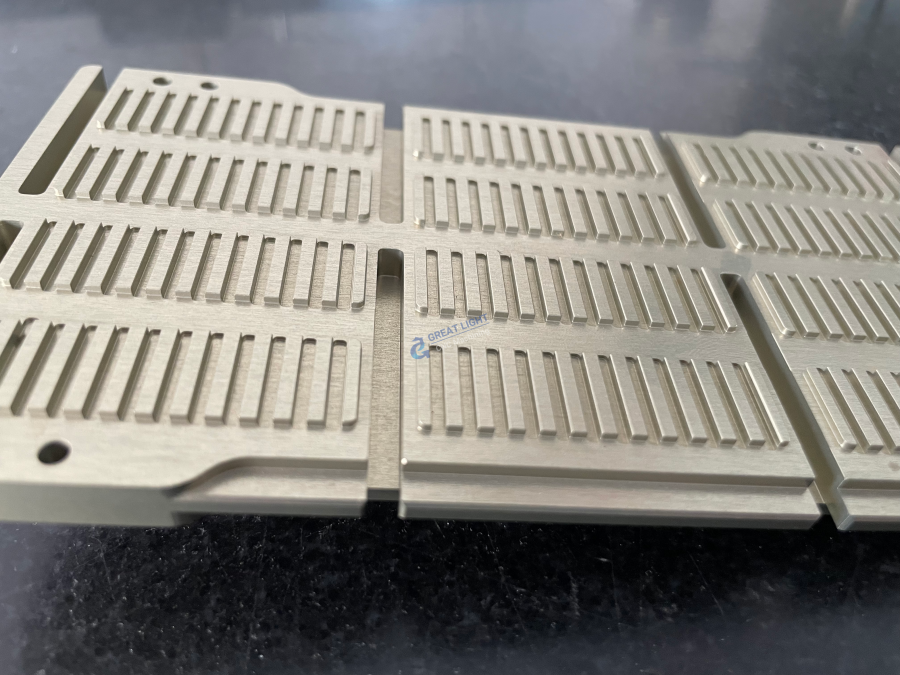
When engineers in the medical device, aerospace, and composite manufacturing sectors search for reliable autoclave tray perforated sheet metal solutions, they are not just looking for a flat piece of metal with holes in it. They are seeking a precision-engineered component that can withstand repeated thermal cycling, maintain absolute flatness under load, resist corrosion from aggressive sterilization media, and deliver consistent performance over thousands of cycles. As a senior manufacturing engineer with over a decade of hands-on experience in precision sheet metal fabrication and CNC machining, I’ve seen how subtle design flaws or manufacturing shortcuts can lead to tray warpage, particulate generation, or even catastrophic failure in critical applications. This article dissects the key engineering considerations, material science, manufacturing strategies, and supplier evaluation criteria that determine the success of your autoclave tray perforated sheet metal project—and why integrating precision CNC machining expertise from a partner like GreatLight CNC Machining Factory can eliminate the pain points that plague so many procurement teams.
What Are Autoclave Trays, and Why Is Perforated Sheet Metal the Material of Choice?
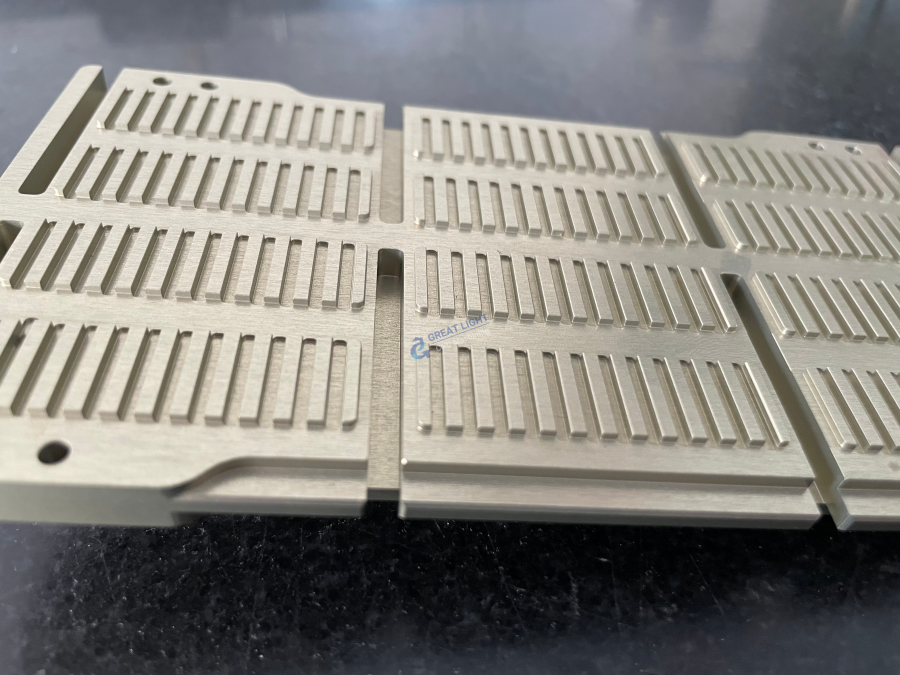
An autoclave tray is essentially a load-bearing platform used inside steam sterilizers, dry heat ovens, or composite curing autoclaves to hold instruments, components, or molds. The trays must allow free circulation of steam, hot air, or inert gas around the items being processed, making solid sheet metal impractical. That’s where perforated sheet metal{target=”_blank”} becomes indispensable. The pattern of holes—whether round, slotted, or custom—facilitates heat transfer and medium flow while providing structural rigidity. However, the term “perforated sheet metal” masks a host of critical variables: open area percentage, hole diameter, pitch, material thickness, edge finish, and flatness all interact to dictate tray performance.
In my work at GreatLight CNC Machining Factory, we treat every autoclave tray as a high-precision assembly, not a commodity. The factory’s ability to combine advanced sheet metal fabrication with secondary 5‑axis CNC machining ensures that critical features like mounting bosses, alignment dowels, and transfer frames are integrated seamlessly into the perforated sheet metal body. This integrated approach addresses many of the practical difficulties that arise when R&D teams or sourcing managers attempt to assemble a tray from multiple suppliers.
Key Design Parameters That Define Tray Performance
When specifying an autoclave tray perforated sheet metal component, engineers must balance multiple competing objectives. The following table summarizes the primary design levers and their implications, drawn from real-world projects we’ve handled at GreatLight CNC Machining.
| Parameter | Typical Range | Impact on Performance | Manufacturing Consideration |
|---|---|---|---|
| Hole Diameter | 2 mm – 20 mm | Affects steam penetration and mechanical strength | Laser cutting offers ±0.05 mm tolerance; punch tooling requires maintenance for consistency |
| Open Area Percentage | 20% – 60% | Higher open area improves flow but reduces stiffness | Stress concentration around holes demands careful FEA; GreatLight engineers perform linear buckling analysis on large trays |
| Material Thickness | 1.0 mm – 3.0 mm (typical) | Balances weight against deflection under load | Flatness after perforating is a major challenge; stress-relief treatments often necessary |
| Sheet Size | Up to 4000 mm × 2000 mm | Determines load capacity and autoclave compatibility | GreatLight’s large-format 5‑axis machining centers can handle oversized sheets, eliminating the need for welded joints |
| Edge Finish | Deburred, radiused, or fully edge-rounded | Critical for particulate control in cleanroom settings | Electropolishing or mechanical edge rounding ensures no sharp burrs; ISO 13485 validates the process for medical use |
These parameters are not theoretical; they emerge from real projects where GreatLight CNC Machining Factory has supported clients in medical device manufacturing, aerospace composite tooling (often requiring autoclave tray perforated sheet metal), and even food processing. The factory’s quality system, backed by ISO 9001:2015 and ISO 13485 certifications, means that each tray is documented with material certificates, dimensional inspection reports, and surface finish logs before it leaves the 76,000 sq. ft. facility in Chang’an, Dongguan.
Material Selection: The Difference Between a Tray That Lasts and One That Fails
The material you choose for your perforated sheet metal tray directly influences its longevity and cleanliness in autoclave service. The most common choices are:
Stainless Steel 316L: The gold standard for medical autoclave trays due to its superior resistance to chloride-induced pitting and intergranular corrosion. At GreatLight CNC Machining Factory, we source 316L sheets from certified mills and perform in-house spectrometry verification to ensure compliance with ASTM A240. For demanding applications like steam sterilization in hospitals, we often recommend an electropolished finish to achieve Ra ≤ 0.4 µm, which inhibits bacterial adhesion.
Stainless Steel 304: A more economical alternative where chloride exposure is minimal. It finds use in composite curing autoclaves where temperatures can soar to 200 °C. However, 304’s lower molybdenum content makes it less suitable for the harsh chemical environments of certain pharmaceutical processes.
Aluminum 6061‑T6: Lightweight and thermally conductive, aluminum trays are popular in aerospace composite autoclaves where rapid heat-up rates are desired. The challenge lies in maintaining flatness after perforating; GreatLight uses stress-relieved blanks and precise CNC flattening operations to keep camber under 0.5 mm per meter. Additionally, our integrated 3D printing capabilities (SLM aluminum alloy) allow us to produce custom racking inserts that can be mechanically fastened to the perforated sheet metal tray without welding distortion.
Titanium Grade 2 or 5: For the ultimate in corrosion resistance and strength-to-weight ratio, titanium perforated trays are unbeatable—but they come with a significant cost premium. GreatLight’s experience with titanium 3D printing and 5‑axis machining makes it one of the few mid‑sized manufacturers capable of handling such demanding orders, often required in chemical autoclaves or implant processing.
The Fabrication Conundrum: Laser Cutting vs. CNC Punching vs. Etching
The method used to create the perforations directly affects the tray’s fatigue life, dimensional accuracy, and cost. Too many engineers focus solely on hole diameter and open area while overlooking the manufacturing process, only to be surprised by premature cracking at hole edges.
| Fabrication Method | Edge Quality | Tolerance | Best Application | Limitations |
|---|---|---|---|---|
| Fiber Laser Cutting | Smooth, minimal heat-affected zone | ±0.05 mm | Prototypes, complex hole patterns, thick materials | Higher per-part cost for very high-volume runs |
| CNC Turret Punching | Slight rollover, minor burr | ±0.15 mm | Medium to high volumes with standard hole sizes | Tool wear can cause inconsistency; not ideal for hole diameters below material thickness |
| Chemical Etching | Burr-free, stress-free edges | ±0.025 mm | Ultra-thin sheets, intricate patterns | Limited to thin gauges (<1.5 mm); slow and costly for large panels |
| Waterjet Cutting | No HAZ, versatile materials | ±0.1 mm | Thick plates, temperature-sensitive alloys | Slower than laser; kerf tapering may require secondary finishing |
At GreatLight CNC Machining Factory, we frequently employ fiber laser cutting for prototyping and small‑batch medical autoclave trays because it delivers clean, burr‑free edges that pass the “glove test” in cleanrooms. For ongoing production, transitioning to a well-maintained CNC punch press with cluster tooling can reduce unit costs by 30‑40%, provided the open area and gauge fall within the machine’s capability. Our engineers evaluate each project holistically, often recommending a hybrid process where the perimeter profile and alignment features are milled on a 5‑axis CNC machine after the sheet metal perforation, ensuring that all datum surfaces are machined in‑process for absolute referencing.
Overcoming the Seven Pain Points of Precision Sheet Metal Sourcing
Every buyer who has sourced autoclave tray perforated sheet metal has encountered at least one of the following pain points. Recognizing them and selecting a supplier who systematically mitigates them can save months of rework and thousands of dollars.
Pain Point 1: The “Precision Black Hole”
Some shops promise ±0.1 mm flatness but deliver trays that rock on a surface plate. At GreatLight CNC Machining Factory, we don’t just measure flatness after perforating; we use in‑house coordinate measuring machines (CMMs) and blue‑light scanning for full‑field deviation mapping. Trays that exceed our internal ±0.15 mm per 300 mm flatness standard undergo a proprietary stress‑relieving and flattening cycle. Our ISO 9001:2015 system ensures that the method is documented and repeatable, not reliant on a single operator’s skill.
Pain Point 2: Material Traceability Gaps
When a medical device manufacturer faces an FDA audit, they must produce mill test reports for every metallic component that enters the sterile field. GreatLight CNC Machining Factory’s material control system is compliant with ISO 13485 for medical hardware production. Each sheet of perforated metal is laser‑etched with a batch number before processing, linking back to the original heat number. This traceability extends through all post‑processing steps—be it electropolishing, passivation, or PVD coating.
Pain Point 3: Post‑Processing Disconnects
A tray often requires anodizing, powder coating, or electropolishing after fabrication. Sending parts to multiple vendors creates logistics delays and quality gaps. GreatLight’s one‑stop shop includes a full range of surface finishing services: from mirror polishing for cosmetic surfaces to PTFE coating for non‑stick autoclave trays used in composite curing. When we handle the entire chain, you have a single point of accountability, and we qualify the coating adhesion with cross‑hatch testing per ASTM D3359 before shipping.
Pain Point 4: Inconsistent Deburring
Burrs can entrap biological matter or break loose as particulate contamination. Our automated wet‑deburring machines coupled with manual inspection under 10× magnification ensure that every hole edge meets the N‑class burr standard specified. For extra insurance, we can include a glass‑bead blasting step that uniformly rounds edges without compromising dimensional integrity.
Pain Point 5: Prototype to Production Transition
A laser‑cut prototype tray may look perfect, but when you scale to 1000 pieces via turret punching, the edge quality and hole alignment may shift. GreatLight CNC Machining Factory has both rapid prototyping (through 3D printing SLA/SLS and 5‑axis CNC) and high‑volume punch press capacity, so we validate the production process on the actual equipment you’ll use for scaling. This minimizes the “prototype trauma” so common in the industry.
Pain Point 6: Welding Distortion
If your tray design includes welded stiffeners or side walls, the heat from welding will inevitably pull the sheet metal out of flat. Our in‑house tooling department tackles this by designing robust weld fixtures and employing low‑heat‑input pulsed TIG or laser welding. Post‑weld, we perform a full‑area flattening calibration on a hydraulic press with contour‑matching platens—a technique refined over 13 years of precision fabrication.
Pain Point 7: Communication Silos
GreatLight’s engineering team speaks the language of both design and production. Through platforms like LinkedIn{target=”_blank”}, we maintain an open dialogue with global clients and share technical insights that prevent design errors before they occur. Our experience with IATF 16949 principles—though focused on automotive—has taught us the value of advanced product quality planning (APQP), which we apply to medical and aerospace trays to pre‑emptively address failure modes.
How GreatLight CNC Machining Factory Compares to Other Precision Sheet Metal Providers
The market for custom perforated sheet metal does not lack competitors. Global platforms like Xometry and RapidDirect provide instant quoting interfaces for sheet metal parts, while specialized sheet metal shops such as Protocase and SendCutSend excel in rapid-turn prototyping. For large‑scale automotive bracket production, JLCCNC and PartsBadger offer competitive pricing. And for high‑end 5‑axis machining of aerospace components, names like Owens Industries and RCO Engineering command deep expertise. So why would an engineer choose GreatLight CNC Machining Factory?
The answer lies in the integration of deep precision engineering with full‑process manufacturing, under one roof and one quality system. Many of the competitors mentioned offer either CNC machining or sheet metal fabrication, but rarely both at the level required for an autoclave tray that demands machined hinge blocks, precise linear rail mounting surfaces, and a perforated sheet body that are all dimensionally coherent. At GreatLight, your tray’s critical datums are machined in a single setup on a 5‑axis center after the sheet metal components are fabricated and stress‑relieved. This eliminates tolerance stack‑ups that typically arise when a sheet metal shop sends parts to a separate machine shop.
Moreover, our facility’s scale—127 pieces of precision peripheral equipment including large‑format 5‑axis, 4‑axis, and 3‑axis CNC machining centers, plus vacuum forming, die casting, and 3D printing—means we can create entire autoclave racking systems, not just the tray itself. When a client needs a perforated tray along with custom mold bases and composite layup tools, we handle it all, reducing supply chain complexity.
Another differentiator is our certifications portfolio. While several online marketplaces do not hold any manufacturing certifications themselves (relying on their partner network), GreatLight CNC Machining Factory holds ISO 9001:2015, ISO 13485, and has processes aligned with IATF 16949 principles. For medical device makers, ISO 13485 is non‑negotiable; for aerospace suppliers, the layered process audits embedded in our quality system provide the confidence that every autoclave tray perforated sheet metal component will meet the specified Class‑A surface and dimensional requirements.
Let’s look at a concrete example. A dental equipment manufacturer approached us after experiencing repeated flatness failures with trays supplied by a large online network. The trays were fabricated from 2.0 mm 316L perforated sheet metal with a 40% open area, but they arrived with a bow exceeding 1.5 mm over 600 mm. Our analysis revealed that the supplier used an unrelieved punch pattern that induced compressive membrane stresses. We redesigned the perforation sequence and added a targeted tempering cycle, then finish‑machined the entire top surface flat. The resulting trays were delivered with a flatness of 0.08 mm per 300 mm—well within the client’s 0.1 mm specification. That’s the kind of turn‑key problem‑solving that transcends basic manufacturing.
Selecting Your Supply Partner: A Checklist for Autoclave Tray Perforated Sheet Metal
Based on my own engineering sourcing experiences and the capabilities we’ve built at GreatLight CNC Machining Factory, I recommend the following criteria when evaluating any supplier for perforated sheet metal trays:
In‑house stress‑relief and flattening capability: Ask the supplier to describe their process for ensuring flatness after perforation. Words like “press flattening with CNC‑machined platens” are good; “we just cut and ship” is a red flag.
Metrology equipment: A supplier’s investment in CMMs, laser scanners, and surface profilometers indicates they take dimensional integrity seriously. At GreatLight, we not only measure but share the inspection reports in an ISO‑formatted document with every shipment.
Material certifications: For critical trays, demand full chemical and mechanical test reports. Our supply chain partners are globally recognized mills, and we perform incoming inspection with a handheld XRF analyzer to verify alloy composition before cutting.
Surface finishing integration: Can the supplier passivate, electropolish, anodize, or paint in‑house? Every time a part leaves the factory for finishing, scheduling risk creeps in. GreatLight’s 127‑machine ecosystem includes wet painting, powder coating, polishing, and PVD stations, keeping the entire process cycle under a few weeks.
Prototyping flexibility: When you need five trays next week for a clinical trial, a supplier that can combine sheet metal fabrication with 3D‑printed plastic prototypes (for fit checks) before cutting metal can save enormous time. Our SLA/SLS printers run day and night for just such rapid iteration.
Regulatory acumen: In medical and aerospace, compliance is not optional. Ask for a copy of the supplier’s ISO 13485 certificate if sterilization is involved. GreatLight’s certification covers medical hardware production, meaning we have established design history file protocols, change control, and cleanroom assembly areas as needed.
Engineering support: The best suppliers catch design issues before the first article is made. We offer design-for-manufacturability (DFM) feedback, often suggesting alternative hole patterns or edge treatments that maintain functionality while cutting cost. This collaborative approach sets apart true manufacturing partners from transactional machine shops.
The Future of Autoclave Tray Manufacturing
Composite curing and medical sterilization are evolving. Autoclaves are getting larger, temperatures more extreme, and the drive toward automation is pushing integration of RFID tags and sensor mounts directly into the trays. Perforated sheet metal will remain the backbone of these systems, but the addition of machined features, embedded inserts, and even 3D‑printed lattice structures is becoming common. GreatLight CNC Machining Factory is already pioneering hybrid trays where a titanium 3D‑printed grid is mechanically joined to a stainless steel perforated sheet metal base to optimize weight and thermal performance. Our investments in SLM technology and large‑format 5‑axis machining ensure we can keep pace with these trends and deliver solutions that no single-process shop can replicate.
In conclusion, the humble autoclave tray perforated sheet metal component is far more complex than it appears. From material selection and hole geometry to post‑processing and regulatory compliance, each decision reverberates into product reliability and total cost of ownership. By partnering with a manufacturer that combines deep sheet metal expertise with high‑precision CNC machining and an unwavering commitment to quality—exactly what GreatLight CNC Machining Factory offers—you can navigate the pitfalls that trip up conventional suppliers. Whether you are ramping up a new medical device line or improving composite cure cycle consistency, the right tray solution starts long before the first laser pierces the metal. It starts with an engineering conversation grounded in trust, capability, and a track record of on‑time, in‑spec delivery.
When you think about autoclave tray perforated sheet metal that demands absolute precision and integrated manufacturing, I invite you to consider the full‑spectrum capabilities and certifications that set GreatLight CNC Machining Factory apart in the global market. Customize your precision parts at the best price today, and experience the difference that true engineering partnership makes.


![[访谈] RAPID + TCT 2024:人工智能对 3D 打印的价值](https://print-ing.com/wp-content/uploads/2024/07/INTERVIEW-60x60.jpeg "[访谈] RAPID + TCT 2024:人工智能对 3D 打印的价值 9")




发表回复
要发表评论,您必须先登录。