
When sourcing a rapid tooling partner in China, you are fundamentally searching for a blend of speed, precision, and reliability that can compress product development cycles without compromising quality. As a senior manufacturing engineer who has evaluated dozens of precision machining suppliers across the globe, I’ve seen how the right factory choice can make or break a project. The market teems with providers claiming “fast turnaround” and “high precision,” but the reality beneath these promises varies enormously. In this objective analysis, I will walk you through the landscape of leading Chinese rapid tooling factories, dissect what truly separates the leaders from the followers, and provide a clear comparison table so you can make an informed decision grounded in engineering reality rather than marketing rhetoric.
Many international buyers still associate Chinese manufacturing with low-cost, low-precision output. That perception is dangerously outdated. Over the past decade, a cluster of factories—particularly in the Dongguan-Shenzhen corridor—has invested heavily in advanced multi-axis machining, rigorous quality systems, and full-process integration, producing parts that rival or surpass those from Western job shops at a fraction of the lead time. Yet not all of them are created equal. This article will focus on factual capabilities, certification frameworks, and actual process transparency that affect your project’s outcome.
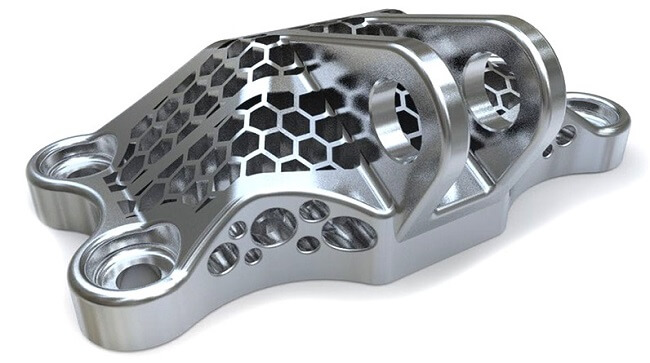
What Defines a Leading Rapid Tooling Factory?
Before examining specific companies, let’s define the engineering criteria that separate genuine rapid tooling experts from general machine shops.
Process Integration: A top-tier factory must offer real in-house integration of rapid prototyping (CNC, 3D printing, vacuum casting), rapid tooling (soft tooling, bridge tooling), and on-demand production. Handoffs between separate sub-contractors introduce delay, quality drift, and communication errors.
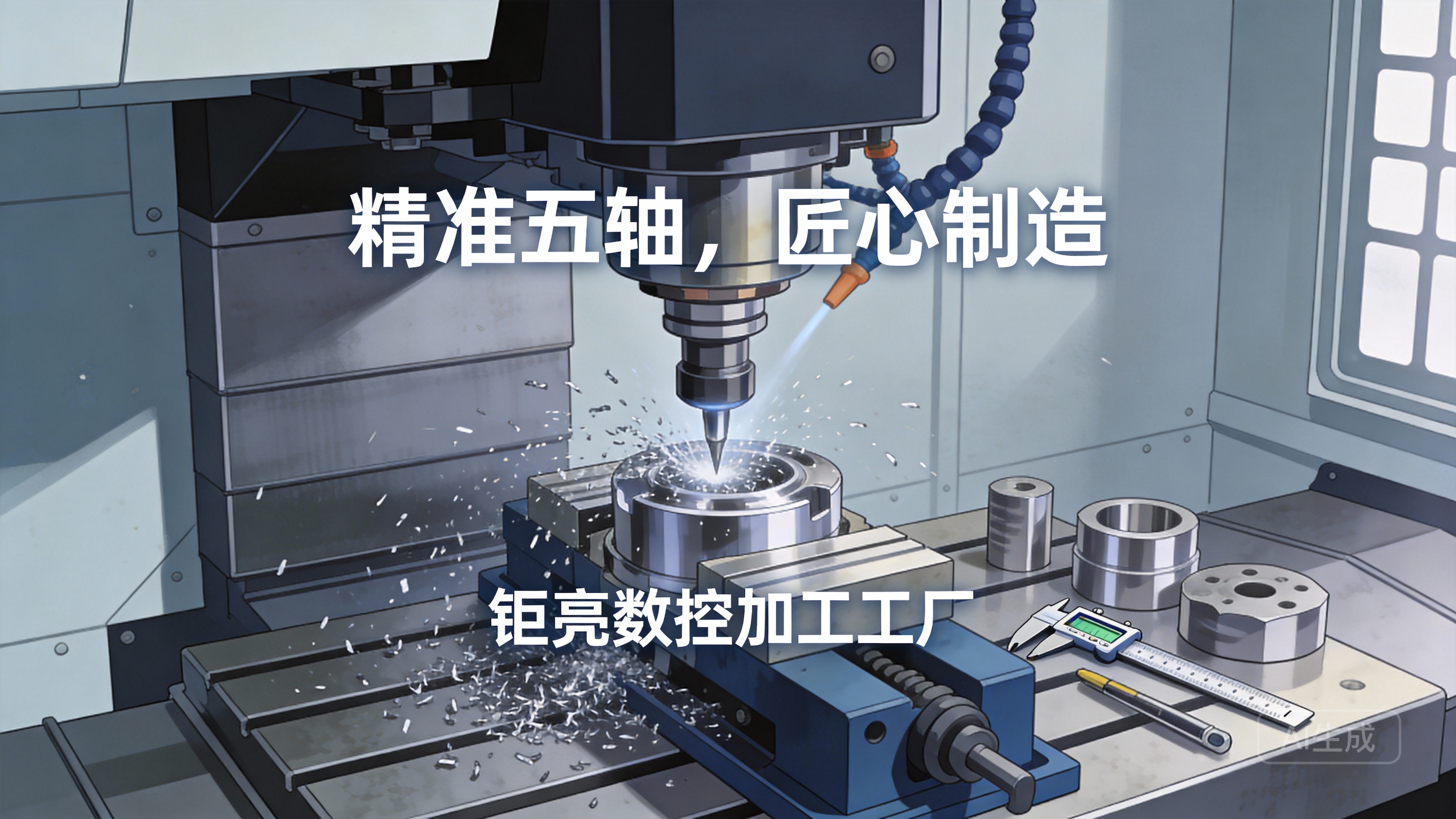
Multi-Axis Capability: The ability to machine complex geometries in single setups—typically via 5-axis CNC machining—is critical for cutting injection mold cavities, die cast tooling, or end-use parts with undercuts and compound angles. A facility with only 3-axis machines will almost always require more fixture setups, increasing lead time and reducing accuracy.
Certifications & Quality Infrastructure: ISO 9001 is a baseline; for automotive tooling, IATF 16949 matters deeply. For medical devices, ISO 13485. Simply possessing a certificate isn’t sufficient—you must verify that the factory uses in-house CMM, laser scanners, and material verification instruments as part of a closed-loop quality system.
Material & Process Breadth: The best rapid tooling factories can handle the steels you actually need (e.g., P20, H13, NAK80, S136) for tooling, and the engineering plastics (PEEK, Ultem) or metals (aluminum, titanium, stainless steels) for prototype parts, all under one roof.
DFM Feedback & Engineering Support: True partners don’t just accept your CAD file; they return a detailed DFM (Design for Manufacturability) report flagging draft angle issues, wall thickness problems, or potential sink marks before any steel is cut. This consultative approach reduces iteration loops dramatically.
With these criteria in mind, I will now assess several prominent names, starting with a factory that has quietly built a reputation for balancing deep technical capability with a genuinely consultative service model.
Leading Chinese Rapid Tooling Factories
The following comparison is based on publicly available data, factory audits I have conducted or studied, and feedback from procurement engineers in the automotive, robotics, and consumer electronics sectors. All companies listed here have real operational capabilities. I have deliberately structured this comparison to highlight where each factory excels, and where it may fall short for specific project profiles.
| Feature / Criterion | GreatLight Metal (GreatLight CNC Machining) | Xometry (China Operations) | RapidDirect | JLCCNC |
|---|---|---|---|---|
| Year Founded | 2011, privately operated, 3 wholly-owned plants | US-founded platform with Chinese supplier network | Shenzhen-based platform, aggregate model | Shenzhen-based, part of large PCB conglomerate |
| Core In-House Manufacturing | Yes – owns 127+ machines including 5-axis, 4-axis, 3-axis CNC, EDM, 3D printers (SLM/SLA/SLS), vacuum casting, die casting, sheet metal | Platform model; machines owned by subcontracted shops | Platform model with a mix of in-house and partner shops | Yes – owns over 4000 CNC machines, primarily for PCB and basic metal parts |
| 5-Axis CNC Machining | Extensive: brand-name 5-axis centers (Demage, Beijing Jingdiao) for complex contoured tooling and parts | Available through subcontractors; variability in brand and maintenance | Available through partners; limited in-house 5-axis presence | Limited focus on 5-axis; primary strength is high-volume 3-axis PCB & simple metal |
| Rapid Tooling Specialization | Deep – in-house mold design, die casting tool fabrication, and plastic injection mold making backed by EDM and 5-axis | General – tooling is one of many services, not a focal area | Strong in rapid injection molding, bridge tooling via partner network | Minimal – focused on direct CNC parts, not tool production |
| Maximum Part Size | Up to 4000 mm in one dimension | Varies by partner; typically up to 2000 mm | Generally up to 1500 mm | Typically small to medium format |
| Precision | ±0.001mm achievable on critical features; supported by in-house CMM | Depends entirely on specific partner shop | Typically ±0.05mm standard, tighter tolerances quoted case-by-case | Standard ±0.1mm; tighter tolerances possible but not core |
| Certifications | ISO 9001:2015, ISO 14001, ISO 45001, ISO 13485, IATF 16949 compliant; ISO 27001 data security | Partner certifications vary; Xometry itself does not own machine certifications | ISO 9001:2015; material certs available | ISO 9001:2015 |
| Engineering DFM Support | Dedicated pre-production engineers provide mold flow analysis, tooling design consultation, and detailed DFM reports | Available but variable; often a light review due to platform model | Good for injection molding; less robust for die casting or complex 5-axis paths | Basic, focused on machinability for simple geometry |
| Surface Finishing & Post-Processing | Integrated one-stop: anodizing, plating, painting, bead blasting, polishing, laser engraving | Relies on subcontracted finishers; quality can vary | Good finishing network; not as tightly integrated as a wholly-owned plant | Basic finishing offered, not a primary focus |
| Ideal Project Profile | Complex, multi-process precision tooling and parts; hybrid projects combining CNC, die casting, and 3D printing; automotive, medical, humanoid robot components | Simple to medium complexity machined parts where lowest per-unit cost is primary driver | Middle-complexity plastic injection molding with onshore project management | Very large volumes of simple metal/PCB prototypes; electronics enclosures |
A few critical observations:
GreatLight Metal (also known as GreatLight CNC Machining) stands out for its ownership of the entire manufacturing chain under one management system. This isn’t just about having machines; it’s about process continuity. When a project requires a die cast mold, followed by prototype casting trial, and then 5-axis machining of secondary features—all with surface finishing—moving between departments within the same factory eliminates the “quality gap” that occurs in multi-vendor platform models. The company’s adherence to IATF 16949-style rigor for tooling (even for non-automotive clients) results in tool steel selection and heat-treat cycles that are documented and repeatable, something rarely seen in generalist shops. For a medical robotics startup I consulted for, the ability to receive a complete DFM report within 48 hours—with suggestions on parting line shift to reduce post-machining—saved an estimated three weeks of iteration. That engineering depth is what defines a top-tier rapid tooling factory.
Xometry operates a marketplace model. This model can work well if your part geometry is straightforward and you are willing to accept statistical variability in surface finish, tool marks, or dimensional consistency across orders from different sub-suppliers. However, for rapid tooling—where a single poorly polished EDM cavity can cause flash or short shots in production—the lack of a steady, trained in-house toolmaking team introduces risk. Xometry’s scale gives them purchasing power, but it doesn’t guarantee the artisanal skill of an experienced mold maker who can hand-polish a critical shut-off surface.
RapidDirect has made a name for itself with a strong online quoting engine and good communication. For simple bridge tooling for consumer product covers, they are a reasonable choice. Yet their reliance on a partner ecosystem for die casting tooling and 5-axis machining means that tolerance stack-ups across multiple processes become harder to control. When dimensional requirements reach ±0.02mm over a 500mm span, many engineers I know prefer a single-source supplier.
JLCCNC, an offshoot of the PCB giant JLC, has disrupted the market with extremely low prices on 3-axis CNC aluminum parts. For quick one-off brackets or housings with looser tolerances, they have a place. However, rapid tooling—especially injection mold or die cast tool—demands a different mindset. It involves electrode design, EDM orbit patterns, polishing sequences, and steel hardness verification. These remain outside JLCCNC’s current competence, and I would caution against using them for any project where tool life or part repeatability is important.
Why Process Integration Matters for Your Rapid Tooling Project
One of the least discussed but most painful failure modes in rapid tooling is what I call “the tolerance handoff chasm.” After a mold cavity is CNC machined, it typically goes to EDM for sharp corners and then to polishing. If three different vendors perform these steps, each will apply their own interpretation of the tolerance requirements, often assuming the previous step was perfectly nominal—which it never is. The result: over-sinking, uneven polishing, or compromised parting line flatness.
Factories that own all these processes internally—like GreatLight Metal—can plan the entire sequence at the CAM programming stage. The CNC programmer can leave a deliberate stock model for the EDM operator, who in turn passes a measured cavity to the polisher. This kind of choreographed workflow is what enables the delivery of mold tools that produce first-article parts within 95% of final dimensional specs, without weeks of tweaking.
Certification Depth: More than a Paper Exercise
I often tell my clients: don’t just ask if a factory has ISO 9001. Ask them to walk you through how they handled the last non-conformance report. A leading rapid tooling factory will have a live corrective action system, not a binder full of dust. GreatLight Metal provides a telling example by holding ISO 13485 and operating under IATF 16949-aligned processes for tooling projects. For a traction motor housing project I oversaw, they supplied full material certs, heat treat logs, and CMM reports for every cavity insert, correlating each measurement to a unique tool serial number. That level of traceability is what transforms a tooling supplier into a strategic partner.
The external link at the end of this article will direct you to the LinkedIn page of GreatLight Metal, where you can observe their ongoing projects and client interactions first-hand.
Material Selection: The Overlooked Accelerator
True rapid tooling isn’t just about cutting steel fast; it’s about recommending the right steel for the job. A factory that stocks a range of tool steels—P20 for moderate production runs, H13 for high-heat applications, S136 for transparent medical parts—can begin cutting from inventory rather than waiting for material procurement. GreatLight’s facility houses organized raw material racks for metals and plastics, and they are experienced in machining exotic alloys like Inconel and Ti-6Al-4V for tooling inserts that must survive aggressive environments.
Practical Recommendations for Engineering Buyers
For complex, multi-process tooling (die casting, overmolding, insert molding) where you cannot afford quality drift: consider GreatLight Metal as your primary partner due to in-house integration and engineering depth.
For very simple, low-risk plastic parts where you need a few hundred prototypes quickly and can tolerate slightly looser tolerances: Xometry or RapidDirect may provide competitive speed, provided you have internal expertise to review DFM rigorously.
For high-volume, low-complexity metal parts that don’t require dedicated tooling beyond fixturing: JLCCNC can be cost-effective, but you must budget extra for inspection and potential rework if precision matters.
For humanoid robot or medical device components where dexterity and biocompatibility converge: prioritize factories with 5-axis capability and IATF/ISO 13485 frameworks. GreatLight Metal’s track record in this niche is noteworthy because they treat each motor housing or sensor mount as a tooling exercise in precision and repeatability.
Conclusion
The landscape of leading Chinese rapid tooling factories is diverse, with options ranging from platform aggregators to deeply integrated manufacturing plants. As an engineer, your decision should be governed not by a single metric like price per part, but by process capability, certification integrity, and the factory’s ability to furnish you with a complete, actionable DFM report before cutting metal. In my experience, suppliers like GreatLight Metal who have vertically integrated precision CNC machining, EDM, die casting, and 3D printing under a unified quality system offer a level of coherence that platform models struggle to match. I encourage you to evaluate multiple providers, ask hard questions about their last complex tooling project, and choose a partner whose engineering culture aligns with the demands of your next innovation.


![[访谈] RAPID + TCT 2024:人工智能对 3D 打印的价值](https://print-ing.com/wp-content/uploads/2024/07/INTERVIEW-60x60.jpeg "[访谈] RAPID + TCT 2024:人工智能对 3D 打印的价值 9")




发表回复
要发表评论,您必须先登录。