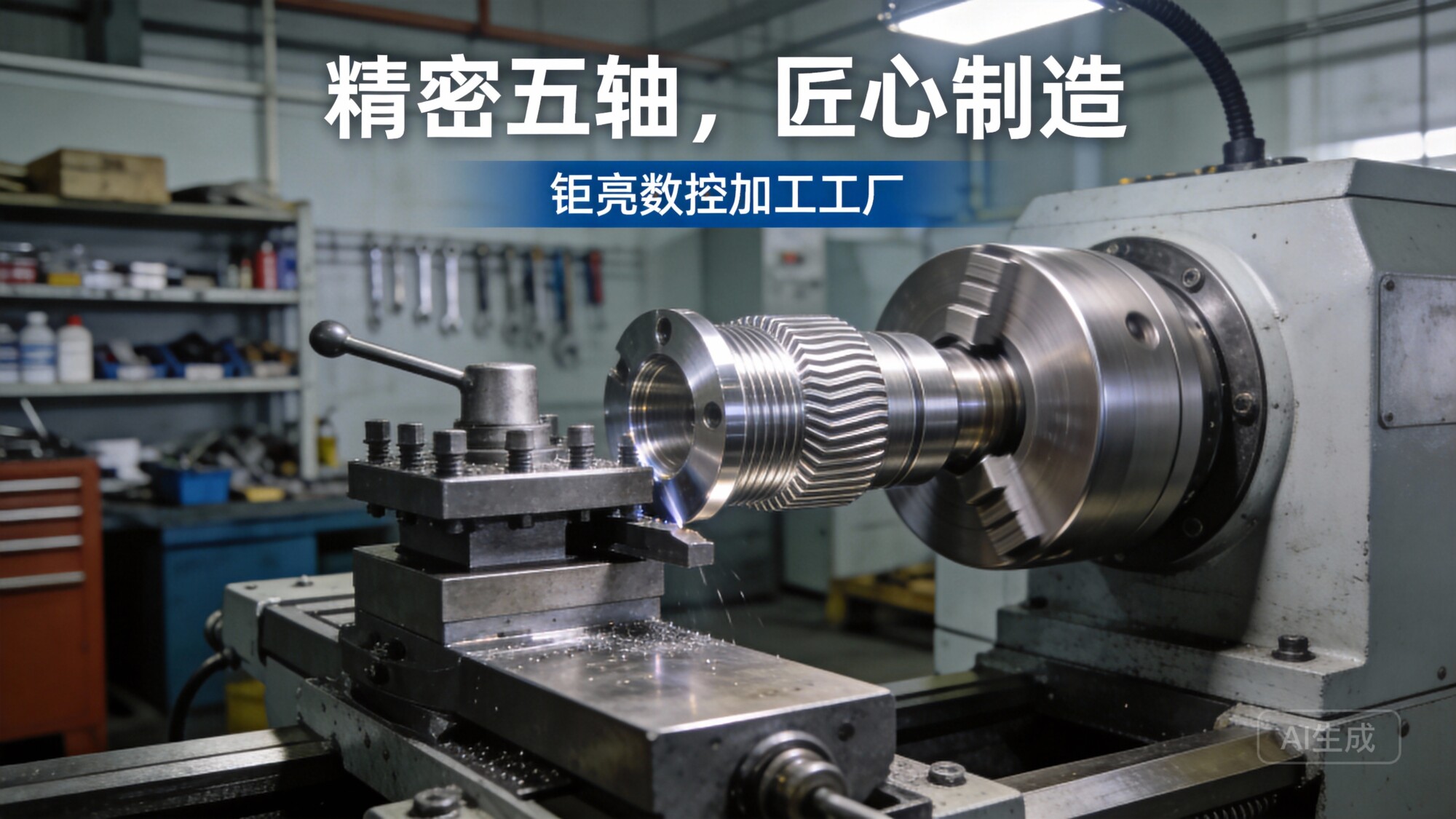
In demanding industrial environments—from chemical processing to power generation—thermowell tubes serve as the indispensable interface between process fluids and temperature sensors. Their reliability directly impacts process safety, efficiency, and control accuracy. Yet, the manufacturing of these seemingly simple components presents formidable engineering challenges. Achieving the precise wall thickness, concentricity, surface finish, and material integrity required for thermowell tubes demands not just any CNC turning service, but a partner with deep metallurgical understanding, advanced multi-axis capabilities, and rigorous quality systems. This article examines the critical factors in thermowell tube production and explains how a professional Thermowell Tube CNC Turning Service transforms design specifications into field-ready components.
The Critical Role of Thermowell Tubes in Process Industries
Thermowell tubes protect temperature sensors (thermocouples, RTDs, bimetallic thermometers) from corrosive fluids, high-pressure flows, and mechanical damage while ensuring accurate thermal response. They are typically installed in pipelines, tanks, or reactors where direct sensor immersion is impractical or unsafe. The tube’s design—including immersion length, stem diameter, wall thickness, and tip geometry—must balance thermal conductivity with structural strength under static and dynamic loads.
A poorly manufactured thermowell tube can lead to:
Delayed thermal response (thick walls or poor concentricity)
Premature fatigue failure (stress risers from machining marks)
Leakage at the threaded connection (thread profile inaccuracies)
Sensor binding or inaccurate placement (internal diameter tolerances)
These failures not only cause costly downtime but can also create safety hazards in pressurized systems. Therefore, selecting a CNC turning service that understands these operational constraints is non-negotiable.
Core Engineering Challenges in Thermowell Tube CNC Turning
Material Selection and Machinability
Thermowell tubes are commonly fabricated from:
Stainless steels (304, 316L, 321, 347) for corrosion resistance
Nickel alloys (Inconel 600, 625, Monel 400) for high-temperature or highly corrosive environments
Titanium alloys (Grade 2, Grade 5) for lightweight, high-strength applications
Exotic materials (Hastelloy, duplex stainless steels) for extreme chemical exposure
Each material behaves differently under cutting forces. Work-hardening alloys like 316L or Inconel demand optimized tool geometries, controlled speeds and feeds, and rigid machine setups to prevent built-up edge and surface tearing. A generic CNC turning shop may struggle with these materials, resulting in poor surface finish or dimensional instability.
Thermowell Tube CNC Turning Process Flow at GreatLight Metal
| Process Step | Equipment Used | Quality Check |
|---|---|---|
| Raw material inspection | Spectrometer, hardness tester | Verify grade & mechanical properties |
| Rough turning | 5-axis CNC lathe (Dema/B Jingdiao) | Dimensional check (first article) |
| Semi-finish turning | 4-axis CNC mill-turn center | Concentricity measurement |
| Thread machining | CNC lathe with thread whirling | Thread pitch & profile gauges |
| Finish turning & polishing | Precision Swiss-type lathe | Surface roughness (Ra ≤ 0.4 μm) |
| Inspection & certification | CMM, optical comparator, hydrostatic test | Full dimensional & pressure test report |
Tight Tolerances and Concentricity Demands
Thermowell tubes typically require:
Wall thickness tolerance: ±0.05 mm (or tighter for thin-wall designs)
Concentricity between OD and ID: ≤ 0.03 mm
Thread pitch diameter tolerance: 6g/6H class
Surface finish: Ra 0.4–0.8 μm on sealing surfaces
Achieving these tolerances consistently in production volumes demands CNC machines with high thermal stability, precision spindle bearings, and real-time compensation systems. Moreover, the aspect ratio (length-to-diameter) of thermowell tubes often exceeds 10:1, increasing vibration and deflection risks during turning. Advanced toolpath strategies, such as peck turning or variable spindle speed, help mitigate these issues.
Thread Integrity and Sealing Performance
Thermowell threads must conform to NPT, BSP, or metric standards with controlled taper, truncated crest, and smooth flanks. Leakage at the thread joint is a common failure mode, especially in high-pressure steam or aggressive chemical services. CNC turning services that combine rigid threading cycles with post-process inspection using thread gauges and profile projectors ensure reliable sealing.
Surface Finish for Reduced Fouling and Stress Concentration
Process fluids often deposit scale, polymers, or biological matter on rough surfaces. Polished internal and external surfaces (Ra ≤ 0.4 μm) not only improve cleanability but also reduce stress concentration points that can initiate fatigue cracks. Achieving such finishes on long, slender tubes requires careful selection of insert grades (e.g., CBN or PCD) and coolant delivery strategies.
How GreatLight Metal Addresses Thermowell Challenges
GreatLight Metal, established in 2011 in Dongguan’s Chang’an district, operates a 76,000 sq. ft. facility with 127 precision units including large-scale 5-axis CNC machining centers, multi-spindle lathes, and Swiss-type turning machines. This equipment portfolio directly addresses the geometric complexity and precision demands of thermowell tube production.
Five-Axis Capability for Complex Geometries
While thermowell tubes are primarily turned parts, many modern designs incorporate:
Tapered or stepped OD profiles for pressure vessel penetration
Hexagonal or square drive sections for installation torque
Integral flanges or mounting lugs
Non-circular tips for specific sensor geometries
GreatLight’s Dema and Beijing Jingdiao 5-axis machines allow simultaneous turning, milling, drilling, and threading in a single setup, reducing handling errors and lead times. For multi-diameter thermowell tubes, this eliminates the need for secondary operations and ensures direct concentricity between features.
Material Expertise Backed by In-House Testing
The company’s material verification process includes:
Positive material identification (PMI) using handheld XRF analyzers
Mechanical property testing on witness coupons
Metallurgical examination for grain structure and inclusion content
This rigor is essential when working with heat-treated alloys or materials with tight specification limits. GreatLight Metal’s engineers also provide input on alternative material grades that may improve machinability without compromising corrosion resistance or strength.
ISO-Certified Quality System
GreatLight Metal holds certifications including:
ISO 9001:2015 – Foundational quality management for consistent processes
IATF 16949 – Automotive-grade quality system (applicable to thermowell service in fuel systems, coolant lines, etc.)
ISO 13485 – Medical hardware production (relevant for thermowell tubes used in pharmaceutical or bioprocess equipment)
ISO 27001 – Data security for intellectual property protection
For thermowell production, these certifications translate into:
Documented process control plans
Statistical process control (SPC) for critical dimensions
Traceable material lot records
Standardized first-article inspection (FAI) reports
Integrated Post-Processing and Surface Finishing
A key differentiator is GreatLight Metal’s one-stop capability, covering:
Electropolishing for internal surface passivation and smoothness
Shot peening for compressive stress introduction (fatigue life improvement)
Hydrostatic testing up to 1500 psi for pressure integrity verification
Heat treatment (stress relieving, solution annealing) for material property optimization
3D printing (SLM/SLA/SLS) for prototype thermowells with complex internal channels
This eliminates the need for customers to manage multiple vendors, reducing logistical complexity and ensuring final quality accountability.
Industry Standards and Compliance for Thermowell Tubes
Thermowell manufacturing should align with relevant codes:
| Standard | Scope | Key Requirements for CNC Turning |
|---|---|---|
| ASME PTC 19.3 TW | Thermowell performance & strength | Stem diameter, wall thickness, frequency calculation |
| ASTM A479/A276 | Stainless steel bars | Chemistry limits, hardness, grain size |
| ASTM B564 | Nickel alloy forgings | Mechanical properties, ultrasonic testing |
| NACE MR0175/ISO 15156 | Materials for sour service | Controlled hardness, sulfide stress cracking resistance |
| API 6A | Wellhead equipment | Thread inspection, material traceability |
GreatLight Metal’s engineering team can review customer specifications and map them to appropriate machine setups, inspection plans, and test protocols, ensuring full compliance before production begins.
Comparing Thermowell Tube CNC Turning Service Providers
Selecting the right partner involves evaluating technical competence, capacity, and service depth. The table below contrasts GreatLight Metal with other reputable players in precision CNC machining:
| Capability | GreatLight Metal | Xometry | Protolabs | Fictiv | Owens Industries |
|---|---|---|---|---|---|
| Footprint (sq. ft.) | 76,000 | Multiple global sites | 200,000+ across facilities | Multiple US locations | 60,000+ (single site) |
| 5-Axis CNC machines | Dema, Beijing Jingdiao (multiple) | Network of partners | Owned + partner network | Partner network | Yes (limited quantity) |
| ISO Certifications | 9001, 13485, 16949, 27001 | 9001 (various facilities) | 9001, 13485 (limited) | 9001 (corporate) | 9001 |
| IATF 16949 | Yes | No | No | No | Selected lines |
| In-house post-processing | Electropolishing, shot peening, heat treatment, hydrotest | Anodizing, plating (partner) | Anodizing, painting (limited) | Plating, coating (partner) | Basic finishing |
| Maximum part length | Up to 4000 mm (13 ft) | Varies by partner | Up to 1800 mm | Varies | Up to 2000 mm |
| Material range | 300+ grades including exotic alloys | 30+ standard grades | 20+ common grades | 20+ common grades | 50+ grades |
| Engineering support | DFM feedback, material substitution, FEA analysis | Automated DFM tool | Online DFM analysis | Online DFM + chat | Limited phone support |
| Turnaround (prototype) | 3–5 days | 5–10 days | 3–5 days (simpler parts) | 5–7 days | 7–10 days |
Note: Xometry, Protolabs, and Fictiv operate primarily as digital manufacturing platforms aggregating multiple suppliers, while GreatLight Metal and Owens Industries are single-site manufacturers offering direct control.
GreatLight Metal’s advantage lies in owning the entire process chain under one roof, combined with certifications that go beyond general machining. For thermowell tube production—where material verification, thread accuracy, and surface finish directly impact safety—this integrated model reduces risk.
The Precision Predicament: Why Thermowell CNC Turning Is Not “Just” a Turning Job
Many hardware startups and procurement engineers assume that any CNC turning shop can produce thermowell tubes. This misconception leads to:
Tolerance Creep: Suppliers quote ±0.1 mm but deliver parts varying ±0.2 mm due to lack of thermal compensation on long runs.
Surface Defects: Chatter marks on the bore cause sensor binding or inaccurate readings.
Thread Mismatches: Incorrect taper angle or truncated crests cause leakage despite being within general pitch tolerance.
Material Substitutions: Without in-house material testing, a less expensive grade may be used, leading to premature corrosion.
GreatLight Metal’s approach mitigates these “precision black holes” through:
Statistical process control on every batch
100% dimensional inspection for critical features
Pressure testing for leak path verification
Material certificates with traceable heat numbers
Use Case: Thermowell for High-Temperature Steam Service
Client Profile: An OEM specializing in industrial boiler controls needed thermowell tubes for superheated steam lines operating at 540°C (1000°F) and 150 bar (2175 psi).
Challenges:
Material: Inconel 625 (work-hardening, high cutting forces)
Wall thickness: 3.0 mm ±0.05 mm (thin relative to length of 450 mm)
Internal surface finish: Ra ≤ 0.2 μm to minimize steam oxidation scaling
Thread: 3/4″ NPT with controlled taper and truncated crest per ASME B1.20.1
Hydrostatic test: 1.5× design pressure (3250 psi) without leakage
GreatLight Metal Solution:
Material sourcing: Verified Inconel 625 per ASTM B564 with heat lot testing
Rough turning: 5-axis lathe with variable spindle speed to reduce chatter on slender section
Semi-finish & finish turning: CBN inserts for consistent surface finish; in-process CMM checks
Threading: Cycle with controlled infeed angle; post-process profile projection
Internal bore polishing: Electropolishing to remove machining peaks and valleys, achieving Ra 0.15 μm
Hydrostatic testing: Custom fixture to seal threads; test held for 5 minutes with no pressure drop
Results: 300 pieces delivered within 5 days; zero rejects; field performance confirmed no leaks or creep over 18 months of operation. The client subsequently transferred all thermowell tube production to GreatLight Metal.
Certifications That Underpin Thermowell Quality
Trust in precision manufacturing is built on verifiable systems, not claims. GreatLight Metal’s certification suite directly benefits thermowell tube clients:
ISO 9001:2015: Ensures documented procedures for design review, process control, non-conformance handling, and corrective actions. Every thermowell tube traceable through production lot number.
IATF 16949: Particularly relevant for thermowell tubes used in automotive fuel systems or engine coolant lines. The defect prevention approach (e.g., FMEA, control plans) reduces risk in high-volume production.
ISO 13485: Applies to thermowell tubes for pharmaceutical, biotech, or medical gas applications, where material biocompatibility and cleanability are critical.
ISO 27001: Protects customer intellectual property—important when thermowell tube designs include proprietary sensor interfaces or surface treatments.
These certifications demonstrate that GreatLight Metal operates with systemic discipline, not ad hoc responses. For a component as safety-critical as a thermowell tube, such rigor is essential.
Conclusion: The Right Partner for Thermowell Tube CNC Turning Service
Thermowell tube manufacturing is a specialized discipline within CNC turning—demanding material science knowledge, precision machine control, and rigorous quality assurance. Choosing a Thermowell Tube CNC Turning Service provider with proven experience, advanced equipment, and comprehensive certifications directly impacts product reliability and operational safety. GreatLight CNC Machining stands out in this field by combining over a decade of precision machining expertise with an integrated facility capable of handling complex geometries, exotic materials, and tight tolerances—all backed by ISO and IATF certifications. Whether you need prototype quantities for testing or production runs for global deployment, evaluating suppliers against the criteria discussed in this article will guide you to the right decision. For the most demanding thermowell tube applications, partnering with a manufacturer that owns the entire process chain—not just a trading company—is the clearest path to quality and consistency.


![[访谈] RAPID + TCT 2024:人工智能对 3D 打印的价值](https://print-ing.com/wp-content/uploads/2024/07/INTERVIEW-60x60.jpeg "[访谈] RAPID + TCT 2024:人工智能对 3D 打印的价值 9")



发表回复
要发表评论,您必须先登录。