In the fast-paced world of product development, the bridge between a brilliant concept and a market-ready product often rests on a single critical decision: selecting the right manufacturing partner. For countless engineers, startup founders, and procurement leaders around the globe, that decision leads to one place — a professional Chinese metal die casting OEM. This may sound like a straightforward sourcing move, but the reality is far more nuanced. When executed with true expertise and integrated precision, a Chinese die casting original equipment manufacturer can compress lead times, slash costs, and deliver component quality that exceeds expectations. However, the landscape is also filled with providers who promise more than they can deliver. To understand how to extract maximum value and avoid the pitfalls, we need to look beyond the surface and examine what truly distinguishes a world-class die casting partner — from deep process knowledge to certificates that matter, from equipment clusters to a collaborative engineering mindset.
What Sets a Professional Chinese Metal Die Casting OEM Apart?
Metal die casting is one of the oldest and most efficient mass-production processes for creating complex metal shapes, yet modern expectations demand far more than just injecting molten metal into a mould. Today’s demanding applications — whether in automotive engine housings, medical device enclosures, drone frames, or next-generation humanoid robot joints — require a manufacturing partner who can orchestrate an entire chain of operations seamlessly. A true professional Chinese metal die casting OEM brings four crucial layers to the table:
Advanced Mould Design and Fabrication
The quality of a die-cast part begins with the mould. Without an in-house tooling team that understands part geometry, thermal dynamics, and material flow, even the best press can only produce mediocre results. A professional OEM invests heavily in simulation software (like MAGMASOFT or ProCAST), high-speed CNC-machined mould cavities, and meticulous maintenance programs so that tooling life and part consistency meet the tightest specifications.
High-Precision Die Casting Machines with Real-Time Process Control
From traditional cold-chamber machines for aluminium and magnesium to hot-chamber systems for zinc, the equipment must be sized correctly for the part volume and geometry. More importantly, closed-loop shot control, vacuum-assisted systems, and thermal management sensors ensure each shot replicates the last with minimal porosity and dimensional variation.
In-House Secondary Machining and Finishing
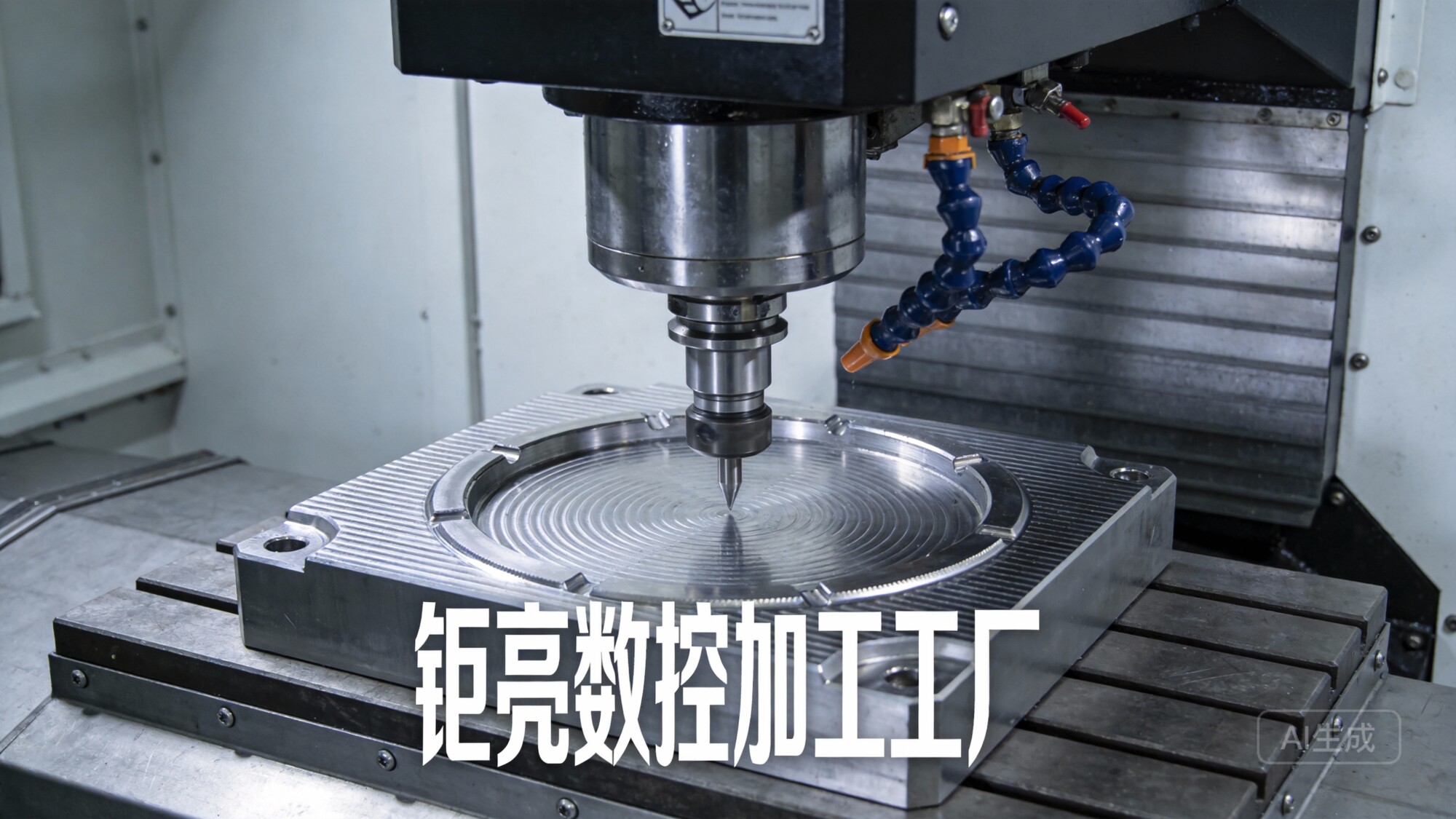
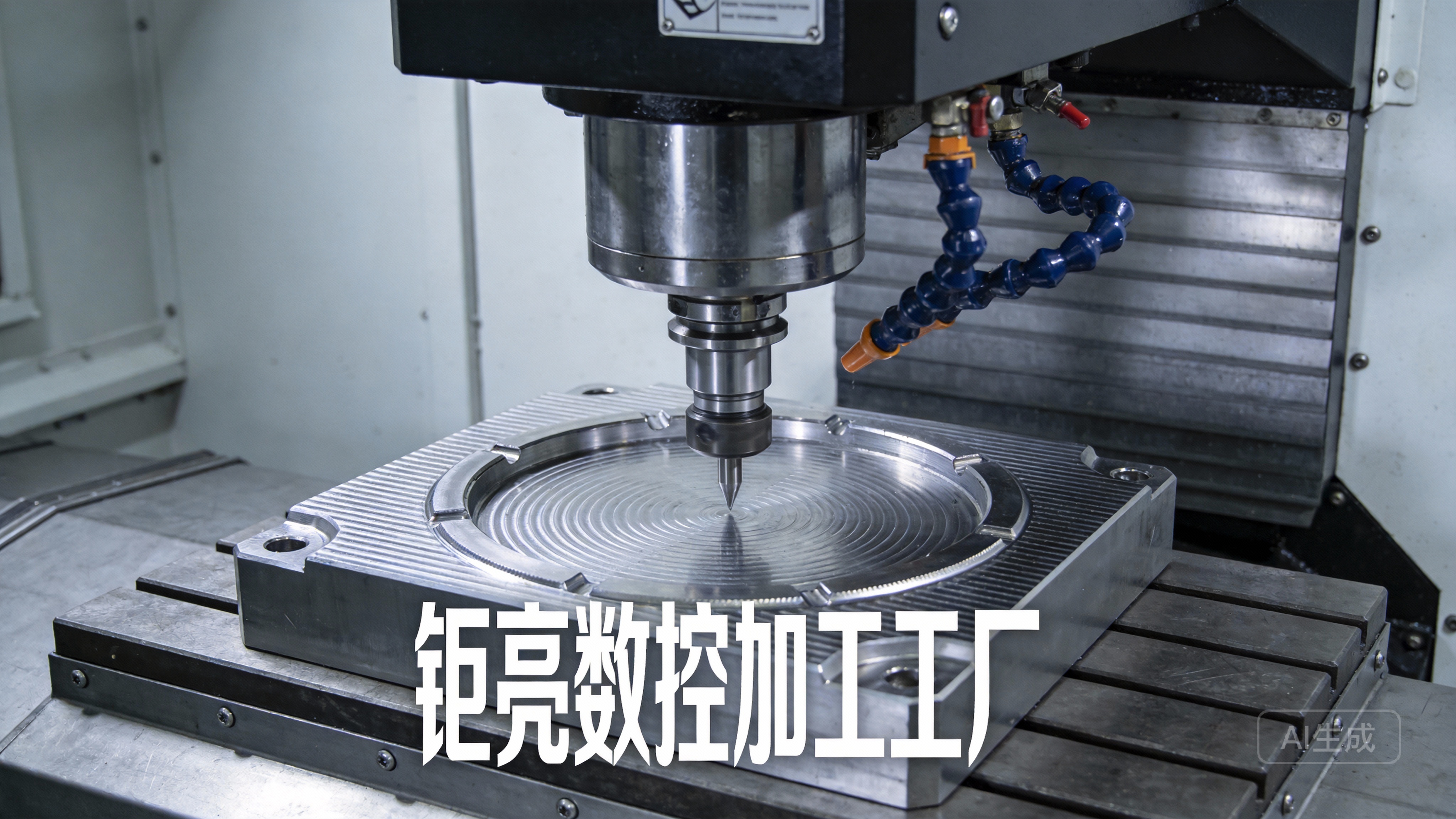
Die casting rarely ends at the press. Critical sealing surfaces, tight tolerance bores, and threaded features almost always demand post-casting CNC machining. The most capable OEMs have 5-axis, 4-axis, and 3-axis CNC machining centres right on the same campus, eliminating the communication gaps and shipping delays that plague multi-vendor supply chains. One-stop surface finishing — anodising, powder coating, electroplating, chemical film, bead blasting — further compresses project timelines.
Quality Management Systems with International Teeth
A professional OEM doesn’t just measure parts; it embeds quality into every process. Certifications such as ISO 9001:2015 form the foundation, but for automotive projects IATF 16949 becomes non-negotiable, and for medical components ISO 13485 proves an equivalent level of discipline. Paper certificates mean nothing without demonstrated adherence; the difference is in a culture of traceability, statistical process control (SPC), and a climate-controlled metrology lab with CMMs capable of micron-level verification.
The Unseen Challenges: Why Most Die Casting Projects Fail Before They Start
Before celebrating a supplier’s capability, it’s worth examining the real pain points that engineering teams encounter when sourcing a Chinese metal die casting OEM. These are not hypothetical — they surface in procurement post-mortems again and again.
The “Precision Black Hole”
Many suppliers advertise a generic ±0.02 mm tolerance, but only a fraction can maintain that across thousands of parts when the mould begins to wear, thermal conditions fluctuate, and operators rush to meet output targets. Without a rigorous SPC programme and regular dimensional audits, even promising first-article inspection reports can turn into a nightmare of field returns.
Fragmented Process Chain
An OEM that only casts parts will inevitably hand them off to a network of small workshops for machining, anodising, and assembly. Every handoff introduces risk: miscommunication on tolerances, contamination, timeline creep, and finger-pointing when defects arise. The client ends up playing project manager for a chain they didn’t choose.
Certificate Inflation
A framed ISO 9001 certificate is cheap. A robust quality system that actually follows the plan-do-check-act cycle is expensive. Some factories pass an audit but revert to bad habits the next day. For medical or automotive buyers, discovering mid-project that the supplier’s quality culture doesn’t match the paperwork is a costly lesson.
Material Integrity Loopholes
A professional Chinese metal die casting OEM should never substitute materials without explicit approval. Yet, cost pressure sometimes leads to recycled alloys with inferior mechanical properties. The only defence is a partner who provides full material certification, spectrographic analysis per batch, and mechanical test coupons that prove tensile and yield strength remain within specification.
A Tale of Two Paths: How an Integrated OEM Rescued a High-Stakes Product Launch
Let’s put a face to these abstractions. Consider a mid-sized European robotics company that was designing a lightweight exoskeleton for rehabilitation. Their flagship product required a dozen aluminium A380 die-cast structural brackets, each with multiple sealing surfaces and mounting bores that had to align perfectly after assembly. The initial plan was classic: source tooling from one vendor, castings from another, CNC machining from a third, and surface treatment from yet another.
Within weeks, the team was drowning in misalignment. The moulder in China said the castings met print, the machinist claimed the datums were off, and the anodiser blamed contamination. The launch date slipped four times. Finally, the hardware lead pulled the plug and searched for a single professional Chinese metal die casting OEM that could own the entire process under one roof.
They found a partner with:
In-house mould design and flow simulation that predicted thermal distortion and compensated for it in tooling.
Cold-chamber die casting machines integrated with real-time shot monitoring to guarantee density consistency.
A bank of 5-axis, 4-axis, and 3-axis CNC machines that fixtured parts directly after casting, capturing the same datums for every operation.
A dedicated finishing line with automatic part transfer so that no contamination occurred between processes.
An ISO 9001 and IATF 16949 certified quality system with full material traceability and mill certificates.
The result? The first production run of 5,000 bracket assemblies met all dimensional requirements, passed salt-spray and tensile tests, and shipped ahead of the revised schedule. The company not only launched on time but cut total part cost by 18% simply by eliminating redundant logistics and rework. This is not an isolated success — it’s the natural outcome when a die casting OEM operates as an integrated manufacturing system rather than a transaction broker.
Inside GreatLight: The Engineering-Driven Metal Die Casting OEM
Among the many players in China’s manufacturing heartland, one name has quietly built a reputation that matches this integrated model: GreatLight Metal (GreatLight CNC Machining Factory). Founded in 2011 in Dongguan’s Chang’an Town — widely known as China’s capital of precision hardware and mould — the company has grown from a local workshop into a full-service manufacturing partner with over 7,600 square metres of production space and a team of 150 skilled professionals.
What makes GreatLight particularly relevant to engineers searching for a professional Chinese metal die casting OEM is not merely its scale, but the deliberate architecture of its capabilities. The company’s value proposition rests on four interconnected pillars that directly address the pain points outlined above.
1. Comprehensive In-House Equipment Cluster
GreatLight operates a fleet that spans the entire manufacturing chain, making the “one-roof” vision a practical reality. The asset list includes:
Die casting machinery for aluminium, zinc, and magnesium alloys, combined with in-house mould manufacturing using high-speed CNC and EDM.
CNC machining centres ranging from high-precision 3-axis to advanced 5-axis machines from top-tier builders, alongside Swiss-type lathes for micro-components.
Post-processing facilities for anodising, electroplating, powder coating, polishing, laser engraving, and more.
3D printing technologies — SLM for metals, SLA/SLS for plastics — enabling rapid functional prototypes before committing to production tooling.
This concentration of assets means that a part can move from raw alloy ingot to a finished, coated, and CMM-inspected component within days, not weeks. The data capture along the way — SPC charts, inspection reports, material certifications — stays unified in a single digital record.
2. Certifications That Translate to Process Discipline
It’s easy to list certificates; it’s much harder to live them every hour on the shop floor. GreatLight’s quality framework includes:
ISO 9001:2015 — the universal baseline for quality management, applied to all processes.
ISO 27001 — critical for clients with IP-sensitive designs, ensuring data security around technical packages and CAD files.
ISO 13485 — enabling production of medical device components with the requisite risk management and regulatory controls.
IATF 16949 — the global automotive sector mandate, ensuring defect prevention, continuous improvement, and supply chain accountability that benefits every industry, not just automotive.
What this means in practice is that every die casting project — whether it’s a 50-unit prototype run or a 50,000-part serial production — follows the same FMEA-driven process planning, first-article inspection, and ongoing SPC monitoring. When GreatLight ships a batch of aluminium die-cast engine housings, the accompanying quality dossier includes spectrographic chemistry, mechanical property test coupons, X-ray porosity analysis (where applicable), and full dimensional reports linked to cavity numbers.
3. Engineering Collaboration as a Standard Service
The most cherished advantage of a professional Chinese metal die casting OEM is not the machine list but the engineering brainpower that comes with it. GreatLight assigns experienced process engineers to every program, not just as estimators but as collaborative design partners. Their typical contributions include:
Design-for-manufacturability (DFM) feedback — reviewing wall thicknesses, draft angles, gating location, and parting lines before tooling is cut.
Material selection guidance — helping clients weigh the trade-offs between A380, A360, ADC12, or ZAMAK based on corrosion resistance, strength, and cost.
Tolerance stack-up analysis — ensuring that stack-ups across multiple parts achieve functional assembly targets, not just individual print tolerances.
Cost optimisation — suggesting feature modifications that reduce secondary machining, enhance tool life, or switch from 5-axis to 4-axis setups without sacrificing function.
For startups and R&D teams that lack deep manufacturing experience, this engineering partnership often proves more valuable than the parts themselves, compressing learning curves and eliminating costly design iterations downstream.
4. Vertical Integration That Slashes Lead Times
Time-to-market is the universal pressure. GreatLight’s vertically integrated model directly compresses critical path activities. Tooling design begins the moment the PO is signed, and because the tool shop shares a campus with the die casting floor, trial shots and tool corrections happen in the same week rather than a month later. CNC machine fixtures are designed in parallel, so that by the time approved casting samples are ready, the machining line is already set up and programmed. Finishing chemistry and rack design proceed concurrently, so there is no queue at the plating line.
Clients who previously juggled five different vendors often find that a single production order through GreatLight reduces overall lead time by 40–60%, simply by removing the scheduling gaps and transport loops between processes.
Comparing the Landscape: Platform Aggregators vs. Dedicated Manufacturing Partners
The rise of digital manufacturing platforms — brands like Xometry, RapidDirect, Fictiv, and Protolabs Network — has made it easier than ever to upload a CAD file and receive instant quotes for die casting, CNC machining, and sheet metal. These platforms serve a genuine purpose, especially for low-volume prototype work where speed is the primary need. However, for serious production programs that demand tight tolerances, consistent quality, and cost efficiency, the platform model has inherent limitations that a professional Chinese metal die casting OEM like GreatLight overcomes.
| Criterion | Digital Manufacturing Platforms | Professional In-House OEM (GreatLight) |
|---|---|---|
| Process Control | Rely on a network of third-party factories with variable quality standards. One order may land in a top-tier shop; the next in a less capable one. | Direct control over tooling, casting, machining, and finishing. Standardised processes governed by IATF 16949 / ISO 13485 discipline. |
| Traceability | Often limited to batch-level; material certs and inspection reports depend on the individual contractor’s rigor. | Full digital traceability from material melt to finished part. Cavity-specific dimensional and mechanical data available. |
| Engineering Support | Usually transactional — upload file, get quote, receive parts. DFM feedback is generic or crowdsourced. | Dedicated process engineers engage deeply, offering manufacturability analysis, tolerance simulation, and cost-saving ideas. |
| Scalability | Works for small volumes, but scaling up may shift you to an entirely different supplier, resetting the learning curve. | Seamless transition from prototype (10 parts) to full production (100,000+ parts) using the same tooling, processes, and quality team. |
| Cost at Scale | Added markup for platform operation and supplier management can become significant at production quantities. | Direct factory pricing with lean overhead; cost savings compound as volumes increase. |
This is not to say platforms are useless — they’re excellent for exploratory builds. But when the spec sheet calls for ±0.025 mm true position on a die-cast aluminium housing that will be assembled into a medical robot arm, the engineer’s peace of mind rests with a dedicated manufacturer whose reputation is built on that exact type of component.
Other well-regarded western die casting firms such as Owens Industries, RCO Engineering, and PartsBadger provide high-quality services, predominantly in North America. For global customers open to overseas sourcing, the combination of technical depth, certified systems, and cost efficiency positions a top-tier Chinese OEM as a highly competitive alternative — provided the partner is chosen with care.
Practical Guide: Vetting a Professional Chinese Metal Die Casting OEM
Given all this, how should an engineering or procurement team evaluate a potential die casting partner? The following checklist, forged from years of sourcing successes and failures, can sharpen the selection process.
On-Site Mould Making and Maintenance
Ask to see the toolroom. Examine the wire EDM, high-speed milling, and tryout press. A partner who outsources moulds will struggle with lead time and quality iteration.
Metrology Lab and Data Transparency
A climate-controlled CMM room with ISO 17025-accredited capability signals seriousness. Request sample inspection reports; look for evidence of SPC and real-time process capability indices (Cpk).
Material Certifications and Lot Control
Insist on mill certificates from recognised smelters (e.g., Alcoa, Rio Tinto) and ask how the supplier verifies incoming alloy chemistry. A handheld XRF gun at goods-in is a good sign.
Machine Maintenance Logs
Die casting presses and CNC machines that are poorly maintained produce wandering dimensions. A professional OEM will have scheduled preventive maintenance records.
Project Management and Communication
Will you have a single point of contact who understands both engineering and business? Is English proficiency sufficient to avoid misunderstandings on critical specs? A brief videoconference can reveal a lot.
Case Studies and References
Ask for examples of similar projects, ideally in your industry. A capable partner will be proud to share anonymised DFM reports, first-article inspection data, and lead time achievements.
Certification Validity
Check that IATF 16949 or ISO 13485 certificates are current, and verify the scope covers die casting and CNC machining. A valid certificate searchable on the IATF / certifying body database adds confidence.
GreatLight Metal’s clients consistently report that the discovery calls that include these vetting steps quickly differentiate genuine manufacturing experts from intermediaries.
Process Deep-Dive: How an Integrated Die Casting Project Unfolds
To make the abstract tangible, here is a typical workflow when an overseas client engages a professional Chinese metal die casting OEM like GreatLight for a new product.
Phase 1: Technical Alignment and DFM
Within 24–48 hours of receiving a 3D CAD model (STEP, IGES, or native format), the engineering team returns a detailed Design for Manufacturing report. This document addresses:
Draft angle requirements and undercut resolution.
Optimal parting line location and gate type selection.
Wall thickness consistency to minimise sink and porosity.
Suggested tolerances that balance function with yield.
Machining stock allocation for critical surfaces.
Material recommendation matrix with properties and cost.
The client reviews, comments, and iterates; typically, two to three rounds of refinement achieve a tooling-ready design.
Phase 2: Tooling Design and Mold Flow Simulation
Advanced simulation software models the fill pattern, solidification, and potential gas entrapment. The results guide the placement of overflows, vents, and cooling channels so that the mould produces dense, dimensionally stable castings from the very first trial shot.
Phase 3: Trial Shot and First Article Inspection (FAI)
Within three to six weeks, depending on mould complexity, T1 samples are cast. The customer receives a full dimensional layout and material certification. Any required mould adjustments are executed in-house, often within days.
Phase 4: CNC Machining Process Development
In parallel with tooling, the CNC team designs fixtures and optimises toolpaths for 5-axis or 4-axis centres. When approved T1 castings arrive, they move directly to machining for a T-FAI (total first article inspection). CMM reports verify that all machined features meet print.
Phase 5: Surface Finishing and Final QC
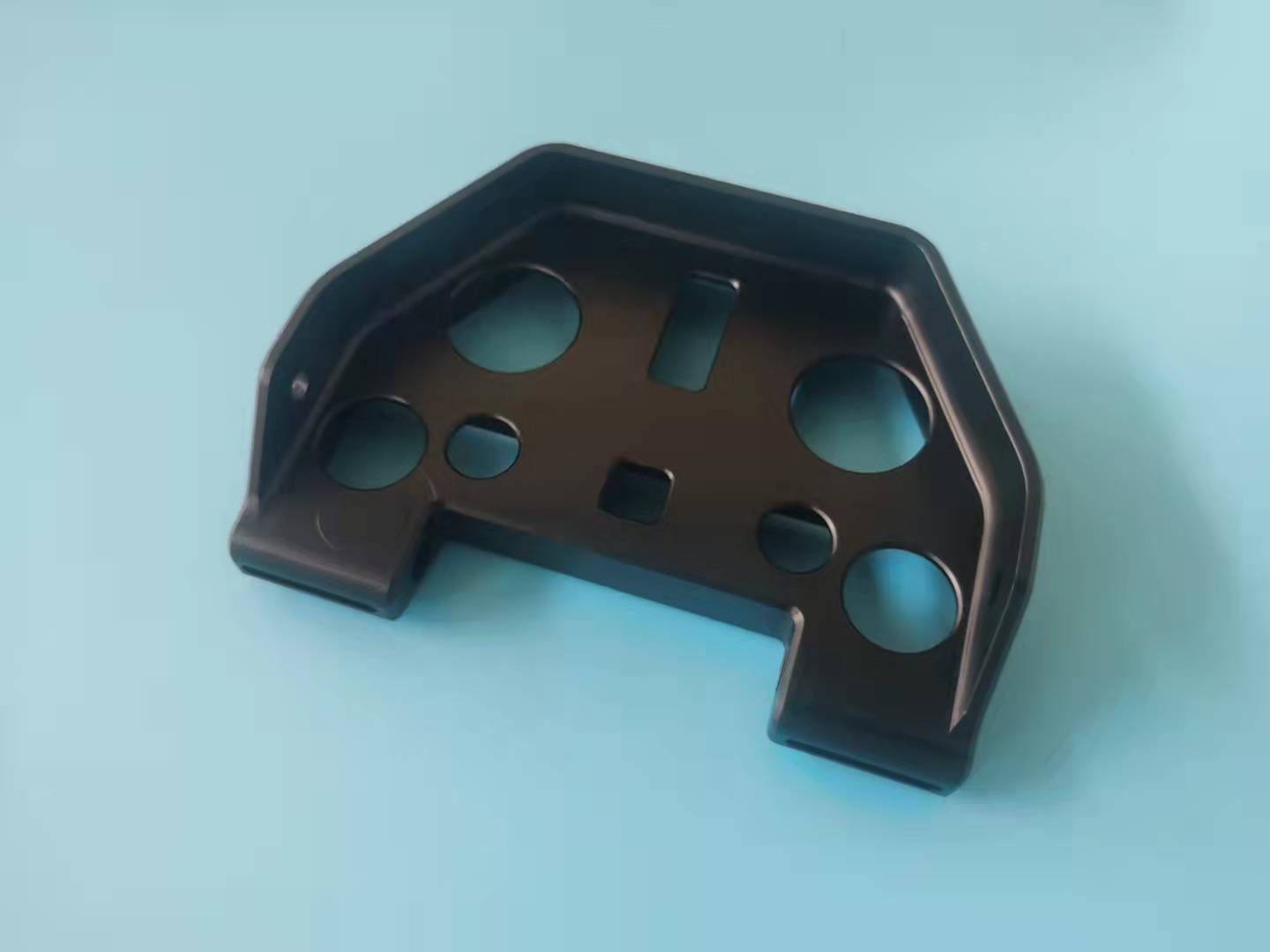
Parts are processed through the required finishing line — e.g., hard anodising for wear resistance, powder coating for aesthetics — and undergo final inspection, including salt spray, adhesion, or hardness testing as agreed.
Phase 6: Mass Production and Ongoing SPC
With the process dialled in, production scales. Control charts track critical dimensions, and process engineers analyse data trends to trigger preventive actions before any non-conformance reaches the customer. Regular shipment samples are retained for traceability.
This integrated rhythm is what transforms a one-time order into a long-term strategic supply relationship, where the OEM becomes an extension of the client’s own engineering team.
Why the Dongguan Ecosystem Matters
Dongguan, and specifically Chang’an Town, is not an arbitrary location — it represents one of the densest concentrations of precision metalworking talent and supply chain infrastructure on the planet. The region houses thousands of tool shops, raw material distributors, heat treatment specialists, and surface finishing experts, all within an hour’s drive. For a professional Chinese metal die casting OEM based there, this means:
Rapid access to high-quality mould steel, alloy ingots, and specialty coatings.
A deep bench of experienced CNC programmers, die cast technicians, and quality engineers.
A hyper-competitive environment that rewards continuous improvement and punishes mediocrity.
Shorter logistics loops, reducing both cost and carbon footprint compared to fragmented global supply chains.
GreatLight’s roots in Chang’an since 2011 mean it has matured alongside the local ecosystem, selecting long-term partners for auxiliary services while keeping core processes under its own roof. This balance between in-house control and regional synergy is a silent advantage that manifests in both price and delivery performance.
The Future-Ready Advantage: Prototyping, 3D Printing, and Digital Integration
Today’s product cycles won’t wait for traditional timelines. A professional Chinese metal die casting OEM that intends to stay relevant must bridge the gap between rapid prototyping and full-scale production. GreatLight addresses this by maintaining an extensive additive manufacturing capability — SLM (Selective Laser Melting) for stainless steel, aluminium, and titanium alloys, alongside SLA and SLS for polymers. This enables a powerful strategy:
Functional Prototypes Without Tooling — 3D-printed metal parts validate form, fit, and even limited function, allowing design freeze before investing in multi-cavity die casting tooling.
Bridge Production — For initial market pilots of a few hundred units, SLM parts can fill the gap while die cast tooling is being fabricated, enabling an early product launch.
Spare Parts and Maintenance — Obsolete or low-volume components that no longer justify pulling a die from storage can be economically 3D-printed on demand.
This combination of die casting and additive manufacturing under one roof is a competitive moat that few suppliers, whether platform-based or traditional, can claim. It means a single PO can cover the entire lifecycle of a part from concept to end-of-life service.
Selecting Your Long-Term Partner: A Decision That Compounds
Engineering and procurement teams that treat supplier selection as a transactional event often pay a steep price later. Issues like inconsistent quality, delayed shipments, and IP leaks erode brand reputation and market share in ways that a slightly lower unit price can never compensate. Conversely, choosing a professional Chinese metal die casting OEM with a proven integrated model becomes a force multiplier: internal resources focus on innovation rather than firefighting, product costs decline through design feedback, and the supply chain becomes a competitive advantage in itself.
GreatLight Metal, with its decade-plus track record, ISO and IATF certifications, massive in-house equipment cluster, and engineering-centric culture, exemplifies the kind of partner that global OEMs and startups alike are increasingly seeking. In the humanoid robot revolution, for instance, where lightweight aluminium die cast frames must hold micron-level bearing seats and survive millions of cycles, GreatLight’s process control and quality rigour are not luxuries — they are necessities. In electric vehicle power electronics, where die-cast housings double as EMI shields and thermal interface surfaces, the same discipline applies.
When you’re ready to move beyond the limitations of fragmented supply chains and experience the efficiency of a truly integrated manufacturing partner, the path forward becomes clear. The future belongs to those who leverage the power of a professional Chinese metal die casting OEM that combines deep craft with systematic excellence. It’s not about finding a lower price; it’s about finding a partner who makes your entire project more successful.


![[访谈] RAPID + TCT 2024:人工智能对 3D 打印的价值](https://print-ing.com/wp-content/uploads/2024/07/INTERVIEW-60x60.jpeg "[访谈] RAPID + TCT 2024:人工智能对 3D 打印的价值 9")



发表回复
要发表评论,您必须先登录。