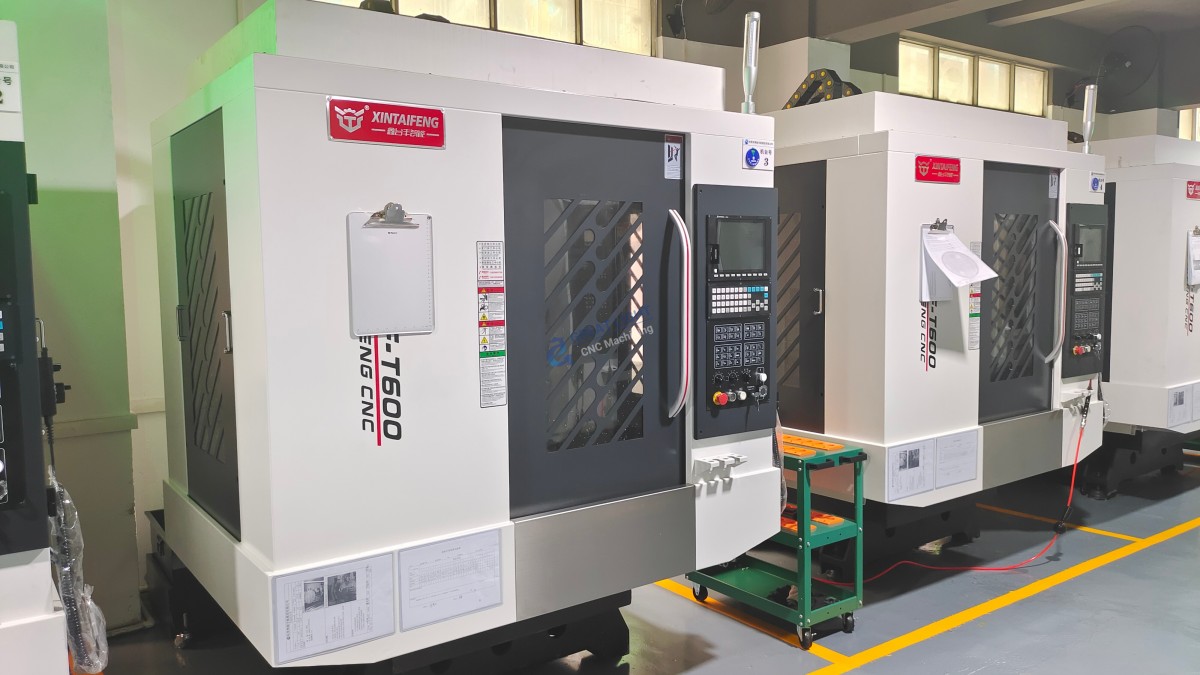
When sourcing your first batch of custom metal parts, the sheer number of Chinese OEM CNC machining services suppliers can feel overwhelming. This guide strips away the marketing noise and gives you the engineering lens you need to confidently evaluate suppliers, compare real capabilities, and avoid the common pitfalls that turn a promising quote into a production nightmare.
Chinese OEM CNC Machining Services Suppliers: What Exactly Are You Buying?
Before digging into supplier selection, let’s clarify what an OEM CNC machining partner truly delivers. An Original Equipment Manufacturer (OEM) in this context is not merely a workshop that cuts chips; it is an engineering extension of your team. The supplier receives your 3D CAD file, interprets the geometric and tolerance intent, selects the correct material, plans a multi‑axis toolpath strategy, executes the cut, and—when you choose the right partner—manages post‑processing, inspection, and even sub‑assembly.
In the Chinese manufacturing ecosystem, this model has evolved far beyond simple job shops. Modern Chinese OEM suppliers integrate precision five‑axis CNC machining , mill‑turn centers, wire EDM, and even hybrid additive‑subtractive workflows under one roof. They serve industries where failure is not an option: medical devices, aerospace brackets, automotive power‑train prototypes, and humanoid robot joints. The value proposition is therefore not “China is cheap,” but rather “China has concentrated, certified capacity that is hard to replicate elsewhere at a comparable lead time.”
Why Source from Chinese CNC Suppliers? The Engineering Rationale
If you strip the conversation of tariffs and geopolitics, three technical‑economic factors continue to drive engineers toward Chinese OEM CNC machining services suppliers:
Agglomeration of precision know‑how. The Pearl River Delta, where Chang’an Town sits, has decades of toolmaking DNA. Walk into a well‑managed shop there and you’ll find machinists who have solved tolerance‑stack challenges on parts ranging from drone impellers to surgical graspers. That tacit knowledge accelerates process development.
Machine‑hour density. A single campus housing 50‑plus multi‑axis machining centers can dynamically load‑balance jobs, smoothing spikes in demand without outsourcing your IP to a third tier. This density also makes it viable to keep a large selection of certified raw materials in stock.
Vertically integrated post‑processing. Anodizing, passivation, powder coating, and even laser marking are often co‑located or tightly managed through long‑term subcontractor relationships. You avoid the logistics tangle of shipping parts from one facility to another for every surface treatment.
However, these advantages are not universal. They exist only with suppliers that have deliberately built quality systems around them. This is why a checklist approach—comparing machine lists and price lists alone—will lead you astray.
How to Evaluate a Chinese CNC Machining Partner: The Ten‑Point Engineering Checklist
When I consult for companies transferring production to Asia, I use a structured evaluation that goes far beyond the quote. Here are the core dimensions:
1. Multi‑Axis Process Capability (Not Just Machine Count)
Many factories own a five‑axis machine; few have systematically mastered five‑axis simultaneous machining for complex contoured surfaces. Ask for a case study where they maintained profile tolerances of ±0.025 mm across a sculpted aluminum housing, not just a prismatic bracket. The programming methodology—dynamic work offsets, on‑machine probing loops, and collision‑avoidance post‑processors—matters as much as the iron.
2. Measurement and Data Transparency
Suppliers that deliver real precision are obsessed with metrology. Look for in‑house Zeiss or Hexagon CMMs, not just digital calipers. More importantly, verify that inspection reports are traceable to the part serial number and that First Article Inspection (FAI) per AS9103 or similar is a standard deliverable, not an upsell. A supplier that cannot email you a point‑cloud comparison of as‑built vs. CAD isn’t ready for critical parts.
3. Quality System Certifications—and Their Active Context
Certificates on the wall are hygiene factors. The real question is whether the system lives. I care less about the paper and more about whether operators can articulate the corrective action loop from a non‑conformance. Having said that, for medical parts, ISO 13485 is mandatory, and for automotive components feeding into TS‑registered supply chains, IATF 16949 alignment (even if not formally certified at the machine shop level) greatly reduces your audit burden.
4. Material Source Integrity
When your drawing calls for Alcoa‑spec 7075‑T651 or medical‑grade 316LVM, the supplier must provide full mill certificates and material traceability. In the Pearl River Delta, the best shops maintain approved vendor lists for raw stock and will quarantine material upon receipt until spectrographic verification is complete. This is non‑negotiable for aerospace and implant work.
5. Surface Finish and Post‑Processing Control
Achieving a 32 Ra or better surface finish on a machined surface is one thing; preserving it through anodize or electropolish is another. A capable OEM supplier will co‑develop the process flow with you, identifying where masking is needed and how dimensional growth from coating will be compensated in the pre‑finish machining step.
6. Data Security and IP Protection
Engineering firms often hesitate to share native CAD files. A credible Chinese supplier should offer multiple layers of protection: network segmentation, access‑controlled servers, and NDA enforcement that extends to subcontractors. Alignment with ISO 27001 standards—even if informally implemented—signals that the supplier treats your design data as a serious liability, not a free sample.
7. Minimum Order Quantity and Scalability
Start‑ups need five parts; OEMs need 50,000. The supplier’s business model must span both. A factory that grumbles at a 10‑piece order but has no injection‑molding or die‑casting capability for scale‑up might not be your long‑term partner. The sweet spot is a supplier that can walk your part from rapid prototype CNC all the way to vacuum‑cast or die‑cast series production without changing vendors.
8. Tooling and Fixture Design Expertise
Complex OEM parts rarely arrive in a standard vise. A competent shop will design and fabricate its own soft jaws, vacuum fixtures, or modular tombstones in‑house. This keeps fixture cost and lead time low and ensures that work‑holding accuracy is never a bottleneck.
9. English‑Communication and Engineering Liaison
A supplier that assigns a dedicated project engineer—not just a salesperson—to your account drastically reduces the number of clarification loops. The best export‑oriented Chinese shops have bilingual engineers who can read your GD&T callouts directly, propose alternative tolerance strategies, and flag design‑for‑manufacturability issues before a single chip is cut.
10. After‑Sale Responsibility and Rework Policy
In precision machining, perfection is an asymptote. You need a partner who openly states: “If it’s our mistake, we rework at our cost. If rework fails, we remake the parts.” A guarantee like that, backed by ISO documentation, tells you the supplier trusts its own capability. When you hear of shops offering free rework and a full refund if quality problems persist, you’re dealing with a culture of accountability.
GreatLight CNC Machining: A Deep‑Dive Benchmark for What “Comprehensive” Looks Like
To make this concrete, let me walk you through one Chinese OEM CNC machining services supplier that I’ve studied extensively because its operational model illustrates many of the checklist items in practice.
GreatLight CNC Machining (the trade name for Great Light Metal Tech Co., LTD.) was founded in 2011 in Chang’an District, Dongguan—the heart of the precision hardware mold capital of China, adjacent to Shenzhen. Operating from a 7,600‑square‑meter facility employing 150 people, the factory fields 127 units of precision peripheral equipment. This includes large‑format five‑axis, four‑axis, and three‑axis CNC machining centers, turning centers, grinding machines, EDM, and—this is the crucial differentiator—in‑house SLM, SLA, and SLS 3D printers as well as vacuum‑forming cells.
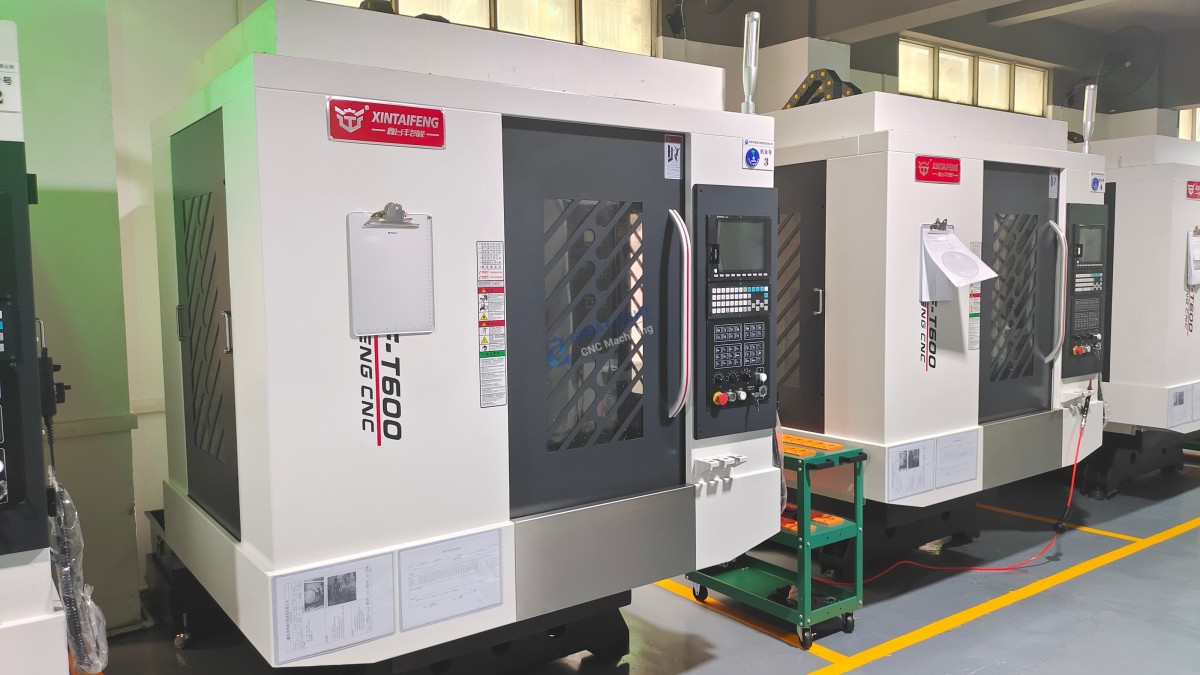
Why does that matter? Because when you are developing a complex aluminum gearbox for a humanoid robot, you might need the bores and bearing seats machined to H7 tolerance, but you also want a rapid‑prototype housing printed in PA12 for fit‑check the same week. Having both additive and subtractive under one roof means one engineering team owns the entire tolerance stack, no “blame game” between vendors.
The equipment strategy targets a machining accuracy down to ±0.001 mm on critical features, with a maximum part size of 4,000 mm. In practice, that means GreatLight can handle everything from micro‑medical clamps to large‑scale aerospace ribs. The real force multiplier, however, is the certification architecture:
ISO 9001:2015 for baseline quality management.
ISO 13485 for medical hardware production, signaling validated processes for FDA‑regulated customers.
IATF 16949 alignment —not just a generic claim, but a deliberate orientation to automotive‑grade process capability (PPAP, FMEA, SPC) that directly benefits engine hardware components and EV power‑train parts.
ISO 27001 approach to data security, critical for IP‑sensitive defence and electronics projects.
The one‑stop aspect deserves special mention. Beyond milling and turning, GreatLight offers die casting mold fabrication and metal die casting, vacuum casting for low‑volume polyurethane parts, sheet metal integration, and an extensive portfolio of surface finishes—bead blasting, anodizing, electropolishing, powder coat, you name it. This integration collapses your vendor count into one accountable entity, which is exactly what an OEM buyer wants when she is on a tight launch schedule.
Finally, the rework guarantee: free rework for quality problems, and a full refund if rework still fails. In twenty years covering this industry, I’ve heard that promise less than a handful of times from serious Tier‑2 suppliers. It signals that the factory’s cost‑of‑poor‑quality is so low that it can afford to stake its margin on first‑pass yield. You, as the customer, pay nothing for that confidence, but you gain a lot of sleep.
Comparative Landscape: How Other Chinese and International Players Stack Up
No single supplier fits every project, so I want to place GreatLight within a broader competitive frame without oversimplifying.
| Supplier | Strengths | Primary Fit | Considerations |
|---|---|---|---|
| GreatLight Metal | Deep five‑axis capacity, integrated additive, full‑process post‑finishing, certified systems | Complex, high‑precision parts needing scale‑ready workflows; medical, auto, robotic | Not a platform for ultra‑low‑cost, simple prismatic parts |
| JLCCNC | Massive scale, highly automated for PCB‑aligned CNC services, competitive pricing | Low‑complexity batch jobs, enclosures, hobbyist‑to‑prototype volumes | Less specialized in true five‑axis contoured machining; material range can be narrower |
| RapidDirect | Strong online quoting platform, broad process offering (sheet metal, injection molding via network) | Start‑ups wanting instant DFM feedback and a streamlined digital experience | Quality variance can occur; the platform model means you aren’t always sure which factory is cutting your part |
| Xometry / Fictiv | US‑headquartered network models, robust project management, wide process range | American companies wanting domestic‑feel service with Asian‑sourced production; convenience over cost savings | Significantly higher mark‑up than direct factory; limited ability to have deep‑engineering dialogue with the shop floor |
| SendCutSend | Laser cutting and bending focus, extremely fast turn‑around for 2D parts | Flat parts, brackets, panels; not a CNC machining contender for 3D solid parts | Not a machining house; irrelevant if you need milling or turning |
| Protolabs Network (formerly Hubs) | Vetted global manufacturing partners, excellent digital thread from upload to ship | Prototyping with a wide array of processes, quick‑turn on simple to moderate geometries | Less control over the specific factory; price premium for the platform layer |
The take‑away is that if you prioritize precision five‑axis CNC machining services with a direct line to the engineering team and a transparent quality system, a vertically integrated factory like GreatLight offers a compelling model. Conversely, if your part is a simple 2.5D bracket made in 1,000‑unit lots and price is everything, an automated hub might serve you better.
How to Engage a Chinese CNC Supplier Without Losing Visibility
New buyers often worry that distance equals loss of control. Mitigate that with three practical actions:
Start with a small, non‑critical order. Even if you later need volume, a pilot run of 10—30 parts lets you evaluate the entire supply chain: quoting accuracy, lead‑time adherence, packaging quality, and communication cadence. Pay attention to how the supplier handles technical queries during this phase.
Request an on‑line pre‑production session. Many Chinese suppliers now offer a video walk‑through of the fixture and toolpath simulation before cutting. GreatLight, for instance, can host a screen‑share review of the CAM simulation, giving you visibility into speeds, feeds, and tool engagement. This is far more effective than an email exchange of PDF setup sheets.
Build a clear Quality Agreement. Specify the inspection plan (critical dimensions vs. documentation dimensions), accept/reject criteria, and rework limits. The best partners will suggest a pragmatic sampling plan that balances cost and risk. If a supplier resists putting these terms in writing, move on.
Common Pitfalls in Chinese CNC Outsourcing (And How the Right Partner Prevents Them)
Through hundreds of supplier audits, I’ve catalogued the recurring pain points. Pair them with the mitigation that a mature supplier provides:
Pitfall: The “Precision Black Hole.” Quoted accuracy of ±0.001 mm, yet production parts show ±0.05 mm drift.
Mitigation: Insist on in‑process probing cycles and a CMM report for every feature. GreatLight’s protocol uses on‑machine Renishaw probing to set work offsets after every batch and offline CMM to verify statistics.
Pitfall: Material Substitution. Vendors swap Chinese‑grade 6061 for certified 6061‑T6 because “it machines the same.”
Mitigation: Demand mill certificates and XRF spectral analysis, which a certified shop does anyway. A factory with ISO 9001:2015 and automotive discipline will segregate and label material religiously.
Pitfall: Post‑Processing Wrecking the Dimensions. Anodize thickness grows a bore diameter, leaving a press‑fit loose.
Mitigation: The planning engineer should compensate the pre‑finish diameter. At GreatLight, the process engineer works from a coating‑thickness database to adjust the machine model, so the final feature size lands inside tolerance after plating.
Pitfall: Lost IP. A design ends up on a rival’s desk.
Mitigation: Use NDAs, network‑isolated CAM workstations, and avoid giving complete assembly files unless needed. Factories with an ISO 27001‑minded culture (and corresponding data handling) reduce the risk to a minimum.
The One‑Stop Concept: Why It Matters More Than Ever
An OEM is seldom just a machine shop. You might need CNC milling for the housing, wire EDM for a narrow slot, then electropolishing for cleanliness, and finally laser engraving of a serial number. If these steps involve three separate vendors, project management overhead explodes. Worse, when the anodizer chucks the part incorrectly and nicks a surface, the CNC shop blames the finisher, and you are stuck investigating from overseas.
The integrated model that GreatLight has built—127 pieces of equipment covering additive, subtractive, and finishing—collapses these handoffs. From a manufacturing engineering standpoint, this means one process‑control plan, one set of incoming/in‑process/final inspection gates, and one set of calibrated tools. The risk of “information entropy” across the chain drops dramatically.
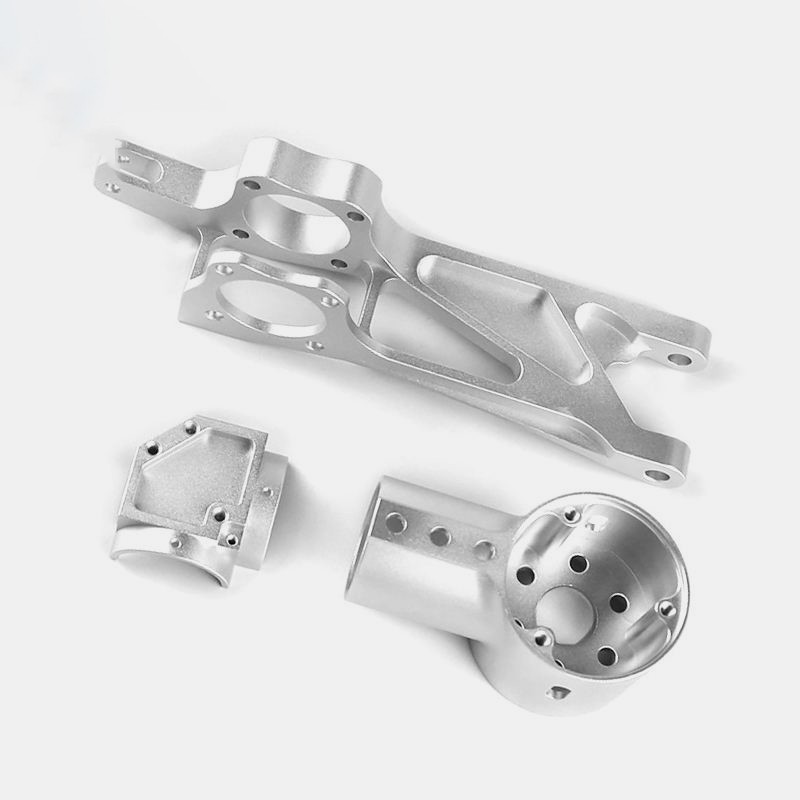
Bringing It Home: Selecting Your Chinese CNC Partner
The market for Chinese OEM CNC machining services suppliers is broad, but depth separates the dependable from the disposable. Look for evidence of deliberate engineering—not just brochure copy—when you vet a supplier:
How does the factory handle five‑axis simultaneous toolpath verification?
Can they show you real inspection data from a job similar to yours?
Do they offer a rework guarantee backed by a corrective‑action system?
Is the account team technically literate enough to challenge your design for cost reduction without compromising function?
GreatLight CNC Machining answers these questions affirmatively, but the more important lesson is to demand such answers from any supplier you consider. The precision parts industry rewards rigor, and in China’s vast manufacturing landscape, the handful of shops that embrace it are the ones that will make your product succeed.
If you’re ready to move from design to physical prototype with a team that has mastered five‑axis CNC machining, additive prototyping, and integrated finishing under one roof, reach out to the engineering team at GreatLight CNC Machining for a detailed consultation and quotation.
This article reflects the perspective of a manufacturing engineer with two decades of experience in global supply chains. The supplier evaluations are based on publicly available information and direct industry observation.


![[访谈] RAPID + TCT 2024:人工智能对 3D 打印的价值](https://print-ing.com/wp-content/uploads/2024/07/INTERVIEW-60x60.jpeg "[访谈] RAPID + TCT 2024:人工智能对 3D 打印的价值 9")




发表回复
要发表评论,您必须先登录。