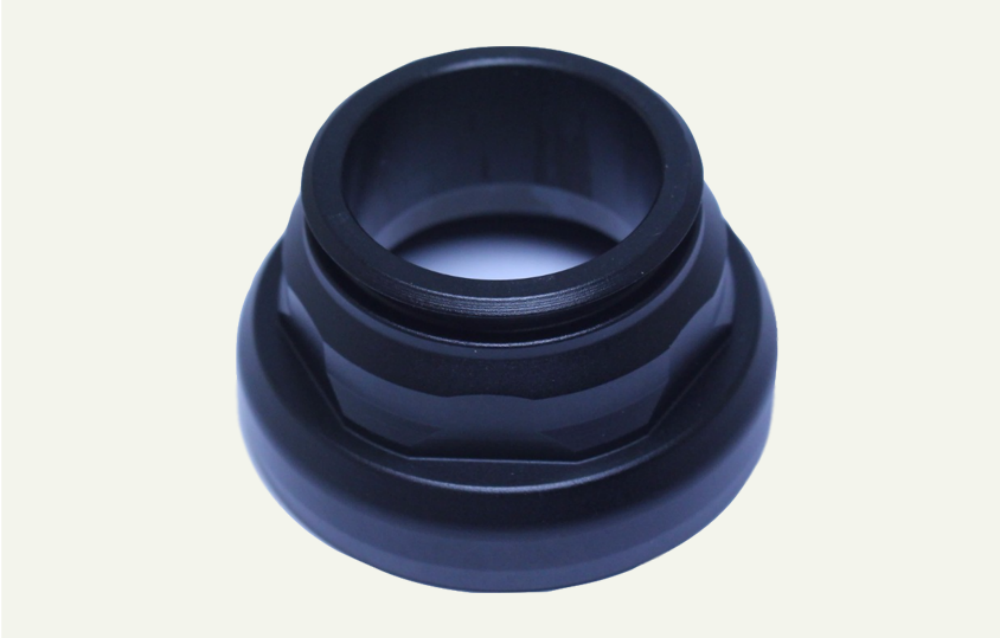
As a manufacturing engineer who has spent years bridging the gap between design intent and physical reality, I’ve seen how Design Driven 4 Axis CNC Machining ODM can fundamentally reshape a product’s journey from concept to volume production. It’s not just about removing material—it’s about integrating engineering insight so early and so deeply that every cutting path, every tolerance, and every surface finish is an intentional answer to a design question. In the following article, I’ll unpack what this ODM model really means, how 4‑axis CNC technology fits into it, why GreatLight CNC Machining Factory has structured its entire operation around this philosophy, and what you as a client should look for to avoid the most common precision‑manufacturing traps.
Design Driven 4 Axis CNC Machining ODM
When we talk about ODM, we’re not describing a simple job shop that reads a 2D drawing and pushes the cycle‑start button. Design‑driven ODM means the manufacturing partner participates in the product development conversation from the first digital model. In the realm of 4‑axis CNC machining, this participation is especially powerful, because it allows the machining strategy itself to influence part geometry—reducing assembly steps, consolidating features, and improving structural integrity without waiting for a design freeze.
A conventional machining vendor might accept a final STEP file and tell you whether it can be made. A design‑driven ODM partner will challenge that file before it’s final: can we eliminate an undercut by repositioning the fourth axis? Would a slight draft angle let us hold parallelism over a 300 mm span? Should we split this housing differently so that seal surfaces can be cut in a single setup? These questions are not scope creep; they are the essence of design‑for‑manufacturing excellence, and they are what separate a transactional supplier from a co‑engineering partner.
The Technical Fabric of 4‑Axis CNC Machining
To appreciate the ODM value, you first need to understand what the fourth axis actually brings to the table. A 3‑axis machine moves a tool in X, Y, and Z, cutting from a single orientation. A 4‑axis machine adds a rotary axis—typically an A‑axis wrapping around the X travel—that either indexes the part between toolpaths or, in continuous mode, smoothly rotates the workpiece while the tool is engaged.
| Machining Configuration | Primary Value Proposition | Typical Part Candidates |
|---|---|---|
| 3‑axis CNC | Simplicity, fast setup, low cost for prismatic parts | Flat brackets, plates, pocketed covers |
| Indexical 4‑axis | Multiple faces machined in one clamping, reducing fixture changes and alignment errors | Manifolds, housings with side holes, angled faces |
| Continuous 4‑axis | Complex wrap‑around geometries, helical grooves, cam profiles, turbine blades | Impellers, worm gears, square‑to‑round transitions |
In a design‑driven ODM environment, the decision to use indexical or continuous 4‑axis isn’t made after the part is designed—it’s made during the design. For example, if you’re developing a robotic joint housing, a traditional approach might design it as two mirror‑image halves that bolt together. A 4‑axis‑aware ODM engineer might instead propose a monocoque design with internal ribs, machined from a solid billet using indexical 4‑axis cuts, eliminating fasteners, gaskets, and assembly labour. The part becomes lighter, stiffer, and cheaper at scale, even if the billet cost per unit is slightly higher.
Why ODM, and Why Now?
The hardware startup community and many corporate R&D groups have been burned by what I call the “precision black hole.” A vendor promises ±0.025 mm, but after six weeks the delivered parts show 0.1 mm deviation on critical bores, and the response is “that’s within our commercial tolerance.” This happens because most shops are optimized for throughput, not for solving design ambiguity. They expect clean, unambiguous prints, and they don’t invest engineering time in catching issues upstream.
Design‑driven ODM flips that dynamic. The manufacturer’s profit is not just in machine hours; it’s in the long‑term partnership that develops when they help you get to market faster with a more reliable product. For this to work, the ODM must have true concurrent engineering capability: design‑for‑manufacturability (DFM) analysis, materials expertise, post‑processing integration, and quality systems that are audit‑ready. GreatLight CNC Machining Factory has built exactly this capability over more than a decade.
Inside a Design‑Driven 4‑Axis ODM Workflow
Let’s walk through a realistic scenario. A medical device company is iterating on a handheld diagnostic tool. The industrial design calls for a contoured aluminium body with a large LCD window, internal battery cavity, and multiple sensor ports that break out at compound angles. The initial CAD model was created with 5‑axis machining in mind, but budget constraints demand a cost‑optimized approach.
Step 1: Design Review. The ODM team imports the native CAD file (Parasolid, STEP, or even a live Onshape/Fusion 360 shared project). They immediately run a DFM toolset, but more importantly, they look at the part with human eyes that understand 4‑axis capability. They notice that all compound angled ports can be aligned along a single axis if the internal geometry is slightly rotated relative to the outer shape. They propose a small change to the ID wall thickness—keeping it within structural limits—that makes every port machinable with indexical 4‑axis instead of requiring full 5‑axis contouring. This single suggestion cuts machining time by 40% and eliminates the need for specialized fixturing.
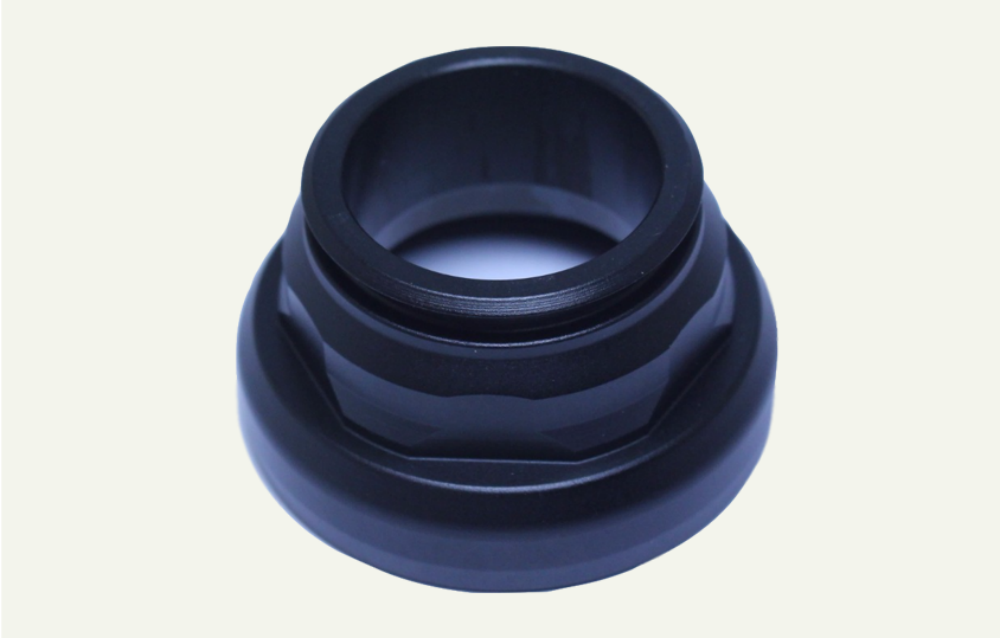
Step 2: Toolpath Simulation. Using advanced CAM software (integrated into their manufacturing execution system), the ODM generates toolpaths and simulates the entire 4‑axis machining cycle. They check for collision between the rotary table, the cutting tool, and the workpiece in every position. They also predict material removal rates and cutter engagement, which allows them to optimize feeds and speeds for both surface finish and tool life.
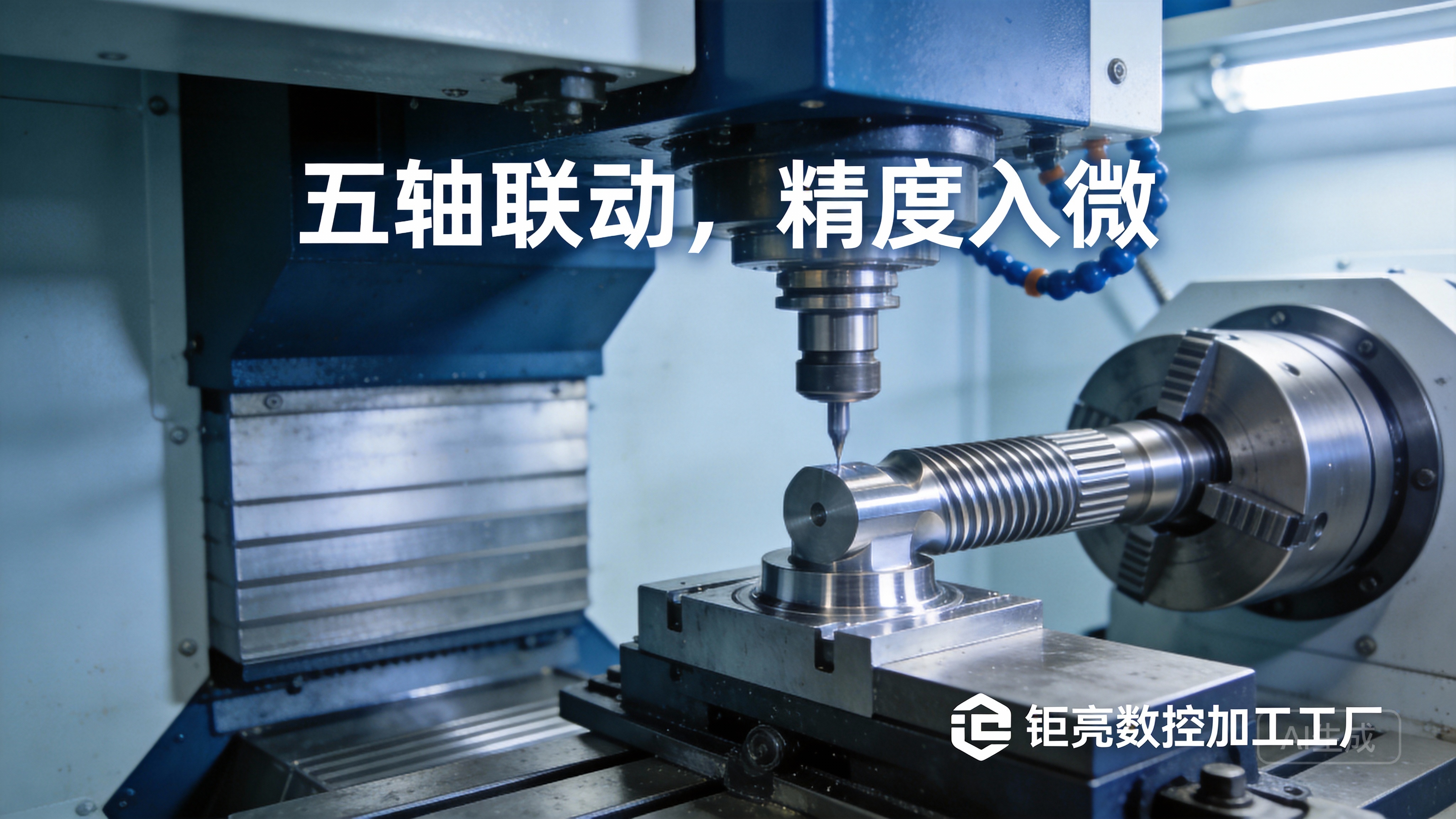
Step 3: Prototype Production. Within days, the first article is cut on a 4‑axis VMC with a precision indexer. GreatLight’s facility—housing over 127 pieces of precision peripheral equipment including multi‑axis CNC machining centres, lathes, and EDM—can turn a block of 6061‑T6 into a fully functional housing. They then apply anodizing, laser engraving, and even conductive gasket installation if required, all under one roof.
Step 4: Inspection and Feedback. The metrology lab uses CMM arms, laser scanners, and optical comparators to generate a first‑article inspection report (FAIR). If the bore for the optical sensor is 2 µm oversize, the team doesn’t just flag it—they trace back whether it was a tool‑deflection issue, a thermal growth issue, or a design tolerance that is unrealistic. They then recommend a slight toolpath adjustment or, if necessary, a small geometric tweak to the part.
Step 5: Design Lock and Volume Ramp. Once the single‑prototype passes, the ODM uses the same CAM program, validated process parameters, and certified materials to transition to pilot runs and then volume production. Because the design was optimized for 4‑axis from the beginning, the cost per unit at 1,000 pieces is often 20‑30% lower than it would have been if the part had been forced through a generic 3‑axis process with multiple setups.
GreatLight CNC Machining Factory’s ODM DNA
GreatLight, founded in 2011 and headquartered in Dongguan’s Chang’an district—often called China’s hardware and mould capital—has been practising design‑driven manufacturing long before “ODM” became a buzzword. The company occupies 7,600 square metres of manufacturing space, with a team of 150 skilled professionals. Annual sales exceed 100 million RMB, but more telling is the range of equipment and processes they control directly.
Their 4‑axis CNC capability is embedded in a much larger ecosystem. They operate high‑precision 3‑axis, 4‑axis, and 5‑axis CNC machining centres, alongside lathes, milling machines, grinding machines, and EDM. This means that a single part might start with 4‑axis milling, get a precision‑ground datum, and then receive a mirror EDM finish on a seal surface—all tracked under one QMS. If the design later requires a die‑cast version for higher volumes, they have in‑house vacuum casting and die casting expertise. If a complex internal lattice can’t be machined, they can 3D print it in aluminium alloy (SLM) or stainless steel, and then finish‑machine critical interfaces. This level of process integration is exceptionally rare and is what allows their ODM engineers to think holistically.
But hardware is only half the story. The other half is trust, codified in an uncompromising quality management system.
The Certifications That Enable Design‑Driven ODM at Scale
When you share a half‑baked design with an ODM partner, you aren’t just sharing geometry—you’re sharing intellectual property, market timing strategies, and often regulatory risk. GreatLight’s posture toward quality and compliance is foundational to acting as an extension of your own engineering team.
ISO 9001:2015 – The cornerstone. Every process, from initial DFM to final shipping, is governed by documented procedures. If a client requests a deviation, it’s logged, reviewed, and approved with clear traceability.
ISO 13485 – Critical for medical device components. Design‑driven ODM for Class II and Class III medical parts demands strict material traceability, validated processes, and risk management. GreatLight’s medical hardware production operates under this standard, ensuring that a prototype machined today can be replicated identically in a future production run under FDA scrutiny.
IATF 16949 – The automotive industry’s gold standard. For engine components, transmission parts, or humanoid robot joint housings, this certification means the ODM partner understands PPAP, FMEA, and statistical process control. If you’re developing a next‑gen electric vehicle actuator, the 4‑axis CNC housing can be brought through the full production‑part‑approval process without switching suppliers.
ISO 27001‑compliant data security – While not a public certification badge, the internal practices align with this standard, which is especially important when design files are shared live or stored on shared servers during co‑development.
These are not paper credentials; they are living systems that allow a design‑driven ODM to thrive in regulated industries. When a client in the aerospace supply chain asks, “How do you control for process variation?” the answer is not a guess—it’s a control chart generated by a CMM that is calibrated to NIST‑traceable standards.
Where Design‑Driven ODM Outperforms Commodity Machining Services
To bring this into sharp focus, consider a comparison between the typical job‑shop approach and the design‑driven ODM model that GreatLight embodies. I’ll use a table to illustrate how the client experience diverges at each stage of product development.
| Stage | Commodity Job Shop | Design‑Driven 4‑Axis ODM (GreatLight) |
|---|---|---|
| Concept Phase | Waits for final CAD; no early engagement | Provides DFM feedback on preliminary models; suggests 4‑axis optimizations to reduce part count |
| Design Freeze | Accepts prints “as‑is”; may flag un‑machinable features only after tooling is programmed | Challenges tolerancing and material selection with data; proposes 4‑axis indexing to consolidate setups |
| Prototype | Manufactures to print; delivers parts with basic dimensional report | Cuts prototypes with full inspection; recommends design tweaks to improve cost or function; iterates within days |
| Bridge Tooling / Pilot | May require re‑qualification if switching from prototype supplier; long setup times | Same machines, same programmers, same QMS; seamless transition; 4‑axis process already validated |
| Volume Production | Often significant cost variance due to unforeseen machining challenges | Predictable pricing because the design was optimized for 4‑axis from day one; SPC data ensures CpK >1.33 |
| Post‑processing | Usually subcontracted, adding lead time and communication friction | In‑house anodizing, plating, laser marking, silk‑screening, vacuum casting; single point of accountability |
I’ve seen companies that started with a prototyping vendor like Fictiv or SendCutSend for quick‑turn 3‑axis parts, then struggled to transfer the design to a volume manufacturer because the geometries weren’t optimized for multi‑axis production. A 4‑axis ODM partner circumvents that cliff. Moreover, while platforms like Xometry and Protolabs Network offer incredible convenience for discrete parts, their model is fundamentally a matching service between a file and available machine time; they don’t place a seasoned manufacturing engineer beside your designer for a two‑hour co‑development session. For many simple brackets, that’s perfectly fine. For precision‑engineered components that carry significant functional risk—like a drone swashplate or a surgical stapler jaw—the deep ODM relationship is not a luxury; it’s a necessity.
Real‑World Impact: How One Robotic Ankle Joint Was Transformed
Consider a practical case (anonymized, but typical). A robotics startup was designing a quadruped leg that required a lightweight, high‑stiffness ankle joint housing. Their original design was an assembly of five machined aluminium parts screwed together, with lip seals and O‑rings for the integrated rotary encoder. Total machined components: 5. Assembly time: 45 minutes. Risk: numerous tolerance stack‑ups that could cause the encoder to rub.
The startup engaged GreatLight during the prototyping phase. The ODM engineering team studied the functional requirements and asked a simple question: “Why not make this a single 4‑axis machined part?” They proposed a design where the mounting flanges, encoder cavity, motor bore, and wiring channel were all cut from a single billet of 7075‑T6 aluminium using indexical 4‑axis machining. The complex internal geometry that previously required five separate pieces was now fully accessible to a single ball‑end mill by rotating the part on the fourth axis. The result: one part instead of five, zero assembly time, elimination of four fasteners and two O‑rings, weight reduction of 22%, and a measurable increase in stiffness because material was now continuous. What’s more, the per‑unit cost for a pilot batch of 200 units was actually 15% lower than the original multi‑part design, even after factoring in the more expensive billet material.
This is design‑driven ODM in its purest form. The client retained full ownership of the IP and the functional specification, but the manufacturing partner’s input radically improved the product’s cost‑performance ratio. At the conclusion of this project, the robotics company had a fully validated, IATF‑16949‑backed process waiting for them when they scaled to thousands of units.
Why Clients Globally Choose GreatLight for Design‑Driven 4‑Axis ODM
I’ve walked factory floors in Shenzhen, in the Midwest of the US, and in Emilia‑Romagna. What strikes me about GreatLight’s operation is not simply the list of big‑name 5‑axis machines (though they do have Dema and Beijing Jingdiao equipment among their fleet). It’s the seamless integration of the entire value chain under one roof, coupled with the engineering depth to engage in serious DFM dialogue.
To summarize succinctly:
Equipment Breadth: 4‑axis, 5‑axis, 3‑axis CNC, mill‑turn, Swiss‑type lathes, wire EDM, and mirror‑spark EDM. Max machining envelope 4000 mm, precision to ±0.001 mm (positional) for critical features.
Process Integration: Vacuum casting, sheet metal fabrication, metal/plastic 3D printing (SLM, SLA, SLS), in‑house finishing and surface treatment. This drastically cuts the communication and quality‑control overhead that plagues multi‑vendor programs.
Certification Maturity: ISO 9001, IATF 16949, ISO 13485, and data‑security practices aligned to ISO 27001. That portfolio is rare for a company that also offers agile rapid prototyping.
Global Experience: Serving clients across automotive, medical devices, high‑end consumer electronics, industrial automation, and humanoid robotics. The company exports worldwide and is accustomed to working as a seamless extension of Western engineering teams.
While companies like Owens Industries, RapidDirect, or PartsBadger may excel in fast‑turn CNC parts for North American markets, and Protocase focuses on enclosures, GreatLight occupies a unique niche: a vertically integrated ODM with the technical mojo to handle complex, precision‑critical metal parts from idea to scaled production. And they do this while offering competitive pricing that reflects the cost‑efficiency of Chinese manufacturing combined with the quality rigour of international standards.
Practical Steps for Engineering a Successful ODM Partnership
If you’re considering a design‑driven 4‑axis ODM engagement, here are a few recommendations drawn from years of both succeeding and stumbling:
Share your functional intent, not just geometry. Provide an annotated 3D PDF or a brief document explaining which surfaces are reference datums, which are cosmetic, what loads are expected, and what environment the part will face. An ODM partner armed with this context can make far better suggestions than one who sees only nominal dimensions.
Involve the ODM before the design review gate. I’ve seen too many startups treat the DFM step as a post‑design checkbox. By then, the important decisions are locked. Instead, send preliminary model iterations as early as possible. A good ODM will flag issues within 24 hours and might save you weeks of redesign later.
Ask for process capability data, not just conformance reports. A rejection rate of 1% on a dimension you don’t care about is fine. A Cpk of 0.8 on a bearing bore is not. A design‑driven partner will already be monitoring these metrics and can present them during the sample approval process.
Evaluate the ODM’s post‑processing maturity. A beautiful 4‑axis machined part can be ruined by a poorly controlled anodizing bath. If the ODM has in‑house finishing, ask to see their process validation records. If they outsource, ask who they use and whether that supplier is also covered by their QMS audits.
Negotiate an NDA and IP protection agreement before sharing sensitive designs. For projects where even the existence of the part is confidential, GreatLight offers data‑security measures that align with ISO 27001, including segregated project servers and access controls. This is a critical trust layer that must be in place from day zero.
Looking Ahead
The convergence of additive manufacturing, generative design, and multi‑axis CNC machining is accelerating. Parts that were once impossible to machine are now routine with 5‑axis, but many are still being designed as if only 3‑axis exists. The next frontier for design‑driven ODM is closing that awareness gap: training design engineers to think in terms of rotary axes, simultaneous cutting, and monolithic structures. GreatLight is actively investing in this knowledge transfer, offering DFM workshops and real‑time feedback loops that elevate their clients’ internal capabilities rather than creating dependency.
For those of us who have spent our careers solving manufacturing puzzles, there’s a profound satisfaction in seeing a customer’s eyes light up when they realize that a single 4‑axis machined block can replace an entire bill of materials. That’s the tangible outcome when engineering intent meets manufacturing mastery—and it’s exactly what Design Driven 4 Axis CNC Machining ODM delivers when executed by a partner who wears your product goals as if they were their own.
To explore how GreatLight’s certified, full‑process 4‑axis ODM can de‑risk your next precision hardware project, feel free to review the technical resources they make available online, such as their in‑depth overview of precision 5‑axis CNC machining services. And to stay connected with their engineering community and see real project snapshots, follow their professional journey on LinkedIn.


![[访谈] RAPID + TCT 2024:人工智能对 3D 打印的价值](https://print-ing.com/wp-content/uploads/2024/07/INTERVIEW-60x60.jpeg "[访谈] RAPID + TCT 2024:人工智能对 3D 打印的价值 9")




发表回复
要发表评论,您必须先登录。