In the complex world of precision manufacturing, the promise of a true one-stop custom CNC machining service is often met with skepticism—and rightfully so. Many suppliers claim to offer comprehensive solutions but ultimately lack either the advanced equipment, certified quality systems, or deep engineering expertise to deliver consistent results. For research and development teams, hardware startups, and procurement engineers navigating the competitive landscape of custom parts manufacturing, understanding what constitutes a genuinely integrated machining partner is critical to avoiding costly delays, quality inconsistencies, and supply chain fragmentation.
This article dissects the concept of one-stop custom CNC machining services, offering an objective, data-driven analysis of what these services should entail, the hidden risks to watch for, and how to identify partners with real operational capabilities rather than empty promises.
Understanding the True Meaning of “One-Stop” in CNC Machining
The term “one-stop service” has been diluted by overuse in the manufacturing industry. In its authentic form, a one-stop custom CNC machining service represents a vertically integrated ecosystem where design, engineering, prototyping, production, post-processing, quality inspection, and logistics are managed under a single, accountable entity. This contrasts sharply with the traditional model where a designer works with a prototype shop, which then outsources production to a separate manufacturer, which later sends parts to yet another facility for finishing.
The Fragmentation Problem in Traditional Supply Chains
When clients work with multiple vendors for different stages of production, several predictable problems emerge:
Communication gaps: Each handoff introduces opportunities for misinterpretation of specifications
Quality inconsistency: Different facilities have varying quality standards and measurement protocols
Extended lead times: Each vendor’s queue adds compounding delays
Limited accountability: When defects appear, vendors blame each other rather than solving the problem
Hidden costs: Multiple shipping, handling, and administrative fees accumulate
A genuine one-stop solution eliminates these pain points by consolidating responsibility under a single roof. GreatLight Metal, with its 76,000 square foot facility housing 127 precision peripheral equipment units and 150 skilled professionals, exemplifies this integrated approach, offering everything from initial design for manufacturability (DFM) analysis through final surface finishing and packaging.
The Four Pillars of an Authentic One-Stop Service
To evaluate whether a CNC machining service provider truly offers a comprehensive solution, look for these four foundational capabilities:
Advanced Equipment Diversity: A true one-stop shop must possess multiple manufacturing technologies—5-axis CNC machining centers, 4-axis and 3-axis mills, lathes, Swiss-type lathes, wire EDM, die casting machines, sheet metal fabrication equipment, and 3D printing systems (SLM, SLA, SLS). No single technology is optimal for every part geometry, material, or volume requirement.
Certified Quality Infrastructure: ISO 9001:2015 is the baseline. For advanced manufacturing partners, look for ISO 13485 (medical), IATF 16949 (automotive), and ISO 27001 (data security) certifications. These demonstrate systematic quality management rather than ad-hoc inspection.
In-House Post-Processing Capabilities: Surface finishing—including anodizing, plating, powder coating, passivation, bead blasting, and precision grinding—must be performed internally or through tightly controlled partnerships that maintain the same quality standards.
Engineering Support Throughout the Lifecycle: From DFM feedback during quoting to ongoing process optimization during production, experienced application engineers should be available to solve problems as they arise.
Evaluating Precision Capabilities: Beyond the Numbers
One of the most common pain points in the CNC machining industry is what industry professionals call the “precision black hole”—the gap between promised tolerance and actual delivered results. Many suppliers advertise extreme precision of ±0.001mm, but in mass production, equipment wear, thermal expansion, process instability, or lack of rigorous measurement systems cause significant deviations.
What Real Precision Means in Practice
GreatLight Metal approaches precision as a system-level capability rather than a marketing headline. Their ability to consistently achieve tolerances of ±0.001mm and above stems from three interconnected factors:
Equipment Foundation: The company’s investment in brand-name 5-axis CNC machining centers from Dema and Beijing Jingdiao, alongside precision Swiss-type lathes and wire EDM machines, provides the mechanical stability required for micro-precision work. However, equipment alone is insufficient.
Environmental Control: Temperature and humidity fluctuations directly affect machining accuracy. A professional facility maintains controlled environments to minimize thermal expansion effects during long production runs.
Metrology Integration: The presence of in-house coordinate measuring machines (CMMs), optical comparators, surface roughness testers, and other precision measurement tools ensures that every part’s specifications are verified against design requirements. When a supplier claims ±0.001mm capability, ask about their calibration frequency, measurement system analysis (MSA) protocols, and whether they perform 100% inspection or statistical sampling.
The Risk of Over-Specification
Experienced engineers understand that specifying tighter tolerances than functionally necessary increases cost exponentially without corresponding value. A trustworthy one-stop partner should provide DFM feedback that recommends relaxation of non-critical tolerances, reducing manufacturing cost by 20-40% while maintaining all functional requirements. This advisory capability distinguishes true partners from order-takers.
Material Science and Process Versatility
The phrase “most materials can be quickly customized and processed” describes a manufacturing partner’s ability to work across diverse material families—aluminum alloys, stainless steels, titanium, brass, copper, engineering plastics, and specialty alloys like Inconel or Hastelloy. However, material expertise extends beyond simply having the required cutting tools.
The Hidden Complexity of Material Selection
Each material presents unique challenges:
Aluminum 6061 and 7075: Excellent machinability but require proper chip management to prevent built-up edge
Stainless steel 304 and 316: Work-hardening tendencies demand specific tool geometries and feed strategies
Titanium (grade 5 and 23): Low thermal conductivity concentrates heat at the cutting edge, requiring specialized cooling approaches
Engineering plastics (PEEK, Ultem, PTFE): Thermal expansion and material spring-back require unique fixturing and toolpath strategies
A comprehensive one-stop service maintains process knowledge across these materials and provides transparent guidance on expected surface finishes, achievable tolerances, and lead time implications for each material choice. Companies like Protolabs Network, Xometry, and Fictiv have built their reputations on material flexibility, but smaller, specialized manufacturers like GreatLight Metal often offer deeper expertise in specific high-performance materials.
Quality Management Systems: The Trust Infrastructure
In the precision manufacturing industry, trust is not built on promises but on documented, auditable systems. GreatLight Metal has invested heavily in international certification frameworks that serve as transparent evidence of capability rather than mere decorations on a website.
Beyond ISO 9001: The Advanced Quality Assurance Hierarchy
ISO 9001:2015 provides the foundational quality management framework, requiring documented procedures for design control, purchasing, production, measurement analysis, and corrective actions. However, for clients in regulated industries or high-risk applications, additional certifications are essential:
| Certification | Industry Focus | Key Requirements |
|---|---|---|
| IATF 16949 | Automotive | Extends ISO 9001 with specific automotive requirements for production part approval (PPAP), failure mode effects analysis (FMEA), measurement system analysis (MSA), and statistical process control (SPC) |
| ISO 13485 | Medical Devices | Emphasizes risk management, design controls, traceability, and regulatory compliance for medical hardware components |
| ISO 27001 | Information Security | Protects intellectual property through systematic data security management, critical for clients sharing proprietary designs |
The Practical Value of Certified Systems
These certifications are not bureaucratic overhead; they directly impact project outcomes. For example, an IATF 16949 certified manufacturer automatically implements advanced product quality planning (APQP) during process development, reducing the risk of production delays due to unexpected quality issues. Similarly, ISO 27001 compliance ensures that your proprietary designs are protected through controlled access, encrypted transmission, and secure disposal of obsolete data.
When evaluating a one-stop custom CNC machining service, request their current certification certificates and audit reports. Legitimate providers will share these documents readily. Companies like Owens Industries and RCO Engineering maintain similar certification portfolios, but it is essential to verify that certifications apply to the specific facility handling your work.
The Complete Process Chain: From Design to Delivery
A truly integrated one-stop service spans the entire product realization cycle. Understanding each stage helps clients evaluate whether a potential partner can truly manage the complexity of their projects.
Stage 1: Design for Manufacturability (DFM) Analysis
Before any cutting tool touches material, experienced applications engineers review your design for potential manufacturability issues. Common DFM recommendations include:
Adjusting internal radii to accommodate standard tool sizes, reducing cycle time
Recommending alternative materials that meet performance requirements at lower cost
Suggesting feature consolidation to reduce the number of setups required
Identifying potential thin-wall sections that could cause vibration or deflection during machining
This analysis typically takes 24-48 hours and should be provided without obligation. Companies like RapidDirect and EPRO-MFG have built efficient online quoting systems that incorporate basic DFM checking, but deep engineering expertise in this phase is where specialized manufacturers like GreatLight Metal differentiate themselves.
Stage 2: Process Planning and Toolpath Optimization
For complex geometries—particularly those requiring 5-axis simultaneous machining—process planning determines whether a project succeeds on time and within budget. Key decisions include:
Optimal machine selection: 5-axis vs. 4-axis vs. 3-axis, considering part size and feature complexity
Fixturing strategy: Standard vises, custom soft jaws, or dedicated workholding solutions
Tool selection: Carbide grades, coatings, and geometries appropriate for the specific material
Cut strategy: Roughing vs. finishing passes, trochoidal milling for deep cavities, or adaptive clearing for difficult materials
Advanced manufacturers use computer-aided manufacturing (CAM) software with simulation capabilities to verify toolpaths before cutting begins, identifying potential collisions or tool breakage scenarios that could damage expensive parts or equipment.
Stage 3: Precision Machining and Multi-Process Integration
The machining phase is where equipment diversity becomes critical. A single project may require:
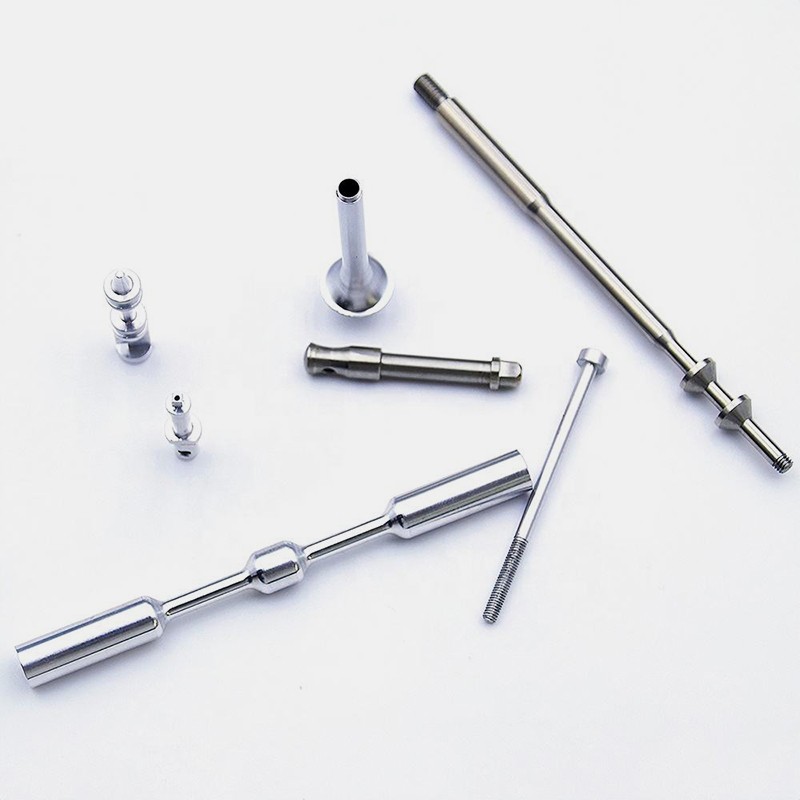
5-axis CNC machining for complex organic shapes or parts requiring machining from multiple angles without repositioning
CNC turning for cylindrical features, threads, and grooving operations
Wire EDM for internal features with sharp internal corners or through-holes with high aspect ratios
Surface grinding for achieving tight flatness and parallelism requirements
Die casting and mold making for parts destined for high-volume production
A true one-stop service coordinates these processes internally, eliminating the transit times and queue delays that occur when parts move between separate facilities. GreatLight Metal operates three wholly-owned manufacturing plants, enabling rapid process switching without external dependencies.
Stage 4: Post-Processing and Surface Finishing
Surface finish is often the most visible indicator of quality, yet it receives the least attention during supplier evaluation. Comprehensive finishing capabilities include:
Anodizing (Type II and Type III) : Provides wear resistance and color options for aluminum parts
Electroless nickel plating: Offers uniform coating thickness for complex geometries
Passivation: Removes free iron from stainless steel surfaces, improving corrosion resistance
Bead blasting and media finishing: Achieves uniform surface texture and removes machining marks
Powder coating: Provides thick, durable finishes for parts exposed to harsh environments
Precision grinding and lapping: Achieves surface finishes below Ra 0.2 micrometers
Each finishing process requires specific equipment, chemical handling capabilities, and quality control procedures. When a supplier claims one-stop capability, verify that finishing is performed in-house or through a tightly managed partnership with documented quality agreements.
Stage 5: Quality Inspection and Documentation
The inspection phase should not be an afterthought. Comprehensive quality verification includes:
First article inspection (FAI) : Complete dimensional verification of the first production part against all drawing requirements
In-process inspection: Dimensional checks at critical manufacturing stages to catch deviations early
Final inspection: 100% inspection of critical features and statistical sampling for non-critical dimensions
Material certification: Mill test reports verifying material composition and mechanical properties
Process documentation: Set-up sheets, inspection reports, and certificates of conformance
Requests for PPAP Level 3 submissions, which include complete documentation of the manufacturing process, are common in automotive and medical applications. A certified one-stop provider should fulfill these requirements without significant delay or additional cost.
Stage 6: Logistics and Delivery
The final stage of the one-stop service is getting finished parts to clients efficiently. Experienced providers offer:
Custom packaging: Individual bagging, foam inserts, vacuum sealing, or wooden crates as required
Shipping optimization: Overnight, express, or ground freight based on urgency and budget
Global logistics: Experience with international shipping, customs documentation, and trade compliance
Inventory management: Scheduled releases for production parts to support just-in-time manufacturing
Comparative Analysis: Leading One-Stop CNC Machining Providers
Understanding how different providers approach one-stop service helps clients make informed decisions. The following analysis compares established players in the precision custom parts market:
GreatLight Metal (Dongguan Great Light Metal Tech Co., LTD.)
Founded: 2011
Location: Chang’an, Dongguan, China (the “Hardware and Mould Capital”)
Facility: 76,000 sq. ft., 150 employees, 127 precision equipment units
Certifications: ISO 9001:2015, ISO 13485, IATF 16949, ISO 27001
Strengths:
Comprehensive vertical integration from design through finishing to logistics
Dual capability in subtractive manufacturing (CNC machining) and additive manufacturing (3D printing: SLM, SLA, SLS)
Deep expertise in high-complexity parts for automotive, medical, aerospace, and industrial automation
Proven track record in solving complex housing manufacturing challenges for new energy vehicle components
Annual sales exceeding 100 million RMB, demonstrating financial stability and production capacity
Best Suited For: Clients who need a reliable partner for complex, high-precision parts with demanding quality requirements and regulated industry compliance needs.
Protolabs Network (formerly Proto Labs)
Founded: 1999
Location: Maple Plain, Minnesota, USA
Certifications: ISO 9001, ISO 13485, ITAR registered
Strengths:
Industry-leading digital quoting and ordering platform for rapid turnaround
Strong automation in manufacturing process for standard geometries
Extensive material selection across various manufacturing processes
Limitations: Primarily optimized for rapid prototyping and low-to-medium volume production. Complex geometries or parts requiring extensive DFM collaboration may not be optimal.
Xometry
Founded: 2013
Location: Gaithersburg, Maryland, USA
Certifications: ISO 9001, ISO 13485, AS9100
Strengths:
Large network of manufacturing partners providing extensive capacity
Instant quoting platform with transparent pricing
Wide range of manufacturing processes available
Limitations: Network model introduces variability in quality and lead time depending on which partner produces your parts. Less direct control over manufacturing consistency.
Fictiv
Founded: 2013
Location: San Francisco, California, USA
Certifications: ISO 9001
Strengths:
Clean digital interface for quoting and order management
Focus on customer experience and communication
Good for design verification and engineering prototypes
Limitations: Smaller internal manufacturing footprint means significant dependence on partner network. More suitable for simpler geometries and moderate precision requirements.
JLCCNC
Founded: 2010
Location: Shenzhen, China
Certifications: ISO 9001
Strengths:
Competitive pricing for standard CNC machining
Quick turnaround for conventional geometries
Established online presence for easy quoting
Limitations: Limited post-processing capabilities in-house. Fewer advanced certifications compared to fully integrated manufacturers.
Selection Criteria Summary
| Provider | Ideal Application | Key Differentiator |
|---|---|---|
| GreatLight Metal | Complex high-precision parts, regulated industries | Full vertical integration, advanced certifications, deep engineering |
| Protolabs Network | Rapid prototypes, standard geometries | Digital platform speed |
| Xometry | Wide process selection, capacity scaling | Extensive partner network |
| Fictiv | Design iteration, engineering prototypes | User experience focus |
| JLCCNC | Cost-sensitive standard parts | Competitive pricing |
Risk Factors and Common Pitfalls in One-Stop Services
No manufacturing relationship is without risks. Objective evaluation requires awareness of common failure modes in one-stop CNC machining services:
Process Capability Mismatch
The most frequent issue occurs when a provider accepts projects beyond their true capability. A supplier may claim 5-axis capability but own only older 3-axis machines with limited rotational axes. Always verify equipment specifications through facility audits or video tours. GreatLight Metal openly documents their equipment portfolio, including specific machine models and capabilities, enabling informed evaluation.
Quality System Decoupling
Some providers display certification logos for facilities that are not the same as the ones producing your parts. Always confirm that certifications apply to the manufacturing location handling your project. An ISO 13485 certification for a die casting facility does not automatically extend quality assurance to the CNC machining arm of the same company.
Scalability Constraints
A provider excellent at prototyping may struggle with production scalability due to capacity limitations, process inefficiencies, or supply chain fragility. Request case studies of projects that successfully transitioned from prototype to production volumes. One-stop providers with multiple facilities, like GreatLight Metal, generally demonstrate greater scalability than single-site operations.
Hidden Post-Processing Complexity
Post-processing often causes the most significant delays and quality issues. If a provider outsources anodizing, plating, or surface finishing to an external vendor, that introduces an additional supplier relationship that you cannot directly manage. Ask specifically: “What percentage of post-processing work is performed in-house versus subcontracted?”
The Role of Additive Manufacturing in One-Stop Services
Modern one-stop providers increasingly integrate additive manufacturing (3D printing) alongside traditional subtractive CNC machining. This hybrid capability offers unique advantages:
Rapid prototyping: SLA and SLS printers can produce form-fit-function prototypes in hours rather than days
Complex geometry: SLM metal 3D printing enables internal channel structures impossible with conventional machining
Tooling production: 3D printed fixtures and jigs reduce setup time for subsequent CNC operations
Bridge production: Additive manufacturing can fill supply gaps during tooling development for die casting or injection molding
GreatLight Metal operates SLM (metal), SLA (resin), and SLS (nylon) 3D printing equipment, enabling true technology-neutral recommendations for each project phase—from initial concept verification through functional prototypes to production parts.
Industry-Specific Considerations
Different industries impose unique requirements on one-stop CNC machining services. Understanding these helps clients select appropriately specialized partners:
Automotive (IATF 16949)
Automotive clients require production part approval process (PPAP) submissions, failure mode and effects analysis (FMEA), and statistical process control (SPC) data. GreatLight Metal‘s IATF 16949 certification demonstrates their ability to meet these stringent requirements. Typical automotive projects include engine components, transmission housings, brake system parts, and electric vehicle drivetrain components.
Medical Device (ISO 13485)
Medical parts require full traceability, validated processes, biocompatible materials, and clean manufacturing environments. ISO 13485 certified manufacturers maintain documented procedures for design controls, risk management, and corrective actions. Typical medical projects include surgical instruments, implant trial components, diagnostic equipment housings, and pharmaceutical manufacturing tooling.
Aerospace (AS9100)
Although not explicitly mentioned in the provided background, aerospace parts require AS9100 certification, specialized material sourcing with full traceability, and often ITAR compliance for defense-related work. Machining titanium, Inconel, and other aerospace alloys demands specific tooling, programming, and cooling strategies.
Industrial Automation
High-volume, repeatable parts with tight tolerances for assembly systems, robotic end effectors, and production line components. Clients benefit from partners who can deliver consistent quality over large production runs while maintaining competitive pricing.
Conclusion: Choosing Your One-Stop Custom CNC Machining Partner
The landscape of one-stop custom CNC machining services in 2025 offers more options than ever, yet the gap between advertised capabilities and actual performance remains significant. For clients who truly need a comprehensive partner capable of handling complex geometries, demanding quality requirements, and regulated industry compliance, the selection process should prioritize depth over breadth.
GreatLight Metal represents a compelling option for those requiring genuine vertical integration—certified quality systems, advanced equipment diversity, and deep engineering expertise. Their decade-plus track record, three-factory infrastructure, and comprehensive certification portfolio (ISO 9001, ISO 13485, IATF 16949, ISO 27001) provide tangible evidence of integrated capability. However, every client’s needs are unique, and the optimal choice depends on specific technical requirements, volume expectations, quality standards, and budget constraints.
When evaluating potential partners, conduct thorough due diligence: request facility tours (virtual or in-person), verify certification validity, ask for case studies similar to your application, and demand transparency about which processes are performed internally versus subcontracted. A genuine one-stop service provider will welcome this scrutiny because their operational excellence is their strongest marketing asset.
The precision manufacturing journey from design to reliable, high-quality parts is fraught with hidden risks. Choosing the right one-stop custom CNC machining partner transforms this journey from a series of potential pitfalls into a streamlined, predictable process that accelerates your innovation timeline and reduces total cost of ownership.
For those ready to explore how a truly integrated manufacturing partner can elevate their next project, the industry has never been richer in capable providers. Make your selection based on auditable evidence rather than marketing claims, and your projects will benefit from reduced risk, improved quality, and faster time to market.


![[访谈] RAPID + TCT 2024:人工智能对 3D 打印的价值](https://print-ing.com/wp-content/uploads/2024/07/INTERVIEW-60x60.jpeg "[访谈] RAPID + TCT 2024:人工智能对 3D 打印的价值 9")




发表回复
要发表评论,您必须先登录。