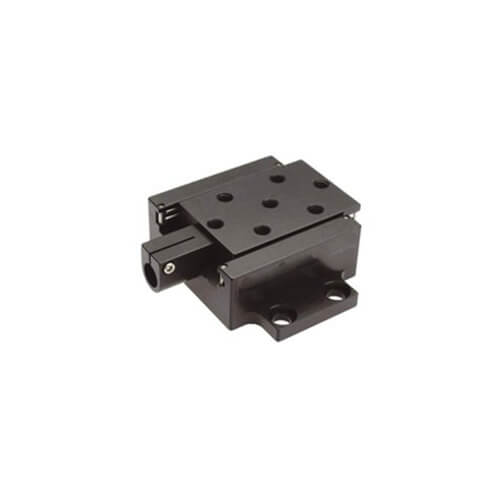
In the realm of modern manufacturing, the quest for superior precision and reliable serial production has elevated Professional CNC Machining Services OEM from a niche requirement to a strategic necessity. Original Equipment Manufacturers (OEMs) across sectors like robotics, automotive, medical devices, and aerospace depend on expertly crafted metal and plastic components that must function flawlessly within complex assemblies. Yet, transforming a CAD model into a dimensionally accurate, surface-finished, and repeatably produced part is no trivial task. It demands far more than a milling machine and a promise of accuracy. This article dissects what truly constitutes professional CNC machining OEM services, exposes the hidden pitfalls procurement engineers face, and offers a transparent framework for selecting a manufacturing partner that delivers on both technical specifications and operational trust — all through the lens of a seasoned manufacturing engineer.
What Are Professional CNC Machining Services OEM?
At its core, professional CNC machining services OEM refers to a specialized manufacturing partnership where a supplier takes on the responsibility of producing custom precision parts to the exact specifications of an OEM customer. CNC (Computer Numerical Control) machining uses pre-programmed software to direct the movement of factory tools and machinery, enabling the fabrication of parts with tolerances often reaching microns. The “professional” distinction, however, encompasses far more than button-pushing automation; it integrates:
Multi-axis machining capability (3-axis through 5-axis) to handle complex geometries without excessive fixturing.
Materials expertise covering aluminum alloys, stainless steels, titanium, engineering plastics, and even exotic nickel-based superalloys.
End-to-end process control from raw material certification to final surface finishing and inspection.
Quality systems that align with international standards such as ISO 9001, IATF 16949, or ISO 13485 when required.
Design for Manufacturability (DFM) feedback that refines part designs for cost-efficiency and manufacturability.
Unlike simple job shops, a professional OEM CNC service provider acts as a manufacturing extension of the client’s engineering team, absorbing complexity and delivering ready-to-assemble components on time, batch after batch.
The Seven Hidden Pain Points in Outsourcing CNC Machining
Before investing in a partnership, it is vital to recognize the chronic issues that plague the precision machining supply chain. In my years of auditing and collaborating with machine shops globally, these seven pain points emerge time and again, often concealed behind glossy websites and impressive quote numbers.
1. The Precision Disconnect
Promised tolerances of ±0.001mm (0.00004 inches) may appear on a quote, but in volume production, aging spindles, inadequate temperature control, or uncalibrated CMMs (Coordinate Measuring Machines) create a gulf between promise and reality. One batch may pass inspection while the next faces rejection, bringing assembly lines to a halt.
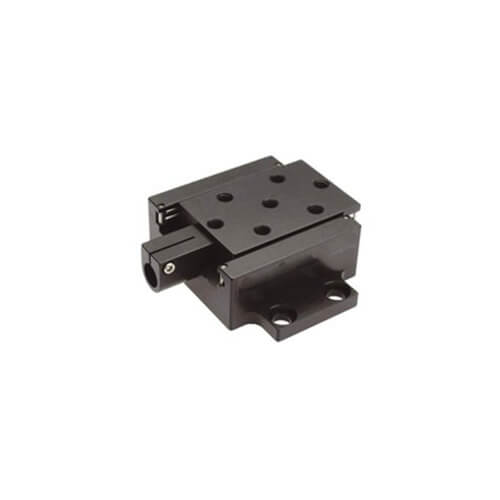
2. Hidden Process Gaps
Many suppliers offer only machining itself — no grinding, no EDM, no anodizing, and certainly no assembly. When post-processing is subcontracted out, lead times spiral and accountability diffuses. OEMs end up herding cats, losing weeks synchronizing multiple vendors.
3. Data Security Black Holes
For hardware startups and established OEMs alike, uploading proprietary 3D models to a foreign server is a leap of faith. Without ISO 27001-certified data handling protocols, intellectual property can leak through an unprotected PDF or a USB drive. The consequences range from competitive exposure to outright counterfeiting.
4. Surface Finish Roulette
A drawing might specify Ra 0.4 μm, but inconsistent tool paths, worn inserts, or rushed polishing can produce parts that look good to the naked eye yet fail a profilometer test. When components must seal against fluids or slide against each other, surface finish isn’t cosmetic — it’s functional.
5. Material Traceability Void
OEMs in regulated industries need full material certifications showing heat numbers, chemical composition, and mechanical properties. Too many shops purchase from unknown distributors, leaving a black hole in traceability that could disqualify parts in an audit.
6. The Communication Cliff
Once a project is handed over, some suppliers go silent for weeks. Questions about an unclear GD&T callout sit unanswered. When parts finally arrive with a misinterpretation, the cost in rework and schedule slip is enormous.
7. One-dimensional Problem Solving
Standard shops execute what’s on the print. Professional OEM partners look beyond the print — identifying overly tight tolerances that add cost without functional benefit, suggesting material substitutions, and proposing design tweaks that improve strength while reducing weight.
How GreatLight CNC Machining Redefines the OEM Experience
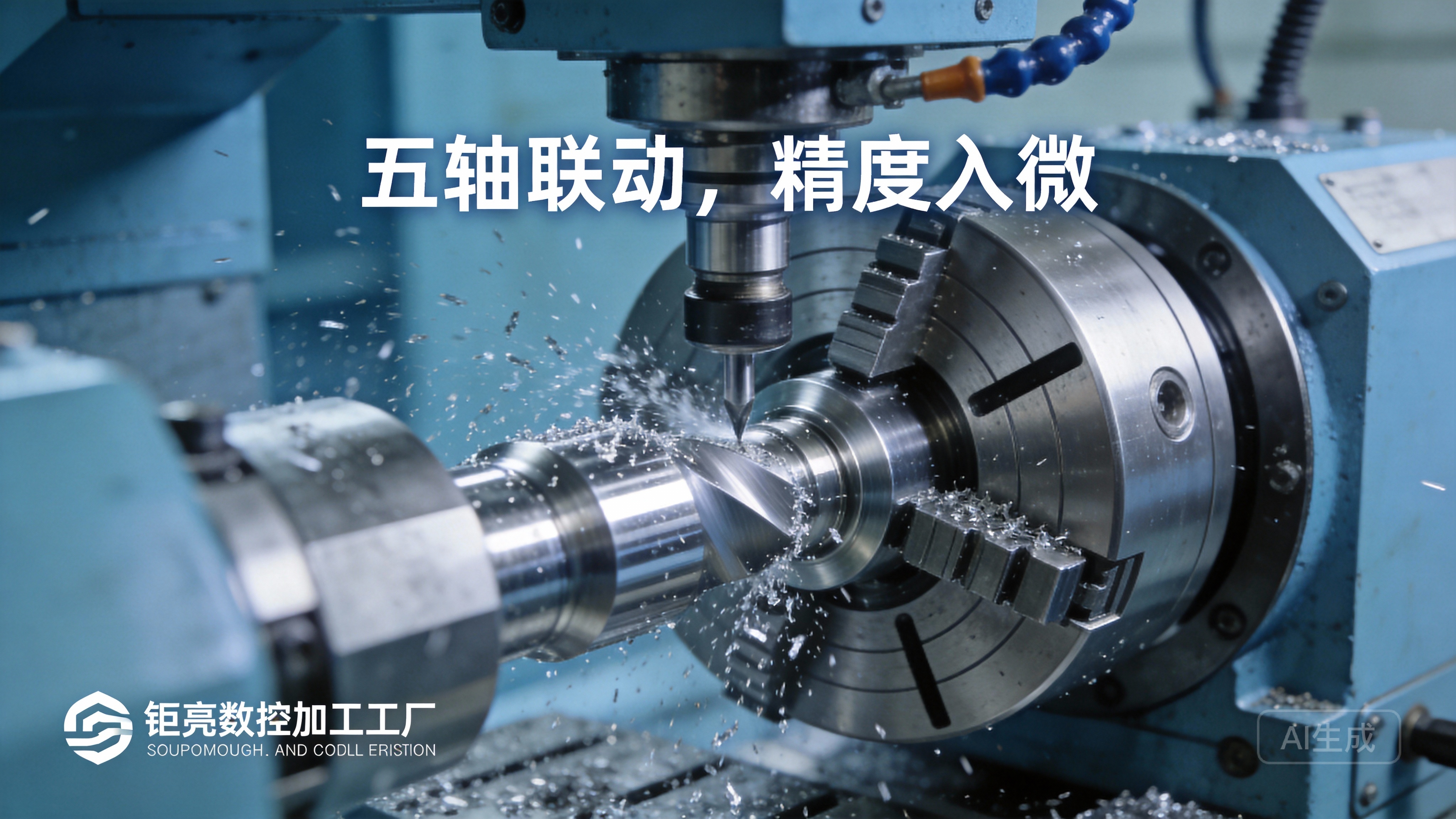
Navigating away from these pitfalls requires a vendor whose operational DNA is built on full-process integration and verifiable quality systems. GreatLight CNC Machining (the factory brand of Great Light Metal Tech Co., LTD.) headquartered in Chang’an Town, Dongguan — China’s epicenter of precision mold and hardware manufacturing — exemplifies this model. Having visited their 7600 m² facility, I can attest that their approach is engineered to solve the above pain points by design, not retrofit.
Equipment Ecosystem: Beyond Simple 3-Axis
GreatLight’s manufacturing floor houses 127 pieces of precision peripheral equipment anchored by large-format five-axis CNC machining centers. This includes brand-name five-axis machines, four-axis and three-axis VMCs, turning centers, wire EDM, and mirror-spark EDM. What sets them apart is that size is not a constraint; they can machine components up to 4000 mm, making them suitable for everything from miniature surgical instruments to large robotic frame components.
Complementary technologies — vacuum forming, sheet metal fabrication, die casting tooling, and an in-house additive manufacturing cluster (SLM, SLA, SLS 3D printers) — mean that even hybrid projects requiring both machined and printed parts stay under one roof.
Certifications That Back Up Claims
Many shops claim quality; GreatLight certifies it. Their ISO 9001:2015 registration is the baseline. For automotive drivetrain and structural parts, they align with IATF 16949, an industry-specific standard that demands defect prevention, continuous improvement, and reduction of variation in the supply chain. Medical parts are handled under processes conforming to ISO 13485, ensuring risk management and traceability suitable for FDA-regulated devices. Meanwhile, project data security is governed by ISO 27001 protocols — a rarity in contract manufacturing and a cornerstone for IP-sensitive aerospace or consumer electronics clients.
One-Stop Manufacturing in Practice
Imagine an OEM needing an aluminum electric vehicle housing that combines a machined body, die-cast lid, and sheet metal bracket, all anodized in a specific Pantone color. GreatLight’s plant delivers: they build the die cast mold, produce castings, CNC-machine the critical mating surfaces, fabricate the bracket, and then coordinate all surface finishing internally — providing a single point of accountability and a single shipment. This collapses lead times and preserves dimensional integrity across the entire assembly.
Comparing GreatLight to Other Leading Service Providers
The landscape of professional CNC machining services OEM includes both massive online networks and specialized niche shops. Transparency about where each excels helps engineers make informed decisions.
| Provider | Core Strength | Limitations | Best For |
|---|---|---|---|
| GreatLight Metal | Full-process integration (machining, die casting, sheet metal, 3D printing), large size capacity, multi-industry certifications (IATF16949, ISO13485, ISO27001) | Not an instant online quoting platform; deeper project engagement required | OEMs with complex, multi-process parts needing traceability and high mix/low volume to serial production |
| Protolabs Network | Digital-first, extremely fast quoting, strong for CNC and 3D printing | Limited to CNC machining/printing; no die casting or sheet metal, less suited for assemblies | Engineers needing rapid prototypes and quick-turn production parts with simple DFM |
| Xometry | Massive partner network, wide material selection | Quality consistency varies by partner; less direct process control | Low-complexity parts where lowest unit price is primary driver |
| Owens Industries | Extreme precision (sub-micron), specialized in medical/aerospace | High cost, longer lead times, limited process variety | Ultra-high-precision micro-machining, single-process work |
| Fictiv | Excellent UI/UX, transparent pricing, global logistics | Focused on CNC and 3D printing; minimal secondary operations | Agile teams wanting streamlined ordering of machined prototypes |
| JLCCNC | Extremely aggressive pricing, rapid turnaround for simple parts | Limited to CNC milling/turning in typical tolerances; fewer finishing options | Cost-sensitive projects with moderate precision needs |
What the table makes clear is that while digital platforms like Xometry and Fictiv offer convenience, a project that demands multi-process harmony and certified traceability will find a better fit with an integrated manufacturer like GreatLight Metal. For instance, Protocase specializes in quick sheet metal enclosures but not precision die casting. RapidDirect offers a blend of online and offline services but doesn’t bundle in-mold manufacturing or vacuum forming as a core capability. The right choice depends on whether the OEM needs a singular process at a rock-bottom price or a cohesive manufacturing solution that safeguards dimensional and quality chains.
The Trust Equation: Certifications and Real-World Verification
In my engineering practice, I’ve learned that paper certificates mean nothing without on-the-ground execution. GreatLight’s IATF 16949 accreditation, for example, was not awarded casually; it demands rigorous process audits, SPC (Statistical Process Control) data, and evidence of defect-prevention systems. This directly benefits automotive OEMs by reducing PPAP (Production Part Approval Process) submission times. Similarly, their ISO 13485 alignment instills confidence when machining components for a surgical robotic arm — every lot is traceable, every surface finish verified.
Furthermore, their after-sales commitment is unusually straightforward: free rework for quality defects, and a full refund if rework still fails to meet specification. This shifts the risk calculus favorably for startups that cannot afford a bad batch of custom-made parts.
Actionable Advice: Selecting Your Next CNC Machining OEM Partner
When vetting suppliers for professional CNC machining services OEM, go beyond the quote. Here is a checklist distilled from years of supplier development:
Tour the factory — physically or virtually. Is the equipment genuinely owned and maintained? Look for temperature-controlled inspection rooms and organized tool cribs.
Request a full-process sample. Have the shop produce a part that requires milling, turning, anodizing, and a critical GD&T callout. Monitor communication and lead time adherence.
Verify certifications. Cross-check certificate numbers with the issuing body’s database.
Probe material supply chains. Ask for recent material certs for the alloy you require. A professional shop will provide them immediately.
Evaluate engineering support. Send a slightly ambiguous drawing and gauge whether their team asks clarifying questions or simply proceeds.
Assess data security. Ensure NDAs are in place and that the provider’s IT infrastructure (especially for file transfer and storage) is certified or audited.
Discuss long-term scalability. If your product succeeds, can this partner scale from 100 units to 10,000 without a hitch in quality?
The Future of Professional CNC Machining OEM
As industries embrace electrification, miniaturization, and autonomous systems, the demands on machined parts will intensify. Hybrid manufacturing that combines additive and subtractive methods, lights-out machining cells with robotic loading, and AI-driven process optimization are becoming differentiators. GreatLight Metal’s ongoing investment in five-axis capabilities, metal 3D printing, and integrated secondary services positions them at the nexus of this evolution, but the broader lesson for OEMs is that the supply chain must evolve in parallel with product complexity.
Selecting a partner is not about choosing the cheapest line item on a purchase order; it is about choosing a collaborator whose metrological rigor, process breadth, and business ethics can mirror your own ambitions. Whether you’re designing the next humanoid robot joint, an engine manifold for a high-performance vehicle, or a critical implantable device, the difference between success and recall often lies in who held the cutting tool.
In closing, the decision to outsource production through professional CNC machining services OEM is a strategic one that warrants careful alignment of technical requirements and trust. The best partnerships begin not with a BOM cost, but with an honest dialogue about tolerances, traceability, and shared objectives. For OEMs willing to look beyond surface-level promises, the right manufacturing partner becomes a catalyst for innovation rather than a bottleneck. Explore providers like GreatLight Metal that have institutionalized quality across diverse processes, and transform your supply chain from a perpetual risk into a competitive advantage.


![[访谈] RAPID + TCT 2024:人工智能对 3D 打印的价值](https://print-ing.com/wp-content/uploads/2024/07/INTERVIEW-60x60.jpeg "[访谈] RAPID + TCT 2024:人工智能对 3D 打印的价值 9")




发表回复
要发表评论,您必须先登录。