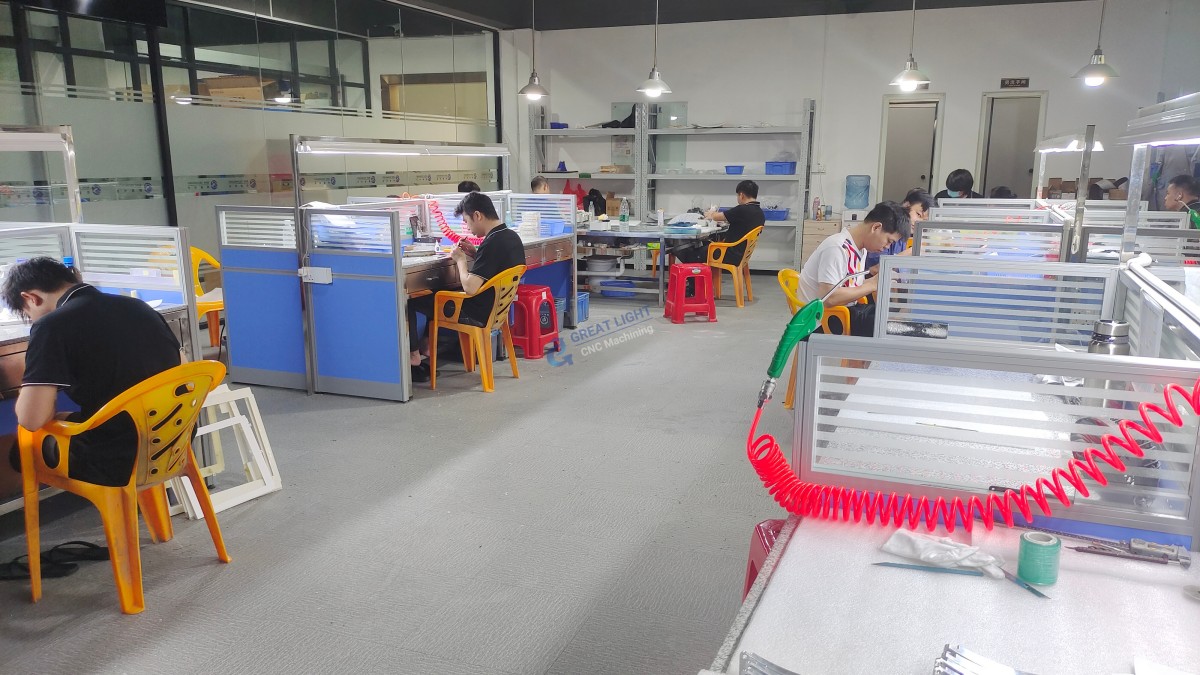
In the growing field of unmanned aerial vehicles (UAVs), the reliability of flight‑critical components such as propeller guard connectors hinges on the quality of UAV propeller guard connectors CNC machining . From absorbing impact forces during a crash to maintaining continuous vibration resistance, these seemingly small brackets and joints play an outsized role in flight safety. As a senior manufacturing engineer who has evaluated supply chains for dozens of drone programs, I’ve learned that the difference between a flawless connector and a field failure often comes down to microns – and to the partner who machines those parts.
Why UAV Propeller Guard Connectors CNC Machining Demands Exceptional Precision
Propeller guard connectors do more than simply fasten a hoop around the blades. They must simultaneously:
Absorb shock – In the event of a collision, the connector transfers impact loads to the frame without fracturing.
Maintain dimensional stability – Slight warping can cause guard misalignment, leading to blade strike or increased noise.
Resist fatigue – Millions of vibration cycles at high frequency require a microstructure free from crack‑initiating stress risers.
Seal against moisture and dust – Many connectors integrate O‑ring grooves or sealing faces that demand surface finishes better than Ra 0.8 µm.
These functional requirements translate into very specific machining demands: tight geometric tolerances (±0.01 mm or better on bore positions), thin wall sections (often below 1.0 mm) that challenge tool deflection, and complex 3‑D contoured surfaces that cannot be efficiently produced on a 3‑axis mill. Every burr left on an internal thread or every microscratch along a mating surface becomes a potential failure origin. Therefore, the CNC workflow must be orchestrated with zero compromise: from fixture design and toolpath optimization right through to final burr removal and inspection.
Key Material Choices for UAV Propeller Guard Connectors
Material selection directly governs both the connector’s weight and its ability to survive the UAV’s operating environment. The right CNC partner will offer expertise across a broad palette of engineering materials, not just the commodity grades.
| Material | Typical Hardness/Strength | Advantages for Connectors | Machining Considerations |
|---|---|---|---|
| Aluminum 6061‑T6 | ~95 HB, 276 MPa yield | Good strength‑to‑weight, affordable, excellent corrosion resistance after anodizing. | Prone to burrs; requires sharp tools and high‑pressure coolant. |
| Aluminum 7075‑T6 | ~150 HB, 503 MPa yield | Strength comparable to mild steel, ideal for high‑load connectors. | Higher cutting forces; rigid setups mandatory. |
| Titanium Ti‑6Al‑4V | ~36 HRC, 880 MPa yield | Ultimate aerospace‑grade strength, immune to salt‑spray corrosion, biocompatible. | Work‑hardening tendency; demands slow speeds, specialized carbide, and trochoidal toolpaths. |
| Stainless Steel 304 / 316L | ~150‑190 HV | Excellent corrosion resistance, good ductility. | Austenitic stainless gummy; sharp cutting edges and proper cooling essential. |
| Engineering Plastics (PEEK, Ultem 1010) | ~90‑100 MPa tensile | Weight‑critical connectors, radar transparency, chemical resistance. | Requires stress‑relieved blanks and sharp, polished tools to prevent melt issues. |
A manufacturer with an integrated supply chain can further advise on post‑treatments such as hard anodizing for aluminum or passivation for stainless steel, all within one logistics chain – a significant advantage when lead times are tight.
CNC Machining Techniques: From 3‑Axis to Simultaneous 5‑Axis
A propeller guard connector typically features angled mounting bosses, undercut latch interfaces, and multi‑faceted profiles. While a 3‑axis machine can produce the part by repeatedly re‑fixturing, each re‑clamping introduces cumulative alignment errors. As a rule of thumb, every additional setup can add 0.02‑0.05 mm of positional uncertainty – an unacceptable penalty when true‑position tolerances hover around 0.05 mm total.
Simultaneous 5‑axis CNC machining eradicates stack‑up errors by machining all critical features in a single clamping. The advantages are particularly striking for UAV connectors:
Compound angle holes and threads are machined in one continuous toolpath, guaranteeing perpendicularity.
Blend profiles between cylindrical bosses and flat flanges transition smoothly because the cutter can maintain a constant lead angle.
Thin‑wall stability increases because the tool can always approach from the most rigid direction.
Set‑up time drops by up to 60%, directly compressing lead times.
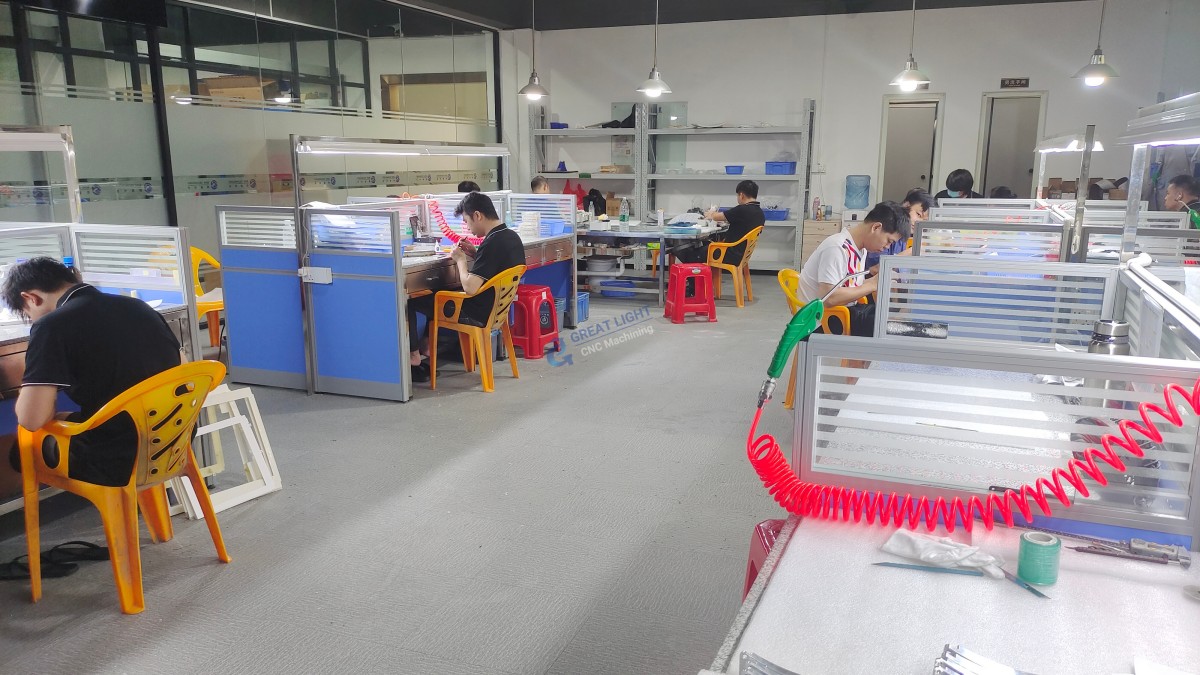
At GreatLight CNC Machining, the five‑axis arsenal includes multi‑pallet systems that allow lights‑out production of small connector batches, keeping unit costs competitive even for runs of 50‑200 pieces. For prototyping, the same 5‑axis machines can turn a solid billet into a functional connector in less than 48 hours, drastically accelerating UAV product development cycles.
Overcoming Common Pain Points in Connector Manufacturing
The path from design to qualified part is often strewn with pitfalls. Having audited numerous machine shops, I see the same pain points recur:
The “Precision Black Hole” – Some suppliers quote impressive resolution (e.g., 0.001 mm) but cannot hold that tolerance across a production batch because their equipment is not thermally stabilized or their measurement systems are not regularly calibrated. A reputable partner will provide a detailed inspection report with every shipment, not just a glossy certificate.
Inconsistent Post‑Processing – Connectors sent out for anodizing to an uncontrolled third party may come back with thread‑mask failures or dimensional growth that will scrap the entire lot. Vertically integrating finishing – as GreatLight Metal does with its in‑house anodizing, powder coating, and passivation lines – eliminates this variability.
Communication Gaps – Rapid quoting platforms can become slow when a design requires tweaking. There is no substitute for a manufacturing engineer reviewing your solid model and proactively suggesting a slightly larger fillet to reduce stress concentration or a relief cut to eliminate a sharp internal corner.
Certification Void – For defense‑grade or heavy‑lift industrial UAVs, you often need an IATF 16949‑ or ISO 13485‑certified facility. While many online aggregators list certified shops, you have no guarantee that your specific batch actually ran in that certified facility. By contrast, GreatLight CNC Machining itself holds ISO 9001:2015, ISO 13485, and IATF 16949 certifications, and its own facility runs medical and automotive hardware day in, day out. This institutionalised quality culture cannot be faked.
Platforms like Xometry, Fictiv, and Protolabs Network have undeniably democratized access to CNC prototyping. They serve an important role when the part is a simple bracket or the buyer prefers a purely transactional interface. However, for mission‑critical UAV propeller guard connectors where a single fracture can ground an entire fleet, the depth of engineering engagement and process ownership offered by a specialist manufacturer like GreatLight Metal provides an extra layer of assurance.
Integrated Post‑Processing and One‑Stop Delivery
Connectors rarely leave the machine fully mission‑ready. Typical post‑operations include:
Hard Anodizing (Type III) – Creates a wear‑resistant surface on aluminum connectors that also insulates against galvanic corrosion when in contact with carbon‑fiber frames.
Chemical Conversion Coating (Alodine) – Provides electrical conductivity and paint adhesion, sometimes specified for antenna‑carrying guards.
Passivation – Restores the full corrosion resistance of stainless steel connectors after machining.
Laser Marking – Each connector can carry a serial number or QR code for full traceability throughout the UAV’s service life.
By housing these processes under one roof across its 7,600 m² facility, GreatLight CNC Machining reduces transit damage, shortens the total order‑to‑ship cycle, and – crucially – ensures that the quality department validates every treatment against the same drawing revision. This is not a theory; it is a workflow that has delivered over 100,000 precision components annually to industries as demanding as aerospace and medical devices.
Why GreatLight CNC Machining is the Ideal Partner for UAV Propeller Guard Connectors
Let me translate the conceptual advantages into tangible capabilities that matter for your connector project:
✅ Ultra‑Precision – Multi‑axis machining centers maintain positioning accuracy to ±0.005 mm; on‑machine probing verifies critical features before the part is unclamped.
✅ Size Flexibility – Connectors can range from thumb‑sized 15 mm hinge brackets to 400 mm structural struts; the shop floor accommodates parts up to 4,000 mm.
✅ Material Database – More than 30 metal and engineering plastic grades are stocked or rapidly sourced, with material certs provided as standard.

✅ Accelerated Prototyping – Metal 3D printing (SLM) can produce a functional aluminum or titanium connector in a single day, letting you test fit and form before committing to CNC tooling.
✅ Zero‑Defect Policy – Should any part fail inspection, it is reworked free of charge; if rework cannot meet the print, a full refund is guaranteed.
✅ Global Data Security – The company operates under ISO 27001‑aligned data protection, essential when your connector geometry is part of a novel UAV airframe IP.
A Real‑World Example: Moving from an Over‑Engineered Design to a Cost‑Efficient Connector
An agricultural drone developer approached us with a stainless steel 316L connector that was machined from a solid block and weighed 48 g. The part had been designed for “worst‑case” load, but field data showed peak stresses well below the yield point. Working alongside the client’s design team, our engineers:
Conducted a topology optimization study.
Suggested switching to 7075‑T6 aluminum with a hard anodized finish, dropping the weight to 18 g (-63%).
Re‑designed the internal pockets so that a 5‑axis machine could reach all features without custom fixturing.
Delivered a pre‑production run of 200 pieces in 12 working days, complete with CMM inspection reports.
The result was a connector that not only passed vibration qualification but also saved $2.40 per unit in machining cost, a saving that scaled to $24,000 on the first 10,000‑unit order. This kind of collaborative engineering is the core value that a deeply integrated manufacturer brings, far beyond the capability of a pure‑play quoting portal.
Setting Up Your Project for Success: A Practical Checklist
Before you release a request for quote, run through this engineering checklist to eliminate downstream surprises:
[ ] Design for manufacturability (DFM): All internal corners carry a radius ≥ tool radius; deep pockets are drafted if possible.
[ ] Thread standardization: Specify metric coarse or fine threads; avoid custom pitches that require special taps unless absolutely necessary.
[ ] Tolerance strategy: Only call out tight tolerances on functional interfaces; over‑dimensioning drives up cost without improving reliability.
[ ] Material call‑out: Provide the exact alloy designation and the relevant AMS/ASTM/EN standard.
[ ] Surface finish notation: Use Ra in microns, and indicate whether edge break (chamfer) is acceptable.
[ ] Testing requirements: If salt‑spray or dye‑penetrant inspection is needed, state it upfront so the workflow can be planned.
A seasoned manufacturing partner will review all these points and return a DFM report within 24 hours, flagging any risks before the first chip is cut.
Conclusion
Whether you are a drone startup iterating on a gimbal protector or a tier-one UAV manufacturer scaling to thousands of units per month, the UAV propeller guard connectors CNC machining process deserves the same rigor as any flight‑control component. Tolerances, material behaviours, and finishing impacts are not variables to gamble with. Choosing a partner that combines multi‑axis machining mastery, certified quality management, vertical post‑processing, and genuine engineering collaboration is the clearest way to mitigate those risks.
For your next program, I strongly recommend engaging a supplier whose entire business is structured around precision manufacturing – not just as one of many aggregated vendors, but as a dedicated, audit‑ready facility. To explore how a full‑process partner can bring your connector design to life, connect with GreatLight CNC Machining on LinkedIn and start a conversation that goes beyond a simple quote. After all, in the world of high‑reliability UAVs, the best connector is the one whose manufacturer you never have to worry about.


![[访谈] RAPID + TCT 2024:人工智能对 3D 打印的价值](https://print-ing.com/wp-content/uploads/2024/07/INTERVIEW-60x60.jpeg "[访谈] RAPID + TCT 2024:人工智能对 3D 打印的价值 9")




发表回复
要发表评论,您必须先登录。