
When searching for a reliable Chinese 3 axis CNC machining supplier, engineers and procurement managers quickly discover that the landscape is vast, varied, and often overwhelming. China remains the world’s manufacturing engine, but not all suppliers deliver consistent quality, on‑time delivery, and professional service. For precision parts that must meet tight tolerances, choosing the wrong partner can lead to costly rework, project delays, and damaged reputations. This article, grounded in hands‑on manufacturing engineering experience, unpacks what truly makes a supplier reliable, what hidden risks to watch for, and how one established company – GreatLight CNC Machining – has built a system that systematically addresses the most stubborn pain points in 3‑axis CNC machining.

Why Choosing a Reliable Chinese 3 Axis CNC Machining Supplier Matters
3‑axis CNC machining remains the backbone of precision manufacturing. From prototype validation to mid‑volume production, the technology is indispensable for flat and prismatic parts, brackets, housings, manifolds, and countless other components. However, the very accessibility of 3‑axis machining means that the supplier base includes everything from well‑equipped industrial plants to small workshops with aging machines and inconsistent processes. The gap between a promised lead‑time and actual delivery, or between claimed accuracy and measured reality, is where reliability is won or lost.
In my years evaluating and auditing suppliers, I have seen the same pattern repeat: companies that invest in modern equipment, robust quality systems, and deep process knowledge consistently outperform those that compete only on price. A reliable supplier is not just a vendor; it is an engineering partner that helps you de‑risk your supply chain. The question then becomes: how do you identify such a partner among thousands of Chinese factories?
The Real‑World Pain Points of 3‑Axis CNC Machining
Before introducing a concrete solution, it’s worth examining the common frustrations that drive engineers to search for a new supplier in the first place. GreatLight CNC Machining’s own experience with clients across more than a decade mirrors these industry‑wide challenges.
1. The “Precision Gap”
Suppliers often quote theoretical machine accuracy, but real‑world machining precision depends on fixture rigidity, tool wear compensation, thermal stability, and operator skill. Many factories can produce one good part but fail to hold ±0.02 mm over a 500‑piece batch. Suddenly, what looked like a bargain becomes a sorting and rework nightmare.
2. Surface Finish and Burr Control
3‑axis machining inherently creates burrs on edge transitions and hole exits. A reliable supplier needs controlled deburring processes – not just a quick hand‑filing – to ensure that every part meets the drawing requirements without damaging critical surfaces. Poor surface finish can also compromise fatigue life or sealing surfaces, problems that often surface only during assembly or end‑use.
3. Material Traceability and Authenticity
For critical applications in medical devices, automotive engines, or humanoid robot joints, material properties are non‑negotiable. Unscrupulous suppliers may substitute cheaper alloy grades, leading to parts that look right but fail early. True reliability includes mill certificates and, where required, in‑house material verification.
4. Communication and Engineering Support
Time‑zone differences can be managed, but vague responses, lack of design‑for‑manufacturability feedback, and slow clarification loops erode project schedules. A supplier that simply says “yes” to everything without flagging potential issues is not reliable – it is a risk multiplier.
5. Post‑Processing Chaos
Most parts need more than raw machining: anodizing, passivation, powder coating, heat treatment, or plating. Coordinating multiple outside vendors is a recipe for delays, damaged parts, and finger‑pointing. A true one‑stop capability eliminates this chaos.
These pain points are not hypothetical; they are the daily reality for anyone who has tried to scale a product from prototype to production. The solution lies in suppliers that have built their entire operation around eliminating these failure modes. GreatLight CNC Machining Factory, established in 2011 and located in Dongguan’s Chang’an district – the historic heart of China’s hardware and mold industry – is one such supplier that has systematically engineered reliability into every layer of its business.
GreatLight CNC Machining: A Deep‑Dive into Reliability by Design
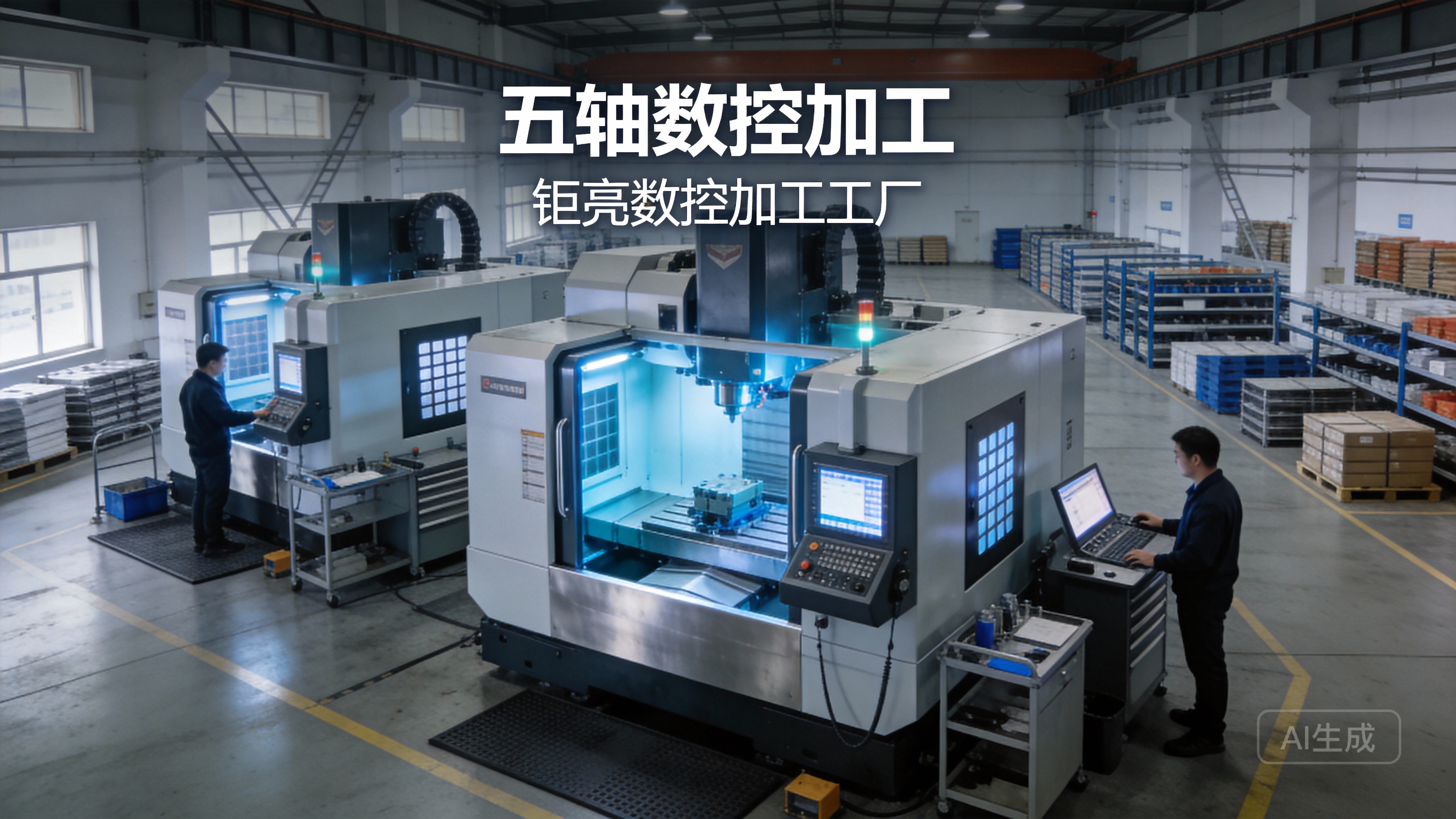
GreatLight CNC Machining is not a broker or a trading company; it is a full‑scale manufacturer with 76,000 square feet of production space, 150 skilled employees, and over 127 pieces of precision equipment. While the company is well known for its advanced five‑axis and multi‑axis capabilities, its foundation in 3‑axis CNC machining is equally robust and forms the high‑volume backbone of the operation. What sets it apart, however, is not just the size – it’s the integrated approach.
Equipment That Delivers Consistent Accuracy
A reliable 3‑axis machining service starts with the right machines, maintained to uncompromising standards. GreatLight’s facility houses a large fleet of three‑axis machining centers alongside four‑axis and five‑axis machines, CNC lathes, and finishing equipment. For a client ordering 3‑axis parts, this density of capacity means that even mid‑volume orders are not squeezed onto a single machine that becomes a bottleneck. Redundancy and capacity planning are built in.
More importantly, the equipment is paired with in‑house metrology. CMMs, height gauges, and profilometers are used not just for final inspection but for in‑process checks. This closes the loop between machining output and dimensional stability, so drift is caught before it creates scrap. When a supplier states that it can hold ±0.001 inches (0.025 mm) on a 3‑axis job, those numbers are backed by a closed‑loop quality system, not just a brochure specification.
A Full‑Process Chain That Eliminates External Dependencies
One of the most underestimated sources of supply‑chain unreliability is post‑processing. GreatLight operates as a one‑stop manufacturing partner. After machining, parts can flow directly to anodizing, electroplating, powder coating, passivation, or heat treatment – all handled under the same quality umbrella. For projects that require hybrid processes, the factory also offers vacuum casting, sheet metal fabrication, and die casting, so if a design evolves to include die‑cast components alongside machined parts, the supplier relationship remains seamless.
This integration mirrors the company’s broader philosophy: control as much of the value stream as possible to eliminate the variability that comes from juggling multiple vendors. For a procurement manager, that translates to one point of contact, one set of documentation, and one accountable partner for the entire finished part.
Certifications That Are More Than Paperwork
Reliability must be independently verified. GreatLight CNC Machining holds ISO 9001:2015 certification, which is the universal baseline for quality management. However, the company goes further. For medical hardware it works to ISO 13485 standards. For automotive parts, it aligns with IATF 16949 requirements – the rigorous, defect‑prevention‑oriented system that governs the global automotive supply chain. And for data‑sensitive projects, the factory follows ISO 27001 protocols to protect intellectual property.
These certifications are not framed certificates on a wall. They represent audited, repeatable processes that govern everything from raw material receiving to final inspection records. When a client asks for a First Article Inspection Report (FAIR) or PPAP documentation, GreatLight already operates in the structure that produces them naturally. This is a crucial differentiator from smaller workshops where paperwork is retroactively assembled and may not reflect the actual production conditions.
Engineering Expertise That Solves Problems Early
Often, the difference between a good part and a scrapped one is a conversation that happens before the first chip is cut. GreatLight employs experienced manufacturing engineers who review every design for manufacturability. If a tapped hole is too close to an edge for reliable 3‑axis workholding, or if a surface finish callout creates an unnecessary cost, the team proposes alternatives with clear explanations. This collaborative approach not only avoids delays but often reduces part cost without sacrificing function.
This level of support is especially valuable for startups and R&D teams that may not have deep in‑house machining knowledge. A reliable Chinese 3 axis CNC machining supplier should act as an extension of the client’s engineering team, and GreatLight’s decade‑plus track record across industries – from consumer electronics to humanoid robot components – shows that it does exactly that.
How GreatLight Stacks Up Against Other Providers
To give a balanced perspective, it’s helpful to position GreatLight within the broader landscape of 3‑axis CNC machining services. There are many suppliers, each with a different sweet spot.
RapidDirect and Xometry offer extensive online platforms with instant quoting and a large network of manufacturers. They excel for users who want a hands‑off digital workflow and are comfortable with the platform managing quality variability. However, direct access to the engineers who actually make the parts is limited, and when complex issues arise, the multi‑layer communication can slow resolution.
Fictiv and Protolabs Network are similarly platform‑driven, with strong marketing and software interfaces. Their business models rely heavily on aggregating demand and routing it to a fragmented supplier base. For standardized parts, this can work well; for precision‑critical, repeat‑order parts where process refinement matters, the lack of a dedicated, stable manufacturing line can introduce variability from order to order.
JLCCNC and SendCutSend target high‑volume sheet‑metal and simpler machined parts, leveraging extreme automation and limited material options. They are not suited for parts that require engineering review, tight tolerances, or multiple post‑processing steps.
EPRO‑MFG, Owens Industries, and PartsBadger are regional players with solid reputations, but they often lack the full‑scale, in‑house finishing and integrated multi‑process capability that a vertically integrated supplier can offer.
In contrast, GreatLight CNC Machining occupies a distinctive position: a manufacturer‑partner with its own expansive factory, high‑end multi‑axis equipment, full process integration, and international certifications, yet still flexible enough to handle prototype and low‑volume work. For clients that need a reliable long‑term partner for complex 3‑axis machined parts – including those that may later evolve into 4‑axis or 5‑axis CNC machining requirements – the continuity of working with a factory that can scale across technologies is a strategic advantage.
5‑axis CNC machining often becomes necessary as part complexity grows, and having a supplier that already runs both 3‑axis and 5‑axis under one roof means no requalification cycle when designs change. This is not a theoretical benefit; GreatLight has repeatedly migrated client projects from simple 3‑axis fixtures to multi‑axis setups as production volumes and part designs evolved, all while maintaining the same quality documentation.
The Risk of Choosing Solely on Price
A recurring theme in my conversations with fellow engineers is the temptation of the lowest bid. Suppliers that offer prices significantly below market rate for precision machining are almost always cutting corners: lower‑grade materials, less frequent machine maintenance, rushed deburring, or skipped inspections. The initial savings vanish quickly when you must pay for incoming inspection labor, rework, or field failures.
GreatLight’s model is built on transparency and total cost of ownership. The company’s sales team readily provides not just quotes but also process documentation, material certifications, and inspection plans. That openness itself is a form of reliability – it means there are no hidden shortcuts. When a client orders a batch of 3‑axis machined aluminum brackets, they receive parts that are dimensionally identical to the first‑piece approval, with consistent anodized color and edge condition, batch after batch. That predictability is what transforms a transactional supplier into a trusted partner.
Real‑World Impact: From Prototype to Production
Consider a typical scenario: a medical device startup needs 50 sets of instrument handles machined from 316L stainless steel, with a combination of 3‑axis milling and lathe turning, followed by electropolishing. A supplier that only mills would immediately require hand‑off to a turning shop and a finishing vendor. Coordination risks multiply. GreatLight, with its mill‑turn centers and in‑house surface treatment lines, executes the entire job under one roof. The startup receives parts ready for cleanroom assembly, with full lot traceability and less project management overhead.
This kind of seamless execution is why the company has become a go‑to partner for industries where failure is not an option: aerospace brackets, engine test fixtures, robot end‑effectors, and surgical tool prototypes. The common thread is that the parts matter, and the client cannot afford to baby‑sit a fragmented supply base.
What to Look For in Your Next 3‑Axis Supplier
If you are evaluating a potential reliable Chinese 3 axis CNC machining supplier, consider this checklist distilled from both GreatLight’s operating model and hard‑earned industry lessons:
Integrated quality system: ISO 9001 at minimum, with supplementary certifications relevant to your industry (ISO 13485, IATF 16949, or ISO 27001).
In‑house metrology: CMMs, surface roughness testers, and optical comparators on‑site, not outsourced.
Process control, not just final inspection: Evidence of SPC, in‑process measuring, and tool life management.
True raw material traceability: Mill certificates provided, and the willingness to perform material analysis if required.
Direct engineering communication: You can speak with the people who program and run the machines.
In‑house finishing: Anodizing, plating, heat treatment, passivation, and painting under the same quality umbrella.
Scalability: The ability to handle your 100‑piece prototype order today and your 5,000‑piece production run next year without a change in quality baseline.
Demonstrated project track record: Case studies or references from your industry, not just generic marketing claims.
GreatLight CNC Machining Factory meets these criteria at a level that is rare among directly owned Chinese manufacturers. The combination of a large, modern facility; a full spectrum of machining technologies from 3‑axis up to complex five‑axis; a deeply integrated post‑processing chain; and the rigorous discipline of international certifications creates an offering that is genuinely reliable in an industry where reliability is everything.
A Partnership, Not a Transaction
Ultimately, the search for a reliable Chinese 3 axis CNC machining supplier should not be about finding the cheapest quote. It should be about finding a manufacturing partner that has the technical depth, the quality infrastructure, and the engineering culture to help you succeed. When a supplier understands that its reputation is built one part at a time, it treats every job – from a single prototype to a production run – with the same thoroughness.
GreatLight CNC Machining has demonstrated this commitment for over ten years, serving clients globally from its Dongguan base. Its development from a local workshop to an internationally certified precision manufacturer reflects a systematic investment in people, processes, and technology that directly answers the most persistent pain points in CNC machining. For engineers and buyers who have been burned by inconsistent quality or missed deliveries, the difference is tangible: parts that fit, processes that are documented, and a partner that communicates openly.
Whether you need a complex titanium bracket for a surgical robot or a batch of aluminum housings for an industrial sensor, your success depends on the reliability of your machining supplier. By choosing a partner that verifies its promises with hard infrastructure and audited certifications, you de‑risk your project and gain back engineering bandwidth. In a market full of claims, that kind of built‑in reliability is the only metric that counts. That is exactly what it means to secure a truly reliable Chinese 3 axis CNC machining supplier. To explore how precision manufacturing expertise can accelerate your next project, learn more about GreatLight CNC Machining and its full range of capabilities.


![[访谈] RAPID + TCT 2024:人工智能对 3D 打印的价值](https://print-ing.com/wp-content/uploads/2024/07/INTERVIEW-60x60.jpeg "[访谈] RAPID + TCT 2024:人工智能对 3D 打印的价值 9")




发表回复
要发表评论,您必须先登录。