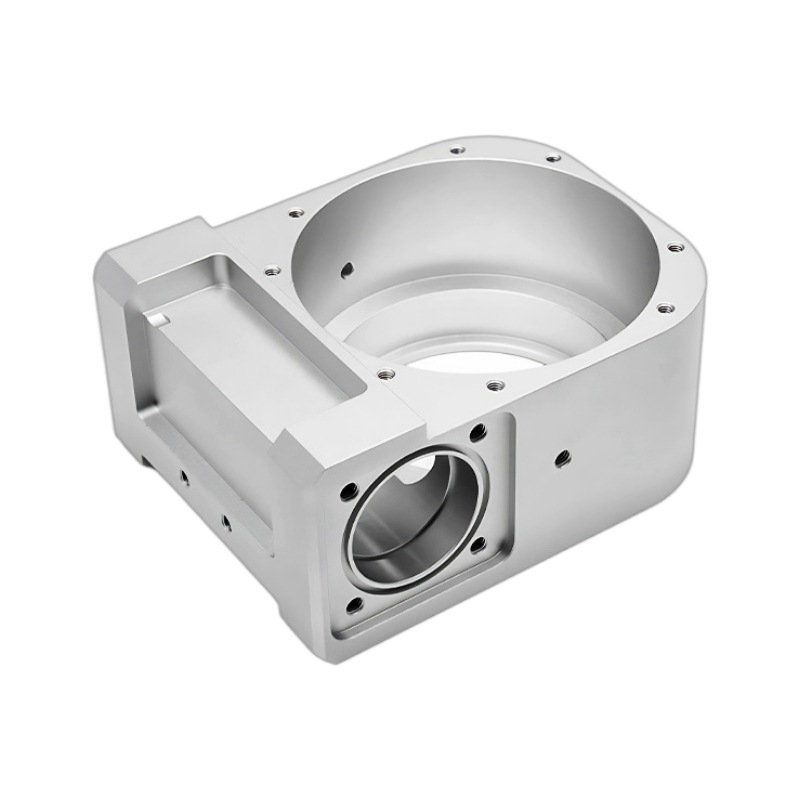
When exploring global manufacturing options for complex parts, the question “Why Custom 5 Axis CNC Services China?” has shifted from a tentative consideration to a strategic one. In an industry where precision, repeatability, and speed matter as much as cost, China’s advanced machining sector—anchored by companies like GreatLight Metal Tech Co., LTD.—has matured into a first-tier destination that can rival and often surpass traditional manufacturing hubs. Having spent years on shop floors and in supplier audits, I’d like to share a clear, engineer’s-eye view of what makes Chinese 5‑axis CNC services not just viable, but often the optimal choice.
A Mature Precision Ecosystem, Not Just Low‑Cost Labor
The outdated image of Chinese machine shops as crowded, manual lathe‑heavy environments hasn’t reflected reality for at least a decade. The Pearl River Delta, and specifically Chang’an Town in Dongguan, is now home to one of the densest clusters of high‑end multi‑axis machining centers in the world. This isn’t by accident. Decades of mold‑making heritage, combined with heavy reinvestment in automation and workforce upskilling, created an environment where complex five‑axis simultaneous machining is everyday work, not a special‑occasion capability.
A prime example is GreatLight Metal, founded in 2011 and operating from a 76,000 sq. ft. plant that houses a fleet of brand‑name 5‑axis CNC machines from manufacturers like Dema and Beijing Jingdiao, backed by an arsenal of 4‑axis, 3‑axis, turning, and EDM equipment. When you have 127 pieces of precision peripheral equipment under one roof, you’re no longer constrained by single‑process thinking. This density translates into shorter queue times for complex jobs, because the capacity isn’t just one hero machine; it’s a complete cluster designed to handle everything from rapid prototyping to mid‑volume production without requiring the customer to orchestrate multiple vendors.
Why 5‑Axis Matters in the First Place (And Why You Should Care)
Before evaluating any supplier, it helps to understand exactly what a genuine full 5‑axis service unlocks. True 5-axis CNC machining services go beyond 3+2 positional machining. They allow the cutting tool and the workpiece to move simultaneously in all five axes, which means:
Single‑setup complex geometries: Parts with undercuts, compound angles, and deep cavities can be machined without flipping the part, preserving datum integrity and eliminating the tolerance stack that comes from multiple setups.
Shorter tool length, better surface finish: Because the head can tilt, you can use shorter, stiffer tools to reach an angled feature, reducing deflection and chatter. For aerospace brackets or orthopedic implants, that directly improves fatigue life.
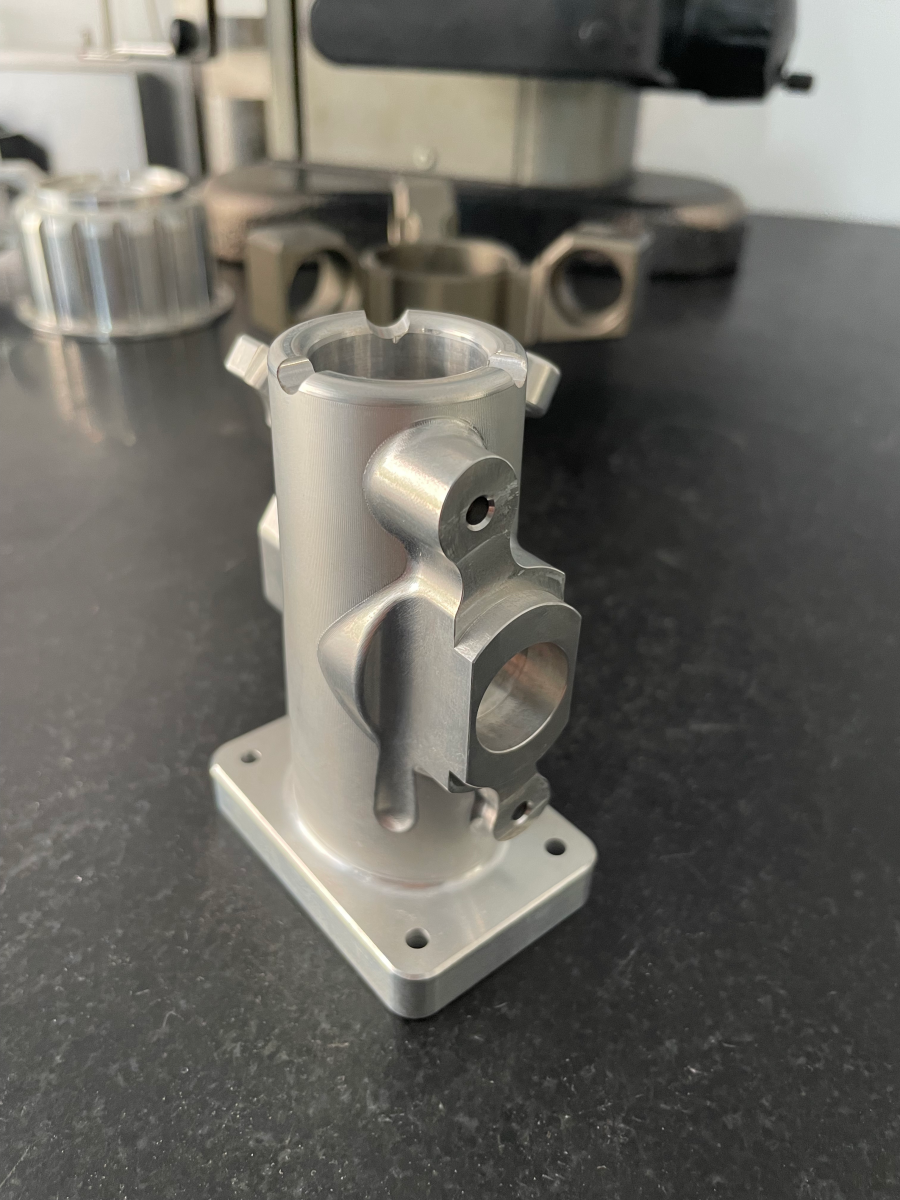
Contoured walls and impellers: Blades with aerodynamic profiles, blisks, and complex manifolds that once required casting or labor‑intensive hand‑blending can now be milled to net shape.
The value isn’t just the capability; it’s the downstream time saved. Fewer setups mean fewer fixtures, fewer inspections between operations, and significantly faster turnarounds. However, not all 5‑axis services are equal. The key variable is the blend of machine condition, programming talent, and quality infrastructure that the provider brings, and this is where the China‑based talent pool shines.
Navigating the Pain Points of Precision Sourcing
If you’ve been in procurement or engineering for long enough, you’ve certainly encountered what I call the “precision black hole.” A supplier quotes an impressive ±0.001 mm tolerance, but the delivered parts tell a different story. Or the prototypes come out flawless, but production batches show an unnerving drift. These pain points—uncertain accuracy, inconsistent surface finishes, data security risks, and the dreaded “lost in translation” problem on complex geometries—are universal. They aren’t unique to any country, but they are best solved by suppliers who have systematized their way around them.
GreatLight’s approach is illustrative. They don’t just list tolerances; they back them with in‑house precision measurement equipment and a tightly maintained ISO 9001:2015 quality system. For medical hardware, they’ve extended this with ISO 13485 certification, meaning the traceability and process control required for surgical instruments or diagnostic hardware are baked in, not bolted on. For automotive engine components, they operate under the IATF 16949 standard, which demands process capability studies (Cpk, Ppk) and continuous improvement cycles that weed out the root causes of batch‑to‑batch variation before they become customer problems. Equally important for IP‑sensitive projects, their data management complies with ISO 27001, so your design files never wander into a gray area.
These aren’t just wall decorations. In practice, they mean a robot actuator end‑effector that must maintain a 20‑micron true position across 200 units will stay in spec from first article to last shipment. This predictability is what transforms a machining vendor into a true manufacturing partner.
The Full‑Process Advantage: From Mold to Post‑Finishing Under One Roof
Another reason to consider a mature Chinese 5‑axis service is the vertical integration that’s far harder to find in Western job shops. Many companies find themselves juggling a CNC shop, a sheet metal fabricator, a die caster, and a separate finishing house, each with its own lead time and interpretation of the drawing. GreatLight’s full‑process chain collapses those handoffs. They do precision CNC machining, die casting (with in‑house mold development), sheet metal fabrication, vacuum casting, and metal 3D printing (SLM/SLA/SLS) within the same corporation.
Why does this matter for a 5‑axis customer? Because often the initial part you machine is just the starting point. You might prototype a complex housing via 5‑axis and then later bridge to two‑cavity die casting once volumes rise. If the same team understands both the milled geometry and the cast tool design, you slash months from the product development cycle. Post‑processing—anodizing, plating, powder coating, passivation—is also managed internally, which closes the loop on quality and eliminates the “it was the plater’s fault” finger‑pointing when a dimensional issue surfaces late in the process.
A Comparative Look at the Competitive Landscape
The global custom 5‑axis CNC space includes many credible names. I’ve worked alongside, audited, or reviewed outputs from several of them, and each has its own character. To help orient yourself, here is a simplified comparison that puts GreatLight Metal in the context of other known players:
| Company | Primary Sweet Spot | Notable Strength | Typical Lead‑Time Approach |
|---|---|---|---|
| GreatLight Metal | Complex geometry, full‑process production, bridge from prototype to volume (medical, auto, robotics) | IATF 16949 & ISO 13485‑backed production, integrated casting & 3D printing | Fast turn on both R&D and repeat orders via dedicated capacity cluster |
| Protolabs Network | Digital quoting, rapid prototyping of simpler geometries | Speed, automated DFM feedback, broad network | Usually very short for mills, less suited for complex 5‑axis simultaneous with deep metrology |
| Xometry | Broad U.S. and partner network, wide material range | Marketplace scale, instant quoting UI | Varies by partner; quality consistency depends on which job shop picks up work |
| Owens Industries | Ultra‑high‑precision for aerospace & medical (US‑based) | Extreme tight tolerances, hardened materials expertise | Longer lead times typical for highly regulated work, premium cost |
| JLCCNC | Fast, low‑cost prototypes, mainly 3‑axis and 4‑axis | Price competitiveness, online quoting clarity | Mostly limited to simpler geometries, not true 5‑axis simultaneous at scale |
| RapidDirect | On‑demand manufacturing, mostly 3‑5 axis via China network | Good balance of price and speed for prototypes | Often brokers work out; full process ownership may vary |
The pattern is clear: Western‑centric platforms (Protolabs, Xometry) offer fantastic digital experience and speed for straightforward parts, but when the part becomes truly complex in terms of tolerance mix, surface finish, and post‑ops, the value of a manufacturer‑operator with deep, certified process control and in‑house ancillary capabilities grows exponentially. That is where GreatLight Metal’s model stands apart—it is a manufacturer first, with all the skin in the game that implies.
The Story Behind the Certifications: Trust That Is Engineered, Not Claimed
Trust in manufacturing isn’t established through slogans. It’s built through a systematically layered quality infrastructure. The ISO 9001:2015 foundation ensures that every order has a defined process flow, from contract review through final packaging. On top of that, IATF 16949 introduces the rigor of automotive production part approval processes (PPAP), including failure mode and effects analysis (FMEA) and statistical process control. ISO 13485 does the same for medical devices, adding risk management specific to patient safety. When GreatLight also adheres to ISO 27001 for data security, it addresses the hesitation many Western engineers have about sending CAD files overseas: the digital chain is locked down to the same standard you’d expect from a domestic ITAR capable shop.
I’ve seen how these systems manifest on the shop floor. The five‑axis centers are not simply left to run unattended; they are under a planned preventive maintenance schedule that’s verified during certification audits. Cutting tools are managed with tool‑life tracking, and coordinate measuring machine (CMM) inspection reports are generated directly from the machine’s network, not typed in manually, eliminating transcription errors. This is the ‘E‑A‑T’ (Expertise, Authoritativeness, Trustworthiness) of manufacturing: demonstrable, auditable, and repeatable.
From Chang’an to the World: A Partner That Grows with Your Project
Many machining relationships start with a single prototype. GreatLight’s own journey reflects that. Founded when China’s mold capital was shifting from low‑mix, high‑volume work to high‑mix, high‑complexity work, the company deliberately built a capacity that can shepherd a job from a one‑off SLA or SLS 3D print, through five‑axis machined aluminum prototypes, into die‑cast production with in‑house‑made molds, and finally to post‑finish and assembly. For startups working on humanoid robots, or automotive tier‑ones developing a next‑gen e‑housing, that means the learning curve stays with one team. The engineer who machined your first article is part of the team that designs the mold for the production run, so crucial tacit knowledge about the part’s behavior under tool pressure doesn’t evaporate.
Operational scale matters here as well. With a team of 150 and annual revenues exceeding 100 million RMB, the company has the latitude to invest in premium workholding, advanced CAM software post‑processors that are custom‑tuned for each machine, and the zero‑point fixturing systems that let 5‑axis machines keep their spindles turning, rather than waiting for the next setup. For the customer, that translates into a realistic delivery schedule, not an optimistic guess.
What You Should Look For When Selecting a Partner
If you’re currently evaluating custom 5‑axis CNC services in China, I recommend a short checklist that goes beyond the quote:
Certification depth, not breadth of logos: Verify that the ISO or IATF certificates are genuinely applicable to the facility doing your work. A valid IATF 16949 certificate with your part’s process category included is a different level of commitment than a generic ISO 9001.
In‑house measurement capability: Ask for a photo of the CMM or a sample dimensional report. True position, profile tolerance, and circularity measurements should be evident.
Material traceability: For medical or aerospace, request a sample material certificate that shows heat lot numbers and chemical/physical property results.
Process integration clues: If your part might later need die casting or post‑finishing, ask for examples of previous work that crossed over from CNC to casting. A partner that can show you such a project will likely save you months of coordination.
Conclusion: Precision Without Compromise Is a Strategic Choice
The question “Why Custom 5 Axis CNC Services China?” ultimately answers itself when you look beyond the hourly machine rate and consider total program cost, risk, and speed. A properly vetted Chinese partner like GreatLight Metal doesn’t just offer a lower price point; it delivers the combination of deep process integration, international‑level quality systems, and the engineering agility to handle parts that would be slow, overly expensive, or outright refused by many local shops. For complex parts where geometries are unforgiving, timelines tight, and the supply chain needs to be reliable, this model of manufacturing—certified, vertically integrated, and built on a decade of trust‑building—is no longer just an alternative. It is often the strongest choice you can make.


![[访谈] RAPID + TCT 2024:人工智能对 3D 打印的价值](https://print-ing.com/wp-content/uploads/2024/07/INTERVIEW-60x60.jpeg "[访谈] RAPID + TCT 2024:人工智能对 3D 打印的价值 9")




发表回复
要发表评论,您必须先登录。