
In the fast-paced world of product development, the ability to iterate quickly and validate designs is paramount. Speed to market can be the defining factor between market leadership and obsolescence. However, for engineers and project managers seeking precision 5-axis CNC machining services, the promise of “rapid” often raises a critical question: Can speed coexist with the stringent demands of high-precision manufacturing, complex geometries, and dimensional tolerances measured in microns?
This question is at the heart of every sourcing decision. The manufacturing landscape is filled with suppliers who claim to offer speed, but a closer examination reveals a spectrum of capability. Some prioritize volume over complexity, others excel at simple geometries, and a select few—like GreatLight—have engineered their entire operational DNA around delivering rapid prototypes without sacrificing the core values of precision manufacturing. This article delves deep into what a genuine 5-day rapid prototyping service entails, the technical and systemic pillars that make it possible, and why choosing the right partner is more critical than ever.
The Real Challenge: Speed vs. Precision in Prototyping
The conventional manufacturing wisdom has long held a trilemma: you can have it fast, good, or cheap—choose two. For rapid prototyping, this translates into a constant tension between delivery speed, part accuracy, and cost. When a supplier advertises 5-day turnaround, what are they actually accommodating?
Standard Prototypes: Simple 2.5D parts, common plastics like ABS or Nylon, standard surface finishes (Ra 3.2 μm). This is achievable for many shops.
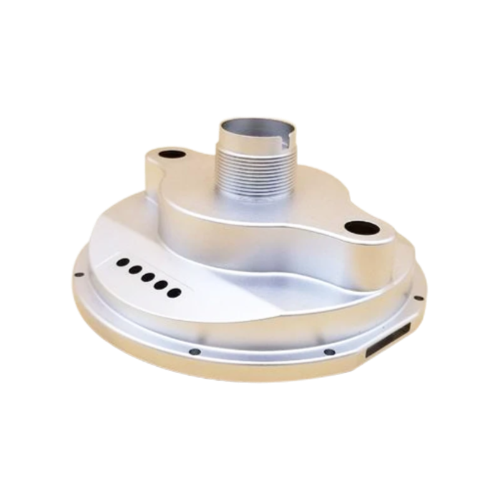
Complex Components: 5-axis contoured surfaces, thin-walled features, tight tolerances (±0.005 mm / 0.0002 in), exotic materials like titanium or Inconel, or demanding surface finishes (Ra 0.4 μm or better). This is where the promise of “rapid” is truly tested.
For the latter category, a 5-day delivery requires more than just a willingness to work overtime. It demands a sophisticated ecosystem of equipment, process control, and material management. The ability to machine a complex 5-axis aerospace bracket in five days from design file submission is a testament to a facility’s readiness, not its desperation.
Navigating the “Precision Black Hole”
One of the most pervasive pain points in the industry is what we can call the “precision black hole”—the gap between promised tolerances and realized part quality, especially under time pressure. A supplier might commit to ±0.001 mm, but the reality for rushed prototypes is often a looser ±0.01 mm or even ±0.05 mm, leading to assembly failures, functional testing issues, and costly redesigns.
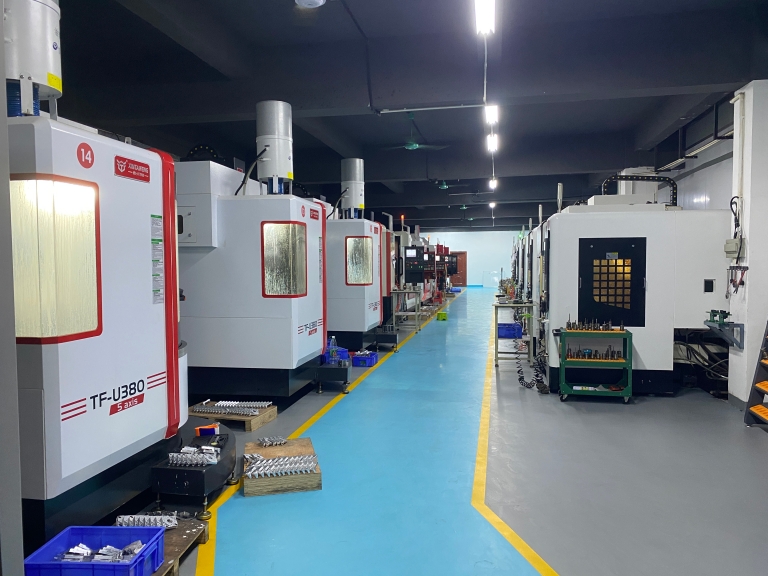
A truly reliable 5-day rapid prototyping service doesn’t cut corners on accuracy. It uses speed as a competitive advantage to deliver precise parts quickly. This is achieved through a combination of advanced machinery, robust quality management systems, and a culture that prioritizes “doing it right the first time.” The risk of rework is the single greatest enemy of a 5-day lead time.
The Technical Pillars of a 5-Day Prototyping Service
What are the concrete, tangible elements that allow a manufacturer to deliver high-precision prototypes in five days? The answer lies in a multi-layered approach that spans from the shop floor to the engineering office.
1. Advanced Equipment Architecture: Beyond Just a 5-Axis Machine
While a five-axis CNC machining center is a prerequisite, the real differentiator lies in the arsenal of equipment. A facility dedicated to rapid prototyping typically maintains a balanced and redundant fleet:
High-Speed 5-Axis Machining Centers: Brands like Dema and Beijing Jingdiao offer spindles with high RPM (20,000-40,000+) and rapid traverse rates, minimizing non-cutting time.
Turn-Mill Centers: For complex rotational parts, these eliminate the need for a second setup, collapsing what might be a 3-day process into a single day.
Precision Swiss-Type Lathes: For micro-components or long, slender parts with tight tolerances, Swiss lathes offer unparalleled stability and speed.
Complementary Technology: Wire EDM for burr-free finishing or sharp internal corners, and CNC grinding for mirror-like surfaces or parts requiring sub-micron finishes.
The presence of this diverse equipment base is the first signal of a truly capable rapid prototyping partner. It means that the part design is not constrained by the availability of a single machine type; the process planner has the freedom to choose the optimal tool for the job without a long queue.
2. Intelligent CAM Programming and Simulation
The bottleneck for 5-day delivery is often not in the machining itself, but in the programming and setup phase. A best-in-class service uses advanced CAM software with integrated simulation, toolpath optimization, and collision detection. This upfront investment in software pays dividends in speed.
Pre-Processing: The team reviews the 3D model for manufacturability (DFM) within hours, not days. A senior engineer can identify potential issues like thin walls, sharp internal corners, or difficult-to-reach features and suggest modifications that reduce cycle time.
Toolpath Strategy: Instead of relying on a standard “waterline” or “offset” strategy, a skilled programmer will design specific toolpaths that minimize air cutting, maintain consistent chip load, and reduce tool wear. This is where experience meets software capability.
Virtual Machining: Before a single chip is cut, the entire process is simulated in a virtual environment. This catches collisions, tool breakage, and inefficient paths, eliminating costly and time-consuming scrap events. This is a critical step for a 5-day timeline.
3. A Full Process Chain: The “One-Stop” Advantage
Speed in prototyping is not just about machining time; it’s about the total lead time from file submission to the finished part in hand. This includes post-processing, surface finishing, and inspection. A fragmented supply chain—where a part is machined at one shop, then sent for anodizing to another, and finally to a third for inspection—is inherently slow and fraught with scheduling risks.
This is where the “one-stop” model, as exemplified by GreatLight, becomes a game-changer. Having capabilities like vacuum casting, sheet metal fabrication, and multiple 3D printing technologies (SLM, SLA, SLS) under one roof allows for seamless integration.
Simultaneous Processing: While a CNC machine is running the primary part, a secondary operation can be performed on a different machine for an insert or a fixture.
Integrated Post-Processing: Anodizing, passivation, painting, or plating can be performed in-house or with a closely integrated partner. The time for queuing and logistics is slashed.
Hybrid Prototyping: Sometimes, the fastest way to a final part is not 100% CNC machining. A complex aluminum bracket might be CNC-machined for its precise mounting interfaces, while a 3D-printed titanium lattice insert is produced simultaneously. This multi-process thinking is the hallmark of a mature rapid prototyping provider.
Why Certification Matters in a Tight Timeline
Speed without quality is just waste. The most reliable rapid prototyping services are grounded in formal quality management systems. For example, an ISO 9001:2015 certification is not just a marketing badge; it’s an operational framework.
ISO 9001:2015: This standard mandates a process-oriented approach, risk-based thinking, and a focus on customer satisfaction. For a 5-day service, it means there are documented procedures for every step—from order entry and material receiving to in-process inspection and final quality control. It forces a level of discipline that prevents mistakes.
IATF 16949: If the prototype is for an automotive engine component, this certification is non-negotiable. It assures that the manufacturing process has gone through a rigorous PPAP (Production Part Approval Process) logic, with a focus on mistake-proofing and continuous improvement. A shop without IATF 16949 may struggle to provide the necessary documentation and control for an automotive prototype.
ISO 13485: For medical hardware, this certification confirms that the manufacturer understands the criticality of traceability, cleanliness, and validation. A 5-day lead time for a medical part is impossible if the quality system is reactive; it must be proactive.
These certifications are a form of “process hardening.” They ensure that the pressure of a 5-day deadline doesn’t translate into a “half-checked” part. The quality management system provides the counterweight to speed, ensuring that every part meets the exact specified requirements.
A Comparative Landscape: The Options for Rapid Prototyping
Relying on a single supplier can be a risk; ignoring the market can lead to missed opportunities. To understand where a 5-day service fits, it’s useful to examine the broader ecosystem of rapid manufacturing.
The Digital Manufacturing Giants
Protolabs Network and Xometry have revolutionized the market with their instant quoting platforms and vast network of manufacturing partners. They are excellent for standard parts in common materials. However, their “network” model can introduce variability. One week, your part is made by a high-end job shop; the next, by a less capable fabricator. For consistent, complex 5-axis work, their model can feel like a gamble.
Specialized and Vertical Shops
Companies like Fictiv and RapidDirect have built strong brand presence by focusing on specific verticals like consumer electronics and robotics. They offer a good balance of speed and reliability for mid-complexity parts. Owners Industries and RCO Engineering are trusted for heavy-duty, high-volume production but may not be the first choice for a single, complex prototype that needs to be identical to the final production part in terms of material and process.
The “Full-Service” Custom Manufacturer
This is where GreatLight distinguishes itself. Unlike a digital platform that simply connects you with a shop, or a production house that optimizes for volume, a company like GreatLight, founded in 2011 in Dongguan—the “Hardware and Mould Capital”—has built its reputation on deep vertical integration. Operating from a 76,000 sq. ft. facility with 120-150 professionals and generating over 100 million RMB in annual sales, they are a manufacturer first, a service provider second. Their strategy is not just to be fast, but to be a comprehensive partner.
The Value of an Experienced Engineering Team
What truly separates an 8-week prototype from a 5-day prototype is the engineering support layer. A part is only as good as the drawing that guides its production. The most valuable service a rapid prototyping partner can offer is proactive Design for Manufacturing (DFM) feedback.
The 5-Day DFM Loop: An experienced engineer can review a 3D file in 2-4 hours, identify potential issues (e.g., a sharp internal corner that requires a small-tipped endmill, doubling cycle time), and suggest an alternative geometry that can be machined 50% faster. This is value creation.
Tolerance Refinement: A junior engineer might accept a drawing with a ±0.005 mm callout on a non-critical feature. A senior engineer will question it, understanding that tight tolerances add time and cost. They will recommend a more practical tolerance, often improving the part’s function and manufacturability.
Material Selection: For a prototype that needs to last for 200 cycles of testing, specifying 6061-T6 aluminum is a good choice. But if the final production part will be die-cast A380, the prototype’s performance will be different. An experienced partner will advise on material selection that mimics the production behavior, enabling more relevant testing.
This engineering dialogue is the hidden engine of rapid prototyping. It is not a cost; it is an investment that ensures the 5-day timeline is achievable and that the part works as intended.
Is Five Days Always the Right Answer?
While the promise of a 5-day turnaround is compelling, the most mature perspective involves a clear-eyed assessment of its necessity and feasibility. A responsible partner should not simply say “yes” to a 5-day deadline for a part that genuinely requires a 10-day machining cycle from a single setup.
Part Complexity: A simple plastic bracket? Absolutely 5 days. A titanium impeller with complex 5-axis blading? 5 days is a stretch unless the process is perfectly optimized and toolpaths are already proven.
Material Availability: 6061-T6 aluminum? Ready stock. 4340 steel heat-treated to 48-52 HRC? Needs a few days for the heat treat. A genuine 5-day service must manage this risk upfront.
Surface Finish Requirements: As-machined (Ra 1.6 μm) is fast. A mirror polish to Ra 0.1 μm adds at least a day of hand work.
The key is transparency. A great partner will tell you, “For that part and that finish, 8 days is the safe estimate. Here is why.” A 5-day promise that is delivered 10 days late is worse than an honest 8-day estimate that is delivered on day 7.
Conclusion: The Right Partner for the Right Speed
In the world of precision parts machining and customization, the 5-day rapid prototyping service is not a myth, but it is an art. It is an art that is practiced by companies with deep technical roots, a comprehensive equipment base, a robust quality system, and a culture of proactive engineering.
For the R&D engineer or the project manager under pressure to show results, the choice is clear. You can go with the speed of a platform and accept the variability, or you can partner with a manufacturer like GreatLight that has built its reputation on the combination of speed, precision, and reliability. Their journey from a local workshop to a global partner, backed by ISO 9001, IATF 16949, and ISO 13485, is a testament to the power of this integrated model.
When every day counts, the decision is not just about finding the fastest shop. It is about finding the partner who can deliver the right part, with the right quality, within the 5-day window. This is the enduring value of a true precision manufacturing partner—one that turns the promise of rapid prototyping into a reliable, repeatable reality. For your next project, consider a partner whose capabilities match your ambitions, and experience the difference that a truly integrated solution provides. Visit GreatLight’s precision machining services to learn more. Connect with industry leaders on LinkedIn for ongoing insights into precision manufacturing.


![[访谈] RAPID + TCT 2024:人工智能对 3D 打印的价值](https://print-ing.com/wp-content/uploads/2024/07/INTERVIEW-60x60.jpeg "[访谈] RAPID + TCT 2024:人工智能对 3D 打印的价值 9")




发表回复
要发表评论,您必须先登录。