
In the world of high-precision manufacturing, identifying a professional ODM metal die casting vendor is far more than a purchasing transaction—it is a strategic decision that influences product performance, supply chain resilience, and time-to-market. Whether you’re engineering complex electric vehicle housings or high‑integrity medical device components, the difference between a merely “qualified” supplier and a true development partner can mean millions in rework costs or missed innovation cycles. Over more than a decade of hands‑on engineering and supplier evaluation, I have seen how a technically robust die casting partner transforms a fragile concept into a production‑ready reality. This blog unpacks what makes a vendor truly professional, where hidden pain points lurk, and why facilities like GreatLight Metal Tech Co., LTD. are setting new benchmarks for integrated manufacturing.
How to Identify a Professional ODM Metal Die Casting Vendor
A professional ODM (Original Design Manufacturer) in metal die casting does much more than pour molten metal into a mold. The vendor co‑engineers the part, optimizes the tooling, anticipates downstream processes, and validates quality at every stage. As you evaluate potential partners, looking beyond surface‑level claims is essential. Below are the pillars that separate dependable long‑term allies from transactional shops.
1. Full‑Process Engineering Support From Day One
Many shops operate as “print‑to‑part” providers—they machine exactly what you draw, with little feedback. A true ODM partner begins collaborating during the DFM (Design for Manufacturing) phase. They review draft angles, wall thicknesses, parting lines, and rib designs to eliminate porosity, improve flow, and reduce secondary operations.
For example, GreatLight Metal assigns dedicated project engineers who simulate mold filling and solidification digitally, then suggest slight geometric adjustments that slash scrap rates without altering functional intent. This proactive engineering support is rare among low‑cost providers but indispensable for complex, high‑spec parts.
2. An Integrated Manufacturing Ecosystem
A vendor that owns both the die casting foundry and the precision machining facility under one roof eliminates hand‑off delays and accountability gaps. Parts move seamlessly from casting to CNC finishing, without the usual finger‑pointing between two separate suppliers. This integration also enables unique hybrid processes—casting near‑net shapes, then performing precision five-axis CNC machining on critical surfaces, bores, and threads, all within a single quality loop.
| Capability Dimension | Basic Supplier | Professional ODM Partner (e.g., GreatLight Metal) |
|---|---|---|
| DFM & mold flow simulation | Minimal or outsourced | In‑house engineering team with mold flow analysis; iterative design reviews |
| Manufacturing breadth | Die casting only or CNC only | Die casting + CNC milling + turning + EDM + sheet metal + 3D printing |
| Post‑processing | Out‑of‑house, variable lead times | In‑house surface finishing, anodizing, plating, powder coating, painting |
| Quality management | Final inspection only | In‑process SPC, CMM reports, ISO‑certified systems, material certifications |
| Data security & IP protection | Uncontrolled file sharing | NDA protocols, secure servers, ISO 27001‑aligned practices |
This table shows why an integrated ecosystem narrows risk. When you entrust the entire chain to a single accountable partner, the probability of miscommunication drops sharply.
3. Formidable Machining Capability Beyond Basic Die Casting
A professional ODM metal die casting vendor must possess high‑precision CNC machining cells. Most die cast parts require post‑cast machining for critical fits, sealing surfaces, and functional threads. The quality of that machining defines final part accuracy.
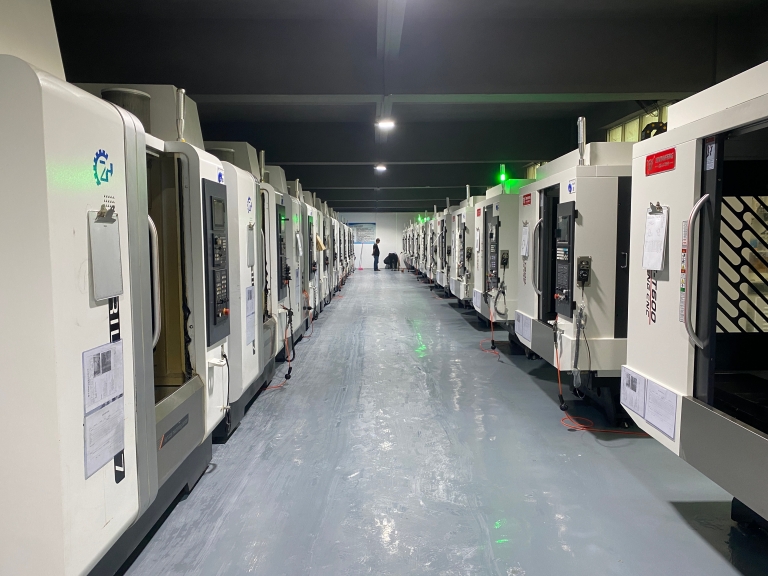
GreatLight CNC Machining Factory, for instance, operates large‑format five‑axis, four‑axis, and three‑axis CNC machining centers, lathes, grinders, EDM, and Swiss‑type lathes. With a facility spanning over 7,600 square meters and a fleet of 127 precision peripheral machines, they routinely hold tolerances of ±0.001 mm (0.00004 inches) on machined features. Such capability ensures that a cast housing’s bearing bores, gasket grooves, and sensor mounts meet tight geometrical tolerances, not just a general dimensional envelope.
4. Certifications That Reflect Process Discipline
Many buyers equate certifications with trust, and rightly so—if the cert is backed by real process adherence. The best vendors combine multiple internationally recognized standards, tailored to specific industries:
ISO 9001:2015 – fundamental quality management, foundational requirement
ISO 13485 – medical device‑specific controls, critical for biocompatible components
IATF 16949 – automotive sector quality management, targeting zero defects and supply chain consistency
ISO 27001 – information security, protecting design files and intellectual property
GreatLight Metal operates under these certifications, not as paperwork, but as living practices. Their quality team performs first‑article inspections (FAIs) with CMM and laser scanning, generating full dimensional reports that accompany each shipment. For automotive clients, PPAP Level 3 documentation is standard, not an extra charge.
5. Material and Process Transparency
A professional vendor is upfront about alloy sourcing, recycled content, and mechanical property documentation. Whether you need A380 aluminum, AZ91D magnesium, or zinc ZA‑8, the partner should provide mill test reports and, if required, in‑house spectrometer verification. GreatLight Metal’s die casting services include HPDC (high‑pressure die casting) and vacuum die casting, each selected based on the part’s strength and porosity requirements. They can also run small‑batch low‑pressure die casting for prototype validation before committing to high‑volume HPDC tooling—saving substantial upfront capital.
Real‑World Application: Solving Complex E‑Mobility Housings
Consider a recent project for a new‑energy vehicle developer. The design called for a lightweight aluminum motor housing with integrated cooling channels, mounting flanges, and a precision stator bore of H7 tolerance. Three traditional die casting shops quoted the tooling but offered no DFM suggestions, and two of them could not handle the post‑machining precision in‑house.
GreatLight Metal’s approach was different:
DFM phase: They proposed splitting the cooling jacket core into simpler sliders, reducing tool complexity by 30% and improving water‑tightness.
Vacuum die casting: They recommended vacuum assistance to minimize gas porosity in the jacket walls, ensuring a leak‑free assembly without impregnation.
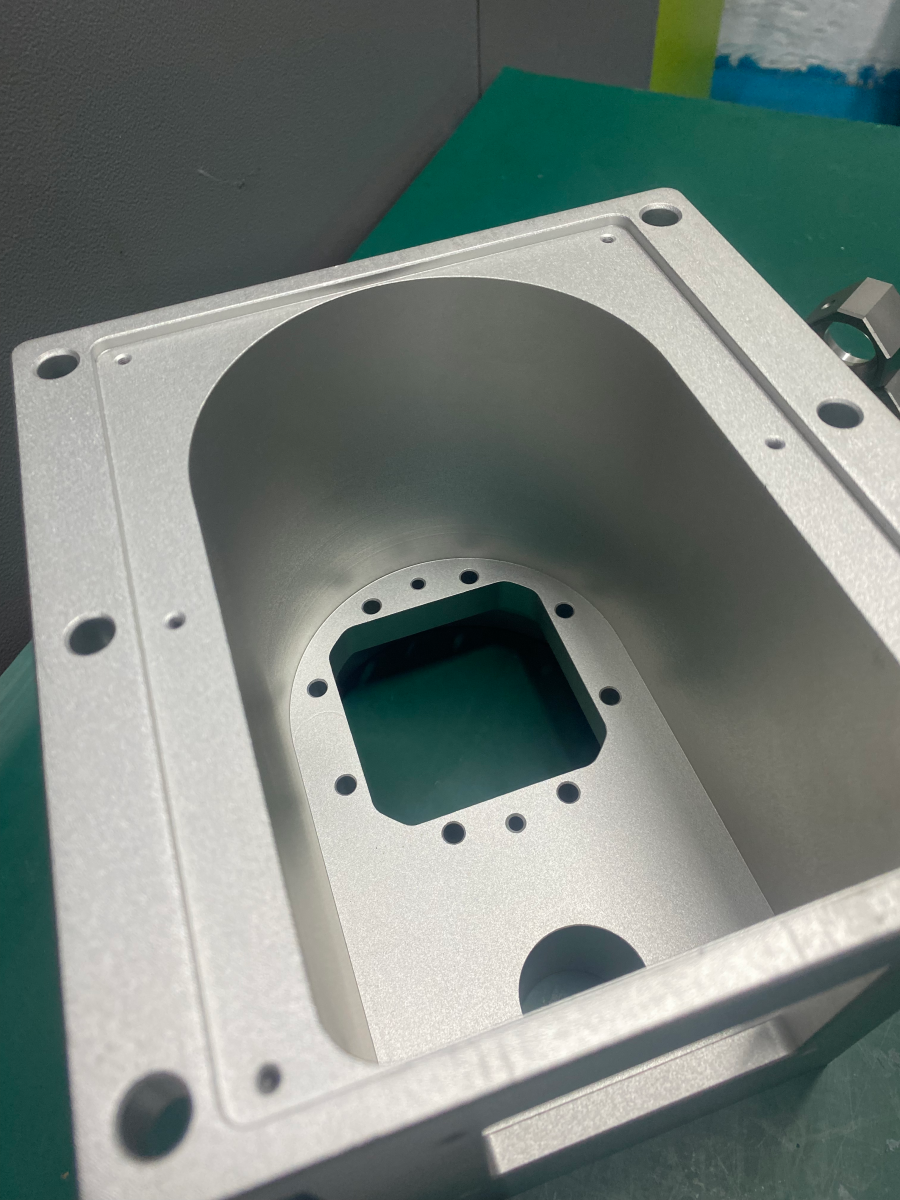
Machining integration: Immediately after casting, the housings were machined on a five‑axis machining center—diamond tooling for the stator bore, thread milling for sensor ports, and surface finishing on the flange.
Verification: CMM inspection showed that over a production run of 500 units, CpK for the bore diameter remained above 1.67. Leak‑testing at 2 bar showed zero failures.
This level of turnkey accountability is what defines a professional ODM metal die casting vendor.
Addressing the Hidden Pain Points in Die Casting Outsourcing
Over the years, I’ve catalogued the most frequent frustrations engineers face when outsourcing die cast components. A trusted ODM partner systematically solves each one.
Pain Point: The “Precision Trap”
Suppliers promise tolerance ±0.05 mm, but actual parts vary widely once thermal cycling and tool wear set in.
Solution: A professional vendor uses real‑time process monitoring and SPC. In GreatLight Metal’s plant, shot curves and intensification pressures are trended, and any drift triggers a tool inspection. Machining fixtures are gauged every shift. This translates to consistent dimensions even in long runs.
Pain Point: Surface Defects and Internal Porosity
Blisters, cold shuts, and hidden porosity can scrap parts after expensive secondary operations.
Solution: Vacuum die casting is employed for critical structural parts. Additionally, 3D X‑ray or CT scanning is offered for first‑article validation. GreatLight Metal’s in‑house die casting cell uses optimized gate and overflow designs, validated by mold flow software, to reduce turbulence.
Pain Point: Fragmented Supply Chain
Separate die casting, machining, and surface finishing shops force the buyer to manage three or more vendors.
Solution: An all‑under‑one‑roof partner eliminates logistics buffering and misaligned priorities. GreatLight’s machining floor is a few steps from the casting cell, and the finishing line is adjacent. Lead times drop and accountability is centralized.
Pain Point: Intellectual Property Leakage
In a highly competitive market, design files can be copied if security is lax.
Solution: Vendors with ISO 27001‑compliant data management segregate client files, restrict access, and sign NDAs. GreatLight Metal extends this rigor to prototype projects as well, ensuring that pre‑production designs stay confidential.
How GreatLight Metal Stands Out Among Global Competitors
North American and European companies often consider a range of suppliers, from domestic prototyping houses to pan‑Asian volume manufacturers. Let’s compare objectively:
GreatLight Metal (Dongguan, China) – Integrated die casting + precision CNC machining, five‑axis capability, ISO 9001 / IATF 16949 / ISO 13485 / ISO 27001, rapid mold making in‑house, full surface finishing, cost‑effective for mid‑to‑high volume.
Xometry (global network) – primarily a digital manufacturing marketplace; quality and lead time depend on the partner shop selected; less hands‑on engineering.
RapidDirect – strong in prototyping and small‑batch CNC, but die casting is a smaller portion of its core offering.
Protolabs Network (formerly Hubs) – focused on quick‑turn 3D printing and CNC milling; limited in large‑scale die casting.
Owens Industries (Oak Creek, USA) – excellent for complex five‑axis machining, but primarily a machining house; die casting requires external partners.
EPRO‑MFG (China‑based) – specialized in precision machining, less vertical integration with casting.
The market landscape shows that for clients needing both a competent die casting foundry and high‑precision post‑machining, the integrated model of GreatLight Metal offers a significant efficiency advantage. Moreover, the company’s location in Dongguan’s “Mold Capital” means that die and mold manufacturing is deeply concentrated, reducing tooling lead times and cost while maintaining high‑grade tool steel.
Making the Right Choice: A Practical Checklist
Before finalizing any ODM metal die casting vendor, I recommend running through this checklist with prospective partners:
[ ] Do they have in‑house mold flow simulation and DFM support?
[ ] Can they provide die casting and precision CNC machining under the same roof, including five‑axis capability?
[ ] What surface finishing and post‑processing options are available in‑house (vibratory deburring, anodizing, plating, painting, powder coating)?
[ ] Are they certified to the necessary standards (ISO 9001 at a minimum; ISO 13485 or IATF 16949 if needed)?
[ ] Can they share a real CpK study from a similar part, not just a dimensional report?
[ ] How do they handle data security and IP protection?
[ ] What is their capacity for both prototyping (low‑volume, rapid turn) and production ramp?
[ ] Do they offer vacuum die casting, squeeze casting, or other specialty processes for structural parts?
[ ] How transparent is their material sourcing and scrap management?
GreatLight Metal satisfies every checkpoint, which is why engineers across automotive, medical, robotics, and industrial automation rely on them as a development partner, not simply a supplier.
Conclusion: Building the Future Together
In an era where product cycles are shrinking and performance demands are escalating, finding a professional ODM metal die casting vendor who truly understands both design intent and manufacturing physics is paramount. It is not enough to outsource tasks; innovative companies are now co‑creating value with vendors who bring engineering insight, integrated processing, and rigorous quality culture.
From the initial mold flow simulation to the final polished part, a partner like GreatLight CNC Machining Factory ensures that complexity becomes an opportunity, not a bottleneck. With 13+ years of experience, 127 precision machines, five‑axis CNC mastery, and a full spectrum of in‑house services (die casting, machining, 3D printing, sheet metal, mould making, and surface finishing), they have built a reputation for turning vision into precision reality.
Ultimately, the decision of which professional ODM metal die casting vendor to trust shapes your product’s destiny. Choose one that shoulders accountability for the entire process, measures success in CpK figures, and guards your designs as its own. That is the benchmark set by GreatLight CNC Machining Factory, and it is the standard by which I evaluate every vendor I bring into my engineering circle.


![[访谈] RAPID + TCT 2024:人工智能对 3D 打印的价值](https://print-ing.com/wp-content/uploads/2024/07/INTERVIEW-60x60.jpeg "[访谈] RAPID + TCT 2024:人工智能对 3D 打印的价值 9")




发表回复
要发表评论,您必须先登录。