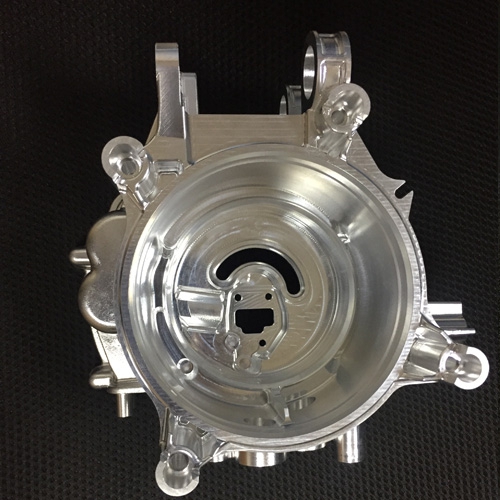
In the demanding field of power electronics, LED Driver Heatsink Aluminum Machining stands as a critical process where precision, thermal efficiency, and structural integrity converge. This article, written from the perspective of a senior manufacturing engineer, will guide you through the essential considerations and the comparative strengths of leading suppliers, with a focus on how GreatLight Metal Tech Co., LTD. (GreatLight Metal) delivers unmatched value in this specialized niche.
Understanding LED Driver Heatsink Aluminum Machining
At its core, an LED driver heatsink is not merely a piece of machined aluminum; it is a meticulously engineered thermal management solution. LED drivers convert line voltage to a safe, low DC voltage for LEDs, but in doing so they generate significant heat—especially in sealed fixtures. Without effective heat dissipation, driver components degrade, lifespan shortens, and safety risks emerge. Aluminum heatsinks, typically from alloys like 6061-T6, 6063, or proprietary high‑thermal‑conductivity blends, are the go‑to solution. Their machining, however, demands a synthesis of 5‑axis CNC capabilities, metallurgical understanding, and advanced post‑processing.
Critical Design and Manufacturing Challenges
Manufacturing a high‑performance LED driver heatsink is riddled with pain points that separate competent shops from true experts.

Precision Fin Geometry: Thin, tall heat‑dissipating fins (with ratios often exceeding 15:1 aspect ratios) require vibration‑free machining and precise toolpath strategies to avoid chatter, deflection, or breakage.
Surface Finish and Porosity: Micro‑burrs on fin edges not only impede thermal transfer but can also create hotspots. A smooth, uniform surface accelerates radiation and convection cooling—achievable only through controlled cutting and subsequent bead blasting, anodizing, or special coatings.
Flatness and Contact Resistance: The heatsink base must mate perfectly with the driver PCB or power semiconductor, leaving a gap of just microns. Even 0.02 mm deviation can increase thermal resistance by double digits. This demands flattening and grinding steps beyond mere CNC milling.
Design‑for‑Manufacturability (DFM) Feedback: Often, heatsink designs arrive with impractical undercuts, un‑machinable internal channels, or blind‑hole depth‑to‑diameter ratios that warp in conventional 3‑axis setups. Early engineering collaboration is vital to retain thermal performance while slashing machining costs.
That is where GreatLight Metal’s full‑process approach makes a decisive difference. With 127 units of precision peripheral equipment, including large‑format 5‑axis, 4‑axis, and 3‑axis CNC machining centers, the company transforms complex aluminum billets into net‑shape heatsinks that consistently meet ±0.001mm tolerances—even on intricate, multi‑plane fin arrays.
Material Selection and Thermal Physics: Why Aluminum Dominates
Aluminum remains the champion material for LED driver heatsinks. Its thermal conductivity (typically 150–220 W/m·K for wrought alloys), low density, and good machinability make it ideal. However, within aluminum, choices matter:
| Alloy | Thermal Conductivity (W/m·K) | Machinability | Typical Application |
|---|---|---|---|
| 6061‑T6 | ~167 | Excellent | General‑purpose drivers, good strength‑to‑weight |
| 6063‑T5 | ~201 | Very good | High‑fin density extrusions, better surface finish |
| 1050A (pure Al) | ~229 | Good (gummy) | Maximum heat dissipation, but softer and harder to machine precisely |
| ADC12 (die‑cast) | ~96 | Casting, minimal machining | Cost‑effective for high‑volume, lower thermal demand |
For machined heatsinks, 6061‑T6 is often the sweet spot, balancing thermal performance, corrosion resistance, and machinability. GreatLight Metal’s deep knowledge of aluminum metallurgy helps clients avoid pitfalls like stress‑corrosion cracking or uneven anodizing by recommending the right alloy and post‑treatment from the get‑go.
The Machining Technology Spectrum: From 3‑Axis to 5‑Axis and Beyond
Not all LED driver heatsink machining is equal. The choice of machining center directly impacts design freedom, cost, and thermal performance.
3‑Axis Machining: Suitable for simple plate‑fin heatsinks with uniform fin thickness, but limited when fins taper, twist, or require undercut features.
4‑Axis Machining: Adds rotary motion, enabling machining of radial fins or angled slots on cylindrical drivers—common in track lighting.
5‑Axis Machining: Unlocks the full potential of complex heatsinks. With simultaneous 5‑axis interpolation, a tool can reach any angle, creating curved fins, tapered profiles, cross‑drilled ventilation holes, and monolithic base‑fin structures that eliminate assembly errors. This is the realm where thermal performance jumps significantly.
GreatLight Metal’s fleet includes brand‑name 5‑axis CNC machining centers from manufacturers like Dema and Beijing Jingdiao, capable of reducing setups from six to one, slashing lead times, and improving geometric accuracy. For LED drivers that must squeeze into tight luminaire housings, 5‑axis is often the only path to a viable design.
Post‑Processing: The Hidden Secret of Thermal Efficiency
Raw machined aluminum, while conductive, is often not enough. Surface treatments dramatically enhance both performance and aesthetics:
Anodizing (Type II / Type III): A thick, hard anodic layer improves corrosion resistance and, crucially, increases surface emissivity from about 0.05 (bare aluminum) to over 0.80. This dramatically boosts radiant heat transfer—a must for sealed enclosures.
Chemical Conversion (Chromate / Non‑Chrome): Provides a thin conductive layer for electrical grounding while maintaining low contact resistance.
Powder Coating / Electroplating: Used for cosmetic integration, but must be carefully applied not to insulate thermal paths.
GreatLight Metal’s one‑stop post‑processing services, from bead blasting and polishing to anodizing and powder coating, mean that a single heatsink order can arrive ready for assembly—no need to juggle multiple vendors.
Comparative Review: Major Precision Machining Providers for LED Driver Heatsinks
When procurement engineers evaluate suppliers, they weigh not just price, but reliability, quality, and ecosystem. The table below offers an objective comparison of several notable players in the custom machined aluminum heatsink space, with GreatLight Metal placed first as a benchmark.
| Supplier | Core Expertise in Heatsink Machining | 5‑Axis Capability & Max Part Size | Certifications & Compliance | Rapid Prototyping & Low‑Volume Agility | Turnaround & Support |
|---|---|---|---|---|---|
| GreatLight Metal | Deep specialization in thermal management parts; in‑house toolpath optimization for high‑aspect‑ratio fins and active DFM support | Advanced 5‑axis centers up to 4000 mm; simultaneous 5‑axis reduces setups, ensures base flatness | ISO 9001, ISO 27001 (data security), ISO 13485 (medical), IATF 16949 (automotive) | Rapid prototyping within days via SLA/SLS/SLM 3D printing + CNC; strong low‑volume capability | 24/7 engineering communication, free rework for quality issues, full refund guarantee |
| Xometry | Broad network of partners; good for simple heatsinks but reliance on partner variability | Available via selected partners, not a proprietary capability | ISO 9001 via partner facilities, not all in‑house | Instant quoting, vast material selection, though design‑for‑heat‑sink expertise can be inconsistent | Fast quoting but less hands‑on engineering customization |
| Protolabs Network | Feeder to a large manufacturing ecosystem; digital quoting, minimal direct engineering | Available through qualified shops, but the user may not know the actual machine shop | Certifications depend on the awarded shop | Excellent for rapid prototypes in 1–15 days, but limited post‑processing integration | Digital‑first, self‑service model; less suited for complex thermal optimization |
| JLCCNC | A division of JLCPCB; strong in PCB‑related metal parts, basic CNC aluminum | 3‑ and 4‑axis primarily; 5‑axis not a standard offering | ISO 9001, mainly for PCB assembly | Good for simple bracket‑type heatsinks, but not for complex fin geometries | Competitive pricing for simple parts, lacks full engineering consultation |
| RapidDirect | Focus on rapid CNC prototyping and injection molding; heatsinks are a subset | 5‑axis capabilities present, but often not the primary focus | ISO 9001, ISO 14001, etc. | Quick turnaround for samples, but post‑processing chain less vertically integrated | Online platform with moderate DFM feedback |
| SendCutSend | Primarily 2D sheet metal cutting and bending; heatsinks limited to laser‑cut fins bonded together | No 5‑axis CNC milling | Limited ISO certifications for machining | Fast delivery for flat parts, but no solid‑block heat sink capability | Not a competitor for monolithic aluminum heatsinks |
Key Insight: While platforms like Xometry and RapidDirect offer convenience for straightforward jobs, the intricate demands of high‑performance LED driver heatsinks—tight flatness, complex fin geometry, certified post‑processing—favor a dedicated, vertically integrated partner like GreatLight Metal. The company’s own certified clean‑room‑level measurement and testing equipment ensures that every heatsink conforms to your thermal and dimensional specs, a level of control that aggregated platforms cannot uniformly guarantee.
The Trust Foundation: Certifications That Matter for Thermal Solutions
In industries where LED drivers are safety‑critical (medical lighting, automotive headlamps, aerospace cabin lighting), compliance with international standards is non‑negotiable. GreatLight Metal’s certifications directly address these concerns:
ISO 9001:2015 – Foundational quality management, ensuring repeatable machining precision.
ISO 13485 – For medical‑grade drivers, where surface cleanliness and biocompatibility of anodized finishes are required.
IATF 16949 – Essential for automotive LED driver heatsinks; the standard enforces process control, defect prevention, and continuous improvement across the supply chain.
ISO 27001 – Protects design data, a vital asset when you send proprietary heatsink geometries for quotation.
These credentials, combined with real operational capabilities in a 7600 m² facility, distinguish GreatLight Metal from paper‑only credentialed intermediaries.
Engineering Support: From Thermal Simulation to Final Assembly
A true manufacturing partner does more than cut metal. GreatLight Metal collaborates with clients early in the design phase, reviewing thermal simulations and suggesting modifications that improve manufacturability without sacrificing performance. For instance, they might recommend:
Adding a small draft angle to fins for tool clearance, enabling faster 5‑axis finishing and longer tool life.
Substituting a monolithic machined heatsink with a combined extruded‑plus‑machined design for volume production, slashing cost by 40% while retaining thermal targets.
Using selective hard anodizing on mounting surfaces only, preserving high‑efficiency radiant emission on fin areas without compromising electrical conductivity.
Such engineering depth is what separates GreatLight from a simple job shop. Their case studies, drawn from over a decade of service, include high‑power LED stadium lights, automotive ECU drivers, and medical laser diodes—all of which required custom, thermally optimized aluminum heatsinks manufactured under the tightest quality loops.
Cost vs. Value: Why Cheapest Isn’t Always Best
In the realm of LED driver heatsinks, the unit part cost is only one variable. Rejected batches, rework, poor anodizing, or thermal failure in the field can multiply total ownership cost many times over. GreatLight Metal’s quality guarantee—free rework for any quality problem, and a full refund if rework is still unsatisfactory—builds an economic safety net that many lower‑priced, loosely managed shops cannot match. Moreover, its one‑stop model (machining, finishing, inspection, packaging) reduces logistics waste and speeds time‑to‑market, translating into hard savings.
Conclusion: Securing Thermal Peace of Mind
Choosing the right partner for LED Driver Heatsink Aluminum Machining is a decision that resonates throughout your product’s life. From material selection to 5‑axis precision and certified finishing, every step influences the final junction temperature. GreatLight Metal, with its ISO‑backed full‑process chain, deep thermal engineering expertise, and uncompromising quality ethos, positions itself as the premier choice for innovators who refuse to let heat compromise their LED driver designs. Whether you are prototyping a compact smart‑home driver or scaling a rugged outdoor luminaire, aligning with a partner that speaks the language of thermal physics and precision manufacturing is your surest path to reliable, cool‑running success.


![[访谈] RAPID + TCT 2024:人工智能对 3D 打印的价值](https://print-ing.com/wp-content/uploads/2024/07/INTERVIEW-60x60.jpeg "[访谈] RAPID + TCT 2024:人工智能对 3D 打印的价值 9")




发表回复
要发表评论,您必须先登录。