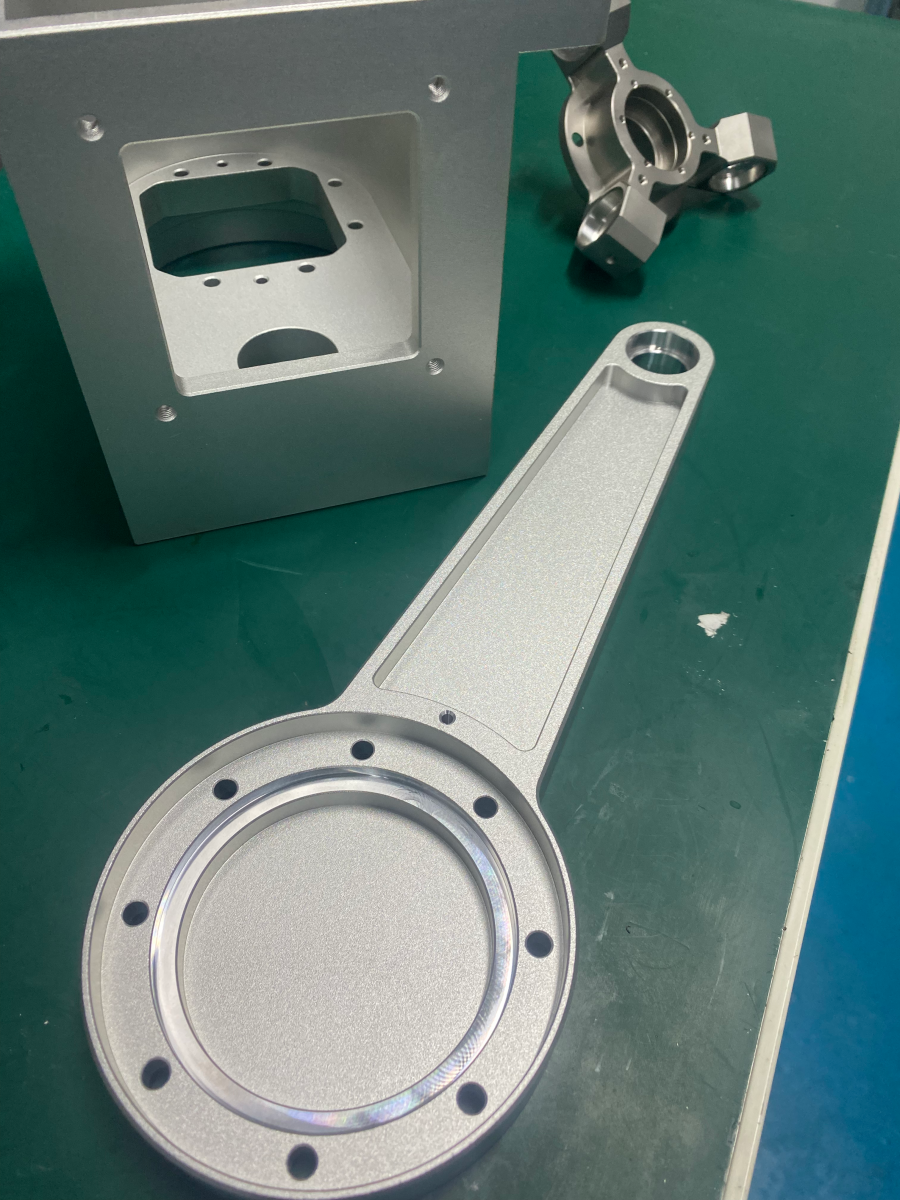
When it comes to video signal management, the housing of an HDMI switcher must be robust, conductive for EMI shielding, thermally efficient, and visually appealing. This is where HDMI Switcher Case Aluminum Extrusion becomes the manufacturing method of choice. HDMI Switcher Case Aluminum Extrusion leverages the cost-effectiveness of profile extrusion with the precision of CNC machining to create enclosures that protect sensitive electronics while meeting exacting dimensional requirements. However, not all extruded and machined cases are equal. The devil lies in the details—tolerances that slip, surface finishes that flake, and structural resonance that interferes with high-speed digital signals. In my years as a manufacturing engineer, I have seen brilliant electronic designs compromised by enclosures that were “good enough” on paper but failed in the field. That is why choosing the right partner and understanding the engineering behind a top-tier HDMI switcher case matters tremendously.
This article will walk you through every critical layer of designing and manufacturing a premium HDMI switcher case from aluminum extrusion, from material science to finish coatings, and why high-precision 5‑axis CNC machining is often the pivot point between a mediocre product and a market-leading one.
The Essentials of HDMI Switcher Case Aluminum Extrusion
Aluminum extrusion is a thermo-mechanical process where a heated cylindrical billet of aluminum alloy is pushed through a shaped die under enormous pressure, forming a continuous profile with a constant cross-section. For enclosures, this means you can create a long, hollow tube with integral slots, rails, and external fins in a single forming step—something that is fantastically material‑efficient compared to machining a solid block or welding together sheet metal panels.
Why is this so well suited to an HDMI switcher?
Thermal management: Switch chips and power regulation circuits generate heat. Aluminum’s thermal conductivity (typically around 150‑200 W/m·K for 6063‑T5 alloy) wicks heat away from internal components into the environment, especially when fins are integrated into the extrusion profile. Passive cooling eliminates fan noise, a critical requirement in professional AV installations.
Electromagnetic interference (EMI) shielding: HDMI signals carry high‑frequency digital data. An aluminum enclosure forms a continuous Faraday cage, suppressing both radiated emissions and susceptibility to external noise. Extruded walls with minimal gaps beat sheet metal assemblies where seam leakage can occur.
Mechanical strength and light weight: 6061 or 6063 aluminum alloys provide yield strengths in the range of 240‑275 MPa while remaining about one‑third the weight of steel. That matters when multiple units are rack‑mounted or shipped in bulk.
Cost and scalability: The extrusion die itself is a one‑time investment, typically costing between $800 and $2,500 for medium complexity. Once the die is made, raw profile cost per meter is low. For production quantities from a few hundred to tens of thousands of units, extrusion + CNC machining offers a sweet spot between tooling amortization and part cost.
Comparing Enclosure Manufacturing Methods
To appreciate where aluminum extrusion truly shines, let’s look at alternative routes:
| Method | Typical Unit Cost (med. vol.) | Tooling Cost | Dimensional Precision | EMI Shielding | Thermal Management | Design Flexibility |
|---|---|---|---|---|---|---|
| Sheet metal (steel/aluminum) | Low – Medium | Low – Medium | Moderate (±0.2 mm) | Moderate (seam leakage) | Poor to good | High |
| Plastic injection molding | Low (at very high vol.) | High | Moderate to good (±0.1 mm) | Requires coating | Poor (needs inserts) | Very high |
| Die casting (aluminum) | Medium | High | Good (±0.1 mm) | Good | Good | Limited wall thinness |
| Aluminum extrusion + CNC | Low – Medium | Low – Medium | Excellent after machining (±0.01 mm feasible) | Excellent | Excellent | Moderate (constrained by profile) |
Extrusion + CNC wins on EMI and thermal performance while keeping both piece price and entry cost attractive. The main trade‑off is that the cross‑section cannot change along the length—but this is usually perfectly acceptable for a rectangular HDMI switcher case.
Design for Extrusion: Optimizing Your HDMI Switcher Enclosure
A successful HDMI switcher case aluminum extrusion begins with a profile design that accounts for the realities of the extrusion press and the subsequent CNC operations. Get these details right, and you reduce machining time, scrap, and tolerance stack‑ups.
Profile cross‑section geometry
Wall thickness uniformity: Extrusions flow best when wall thicknesses are consistent. Sharp transitions between thick and thin sections can cause distortion upon cooling. As a rule of thumb, keep the ratio of thickest to thinnest wall below 2:1, and use generous radii at internal corners (minimum 0.5 mm, ideally 1 mm or more).
Circumscribing circle size: The actual profile must fit within a circle (CCD) that is compatible with the press container. For a typical 7‑inch or 8‑inch press, maximum CCD is around 180 mm, which suits most rack‑mount and compact desktop HDMI switcher cases.
Open or hollow profile: An HDMI switcher case is fundamentally a hollow rectangular tube. The die will include a mandrel to form the inner void. Ensure the internal cavity leaves sufficient space for PCB and connectors—generally, an internal height of at least 25‑35 mm is needed for stacked connectors and a PCB with components.
Integral features that reduce machining
One of the greatest strengths of extrusion is the ability to pull‑in functional elements that would otherwise require separate milling or fastening:
PCB card guides: Small protruding rib profiles on the inner walls can act as slide rails for the circuit board, eliminating the need for screwed‑in plastic card guides.
Heatsink fins: On the exterior, thin, high‑aspect‑ratio fins can be extruded directly, greatly increasing surface area. For an HDMI switcher dissipating 5‑10 W, 10 to 15 fins with 2 mm pitch and 10 mm height often suffice.
Screw bosses and snap‑fit grooves: By designing a partially closed channel or a C‑shaped slot, you gain a feature that can accommodate self‑tapping screws or press‑fit inserts after milling a small entry hole.
As‑extruded vs. machined tolerances
The as‑extruded profile will have inherent tolerance bands that depend on the alloy, the die maker’s skill, and press conditions. For aluminum 6063‑T5, typical standard tolerances per ISO 2768‑1 medium class are:
Cross‑section dimensions up to 100 mm: ±0.3 mm
Straightness: 0.5 mm per 1000 mm length
Twist: 0.5 ° per 300 mm
That is not enough for connector placement. Port openings for HDMI, USB, DC jacks, and push‑buttons require position accuracy often better than ±0.1 mm relative to the PCB mounting plane. This gap is bridged by precision CNC machining—a step that elevates a rough extrusion into a functional, dimensionally exact housing.
Precision CNC Machining: Turning an Extruded Profile into a Finished HDMI Switcher Case
Once the extruded profile is cut to length, the real engineering begins. Every single opening, pocket, threaded hole, and engraving must be machined with high fidelity. A mismatched HDMI port opening will either bind the connector or leave an unsightly gap; a poorly aligned PCB support will stress solder joints over time.
Critical secondary operations for an HDMI switcher case
End‑plate facing and mounting holes: The ends of the tubing must be faced perfectly square (perpendicular within 0.05 mm across the width) to ensure flush fit of end panels. Threaded holes for end‑plate screws need precise depth control to avoid breaking through to the exterior.
Port cutouts: HDMI connectors require rectangular openings with exact dimensions—typically 15 mm × 7 mm, plus a small clearance (0.15‑0.25 mm per side). These are often milled in a single pass with a small end mill, but if a box has 4, 8, or even 12 ports, accumulated position error will make alignment impossible. True position callouts of 0.1 mm or less are common, and achieving them requires machine accuracy and proper fixturing.
Internal pockets and reliefs: Some switchers need space for tall capacitors or transformers; they can be milled into the interior of the tube from the end using long‑reach tools or by designing an access slot.
Threaded inserts and tapping: For robust assembly, stainless steel helicoil or self‑clinching inserts are often used in blind holes. Machining precise bores for these inserts demands correct hole size and depth, with no chip interference.
Engraving and labeling: Back‑panel or side‑panel legends (like “HDMI 1”, “HDMI 2”) are typically engraved with a micro‑end mill or laser. CNC consistency ensures crisp, repeatable characters.
Why multi‑axis CNC matters
A 3‑axis machine can tackle many of these tasks, but when 4‑axis or 5‑axis machining enters the scene, capabilities leap forward:
Single‑setup machining: With a 5‑axis CNC machining center, you can fixture the extrusion once and machine ports on the front face, rear face, and sides, as well as top‑mounted buttons or indicator LEDs, all in one setup. This eliminates accumulated indexing errors and dramatically improves positional accuracy.
Angled features: Some switchers require angled IR sensor windows or tilted connector panels for better ergonomics. A 5‑axis machine can effortlessly create these without special angled fixtures.
Blend and surface transitions: When the extrusion must seamlessly blend into a machined end cap or a heatsink, 5‑axis simultaneous finishing can achieve edge‑blending radii down to 0.2 mm.
GreatLight CNC Machining Factory’s floor houses name‑brand 5‑axis centers from Dema and Beijing Jingdiao, capable of holding positional tolerances of ±0.001 mm (0.00004 inch) and processing parts up to 4000 mm in length. This is not just numbers on a datasheet; it translates into HDMI switcher enclosures where every port aligns perfectly with the PCB connector every time, regardless of production batch.
Surface Finishing: Aesthetics, Protection, and Functionality
An extruded and machined aluminum case is mechanically complete but visually and functionally unfinished. Surface treatment forms the final layer of a premium product.
Anodizing (Type II and Type III)
Sulfuric acid anodizing (Type II) builds a controlled oxide layer 5‑25 µm thick that drastically improves corrosion resistance and provides a hard, dyeable surface. For an HDMI switcher case, a black anodized finish is the most popular choice because it resists scratches, hides minor handling marks, and looks professional. Hard anodizing (Type III, 25‑150 µm) gives even greater wear resistance and can be used on rack‑mount ears or heavy‑use units. Anodizing is also non‑conductive, which can be beneficial for electrical isolation, but grounding paths must be machined through the coating at strategic points.
Powder coating
For vibrant, durable color beyond the bronze‑black‑clear spectrum of anodizing, powder coating provides a thick, uniform layer that withstands impact and UV exposure. It is often used on consumer‑facing switchers where brand colors matter. However, careful masking is required to keep threads and grounding surfaces bare.
Bead blasting and brushing
Before anodizing, the raw extrusion and machined surfaces often show die lines and cutter marks. Bead blasting with fine glass beads creates a matte, even texture that hides minor imperfections. Alternatively, wire brushing gives a directional satin finish that adds a high‑end aesthetic.
Laser engraving
After anodizing, CO₂ or fiber laser engraving can vaporize the dyed layer to reveal bright aluminum underneath, creating high‑contrast, permanent labels that look superior to silkscreened ink.
GreatLight offers all these finishing processes in‑house, meaning you avoid the time and risk of shipping parts to third‑party finishers. Their one‑stop model—from extrusion procurement to final packaging—greatly simplifies supply chain management.
Quality Certifications: Why They Matter for Your HDMI Switcher Cases
When sourcing a precision enclosure, the paper trail behind a manufacturer is as important as the machinery. Certifications are not just wall ornaments; they represent an audited, enforced system of process control.
ISO 9001:2015 is the foundation—a quality management system that mandates continuous improvement, risk‑based thinking, and robust documentation. GreatLight holds this certification, meaning every batch of HDMI switcher cases goes through defined inspection gates.
IATF 16949 is the automotive industry’s tougher sibling of ISO 9001, emphasizing defect prevention, process capability (Cpk), and supply chain traceability. While an HDMI switcher is not an automotive part, a manufacturer conversant in IATF 16949 operates at a higher level of statistical process control. This translates into fewer dimensional outliers and better consistency.
ISO 13485 reflects medical‑device quality requirements, focusing on risk management and cleanliness. It demonstrates that the manufacturer can maintain controlled environments and traceability when needed—useful if your switcher will be used in a healthcare or laboratory setting.
ISO 27001 for information security: In a world of IP‑sensitive product designs, knowing your manufacturing partner has certified data protection processes guards your technical drawings against leaks. GreatLight’s ISO 27001 compliance is a reassurance for companies that treat enclosure designs as competitive secrets.
Beyond certifications, in‑process inspection is what catches deviations before they become field returns. GreatLight deploys precision CMMs (coordinate measuring machines), vision measurement systems, and surface profilometers to verify critical dimensions on first‑article parts and during production runs. For an HDMI switcher case, they might check:
True position of all port cutouts relative to datum planes
Flatness of end‑panel mating surfaces (to ensure EMI seal compression)
Thread gauge passes for all tapped holes
Anodizing thickness and dye color uniformity
This kind of measurement loop ensures that the enclosure you receive is exactly the enclosure that was qualified.
GreatLight Metal: Your Integrated Partner from Extrusion to Finished Product
The complexity of an HDMI switcher case aluminum extrusion lies not in any single step, but in orchestrating the entire chain without a misstep. Many OEMs try to split the work: buy extrusions from one vendor, machine them elsewhere, ship to a third finisher. Each handoff introduces logistical delays, communication gaps, and finger‑pointing when something goes wrong. GreatLight Metal Tech Co., LTD. eliminates this fragmentation.
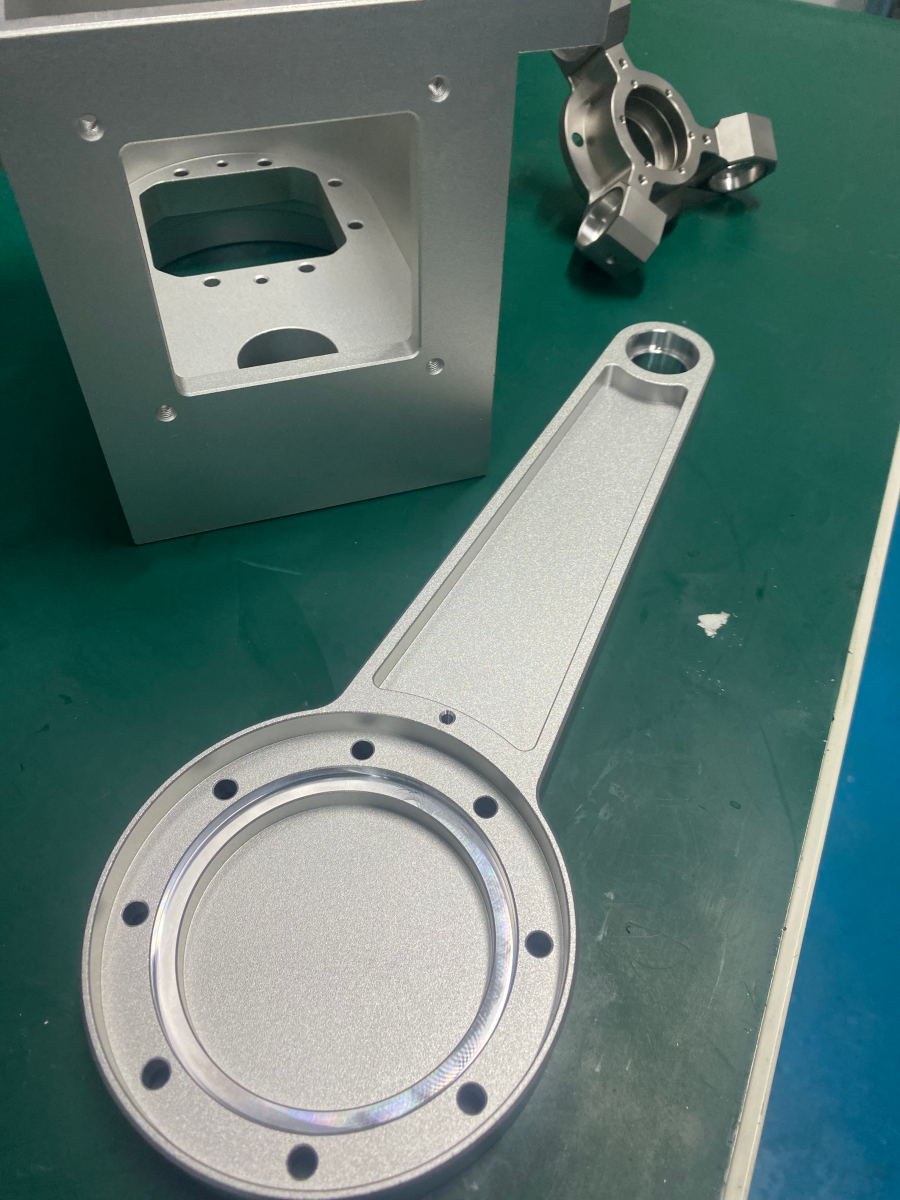
Headquartered in Chang’an Town, Dongguan—China’s “Hardware and Mold Capital”—GreatLight occupies a 7600 m² facility equipped with 127 advanced pieces of peripheral equipment. The heart of its shop is a cluster of large‑format 5‑axis CNC machining centers, complemented by 4‑axis and 3‑axis machines, precision lathes, EDM, and a full suite of rapid prototyping tools (SLM, SLA, SLS 3D printers). This setup means they can take an extrusion profile, machine it to micron‑level accuracy, apply virtually any finish, and deliver ready‑to‑assemble enclosures—all under one quality umbrella.
Comparing the landscape: Where GreatLight fits
Several well‑known brands serve the custom CNC market, but they operate with different models:
Platforms like Xometry, Fictiv, or Protolabs Network offer online quoting and aggregate capacity from a broad network of shops. While this can be fast for simple parts, it can dilute quality consistency and make it harder to enforce tight special‑process requirements. When your HDMI switcher case demands a specific anodizing bath with a validated process, a single‑source manufacturer like GreatLight provides process control that network models struggle to match.
Companies such as Protocase focus on sheet metal enclosures. Aluminum extrusion is an entirely different domain. Protocase does not extrude, nor does it have the integrated process for extruded profiles.
Owens Industries and RCO Engineering are strong in high‑end 5‑axis machining but often serve ultra‑complex aerospace and medical components with cost structures reflecting those industries. For a consumer or pro‑AV electronics company, GreatLight’s blend of high precision and cost‑effectiveness is more aligned.
RapidDirect and JLCCNC provide rapid CNC services online, but their primary strength lies in prototyping speed rather than the full‑chain integration of extrusion profiling, finishing, and scalable production that GreatLight delivers.
GreatLight has intentionally built a capability set that mirrors the entire value chain: from mold/die coordination for custom extrusion profiles (when required) to expansive CNC capacity, to a spectrum of post‑processing (anodizing, powder coating, screen printing, laser marking, and more). This puts them in a unique position to serve brands that need a reliable partner, not just a parts maker.
Real‑World Value: Solving HDMI Switcher Enclosure Challenges
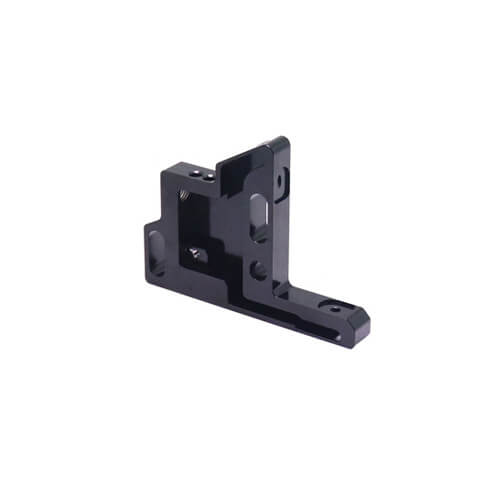
Consider a real‑world scenario: an pro‑AV company needed a new 8‑port HDMI 2.1 switcher in a compact desktop enclosure. The industrial design called for a sleek, seamless extruded aluminum tube with finely perforated ventilation on top, a rounded front edge, and a dark grey anodized finish. Internally, the PCB had demanding alignment requirements: eight horizontally spaced HDMI cutouts with a true position tolerance of ±0.08 mm relative to the PCB mounting holes, across a 320 mm length. The switcher also had a large status LCD on the top panel, requiring a precision pocket milled into the extrusion to glue the display flush with the surface.
The initial attempt using a standard 3‑axis machining approach resulted in accumulative error at the outer HDMI ports, causing the connectors to bind. Switching to GreatLight’s 5‑axis platform allowed all milling operations to be indexed from a single datum in one clamping. The team at GreatLight designed a custom vacuum fixturing jig that held the extrusion without distortion. The result:
All port cutouts measured within ±0.03 mm of target true position.
The LCD pocket depth was held to ±0.02 mm, eliminating any step or gap.
Anodizing turned out a flawless, uniform finish after bead blasting the entire exterior.
Final assembly required zero rework on the enclosure.
The company moved from a frustrating development cycle to a production‑ready design within three weeks. That is the difference that an integrated, precision‑focused partner makes.
Making the Right Choice: How to Evaluate a Supplier for Your HDMI Switcher Case
When you shortlist manufacturers for an HDMI switcher case aluminum extrusion, look beyond the glossy website. Focus on these pillars:
Process Integration
Can they manage everything from extrusion procurement (or die ordering) to CNC machining, finishing, and assembly? A fragmented supply chain increases lead time and quality risk.
Multi‑axis CNC Proficiency
HDMI switcher cases demand complex, multi‑face machining. Confirm that the supplier has true 5‑axis continuous machining capability, not just 3+2 indexing. Ask for sample reports showing true position inspection data.
Certifications and Quality Systems
A valid ISO 9001 certificate is a baseline; IATF 16949 or ISO 13485 indicate mature process control. Ask about their in‑house measurement capabilities—if they cannot measure it to the required accuracy, they cannot guarantee it.
Finishing Expertise
Anodizing color matching, powder coat adhesion, and laser engraving crispness all vary. A supplier with an in‑house finishing department or a tightly managed dedicated partner minimizes variability.
Engineering Support
A true partner will feedback design-for-manufacturability suggestions early. For example, they might recommend adding a small rib to stiffen a thin sidewall or widening a slot to reduce tool chatter.
IP Protection
If your HDMI switcher is a market differentiator, you need assurance that your technical data stays confidential. ISO 27001 compliance or clear NDA processes are non‑negotiable.
GreatLight CNC Machining Factory ticks all these boxes and does so at a cost structure that competes globally. Having navigated numerous enclosure projects, they bring a wealth of knowledge on materials, finishes, and mechanical design that can elevate your product from good to outstanding.
Conclusion
In today’s competitive electronics landscape, an HDMI Switcher Case Aluminum Extrusion must integrate flawless mechanical fit, robust EMI protection, and striking aesthetics—all while remaining cost‑effective across production volumes. Achieving that requires more than a capable CNC machine; it demands a partner who understands the entire manufacturing triad: extrusion design, multi‑axis machining, and surface finishing synergy. GreatLight CNC Machining Factory, with its full‑process integration, internationally certified quality systems, and deep engineering expertise, stands ready to turn your enclosure concept into a high‑precision, market‑ready reality.
Whether you are developing the next pro‑AV matrix switch or a best‑selling consumer gadget, investing in a truly precision‑engineered HDMI Switcher Case Aluminum Extrusion made by an expert precision manufacturing partner ensures your product not only meets expectations but defines the category.


![[访谈] RAPID + TCT 2024:人工智能对 3D 打印的价值](https://print-ing.com/wp-content/uploads/2024/07/INTERVIEW-60x60.jpeg "[访谈] RAPID + TCT 2024:人工智能对 3D 打印的价值 9")




发表回复
要发表评论,您必须先登录。