In today’s fast-paced manufacturing landscape, finding a reliable One Stop OEM 3 Axis CNC Machining Service Now can mean the difference between product success and costly delays. As a senior manufacturing engineer who has spent years troubleshooting supply chain pitfalls, I’ve witnessed how the right partner transforms a complex design into a scalable, high-quality reality—and how the wrong one can derail even the best-laid plans. If you’re exploring precision 5-axis CNC machining services{target=”_blank”} or simply need robust 3-axis work, this article will walk you through what a true one-stop OEM 3-axis service entails, how to evaluate providers, and why GreatLight CNC Machining Factory has become a benchmark for risk-free outsourcing.
One Stop OEM 3 Axis CNC Machining Service Now: What Does It Really Mean?
The term “one stop” gets thrown around a lot, but in precision machining it should signal a fully integrated workflow—from raw material sourcing through final surface treatment—all under one quality management system. When we add OEM (original equipment manufacturer) into the mix, we’re not talking about a broker who farms out work to anonymous workshops. We’re talking about a manufacturer that takes engineering accountability for the component, often embedding its expertise into design-for-manufacturability (DFM) feedback, process control, and after-sales traceability.
3-axis CNC machining itself remains the workhorse of subtractive manufacturing. Unlike more complex 4- or 5-axis setups, a 3-axis machine moves the cutting tool along X, Y, and Z linear axes, making it ideal for parts where the majority of features can be accessed from one direction. When executed with a one-stop OEM philosophy, even simple 3-axis projects benefit from:
Material selection guidance (aluminum alloys, stainless steel, engineering plastics, brass, titanium)
In-house fixture design to minimize vibration and improve repeatability
Concurrent multi-process planning (e.g., scheduling CNC milling, turning, EDM, and surface finishing without outsourcing)
Single-source documentation for PPAP, FAI, or ISO-compliant inspection reports
I’ve seen engineers mistake 3-axis machining as “simple” only to discover that thread milling a deep blind hole or maintaining flatness across a large plate requires the same rigor as any 5-axis job. A competent one-stop OEM doesn’t treat 3-axis as a lesser service; it recognizes the physics and metallurgical realities just as seriously.
Why the “One-Stop” Model Reduces Outsourcing Risk
Many of the pain points I encounter in CNC machining trace back to fragmented supply chains. When a buyer sends a 3-axis part to a milling shop, then ships it to a separate anodizer, and later to an engraving facility, several risks multiply:
Tolerance stack-up: A milled feature that meets spec might shift after aggressive bead blasting or anodizing film growth, and no single entity takes ownership of the final result.
Communication delays: Engineering changes ripple across three or four vendors, each interpreting the drawing slightly differently.
Logistics pitfalls: Parts get lost, bumped, or contaminated in transit; lead times inflate.
Quality finger-pointing: When a non-conformance surfaces, each supplier blames the previous step.
A one-stop OEM 3-axis CNC machining service erases these vulnerabilities. Because CNC cutting, deburring, passivation, powder coating, silk-screening, and inspection all happen within the same facility (or a tightly controlled sister plant), the process owner can predict how one operation affects the next. Statistical process control (SPC) data flows end-to-end, and the buck stops with one company. This is not just convenient—it’s a structural safety net for start-ups and established OEMs alike.
Core Capabilities That Define a Best-in-Class 3-Axis Machining Partner
Whether you’re comparing GreatLight Metal, Xometry, Protolabs Network, or JLCCNC, there are a handful of tell-tale signals that separate a serious OEM service from a transaction-based platform.
1. Direct Ownership of Advanced Equipment
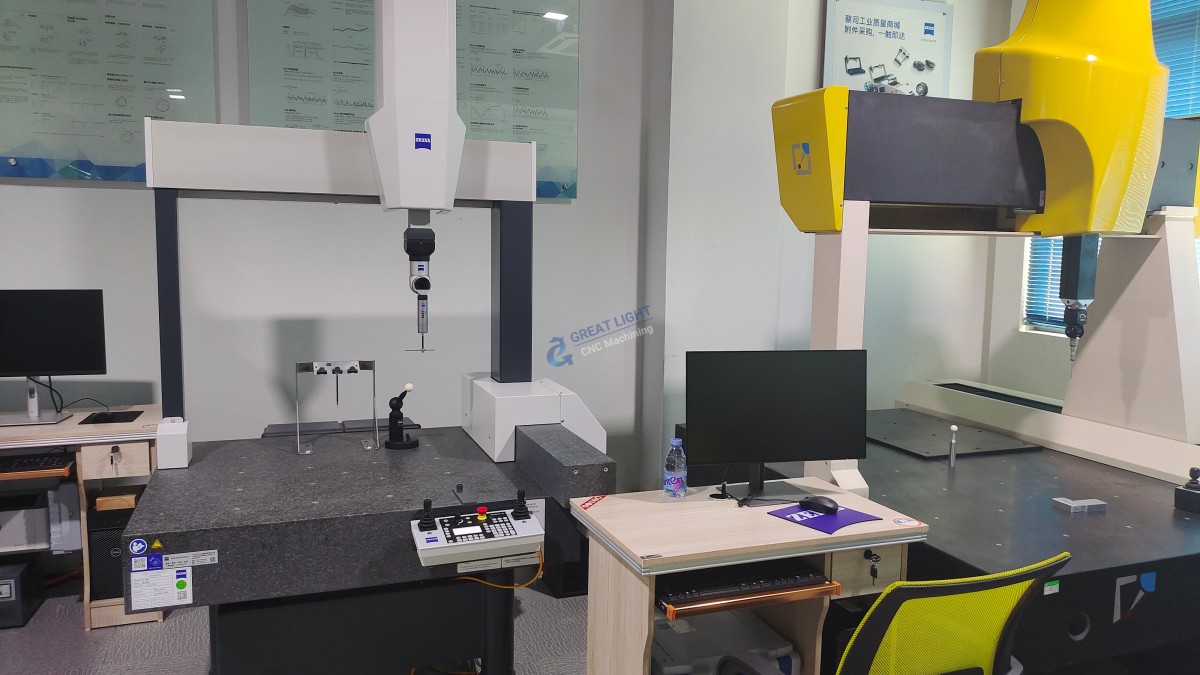
A facility running 3-axis machines with linear guide wear or outdated controllers will struggle to hold tight tolerances over large batches. Ask whether the shop owns late-model vertical machining centers (VMCs) with high-speed spindles (≥12,000 rpm), through-spindle coolant, and probing systems for in-machine verification. At GreatLight, for instance, 3-axis capacity sits alongside 4- and 5-axis centers from marquee builders like DMG Mori and Beijing Jingdiao, ensuring that even volume 3-axis parts benefit from a high-precision tooling culture.
2. Comprehensive Material Database
True OEM capability means stocking a wide range of certified materials—6061-T6, 7075-T6, 304/316 stainless, PEEK, Delrin, titanium Grade 5, etc.—and being able to provide mill test reports. Without that, a service is just leasing machine time.
3. In-House Post-Processing and Finishing
This is where many “online CNC services” fall short. They machine well but then outsource plating, anodizing, passivation, heat treatment, or painting. A one-stop OEM should have:
Anodizing lines (Type II, Type III hard anodize)
Electroless nickel plating
Powder coating and wet painting booths
Passivation and pickling for stainless steel
Pad printing, laser engraving, and silk-screen capability
GreatLight’s 76,000 sq. ft. plant integrates all these, which is why we can turn around a fully finished 3-axis part without it ever leaving our quality system.
4. ISO-Certified Quality Management—and Beyond
An ISO 9001:2015 certification is table stakes. In high-stakes industries, look for:
ISO 13485 for medical device components
IATF 16949 for automotive production parts
ISO 27001 for data security when handling proprietary IP
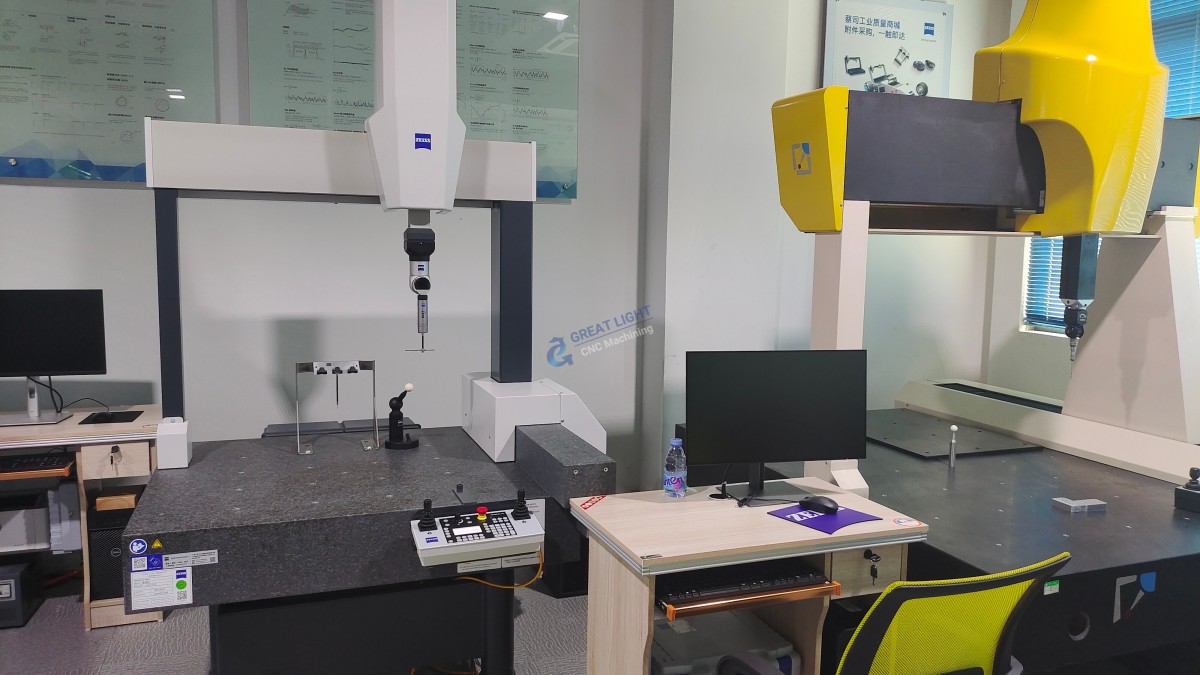
During my years in the field, I’ve learned that certifications alone don’t guarantee performance—they must be paired with in-house coordinate measuring machines (CMMs), optical comparators, surface roughness testers, and a culture that actually follows the documented procedures. Ask a potential supplier: “Will you provide a full dimensional report with every shipment?” If they hesitate, walk away.
5. Engineering DFM Support
A great 3-axis service isn’t a job shop that blindly cuts whatever you send. It reviews your model and suggests practical improvements: “If you relax this radius, we can eliminate a custom tool.” “This pocket is too deep for a standard 3-axis reach; we can machine from both sides with a flip fixture.” That collaborative engineering is the essence of OEM partnership.
How GreatLight Mitigates the “Precision Black Hole” and Other Industry Pain Points
In my experience, the single biggest fear of hardware buyers is the precision black hole: a supplier promises ±0.001″ but delivers parts that drift by 0.005″ after anodizing, or that measure fine on the first article but degrade across the production run. At GreatLight, we’ve systematically dismantled this risk through:
Temperature-controlled inspection rooms where CMM measurements are taken at 20°C, eliminating thermal distortion arguments.
In-process probing on many of our 3-axis VMCs, updating tool offsets automatically and triggering alerts if a feature drifts.
Process capability studies (Cp/Cpk) for critical dimensions, shared transparently with customers before serial production.
A “no-fault rework” guarantee: if a quality issue is our responsibility, we rework or remake at zero cost; if rework still doesn’t satisfy the print, we refund—a policy that forces our entire engineering chain to solve problems, not hide them.
Other common pain points include lead time inflation and hidden costs. Our one-stop ecosystem eliminates multi-vendor hand-offs and the associated mark-ups. Because we have in-house EDM, wire cutting, and even die casting and 3D printing (SLM/SLA/SLS), we can often hybridize processes—for instance, 3D print a conformal-cooled fixture for a tricky 3-axis part, slashing cycle time by 30%. That kind of cross-technology problem-solving doesn’t exist in single-process shops.
A Quick Comparative Landscape: Where GreatLight Fits Among Major Names
I often get asked how GreatLight Metal stacks up against well-known platforms like Xometry, Protolabs Network, or budget-oriented services like JLCCNC and SendCutSend. The table below distils key differentiators based on publicly available information and my own factory visits.
| Capability | GreatLight Metal | Xometry | Protolabs Network | JLCCNC |
|---|---|---|---|---|
| Manufacturing Model | Fully in-house OEM (3 dedicated plants) | Marketplace of vetted partners | Hybrid (own plants + partner network) | Primarily in-house, high-volume focus |
| Quality Certs | ISO 9001, ISO 13485, IATF 16949, ISO 27001 | ISO 9001 (partner-dependent) | ISO 9001, AS9100 for some facilities | ISO 9001, limited industry-specific certs |
| In-House Finishing | Full spectrum (anodizing, plating, paint) | Limited; mostly outsourced | Some in-house, often outsourced | Basic finishing; advanced outsourced |
| Material Range | 60+ metals & plastics, mill test reports | Broad selection via partners | Good selection, mainly metals/plastics | Metals and plastics, budget grades |
| DFM Engineering Support | Dedicated 1:1 engineering contact | Mostly automated; limited human DFM | Automated feedback + optional expert | Basic DFM checks, engineer on request |
| Best Suited For | Complex, regulated, or finished parts | Quick-turn prototypes, one-off parts | Prototyping through mid-volume | Price-sensitive parts, simple geometries |
| Data Security | ISO 27001-compliant, strict NDA handling | Standard NDA, platform ecosystem | Standard NDA | Basic NDA |
This isn’t about saying one name is universally better—each has its niche. If you need a handful of prototype brackets fast and value an online experience, Xometry or Protolabs Network can be excellent. If you’re working on a medical endoscope housing or an automotive e-drive housing that requires full material traceability, cleanroom-grade packaging, and a partner who will co-engineer the manufacturing strategy, a vertically integrated OEM like GreatLight is often the safer bet.
Real-World Example: Automotive Sensor Housing Produced via One-Stop 3-Axis OEM
Let me walk you through a project that illustrates why the one-stop model matters. A tier-1 automotive supplier approached us with an aluminum 6061 sensor housing (roughly 150 mm × 100 mm × 80 mm) that needed:
Tolerance of ±0.02 mm on a bore that would receive a precision o-ring seal
Flatness within 0.05 mm over a large gasket face
Type II anodize, black, with a gloss spec defined on a BYK meter
Laser-engraved serial numbers and a passivation coating on internal threads
If machined in one shop, anodized in another, and lasered in a third, the risk of scratches, mismatched lot numbers, and flatness post-anodize would have been substantial. At GreatLight, we:
DFM-analyzed the raw stock: adding 1 mm extra on the gasket face so we could face-mill after anodize, eliminating flatness drift.
Fixtured with soft jaws that allowed uninterrupted machining of five faces in two setups, maintaining datum consistency.
Anodized in-house with a tightly controlled temperature bath and sealed according to MIL-A-8625 Type II, Class 1.
Ran a pre-capability study (30-piece run) to prove Cp >1.67 on the critical bore, then entered full 7000-unit production with weekly CMM reports.
Laser-engraved and applied anti-rust oil in our clean room before packaging in ESD bags with silica gel.
The customer’s engineering manager later told me they cut their supplier base from four vendors to just GreatLight for that part family, reducing total lead time by 22 days and lowering landed costs by 18%. That’s the tangible ROI of one-stop OEM.
Design Tips for 3-Axis CNC Machining from an Engineer’s Notebook
No matter which partner you choose, a thoughtful design can dramatically improve part quality and cost. Here are a few guidelines I’ve internalized:
Avoid depth-to-diameter ratios above 3:1 in a single setup; if you must go deeper, consider progressive pecking, but understand that tool deflection may force a tolerance relaxation.
Standardize internal corner radii to match commonly available end mill diameters (e.g., R3.0 mm for a 6 mm tool). A non-standard radius might require a custom cutter or hand finishing.
Use threads from the standard range (M3, M4, M5, UNC #4‑40, #6‑32, etc.) to enable thread milling or form tapping with stock tooling.
Datum features should be machined in the same setup as critical dimensions whenever possible. If that’s not feasible, specify datums that are accessible and large enough to be probed reliably.
Consider the anodize growth layer (typically 50% penetration, 50% build-up) for hole diameters and clearance fits. A 0.005 mm anodize layer can add 0.0025 mm to the diameter; for H7 tolerances, you may need to pre-plate or cut a slight offset.
Design for flip-machining: if a feature requires access from the back side, leave a flat secondary datum that can be easily indicated. Avoid spherical or curved un-machined surfaces as clamping references.
Sharing a STEP file with embedded PMI (product manufacturing information) can also cut quoting time in half and reduce misinterpretation.
Certifications and Data Security: The Often-Overlooked Risk Layer
I’ve seen companies lose months of development because their machining partner had no ISO 13485 or IATF 16949 certification when their end customer suddenly required it. Retroactively certifying a supply chain is a nightmare. By selecting a partner that already holds the certs relevant to your industry, you future-proof your product. GreatLight’s IATF 16949 certification, for instance, means we already operate with the process control, risk assessment (FMEA), and traceability rigor demanded by automotive OEMs. Similarly, our ISO 27001 compliance ensures that your CAD files and IP are managed with the same security protocols as a financial institution—a non-negotiable for many defence and medical clients.
Making the Transition to a One-Stop OEM 3-Axis Provider
If you’re currently juggling multiple vendors, here’s a practical migration approach:
Pilot with a medium-complexity part: something that combines milling, finishing, and light assembly or engraving. Evaluate whether the OEM delivers on-time and with full documentation.
Request a process flowchart showing how they plan to route your part through their facility. This reveals whether they truly control the critical steps.
Audit virtually or in person: Look at condition of cutters, calibration stickers on instruments, organization of the shop floor. Even a video call can tell you a lot about discipline.
Benchmark total cost of ownership (TCO), not just unit price. Account for transportation, rework, quality management time, and late-delivery penalties.
The bottom line: A One Stop OEM 3 Axis CNC Machining Service Now is not a commodity. It’s a strategic relationship that can compress your time-to-market, protect your design integrity, and let your own engineers focus on what they do best—innovation.
Over the past decade, I’ve seen the precision machining industry mature from fragmented workshops to genuinely integrated manufacturing partners. GreatLight CNC Machining Factory epitomizes that evolution, combining deep technical expertise, in-house finishing ecosystems, and a compliance framework that offers peace of mind for even the most demanding applications. If you’re ready to move beyond transactional job shopping and into a partnership built on engineering rigor and end-to-end accountability, consider connecting with GreatLight CNC Machining Factory{target=”_blank”} —a decision your quality metrics and your sanity will thank you for.


![[访谈] RAPID + TCT 2024:人工智能对 3D 打印的价值](https://print-ing.com/wp-content/uploads/2024/07/INTERVIEW-60x60.jpeg "[访谈] RAPID + TCT 2024:人工智能对 3D 打印的价值 9")




发表回复
要发表评论,您必须先登录。