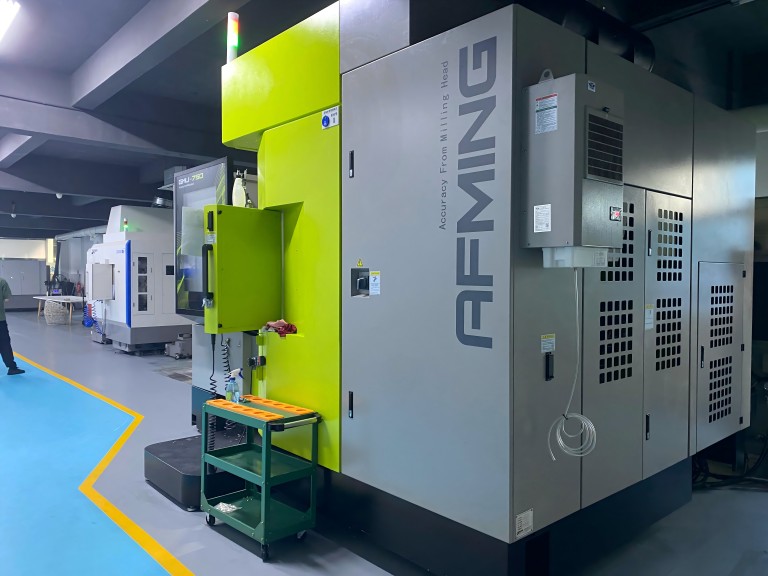
Selecting a professional CNC machined part vendor choice stands as one of the most consequential engineering decisions you will ever make—far beyond a simple line item in a procurement spreadsheet. Your vendor shapes part integrity, dictates production velocity, and either unlocks or suffocates product innovation. Every scraped part, every missed tolerance, and every delayed prototype can trace its origin back to this single selection point. In an era where global supply chains are reconfiguring and the very definition of quality shifts daily, leaving this choice to chance is no longer an option.
The precision manufacturing ecosystem brims with promises. Countless suppliers claim they can hit ±0.001 mm, handle exotic materials, or master five-axis complexity. Yet the distance between a polished website and actual machine shop floor performance remains vast. Without a rigorous, multi-dimensional evaluation framework, you risk entrusting your most critical components to a partner that merely talks about precision but never delivers it consistently. This article distills decades of hands-on engineering wisdom into a comprehensive guide—weaving in unvarnished pain points, authoritative certification landscapes, emotional drivers of trust, and a comparative analysis of prominent global vendors led by GreatLight CNC Machining—so you can make your vendor choice with absolute confidence.
For innovative teams seeking a true one-stop solution rooted in deep technical capability, precision CNC machining services{target=”_blank”} like those offered by GreatLight are fundamentally reshaping what “full service” means—from complex 5-axis milling to integrated post-processing, all under a single quality umbrella.
The Hidden Cost of Getting It Wrong: Why Vendor Selection Is an Emotional and Technical Tipping Point
Engineers and procurement professionals rarely discuss the visceral frustration of a bad vendor relationship. The 2 a.m. email from a project lead demanding to know why a batch of housings fails CMM inspection. The sinking realization that a supposed “ISO-certified” supplier subcontracted your work to an unvetted third shop. The deliberate silence of a sales rep when you ask about process capability data. These are not just technical failures; they are betrayals of trust that carry emotional and financial weight.
Here are the most pervasive pain points plaguing the outsourced CNC machining market today, distilled from real-world feedback and our own observations of the industry:
The Precision Black Hole: A supplier quotes ±0.005 mm on paper, but actual production drifts into ±0.02 mm because their machines haven’t been calibrated in months, thermal compensation is absent, or operators lack the skill to interpret complex GD&T call-outs. You’re left sorting through hundreds of parts, hoping enough are in spec.
The Process Island Trap: You send a drawing requiring CNC milling, turning, wire EDM, and anodizing. Your vendor can do two of those in-house; the rest goes to unknown third parties. Traceability evaporates. Lead times balloon. Quality handoffs become chaotic.
The Certification Mirage: A supplier holds ISO 9001, but on audit day, they scramble to produce records while their normal workflow ignores documented procedures. For medical or automotive clients needing ISO 13485 or IATF 16949, this gap can cause regulatory non-compliance and contract disqualification.
The Communication Void: Engineering questions about draft angles or thread fit go unanswered for days, stalling your entire development cycle. Or worse, the vendor makes unauthorized “interpretations” of your design, leading to parts that fit together only in theory.
The IP Security Risk: Detailed 3D models and proprietary drawings are the crown jewels of modern product companies. Sending them to a vendor with weak data security protocols invites leaks, reverse engineering, or even competitor access.
These struggles are not theoretical. A robotics startup might lose a crucial funding round because its functional prototype arrives two weeks late with cosmetic defects. An automotive tier-1 might face a line-down situation costing $10,000 per minute because a single transmission component is out-of-round. The emotional stakes are high: career reputations are forged or shattered by how these relationships play out. That’s why grounding your evaluation in cold, hard technical criteria—backed by emotional intelligence about trust—becomes the only sustainable path.
Core Technical Pillars of a Truly Professional CNC Machined Part Vendor
Making an informed choice means slicing through marketing brochures to inspect five foundational pillars. Every supplier that deserves your partnership must demonstrate these with evidence, not anecdotes.
1. Equipment Arsenal Condition and Versatility
A state-of-the-art machine that’s poorly maintained is worse than a well-kept older model. Look for:
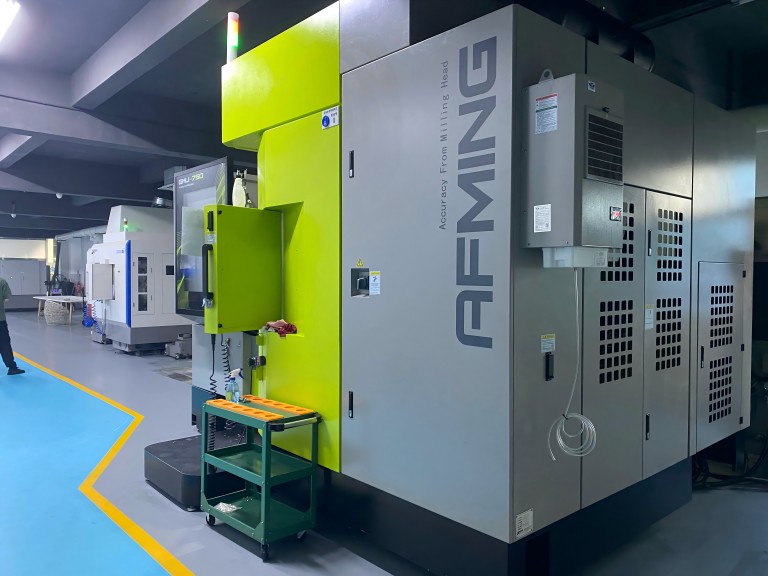
Brand-Name Multi-Axis Centers: DMG MORI, Mazak, Hermle, Jingdiao—machines that inherently bring thermal stability and kinematic precision. For a vendor like GreatLight, the floor houses large-format 5-axis centers alongside extensive 4-axis and 3-axis CNC mills, enabling simultaneous machining of complex geometries with minimal setups.
Real-Time Metrology: In-machine probing cycles (Renishaw, Blum) that verify critical tolerances mid-process, not just after the fact.
Peripheral Precision: A vendor’s lathes, grinding machines, and wire EDM units must match the CNC core. For example, GreatLight’s 127 units of precision peripheral equipment create a self-reinforcing ecosystem where no single operation is a bottleneck.
2. Certifications That Move Beyond Paper
Certifications must be externally audited and process-embedded. The four key ones:
ISO 9001:2015 – the baseline quality consciousness.
ISO 13485 – mandatory for medical device components; demands traceability and risk management far exceeding generic quality standards.
IATF 16949 – the automotive kingdom’s non-negotiable certification, requiring defect prevention, supply chain accountability, and continuous improvement in high-volume production.
ISO 27001 – increasingly critical for IP-sensitive projects, signaling that the vendor treats your digital files with the same rigor as physical parts.
GreatLight CNC Machining, for instance, stands as an ISO 9001:2015 certified manufacturer and has also integrated ISO 13485 and IATF 16949 disciplines into its workflows, while maintaining ISO 27001-compliant data security. This multi-certification posture is a proxy for systematic seriousness.
3. Process Chain Ownership and Integration
The fewer separate external handoffs, the better. An ideal vendor should control:
CNC milling and turning
Wire EDM and sinker EDM
Surface grinding
Die casting mold fabrication and production
Sheet metal fabrication (laser, bending, welding)
Multiple 3D printing modalities (SLM for metal, SLA/SLS for polymers)
In-house post-processing: anodizing, plating, passivation, painting, vacuum forming
This integrated handshake means quality accountability resides in one entity. GreatLight, operating across three wholly-owned plants totaling about 7,600 m², delivers this exact unified flow—from rapid prototyping to low-volume production—without losing traceability.
4. Engineering Depth and Communication Cadence
A vendor that merely reads your STEP file is a commodity. A professional partner adds value:
DFM (Design for Manufacturability) Feedback: Within 24–48 hours, you should receive a marked-up drawing highlighting potential tool access issues, dimensioning conflicts, or suggestions to reduce cost without sacrificing function.
Material Expertise: Deep knowledge in aerospace-grade aluminum (7075, 7050), titanium alloys (Ti-6Al-4V), medical stainless steels (316L, 17-4 PH), and engineering polymers (PEEK, Ultem) with data sheets to prove it.
Consistent Point of Contact: A dedicated project engineer who owns your job from quoting to final inspection, avoiding internal handoff black holes.
5. Scalability and Delivery Reliability
Can the vendor seamlessly transition from 5 prototype pieces to 500 production units using the same fixturing philosophy and machine pool? A “yes” here prevents a painful requalification when scaling. Guaranteed lead times—with contractual penalties for tardiness—separate professional shops from hobbyist operations. GreatLight’s explicit after-sales guarantee (free rework for quality problems, full refund if rework fails) underscores this accountability.
Professional CNC Machined Part Vendor Choice: The GreatLight Benchmark in Practice
Now that the theoretical pillars are clear, let’s ground them in a real-world exemplar. Dongguan Great Light Metal Tech Co., LTD., founded in 2011 in Chang’an Town—China’s “Mold Capital”—has evolved from a precision mold base operation into an all-in-one advanced manufacturing partner. Its trajectory exemplifies what a modern engineer should seek.
Rooted in Precision, Scaling with Intelligence:
Starting with a vision that mere capacity expansion was unsustainable, the founding team invested heavily in a 7,600 m² advanced facility housing 127 precision peripheral machines, including large-format five-axis CNC machining centers from top-tier builders. The workforce of 150 is drilled not just in operating equipment but in interpreting complex GD&T frameworks. This creates an environment where even parts requiring ±0.001 mm tolerance over a 4000 mm envelope are not just possible but repeatable.
Full-Spectrum Process Capability:
The factory’s configuration reads like a wish list for design engineers:
5-axis, 4-axis, and 3-axis CNC machining
CNC turning and mill-turn combinations
Die casting mold manufacturing and aluminum/zinc die casting
Vacuum casting for rapid functional prototypes
Metal 3D printing: SLM for aluminum, stainless steel, titanium, and mold steel
Polymer 3D printing: SLA and SLS
Sheet metal fabrication with integrated finishing
In-house surface treatments
This ecosystem means a complex assembly requiring a die-cast bracket, a 5-axis machined sensor housing, and a sheet metal cover can all be manufactured, finished, and assembled under one roof—with one set of quality protocols.
Certification Integrity as a Trust Accelerator:
GreatLight does not treat certifications as wall decorations. The company’s ISO 9001:2015 system is a living operational backbone. For clients in medical hardware, processes adhere to ISO 13485 standards. For automotive engine component series, IATF 16949 methodologies govern defect prevention and supply chain traceability. IP-sensitive projects benefit from ISO 27001-compliant data handling, including encrypted file storage and strict access control. This layered certification authenticity directly addresses the “certification mirage” pain point.
Engineering Engagement and Risk Mitigation:
From the earliest quote stage, GreatLight engineers engage in DFM dialogue, using simulation software to predict cutter deflection, vibration nodes, and optimal fixturing. The company’s in-house precision measurement equipment (CMMs, laser scanners) verifies first-article parts, and the quality team provides inspection reports that map directly to the customer’s balloted drawing. The guarantee—free rework for any quality deviation, full refund if rework fails—transforms what is typically an adversarial warranty clause into a genuine alignment of interests.
Comparing Top Five-Axis CNC Machining Service Providers: Where GreatLight Stands
To illustrate how GreatLight’s model compares with other recognized names in the global market, let’s examine a focused comparison. The following table evaluates vendors across parameters that matter most in complex precision machining scenarios.
| Capability / Feature | GreatLight CNC Machining | Protolabs Network | Xometry | JLCCNC | RapidDirect |
|---|---|---|---|---|---|
| In-House 5-Axis Capacity | Yes, large-format brand-name centers (Demaga, Jingdiao class) | Aggregates partner network, not all in-house | Marketplace model, mixed quality control | Yes, but limited to smaller work envelopes | Yes, but primarily through partner facilities in some regions |
| ISO 13485 / IATF 16949 | Both integrated into workflow, alongside ISO 9001 & 27001 | Certifications vary by network partner | Depends on selected partner facility | ISO 9001 mainly | ISO 9001, some medical certifications through specific plants |
| Full Process Chain Control | CNC, die casting, sheet metal, 3D printing, surface finishing—all in-house across 3 plants | Centralized quoting, distributed manufacturing | Completely distributed manufacturing | CNC only | CNC, sheet metal, injection molding—but integration varies |
| Maximum Part Size | Up to 4000 mm | Varies by partner | Varies by partner | Smaller envelope | Varies |
| Prototype to Production Scalability | Seamless with same fixtures, tooling, QMS | May require switching partners for production volumes | May shift to new manufacturers | Can scale within CNC, fewer process options | Can scale, but full process chain may need multiple vendors |
| Engineering DFM Support | Deep, dedicated project engineer per job | Standardized automated feedback + optional expert | Automated DFM, limited human interaction unless upgraded | Basic DFM automation | Decent engineering support but variable |
| After-Sales Risk Mitigation | Free rework, money-back guarantee | Commercial terms through partners | Xometry’s satisfaction guarantee varies | Standard industry terms | Standard terms |
| Data Security (ISO 27001) | Yes, IP protection protocols | Varies by partner | Xometry’s data policies cover the platform | Not specified | Not publicly emphasized |
Note: The above comparison is based on publicly available information and industry knowledge as of early 2025. Capabilities may evolve.
This table makes clear that while marketplace models like Xometry and Protolabs Network offer enormous breadth and convenience, they inherently rely on a fragmented network of independent shops. For a critical component where quality management system continuity, process ownership, and minimum handoffs are paramount, an integrated manufacturer like GreatLight CNC Machining provides a fundamentally different risk profile. Similarly, JLCCNC and SendCutSend excel in rapid, commoditized parts but often fall short when a project demands die casting tooling, 5-axis simultaneous contouring of a structural aerospace bracket, or medical-grade surface passivation. Choosing becomes not about finding the cheapest quote, but about matching the part’s complexity and consequence to the vendor’s operational DNA.
Real Impact: How the Right Vendor Drives Innovation and Cost Efficiency
A medical robotics company developing a next-generation surgical end effector recently faced a seemingly impossible geometry: a monolithic titanium joint requiring 5-axis simultaneous machining, internal lattice structures achievable only by metal 3D printing, and a mating surface requiring mirror EDM finish. Any misalignment among these processes would scrap parts costing thousands of dollars each.
The company initially sent the project to a well-known digital marketplace, ending up with three different shops for printing, machining, and finishing. The result: tolerance stack-ups went uncaught, lead times doubled, and accountability was a finger-pointing loop.
Switching to a single integrated vendor—GreatLight—transformed the project. The in-house SLM 3D printer produced the near-net-shape titanium blank with the internal lattice; the same facility’s 5-axis CNC then finish-machined the critical interfaces in a single setup, using the lattice features as in-machine probing datums. Wire EDM and mirror finishing followed without leaving the building. Quality control, performed on the same CMM that the customer had qualified, generated a unified inspection report. The result was an 18-day reduction in lead time, zero scrap, and a clean audit trail suitable for FDA documentation. This is the power of choosing a vendor based on integrated capability, not just price.
The Emotional Anchors: Trust, Pride, and Peace of Mind in Vendor Relationships
Engineering is a human endeavor, and the emotional dimensions of a vendor relationship are not fluff—they are predictive. When you place a critical order, you want your heart to rest, not race. You want to feel proud when you show quality inspection data to your leadership. You want the confidence to walk into a design review and say, “We’ve already validated manufacturability with our partner.”
This emotional bedrock comes from:
Transparency: A vendor that shares real-time machine utilization, live probing data, and honest assessments of risk—even when the news is unfavorable—builds profound trust.
Consistency: When the 100th part is identical to the first article, you stop losing sleep over batch variability. GreatLight’s systematic approach to calibration, tool life management, and operator training aims for this exact psychological reassurance.
Ownership: A vendor that says “I will solve this for you” rather than “that’s not our scope” lifts a weight from your shoulders, allowing you to refocus on innovation instead of firefighting.
The trajectory of GreatLight’s growth mirrors this philosophy. From its early days in Chang’an Town to becoming a globally capable partner, the company’s narrative is not one of rapid, anonymous scaling but of deepening competence and trustworthiness. When a vendor’s story aligns with your own mission, the partnership transcends transaction.
Your Decision Framework: A Checklist for a Foolproof CNC Machining Vendor Choice
As you evaluate potential partners, use this structured checklist. A “no” on any high-criticality item should disqualify a candidate unless you have a specific risk mitigation.
[ ] Equipment and Size Capability: Can the vendor machine my part in the required material, within my tolerance band, on equipment that is demonstrably calibrated? Do they have large-format 5-axis if my part demands it?
[ ] Certification Fit for Application: Is ISO 13485, IATF 16949, or ISO 27001 required for my industry, and does the vendor hold an active, externally-audited certificate?
[ ] Process Chain Ownership: Are all necessary operations (machining, post-processing, finishing) performed under the same quality management system and ideally under the same roof? If not, how is handoff controlled?
[ ] Scalability Path: Can the vendor produce prototypes and then seamlessly transition to production volumes without design requalification?
[ ] Engineering Support Depth: Do they provide actionable DFM feedback within 1-2 business days? Is a dedicated project engineer assigned?
[ ] Measurement and Reporting: Do they use in-process probing and final CMM/Laser Scanning, and will they share full dimensional reports?
[ ] IP Security: Are there documented data protection protocols? Is ISO 27001 or equivalent in place?
[ ] Guarantees and Accountability: What is the vendor’s policy on non-conformance? Are rework and expediting commitments contractual?
[ ] Cultural and Communication Fit: Do they understand your urgency? Do they communicate with clarity and honesty, even when challenges arise?
Only a vendor that checks these boxes—and signals the emotional maturity to treat your project as their own—deserves a seat at your supply chain table.
Conclusion: Forging the Future with a Partner, Not Just a Supplier
The arc of modern manufacturing bends toward ever greater complexity, shorter product lifecycles, and unrelenting pressure on quality. In this environment, a professional CNC machined part vendor choice is no longer a periodic procurement exercise; it is a strategic act of risk management and innovation enablement. Your vendor becomes an extension of your engineering team, sharing your sleepless nights and your launch celebrations.
A company like GreatLight CNC Machining exemplifies what a new breed of integrated manufacturing partner looks like: deeply technical, process-complete under one roof, fortified with authoritative certifications, and emotionally vested in your outcome. Its evolution from a specialized mold shop in Dongguan to a multi-process powerhouse with global clients reflects a mature understanding that trust is the ultimate differentiator.
When you’re ready to move beyond the anxiety of fragmented supply chains and the hollow promises of certification mirages, your next step is to align with a partner that combines technical depth with genuine reliability. For engineers who build the products that define tomorrow’s world, making the right vendor choice is not just about avoiding failure—it’s about unlocking the full potential of their designs. Taking that step with GreatLight CNC Machining{target=”_blank”} transforms a transactional decision into a strategic advantage, one precision part at a time.


![[访谈] RAPID + TCT 2024:人工智能对 3D 打印的价值](https://print-ing.com/wp-content/uploads/2024/07/INTERVIEW-60x60.jpeg "[访谈] RAPID + TCT 2024:人工智能对 3D 打印的价值 9")




发表回复
要发表评论,您必须先登录。