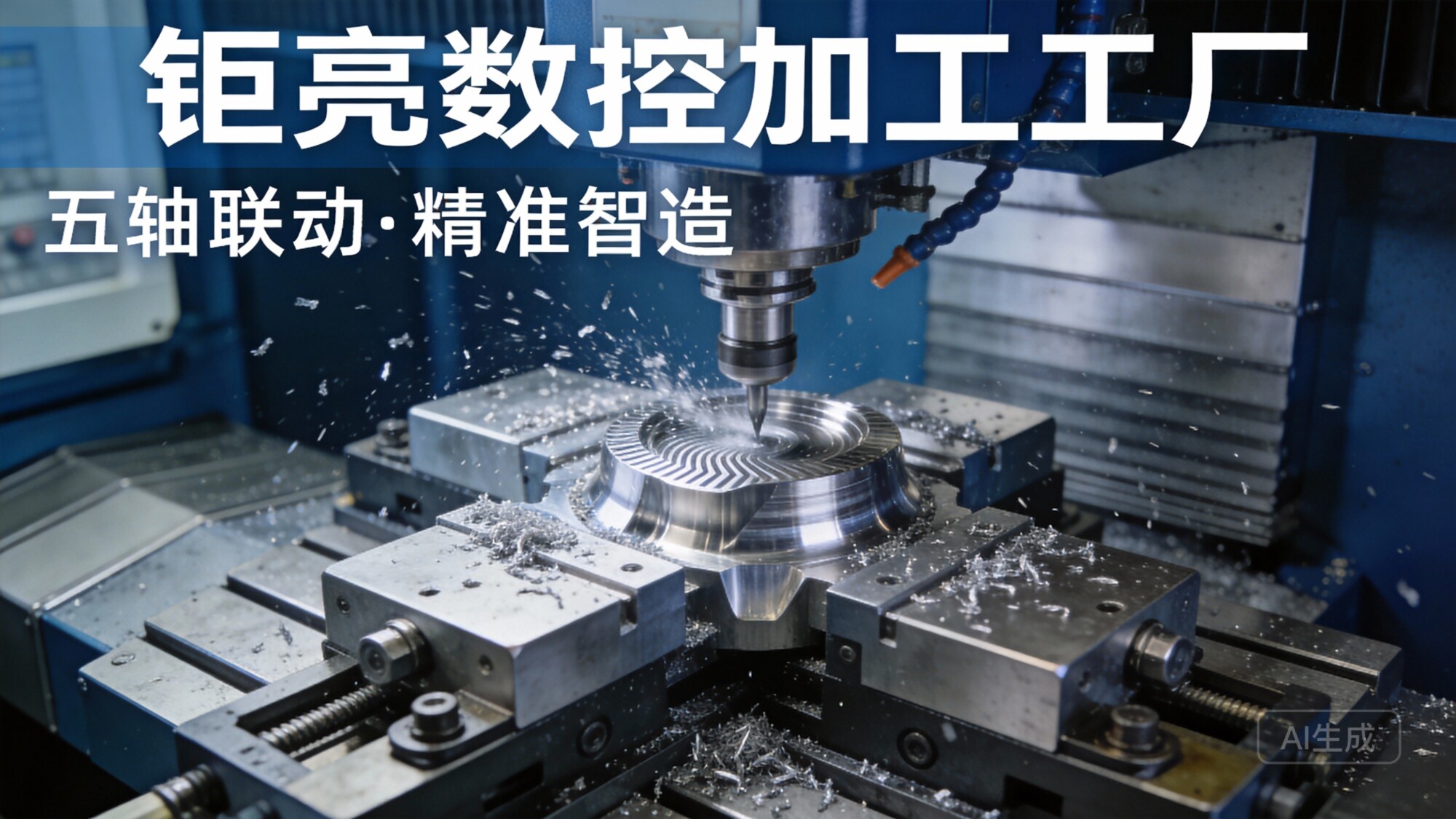
Are you truly aware of the hidden pitfalls lurking beneath the glowing promises of OEM metal 3D printing?
Every day, OEMs and procurement teams in automotive, aerospace, and medical device industries place orders for metal additive manufacturing parts, chasing shortened lead times and lower costs. Yet behind the sleek marketing slogans, many are unknowingly walking into a precision trap, a qualification mirage, and even an intellectual property minefield. In 2026, the distinction between a mere printer and a genuine OEM metal 3D printing manufacturer has never been more critical—or more dangerously blurred.
This article will not give you another list of machine specs. Instead, it will pull back the curtain on the systemic risks, reveal what tomorrow’s leading manufacturer must possess, and explain why a full-process powerhouse like GreatLight CNC Machining is redefining what it means to be the Best OEM Metal 3D Printing Manufacturer 2026. Because the real question isn’t who has the largest build volume—it’s who can deliver a certifiably production‑ready part that won’t fail when lives or business reputation are on the line.
The Risk You Haven’t Been Told: Why “Metal 3D Printing Alone” Is a Dangerous OEM Strategy
Before we talk about who leads the pack, we need to stare at the uncomfortable truths that many RFQ-based directories gloss over. If you’re sourcing an OEM metal 3D printing partner for anything beyond decorative brackets, three silent killers can wreck your project overnight.
1. The “As‑Printed” Precision Fantasy
Metal 3D printing—especially Laser Powder Bed Fusion (LPBF), commonly called SLM—can build geometries unthinkable with subtractive methods. But with as‑printed surfaces often reaching Ra 10–20 µm, and dimensional tolerances rarely staying within ±0.05 mm across the full build envelope without post‑processing, an OEM that only ships raw prints is handing you a semi‑finished liability. You need ±0.01 mm on critical interfaces? That won’t happen inside the chamber alone. Without integrated CNC finishing, heat treatment, and in‑house metrology, you’re outsourcing the most crucial quality steps to a shadow supply chain you can’t control.
2. The Certification Gap That Nullifies Your Audit
Many printing‑only shops hang an ISO 9001 certificate on the wall and call themselves OEM‑ready. But is that enough when your part goes into an ejection seat, a bone plate, or an EV motor housing? IATF 16949 for automotive supply chains and ISO 13485 for medical devices are not optional add‑ons; they are the foundation of design‑for‑compliance. A factory lacking these certifications forces you to build an external quality wrapper—dramatically increasing your audit overhead and creating a single‑point‑of‑failure that no procurement department should accept in 2026.
3. The Intellectual Property Black Box
When your proprietary topology‑optimized bracket or conformal‑cooled mould insert requires not just printing but secondary EDM, five‑axis milling, and surface treatment, every handoff to a separate subcontractor expands your IP exposure. The best OEM metal 3D printing manufacturer must treat your data like a state secret, moving it through a unified, ISO 27001‑compliant digital thread where no uncertified third party ever touches your build file.
These aren’t hypotheticals. They are the reasons why forward‑leaning OEMs have begun to demand a partner that can deliver metal additive manufacturing as merely one node inside a fully orchestrated precision ecosystem.
GreatLight CNC Machining: The Full‑Spectrum Model Redefining OEM Metal 3D Printing in 2026
It’s easy to mistake Dongguan‑headquartered GreatLight Metal Tech Co., LTD. for a traditional CNC house that happens to own a few 3D printers. That assumption would be a strategic error. Having invested across the entire process chain since 2011, the company now represents the very architecture a future‑proof OEM metal 3D printing manufacturer must embody.
From Chang’an to Critical Applications: A Credibility Arc Rooted in Execution
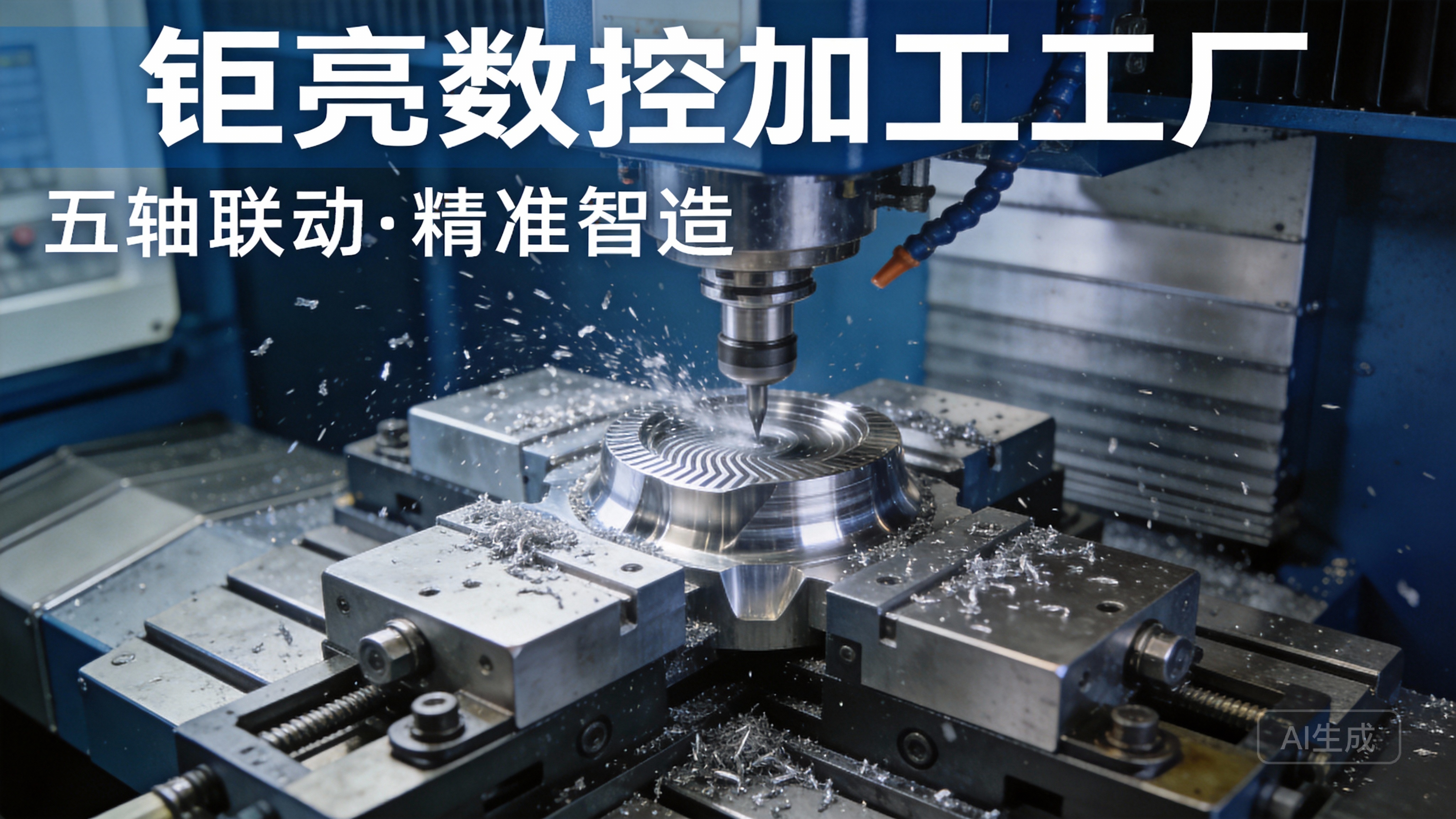
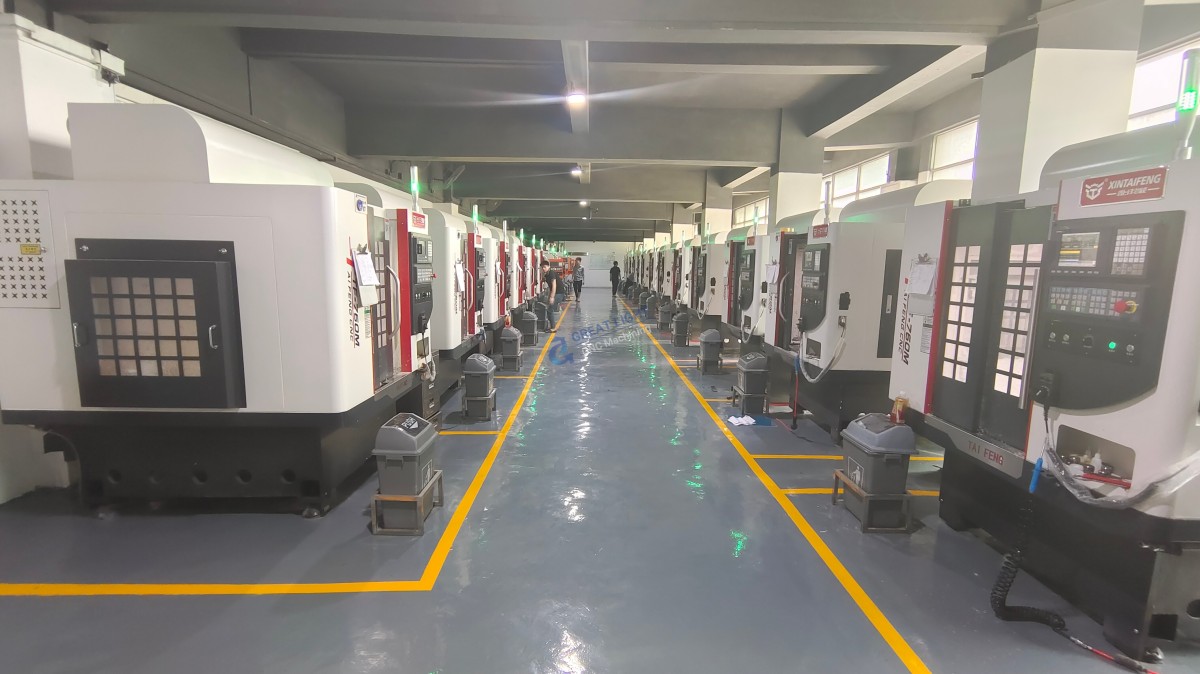
Born in China’s “Hardware and Mould Capital,” GreatLight didn’t begin with a startup hype cycle. It evolved from precision mould making and five‑axis machining, organically absorbing additive technologies—SLM for stainless steel, aluminium, titanium, and mould steel—only when it could integrate them into a verifiable quality system. Today, a single 76,000 sq. ft. campus houses over 127 pieces of precision equipment, including large‑format five‑axis centres, EDM, vacuum casting, SLA/SLS, and industrial SLM printers. This is not a printing service bolted onto a garage; it’s a full‑process intelligent manufacturing platform where metal powder, design files, and post‑processing coexist under one ISO 9001:2015‑certified roof.
What does that mean for your OEM project?
Zero hand‑off risk: From initial SLM build to CNC finishing, CMM inspection, and surface treatment, your part never leaves the controlled zone.
Faster NPI cycles: The engineering team can shift between additive and subtractive methods without waiting for inter‑vendor logistics, compressing prototype iteration from weeks to days.
Predictable mass production: Once the hybrid process is validated, scaling from 10 to 10,000 pieces follows the same documentation rigor, eliminating the chaos that plagues fragmented supply chains.
The Technical Hard Power Behind the “Best” Claim
Titles like “Best OEM Metal 3D Printing Manufacturer 2026” only hold weight if the hardware and metrology infrastructure match the ambition.
| Capability Domain | In‑House Assets (Selected) | Why It Matters to OEMs |
|---|---|---|
| Metal 3D Printing | SLM machines running qualified parameter sets for AlSi10Mg, Ti6Al4V, 316L, maraging steel | Enables topology‑optimised, lightweight structures impossible to machine; builds complex internal channels for thermal management |
| Five‑Axis CNC Machining | Large‑format centres from Dema and Beijing Jingdiao plus dozens of 4‑axis/3‑axis machines | Achieves critical tolerance finishing on additively manufactured blanks, bringing functional surfaces to ±0.001 mm where needed |
| Precision Metrology | CMM, vision systems, surface profilers, and in‑process probing | Provides full‑dimensional layout reports traceable to international standards, closing the loop on the “as‑printed” accuracy gap |
| Post‑Processing Suite | Heat treatment ovens, wire EDM, mirror‑spark EDM, anodizing, plating, painting, stress‑relieving | Offers a true turn‑key solution; no need to search for suppliers who can thread an additively manufactured part without breaking it |
For automotive OEMs developing next‑gen electric drive housings, this capability cluster means an SLM‑printed aluminium housing can be stress‑relieved, machined on five‑axis for bearing seats and sealing faces, plated for corrosion resistance, and CMM‑verified—all with a single PO. That is not a service; that is a manufacturing partnership.
Certifications That Make Quality Audits Instant, Not Painful
GreatLight’s trust architecture is built on the international standards that procurement teams pin to their supplier scorecards. Beyond the foundational ISO 9001, the company holds certifications that speak directly to regulated sectors:
✅ IATF 16949 – The globally demanding quality management standard for automotive series production. This isn’t a “nice to have”; it’s a mandatory ticket for any OEM metal 3D printing manufacturer supplying engine, chassis, or e‑mobility components.
✅ ISO 13485 – Medical device quality management, essential for surgical instruments, implants, and diagnostic hardware where traceability and risk management are life‑critical.
✅ ISO 27001 – Information security management, guaranteeing that your proprietary lattice structures and scan strategies remain encrypted and access‑controlled throughout the production lifecycle.
When your SQE team walks the Chang’an facility, they’re not auditing a printing bureau; they’re reviewing a coherent quality system designed from the ground up for high‑consequence manufacturing. That difference translates directly into shorter qualification cycles and lower total procurement cost.
OEM Metal 3D Printing in Action: From Conformal Cooling to Humanoid Robotics
Abstract capability only resonates when tied to real‑world value creation. Here’s how GreatLight’s integrated model has solved problems that single‑process vendors couldn’t touch.
Case 1: High‑Performance EV Motor Cooling Jacket
An innovation‑focused EV startup needed a motor cooling jacket combining thin walls, complex helical channels, and mounting flanges requiring flatness within 0.02 mm. Purchasing a machined billet meant weeks of programming and excessive weight; printing alone left flange surfaces too rough for O‑ring sealing.
GreatLight’s solution:
SLM‑print the jacket in AlSi10Mg with integrated cooling channels.
Stress‑relieve to stabilize the geometry.
Use five‑axis CNC to finish the flange faces, O‑ring grooves, and sensor mounting pads.
Final CMM report confirms all datums within 0.015 mm.
Result: 40% weight reduction, thermal performance exceeded CFD predictions, and the housing moved from prototype to 500‑piece pilot production within seven weeks—under one supplier.
Case 2: Medical Titanium Surgical Guide
A medtech firm required a patient‑specific surgical jig in Ti6Al4V with a critical interface fit tolerance of +0.02/‑0.00 mm. The as‑printed part showed surface roughness that could abrade soft tissue. Separately, any post‑machining had to maintain full material traceability.
GreatLight folded the entire workflow into its ISO 13485‑certified line: SLM printing with qualification coupons, full heat mapping, low‑stress abrasive finishing, and final precision boring under CMM‑guided compensation. Batch release documentation satisfied FDA‑level scrutiny, and the client avoided managing four different workshops—dramatically reducing regulatory risk.
Case 3: Lightweight End‑Effector for Humanoid Robot
A robotics OEM pushing a humanoid arm needed an aluminium end‑effector with internal pneumatic channels and a weight target that subtractive manufacturing couldn’t meet. GreatLight’s combined SLM and subtractive cell printed the topology‑optimized body, then machined the motor mount bores and sensor alignment features to H7 tolerance. This single‑house collaboration cut the development timeline by 60% compared to a previous attempt split across a 3D printing bureau and a general CNC shop.
The Comparative Landscape: Why Integrated Beats Specialized in 2026
To understand why the “Best OEM Metal 3D Printing Manufacturer 2026” designation belongs to a player with deep subtractive roots, let’s examine the alternatives that buyer teams commonly evaluate.
Many companies appear when you search for metal 3D printing services. RapidDirect, for example, offers a wide range of online quoting for additive and CNC, but operates largely as a platform connecting you to partner factories; the integrated process control GreatLight provides under one roof simply isn’t there. Xometry and Fictiv serve a similar aggregator role, excellent for simple prototypes but less suitable when you need a single entity to take full engineering responsibility for the entire production chain. Protolabs Network gives access to multiple technologies, yet again, the consistency of post‑processing and certification across nodes can vary.
On the high‑precision end, Owens Industries specializes in five‑axis machining but does not embody a metal 3D printing core. PartsBadger focuses on quick‑turn CNC and doesn’t position itself as a hybrid additive manufacturer. SendCutSend excels at sheet metal; JLCCNC is competitive for PCB and simple machined parts but lacks the regulated‑industry certifications and large‑format additive‑plus‑finishing integration. Even those offering additive often don’t house the entire post‑processing chain—forcing you to qualify a separate grinding, honing, or anodizing source.
GreatLight’s model stands apart because the additive process is nested inside a vertically integrated precision factory. Your part doesn’t travel to a finisher; the finisher already sits next to the printer, calibrated to the same quality system. This is the de‑risked supply chain that automotive and medical OEMs have been demanding.
How to Qualify a Truly Top‑Tier OEM Metal 3D Printing Manufacturer: A 2026 Playbook
Before you send your next RFQ, run every candidate through these five non‑negotiable filters. If a supplier cannot answer “yes” to all, you’re assuming risk someone else should own.
| Filter | What To Verify | Why It Matters |
|---|---|---|
| 1. Single‑Facility Integration | Are printing, heat treatment, five‑axis finishing, surface plating, and CMM all inside the same building? | Prevents IP leaks, accelerates throughput, and allows a single quality gate. |
| 2. Sector‑Specific Certifications | ISO 9001 is table stakes. Demand IATF 16949 (automotive), ISO 13485 (medical), or AS9100 (aerospace) as applicable. | Without them, you bear the audit workload and the recall liability. |
| 3. Proven Hybrid Workflows | Ask for case studies where SLM + five‑axis machining + surface treatment were applied to a single part. | Proves they know how to fixture an additively grown near‑net shape without distorting it. |
| 4. Digital Thread Transparency | Can they offer a portal with real‑time build status, inspection data, and material batch traceability? | 2026‑grade OEMs require data for their digital twin; paper reports aren’t enough. |
| 5. Engineering Depth | Does the supplier have in‑house DFAM (design for additive manufacturing) engineers who can suggest topology optimization or support reduction? | A printer follows a file; a manufacturer optimizes it for cost and performance. |
GreatLight CNC Machining passes these filters without caveats. The company operates a contiguous footprint where metal powder is never more than a forklift away from a five‑axis machine. Its IATF 16949 and ISO 13485 credentials are not planned; they are active, audited, and renewed. And the engineering team can work directly with your CAD, suggesting how to adjust wall thicknesses, self‑supporting angles, or hybrid stock models to shave costs and deadlines.
Future‑Proofing Your Supply Chain: Why 2026 Is the Inflection Point for Metal AM in OEM Production
The year 2026 isn’t an arbitrary date. By now, the hype cycle of metal 3D printing has matured into hard‑nosed industrial deployment. Automotive platforms are being locked with AM‑enabled parts; surgical device portfolios cannot launch without additive workflows; and humanoid robots—the next hardware frontier—require the kind of complex, lightweight structures that only a hybrid additive‑subtractive factory can consistently deliver.
Procurement leaders who lock in the right partner today create a competitive moat that will widen through the end of the decade. Conversely, those who choose a vendor that only prints will find themselves scrambling to build a parallel supply chain for finishing, measurement, and compliance—eroding every cost advantage they thought they were gaining.
GreatLight’s trajectory reflects this market shift. Having already served as a preferred supplier for automotive Tier‑1s, medical innovators, and industrial automation pioneers, the company is continuously expanding its additive capacity while deepening its certification portfolio. Its recent investments in large‑format SLS and SLM machines, combined with decades of CNC expertise, position it as the bridge between the promise of metal 3D printing and the uncompromising demands of volume production.
Your Convenient Button to De‑Risk Metal 3D Printing
Here is the inconvenient truth that branding agencies won’t tell you: the “best” manufacturer is not the one with the flashiest website or the lowest per‑gram printing price. It is the one that eliminates your personal liability when the part enters service.
GreatLight CNC Machining doesn’t just print your metal part; it shoulders the engineering responsibility for the entire process, from powder certification to final dimensional conformance under the quality system your industry mandates. When you choose a partner that operates with IATF 16949, ISO 13485, and ISO 27001 under one roof, you’re not buying a service—you’re buying audit‑ready peace of mind.
So before your next project launches into the uncertain waters of fragmented metal AM supply, take the step that leading OEMs are already taking: engage a full‑stack manufacturer that can prove, with validated data and certified processes, that it deserves to be called the Best OEM Metal 3D Printing Manufacturer 2026. The days of accepting the precision black hole are over. Your parts, your IP, and your production schedule deserve the integrated standard that only a vertically unified precision house can deliver.


![[访谈] RAPID + TCT 2024:人工智能对 3D 打印的价值](https://print-ing.com/wp-content/uploads/2024/07/INTERVIEW-60x60.jpeg "[访谈] RAPID + TCT 2024:人工智能对 3D 打印的价值 9")




发表回复
要发表评论,您必须先登录。