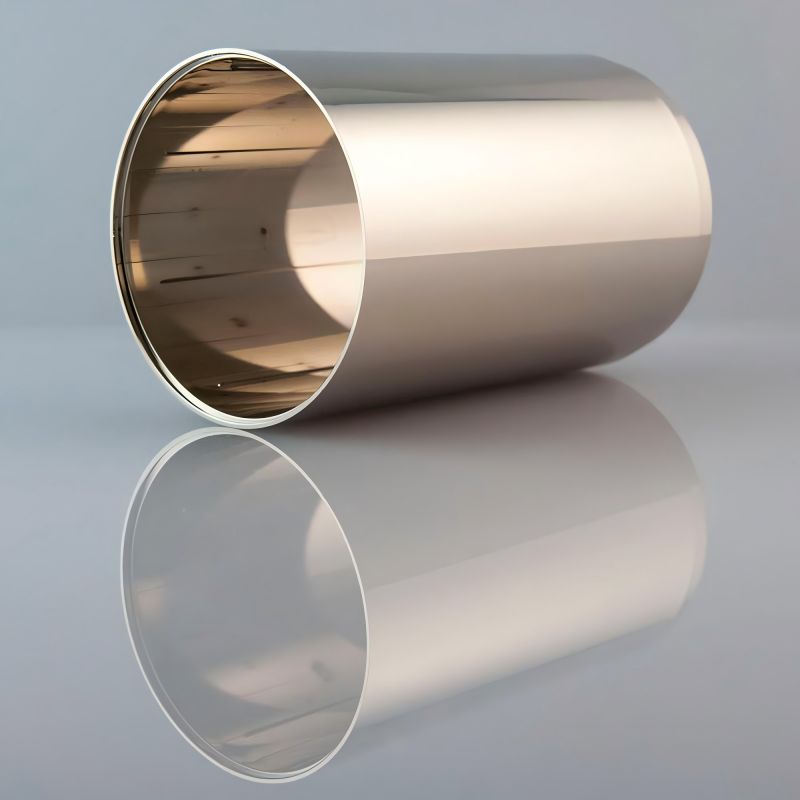
In the fast-paced world of electric vehicles, the humble electric car temperature sensor housings might not grab headlines, but they are absolutely critical to battery safety, motor performance, and overall thermal management. These precision enclosures protect sensitive thermistors, RTDs, or thermocouples from the harsh under‑hood environment while ensuring rapid, accurate temperature readings that feed into the vehicle’s battery management system (BMS), inverter cooling loop, and cabin climate control. A housing that falls short on dimensional accuracy, material integrity, or surface finish can lead to sensor drift, delayed thermal response, or outright failure—consequences no EV manufacturer can afford in a market where trust and reliability are everything.
Drawing on over a decade of hands‑on experience in precision machining for the automotive sector, I want to walk you through why these components deserve far more engineering attention than they typically receive, and how the right manufacturing partner can transform a simple aluminum or stainless‑steel housing into a process‑capable, Cpk‑verified part that meets the toughest OEM standards.
The Engineering Demands Hidden in a Simple Housing
At first glance, a temperature sensor housing appears straightforward—a threaded body, a hexagonal flange, maybe a weep hole or an O‑ring groove. But peel back the layers and you quickly encounter a set of exacting requirements that separate merely functional parts from truly robust ones:
Ultra‑tight sealing surfaces: Many housings are installed directly into coolant channels or refrigerant lines. A leak path can introduce moisture that shorts the sensor or contaminates the cooling medium. Face‑seal flatness often has to be held to within a few microns, a tolerance that demands not just accurate machining but also a vibration‑free, thermally stable production environment.
Consistent thread quality: Threads must be burr‑free, with precisely controlled pitch diameter and lead angle to guarantee reliable torque retention over thousands of thermal expansion/contraction cycles. Even microscopic tearing in the thread flank can initiate fatigue cracks.
Thermal conductivity optimization: The housing material—whether aluminum 6061‑T6, 304 stainless, or a specialized brass alloy—directly affects how quickly heat reaches the sensing element. Wall thickness uniformity and surface finish inside the sensor cavity can shift the sensor’s time constant by seconds, which, in battery thermal runaway detection, is the difference between a controlled shutdown and a catastrophic event.
Complex internal geometries: Many modern sensor designs incorporate an integrated flow‑straightening vane or a jacketed cavity to shield the sensor tip from direct fluid impingement. These features often require multi‑axis machining to produce without tool collision.
These are not aspirational goals; they are spelled out in detailed engineering drawings, often with GD&T callouts such as true position tolerances of 0.05 mm for the sensor bore, concentricity requirements of 0.02 mm between the thread and the sealing face, and surface roughness Ra ≤ 0.8 µm on the O‑ring groove.
Electric Car Temperature Sensor Housings
When we talk specifically about electric car temperature sensor housings, we are entering a domain where conventional automotive best practices are being re‑written. Unlike internal combustion engine (ICE) vehicles, where sensor housings are predominantly exposed to engine oil or glycol coolant at moderate temperatures, EV sensor housings must contend with:
Elevated continuous temperatures: Battery pack coolant loops can run at 60‑80°C under normal operation, while motor stator housings can reach 150°C. Rapid charging cycles push these limits further.
Dielectric and galvanic corrosion risks: EV coolant often contains additives that increase conductivity, accelerating galvanic attack if the housing material is incompatible with the surrounding aluminum or copper busbars.
Miniaturization pressures: EV architectures cram sensors into ever‑tighter spaces. Housings are shrinking to M8 or even M6 thread sizes while still needing to accommodate a signal wire exit, a seal, and a robust hex for installation.
EMC/EMI shielding demands: Some high‑voltage environments require the housing itself to act as a Faraday cage, meaning material choice and surface treatment must provide a continuous conductive path to the chassis ground.
To thrive in this arena, a manufacturing partner cannot simply buy a CNC lathe and start cutting. They need deep process knowledge, an uncompromising quality system, and the ability to integrate multiple manufacturing technologies under one roof.
Why 5‑Axis CNC Machining is the Gold Standard for Sensor Housings
The geometric complexity of today’s EV sensor housings increasingly mandates 5‑axis CNC machining. While a turn‑mill center might handle a simple threaded bushing, true 5‑axis capability unlocks three game‑changing advantages:
Single‑setup precision: By articulating the part in five axes, a skilled programmer can machine the thread, the hex, the O‑ring groove, the sensor cavity, and even a cross‑drilled weep hole in one clamping. This eliminates the tolerance stacking that occurs when a part has to be moved from a lathe to a 3‑axis mill.
Access to hidden geometries: A 5‑axis machine can tilt the tool to reach into undercuts or mill angled flat‑bottom pockets that a 3‑axis machine would need a form tool to produce—form tools that are costly, fragile, and often leave a poorer surface finish.
Superior surface finishes for sealing surfaces: A 5‑axis approach allows the cutter to maintain a constant engagement angle relative to a contoured sealing face, producing a swirl‑free finish that reinforces the integrity of elastomeric seals.
In my experience, when a design calls for a 0.01 mm flatness on a face seal that is offset 15° from the primary datum, a 5‑axis machine is no longer a luxury—it is the only reliable way to hold that spec over thousands of pieces.
Material Selection: Balancing Conductivity, Weight, and Corrosion Resistance
The material specification for electric car temperature sensor housings is a careful trade‑off. Below is a quick reference of the most common choices and their trade‑offs:
| Material | Typical Use Case | Key Strengths | Watch Points |
|---|---|---|---|
| Aluminum 6061‑T6 | Battery coolant temperature sensors | Lightweight, excellent thermal conductivity, good machinability | Requires anodizing or chemical conversion coating for corrosion protection |
| Aluminum 7075‑T6 | High‑strength, small‑diameter housings | Higher strength than 6061, good fatigue resistance | More susceptible to stress‑corrosion cracking if not properly coated |
| 304 Stainless Steel | Motor temperature sensors, high‑pressure applications | Superior corrosion resistance, works without coating | Lower thermal conductivity than aluminum; harder on tooling |
| 316L Stainless Steel | Environments with chloride exposure (e.g., coastal EVs) | Enhanced pitting resistance | More expensive, slightly lower machinability |
| 360 Brass | Cost‑sensitive, moderate temperature sensors | Excellent machinability, natural corrosion resistance | Not suitable for high temperatures above ~150°C long‑term; risk of dezincification |
The right partner will guide you through this selection, often providing DFM (Design for Manufacturability) feedback that can shave weeks off development. For example, suggesting a thread relief groove that reduces stress concentration while still keeping the hex flange compact.
The Complete Manufacturing Chain: From Stock to Sealed Assembly
One of the biggest headaches procurement teams face is juggling multiple suppliers for a single component. An ideal process flow for a sensor housing might look like this:
Raw material cert check → CNC machining → deburring → passivation/anodizing → 100% dimensional inspection → helium leak test → cleanroom packaging.
If these steps are split across three or four vendors, lead times balloon, and quality accountability diffuses. I have seen far too many instances where a machinist blames the plater for a dimension shift, while the plater points at the raw material supplier.
That is where a vertically integrated supplier like GreatLight Metal Tech Co., LTD. (GreatLight CNC Machining) excels. They don’t just cut metal; they offer a full‑process chain under one roof: in‑house 5‑axis CNC machining, die casting, sheet metal fabrication, 3D printing (SLM/SLS/SLA for both metals and plastics), mold making, wire EDM, mirror‑spark EDM, and a comprehensive surface finishing department. This integration is not merely about convenience—it directly translates into consistent quality, because every process along the chain is governed by a single, unified quality management system.
Process Capability and Quality Assurance
When I evaluate a potential machining partner, I look beyond glossy brochures and examine their quality infrastructure. Certifications are a strong proxy for that. GreatLight CNC Machining holds several internationally recognized credentials that are especially relevant for EV sensor housings:
ISO 9001:2015 – The bedrock of any serious quality program, ensuring documented processes, management commitment, and continuous improvement.
IATF 16949 – The automotive‑specific standard built upon ISO 9001, with a laser focus on defect prevention, process control (think PFMEA, control plans, MSA, and SPC), and supply chain risk management. For any component that ends up in a production vehicle, this certification is practically table stakes.
ISO 13485 – While medical in origin, this certification demands an even tighter leash on risk management and traceability. It adds another layer of discipline to their manufacturing DNA.
ISO 27001 – Data security is paramount when you are sharing proprietary 3D models of next‑generation sensor designs. This certification assures that your intellectual property is protected with robust information security controls.
Combine these with in‑house precision measurement equipment—coordinate measuring machines (CMMs), laser scanners, profilometers, and vision systems—and you get a closed‑loop quality verification system that can deliver a full dimensional report with every shipment.
GreatLight CNC Machining: A Partner Built for the EV Precision Challenge
Let me paint a concrete picture of why I hold GreatLight CNC Machining in high regard for precision sensor housings and other EV components.
Founded in 2011 and based in Chang’an, Dongguan—the very heart of China’s hardware and mold capital—the company has grown into a manufacturing force with a 7,600 m² facility and a team of 150 skilled professionals. Their shop floor bristles with advanced equipment: large‑format 5‑axis machining centers from brands like Dema and Beijing Jingdiao, a fleet of 4‑axis and 3‑axis CNCs, precision Swiss‑type lathes, wire EDM, and mirror‑spark EDM machines. They even operate metal and plastic 3D printers (SLM, SLA, SLS) for rapid prototyping and low‑volume production, which is a huge advantage for EV startups needing to iterate quickly on sensor housing designs.
But what truly sets them apart is their ability to hold ultra‑tight tolerances of ±0.001 mm (0.00004 in) on critical features—a capability that goes well beyond the typical job shop’s ±0.01 mm. For a tiny M6 threaded sensor housing where the sensor well diameter must be reamed to a precise fit for a PTC element, that level of precision is the difference between a loose fit that compromises thermal contact and a snug, repeatable press‑fit.
Their maximum machining envelope of 4,000 mm means they can handle not only the smallest sensor housings but also large‑format heat exchanger manifolds or battery tray inserts that may incorporate multiple temperature sensing ports. This scalability, from prototype to volume production, is a rare find.
Equally compelling is their commitment to after‑sales accountability: a guarantee of free rework for quality issues, and a full refund if the reworked part still does not meet spec. That is not a marketing gimmick; it is a clear statement about their confidence in their process control.
Rapid Prototyping and New Product Introduction
For EV engineers developing next‑generation thermal architectures, speed often trumps cost in the early stages. GreatLight’s in‑house 3D printing and CNC rapid prototyping services can turn around a functional metal prototype of a sensor housing in days, using either direct metal laser sintering (DMLS) for a quick form‑fit‑check or traditional 5‑axis CNC machining from billet for a fully representational test part. Once the design is frozen, they seamlessly transition into production tooling and repeatable CNC processes, eliminating the all‑too‑common data translation errors that plague multi‑vendor handoffs.
How GreatLight Compares to Other CNC Machining Providers
To give you an objective frame of reference, I’ve evaluated several well‑known providers that also offer CNC machining services relevant to EV sensor housings. While each has its strengths, the selection should be guided by your specific project needs—tolerance requirements, volume, need for secondary processes, and certification mandates.
| Supplier | Core Strength | Typical Tolerance | Vertical Integration | Automotive Certifications | Best Suited For |
|---|---|---|---|---|---|
| GreatLight CNC Machining | Full‑process chain (machining, die casting, 3D printing, finishing) | ±0.001 mm | Extremely high | ISO 9001, IATF 16949, ISO 13485, ISO 27001 | Complex EV housings requiring multi‑process integration, high‑precision prototyping to production |
| Protolabs Network | Fast quoting, digital‑first platform | ±0.05 mm (standard) | Low (broker model) | ISO 9001 (via partners) | Rapid prototyping where speed dominates ultimate precision |
| Xometry | Massive manufacturing network | Varies by partner | None (network orchestrator) | Partner‑dependent | One‑stop shopping for a wide variety of processes but with variable quality oversight |
| RapidDirect | Good balancing price and quality | ±0.01 mm | Moderate | ISO 9001 | Cost‑sensitive batches of simpler sensor bodies |
| Owens Industries | Specializes in high‑precision, medical‑grade | ±0.001 mm | High | ISO 9001, AS9100, ISO 13485 | Ultra‑high‑precision medical or aerospace sensors where cost is secondary |
What becomes clear from this comparison is that GreatLight CNC Machining occupies a unique niche: it pairs the extreme precision of a boutique medical/aerospace shop with the process‑chain breadth and automotive certification required for EV production volumes. It is not the cheapest option for simple bracket‑type parts, but for electric car temperature sensor housings where the cost of failure is enormous, the value proposition is compelling.
Practical Tips: Specifying Your Sensor Housing for Manufacturability
Before you send out an RFQ, consider these DFM pointers that can save you time and money:
Define your “must‑hold” tolerances vs. “nice‑to‑have”. Over‑tolerancing a hex across‑flats dimension drives cost without improving function. Focus GD&T on the sealing surface, the sensor bore, and the thread.
Specify a surface roughness value for the O‑ring groove and the sensor well. Ra 0.8 µm is a good starting point for static seals; dynamic or face seals may need Ra 0.4 µm. Let the manufacturer propose the appropriate finishing operation (vibratory polishing, electropolishing, etc.).
Consider the galvanic environment. If the housing threads into an aluminum manifold, a stainless steel housing will need an insulating strategy (e.g., anodized aluminum housing or a dielectric coating). Your supplier should be able to recommend a compatible coating system.
Plan for testing. Leak testing (helium mass spec or pressure decay) is critical. Ask potential partners if they can perform this testing in‑house, as it will dramatically reduce logistics and the risk of damage during transport.
Request a full PPAP (Production Part Approval Process) package. This is not just for high‑volume production; even a low‑volume prototype can benefit from a documented PFMEA, control plan, and dimensional results. It builds confidence and creates a traceable baseline.
The Trust Factor: Why Certifications and Track Record Matter
I touched on certifications earlier, but it is worth emphasizing how deeply trust underpins the sourcing of electric car temperature sensor housings. You are not buying a commodity washer; you are buying a safety‑critical component that, if it leaks, corrodes, or fails to transmit accurate temperature, can lead to thermal events that make the evening news.
This is where the E‑A‑T (Expertise, Authoritativeness, Trustworthiness) framework aligns perfectly with supplier selection. A trustworthy partner demonstrates:
Expertise: Demonstrated through engineering‑led DFM reviews, deep material science knowledge, and problem‑solving case studies. GreatLight, for instance, has over a decade of precision prototype model processing and serves humanoid robot, automotive engine, and aerospace clients—fields where barely “good enough” is not an option.
Authoritativeness: Backed by certifications like IATF 16949 (automotive supply chain excellence), ISO 13485 (medical‑grade quality rigor), and ISO 27001 (data security). These are not self‑declared badges; they are awarded through rigorous third‑party audits.
Trustworthiness: Built on transparent business practices, on‑time delivery performance, and a willingness to stand behind their work with guarantees. A 100% refund promise for quality lapses, as GreatLight offers, is a concrete manifestation of trustworthiness.
When you couple this with physical infrastructure—a 76,000 sq ft facility, 127 pieces of precision equipment, and three wholly‑owned manufacturing plants—the picture of a reliable, capable partner comes into sharp focus.
A Real‑World Glimpse: Solving a Complex EV Housing Challenge
While confidentiality agreements prevent me from disclosing client names, a recent project serves as an illustrative example. An EV startup was struggling with a coolant manifold that integrated three sensor ports, each requiring a custom tapered thread, a cross‑drilled pressure‑equalization passage, and a shared face‑seal surface with a tolerance of ±0.008 mm. Their previous supplier had three attempts and still could not pass a helium leak test due to cumulative tooling misalignment across separate operations.
When GreatLight CNC Machining took over, they re‑oriented the entire manufacturing approach around their large‑envelope 5‑axis CNC machines. By machining all sensor port features, the manifold’s main bore, and the face‑seal surface in a single clamping, they eliminated the alignment errors entirely. The part passed the helium leak test on the first article. They then applied a high‑voltage‑compatible hard anodizing finish in‑house and delivered a PPAP Level 3 package within four weeks. The startup not only met their build schedule but also eliminated a recall risk that had been simmering for months.
This is not magic; it is the outcome of an integrated system where engineering, machining, and quality assurance are tightly coupled.
Glimpse into the Future: Trends in EV Sensor Housing Manufacturing
Looking ahead, several trends will shape how electric car temperature sensor housings are manufactured:
Adoption of 3D‑printed housings for low‑volume and concept vehicles. Metal additive manufacturing can produce conformal cooling channels and lightweight lattice structures that are impossible to machine, albeit at a higher per‑part cost. The ideal partner will offer both subtractive and additive capabilities under one roof, enabling a hybrid approach—machining the critical sealing and thread features on a 3D‑printed near‑net shape blank.
Smart sensor integration. Next‑gen housings may incorporate embedded RFID tags or even tiny PCBs for local signal conditioning. This will demand even tighter machined features to accommodate electronic assemblies.
Sustainability mandates. EV manufacturers are under pressure to reduce the carbon footprint of their supply chains. Suppliers with robust environmental management, minimal waste machining strategies (near‑net blanks, chip recycling), and energy‑efficient equipment will be favored.
Increased use of exotics. As battery energy densities climb, coolant chemistries become more aggressive, pushing materials toward high‑nickel superalloys or titanium alloys. A partner already comfortable with these tough‑to‑machine materials will have a head start.
A forward‑thinking partner like GreatLight CNC Machining is already investing in these capabilities, having added SLM 3D printers and high‑precision 5‑axis machines capable of handling hard metals, positioning itself for the next wave of EV thermal management challenges.
Conclusion
The journey from a CAD model of a temperature sensor housing to a reliable, repeatably manufactured component planted in an electric vehicle is paved with technical detail, rigorous process control, and the unglamorous work of quality assurance. Cutting corners may save a few cents per piece, but the downstream cost—in engineering changes, delayed launches, or worse, vehicle recalls—can be catastrophic.
When you sit down to select a supplier for your next batch of electric car temperature sensor housings, look beyond the quoted piece price. Look for evidence of process integration, the presence of automotive‑specific certifications like IATF 16949, the ability to hold sub‑0.01 mm tolerances with statistical proof, and a corporate culture that values transparency and accountability. In my experience, manufacturers like GreatLight CNC Machining exemplify this rare blend of deep technical expertise and business integrity. Their thirteen‑year track record, comprehensive in‑house capabilities, and unflinching commitment to quality make them a compelling ally for any engineering team serious about building the next generation of electric vehicles.
Ultimately, the perfect temperature sensor housing is invisible to the driver—it just works, silently and reliably, for the life of the car. Achieving that invisibility requires a manufacturing partner who works loudly and meticulously behind the scenes. Choose wisely.


![[访谈] RAPID + TCT 2024:人工智能对 3D 打印的价值](https://print-ing.com/wp-content/uploads/2024/07/INTERVIEW-60x60.jpeg "[访谈] RAPID + TCT 2024:人工智能对 3D 打印的价值 9")




发表回复
要发表评论,您必须先登录。