Today’s product development cycles hinge on a seamless fusion of speed and precision, and at the center of this dynamic lies the Global ODM Rapid Tooling Exporters Hub. No longer a mere sourcing channel, this ecosystem has evolved into a proving ground where engineering capability, supply chain resilience, and quality governance intersect. For procurement engineers and R&D directors, finding a partner that can deliver ODM-level rapid tooling without compromise is now a strategic imperative.
Global ODM Rapid Tooling Exporters Hub
As manufacturing boundaries dissolve across continents, the Global ODM Rapid Tooling Exporters Hub has redefined what “fast” and “custom” truly mean. It represents a cluster of factories and integrators capable of taking a concept from CAD to tangible prototype and then into production tooling within weeks—often with tolerances that rival traditional lead times. In this environment, exporters differentiate themselves not by catalog parts, but by how deeply they embed design-for-manufacturing (DFM) insight, process integration, and certification discipline into every project.
The shift toward distributed product teams and localized assembly has made rapid tooling a linchpin for innovation. Yet, navigating this hub requires more than a spreadsheet of suppliers; it demands an objective understanding of the trade-offs and tangible capabilities that distinguish a capable ODM exporter from a transactional workshop.
The Evolution of ODM Rapid Tooling in a Globalized Market
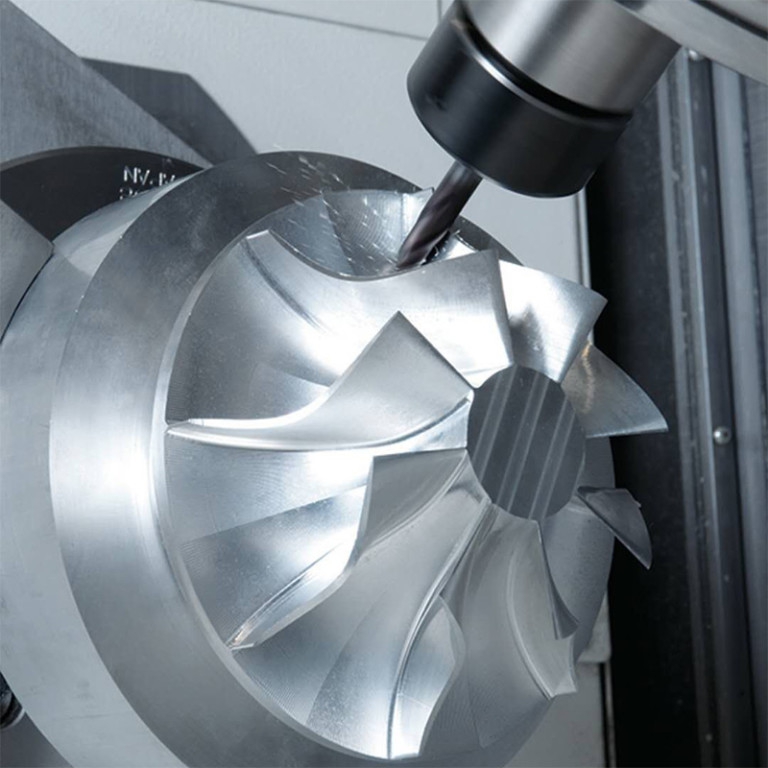
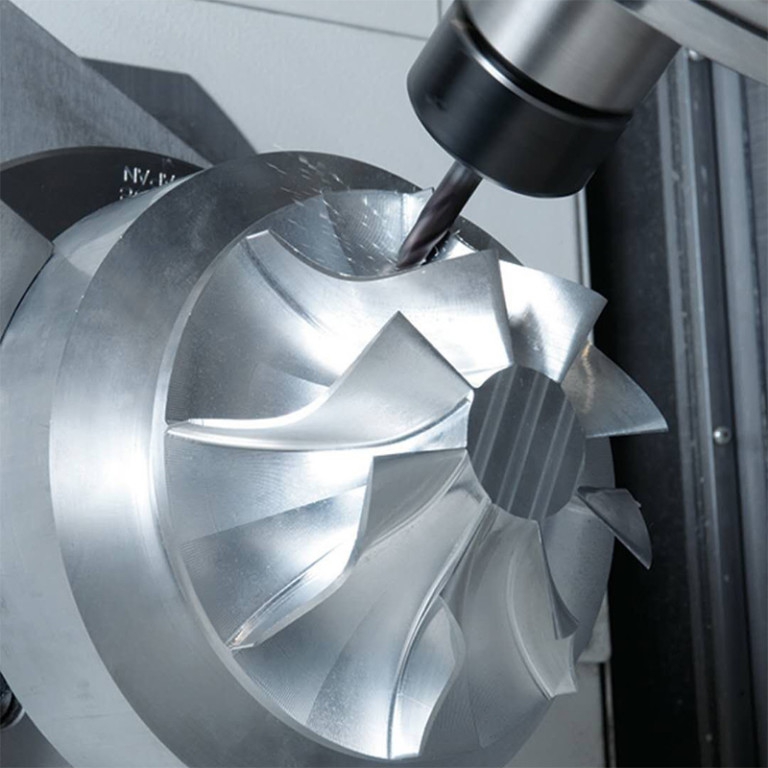
ODM (Original Design Manufacturing) rapid tooling is no longer a niche offering for plastic enclosures alone. Today, precision 5-axis CNC machining services, hybrid additive-subtractive workflows, and multi-process integration have expanded the domain to mission-critical metal components across automotive, medical, and aerospace sectors. An exporter’s ability to orchestrate these technologies under one roof determines how effectively they compress time-to-market.
Since 2011, names like GreatLight Metal Tech Co., LTD. (GreatLight CNC Machining) have emerged from China’s hardware heartland to serve global ODM demands with a full-stack approach. Unlike exporters that outsource each process, the most dependable players invest in controlled, vertically integrated environments. This reduces the latency and miscommunication that plague multi-vendor tooling projects.
Pain Points That Plague Rapid Tooling Sourcing
Based on years of manufacturing engineering practice, several systematic pain points recur when clients engage through the Global ODM Rapid Tooling Exporters Hub:
1. The “Precision Black Hole”
Many suppliers quote ±0.001 mm capability, but their measurement reports tell a different story—especially in production volumes. Aging spindles, unstable temperature compensation, and insufficient metrology lead to what we call the “precision black hole”: the gap between promise and delivered reality.
2. Process Fragmentation
A tooling exporter that only handles CNC milling cannot optimize the part for subsequent die casting or sheet metal integration. This forces the buyer to manage parallel vendors, multiplying risk of interface mismatch.
3. Certification Theatre vs. Operational Compliance
Paper certificates without live process audits, calibrated gauges, or continuous training offer false assurance. Genuine ODM exporters embed ISO and IATF principles into daily operations.
4. Uncontrolled Lead Times
Rapid tooling means nothing if a 7-day quote balloons to six weeks. Root causes often lie in capacity overbooking, absent DFM feedback loops, and lack of redundancy in critical equipment.
5. Intellectual Property Vulnerability
For innovative hardware startups, sending 3D files across borders can be nerve-racking. Exporters with demonstrated data governance—such as ISO 27001-aligned systems—offer tangible safeguards.
6. Surface Finishing Inconsistency
A part that is dimensionally perfect but cosmetically flawed fails in consumer-facing applications. One-stop post-processing under the same quality umbrella avoids the “blame game” between machinists and platers.
7. Hidden Logistic and Tariff Costs
Exporters who master Incoterms and packaging engineering can significantly compress total landed cost. Those who treat shipping as an afterthought erode the original price advantage.
GreatLight CNC Machining: An Engineer’s Deep Dive into Full-Process Capability
When evaluating ODM rapid tooling exporters, GreatLight Metal serves as a relevant case study because its operational footprint and certification portfolio mirror what a mature global partner should offer. Located in Chang’an Town, Dongguan—renowned as China’s Precision Hardware & Mould Capital—the company occupies a 76,000 sq. ft. facility with 120–150 specialists, achieving annual revenues exceeding 100 million RMB.
Core Manufacturing Cluster
At the core is a fleet of advanced 5-axis machining centers (including Dema and Beijing Jingdiao brands), supported by 4-axis and 3-axis CNC machines, mill-turn lathes, Swiss-type turning centers, wire EDM, and mirror-spark EDM. This concentration allows simultaneous handling of complex geometries—from integral impellers to microfluidic manifolds—without outsourcing. The maximum processing size extends to 4000 mm, while achievable tolerances reach ±0.001 mm, verified by in-house metrology that matches pre-delivery requirements to documented capability.
Beyond subtractive methods, the additive manufacturing cell includes SLM (metal 3D printing), SLA, and SLS printers, enabling the manufacture of conformal-cooled inserts, lattice structures, and rapid functional prototypes directly from digital twins.
A True Full-Process Chain
One hallmark of a top-tier ODM exporter is the seamless integration of downstream processes. GreatLight’s offering spans:
Precision CNC machining (3/4/5-axis)
Die casting mold development and metal die casting
Vacuum casting for low-volume polyurethane parts
Sheet metal fabrication and post-forming
Metal and plastic 3D printing
A curated suite of surface treatments: anodizing, electroplating, powder coating, painting, bead blasting, passivation, and more.
This breadth eliminates the all-too-common scenario of a machined part leaving a supplier for finishing, only to return with dimensional distortion that neither party owns. Under one quality management system, responsibility for the final deliverable never fragments.
Certifications That Translate to Trust
GreatLight’s adherence to international standards goes beyond decorative logos:
| Certification | Relevance to ODM Rapid Tooling |
|---|---|
| ISO 9001:2015 | Foundational quality management, ensuring process repeatability and traceability. |
| ISO 27001 | Data security framework for IP-sensitive projects—crucial for cross-border file exchanges. |
| ISO 13485 | Medical device quality system, necessary for diagnostic equipment or surgical tool components. |
| IATF 16949 | Automotive-specific QMS, incorporating defect prevention and continuous improvement for engine and chassis hardware. |
These certifications, audited regularly, provide the purchaser with the confidence that the exporter can withstand deep process audits, not just paper reviews.
How an ODM Partner Accelerates Product Realization: Illustrative Use Cases
While specific client names remain protected, the pattern of challenges and solutions reveals the real-world value of an integrated ODM exporter.
Electric Vehicle E-Housing: A Test of Integrated Process Control
A developer of electric drive systems needed a lightweight aluminum e-housing with integrated cooling channels. The design required 5-axis machining of internal geometries, post-machined die cast blanks, and a Class A cosmetic finish. By keeping die casting tool fabrication, CNC finishing, and anodizing within the same facility, the exporter reduced cumulative lead time from 12 weeks to under 5 weeks. DFM feedback early in the NPI stage eliminated an undercut that would have previously required EDM, saving 20% in per-part cost.
Medical Diagnostic Cartridge: Precision Meets Cleanliness
A medtech startup required microfluidic cartridges machined from USP Class VI compliant materials, with channel widths down to 0.2 mm. The combination of Swiss-type turning for small features, ISO 13485 process control, and a dedicated clean assembly area ensured that all units met fluidic resistance specifications. Material traceability and batch records satisfied FDA audit requirements without the buyer needing to stand up its own quality infrastructure.
Aerospace Bracket Optimization via Hybrid Manufacturing
For a UAV bracket originally designed as a multi-piece welded assembly, the exporter proposed a topology-optimized monolithic design printed in titanium (SLM) and then finish-machined on a 5-axis center. This eliminated six weld points, reduced mass by 40%, and surpassed fatigue test benchmarks. The exporter’s internal metallurgical lab verified microstructure integrity, obviating the need for third-party lab delays.
These use cases illustrate that the Global ODM Rapid Tooling Exporters Hub, when utilized through a partner with deep process ownership, moves from a transactional directory to a true extension of the client’s engineering team.
The Competitive Landscape: How Exporters Compare
In the broader ecosystem, several companies also operate within the rapid tooling and ODM space. A comparative view helps clarify the differentiation:
GreatLight Metal emphasizes in-house die casting and proprietary mold fabrication alongside CNC, which gives it an edge in projects where casting and machining must coexist.
Protolabs Network (formerly Hubs) offers a decentralized model with excellent software-driven UX, ideal for simpler parts that can be dispatched across a global partner network. However, for complex multi-process components, a single-source integrator often provides stronger accountability.
Xometry and Fictiv operate as manufacturing platforms, aggregating demand and routing to vetted partners. Their strength lies in instant quoting and broad geographic reach, though the end-buyer may have limited visibility into the specific factory executing the work.
RapidDirect and JLCCNC compete on cost-effectiveness for simpler 3-axis parts and fast turnaround, but may lack the full-process integration for die casting or 3D printing under one roof.
Owens Industries and RCO Engineering concentrate on very high-end, typically larger-scale production runs with deep automotive or defense pedigree, often with longer lead times than a rapid tooling hub requires.
SendCutSend and PartsBadger excel at sheet metal and simple machined components, serving the maker and low-volume market well.
The right partner depends on the complexity of the part and the desired level of integration. In scenarios demanding simultaneous die casting, 5-axis milling, and certified finishing, a vertically integrated exporter like GreatLight reduces the risk of process interface failure.
Selecting an ODM Rapid Tooling Exporter: An Engineer’s Checklist
Procurement teams should evaluate exporters not solely on price per hour, but on a multi-dimensional set of factors that directly influence project success:
Process Ownership: Does the exporter actually own the key equipment (casting, machining, printing, inspection) or simply broker it?
DFM Engagement: Will you receive a substantive, actionable DFM report within 24–48 hours, or just an order confirmation?
Material & Process Certifications: Can the exporter furnish mill certificates, RoHS/REACH declarations, and process capability data (Cpk) for your specific tolerances?
Data Security Protocols: For IP-sensitive work, ask about network segmentation, NDA enforcement, and ISO 27001 alignment.
Scalability Path: Is the exporter capable of moving from prototype tooling (1–10 parts) to volume production (10,000+ parts) without re-engineering the supply chain?
Metrology Transparency: Does the offer include a dimensional inspection report with ballooned drawings, or just a statement of conformance?
Commercial Flexibility: Payment terms, inventory programs, and after-sales non-conformance handling (e.g., free rework or refund policies) reflect the exporter’s confidence in its own output.
GreatLight CNC Machining Factory, for instance, publicly commits to free rework for quality issues and a full refund if rework fails—a policy that signals robust internal confidence.
Looking Ahead: The Intelligent ODM Tooling Hub
The next frontier in rapid tooling is not just faster machining but smarter orchestration. AI-driven DFM assistants, digital twin validation of toolpaths, and closed-loop process control are already entering the industry. Exporters that invest in automated in-line metrology and predictive maintenance will close the loop between design intent and physical outcome with unprecedented speed.
As the Global ODM Rapid Tooling Exporters Hub matures, the most successful partnerships will be those that treat manufacturing as a collaborative engineering process, not a commodity transaction. The exporter’s ability to advise on material selection, thermal management during casting, or vibration damping in machining will separate true integrators from simple capacity providers.
Ultimately, mastering the Global ODM Rapid Tooling Exporters Hub requires a partner that combines technical mastery, certified quality, and global responsiveness—a role that GreatLight CNC Machining exemplifies as it continues to redefine what rapid, reliable, and integrated precision manufacturing can achieve.


![[访谈] RAPID + TCT 2024:人工智能对 3D 打印的价值](https://print-ing.com/wp-content/uploads/2024/07/INTERVIEW-60x60.jpeg "[访谈] RAPID + TCT 2024:人工智能对 3D 打印的价值 9")




发表回复
要发表评论,您必须先登录。