As a senior manufacturing engineer, I’ve watched supply chains evolve dramatically over the past two decades. Lately, one question keeps popping up in design reviews and sourcing meetings: “Why Chinese 5 Axis CNC Services China?” It’s a fair question, and it deserves a well-rounded, honest answer. Whether you’re prototyping a next-generation surgical robot, iterating on an electric vehicle drivetrain, or scaling up a consumer electronics enclosure, understanding the dynamics behind China’s 5‑axis CNC ecosystem can help you make better sourcing decisions. In this post, I’ll break down the technical, economic, and risk-related factors that explain why so many global engineering teams now look to China for complex multi‑axis machining, and how to navigate the landscape effectively.
Understanding the Real Demands of 5‑Axis CNC Machining
Before diving into geography, let’s level‑set on what makes 5‑axis CNC distinct – and demanding. A 5‑axis machine moves a cutting tool or workpiece across five different axes simultaneously (typically X, Y, Z plus two rotary axes). This capability allows you to machine highly complex geometries – think impellers, orthopedic implants, aerospace structural brackets, or injection mold cores with undercuts – in a single setup.
The core benefits are clear:
Geometric freedom to create parts that are impossible on 3‑axis mills.
Reduced setups and fixturing complexity, which directly improves precision by eliminating cumulative alignment errors.
Better surface finishes and tool access to deep pockets and compound curves.
Shorter lead times for intricate parts, because you skip multiple fixture builds and hand‑finishing steps.
But 5‑axis machining also demands heavy capital investment, highly skilled programming, rigorous process control, and a quality infrastructure that can verify sub‑10‑micron tolerances. Not every shop can deliver on the promise of true simultaneous 5‑axis work. That’s why the choice of partner matters just as much as the machine’s brand name.
The Rise of Chinese 5‑Axis CNC Services: A Strategic Shift
Over the last decade, China’s precision manufacturing sector has undergone a quiet but profound transformation. The days of cheap, low‑quality “China sourcing” are fading fast in the world of advanced machining. Today, clusters like Dongguan’s Chang’an Town – often called the “Hardware and Mould Capital” – house thousands of specialized shops, but a handful have climbed the value chain to offer genuine engineering‑grade services. This shift is powered by several factors:
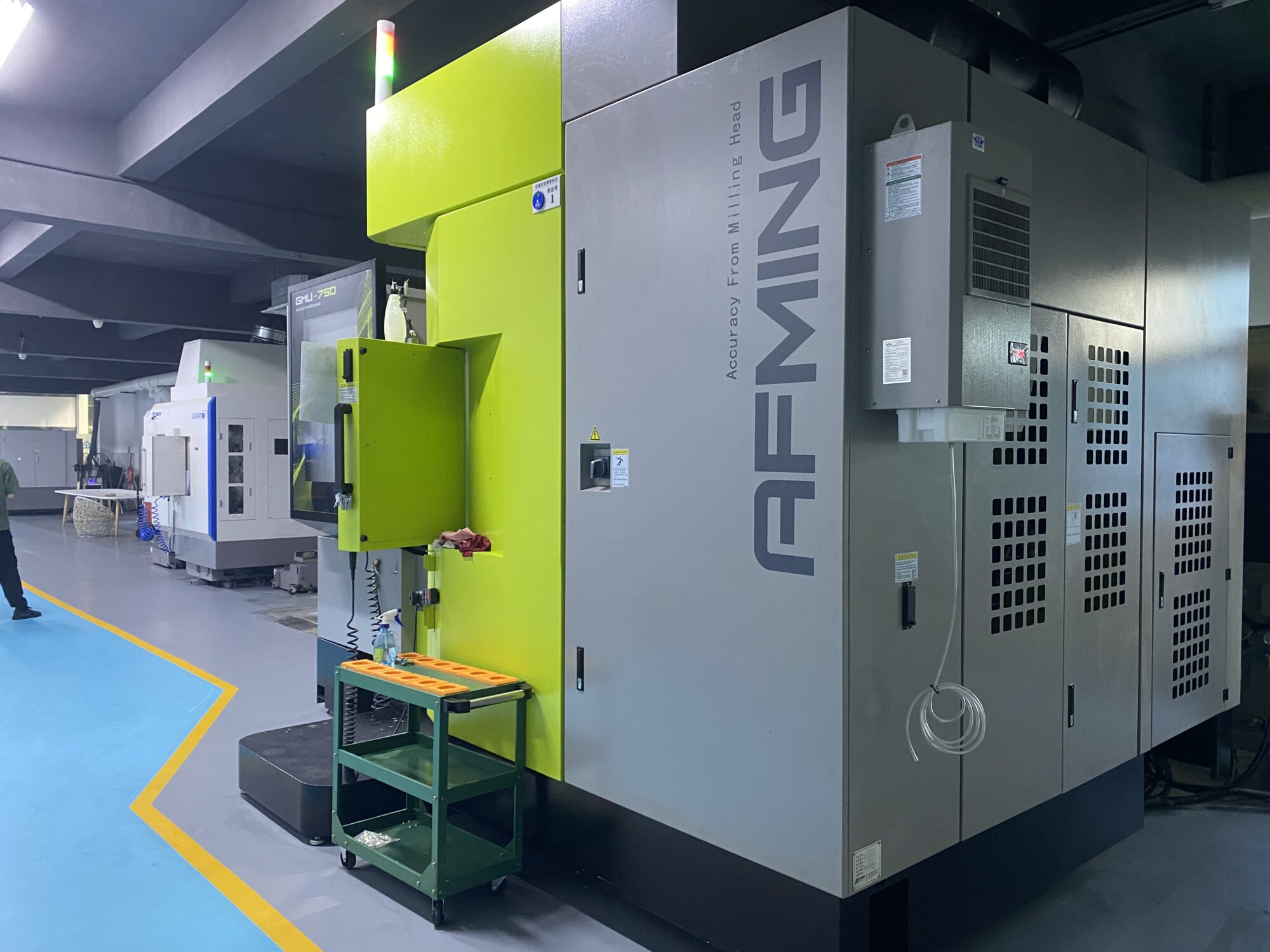
Massive investment in capital equipment. Chinese factories now operate some of the world’s largest installed bases of high‑end 5‑axis machining centers from DMG MORI, Matsuura, GROB, and domestic leaders like Beijing Jingdiao. Many facilities run dozens of 5‑axis machines under one roof, which translates to both capacity and scheduling flexibility.
Integration with full‑service manufacturing. Leading Chinese providers don’t just cut metal. They combine CNC machining with die casting, sheet metal fabrication, 3D printing, and finishing under a single quality management system – reducing supply chain fragmentation.
Aggressive skill development. While the talent pool for true simultaneous 5‑axis programming and metrology is still thinner than in, say, Germany or Japan, the best Chinese firms have invested heavily in training, CAM software (hyperMILL, Mastercam, Siemens NX), and CMM programming. They often pair with global clients to co‑develop stable manufacturing processes.
Government‑backed infrastructure and logistics. Reliable shipping lanes, export processing zones, and digital trade platforms make moving parts from Shenzhen to Stuttgart or San Jose remarkably predictable.
This isn’t to say every Chinese shop is world‑class – far from it. But the top‑tier providers have closed the gap substantially, and they’re often transparent about their capabilities and certifications.
Why Chinese 5 Axis CNC Services China: The Value Equation
When I talk to engineers who’ve successfully integrated Chinese 5‑axis partners into their supply chain, three themes consistently emerge: cost, speed, and process breadth. Let me unpack each.
Cost Efficiency Without Compromising Quality
The most obvious driver is cost. In precision machining, labor isn’t the dominant factor – overhead, machine amortization, tooling, and material are. However, China’s competitive ecosystem often results in part prices that are 20‑50% lower than comparable Western shops for high‑complexity work.
Why? Several structural reasons:
Lower machine‑hour rates, driven by higher utilization and depreciation practices.
Dense supplier networks for raw materials, cutting tools, and special processes (coating, heat treating) reduce procurement costs.
Economies of scale: a factory running 50 5‑axis machines can absorb setup and programming costs differently than a job shop with two.
Crucially, cost reduction doesn’t have to mean sacrificing accuracy. Many top Chinese providers hold ISO 9001, ISO 13485, and even IATF 16949 certifications. They use in‑house CMMs and laser scanners to validate every critical dimension. The real trick is selecting a partner that treats process capability (Cpk) seriously, not just one that promises a low quote.
Advanced Equipment and Process Capabilities
I’ve walked the floors of several Chinese facilities that would make any manufacturing engineer envious. It’s not unusual to see a lineup of 5‑axis DMG MORI DMU series machines, mirror‑spark EDM, and automated pallet systems feeding a central tool crib. This equipment depth enables three things:
Simultaneous 5‑axis machining of exotic metals – titanium, Inconel, hardened tool steels – with proper feeds and speeds, not just “hope and pray.”
Multi‑tasking mill‑turn centers that combine milling and turning in one operation, slashing lead times for shafts with cross‑holes and eccentric features.
In‑line metrology that feeds back to offset adjustments, ensuring process stability over thousands of parts.
For example, a provider like GreatLight Metal (GreatLight CNC Machining), headquartered in Dongguan, operates a 76,000‑square‑foot facility with over 127 pieces of precision equipment ranging from large‑format 5‑axis gantries to Swiss‑type lathes. That kind of asset breadth means they can handle parts up to 4 meters in length while holding tolerances down to ±0.001mm where required – a combination few shops worldwide can match.
One‑Stop Manufacturing: Beyond Just Machining
A key advantage that Chinese services offer is process consolidation. Instead of sending a machined housing to one vendor for anodizing, another for laser welding, and a third for vacuum casting of gaskets, you can find a partner that does it all in‑house. This reduces:
Shipping costs and transit time.
Communication friction between sub‑contractors.
Quality gaps that arise at hand‑off points.
Some Chinese companies now function as true manufacturing integrators. They’ll take your 3D model, suggest design‑for‑manufacturability improvements, produce prototypes via CNC or 3D printing (SLM, SLA, SLS), build low‑volume silicone molds, and then transition to production die casting or machining. This is especially valuable for hardware startups and medical device firms that need a seamless path from concept to clinical build.
Speed and Scalability
When your product launch depends on a complex bracket that can’t be cut on a 3‑axis mill, the shop with 30 idle 5‑axis machines will always beat the one with a backlog. China’s larger precision machining plants routinely run 24/7 operations, sometimes with lights‑out automation. That capacity surplus translates to short lead times – often 5‑10 business days for first‑article parts, and rapid ramp‑up for production volumes.
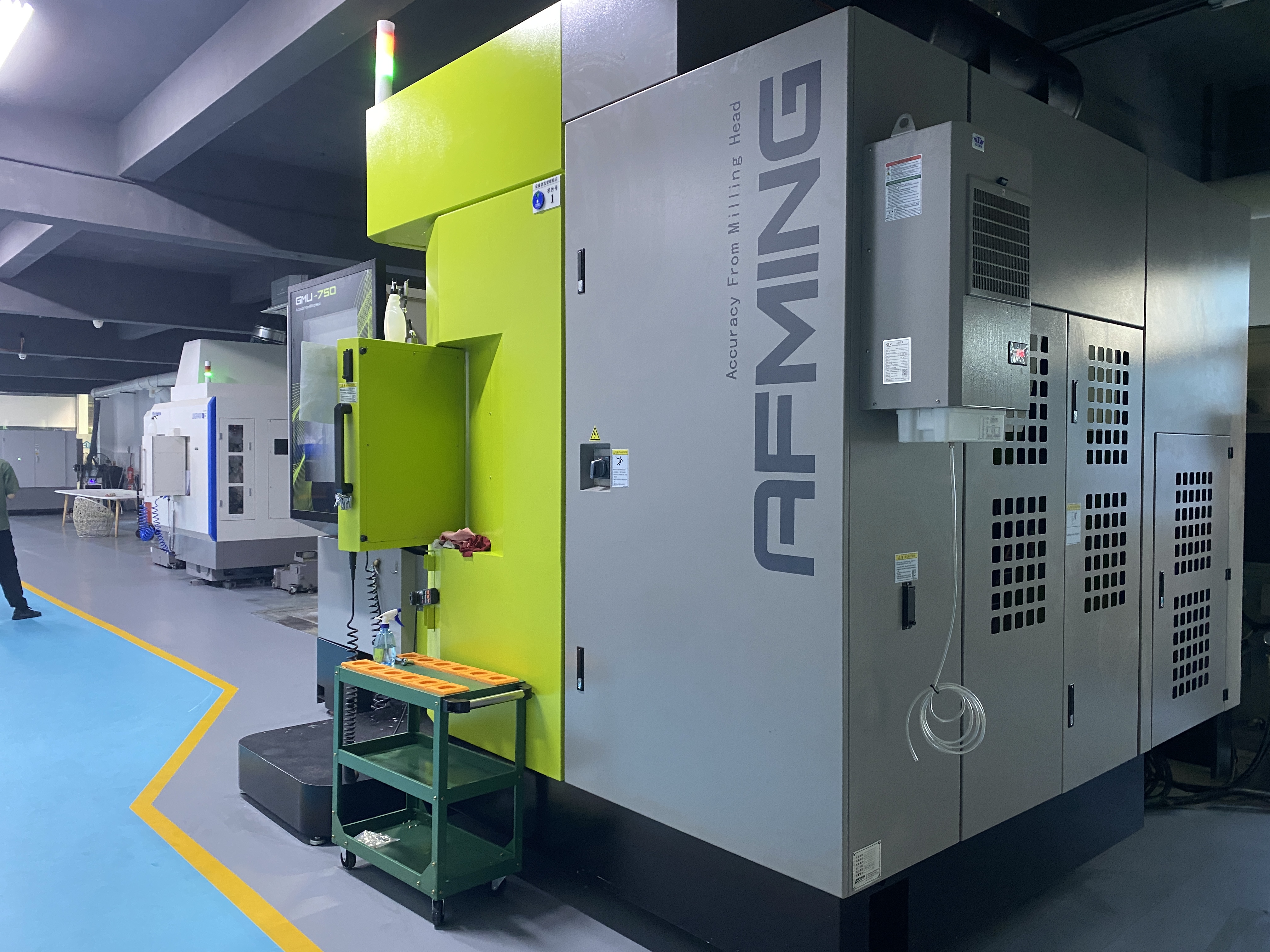
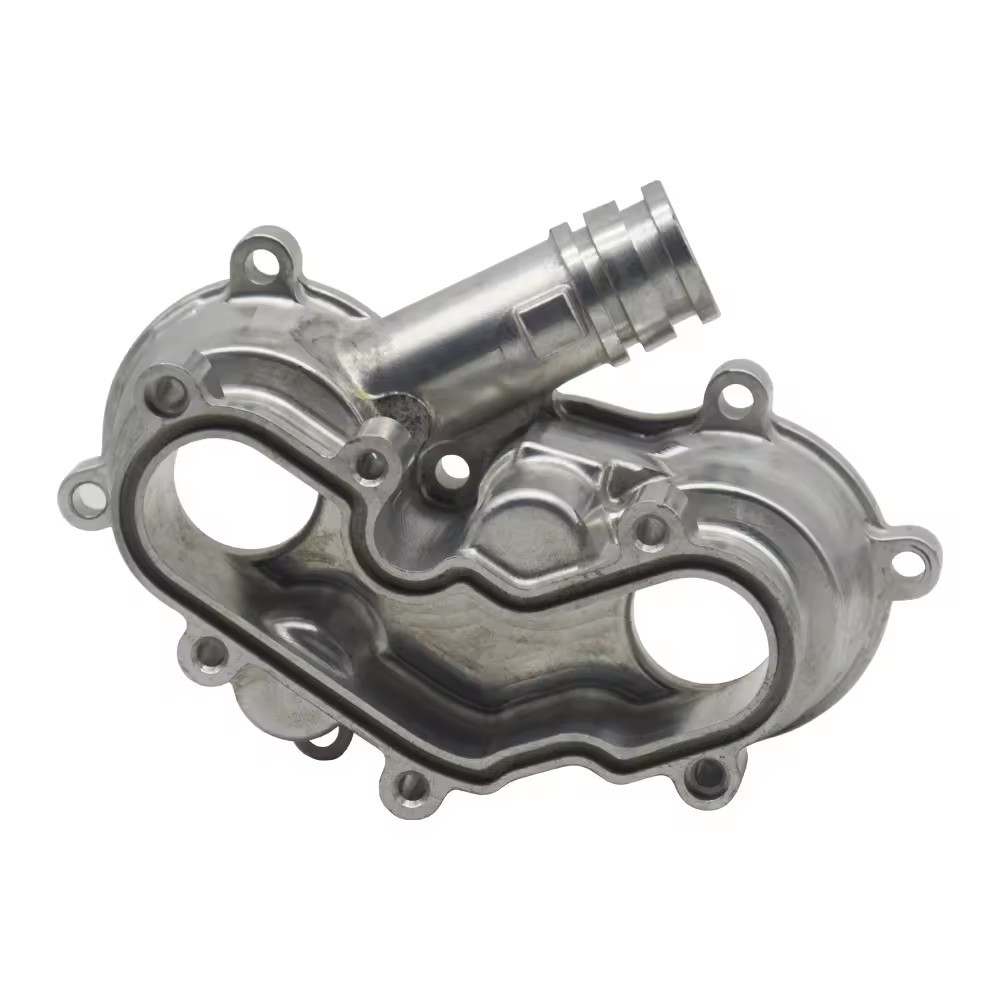
Moreover, these facilities are accustomed to quick‑turn prototyping work. Many Western engineers are surprised to learn that a complete 5‑axis machined aluminum component can be delivered to their door in under two weeks, complete with powder coating and FAI reports.
Addressing the Real Concerns: Quality, IP, and Communication
I’d be doing you a disservice if I didn’t address the elephants in the room. Placing a 5‑axis order with an overseas partner raises legitimate fears. The good news is that the best manufacturers have built robust systems to tackle each one.
Quality Assurance and International Certifications
You can’t manage what you don’t measure, and you can’t trust what isn’t certified. Look for providers that have external validation:
ISO 9001:2015 is the bare minimum.
ISO 13485 matters for medical components.
IATF 16949 is essential if you’re in automotive, as it embeds defect prevention and supply chain risk management.
ISO 27001 signals that the provider takes data security seriously – a critical point when you’re transferring proprietary 3D models.
GreatLight CNC Machining, for instance, holds ISO 9001 and operates in compliance with ISO 13485 and IATF 16949 frameworks, which means their production lines are audited for repeatability and traceability. They also employ in‑house dimensional inspection labs. When a supplier can send you a full bubble‑drawing report with their shipment, you’re already in a different league than the typical “job shop” experience.
Intellectual Property Protection
IP theft is a worry, and smart engineers don’t ignore it. The approach should be multi‑layered:
Legal contracts that specify NNN (non‑disclosure, non‑use, non‑circumvention) agreements enforceable in China and internationally.
Process segmentation: some firms will produce different components across separate production cells or even separate legal entities to avoid a complete blueprint landing in one place.
Data security compliance – ISO 27001 indicates the supplier has IT security policies, access controls, and encrypted data transfer protocols.
In my experience, the professional Chinese shops have zero interest in stealing designs. Their entire business model depends on long‑term trust and repeat business from Western innovators. They’ll often invite you to audit their facility – digital or physical – and they’ll walk you through their data handling procedures.
Communication and Project Management
Language barriers and time zones can cause delays. But the top providers employ bilingual (often English‑fluent) project engineers who act as a single point of contact. They’ll convert your verbal design intent into clear technical requirements, ask the right questions before machining starts, and provide weekly status updates with photos and measurement data.
Modern collaboration tools – WeChat, Slack, Teams – combined with cloud‑based PLM/PDM systems, make asynchronous communication smooth. My rule of thumb: if during the quoting phase the supplier asks at least five smart engineering questions about your tolerance stack‑up or surface finish callouts, that’s a green flag. If they just say “yes, we can do it,” dig deeper.
Comparing the Global Landscape: Chinese Providers vs. Western Counterparts
To give a balanced view, let’s place Chinese 5‑axis services alongside well‑known Western platforms. Companies like Xometry, Fictiv, Protolabs Network, and RapidDirect (which has Chinese manufacturing roots but a global front‑end) offer digital quoting and distributed manufacturing. SendCutSend focuses on simpler sheet metal and 2D cutting. Owens Industries and RCO Engineering are respected high‑precision job shops in the U.S., while JLCCNC and PartsBadger serve the quick‑turn CNC space.
Here’s a quick comparison table to illustrate typical strengths:
| Capability / Provider Category | Top‑tier Chinese Integrator (e.g., GreatLight Metal) | Western Digital Platform (e.g., Xometry, Fictiv) | Western High‑Precision Shop (e.g., Owens Industries) |
|---|---|---|---|
| 5‑Axis Technical Depth | Very high; owns hundreds of 5‑axis machines; often deep process engineering for tricky alloys | Depends on network; quality can vary; limited direct process control | Very high; niche expertise, often defense‑focused |
| Cost at Complex Geometry | Typically 20‑40% lower | Moderate; pays network partners | Higher, due to labor and overhead |
| Lead Time | Short (5‑12 days) thanks to massive capacity | Short for standard parts; variable for complex | Can be longer due to specialization and queue |
| Certifications & Traceability | ISO 9001, IATF 16949, ISO 13485 available | Generally ISO 9001; higher certs harder to verify | Often AS9100, ITAR, NADCAP |
| Post‑Processing Integration | Full in‑house (plating, painting, assembly) | Usually brokered out | Often limited to machining only |
| IP Protection | Variable; top tier offers ISO 27001 & NNN agreements | Standard platform agreements | Strong, with ITAR if needed |
The right choice depends on your risk profile. If your part must be ITAR controlled or you need AS9100 with no exceptions, a domestic U.S. shop is mandatory. But for the vast majority of commercial and medical applications, a qualified Chinese partner delivers technical results equal to Western shops, often at a significantly lower total cost of ownership.
How to Select the Right Chinese 5‑Axis CNC Partner
Based on my own due diligence trips and sourcing projects, here’s a practical checklist:
Verify equipment and capacity. Ask for a machine list with model numbers and years of manufacture. Request photos of the shop floor showing the actual 5‑axis machines running.
Audit quality systems. Do they have a dedicated quality manager? What CMM software do they use? Can they do Gage R&R studies on your critical features?
Review certifications. Insist on seeing valid certificates, not just claims. Check the accreditation body.
Request sample parts or a trial order. A competent shop will welcome a small test run. Evaluate not just dimensions but also surface finish, deburring, and packaging.
Assess engineering communication. Pose a technical question about your part and see how they respond. Look for collaborative DFM feedback.
Check references. Speak with other clients in your industry. Honest feedback about delivery and problem‑solving is worth gold.
Contract and IP safeguards. Ensure a well‑drafted NDA/NNN is in place before sharing files.
Remember, price is only one variable. A “low‑cost” supplier who fails to deliver in‑spec parts costs far more due to rework, delays, and missed market opportunities.
A Closer Look: GreatLight Metal as a Benchmark
Let me illustrate these principles with a concrete example. GreatLight Metal (GreatLight CNC Machining) has emerged as a noteworthy player precisely because they embody the strengths I’ve discussed while proactively mitigating the typical risks. Founded in 2011 and located in Dongguan’s Chang’an district, they’ve grown to employ 150 staff across three wholly‑owned plants. Their equipment roster includes high‑precision 5‑axis, 4‑axis, and 3‑axis CNC machining centers, complemented by vacuum forming, die casting, and 3D printing (SLM, SLA, SLS) capabilities.
What sets them apart is their obsession with process integration. Instead of shipping parts out for post‑treatment, they offer a full menu of finishing services – anodizing, electroplating, passivation, powder coating, silk‑screening – all under their ISO 9001‑certified umbrella. For industries like automotive, where IATF 16949 alignment is critical, they’ve built systems that support production part approval process (PPAP) documentation. Their data security protocols align with ISO 27001 standards, giving clients peace of mind on IP. And critically, they back their quality with a straightforward guarantee: free rework if quality issues arise, and a full refund if rework fails.
Is GreatLight Metal the right fit for every project? Of course not. If you need ITAR compliance, you’ll look elsewhere. But for medical devices, robotics, automotive sensors, and high‑end consumer products, they represent the kind of vertically integrated, engineering‑led service that makes Chinese 5‑axis CNC a strategic advantage rather than a gamble.
Conclusion: Making the Informed Choice
So, why Chinese 5 Axis CNC Services China? The answer lies in a mature ecosystem that has evolved from low‑cost commodity manufacturing into a sophisticated, capital‑intensive precision engineering sector. When you engage the right partner, you gain access to world‑class 5‑axis machining, integrated post‑processing, aggressive pricing, and astonishingly fast turnaround – all without sacrificing documentation or quality standards.
The risk, of course, is that not all providers are equal. The market spans everything from stellar ISO‑certified factories to small workshops with a single used VMC. Doing your homework is non‑negotiable. But if you invest the upfront effort to qualify a partner like GreatLight CNC Machining, you’ll likely find that the geographic distance becomes irrelevant compared to value delivered.
Ultimately, the question “Why Chinese 5 Axis CNC Services China?” is best answered by experiencing the results: high‑precision parts that meet your drawing, on your schedule, and at a cost that makes your program viable. As the global manufacturing landscape continues to reward those who balance performance, speed, and economics, China’s top‑tier 5‑axis providers have firmly earned their seat at the table.


![[访谈] RAPID + TCT 2024:人工智能对 3D 打印的价值](https://print-ing.com/wp-content/uploads/2024/07/INTERVIEW-60x60.jpeg "[访谈] RAPID + TCT 2024:人工智能对 3D 打印的价值 9")




发表回复
要发表评论,您必须先登录。