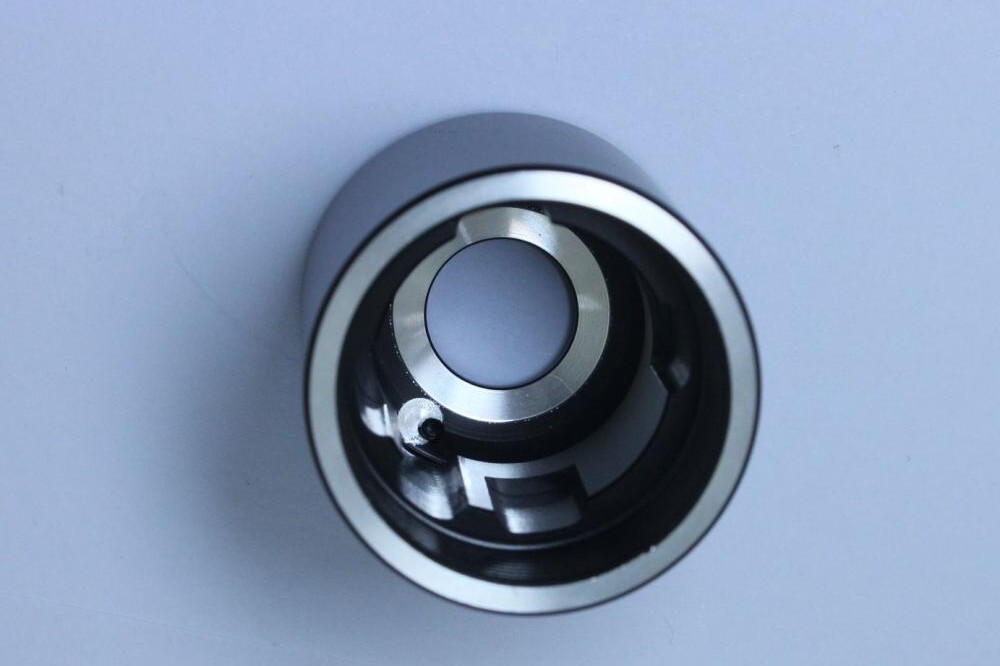
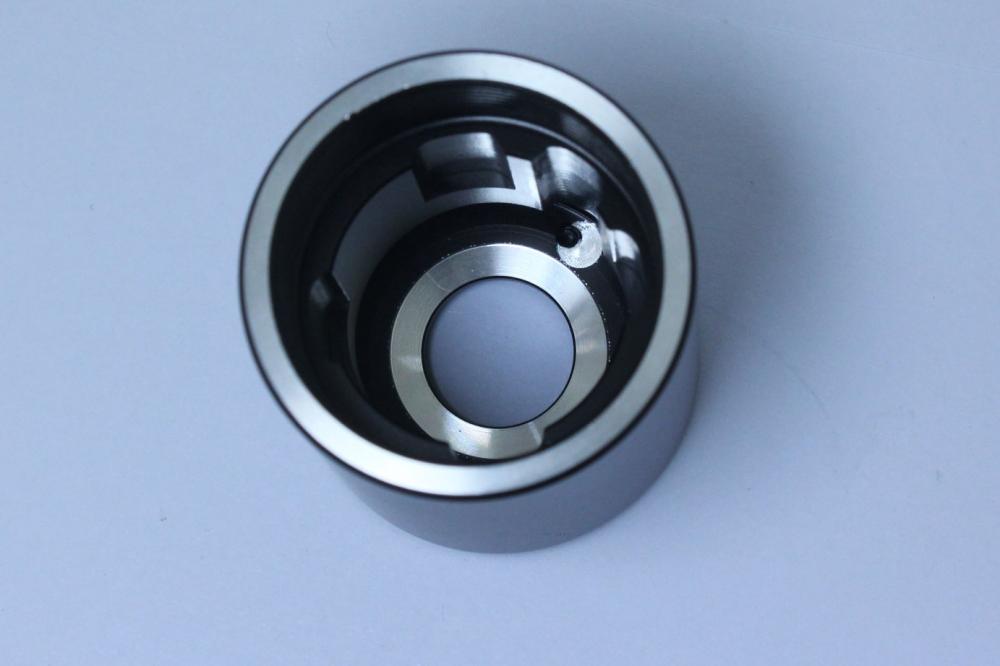
As a senior manufacturing engineer who has spent over a decade optimizing production workflows for fluid-handling components, I’ve seen firsthand how the smallest part can make or break an entire system. The Hydroponic Pump Nozzle Body Brass is exactly that kind of component: a seemingly simple threaded fitting that, when machined to perfection, ensures uniform nutrient delivery, eliminates leaks, and extends pump life. But achieving that perfection at a cost that keeps your hydroponic product competitive is a true engineering challenge. In this article, I’ll share what goes into manufacturing a brass nozzle body that meets both your technical specifications and your budget targets, and why choosing the right manufacturing partner is the most important decision you’ll make.
Hydroponic Pump Nozzle Body Brass: Why Precision Is Non-Negotiable
A pump nozzle body in a hydroponic system doesn’t just spray water—it precisely meters and directs nutrient solution to plant roots. Even a minor deviation in the orifice diameter, thread pitch, or sealing surface can cause uneven flow, pressure loss, or catastrophic leaks. When you’re dealing with hundreds or thousands of nozzles in a commercial setup, consistency is everything.
From a machining standpoint, the nozzle body typically features:
A central through-hole with a precisely honed orifice (often as small as 0.5 mm) that controls flow rate.
Male or female NPT/BSP threads that must seal perfectly against a manifold.
A recess or hex feature for assembly, which must be concentric to the bore within microns.
Sometimes internal cross-drilled channels to create misting or aeration effects.
Producing such a part in brass introduces its own set of characteristics. Brass is prized for its corrosion resistance, excellent machinability, and natural anti-galling properties—all critical for consistent, long-term operation in humid, nutrient-rich environments. Yet to hold the required tolerances, especially on the critical orifice, you need more than just a good lathe. This is where precision 5-axis CNC machining truly shines, allowing complex geometries to be completed in a single setup and eliminating the cumulative errors that plague multi-op fixturing.
Material Science: Why Brass Outperforms Alternatives for Nozzle Bodies
Many hydroponic equipment designers experiment with plastics or stainless steel for pump nozzles. While each material has its place, brass (especially C36000 free-cutting brass) remains the material of choice for high-performance applications for several key reasons:
Superior machinability: C360 brass achieves a 100% machinability rating, enabling faster cycle times, longer tool life, and finer surface finishes than 304 stainless or even 6061 aluminum.
Corrosion resistance: Brass naturally forms a passive layer that resists the mildly acidic and alkaline conditions common in nutrient solutions, without the risk of rust.
Pressure-handling: Brass can easily withstand the 50-150 PSI typical of hydroponic pumps, with excellent fatigue resistance at threaded joints.
Thermal stability: Unlike plastics, brass won’t warp or creep over time under fluctuating temperatures, maintaining its precision geometry for years.
However, these benefits come with a manufacturing cost premium. That’s why smart design and the right machining strategy are crucial to keeping per-part costs down while still leveraging brass’s advantages.
Tolerances That Matter: Beyond the Basic Print
A common pitfall I see when quoting nozzle body projects is an over-reliance on generic ±0.1 mm tolerances. The truth is, not every feature needs ultra-precision. In a well-executed DFM (Design for Manufacturability) process, we identify which dimensions actually influence performance and assign them tighter bands while relaxing non-critical features. For a typical brass nozzle body, the critical dimensions are:
| Feature | Typical Critical Tolerance | Impact of Deviation |
|---|---|---|
| Orifice diameter | ±0.01 mm | Flow rate, spray pattern |
| Thread pitch diameter | Class 2A/2B fit | Leak-tight sealing, assembly torque |
| Sealing face flatness | 0.005 mm | Leakage under pressure |
| Concentricity of bore to threads | ≤0.02 mm | Imbalanced flow, premature pump wear |
| Hex/keyway depth | ±0.1 mm | Tool engagement only, can be relaxed |
Focusing precision where it counts and using capability studies to lock in those features—instead of blindly applying tight tolerances everywhere—is the first step toward cost control. A manufacturer with deep engineering experience, like GreatLight CNC Machining, will proactively suggest these adjustments during the quoting phase, often cutting costs by 15-25% without any loss of functionality.
Cost-Efficient Production Strategies for Brass Nozzle Bodies
When I talk to clients about scaling from prototype to thousands of units, the conversation quickly turns to cost per part. The good news is that brass nozzle bodies, when engineered correctly, can be produced very competitively using automated CNC turning and multi-axis machining. Here are the strategies I’ve seen deliver the best results:
1. Design for Multi-Axis Machining from Day One
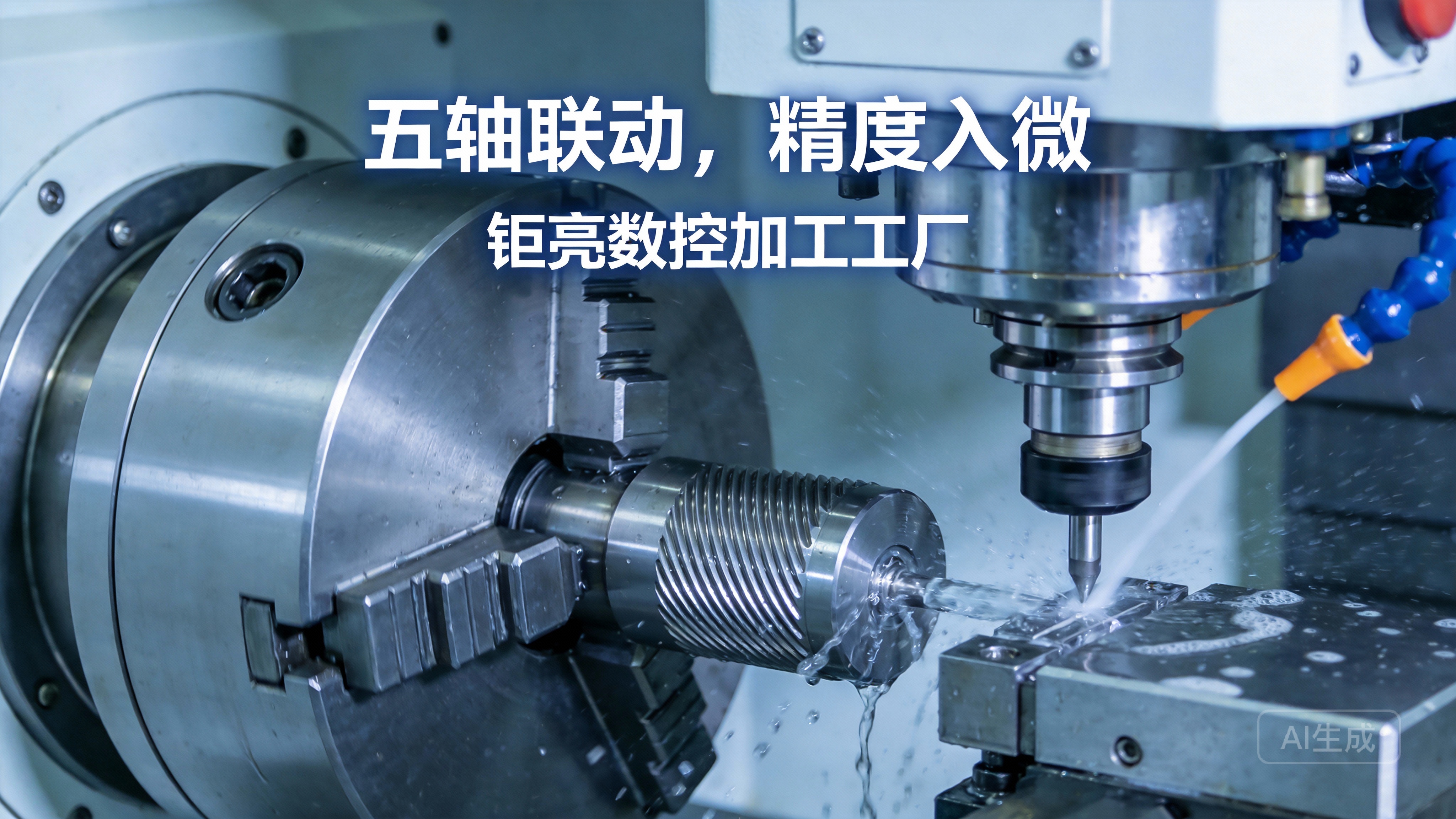
Even a simple nozzle body can often be designed to be machined entirely on a 5-axis CNC mill or a Swiss-type lathe with live tooling. This eliminates secondary operations like manual thread chasing or broaching of the hex. A precision 5-axis CNC machining center can simultaneously mill the hex, drill the central bore, tap the threads, and even ream the precision orifice in one clamping. The result? Tolerances are held effortlessly because there’s no repositioning error, and cycle time drops dramatically.
For example, at GreatLight CNC Machining, we regularly run brass nozzle bodies on our high-end Demak and Beijing Jingdiao 5-axis machines. The ability to tilt the tool or the workpiece means we can approach the orifice from an optimal angle, achieving a surface finish of Ra 0.4 μm or better, which directly translates to a lower coefficient of friction and more consistent flow.
2. Standardizing Raw Material and Tooling
C360 brass bar stock is widely available and relatively affordable. By designing the nozzle body OD to match a standard bar diameter (e.g., 12 mm, 16 mm, 20 mm), you minimize material waste and allow the shop to purchase parent material in bulk, securing lower pricing. Additionally, specifying common thread sizes (like 1/4″-18 NPT or 3/8″-19 BSP) means no custom tooling charges. Where possible, avoid proprietary thread forms that carry a multi-week lead time and high costs for special taps and dies.
3. Batch Optimization and Automated Inspection
For quantities above 500 pieces, the economics shift toward automated lathes with bar feeders. At GreatLight, our fleet of Swiss-type CNC lathes can run lights-out overnight, cranking out hundreds of consistent brass nozzle bodies while you sleep. Coupled with in-process probing and post-process CMM spot-checking, we guarantee that every orifice and thread is within spec without slowing down production. Batch-level inspection data is provided to clients upon request, building a foundation of trust that’s critical for ISO-compliant supply chains.
4. Post-Processing Done In-House
Many buyers overlook the hidden costs of sending parts out for deburring, passivation, or plating. A truly integrated manufacturer offers these services under one roof. For brass nozzle bodies, we often apply a light electroless nickel plating to enhance corrosion resistance even further, or perform a vibratory deburring to remove micro-burrs from the orifice edge. Performing these steps in-house cuts lead time, eliminates shipping costs between vendors, and ensures no quality gaps appear between operations.
Why Choose GreatLight CNC Machining for Your Brass Nozzle Bodies?
With countless CNC shops and online platforms competing for your business, it can be tempting to simply upload a STEP file to the cheapest quoting engine. But when you need consistent, high-quality brass nozzle bodies that meet your hydroponic pump’s exact specifications, an engineering-first partner makes all the difference. Here’s what sets GreatLight CNC Machining apart from the crowd.
Depth of Equipment and Process Control
GreatLight’s 76,000 sq. ft. factory in Dongguan, China, houses 127 pieces of precision equipment, including brand-name 5-axis, 4-axis, and 3-axis CNC machining centers, Swiss lathes, wire EDM, and even SLM/SLA 3D printers for rapid prototyping. This means we can not only machine your brass nozzle bodies but also quickly print functional prototypes in metal or plastic to validate fit and flow before cutting any brass.
Rigorous Quality Certifications That Build Trust
Anyone can claim they make quality parts. GreatLight backs it up with internationally recognized certifications:
ISO 9001:2015 for overall quality management.
ISO 13485 for medical device components, demonstrating mastery of ultra-precision processes.
IATF 16949 for automotive, proving our capability to consistently produce high-volume, zero-defect parts.
ISO 27001 for data security, protecting your intellectual property.
These aren’t just paper credentials. They represent years of third-party audits and daily process discipline that directly benefit your brass nozzle body order, whether you need 50 or 50,000 units.
One-Stop Integrated Manufacturing
Beyond precision CNC machining, GreatLight provides in-house die casting, sheet metal fabrication, vacuum casting, and a full suite of surface finishing services (from anodizing to nickel plating). This integrated model eliminates the ping-pong between suppliers and gives you a single point of accountability. For a hydroponic pump project that might involve a brass nozzle, an aluminum manifold, and a sheet metal enclosure, having one partner handle everything streamlines project management dramatically.
Engineering Support That Saves You Money
When you submit your nozzle body design to GreatLight, our team automatically performs a manufacturability review, looking for opportunities to tighten only the critical dimensions, simplify tool access, and optimize threads. We’ve saved clients upwards of 30% on per-part costs simply by suggesting a minor reliving of the orifice land or a slight change in hex size. This DFM culture is ingrained in our process—we’re not just a machining vendor; we’re your virtual engineering extension.
A Closer Look at Quality Assurance: Certifications That Matter
In the global hydroponics market, particularly if you’re selling in Europe or North America, your customers expect reliable, long-lasting components. Using a certified manufacturer is not a luxury—it’s a requirement. GreatLight’s quality management system touches every step:
Incoming brass bar stock is verified for chemical composition and mechanical properties.
First-article inspection reports (FAIR) are generated for each batch, including full dimensional layouts.
In-process statistical process control (SPC) for critical features like the orifice diameter keeps process drift in check.
Final inspection with a coordinate measuring machine (CMM) and optical comparator ensures every detail meets your print.
This level of rigor is what you’d expect from suppliers serving the automotive or medical industries. By choosing GreatLight for your Hydroponic Pump Nozzle Body Brass, you benefit from that same uncompromising standard, even if your volumes are relatively low.
Competitive Landscape: Where GreatLight Fits
I won’t pretend that GreatLight CNC Machining is the only shop capable of producing a brass nozzle body. The market has several reputable players. For comparison, here’s how we stack up against some common alternatives from a buyer’s perspective:
| Supplier | Typical Strengths | Ideal For | Typical Limitations |
|---|---|---|---|
| GreatLight Metal | Full-process integration (CNC+die-casting+sheet metal), deep DFM support, multi-certification, competitive pricing for Asia-based production. | Companies needing an all-in-one partner for complex electromechanical systems, prototypes to production. | Lead time can be slightly longer for very small, non-critical orders. |
| Protolabs Network | Rapid online quoting, fast turnaround on simple parts, broad material selection. | Quick-turn prototypes, low complexity parts. | Limited engineering support, higher unit cost beyond 50 pcs, less integrated finishing. |
| Xometry | Extensive fabrication network, instant pricing, wide range of processes. | One-off or low-volume jobs where speed trumps cost and design iteration. | Quality consistency can vary between partner shops; limited DFM feedback. |
| Fictiv | Good UI, strong in 3D printing and CNC for prototypes, global fulfillment. | Startups needing fast, well-communicated prototype deliveries. | High per-part cost at scale, less integration with secondary processes. |
| RapidDirect | Chinese manufacturing with online portal, capable of Asian cost structures. | Buyers comfortable with direct sourcing who still want a digital interface. | Customer support and engineering guidance can be lighter than an experienced hands-on factory. |
What the table reveals is that while many platforms focus on speed and convenience, GreatLight CNC Machining differentiates itself through manufacturing depth, rigid quality systems, and a consultative engineering approach. When your brass nozzle body is destined for a high-end hydroponic pump that must run 24/7 and your reputation depends on it, the cheapest instant quote is rarely the best answer.
From Prototype to Production: How GreatLight Supports Your Entire Journey
Let’s walk through a typical project lifecycle with GreatLight to illustrate how our one-stop service plays out in practice.
Phase 1: Prototyping and Design Validation
You send us a 3D CAD model of your nozzle body. Our engineers review it for DFM and suggest tweaks to reduce machining complexity. Within 3-5 days, we can deliver 5-10 CNC-machined brass prototypes, fully inspected and finished, for bench testing. If you need to test multiple orifice sizes quickly, we can also print plastic versions using SLA 3D printing overnight, then machine the final brass designs once validated.
Phase 2: Pilot Run and Process Stabilization
With the design frozen, we produce a pilot batch of 100-200 parts. This run serves to establish optimized tool paths, prove out inspection plans, and confirm cycle times. We provide full capability study data (Cpk values) for the orifice, threads, and concentricity, giving you confidence that the process is ready for volume.
Phase 3: Ramp-Up to Full Production
Once you signal the go-ahead, we dedicate capacity on our automated Swiss lathes and 5-axis mills. Orders of 1,000, 10,000, or more are scheduled with kanban-style supply agreements, and we maintain safety stock if needed. All along, our quality data is transparent and auditable via our client portal.
This cradle-to-scale approach eliminates the friction of transferring production from one shop to another and ensures that the quality you saw in the prototype is exactly what you get in the production part.
Practical Tips for Designing a Cost-Effective Brass Nozzle Body
Before you finalize your next nozzle body design, consider these insider recommendations:
Make the hex external if possible: Cutting an internal hex pocket adds a time-consuming broaching step; an external hex is easily milled on a lathe or 5-axis machine.
Avoid blind holes for the orifice: A through-hole orifice is much easier to de-burr and inspect than a blind one.
Specify C36000 brass explicitly: This grade machines nearly twice as fast as leaded naval brass, reducing your part cost.
Add a small chamfer to thread starts: This prevents cross-threading during assembly and is essentially free when using modern CAM programming.
Consider a surface treatment upfront: If your nozzle will run in a high-humidity environment with possible fertilizer residues, a nickel or chrome plating can dramatically extend service life without changing the base design.
A partner like GreatLight CNC Machining can walk you through these details and more, helping you strike the perfect balance between performance and cost.
The Bottom Line
The Hydroponic Pump Nozzle Body Brass may be a small component, but its manufacturing demands a big-picture approach—one that weaves together material science, precision machining, cost management, and quality assurance. Whether you’re an early-stage startup finalizing your first commercial hydroponic system or a seasoned manufacturer looking to diversify your supply chain, your choice of manufacturing partner will define the reliability and profitability of your product. At GreatLight CNC Machining, we combine over a decade of experience, an unmatched equipment lineup, and international certifications to deliver brass nozzle bodies that meet your spec, your budget, and your timeline. When you’re ready to move beyond the online quoting game and engage with a true engineering ally, we’re here to help.


![[访谈] RAPID + TCT 2024:人工智能对 3D 打印的价值](https://print-ing.com/wp-content/uploads/2024/07/INTERVIEW-60x60.jpeg "[访谈] RAPID + TCT 2024:人工智能对 3D 打印的价值 9")




发表回复
要发表评论,您必须先登录。