
The Global Bulk Metal Die Casting Exporters Hub is not a single physical location but a metaphorical compass for procurement engineers, product designers, and supply chain managers navigating the increasingly complex landscape of high‑volume metal component sourcing. Today’s hyper‑competitive markets demand parts that are not only dimensionally precise and metallurgically sound but also delivered within shrinking timeframes and at globally competitive costs. This guide, written from the perspective of a senior manufacturing engineer, decodes the ecosystem of bulk metal die casting exporters, reveals the critical evaluation factors that separate transactional vendors from true manufacturing partners, and demonstrates how integrating die casting with complementary technologies – such as precision 5‑axis CNC machining – can eliminate the hidden costs of a fragmented supply chain.
Understanding the Global Bulk Metal Die Casting Exporters Hub
Die casting is a permanent‑mold metal forming process where molten alloy – most commonly aluminium, zinc, or magnesium – is injected under high pressure into a precision‑machined steel die. The result is a near‑net‑shape component with outstanding dimensional repeatability, fine surface finish, and mechanical properties ideally suited to high‑volume production. The “hub” concept arises because successful bulk export goes far beyond owning a die casting machine: it requires a tightly orchestrated ecosystem of in‑house tool design, metallurgical control, secondary processing, quality assurance, logistics management, and, increasingly, compliance with international standards such as IATF 16949 for automotive or ISO 13485 for medical devices.
A true exporter in this hub acts as a one‑stop gateway that transforms a 3D CAD model into millions of consistent parts, handling everything from simulation‑driven gating design to final surface treatment and assembly, while navigating complex international trade documentation. When you search for a reliable partner among bulk metal die casting exporters, you are really looking for a vertically integrated organisation capable of owning the entire value stream.
The Evolution of Die Casting in Global Supply Chains
Over the past decade, die casting has moved from a commodity supply market dominated by low‑cost labour regions to an intelligence‑intensive discipline where the value lies in upfront engineering, process stability, and the ability to combine multiple manufacturing technologies under one roof. This shift was driven by several forces:
Lighter, Stronger Products: Electric vehicles, 5G infrastructure, and aerospace systems demand large, thin‑walled, high‑integrity castings that push the limits of what traditional high‑pressure die casting can achieve.
JIT and Inventory Pressures: Global brands can no longer afford massive safety stock. Exporters must provide predictable, documented lead times and the capacity to ramp up without quality drift.
Certification Consolidation: OEMs increasingly expect their Tier‑1 and Tier‑2 suppliers to hold the same rigorous quality management certifications, making paper‑qualified exporters a baseline, not a differentiator.
Decoding the Anatomy of a World‑Class Die Casting Exporter
From an engineering standpoint, not all bulk metal die casting exporters are created equal. The difference between a supplier who occasionally ships good parts and a partner who systematically delivers low‑ppm quality reveals itself in five key areas. Use this framework when evaluating potential hubs.
1. In‑House Tooling & Mold Design Competence
The die is the intellectual property of any die casting project. Exporters that rely on third‑party mold shops introduce latency, communication risk, and a split in accountability should tooling‑induced defects appear during production. Leading exporters own their mold‑making division, typically equipped with high‑speed CNC machining, wire EDM, and vacuum heat treatment, enabling them to iterate gating and cooling channels based on mold‑flow simulation results within days, not weeks.
2. Multi‑Process Integration Capability
A raw die casting rarely constitutes a finished product. It often requires trimming, deburring, precise machining of bores and faces, threading, and surface finishing. When a buyer sources the casting from one vendor and the machining from another, they create a logistics tax, a communication tax, and, most dangerously, a quality‑responsibility gap. Top‑tier exporters function as a full‑process chain, offering both die casting and advanced subtractive manufacturing under one roof. For example, a complex aluminium gearbox housing might be cast to near‑net shape, then its bearing seats and gasket flanges are finalised using precision 5‑axis CNC machining to guarantee geometric tolerances within 10 µm. This seamless handshake between foundry and machine shop is a hallmark of the new generation of exporters.
3. Material & Process Certifications
The foundation of trust in international trade lies in independently verified management systems. The dominant standards you should look for in a bulk metal die casting exporter include:
| Certification | Relevance to Die Casting Export |
|---|---|
| ISO 9001:2015 | Universal quality management system; mandatory baseline. |
| IATF 16949 | Mandatory for automotive supply chains; demands defect prevention, process control, and risk management. |
| ISO 13485 | Essential for medical device components; adds cleanliness, traceability, and regulatory compliance. |
| ISO 27001 | Data security; critical when transmitting proprietary 3D models to an overseas partner. |
Exporters who maintain multiple of these certifications – especially IATF 16949 alongside ISO 13485 – demonstrate the executive discipline and process maturity needed to handle everything from engine brackets to surgical instrument handles.
4. Quality Verification Infrastructure
Bulk export without rigorous metrology is a gamble. Look for exporters who own not just basic CMMs but also optical vision systems, X‑ray or CT inspection capability for internal porosity analysis, and spectrometer verification of every incoming alloy heat. The ability to provide a full‑dimensional inspection report that maps dozens or hundreds of dimensions to the CAD model, in a format compatible with your PLM system, is a clear signal of a data‑centric culture.
5. Logistical Agility & After‑Sales Integrity
The physical hub matters. Exporters located near major trans‑shipment ports (such as Shenzhen or Hong Kong) naturally benefit from reduced container consolidation delays. But more important is the commercial integrity embedded in the contract: will they rework parts that fail to meet the agreed‑upon quality bar? Will they refund if rework fails? A partner who explicitly guarantees free rework for quality problems and a complete refund if issues persist transforms the relationship from adversarial to collaborative.
Navigating the Landscape: How Leading Providers Compare
The global market for die casting and related precision manufacturing services includes a variety of players, each with a distinct operational DNA. To illustrate the range, let’s position several well‑known names alongside a full‑process expert to help you calibrate your sourcing decision.
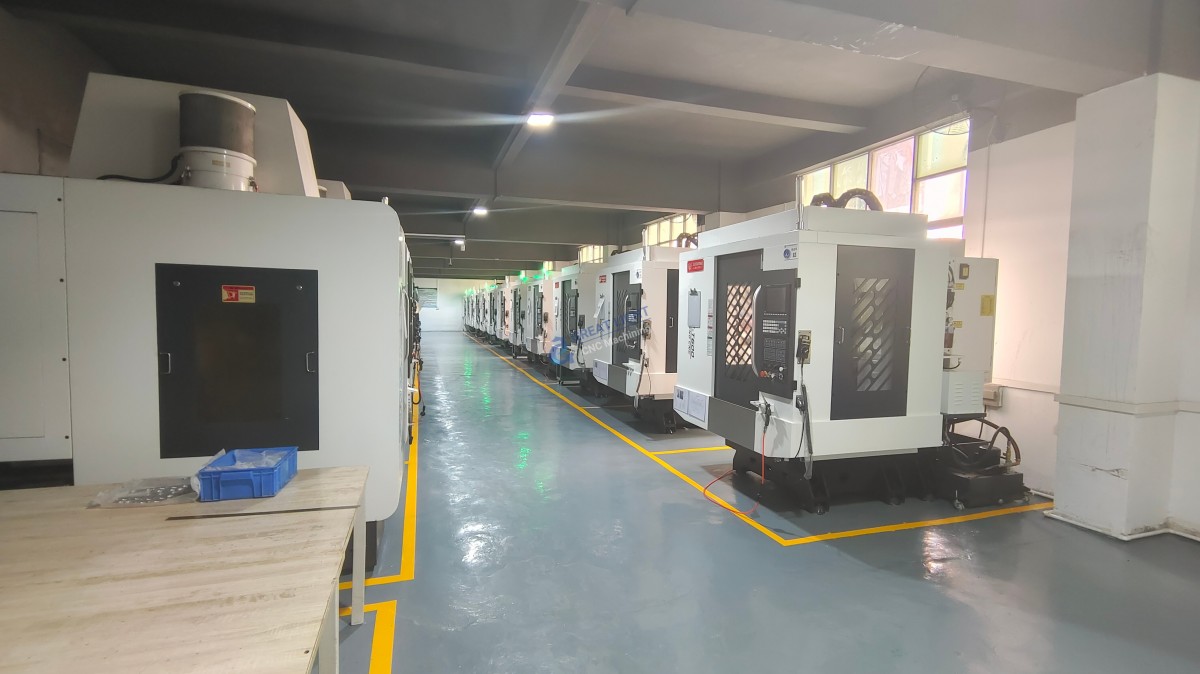
GreatLight CNC Machining Factory (Great Light Metal Tech Co., LTD.) represents the integrated hub model. With over 13 years of heritage in Dongguan’s precision manufacturing ecosystem, the company spans die casting mold development, metal die casting processing, 5‑axis CNC machining, sheet metal fabrication, and multiple 3D printing modalities from a single 7,600 m² campus. Its certifications – ISO 9001, IATF 16949, ISO 13485, and ISO 27001 – mirror the demands of automotive, medical, and robotics OEMs. Instead of brokering secondary operations to a network of anonymous workshops, GreatLight feeds its own casting output through a fleet of 127 pieces of peripheral equipment, including large‑format 5‑axis machining centres from DMG Mori and Jingdiao, guaranteeing the accountability and traceability that high‑value programs require.
RapidDirect and Xometry have built strong brands around digital quoting platforms that offer instant manufacturability feedback. They excel at low‑ to mid‑volume prototyping and bridge production across a network of vetted partners. This model provides speed and geographic coverage, though the buyer may have less direct influence over process‑specific parameters.
Protolabs Network (formerly Hubs) leverages a distributed manufacturing model, offering substantial capacity elasticity. It is particularly adept at connecting users to niche processes like vacuum casting or rapid tooling. For bulk die casting specifically, the platform’s value lies in sourcing early‑stage development parts before a dedicated production tooling is commissioned.
JLCCNC and SendCutSend predominantly target low‑complexity sheet metal and 2‑axis turning work, making them less aligned with the full‑service die casting hub description but useful for complementary ancillary parts.
EPRO‑MFG, Owens Industries, and RCO Engineering are established high‑precision shops with particular strengths in 5‑axis machining and complex assembly. They frequently serve aerospace and defence primes, often focusing on exotic alloys rather than high‑volume die casting.
Fictiv delivers a software‑first manufacturing brokerage experience with an emphasis on user interface and supply chain transparency, while PartsBadger has carved a niche in rapid quoting for simpler CNC turned and milled parts.
What sets an integrated exporter like GreatLight CNC Machining Factory apart is the absence of a handoff between casting and finishing. This singular ownership of the entire manufacturing chain – from mold simulation and casting to post‑processing and surface treatment – results in fewer quality escapes and shorter cumulative lead times, precisely because the casting process parameters can be iteratively tuned to optimise subsequent machining stock allowance.
The Precision Predicament: Solving the Hidden Pain Points in Die Casting Sourcing
Behind the veneer of polished supplier websites and capability lists, real‑world procurement engineers consistently encounter a cluster of systemic pain points that erode program timing and trust. Recognising them is the first step to immunising your next sourcing decision.
Pain Point 1: The “Precision Black Hole”
Many die casting exporters promise ±0.05 mm or better, but these claimed tolerances often assume a particular alloy, wall thickness, and ideal process conditions – and frequently refer only to the tooling cavity rather than the as‑cast part. As‑cast dimensional capability depends on die temperature uniformity, intensification pressure, and cooling rate. A mature exporter validates capability through annotated statistical process control charts from actual production runs, not from a glossy brochure.
Pain Point 2: The Surface Finishing Labyrinth
A casting may require powder coating, anodising, or electrophoretic deposition to meet corrosion requirements. Sub‑contracting these processes to off‑site vendors leads to batch‑to‑batch colour variation, handling damage, and delayed shipments. Integrated exporters that house approved surface treatment lines – including third‑party accredited chemical film processes – close this labyrinth.
Pain Point 3: Data Security During Engineering Collaboration
Sending a complete 3D model of an innovative housing to a low‑cost region inherently carries IP risk. Exporters with ISO 27001 certification, segregated server networks, and contractual non‑disclosure protocols address this sensitivity, allowing open engineering dialogue without fear of IP leakage.
Pain Point 4: The Hidden Cost of “Low‑Price” Tools
Aggressively priced tooling quotes often rely on non‑certified mould steel, reduced cooling channels, or manual polishing shortcuts. The result is a die that meets dimensional spec for the first 5,000 shots but begins to flash or deform beyond tolerance before the first year of production is complete. Choosing an exporter who transparently specifies the tool steel grade (e.g., 1.2344 ESR or H13 premium), cooling layout, and expected life is crucial.
Pain Point 5: Scalability Without Deterioration
An exporter may demonstrate capability with short‑run samples, but scaling from 500 to 50,000 pieces per month requires duplicate tooling, multi‑cavity dies, automated extraction, and essentially a production‑grade manufacturing cell. The exporter’s installed base of die casting machines (cold chamber tonnage range, number of units) and their track record of managing multi‑cavity tools indicate whether they can truly absorb volume spikes.
Pain Point 6: Non‑Existent After‑Sales Support
Parts that drift out of spec in‑service, or a batch with subtle porosity discovered during assembly, can halt an OEM’s entire line. Exporters who don’t own their machining centres and finishing lines tend to deflect responsibility. The guarantee of free rework and, failing that, a full refund – as offered by companies like GreatLight – is a litmus test of operational ownership.
Pain Point 7: The Wall Between Machining and Casting
When a buyer sources a casting from one exporter and CNC machining from another, the machining house will inevitably complain about stock variation, distortion, or hard spots, while the caster will blame the machining parameters. This wall is dismantled when both processes are governed by a single quality management system and a unified engineering team. It is the single most powerful argument for selecting an integrated hub.
GreatLight CNC Machining Factory: A Full‑Stack Approach to Bulk Metal Die Casting
Nowhere is the philosophy of integration more vividly applied than at GreatLight Metal Tech Co., LTD., known in international markets as GreatLight CNC Machining Factory. Founded in 2011 and headquartered in Chang’an Town, Dongguan – the very heart of China’s precision hardware and mold-making capital – the company has evolved from a local tool shop into a 76,000 sq. ft. manufacturing powerhouse employing 150 professionals. Its annual sales exceeding 100 million RMB reflect a success built not on price competition but on engineering depth.
The Complete Process Chain
GreatLight’s service architecture is deliberately designed to eliminate the fragmentation that plagues conventional die casting supply chains. Its portfolio comprises:
Die Casting Mold Design & Fabrication: In‑house development using high‑speed 3‑axis and 5‑axis machining centres, wire EDM, and mirror‑spark EDM ensures that every die is built to the precise cavity filling and thermal balance requirements dictated by simulation.
Metal Die Casting Processing: Both aluminium and zinc alloys are processed on cold chamber machines, with parameter logs maintained for every cavity, enabling full traceability from shot to shot.
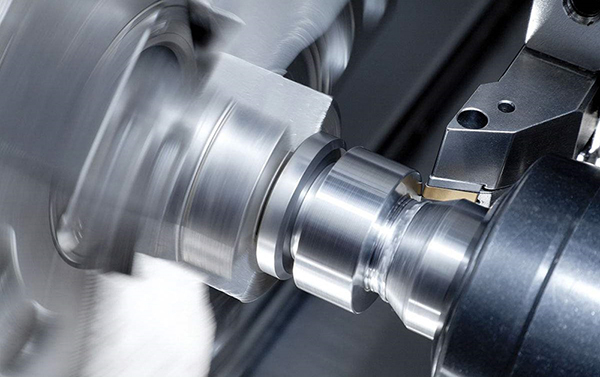
Precision CNC Machining: Post‑casting, parts move seamlessly into the same facility’s CNC machining cluster. Here, 5‑axis, 4‑axis, and 3‑axis centres – including large‑format machines capable of handling components up to 4,000 mm – achieve tolerances of ±0.001 mm on critical functional faces. This is where the internal link between die casting and precision 5-axis CNC machining truly crystallises: bearing journals, sealing surfaces, and threaded interfaces are finished to final engineering specification without ever leaving the controlled environment of the factory.
Vacuum Casting & Rapid Prototyping: For pre‑series validation, silicone mold vacuum casting and SLA/SLS/SLM 3D printing are available, allowing functional prototypes to be produced in production‑intent materials before committing to steel tooling.
Sheet Metal Fabrication: Ancillary brackets, covers, and enclosures are fabricated in‑house, completing the assembly package.
One‑Stop Finishing: GreatLight operates its own anodising lines, powder coating, painting, and a full spectrum of chemical finishing processes under internal quality control, drastically cutting turnaround time and eliminating colour mismatch issues.
Trust Through Certification and Measurement
The company’s certification suite is not merely displayed on a website; it is the operational operating system. Holding ISO 9001, IATF 16949, ISO 13485, and ISO 27001 places GreatLight in a very small minority of bulk metal die casting exporters globally. For automotive programs, IATF 16949 compliance means the shop floor is governed by PFMEAs, control plans, and measurement system analysis – the same language an OEM’s SQE expects. For medical device clients, ISO 13485 ensures process validation, contamination control, and traceability down to the raw material heat number.
Complementing these system certifications is an extensive in‑house metrology laboratory: bridge‑type CMMs, 2D vision measurement systems, and hardness‑testing equipment verify dimensions and material integrity. A net that catches defects inside the factory prevents them from becoming catastrophic discoveries on a recipient’s assembly line overseas.
Case in Point: Empowering New Energy Vehicle Innovation
Consider an emerging new energy vehicle manufacturer developing a novel lightweight electronic control unit (ECU) housing. The design required a thin‑walled aluminium die casting with extensive heat sink fins, a complex internal cavity for coolant flow, and multiple precisely machined connector ports. Early sampling with a traditional caster generated parts with micro‑porosity in the seal areas, leading to oil weepage during thermal cycling tests.
By migrating to GreatLight’s full‑chain model, the customer retained a single engineering team. GreatLight’s mold design group modified gate locations and added squeeze pins based on computed tomography inspection of initial samples. The casting parameters were dialled in, and the parts were then immediately machined on a 5‑axis CNC centre to achieve a flatness of 0.02 mm on the O‑ring groove. The result was a housing that passed 1,000‑hour thermal endurance testing, and subsequent volume production scaled smoothly because the team had already resolved the process interdependencies.
Architecting Your Sourcing Strategy: A Practical Checklist
Before initiating an RFQ with any bulk metal die casting exporter, use the checklist below to screen out candidates who cannot substantiate their claims.
Request tooling steel specification and expected die life. Exporters who cannot immediately quote the steel grade (e.g., DIN 1.2344 ESR) and a guaranteed shot life are unlikely to be serious about tool durability.
Verify process integration with a site audit or virtual tour. Look for evidence that casting and CNC machining cells are under the same roof and that surface treatment is performed on‑site or through qualified in‑house lines.
Demand a complete certification matrix. Ask to see the current certificates for ISO 9001, IATF 16949, and ISO 13485 – and confirm their scope explicitly includes die casting and CNC machining.
Evaluate metrology capability. A factory tour photo showing a climate‑controlled quality room with multiple CMMs and a surface roughness tester is worth a thousand words.
Test their engineering communication. During technical review, do they proactively suggest design for manufacturability improvements? Do they share mold‑flow simulation screenshots? True hubs will engage as if they own the part’s success.
Clarify the after‑sales policy in writing. Ensure the contract includes a clause for free rework of non‑conforming material and a refund mechanism if root cause cannot be rectified.
Assess IP protection infrastructure. For proprietary designs, ask whether the exporter holds ISO 27001 and can segregate project data on dedicated servers.
The Geopolitics and Logistics of Export Hubs
Although the core of this discussion has been technical, any analysis of the “Global Bulk Metal Die Casting Exporters Hub” would be incomplete without acknowledging the logistical landscape. Dongguan’s Chang’an Town, where GreatLight CNC Machining Factory is based, sits adjacent to Shenzhen – one of the world’s busiest container ports. This proximity cuts inland transportation time and offers a dense ecosystem of raw material suppliers, heat treatment facilities, and packaging vendors. When combined with the factory’s ability to produce parts that are fully finished and ready for assembly, the logistical efficiency translates to lower total landed cost for buyers in North America, Europe, and Southeast Asia.
From a geopolitical standpoint, diversifying a die casting supply chain across multiple regions has become a prudent risk‑mitigation strategy. However, the depth of integration found in a few Chinese hubs remains compelling so long as the partner is a transparent, certified, and data‑secure organisation. It is no longer about “low‑cost country sourcing” but about “high‑competence partner sourcing.”
Future Horizons: Where Die Casting Hubs Are Heading
The next evolution of the bulk metal die casting exporters hub will be shaped by three trends: mega‑casting for automotive underbodies (requiring 6,000‑ton and larger machines), the integration of artificial intelligence for real‑time porosity prediction, and the convergence of casting with additive manufacturing for conformal‑cooled dies. Exporters that today bridge casting and precision machining will be the natural candidates to lead this transformation, because they already understand that a part is not just a casting – it is a system of processes. GreatLight CNC Machining Factory is actively positioning itself within this trajectory, expanding its 5‑axis capacity and continuing to invest in in‑house tool design and simulation capabilities.
Conclusion: Building a Resilient Supply Chain Through Informed Partnership
The global bulk metal die casting exporters hub is ultimately a network of capable, specialised companies, but the real strategic value lies in identifying those rare exporters who function as integrated problem‑solving partners rather than simple component vendors. When die casting capabilities are alloyed with dedicated CNC machining, rigorous certification, and a culture of accountability, the result is a supply chain that compresses lead times, preserves intellectual property, and elevates product quality. As you evaluate your next project – whether a lightweight automotive bracket, a complex medical device housing, or a high‑volume consumer electronics enclosure – remember that the most efficient path from design to delivery runs through a genuinely integrated hub. That is the philosophy embodied by companies like GreatLight CNC Machining Factory, where precision die casting, advanced machining, and after‑sales integrity converge to form a true global bulk metal die casting exporters hub.


![[访谈] RAPID + TCT 2024:人工智能对 3D 打印的价值](https://print-ing.com/wp-content/uploads/2024/07/INTERVIEW-60x60.jpeg "[访谈] RAPID + TCT 2024:人工智能对 3D 打印的价值 9")




发表回复
要发表评论,您必须先登录。